Dog Drinking a Lot of Water and Peeing a Lot: Causes
A dog drinking a lot of water and peeing a lot points to a classic medical triad: diabetes, kidney disease, or Cushing's. A DVM-grade guide to causes, the tests, and when it is urgent.

BVMS MRCVS
Medically reviewed by Dr. Pippa Elliott, BVMS MRCVS · Last reviewed

This article contains affiliate links. Webvet may earn a commission when you buy through them, at no extra cost to you.
A dog drinking a lot of water and peeing a lot is one of the most reliable early warning signs in veterinary medicine. The combination has a name, polyuria and polydipsia (PU/PD), and it most often points to one of three conditions: diabetes mellitus, kidney disease, or Cushing's disease. Because these go hand in hand and rarely resolve on their own, a dog showing both excessive thirst and excessive urination needs a veterinary exam and bloodwork, not a wait-and-see approach.
The good news: most of the causes are diagnosable with routine tests and manageable when caught early. This guide explains exactly how much water is too much, walks through every differential your vet weighs (mechanism, companion signs, how it is diagnosed, and how it is treated), maps out the testing sequence step by step, and flags the red flags that turn a clinic appointment into an emergency.
- 1"Drinking and peeing more" together is called PU/PD and is a medical sign, not a behavior quirk.
- 2The big three differentials are diabetes mellitus, chronic kidney disease, and Cushing's disease (hyperadrenocorticism).
- 3A healthy dog drinks roughly 50 to 60 ml per kg of body weight per day; sustained intake above 100 ml/kg/day is true polydipsia.
- 4Diagnosis is straightforward: bloodwork, a urinalysis (urine specific gravity), and sometimes hormone testing.
- 5Book a vet visit within a few days; sudden severe signs, vomiting, collapse, or a non-spayed female warrant emergency care.
 $65 · no membership
Have a health question about your dog?
A licensed vet can assess your dog over video and prescribe online when it's appropriate.
 Talk to a vet
- Licensed vets
- All 50 states
- same-day Rx
Webvet may earn a commission if you book.
How much water is too much for a dog?
A healthy dog normally drinks about 50 to 60 milliliters of water per kilogram of body weight per day, which works out to roughly 1 ounce per pound. Per the Merck Veterinary Manual, true polydipsia is defined as sustained intake above 100 ml/kg/day. So a 20 kg (44 lb) dog drinking more than about 2 liters (roughly 68 oz) a day, every day, has crossed the threshold from normal to abnormal.
Polyuria, the urination half of the pair, is harder to quantify at home, but the giveaways are obvious: the water bowl empties faster, your dog asks to go out more often, accidents start appearing in a previously house-trained dog, and the puddles themselves look bigger and paler. Thirst and urine output rise together because they are physically linked, which is why measuring one tells you a great deal about the other.
Measuring intake is the single most useful thing you can do before the appointment. Fill the bowl with a measured amount, top it up with measured amounts, and at the end of 24 hours subtract what is left. Do this for two or three days, accounting for any shared bowls. A clear before-and-after number is far more useful to your vet than "it seems like a lot."

It is worth ruling out the harmless explanations first. Hot weather, heavy exercise, a switch from wet food to dry kibble, or salty treats can all bump up drinking for a day or two. The pattern that matters is a sustained, unexplained increase that is paired with more urination. For a deeper look at the thirst side of this picture, and what a normal range looks like, see our guides on a dog drinking a lot of water and how much water a dog should drink.
| Dog weight | Normal daily intake (approx.) | Polydipsia threshold (>100 ml/kg) |
|---|---|---|
| 5 kg (11 lb) | 250 to 300 ml (8 to 10 oz) | More than 500 ml (17 oz) |
| 10 kg (22 lb) | 500 to 600 ml (17 to 20 oz) | More than 1 liter (34 oz) |
| 20 kg (44 lb) | 1 to 1.2 liters (34 to 40 oz) | More than 2 liters (68 oz) |
| 30 kg (66 lb) | 1.5 to 1.8 liters (51 to 61 oz) | More than 3 liters (101 oz) |
Why is my dog drinking so much water and peeing a lot?
A dog drinking so much water and peeing a lot almost always has a medical cause that links the two. When the kidneys cannot concentrate urine, or when the blood carries excess glucose or hormones, the body dumps more water into the urine. The dog then drinks more to keep up. That feedback loop is why thirst and urination rise together, and the three most common drivers are diabetes mellitus, kidney disease, and Cushing's disease.
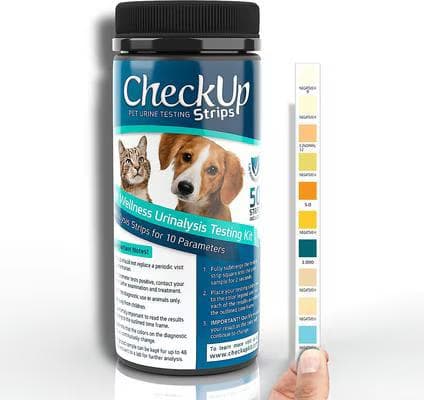
At-home urine test strips that screen for glucose, blood, pH, and protein in seconds, so you can catch early signs of diabetes, kidney disease, or a UTI and bring real numbers to your vet.
Webvet may earn a commission when you click through to Chewy, at no extra cost to you.
Vets usually split PU/PD into two mechanisms. In the first, the dog is losing water it should be keeping, so it drinks more to avoid dehydration (diabetes, kidney disease, and most hormonal causes work this way). In the second, the dog drinks excessively for behavioral reasons and the kidneys simply offload the surplus. The sections below walk each cause from mechanism to treatment, roughly in order of how often it explains the combination.
Diabetes mellitus
Diabetes mellitus occurs when the body cannot produce enough insulin, or cannot respond to it, so glucose builds up in the blood instead of feeding the cells. Once blood sugar climbs past the kidney's reabsorption limit, glucose spills into the urine and drags water out with it by osmosis. That water loss is what drives the heavy urination, and the thirst follows to replace it. According to Cornell University's College of Veterinary Medicine, the classic clinical signs are increased thirst, increased urination, increased appetite, and weight loss.
Companion signs to watch for: a ravenous appetite paired with steady weight loss, a dull or thinning coat, cloudy eyes from cataracts that can develop quickly in diabetic dogs, and in advanced cases a sweet or fruity smell on the breath. A hungry dog that is drinking, peeing, and still losing weight is a textbook diabetes presentation.
How the vet diagnoses it: a single blood glucose reading that is persistently high, combined with glucose detected in the urine, confirms the diagnosis (a one-off high reading from stress is ruled out with a fructosamine test, which reflects average sugar over weeks). How it is treated: most dogs need twice-daily insulin injections, a consistent feeding schedule, and a moderate-carbohydrate, higher-fiber diet. With stable dosing, many diabetic dogs live comfortably for years.
Chronic kidney disease
Chronic kidney disease (CKD) is common in older dogs and is often first noticed as increased drinking. The kidney's job is to concentrate urine, pulling water back into the body while excreting waste. As nephrons are lost, the kidney loses that concentrating power, so it produces large volumes of dilute urine, and the dog drinks more to avoid dehydration. Crucially, this PU/PD often appears before blood waste values rise, which is why a change in thirst can be the earliest clue.
Companion signs to watch for: reduced or picky appetite, gradual weight loss, intermittent vomiting or nausea, bad (ammonia-like) breath, a duller coat, and lower energy. Some dogs also develop pale gums from anemia as the disease advances.
How the vet diagnoses it: bloodwork (urea, creatinine, and the more sensitive SDMA) measured against urine specific gravity. Dilute urine alongside rising kidney values is the signature of CKD, and the disease is then staged to guide treatment. How it is treated: a prescription renal diet (controlled phosphorus and protein), fluid support, phosphate binders, blood-pressure and anti-nausea medication, and regular monitoring. Treatment does not reverse the damage but can meaningfully slow progression and keep dogs comfortable. CKD overlaps heavily with our coverage of senior dog health, and the steady weight loss it can cause is worth tracking closely.
Cushing's disease (hyperadrenocorticism)
Cushing's disease is a hormonal disorder in which the body produces too much cortisol, the stress hormone, usually because of a benign tumor on the pituitary gland (about 80 to 85 percent of cases) or, less often, on an adrenal gland. Chronically high cortisol interferes with the kidney's response to antidiuretic hormone, so the dog produces dilute urine and drinks heavily to compensate. It is one of the most overlooked causes of PU/PD because it comes on slowly and is easy to chalk up to aging.
Companion signs to watch for: a pot-bellied appearance, a ravenous appetite, panting at rest, thinning skin, symmetrical hair loss along the flanks, recurrent skin or urinary infections, and muscle weakness alongside the drinking. Long-term steroid medication can produce the very same picture (called iatrogenic Cushing's), which is why our overview of prednisone for dogs and cats notes increased thirst as an expected side effect.
How the vet diagnoses it: routine bloodwork often shows a raised liver enzyme (ALP), but confirmation requires a specific hormone-stimulation test, either an ACTH stimulation test or a low-dose dexamethasone suppression test, often with an abdominal ultrasound to tell a pituitary cause from an adrenal one. How it is treated: pituitary-dependent Cushing's is usually controlled with a daily oral medication (trilostane) that throttles cortisol production, with periodic blood tests to fine-tune the dose; an adrenal tumor may be treated surgically.
Diabetes insipidus
Diabetes insipidus is rare and, despite the shared name, has nothing to do with blood sugar. It is a problem with antidiuretic hormone (ADH): either the brain does not make enough of it, or the kidneys do not respond to it. Without ADH telling the kidneys to reclaim water, the dog passes huge volumes of extremely dilute, almost water-like urine and drinks enormous amounts to keep pace. The thirst in these dogs can be dramatic, sometimes the most extreme of any cause on this list.
Companion signs to watch for: often very few beyond the relentless drinking and urinating, which is part of why it is diagnosed last, after the common causes are excluded. How the vet diagnoses it: a markedly low urine specific gravity with otherwise normal bloodwork, followed by a carefully supervised water-deprivation test or a trial of synthetic ADH (desmopressin) to see if urine concentrates. How it is treated: central (brain-origin) diabetes insipidus responds well to desmopressin eye or nasal drops; the kidney-origin form is managed with diet and constant access to water.
Pyometra (unspayed females)
Pyometra is a life-threatening infection of the uterus that develops in unspayed female dogs, typically in the weeks after a heat cycle. The uterus fills with pus, and the bacteria release toxins that impair the kidneys' ability to concentrate urine, so heavy drinking and urination are common early signs, sometimes before the more obvious illness sets in. This is a surgical emergency, not a wait-and-see situation.
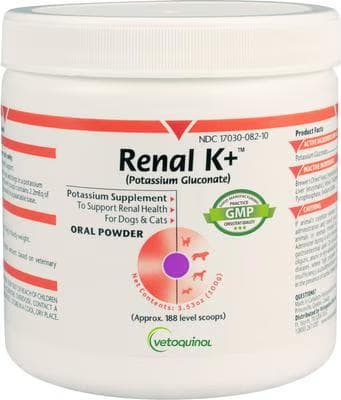
Vet-formulated potassium supplement that supports kidney health in dogs and cats with chronic kidney disease. An easy oral powder you mix into food.
Webvet may earn a commission when you click through to Chewy, at no extra cost to you.
Companion signs to watch for: a recent season, lethargy, loss of appetite, fever, a swollen abdomen, and, in an "open" pyometra, a foul or bloody vaginal discharge. A "closed" pyometra has no discharge and is even more dangerous because the infection is sealed inside. How the vet diagnoses it: physical exam, bloodwork showing infection, and ultrasound of the uterus. How it is treated: emergency spay surgery to remove the infected uterus, with intravenous fluids and antibiotics. Spaying eliminates the risk entirely.
Hypercalcemia and cancer
Hypercalcemia means too much calcium in the blood, and high calcium directly interferes with the kidney's concentrating mechanism, producing PU/PD. In dogs, one of the more common drivers is cancer, particularly lymphoma and anal-gland tumors (a phenomenon called hypercalcemia of malignancy), though overactive parathyroid glands, certain toxins, and Addison's disease can also raise calcium. Because the thirst can appear before any lump is found, hypercalcemia is an important reason not to skip the full blood panel.
Companion signs to watch for: weakness, reduced appetite, constipation, and sometimes a palpable mass or enlarged lymph nodes. How the vet diagnoses it: blood chemistry flags the high calcium, then the workup hunts for the source with ionized calcium, parathyroid hormone levels, chest and abdominal imaging, and lymph-node sampling. How it is treated: the priority is treating the underlying cancer or gland problem; fluids and specific medications lower calcium in the meantime.
Liver disease
The liver and kidneys cooperate to manage the body's water and waste, so significant liver disease can also cause PU/PD. A damaged liver clears urea less efficiently and disrupts the salt gradient the kidneys rely on to concentrate urine, and in some cases excess cortisol breakdown adds to the thirst. The drinking is rarely the only sign here, but it can be one of the earlier ones.
Companion signs to watch for: poor appetite, vomiting, weight loss, a yellow tinge to the gums or eyes (jaundice), a distended belly from fluid, and in severe cases disorientation. How the vet diagnoses it: raised liver enzymes and bilirubin on bloodwork, bile-acid testing, ultrasound, and sometimes a biopsy. How it is treated: this depends entirely on the cause, ranging from liver-support diets and medication to surgery for a portosystemic shunt in younger dogs.
Medications: steroids and diuretics
Some medications cause PU/PD as an expected, dose-related effect rather than as a sign of disease. Corticosteroids such as prednisone and prednisolone (used for allergies, immune conditions, and inflammation) mimic cortisol and produce the same thirst and dilute urine seen in Cushing's. Diuretics such as furosemide, prescribed for heart failure, work precisely by making the kidneys flush out water and salt, so increased urination and compensatory drinking are part of how they do their job. Anti-seizure drugs like phenobarbital can do it too.
What to do: never stop a prescribed medication on your own, because abruptly stopping steroids in particular can be dangerous. Instead, tell your vet about the drinking. They can confirm the drug is the cause, review whether the dose can be adjusted, and rule out the possibility that a separate condition has developed alongside the medication. This is exactly why your medication list belongs at the top of the appointment notes.
Urinary tract infection
A urinary tract infection (UTI) does not usually cause true polydipsia, but it is a frequent reason owners notice a change in urination, so it belongs on the list. Bladder inflammation makes a dog feel an urgent need to go even when little urine is present, which reads as frequent peeing. Companion signs include straining, frequent small amounts, licking at the area, accidents, and sometimes blood or a strong smell. The vet diagnoses it with a urinalysis and culture and treats it with the appropriate antibiotic; recurrent UTIs themselves can be a clue to diabetes or Cushing's underneath.
Psychogenic (behavioral) polydipsia
Psychogenic polydipsia is excessive drinking out of habit, boredom, anxiety, or attention-seeking rather than any physical disease. Here the drinking comes first and the urination is simply the body offloading the surplus; the kidneys are perfectly healthy. It is more common in young, high-energy, or under-stimulated dogs and is a diagnosis of exclusion, meaning your vet should only land on it after the medical causes above have been tested for and ruled out.
How the vet diagnoses it: normal bloodwork and urinalysis, plus a urine sample that can still concentrate normally, sometimes confirmed with a supervised water-deprivation test. How it is managed: more exercise and enrichment, scheduled (not restricted) water, and addressing the underlying anxiety or boredom rather than simply limiting the bowl, which can be unsafe if the real cause was missed.
| Likely cause | Other signs you may see | What to do |
|---|---|---|
| Diabetes mellitus | Big appetite, weight loss, sweet-smelling breath | Vet visit within days; blood and urine glucose |
| Kidney disease (CKD) | Poor appetite, weight loss, nausea, dilute urine | Vet visit within days; bloodwork and urinalysis |
| Cushing's disease | Pot belly, hair loss, panting, muscle weakness | Vet visit; hormone-stimulation testing |
| Diabetes insipidus | Extreme thirst, very dilute urine, few other signs | Vet visit; water-deprivation or desmopressin trial |
| Pyometra (unspayed female) | Pus or discharge, fever, lethargy, off food | Emergency vet now |
| Hypercalcemia / cancer | Weakness, poor appetite, sometimes a lump | Vet visit; calcium panel and imaging |
| Liver disease | Jaundice, vomiting, weight loss, swollen belly | Vet visit; liver panel and ultrasound |
| Medications (steroids, diuretics) | Started a new drug; otherwise well | Tell your vet; do not stop the drug yourself |
| Urinary tract infection | Straining, frequent small pees, blood in urine | Vet visit; urinalysis and culture |
| Psychogenic polydipsia | Young, bored, otherwise healthy; normal tests | Vet visit to exclude disease first; add enrichment |
How the vet diagnoses PU/PD
To sort out a dog drinking a lot of water and peeing a lot, the vet works through a standard, efficient sequence designed to separate the big three differentials quickly and confirm the cause before treating. The first step is almost always a urinalysis paired with bloodwork, and most cases are solved in that first round. The order matters: cheaper, higher-yield tests come first, and the more specialized tests are reserved for when the picture is still unclear.
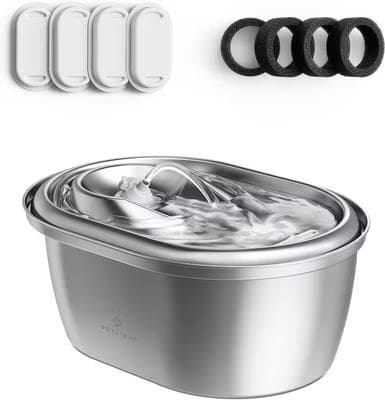
304 food-grade stainless steel pet water fountain, 101 oz. The circulating, filtered water encourages cats to drink more, which supports urinary tract and kidney health.
Webvet may earn a commission when you click through to Chewy, at no extra cost to you.

- Urinalysis with urine specific gravity (USG): the single most informative first test. USG measures how concentrated the urine is. A reading below 1.030 in a dog with these signs means the kidneys are not concentrating urine properly, which points toward kidney disease, Cushing's, diabetes insipidus, or hypercalcemia. The urinalysis also detects glucose (diabetes), protein, and signs of infection.
- Blood chemistry panel: checks blood glucose (high in diabetes), kidney values (urea, creatinine, and the early-warning marker SDMA), calcium (high in hypercalcemia), liver enzymes including ALP (often raised in Cushing's and liver disease), and electrolytes.
- Complete blood count (CBC): looks for the elevated white-cell counts of infection such as pyometra or a UTI, and for anemia, which can accompany advanced kidney disease.
- Urine culture: confirms or rules out a bacterial urinary tract infection and identifies which antibiotic will work, since infection can hide behind dilute urine.
- Hormone testing: if Cushing's is suspected, an ACTH stimulation test or a low-dose dexamethasone suppression test confirms it. A fructosamine test settles a borderline diabetes diagnosis, and if diabetes insipidus is on the table the vet may run a supervised water-deprivation or desmopressin trial.
- Abdominal ultrasound and imaging: pictures of the kidneys, adrenal glands, liver, and (in unspayed females) the uterus when the first round of results is inconclusive. Ultrasound is what distinguishes a pituitary from an adrenal cause of Cushing's and confirms pyometra.
Bring your measured water-intake log and, if possible, a fresh morning urine sample in a clean container. That single sample often saves a return trip, and a first-of-the-day sample gives the truest read on concentrating ability. Do not restrict your dog's water before the visit unless your vet tells you to, because a thirsty dog with an underlying problem can dehydrate dangerously fast. See our guide to dehydration in dogs for warning signs.
Does drinking and peeing more change with age?
Older dogs are more likely to develop the conditions behind PU/PD, but age itself is not a normal reason to drink and pee more. As the American Kennel Club notes, a sudden change in thirst always warrants a vet check. Chronic kidney disease and Cushing's are especially common in senior dogs, so increased drinking in a grey-muzzled dog should never be brushed off as "just getting old."
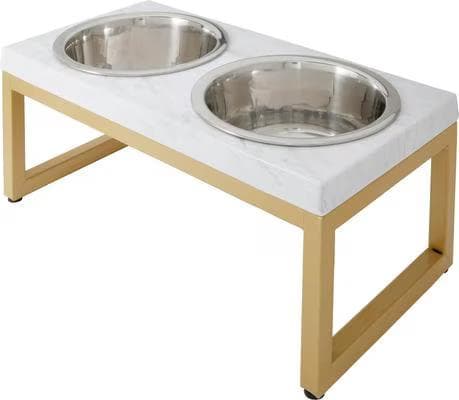
Raised stainless steel double bowl on a marble-look stand. Easier on the neck and joints and a clean, tip-resistant way to keep fresh water available all day.
Webvet may earn a commission when you click through to Chewy, at no extra cost to you.
Puppies and young dogs are far less likely to have kidney or hormone disease, but they can still develop diabetes, infections, congenital kidney problems, or the rarer diabetes insipidus, and young dogs are the most common candidates for psychogenic polydipsia. At any age, the rule is the same: a sustained, unexplained rise in both drinking and urination earns a veterinary visit. If your senior dog is affected, our dedicated guide on a senior dog drinking a lot of water goes deeper, and you can also review changes in dog energy levels by age.
What you can do at home before the appointment
While you wait to be seen, keep fresh water available at all times and resist the urge to ration it. The goal is to arrive with good data so the vet can move straight to the right tests. A few simple steps make the appointment more productive:
- Log daily water intake in milliliters or ounces for two to three days, including any shared or outdoor bowls.
- Note urination: frequency, accidents in the house, volume, color, and any blood.
- Track appetite and weight, and watch for any weight loss or a noticeably bigger appetite.
- List any medications, especially steroids and diuretics, and recent diet changes.
- For unspayed females, note the date of the last heat cycle and any discharge.
- Collect a clean, fresh urine sample the morning of the visit if you can.
Frequently asked questions
Why is my dog drinking so much water and peeing a lot?
A dog drinking so much water and peeing a lot usually has a medical cause that links the two, most often diabetes mellitus, kidney disease, or Cushing's disease. When the kidneys cannot concentrate urine or the blood holds excess glucose or cortisol, the body loses more water in urine and the dog drinks more to keep up. Less common causes include diabetes insipidus, hypercalcemia, liver disease, certain medications, and behavioral overdrinking. Sustained changes warrant a vet exam with blood and urine tests.
What are the first signs of kidney failure in dogs?
Early signs of kidney disease in dogs include a change in water intake (usually drinking more), a change in urine volume, reduced appetite, weight loss, vomiting, bad breath, and lethargy. In acute kidney failure you may also see uncoordinated movement, a chemical smell on the breath, and a sharp drop in appetite. Because the kidneys hold significant reserve, increased thirst can be one of the earliest visible clues, so any of these signs should be checked promptly with bloodwork and a urinalysis.
What are the first signs of diabetes in a dog?
The main early signs of diabetes mellitus in dogs are increased thirst, increased urination, increased appetite, and weight loss. A dog that is eating well, even more than usual, but still losing weight while drinking and peeing more is a classic diabetes picture. Other clues include a dull coat and, over weeks, cloudy eyes from cataracts. It is diagnosed with blood and urine glucose tests and managed with insulin and a consistent diet.
Do dogs drink and pee more as they get older?
Age alone is not a healthy reason to drink and pee more. Older dogs are simply more prone to the conditions that cause it, especially chronic kidney disease and Cushing's disease. Damaged kidneys lose the ability to concentrate urine, so a senior dog drinks more to compensate. Increased thirst in an older dog should be evaluated with bloodwork and a urinalysis, not dismissed as normal aging.
How does a dog act when their kidneys are shutting down?
As kidney function fails, dogs often show changes in thirst (drinking more or, later, less), changes in urine volume, nausea, vomiting, loss of appetite, weakness, and a chemical or ammonia smell on the breath. Late-stage signs include mouth ulcers, pale gums from anemia, and collapse. These dogs need prompt veterinary care, as supportive treatment with fluids, diet, and medication can ease symptoms and slow progression.
What are the three warning signs of kidney disease?
In dogs, three early warning signs of kidney disease are increased urination (often with increased drinking), reduced appetite with weight loss, and vomiting or nausea. Producing large volumes of dilute, pale urine is one of the earliest clues. Because the kidneys have significant reserve, blood values can stay normal until substantial damage has occurred, which is why testing at the first change in thirst, rather than waiting for the dog to look ill, matters so much.
Can Cushing's disease in dogs be cured?
Most cases of Cushing's disease come from a benign pituitary tumor and are controlled rather than cured. A daily oral medication (commonly trilostane) lowers cortisol and usually resolves the heavy drinking and urination within weeks, with periodic blood tests to fine-tune the dose. When the cause is a single adrenal tumor, surgery to remove it can be curative. Either way, treatment lets most dogs return to a comfortable, normal life.
Do dogs drink a lot of water before they pass?
Some seriously ill dogs do show increased thirst near the end of life, often tied to kidney failure or other organ disease, but drinking is not a reliable sign on its own. Many dogs keep drinking until very close to death, so a dog that is still drinking is not necessarily well, and some dogs near the end actually drink less. Judge by the whole picture, including appetite, energy, breathing, and comfort, and lean on your vet for guidance.
Should I limit my dog's water if it is drinking too much?
No. Do not restrict water in a dog that is drinking excessively unless your veterinarian specifically tells you to. Heavy drinking is usually the body compensating for water lost in urine, so withholding it can cause dangerous dehydration, especially in a dog with diabetes or kidney disease. Instead, measure the intake, keep water available, and get a veterinary workup to find and treat the underlying cause.
The bottom line: a dog drinking a lot of water and peeing a lot is a clear signal to call your vet. The most likely causes (diabetes, kidney disease, and Cushing's) are all diagnosable with routine tests and far more manageable when caught early, and even the rarer causes have clear treatment paths once identified. Measure the water, watch for the red flags above, collect a morning urine sample, and book the appointment.
$65 · no membershipHave a health question about your dog?
A licensed vet can assess your dog over video and prescribe online when it's appropriate.
Talk to a vet- Licensed vets
- All 50 states
- same-day Rx
Webvet may earn a commission if you book.

Editor
The Webvet Editorial Team is the in-house group of pet-care editors and writers behind Webvet, operated by Smart Pet Collective. The team researches, writes, and maintains Webvet's pet health, behavior, and medication content. Every article follows a defined editorial process: research from reputable veterinary and scientific sources, careful drafting, mandatory review of medical content by a credentialed veterinarian, and dated publication. Health and medication articles are medically reviewed by a licensed veterinary professional before they go live and are kept current over time.
Veterinarian · BVMS MRCVS
Dr. Pippa Elliott, BVMS, MRCVS, is a veterinarian with nearly 30 years of experience in companion animal practice. Dr. Elliott earned her Bachelor of Veterinary Medicine and Surgery from the University of Glasgow. She was also designated a Member of the Royal College of Veterinary Surgeons. Married with 2 grown-up kids, Dr. Elliott has a naughty Puggle named Poggle, 3 cats and a bearded dragon.


