Dog Drinking a Lot of Water: Causes and When to Worry
A dog drinking a lot of water can be harmless or an early sign of kidney disease, diabetes, or Cushing's. Learn the normal range, the red flags, and exactly when to call your vet.

BVMS MRCVS
Medically reviewed by Dr. Pippa Elliott, BVMS MRCVS · Last reviewed

This article contains affiliate links. Webvet may earn a commission when you buy through them, at no extra cost to you.
A dog drinking a lot of water is sometimes completely normal (after exercise, on a hot day, or on a dry-kibble diet) but a sudden, sustained jump in thirst is one of the most common early warning signs of kidney disease, diabetes, or Cushing's disease. As a rule of thumb, a healthy dog drinks roughly 1 ounce of water per pound of body weight per day. Drinking noticeably more than that for more than a day or two is worth a vet visit.
The medical term for abnormal thirst is polydipsia, and it almost always travels with polyuria (peeing more). Below, our editorial team breaks down what counts as normal, the full list of causes from harmless to serious, the red flags that mean call your vet now, how vets actually diagnose the problem, and how to measure your dog's intake at home so you can give your vet real numbers.
- 1Normal intake is about 1 ounce (roughly 30 ml) of water per pound of body weight per day; vets flag intake above ~100 ml/kg/day as polydipsia.
- 2Increased thirst plus increased urination (polydipsia/polyuria) is the classic early sign of kidney disease, diabetes mellitus, and Cushing's disease.
- 3Measure intake for 2 to 3 days before your visit; consistent numbers are the single most useful thing you can hand your vet.
- 4Drinking with vomiting, lethargy, weight loss, or in an unspayed female (possible pyometra) is a same-day or emergency vet visit.
What is considered excessive drinking for a dog?
Excessive drinking for a dog is generally defined as more than about 100 ml of water per kilogram of body weight per day (a little over 1.5 ounces per pound). A healthy dog usually sits well under that, drinking close to 1 ounce per pound daily. The point at which casual extra drinking becomes medically significant polydipsia is when intake is consistently elevated, not just high for one hot afternoon.
The distinction that matters most is duration. One thirsty day after a long hike, a romp in the yard, or a salty meal is not polydipsia. A pattern of heavy drinking that holds for several days, especially if the bowl needs refilling more often than it used to or your dog is suddenly draining it before bedtime, is the signal worth acting on. Trust the change from your dog's own baseline more than any single number.
Here is a quick reference for a healthy dog's baseline daily intake by body weight. Use it as a starting point, not a hard rule, because activity, diet, and weather all shift the number.
| Dog body weight | Approx. normal daily water | Watch-it threshold (roughly 1.5x) |
|---|---|---|
| 10 lb (4.5 kg) | ~10 oz / 300 ml | ~15 oz / 450 ml |
| 25 lb (11 kg) | ~25 oz / 740 ml | ~38 oz / 1.1 L |
| 50 lb (23 kg) | ~50 oz / 1.5 L | ~75 oz / 2.2 L |
| 75 lb (34 kg) | ~75 oz / 2.2 L | ~110 oz / 3.3 L |
The American Kennel Club puts the healthy baseline at roughly 1 ounce of water per pound of body weight per day. Puppies, nursing mothers, and very active working dogs run higher, and a dog eating canned food (which is roughly 70 to 80 percent water) will drink less from the bowl than a dog on dry kibble. If you want to dig into the math for your specific dog, see our companion guide below.
For the full per-pound breakdown and how diet changes the number, read our companion guide on how much water a dog should drink.

 $65 · no membership
Have a health question about your dog?
A licensed vet can assess your dog over video and prescribe online when it's appropriate.
 Talk to a vet
- Licensed vets
- All 50 states
- same-day Rx
Webvet may earn a commission if you book.
How to measure how much your dog actually drinks
Measuring your dog's water intake is the single most useful thing you can do before a vet visit, and it takes a measuring cup and a notepad. Fill the bowl with a measured amount, then at the end of 24 hours measure what is left and subtract. Do this for two to three days to get a reliable daily average.
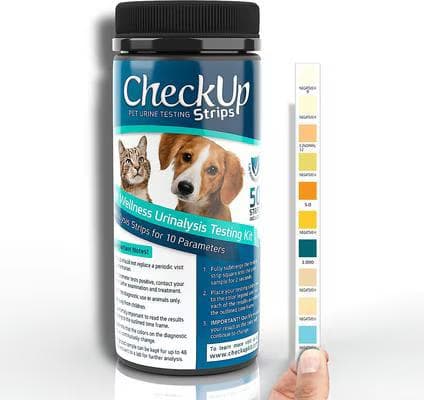
At-home urine test strips that screen for glucose, blood, pH, and protein in seconds, so you can catch early signs of diabetes, kidney disease, or a UTI and bring real numbers to your vet.
Webvet may earn a commission when you click through to Chewy, at no extra cost to you.
- Pour a measured volume of water into the bowl (write it down).
- After 24 hours, measure what remains and subtract to get the amount drunk.
- In multi-pet homes, separate bowls for a couple of days so you know who is drinking what.
- Account for other sources: toilet bowls, puddles, the garden hose, and wet or canned food all add water.
- Note urination too: more drinking with more (or larger) puddles is the polydipsia/polyuria pattern vets care about.
Evaporation matters in hot or dry rooms, so keep the bowl out of direct sun and away from heating vents while you track. If you free-feed multiple dogs and cannot separate them, even a rough count of how many times you refill the shared bowl compared with a normal week gives your vet a useful signal. Bring the written log to your appointment rather than trying to recall it from memory.
Why do dogs suddenly start drinking lots of water?
Dogs suddenly start drinking lots of water for reasons that range from completely benign to medically urgent. Benign triggers include hot weather, exercise, a switch to dry kibble, salty treats, or certain medications. The concerning causes are the organ and hormone diseases (kidney disease, diabetes, and Cushing's) that make the body lose or fail to concentrate water, driving thirst up to compensate.
Harmless and lifestyle causes
- Hot weather or a warm house: dogs cool themselves by panting, which loses water they replace by drinking.
- Exercise and activity: a long walk, a run, or a play session all raise normal intake for that day.
- Diet change: switching from wet food to dry kibble (or feeding salty foods) increases thirst, since canned food is mostly water.
- Medications: diuretics, anti-seizure drugs, and corticosteroids such as prednisone are well-known thirst-drivers.
- Recovery from illness: a dog rehydrating after vomiting, diarrhea, or a fever will drink more for a short time.
- Behavioral (psychogenic) drinking: boredom or habit can drive over-drinking; this is a diagnosis of exclusion after disease is ruled out.
If your dog recently started a steroid, increased thirst is expected. Our guide to prednisone for dogs and cats explains why corticosteroids drive drinking and urination. Steroid-driven thirst usually appears within days of starting the drug and eases as the dose tapers, which helps distinguish it from disease-driven thirst that climbs on its own.
Medical causes that need a vet
When increased thirst sticks around, the most common medical culprits are the ones below. Each has a distinct set of companion signs, which is why tracking what else changed (appetite, weight, energy, urination) helps your vet zero in fast. The table is a quick map; the sections that follow give each cause its full picture.
| Possible cause | Other signs to look for | What to do |
|---|---|---|
| Chronic kidney disease (CKD) | Dilute urine, weight loss, poor appetite, bad breath, lethargy | Vet visit within days; bloodwork + urine test |
| Diabetes mellitus | Increased appetite with weight loss, sweet-smelling breath | Vet visit within days; blood glucose test |
| Cushing's disease (hyperadrenocorticism) | Pot belly, hair loss, panting, hunger, thin skin | Vet visit; hormone testing |
| Pyometra (unspayed females) | Pus or discharge, fever, vomiting, lethargy | Emergency, same day; can be life-threatening |
| Diabetes insipidus | Very large volumes of very dilute urine | Vet visit; water deprivation/hormone testing |
| Hypercalcemia / some cancers | Lethargy, weakness, appetite loss | Vet visit; bloodwork to check calcium |
| Liver disease / leptospirosis | Jaundice, vomiting, lethargy, fever | Vet visit promptly; bloodwork |
| Fever or infection | Hot ears, shivering, lethargy, off food | Vet visit; find and treat the source |
Chronic kidney disease (CKD)
Chronic kidney disease is one of the most common reasons an older dog drinks a lot of water. As the kidneys lose the ability to concentrate urine, the dog pees out more fluid and drinks more to keep up. According to the Merck Veterinary Manual, increased thirst and urination are among the earliest visible signs. Catching it early through bloodwork matters because diet and treatment can slow progression. Our guide to kidney disease in dogs and water-intake tracking explains how a simple home log can give your veterinarian clearer context.
Other signs that travel with CKD: gradual weight loss, a patchy or reduced appetite, nausea or occasional vomiting, lethargy, a dull coat, and breath that smells faintly of ammonia. The urine often looks pale and watery. Because the kidneys have large reserve capacity, these clues can be subtle until a significant fraction of function is already gone, which is why an unexplained thirst change in a senior dog should never be brushed off.
Diabetes mellitus
In diabetes mellitus, excess blood sugar spills into the urine and pulls water with it, so the dog urinates more and drinks more to compensate. The tell-tale combination is a hungry dog that is drinking heavily yet losing weight. Untreated diabetes can progress to a dangerous condition called diabetic ketoacidosis, so increased thirst plus weight loss deserves a prompt blood glucose test.
Other signs that travel with diabetes: a ravenous appetite paired with a shrinking waistline, a coat that loses its shine, recurring urinary tract infections, and in some dogs the early formation of cataracts that cloud the eyes. Breath can take on a faintly sweet, acetone-like smell. Once diagnosed, most diabetic dogs do very well on twice-daily insulin and a consistent diet.
Diabetes insipidus
Diabetes insipidus is a different and much rarer condition than diabetes mellitus, despite the shared name, and it has nothing to do with blood sugar. It results from a problem with the hormone that tells the kidneys to conserve water, either because the body makes too little of it or because the kidneys cannot respond to it. The result is enormous volumes of extremely dilute, almost water-clear urine and a relentless, hard-to-satisfy thirst.
Other signs that travel with diabetes insipidus: dogs may have accidents in the house simply because they cannot hold the sheer volume, and they can become dangerously dehydrated fast if water is withheld. Diagnosis usually requires a supervised water deprivation test in the clinic, never at home, because removing water from these dogs without monitoring is risky.
Cushing's disease (hyperadrenocorticism)
Cushing's disease (hyperadrenocorticism) is an overproduction of the stress hormone cortisol, and excessive thirst is often the first thing owners notice. It typically shows up in middle-aged and older dogs alongside a pot-bellied appearance, thinning hair, increased hunger, and heavy panting. It is diagnosed with hormone testing and managed with medication, so it is very much treatable once identified.
Other signs that travel with Cushing's: a symmetrical loss of hair along the flanks, skin that becomes thin and bruises easily, muscle weakness, a sagging belly, and excessive panting even at rest. The combination of a pot belly, a hungry appetite, and heavy drinking in an older dog is a classic Cushing's picture that warrants the specific hormone tests your vet can run.
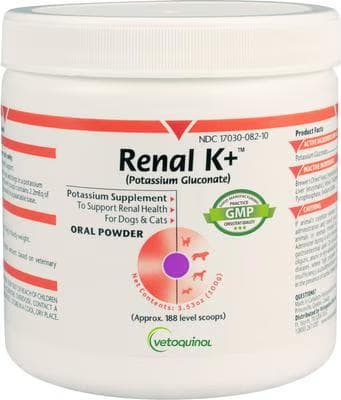
Vet-formulated potassium supplement that supports kidney health in dogs and cats with chronic kidney disease. An easy oral powder you mix into food.
Webvet may earn a commission when you click through to Chewy, at no extra cost to you.

Pyometra in unspayed females
Pyometra is a pus-filled uterine infection in unspayed female dogs, and it is a true emergency. It usually appears in the weeks after a heat cycle, and increased thirst is a classic early symptom alongside lethargy, appetite loss, vomiting, and sometimes a foul vaginal discharge. If an intact female suddenly drinks a lot of water, treat it as urgent and call your vet the same day.
Other signs that travel with pyometra: a swollen or tender abdomen, fever, pale gums, and rapid decline over a day or two. In a closed pyometra the cervix is sealed so there is no discharge to see, which makes the infection even more dangerous because it can rupture. The standard treatment is emergency spay surgery, and the sooner it happens the better the outlook.
Hypercalcemia and some cancers
Hypercalcemia, an abnormally high blood calcium level, interferes with the kidneys' ability to concentrate urine and so drives thirst and urination. It can stem from certain cancers (such as lymphoma or anal gland tumors), from parathyroid gland disorders, from Addison's disease, or from ingesting certain rodenticides or vitamin D products. Because some causes are serious, persistent unexplained thirst with high calcium on bloodwork always gets a thorough workup.
Other signs that travel with hypercalcemia: lethargy, muscle weakness, reduced appetite, constipation, and in advanced cases tremors or kidney damage. The signs are vague enough that the condition is often found only when a routine blood panel flags the calcium number, another reason bloodwork is the right first step for unexplained thirst.
Liver disease and leptospirosis
Liver disease can cause increased thirst because the liver plays a role in fluid balance and waste clearance, and a struggling liver can disturb both. Leptospirosis, a bacterial infection spread through contaminated water and wildlife urine, frequently attacks the kidneys and liver together and is a notable cause of sudden heavy drinking in an otherwise healthy dog. It is also zoonotic, meaning it can spread to people, so prompt diagnosis protects the household.
Other signs that travel with liver disease or lepto: jaundice (a yellow tinge to the gums, eyes, or skin), vomiting, diarrhea, loss of appetite, fever, abdominal pain, and dark urine. Any of these alongside increased thirst warrants prompt bloodwork, and a current leptospirosis vaccine meaningfully lowers the risk for at-risk dogs.
Fever, infection, and pain
A fever or a brewing infection anywhere in the body raises water needs, so a dog fighting an illness often drinks more for a few days. The same is true after significant blood loss or in the early phase of recovery from a serious illness. This kind of thirst is usually short-lived and resolves as the underlying problem is treated, but it still deserves attention if you cannot identify the cause.
Other signs that travel with fever or infection: warm ears, shivering or seeking warmth, low energy, a reduced appetite, and sometimes a localized sign such as a limp, a wound, or a cough that points to where the infection sits. If the thirst is part of a clearly sick dog, the priority is finding and treating the source rather than the drinking itself.
Medications: steroids and diuretics
Several common medications increase thirst as an expected side effect rather than a sign of disease. Corticosteroids such as prednisone are the most familiar, and they reliably drive both drinking and urination. Diuretics such as furosemide, prescribed for heart disease, work by pulling fluid out through the kidneys, so more drinking is part of how they do their job. Some anti-seizure drugs, including phenobarbital, do the same.
Other context that travels with medication thirst: the timing lines up with starting or increasing the drug, and the effect is consistent rather than worsening. Never stop a prescribed medication on your own to test this. Instead, mention the increased drinking to your vet, who can confirm it fits the drug and rule out a separate problem hiding behind it.
Psychogenic (behavioral) drinking
Psychogenic polydipsia is over-drinking driven by habit, boredom, anxiety, or attention-seeking rather than a physical disease. It is most often seen in young, energetic dogs in active households. Crucially, it is a diagnosis of exclusion: a vet only lands on it after bloodwork and urine testing have ruled out the medical causes, because assuming behavior when the real problem is kidney disease or diabetes can be dangerous.
Other clues that point toward behavioral drinking: the dog is otherwise healthy with normal lab values, the drinking spikes around boredom or excitement, and intake can be normalized with enrichment, exercise, and managed water access under veterinary guidance. Even then, the workup comes first so nothing serious is missed.
How vets diagnose excessive thirst
Vets diagnose excessive thirst by first confirming the dog truly is drinking too much, then running a small battery of tests to find why. The two foundational tests are a urinalysis (including urine specific gravity) and a blood panel. Together these usually point straight at the responsible system, whether that is the kidneys, the endocrine glands, or something else.
Urinalysis and urine specific gravity
Urine specific gravity (USG) measures how concentrated the urine is, and it is often the single most revealing number. A dog that is drinking a lot but producing properly concentrated urine is a very different picture from one producing thin, dilute urine. Dilute urine in a thirsty dog points the vet toward kidney disease, diabetes, Cushing's, or diabetes insipidus, while the urinalysis also screens for glucose, protein, and infection.
Glucose in the urine flags diabetes mellitus, while a urinary tract infection or excess protein can redirect the workup. This is why your vet may ask you to collect a fresh urine sample at home in a clean container, ideally the first morning sample, before the appointment.
Bloodwork
A complete blood count and chemistry panel check kidney values, blood sugar, calcium, liver enzymes, electrolytes, and signs of infection in one pull. Elevated kidney values point to CKD, high glucose to diabetes, high calcium to hypercalcemia, and abnormal liver enzymes to liver disease. If Cushing's is suspected, the vet adds specific hormone tests such as an ACTH stimulation test or a low-dose dexamethasone suppression test.
The water deprivation test
When routine tests come back normal but the thirst is real, a vet may run a supervised water deprivation test to distinguish diabetes insipidus from behavioral drinking. This must be done in the clinic with close monitoring, never at home, because withholding water from a dog that genuinely cannot conserve it can cause rapid, dangerous dehydration. The test measures whether the kidneys can concentrate urine once water is controlled.
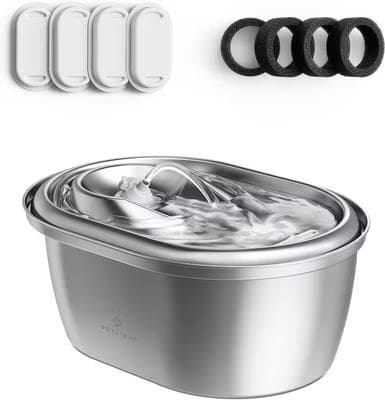
304 food-grade stainless steel pet water fountain, 101 oz. The circulating, filtered water encourages cats to drink more, which supports urinary tract and kidney health.
Webvet may earn a commission when you click through to Chewy, at no extra cost to you.
Should I be concerned if my dog is drinking a lot of water?
You should be concerned if your dog is drinking a lot of water for more than a day or two with no obvious explanation like heat or exercise, especially when it is paired with other changes. A single thirsty day after a hot walk is normal. A sustained jump in intake, or thirst alongside weight loss, vomiting, lethargy, or accidents in the house, is a reason to book a vet appointment.
If the thirst comes with stomach upset, see our guide on a dog drinking water and vomiting. And if you suspect the opposite problem, dehydration in dogs covers the warning signs and the skin-pinch test.
Increased thirst plus peeing a lot: the polydipsia/polyuria pattern
When a dog drinks a lot and pees a lot at the same time, vets call it polydipsia and polyuria, and it is the signature pattern of kidney disease, diabetes, and Cushing's. The drinking is usually the body trying to keep up with fluid lost in urine, not the other way around. Our dedicated guide on a dog drinking and peeing a lot walks through how vets tell these apart.
This distinction is more than academic. In nearly all of the serious causes, the kidneys are dumping water into the urine first and the thirst is the body chasing it. That is why simply offering less water never fixes the problem and can be dangerous. The underlying disease has to be diagnosed and treated for the drinking to settle, which loops back to the value of early bloodwork.
This is a hub, so dig deeper based on your dog's situation: a senior dog drinking a lot of water, or a dog not eating but drinking water, each have their own dedicated breakdown.
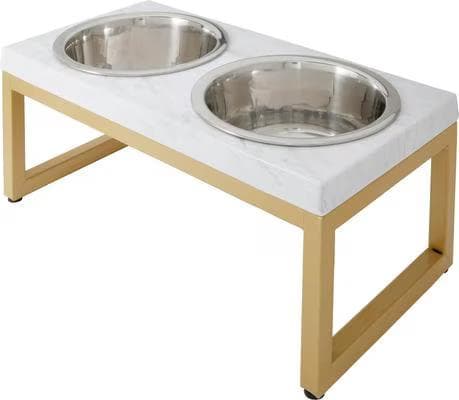
Raised stainless steel double bowl on a marble-look stand. Easier on the neck and joints and a clean, tip-resistant way to keep fresh water available all day.
Webvet may earn a commission when you click through to Chewy, at no extra cost to you.
Do dogs drink a lot of water before they pass?
There is no single drinking pattern that signals a dog is dying, and the assumption can be misleading. Some dogs with advanced kidney disease or diabetes drink heavily because those diseases drive thirst, but many dogs near the end of life actually lose interest in food and water rather than drink more. Increased thirst is far more often a sign of a treatable disease caught in time than a sign of imminent death.
The takeaway from veterinary educators like Cornell's Riney Canine Health Center is consistent: a change in drinking is a prompt to investigate, not to assume the worst. Get the bloodwork; most causes of excess thirst are manageable.
How vets treat excessive thirst
Treatment depends entirely on the cause, because the thirst itself is a symptom, not the disease. Once testing identifies the culprit, the goal is to control the underlying condition, and the drinking usually settles as that happens. The most common causes are manageable, and many dogs live well for years once the underlying condition is under control.
- Chronic kidney disease: a kidney-support diet, controlled phosphorus, fluid therapy, and medications to manage blood pressure and protein loss.
- Diabetes mellitus: twice-daily insulin injections plus a consistent diet and feeding schedule.
- Cushing's disease: daily medication (commonly trilostane) with periodic monitoring blood tests.
- Pyometra: emergency spay surgery with supportive fluids and antibiotics.
- Medication-related thirst: reviewing the dose with your vet; never stop the drug on your own.
Frequently Asked Questions
Should I be concerned if my dog is drinking a lot of water?
Yes, if it lasts more than a day or two without an obvious cause like heat or exercise, or if it comes with weight loss, vomiting, lethargy, or accidents in the house. Occasional extra drinking is normal, but a sustained increase is one of the earliest signs of kidney disease, diabetes, or Cushing's. The safest move is to measure intake for two to three days and book a vet visit for bloodwork and a urine test. Most causes found this way are treatable, and catching them early genuinely improves the outcome.
Do dogs drink a lot of water before they pass?
Not reliably. There is no consistent drinking pattern that signals a dog is dying. Some dogs with advanced kidney disease or diabetes drink heavily because those specific diseases drive thirst, but many dogs near the end of life lose interest in food and water instead. Increased thirst is far more often a treatable disease caught early than a sign of imminent death. Treat a thirst change as a reason to get veterinary care and bloodwork rather than as a reason to panic.
Why do dogs suddenly start drinking lots of water?
Sudden increased drinking ranges from harmless to urgent. Benign triggers include hot weather, exercise, a switch to dry kibble, salty treats, and medications like steroids or diuretics. Concerning causes are kidney disease, diabetes mellitus, Cushing's disease, hypercalcemia, liver disease, and (in unspayed females) pyometra. If there is a clear lifestyle reason and the thirst settles in a day or two, it is likely fine. If there is no obvious explanation and the thirst persists, or it comes with other changes, see your vet.
What is considered excessive drinking for a dog?
Vets generally define excessive drinking (polydipsia) as more than about 100 ml of water per kilogram of body weight per day, a little over 1.5 ounces per pound. A healthy dog usually drinks close to 1 ounce per pound daily. The key is a consistent, sustained increase rather than one high-intake day after exercise or heat. Because every dog has its own baseline, a clear change from what is normal for your dog is often more telling than the exact number. Measuring intake over a few days gives your vet the data to confirm it.
When a dog is dying, do they drink a lot of water?
Often the opposite. Many dogs in their final days reduce or stop eating and drinking altogether. Heavy drinking late in a disease like kidney failure or diabetes reflects that specific illness, not the act of dying itself. Because increased thirst usually points to a manageable condition, treat it as a reason to get veterinary care rather than as a sign the end is near. If your dog is also weak, withdrawn, and off food, your vet can help you assess comfort and quality of life directly.
What are the first signs of kidney failure in dogs?
The earliest signs of kidney disease in dogs are usually increased thirst and increased urination, because failing kidneys cannot concentrate urine. Other early signs include a reduced or picky appetite, gradual weight loss, lethargy, a dull coat, and breath that smells faintly of ammonia. Because the kidneys have large reserve capacity, these clues can be subtle until significant function is already lost. Bloodwork and a urine test detect kidney disease before it advances, which is exactly why an unexplained thirst change should be checked promptly rather than watched.
How do dogs act right before they pass away?
Dogs near the end of life often withdraw, sleep much more, and lose interest in food and water. They may become weak, unsteady, or disoriented, and breathing and heart rate can change. Some lose bladder or bowel control, and many seek out quiet, comfortable places to rest. These are general end-of-life signs and are not specific to thirst. If you are seeing several of them together, your vet can help you assess comfort and quality of life and guide you on next steps.
What is the silent killer in dogs?
Chronic kidney disease is often called a silent killer in dogs because it progresses with few obvious signs until a large portion of kidney function is already lost. Increased thirst and increased urination are frequently the first noticeable clues, sometimes the only ones for a while. This is exactly why a sustained, unexplained jump in drinking deserves bloodwork rather than a wait-and-see approach. Routine senior bloodwork is the best way to catch it early, when diet and treatment can still slow the disease.
This article is for general education and does not replace an in-person veterinary exam. If your dog's thirst changes suddenly or comes with any of the red-flag signs above, contact your veterinarian.
$65 · no membershipHave a health question about your dog?
A licensed vet can assess your dog over video and prescribe online when it's appropriate.
Talk to a vet- Licensed vets
- All 50 states
- same-day Rx
Webvet may earn a commission if you book.

Editor
The Webvet Editorial Team is the in-house group of pet-care editors and writers behind Webvet, operated by Smart Pet Collective. The team researches, writes, and maintains Webvet's pet health, behavior, and medication content. Every article follows a defined editorial process: research from reputable veterinary and scientific sources, careful drafting, mandatory review of medical content by a credentialed veterinarian, and dated publication. Health and medication articles are medically reviewed by a licensed veterinary professional before they go live and are kept current over time.
Veterinarian · BVMS MRCVS
Dr. Pippa Elliott, BVMS, MRCVS, is a veterinarian with nearly 30 years of experience in companion animal practice. Dr. Elliott earned her Bachelor of Veterinary Medicine and Surgery from the University of Glasgow. She was also designated a Member of the Royal College of Veterinary Surgeons. Married with 2 grown-up kids, Dr. Elliott has a naughty Puggle named Poggle, 3 cats and a bearded dragon.


