Senior Dog Drinking a Lot of Water: Causes & Vet Care
A senior dog drinking a lot of water is rarely just aging. Learn the common causes (kidney disease, Cushing's, diabetes), the tests your vet runs, and when it's an emergency.

BVMS MRCVS
Medically reviewed by Dr. Pippa Elliott, BVMS MRCVS · Last reviewed

This article contains affiliate links. Webvet may earn a commission when you buy through them, at no extra cost to you.
A senior dog drinking a lot of water is rarely just a normal part of getting old. In older dogs, a real, sustained increase in thirst (called polydipsia) is one of the earliest outward signs of an underlying condition, most often chronic kidney disease, Cushing's disease, or diabetes mellitus. The good news: these are conditions your vet can diagnose with routine blood and urine tests, and early detection usually means more comfortable years ahead.
This guide walks through exactly why an older dog's thirst climbs, how to measure it at home so you have real numbers for your vet, the tests the clinic will run, the red flags that mean call today, and how to think about quality of life if your dog is diagnosed with a chronic disease. Throughout, the aim is to inform without alarming you: most causes are manageable when caught early.
- 1A senior dog drinking a lot of water is usually a medical sign, not normal aging. Get it checked.
- 2The big three culprits in older dogs are chronic kidney disease, Cushing's disease, and diabetes mellitus.
- 3A healthy dog drinks roughly 50 ml per kg of body weight per day; consistently topping ~100 ml/kg/day is true polydipsia.
- 4Never restrict water to fix the drinking. That can cause dangerous dehydration. Treat the cause instead.
- 5Measure the water for 2-3 days and book a vet visit. A simple blood panel and urine test usually find the answer.
Is It Normal for a Senior Dog to Drink a Lot of Water?
No. A senior dog drinking a lot of water is not a normal consequence of aging by itself. Healthy older dogs may slow down, sleep more, and eat a little differently, but a genuine, sustained jump in thirst points to a problem with how the body manages water, sugar, or hormones. Age is the risk factor, not the cause.
The distinction matters because thirst feels harmless. Owners often file it under "she's just getting old" and move on. But increased drinking frequently shows up months before a dog looks sick, which is precisely why it is so useful as an early warning sign. Catching it early is one of the best things you can do for an aging dog.
There are benign explanations too: hot weather, more exercise, a switch from wet food to dry kibble, salty treats, or a new medication. A dog on a diuretic or a course of steroids will often drink and urinate more for a clear, expected reason. Those are worth ruling out. But persistent thirst with no obvious lifestyle change deserves a vet visit, not a wait-and-see.
Why are older dogs more prone to this? With age, organs that regulate water lose efficiency. Kidney function declines, the endocrine glands are more likely to over- or under-produce hormones, and the immune system weakens against infection. So the same signal that might be trivial in a young dog carries more weight in a senior, and earns a closer look rather than a shrug.
How Much Water Is Too Much for a Senior Dog?
A healthy dog drinks roughly 50 ml of water per kilogram of body weight per day (about 1 ounce per pound). Drinking that is consistently above about 100 ml per kg per day is generally considered polydipsia, or excessive thirst, by the Merck Veterinary Manual. For a 20 kg (44 lb) dog, that threshold works out to roughly 2 liters a day.
You do not need to hit an exact number to act. What matters most is change from your dog's own baseline. A dog who used to leave water in the bowl and now empties it twice a day, or who suddenly wakes you at night to drink, has changed, and that change is the signal.
Quick reference for a few common dog sizes, using the everyday upper guideline:
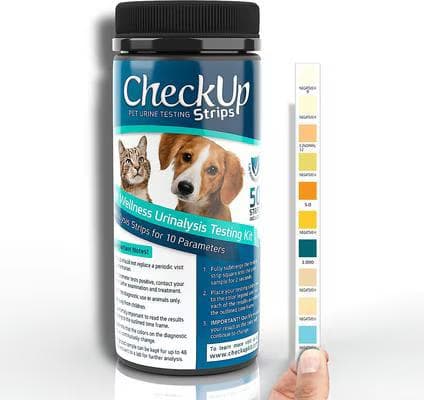
At-home urine test strips that screen for glucose, blood, pH, and protein in seconds, so you can catch early signs of diabetes, kidney disease, or a UTI and bring real numbers to your vet.
Webvet may earn a commission when you click through to Chewy, at no extra cost to you.
| Dog weight | Normal daily intake (approx.) | "Too much" flag (approx.) |
|---|---|---|
| 5 kg / 11 lb | up to ~250 ml | over ~500 ml/day |
| 10 kg / 22 lb | up to ~500 ml | over ~1 liter/day |
| 20 kg / 44 lb | up to ~1 liter | over ~2 liters/day |
| 30 kg / 66 lb | up to ~1.5 liters | over ~3 liters/day |
Figures are guidelines, not diagnoses. Diet (wet vs dry food), heat, and activity all shift the normal range, so use these alongside what you know about your own dog. A dog eating canned food gets much of its water from the meal and may drink little from the bowl, while a kibble-only dog naturally drinks more. Factor that in before you panic at a single high day.

Common Causes of Excessive Thirst in Senior Dogs
In senior dogs, excessive thirst most often traces back to a handful of conditions that become more common with age. Kidney disease, Cushing's disease, and diabetes mellitus lead the list, followed by urinary tract infections, liver disease, and (in unspayed females) the womb infection pyometra. Increased drinking is usually paired with increased urination, because the body is either losing water it cannot hold onto or flushing out excess sugar or toxins.
A useful way to think about it: the kidney is a filter that decides how much water to keep. Diseases that damage the filter, flood it with sugar, or change the hormones that tell it what to do all end the same way, with the dog losing water in the urine and drinking more to keep up. The sections below take each main cause in turn, with the other signs that tend to travel with it.
Chronic Kidney Disease (CKD)
Chronic kidney disease is one of the most common reasons a senior dog drinks a lot of water. As aging kidneys lose the ability to concentrate urine, the body produces large volumes of dilute urine, and the dog drinks more to keep from dehydrating. By the time thirst becomes obvious, a significant share of kidney function may already be reduced, which is why this is sometimes called a silent disease.
Other signs to watch for include weight loss, reduced appetite, occasional vomiting, bad (ammonia-like) breath, mouth ulcers, and a dull, unkempt coat. The American Kennel Club notes that kidney disease tends to develop gradually in older dogs, so these clues often creep in over weeks rather than appearing all at once.
Vets stage chronic kidney disease using the International Renal Interest Society (IRIS) system, which sorts cases into four stages based on a blood marker called creatinine (and increasingly SDMA), then sub-stages them by urine protein and blood pressure. Stage 1 is early, with subtle changes, while Stage 4 reflects advanced disease. Staging matters because it directly drives the treatment plan, from when to start a renal diet to whether to add medication for protein loss or high blood pressure.
CKD is progressive but very manageable when caught early, often for years, through prescription kidney diets, fluid support, phosphate binders, and regular monitoring. The earlier the stage at diagnosis, the more runway you have. This is exactly why the thirst signal is worth acting on rather than watching.
Cushing's Disease (Hyperadrenocorticism)
Cushing's disease is an endocrine disorder in which the body overproduces the stress hormone cortisol. It is largely a disease of middle-aged and older dogs, with most cases driven by a small benign tumor on the pituitary gland and a minority by a tumor on an adrenal gland. Long-term steroid medication can produce a near-identical (iatrogenic) version.
The classic picture is increased thirst and urination plus a ravenous appetite, a pot-bellied appearance, thinning coat or symmetrical hair loss, thin skin that bruises easily, recurring skin or urinary infections, and heavy panting. Many owners first notice that a previously house-trained senior is suddenly having accidents or emptying the water bowl. Because cortisol affects so many systems, the combination of signs is often what tips a vet off.
Cushing's is diagnosed with specific hormone tests (typically an ACTH stimulation test or a low-dose dexamethasone suppression test) and is usually controlled with daily oral medication such as trilostane. With monitoring, most dogs return to comfortable, normal lives, and the thirst and accidents settle as cortisol comes back under control.
Diabetes Mellitus
In diabetes mellitus, the body either cannot make enough insulin or cannot use it properly, so blood sugar climbs and spills into the urine. The sugar pulls water with it, driving heavy urination and intense thirst. It is most common in older dogs and tends to appear in middle age and beyond, with unspayed females and certain breeds at higher risk.
Other signs to watch for are the telling combination of drinking a lot, eating well or even more yet losing weight, and increased urination. Many diabetic dogs develop cataracts and cloudy eyes, sometimes within months of onset, and some become lethargic or develop recurrent infections. The weight loss despite a good appetite is a particularly useful red flag that separates diabetes from simple overeating.
Diabetes is managed with insulin injections, a consistent diet, and a steady daily routine, and most dogs do well once regulated. Untreated, it can progress to a dangerous state called diabetic ketoacidosis, where dogs become lethargic, stop eating, and may vomit. If your dog is drinking heavily and also vomiting, read our guide on a dog drinking water and vomiting and call your vet promptly.
Urinary Tract Infections and Bladder Issues
A urinary tract infection (UTI) irritates the bladder and can nudge water intake upward, along with straining, frequent small urinations, accidents in the house, licking at the rear, cloudy or strong-smelling urine, or visible blood. UTIs are more common in older dogs and in females, and they sometimes ride alongside another condition such as diabetes or Cushing's that lowers the body's defenses.
They are usually cleared with a course of antibiotics once a urine sample confirms the infection and identifies the right drug. Because a UTI can be a clue to a deeper problem in a senior dog, vets often look beyond the infection itself to be sure nothing else is feeding it.
Liver Disease, Pyometra, and Other Causes
Liver disease can also raise thirst as the organ's ability to process waste declines. Other signs to watch for include reduced appetite, vomiting, yellow-tinged gums or eyes (jaundice), a swollen belly, and confusion in advanced cases.
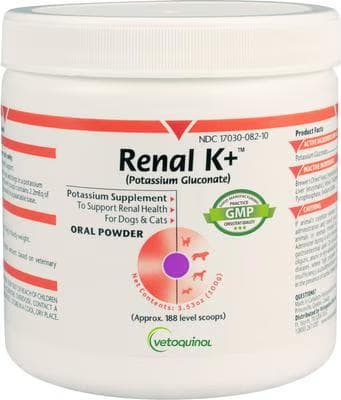
Vet-formulated potassium supplement that supports kidney health in dogs and cats with chronic kidney disease. An easy oral powder you mix into food.
Webvet may earn a commission when you click through to Chewy, at no extra cost to you.
In an unspayed female, sudden heavy drinking weeks after a heat cycle, sometimes with a swollen belly, lethargy, off food, or vaginal discharge, can signal pyometra, a life-threatening uterine infection that is a surgical emergency. Less common drivers include high blood calcium (sometimes linked to cancer), Addison's disease, and the rare diabetes insipidus, a water-balance hormone disorder in which the body simply cannot hold onto water no matter how much the dog drinks.

Cause, Companion Signs, and What to Do: A Quick Map
Thirst alone rarely tells the whole story. The other signs your dog shows alongside the drinking are what point your vet toward the right diagnosis. Use this table to spot patterns, then bring your notes to the appointment.
| Likely cause | Other signs to watch for | What to do |
|---|---|---|
| Chronic kidney disease | Weight loss, poor appetite, vomiting, bad breath, dull coat, more urination | Vet visit within days; blood + urine tests |
| Cushing's disease | Big appetite, pot belly, hair loss, thin skin, panting, more urination | Vet visit; hormone testing |
| Diabetes mellitus | Eating well but losing weight, cloudy eyes, more urination | Vet visit within days; blood glucose + urine |
| Urinary tract infection | Straining, frequent small pees, accidents, blood in urine | Vet visit; urine sample for testing |
| Liver disease | Reduced appetite, vomiting, jaundice, swollen belly | Vet visit within days; blood + imaging |
| Pyometra (unspayed female) | Recent heat, swollen belly, discharge, lethargy, off food | Emergency: call vet now |
| Medication side effect (e.g. steroids) | Started a new drug recently | Call vet; do not stop meds on your own |
 $65 · no membership
Have a health question about your dog?
A licensed vet can assess your dog over video and prescribe online when it's appropriate.
 Talk to a vet
- Licensed vets
- All 50 states
- same-day Rx
Webvet may earn a commission if you book.
What the Vet Will Do: Tests and Diagnosis
When you bring in a senior dog drinking a lot of water, the vet's job is to find which organ or hormone is behind it. Expect a physical exam, questions about your dog's habits, and a starter set of tests that, together, identify most causes. Bringing your home water-intake numbers genuinely speeds this up and can save the cost of repeat visits.
The first step is confirming the thirst is real, not just perceived, then narrowing the field. The standard approach is to run inexpensive, high-yield tests first, and reserve more specialized testing (like hormone assays and ultrasound) for when the first round points that way. Here is what each test is looking for and why it matters:
- Blood panel (CBC + chemistry): checks kidney values (creatinine, urea, SDMA), blood sugar, liver enzymes, electrolytes, and calcium. This single test can flag kidney disease, diabetes, liver problems, and high calcium in one go.
- Urinalysis: measures how concentrated the urine is (specific gravity) and screens for sugar, infection, blood, and protein. Dilute urine alongside normal-to-high blood kidney values is a classic early-kidney-disease pattern, which is why this test is run with the blood panel, not instead of it.
- Urine culture: confirms a UTI and identifies which antibiotic will actually work, rather than guessing.
- Hormone tests: specific tests for Cushing's disease (ACTH stimulation or dexamethasone suppression) when the picture fits, plus thyroid testing in some cases.
- Blood pressure check: high blood pressure often rides alongside kidney disease and Cushing's, and it changes the treatment plan.
- Imaging: ultrasound or X-rays to look at the kidneys, liver, adrenal glands, or uterus when blood and urine results need a visual confirmation.
Because thirst and urination travel together, your vet will ask detailed questions about bathroom habits too. Our companion piece on a dog drinking and peeing a lot explains why that pairing is so diagnostically useful, and why a vet treats the two as a single clue rather than two separate ones.
Telling a Treatable Cause From True Decline
This is the worry behind many late-night searches: is the drinking a fixable problem, or a sign my dog is failing? The honest answer is that increased thirst on its own almost always points to a treatable condition, not the end. The difference lies in the whole picture, not the water bowl.
A treatable cause typically looks like a bright, interested dog who is still eating, still greeting you, and still moving around normally, but drinking and urinating more. That dog has a problem to diagnose, and the odds strongly favor a manageable diagnosis such as early kidney disease, Cushing's, diabetes, or an infection.
True decline looks different. It is the cluster: a dog who has stopped eating and drinking, cannot stand or is collapsing, is breathing oddly, has lost bladder and bowel control, and has withdrawn from the family. When several of those appear together in an older dog with a known serious illness, that is the conversation to have with your vet, and it is a very different situation from a dog who is simply thirsty.
The reason to act early is that the window for the good outcome is widest at the start. A dog caught at IRIS Stage 1 or 2 kidney disease, or in the early weeks of diabetes, has far more options than one whose disease has been advancing unnoticed for a year. Acting on the thirst is how you keep your dog on the treatable side of that line.
How to Measure Your Senior Dog's Water Intake at Home
Measuring water intake at home is simple and gives your vet real data instead of impressions. You do not need special equipment, just a measuring jug and a couple of days of attention. Here is a reliable method:
- Each morning, fill all bowls with a measured amount of water and write it down.
- Twenty-four hours later, pour what is left back into the jug and subtract to find the amount consumed.
- In a multi-pet home, separate the dogs at measuring time so you know who drank what.
- Account for spills, outdoor water sources, and wet food, which all throw off the count.
- Repeat for 2-3 days and average it, then compare against the roughly 50 ml per kg per day guideline.
If you want the full breakdown of normal intake by weight and diet, see our guide on how much water a dog should drink. And whatever you do, do not limit water to control the drinking; that is covered next.
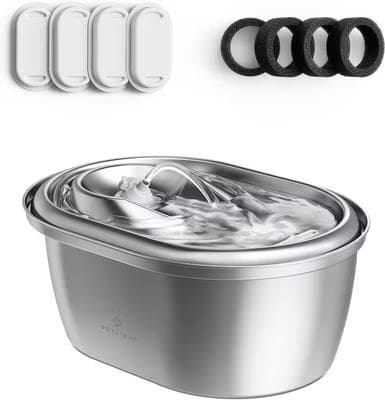
304 food-grade stainless steel pet water fountain, 101 oz. The circulating, filtered water encourages cats to drink more, which supports urinary tract and kidney health.
Webvet may earn a commission when you click through to Chewy, at no extra cost to you.
Should You Limit Your Senior Dog's Water?
No. You should not restrict a senior dog's water to stop excessive drinking. In conditions like kidney disease and diabetes, the heavy drinking is the body compensating for water it is losing. Take the water away and the dog can become dangerously dehydrated very quickly. The drinking is a symptom, not the disease.
A dehydrated senior dog can decline fast, and the consequences (sunken eyes, sticky gums, weakness, and a worsening of the underlying disease) can be serious. If you are worried your dog is already not drinking enough at times, our guide to dehydration in dogs walks through the warning signs and the simple skin-and-gum checks you can do at home.
The only exception is if your vet gives a specific instruction (for example, managed access in certain rare disorders or before a particular test). Otherwise, keep fresh water freely available, refresh it often, and place extra bowls around the home so a stiff or sleepy senior never has to work hard for a drink. Focus your energy on diagnosing and treating the cause.
Quality of Life and What a Diagnosis Means
A diagnosis of kidney disease, Cushing's, or diabetes can feel frightening, but for most senior dogs it is the start of effective management, not the end. Kidney disease is slowed with diet and fluids, diabetes is controlled with insulin and routine, and Cushing's is managed with daily medication. Many dogs go on to enjoy good months or years with the right plan.
Living with a chronic diagnosis becomes a rhythm rather than a crisis: a prescription diet, medication or insulin at set times, periodic recheck bloodwork to fine-tune the dose, and a home setup that makes life easy. Most owners are surprised how quickly the new routine becomes normal, and how much better their dog looks once the underlying problem is controlled and the relentless thirst settles.
The earlier you act on the thirst, the more options you and your vet have. Routine senior wellness checks, ideally twice a year with bloodwork, catch these conditions before they advance. Our senior dog health guide covers the bigger picture of caring for an aging dog, including weight, mobility, and comfort.
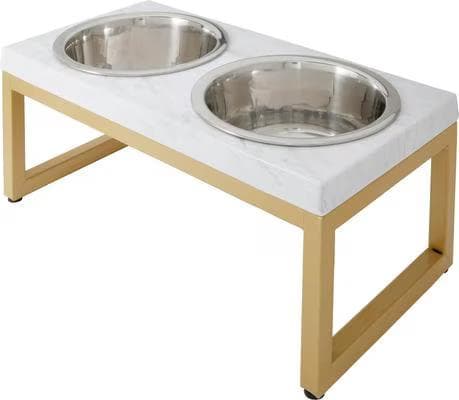
Raised stainless steel double bowl on a marble-look stand. Easier on the neck and joints and a clean, tip-resistant way to keep fresh water available all day.
Webvet may earn a commission when you click through to Chewy, at no extra cost to you.
Because thirst so often comes with appetite and weight changes, tracking your dog's weight loss or gain alongside the water log gives your vet an even clearer picture of how your dog is doing over time. Steady weight on treatment is one of the most reassuring signs that a plan is working.

Frequently Asked Questions
Do dogs drink a lot at the end of life?
Some dogs near the end of life drink more because of underlying organ disease such as kidney failure, while others drink less and lose interest in water entirely. Increased thirst by itself is not a reliable end-of-life sign; it is far more often a symptom of a treatable condition. The clearer warning signs are refusing food and water, severe weakness or collapse, labored breathing, and no urine output. If your senior dog shows those, contact your vet promptly to discuss comfort and next steps.
How can you tell your dog is nearing the end?
Signs a dog may be nearing the end of life include a persistent loss of appetite and refusal to drink, profound lethargy or inability to stand, labored or irregular breathing, incontinence, withdrawal from family, and uncontrolled pain. A single sign such as drinking more is not enough to conclude this. A vet can assess quality of life objectively and help you weigh options, so a same-day call is the right move when several of these appear together.
What is the leading cause of death in senior dogs?
Cancer is the most common cause of death in older dogs, and many of the conditions linked to excessive thirst (kidney disease, diabetes, Cushing's) are themselves significant causes of illness and decline in seniors. This is why a change at the water bowl deserves attention: it can be the first detectable clue to a serious but often manageable disease. Routine senior screening, ideally twice a year, improves the odds of catching these problems early.
What are signs a dog's quality of life is declining?
Declining quality of life shows up as ongoing pain that medication no longer controls, loss of appetite and weight, difficulty standing or walking, loss of interest in people and favorite activities, frequent accidents, and more bad days than good. Vets often use a quality-of-life scale that scores hurt, hunger, hydration, hygiene, happiness, and mobility. Tracking these honestly over a week or two, and reviewing them with your vet, gives a clearer answer than any single day.
How long can a senior dog live with kidney disease?
It depends heavily on the IRIS stage at diagnosis and how well treatment is followed. Dogs caught at an early stage and managed with a prescription kidney diet, fluid support, and regular monitoring can live comfortably for many months to several years. Dogs diagnosed in advanced stages have a shorter, more variable outlook. This is the strongest argument for acting on increased thirst early, because catching kidney disease at Stage 1 or 2 rather than Stage 3 or 4 can change the picture dramatically. Your vet can give a realistic estimate once staging is done.
How to tell if a dog's body is shutting down?
A body that is shutting down typically shows several signs at once: refusing food and water, extreme weakness or collapse, cold extremities and pale gums, slow or irregular breathing, loss of bladder and bowel control, and disengagement from surroundings. These are very different from an otherwise bright dog who is simply drinking more water. If you are seeing this cluster, treat it as an emergency and contact your vet or an emergency clinic immediately.
How does a dog act when their kidneys are shutting down?
Early kidney disease often causes increased thirst and urination, while advanced kidney failure flips toward drinking and urinating less, severe lethargy, vomiting, loss of appetite, bad (ammonia-like) breath, mouth ulcers, and weakness. A dog whose kidneys are failing may seem nauseated and reluctant to move. Blood and urine tests confirm kidney function, and even advanced cases can sometimes be stabilized with fluids and supportive care, so a prompt vet visit is worthwhile.
What is the silent killer in dogs?
Chronic kidney disease is often called a silent killer in dogs because the kidneys can lose a large share of their function before any outward symptoms appear, and increased thirst is frequently the very first visible clue. Cushing's disease and diabetes are similarly quiet in their early stages. That is exactly why a sustained increase in drinking should never be ignored in a senior dog: it may be the only early sign you get of an otherwise hidden problem.
Why is my senior dog drinking a lot of water all of a sudden?
A sudden increase in thirst in an older dog most commonly points to chronic kidney disease, Cushing's disease, diabetes mellitus, or a urinary tract infection, though heat, new medications, or a diet change can also play a role. Because the sudden onset narrows the list of likely causes, it is worth booking a vet visit within a few days with a record of how much your dog is drinking. Our broader guide to a dog drinking a lot of water covers causes across all ages.
Should I worry if my senior dog is drinking more water at night?
Yes, increased nighttime drinking (and the extra urination or accidents that come with it) is worth investigating in a senior dog. Waking to drink often reflects the same conditions behind daytime thirst, especially kidney disease and diabetes, rather than a behavior quirk. Note how often it happens and whether your dog is also having accidents, then share that with your vet. Do not restrict overnight water to manage it; address the underlying cause instead.
This article is for general information and is not a substitute for veterinary diagnosis. If your senior dog's drinking has changed, measure it for a couple of days and book a vet visit; in most cases the cause is identifiable and treatable, and early action gives your dog the best outcome.
$65 · no membershipHave a health question about your dog?
A licensed vet can assess your dog over video and prescribe online when it's appropriate.
Talk to a vet- Licensed vets
- All 50 states
- same-day Rx
Webvet may earn a commission if you book.

Editor
The Webvet Editorial Team is the in-house group of pet-care editors and writers behind Webvet, operated by Smart Pet Collective. The team researches, writes, and maintains Webvet's pet health, behavior, and medication content. Every article follows a defined editorial process: research from reputable veterinary and scientific sources, careful drafting, mandatory review of medical content by a credentialed veterinarian, and dated publication. Health and medication articles are medically reviewed by a licensed veterinary professional before they go live and are kept current over time.
Veterinarian · BVMS MRCVS
Dr. Pippa Elliott, BVMS, MRCVS, is a veterinarian with nearly 30 years of experience in companion animal practice. Dr. Elliott earned her Bachelor of Veterinary Medicine and Surgery from the University of Glasgow. She was also designated a Member of the Royal College of Veterinary Surgeons. Married with 2 grown-up kids, Dr. Elliott has a naughty Puggle named Poggle, 3 cats and a bearded dragon.


