Dog Not Eating but Drinking Water: Vet Guide
A dog not eating but drinking water can point to nausea, dental pain, pancreatitis, or kidney disease. Learn the real causes, a safe timeline, home steps, and the red flags that mean call your vet now.

BVMS MRCVS
Medically reviewed by Dr. Pippa Elliott, BVMS MRCVS · Last reviewed

This article contains affiliate links. Webvet may earn a commission when you buy through them, at no extra cost to you.
A dog not eating but drinking water is usually showing signs of nausea, mild illness, or stress rather than a desperate thirst. Drinking but refusing food often points to causes like an upset stomach, dental pain, early pancreatitis, or the early stage of a disease such as kidney problems. The good news: a dog that is still drinking is keeping itself hydrated, which buys you some time. The concern: a healthy adult dog should not skip meals for more than 48 hours, and certain pairings of symptoms are emergencies.
This guide walks through the most common reasons a dog will drink but not eat, exactly how long not eating is safe, what you can try at home, and the red flags that mean you should call your vet right away. Throughout, the key is not the food refusal by itself but the company it keeps: the other signs alongside it tell you whether you are watching a passing sulk or an early warning of something serious.
- 1A dog that is drinking but not eating is staying hydrated, so it is less urgent than a dog refusing both, but it still needs attention.
- 2The most common causes are nausea, dental or mouth pain, stress, pain, fever or infection, pancreatitis, and early kidney disease.
- 3A healthy adult dog can usually skip food for about 24 to 48 hours; call your vet if it passes 48 hours, sooner for puppies, seniors, small breeds, or sick dogs.
- 4Vomiting, diarrhea, lethargy, a swollen belly, pale gums, or trying to vomit without producing anything are emergencies.
- 5The accompanying symptoms, not the missed meal alone, decide whether you can watch at home or need the vet today.
Why is my dog not eating but drinking water?
A dog not eating but drinking water most often feels nauseous or unwell in a way that suppresses appetite while leaving thirst intact. Nausea, mouth or tooth pain, stress, and the early phase of conditions like pancreatitis or kidney disease are the usual culprits. Because the dog is still taking in water, the body is protecting itself from dehydration first, which is why drinking continues even when eating stops.
Appetite (medically called anorexia when it is absent) is one of the most sensitive signals of illness in dogs. According to the Merck Veterinary Manual, loss of appetite is one of the clearest early signs that something is wrong, because dogs that feel even mildly sick will often stop eating before any other symptom appears. That is why the same advice runs through this whole guide: take note of every other change you see, because appetite is the body's first alarm, not the diagnosis itself.
Nausea and an upset stomach
Nausea is the single most common reason a dog drinks but will not eat. A queasy dog often laps water to soothe itself but turns away from food. A short bout from dietary indiscretion (eating something it should not have) often settles on its own, but persistent nausea needs a vet. If your dog also has loose stool, our guide to a dog upset stomach walks through what is normal and what is not.
Other signs to watch for: lip-licking, repeated swallowing, drooling, audible gut gurgling, eating grass, lying with the belly pressed to a cool floor, and walking up to the bowl only to walk away. These are the classic nausea tells, and they point you toward a gut cause rather than a mouth or stress problem.
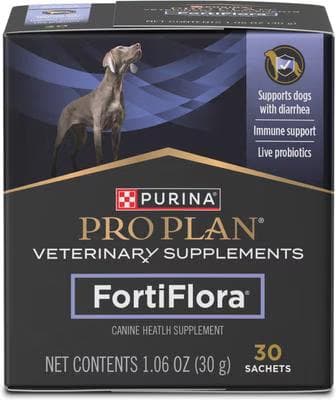
The #1 vet-recommended probiotic for dogs. Daily powder sachets with live probiotics support healthy digestion and firmer stools, and can help dogs coping with diarrhea or GI upset.
Webvet may earn a commission when you click through to Chewy, at no extra cost to you.
Dental disease and mouth pain
A painful mouth makes drinking tolerable but chewing miserable. Broken or loose teeth, advanced gum disease, oral ulcers, or a stick lodged across the roof of the mouth can all cause a dog to drink eagerly while refusing kibble. Dental disease is extremely common: the American Veterinary Medical Association reports that most dogs show evidence of periodontal disease by age three.
Other signs to watch for: bad breath, dropping food out of the mouth, chewing only on one side, pawing at the face, blood-tinged drool or saliva, a swelling under the eye, and a dog that wants soft food but backs away from hard kibble. A telling clue is a dog that is clearly hungry, approaches the bowl with interest, then stops the moment chewing begins.

Stress, anxiety, and routine changes
Dogs are creatures of habit, and emotional upset can shut down appetite while leaving thirst alone. A move, a new pet or baby, boarding, fireworks, travel, or a change in feeding schedule can all cause a stress-related food strike. A stressed dog that is otherwise bright, drinking, and acting normally will usually start eating again within a day or two once it settles.
Other signs to watch for: panting without exercise, pacing, hiding, clinginess, yawning, lip-licking, a tucked tail, and an appetite that bounces back the instant the trigger ends or the household calms down. Crucially, a purely stressed dog has no vomiting, no diarrhea, and no lethargy. If those appear, look past stress for a medical cause.
Pain anywhere in the body
Pain does not have to be in the mouth or gut to kill an appetite. Arthritis, a back or neck injury, an ear infection, a urinary problem, or a recent surgery can all make a dog too uncomfortable to want food while it still drinks. This is easy to miss because the dog simply seems off rather than obviously hurt.
Other signs to watch for: reluctance to jump, climb stairs, or be touched, a stiff or hunched posture, restlessness or trouble settling, whimpering when moving, holding the head low, shaking the head or scratching an ear, or straining in the litter routine. A dog in pain often eats again quickly once the underlying ache is treated.
Fever and infection
A fever from a viral, bacterial, or other infection commonly drives appetite down while thirst stays up, because a feverish body loses fluid and feels generally lousy. Anything from a simple infected wound to a more serious systemic infection can produce this picture. A normal dog temperature runs roughly 101 to 102.5 degrees Fahrenheit (38.3 to 39.2 Celsius); anything at or above 103 is a fever worth a vet call.
Other signs to watch for: warm ears and nose, shivering, lethargy, sleeping more than usual, a dull coat, fast breathing, and seeking out cool surfaces. If you have a pet thermometer and your dog will tolerate it, a reading at or above 103 degrees Fahrenheit alongside food refusal is a clear reason to call.
Tick-borne disease
In regions with ticks, diseases like Lyme disease, anaplasmosis, and ehrlichiosis are an underrated cause of a dog that suddenly goes off food but keeps drinking. These infections often start vague: a quiet, feverish dog that loses its appetite days or weeks after a tick bite you may never have noticed. They are very treatable when caught, which is why this cause is worth raising with your vet if your dog spends time outdoors. See WebVet’s guide to anaplasmosis in dogs.
Other signs to watch for: fever, lethargy, shifting or limping lameness that seems to move from leg to leg, swollen or painful joints, swollen lymph nodes, and a history of tick exposure or a lapsed tick preventive. Mention any recent travel or hikes to your vet, because it narrows the search fast.
Pancreatitis
Pancreatitis (inflammation of the pancreas) is a frequent cause of sudden appetite loss with continued or even increased drinking. It often follows a fatty meal or table scraps. Pancreatitis can range from mild to life-threatening and needs prompt veterinary care, so it is not a wait-and-see situation if you suspect it.
Other signs to watch for: a hunched back or a stretched-out praying position (front end down, rear up) that signals belly pain, a tender or bloated abdomen, vomiting, diarrhea, restlessness, and obvious lethargy. A recent rich, greasy, or stolen fatty meal in the day or two beforehand makes pancreatitis even more likely.
Kidney disease and other organ problems
When a dog stops eating but drinks noticeably more than usual, kidney disease moves up the list. Failing kidneys make a dog thirsty and nauseous at the same time, which is why increased drinking and food refusal often appear together. Liver disease and certain hormonal conditions do the same. If you are seeing a clear uptick in water intake, read our companion piece on a dog drinking a lot of water to understand the differentials.
Other signs to watch for: drinking and urinating much more than usual, gradual weight loss, a dull or unkempt coat, foul or ammonia-smelling breath, mouth ulcers, intermittent vomiting, and a slow decline in energy over weeks rather than a sudden crash. This pattern in a middle-aged or senior dog is a strong prompt for bloodwork and a urine test.
Gastrointestinal obstruction or a foreign body
A dog that has swallowed a sock, a toy, a corn cob, a rock, or a wad of string can develop a partial or complete blockage of the stomach or intestines. The dog often still laps water (and may vomit it back up) but cannot keep food down or refuses it outright. This is a surgical emergency in its complete form, and even partial blockages can turn dangerous quickly, so it is never something to monitor at home.
Other signs to watch for: repeated vomiting (especially right after drinking), retching, a painful or distended belly, straining to pass stool or producing little to none, a known habit of chewing or swallowing objects, and obvious distress or inability to get comfortable. If you suspect your dog ate something it should not have, call right away rather than waiting.
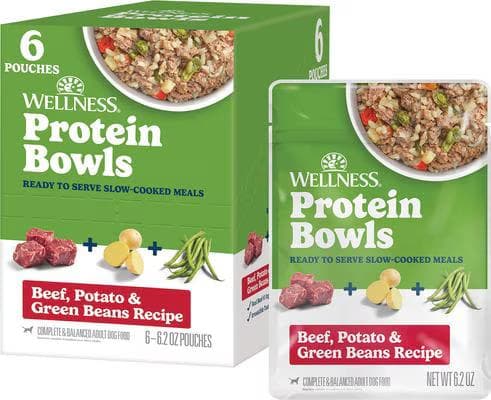
Slow-cooked, complete and balanced wet dog food with real beef as the #1 ingredient. Case of six 6.2 oz pouches.
Webvet may earn a commission when you click through to Chewy, at no extra cost to you.
Medication side effects and recent vaccines
Some medications blunt appetite as a side effect, including certain antibiotics, pain relievers, and chemotherapy drugs. Steroids like prednisone famously do the opposite and increase both thirst and hunger, so a dog on steroids that suddenly will not eat may have a new problem rather than a drug effect. Our overview of prednisone for dogs and cats explains what to expect. A mild, short-lived appetite dip in the day after vaccines is also common and usually resolves on its own.
Other signs to watch for: a clear time link to a new drug or a vaccine in the past 24 to 48 hours, mild soreness or low energy after shots, and an appetite that returns on its own within a day. If a post-vaccine reaction includes facial swelling, hives, vomiting, or collapse, that is an allergic emergency and needs care now.
Causes at a glance: what else to watch for
The accompanying signs are what separate a minor, self-limiting cause from something that needs the vet today. Use this table to match what you are seeing with the likely cause and the right next step. When two rows could fit, always act on the more urgent one.
| Likely cause | Other signs you may notice | What to do |
|---|---|---|
| Nausea / dietary indiscretion | Lip-licking, drooling, grass-eating, soft stool | Withhold food a few hours, offer water, reassess in 12 to 24 hours |
| Dental or mouth pain | Bad breath, dropping food, chewing one side, pawing at face | Book a vet dental exam; offer soft food meanwhile |
| Stress or anxiety | Recent change, panting, hiding, otherwise bright | Keep routine calm; expect appetite back in 1 to 2 days |
| Pain (joints, ears, back) | Stiffness, reluctance to move, head shaking, whining | See the vet to find and treat the source of pain |
| Fever or infection | Warm ears, shivering, lethargy, fast breathing | Call the vet; check temperature if you can (103F+ is a fever) |
| Tick-borne disease | Shifting lameness, swollen joints, fever, tick exposure | See the vet for testing; mention outdoor and travel history |
| Pancreatitis | Hunched back, tender belly, vomiting, lethargy | Call the vet promptly; do not wait it out |
| Kidney or liver disease | Increased drinking, weight loss, bad breath, vomiting | See the vet soon for bloodwork and urine testing |
| Diabetes (with ketoacidosis) | Excessive drinking, weight loss, sweet breath, weakness | Emergency: seek care immediately |
| Foreign body / blockage | Repeated vomiting, retching, no stool, painful belly | Emergency: seek care immediately |
 $65 · no membership
Have a health question about your dog?
A licensed vet can assess your dog over video and prescribe online when it's appropriate.
 Talk to a vet
- Licensed vets
- All 50 states
- same-day Rx
Webvet may earn a commission if you book.
How long can a dog go without eating but still drinking water?
A healthy adult dog that is still drinking water can usually go about 24 to 48 hours without food without harm. Beyond that, you should contact your veterinarian even if the dog seems otherwise fine. While dogs have technically survived three to five days or more without eating when hydrated, that range carries a real risk of organ stress, and it is not a safe target to aim for. The safe timeline is much shorter for vulnerable dogs.
Think of it as a simple ladder. A single skipped meal in an otherwise bright, playful adult dog is rarely cause for alarm. By 24 hours of total refusal, you should be paying close attention and lining up a vet call. By 48 hours, that call becomes urgent regardless of how the dog looks. And at any point along that ladder, the moment a second symptom appears (vomiting, lethargy, a swollen belly), the clock no longer matters and the dog needs to be seen.
Lower your threshold for these dogs and call sooner:
- Puppies: can develop dangerously low blood sugar (hypoglycemia) within hours. Do not wait a full day. Call if a young puppy skips meals for more than 12 hours, and watch for wobbliness, glazed eyes, or collapse, which need care immediately.
- Senior dogs: have less reserve and more underlying disease, so appetite loss is more likely to mean something serious. Call within 24 hours.
- Dogs with diabetes or chronic illness: skipping food can throw off insulin and blood sugar and tip a stable dog into a crisis. Call the same day, and ask before giving the next insulin dose to a dog that has not eaten.
- Small or toy breeds: are prone to low blood sugar because they have so little reserve. Do not push past 24 hours, and treat a tiny puppy of a toy breed as a near-emergency after even half a day off food.
- Pregnant or nursing dogs: have very high energy demands and can drop their blood sugar quickly. Do not wait it out; call your vet promptly.

What to do at home when your dog won't eat but is drinking
If your dog is bright, alert, drinking, and has no red-flag symptoms, it is reasonable to try a few gentle home steps for the first 12 to 24 hours. The goal is to make food easy and appealing without forcing it. Work through the steps in order, give each one a fair try, and stop and call the vet if nothing works within a day or if any warning sign appears.
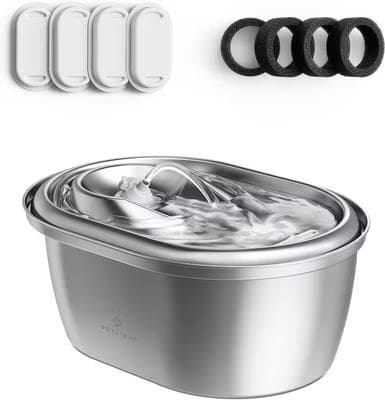
304 food-grade stainless steel pet water fountain, 101 oz. The circulating, filtered water encourages cats to drink more, which supports urinary tract and kidney health.
Webvet may earn a commission when you click through to Chewy, at no extra cost to you.
- Do a quick body check first. Before tempting your dog with food, gently look in the mouth for broken teeth or a stick, feel the belly for tenderness, and note energy level. If anything looks painful, swollen, or very off, skip the home steps and call the vet.
- Warm the food. Gently warming wet food (test it on your wrist first, body temperature is plenty) releases aroma and makes it far more tempting to a queasy dog.
- Offer a bland meal. Plain boiled chicken breast (no skin, no seasoning) with white rice is easy to digest and often tempts a dog that turns up its nose at kibble. Plain canned pumpkin (not pie filling) is another gentle option.
- Hand-feed in a calm spot. Some dogs, especially stressed ones, will accept food from your hand in a quiet room when they ignore a bowl. Sit on the floor, stay relaxed, and do not hover anxiously.
- Try low-sodium broth. A little plain, low-sodium chicken or bone broth (no onion or garlic, which are toxic to dogs) adds flavor and extra fluids at once, and can be poured over food or offered alone.
- Offer small, frequent portions. A heaping bowl can overwhelm a queasy dog. Several teaspoon-sized servings spread through the day feel more manageable and often restart eating.
- Keep water available and fresh. Since drinking is the one thing your dog is still doing, make sure clean water is always within reach and refreshed often.
A few things to avoid: do not force-feed or syringe food into a dog that is refusing, which risks choking and a lasting food aversion. Do not give human painkillers like ibuprofen, naproxen, or acetaminophen, which are toxic to dogs. Do not offer fatty leftovers or greasy table scraps, which can trigger pancreatitis. And do not give an over-the-counter appetite stimulant or anti-nausea drug without your vet's guidance.
When to call your vet
Call your veterinarian if a healthy adult dog has not eaten for more than 48 hours, or sooner if your dog is a puppy, a senior, a small breed, pregnant, or has a chronic illness. Also call regardless of the timeline if the food refusal comes with any other symptom, even a subtle one. A dog that is drinking but quietly losing weight or sleeping more is telling you something.
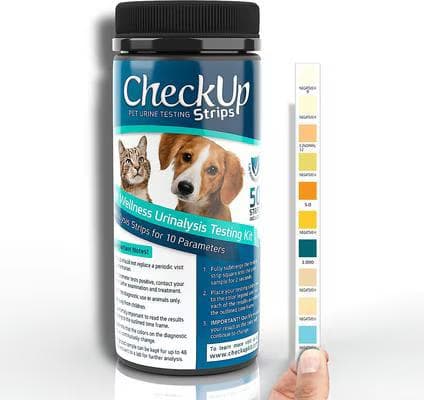
At-home urine test strips that screen for glucose, blood, pH, and protein in seconds, so you can catch early signs of diabetes, kidney disease, or a UTI and bring real numbers to your vet.
Webvet may earn a commission when you click through to Chewy, at no extra cost to you.

Senior dogs deserve a lower threshold for concern, since appetite loss in an older dog is more likely to reflect underlying disease. Our guide to senior dog health covers the changes worth tracking with age, and if you notice the number on the scale dropping, see dog weight loss or gain for what that can mean.
At the visit, your vet will likely do a physical exam, check the mouth and belly, take a temperature, and may recommend bloodwork and a urine test to screen for kidney disease, diabetes, pancreatitis, and liver problems. X-rays or an ultrasound can rule out a blockage. The American Animal Hospital Association recommends routine wellness screening precisely because these tests catch the diseases behind appetite loss early, when they are most treatable.
Frequently asked questions
Why won't my dog eat but still drinks water?
A dog that drinks but will not eat is most often dealing with nausea, mouth or dental pain, stress, pain elsewhere in the body, a fever, or the early stage of an illness like pancreatitis or kidney disease. The body keeps drinking to stay hydrated while a queasy stomach or a painful mouth shuts down appetite. The deciding factor is the other signs: a bright, playful dog that simply skipped a meal is usually fine, while one that is also vomiting, lethargic, or losing weight is not. If the refusal lasts more than 48 hours or comes with any second symptom, see your vet.
How long can a dog go without eating but drinking water?
A healthy adult dog that is still drinking can usually manage about 24 to 48 hours without food before you should call the vet. Dogs have survived longer (three to five days or more) when hydrated, but that range risks organ damage and is not a safe goal. Think of 24 hours as the point to start watching closely and 48 hours as the point to act, with any added symptom collapsing that timeline immediately. Puppies, seniors, toy breeds, pregnant dogs, and dogs with diabetes or chronic illness need to be seen much sooner, often within 12 to 24 hours.
What are the most common causes of appetite loss in dogs?
Common causes include nausea and upset stomach, dental and gum disease, pain anywhere in the body, stress and routine changes, infections or fever, tick-borne disease, pancreatitis, and organ diseases such as kidney, liver, or hormonal disorders. A swallowed foreign object causing a blockage is a serious one not to overlook. Medication side effects and recent vaccines can also cause a short-lived dip. Because so many conditions blunt appetite, persistent food refusal always deserves a vet's assessment rather than guesswork at home.
What can I feed a sick dog with no appetite?
Offer bland, easy-to-digest foods: plain boiled chicken breast with white rice, a little plain canned pumpkin, or warmed wet food to boost the aroma. A small amount of low-sodium chicken or bone broth (no onion or garlic) can tempt a dog and add fluids at the same time. Warm the food slightly to body temperature and serve small portions in a calm, quiet spot. Avoid forcing food, and avoid fatty or seasoned table scraps that can trigger pancreatitis. If your dog still refuses after a day, call your vet rather than continuing to experiment.
How can I encourage a sick dog to eat?
Warm the food to release its smell, switch to a softer or stronger-smelling option, and hand-feed in a quiet room away from other pets. Try small, frequent portions rather than one large bowl, and add a spoon of low-sodium broth or a tempting topper. Stay calm yourself, since an anxious owner can make a stressed dog more reluctant. Do not force-feed, and do not use appetite-stimulant or anti-nausea medications without your vet's guidance. If gentle steps do not work within 24 hours, call your vet.
My dog is not eating but drinking water and vomiting. Is that an emergency?
Yes, treat this seriously. A dog that refuses food, drinks, and vomits, especially if it vomits right after drinking, may have a gastrointestinal blockage, pancreatitis, or another condition that needs prompt care. If your dog is also retching without producing anything, has a swollen or hard belly, has pale gums, or is weak, go to an emergency vet immediately, as these can signal bloat or internal bleeding. Even without those red flags, repeated vomiting plus food refusal is a same-day vet call. For ongoing stomach upset, see our guide on a dog vomiting and diarrhea.
What are the signs a dog is dying?
Near the end of life, dogs often lose interest in both food and water, become very weak or unable to stand, breathe with difficulty or in an irregular pattern, withdraw from the family, lose bladder or bowel control, and may have a noticeably different body odor. The gums may turn pale or grey. Important: appetite loss with continued drinking is far more often a treatable illness than a sign of dying, and the fact that your dog is still drinking is itself reassuring. If you are worried your dog is declining, an exam will tell you whether the cause is reversible, and most are.
My dog is eating but not drinking water. Is that different?
Yes, the reverse pattern has its own causes and risks. A dog that eats but will not drink can become dehydrated quickly, which is dangerous. Causes include nausea, mouth pain, an unfamiliar water source, or simply getting enough moisture from a wet-food diet. Because dehydration sets in faster than starvation, refusing water is often more urgent than refusing food. If your dog is refusing water, see our guides on a dog not drinking water and dehydration in dogs.
$65 · no membershipHave a health question about your dog?
A licensed vet can assess your dog over video and prescribe online when it's appropriate.
Talk to a vet- Licensed vets
- All 50 states
- same-day Rx
Webvet may earn a commission if you book.

Editor
The Webvet Editorial Team is the in-house group of pet-care editors and writers behind Webvet, operated by Smart Pet Collective. The team researches, writes, and maintains Webvet's pet health, behavior, and medication content. Every article follows a defined editorial process: research from reputable veterinary and scientific sources, careful drafting, mandatory review of medical content by a credentialed veterinarian, and dated publication. Health and medication articles are medically reviewed by a licensed veterinary professional before they go live and are kept current over time.
Veterinarian · BVMS MRCVS
Dr. Pippa Elliott, BVMS, MRCVS, is a veterinarian with nearly 30 years of experience in companion animal practice. Dr. Elliott earned her Bachelor of Veterinary Medicine and Surgery from the University of Glasgow. She was also designated a Member of the Royal College of Veterinary Surgeons. Married with 2 grown-up kids, Dr. Elliott has a naughty Puggle named Poggle, 3 cats and a bearded dragon.


