Dog Not Drinking Water: Causes and When to Worry
A dog not drinking water can signal nausea, dental pain, stress, or serious illness. Learn the real causes, dehydration warning signs, vet-approved ways to encourage drinking, and exactly when it is an emergency.

BVMS MRCVS
Medically reviewed by Dr. Pippa Elliott, BVMS MRCVS · Last reviewed

This article contains affiliate links. Webvet may earn a commission when you buy through them, at no extra cost to you.
A dog not drinking water usually points to one of three things: nausea or illness that makes water unappealing, mouth or dental pain that makes the act of lapping hurt, or a change in environment, routine, or anxiety that throws off normal habits. A short dip in intake on a cool, low-activity day is rarely an emergency. But a healthy dog that refuses water for more than 24 hours, or one that is also vomiting, lethargic, or has sunken eyes, needs a veterinarian promptly.
This guide breaks down why a dog stops drinking, how to spot dehydration before it turns dangerous, vet-approved ways to coax more water in, and the clear line where reduced drinking becomes a true emergency. The single most useful habit is to know your own dog's baseline, because the change from normal is what matters, not a textbook number. The rest of this article walks each cause, each home test, and each red flag in detail.
- 1Most dogs need roughly 1 ounce of water per pound of body weight per day; a sudden, sustained drop matters more than the exact number.
- 2The top causes of refusing water are nausea or illness, dental or mouth pain, stress or a new environment, reduced thirst with age, and getting moisture from wet food.
- 3Healthy adult dogs can survive about 72 hours without water, but dehydration damage starts within 24 hours.
- 4Two 60-second home checks, the gum-tackiness test and the skin-tent test, screen for dehydration before it turns dangerous.
- 5Call your vet if your dog has not drunk in 24 hours, or shows tacky gums, sunken eyes, vomiting, or lethargy at any point.
Why is my dog not drinking water?
A dog not drinking water is most often reacting to feeling unwell, to pain when it drinks, or to a change in its surroundings. Some causes are harmless and self-correcting. Others, such as kidney disease or an infection, need veterinary care. The list below moves roughly from least to most concerning, and each cause includes the extra signs that help you tell them apart.
Work through the section the way a vet works through a differential. Match the timing, the companion symptoms, and your dog's age against each cause below, then let that pattern decide whether you can safely watch at home or need to pick up the phone.
Diet and moisture from food
Canned, raw, and home-cooked diets can be 60 to 80 percent water, so dogs eating wet food naturally drink less from the bowl. Dry kibble is only about 10 percent moisture, which is why a kibble-fed dog visits the bowl far more often. If your dog recently switched from kibble to wet food and is otherwise bright and normal, lower bowl intake is expected, not alarming.
The same effect shows up in dogs that get a lot of moisture-rich extras. A dog topped up with broth-soaked food, fresh dog-safe fruit, or a wet-food topper is pulling water in through the food bowl rather than the water bowl, so the standing bowl simply empties more slowly.
Other signs to watch: energy, appetite, and urine output all stay normal, and the drop in drinking lines up neatly with the diet change. If intake fell without any food change, look elsewhere on this list.
A new, dirty, or relocated bowl and unfamiliar water
Cooler weather, less exercise, a dirty bowl, a moved bowl, or travel can all suppress drinking. Dogs are also creatures of habit. The American Kennel Club notes that a dog in a new home, kennel, or unfamiliar setting may drink less until it feels secure. Stainless steel or ceramic bowls hold fewer off-putting odors than plastic.
The bowl itself is an underrated culprit. A brand-new bowl can carry a chemical or metallic smell, plastic scratches trap bacteria and odor, and a bowl left unwashed grows a slick biofilm that many dogs can taste and dislike. A dog that sniffs the bowl and walks away is often telling you something about the bowl, not its thirst.
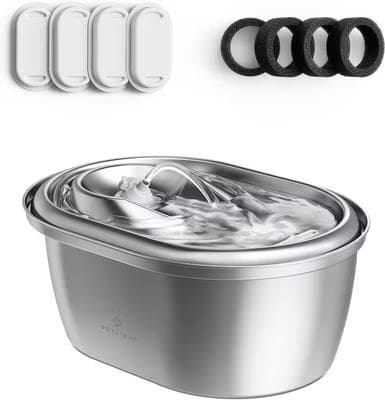
304 food-grade stainless steel pet water fountain, 101 oz. The circulating, filtered water encourages cats to drink more, which supports urinary tract and kidney health.
Webvet may earn a commission when you click through to Chewy, at no extra cost to you.
The water can be the problem too. Water that has sat warm and stale all day, a recent switch from tap to softened or strongly chlorinated water, or a different mineral taste at a vacation rental can each turn a dog off. Try fresh, cool water in a clean bowl as a first, free experiment, and if you are traveling, bring water from home for a day or two.
Placement matters as much as the bowl. A bowl moved next to a noisy appliance, a heating vent that warms the water, or a slick floor where the bowl slides away can quietly discourage a dog that drank happily from its old spot.
Other signs to watch: the dog is bright, playful, and eating, the timing matches a recent move, a new bowl, or a weather shift, and drinking recovers within a day or two once things settle.
Water temperature and bowl material preferences
Dogs have genuine preferences about how their water feels, not just how it tastes. Many dogs ignore lukewarm water that has equalized to room temperature but eagerly drink cool, freshly poured water. In summer a few ice cubes can be the difference between a full bowl and an empty one, while in winter a dog may avoid water that is uncomfortably cold.
Bowl material shapes the experience too. Stainless steel resists odor and is easy to sanitize, ceramic stays cooler and feels stable, and plastic is the most likely to hold smells and harbor scratches. Some dogs also dislike the clang of a metal tag against a steel bowl, or a deep narrow bowl that touches sensitive whiskers, and switching to a wide shallow dish solves it.
Other signs to watch: the dog drinks readily once you change the temperature, bowl, or location, and shows no other symptoms. If a swap fixes it within a day, the cause was preference, not illness.
Stress and anxiety
Fear, a change in household, a new pet, fireworks, or a bowl placed in a high-traffic or noisy spot can make an anxious dog avoid drinking. A dog that feels watched or cornered at its bowl may simply wait, sometimes long enough to start mild dehydration. Move the bowl to a quiet, low-stress corner and watch whether intake recovers once the dog settles.
Acute stress can also shut down normal body functions for a short stretch. A dog at a boarding kennel, on the first night in a new home, or recovering from a frightening event may eat and drink very little for a day, then bounce back as it learns the new space is safe. The key is whether the dog is otherwise alert and the trigger is obvious.
Other signs to watch: pacing, hiding, panting without heat or exercise, or a clear trigger such as a houseguest or a thunderstorm. Resource-guarding multi-dog homes can also leave a lower-ranking dog afraid to approach a shared bowl, so try separate bowls in separate rooms.
Dental disease and mouth pain
Broken teeth, gum disease, oral ulcers, or a foreign object lodged in the mouth can make lapping water genuinely painful. Suspect mouth pain if your dog approaches the bowl, hesitates, then backs off, or drops food and water mid-bite. Bad breath, drooling, or pawing at the muzzle are added clues.
Dental disease is extremely common, which makes it an easy cause to overlook. By age three, most dogs already show some degree of periodontal disease, so a mouth source is worth ruling out early in middle-aged and older dogs that suddenly avoid the bowl. Cold water can sting an inflamed tooth or ulcer, which is why some dogs in pain prefer room-temperature water or soft, moistened food.
A lodged stick fragment, bone shard, or grass awn can also cause sudden, dramatic water refusal in a previously normal dog. If your dog is gagging, pawing hard at its face, or you can see something wedged across the roof of the mouth or between the teeth, treat it as urgent rather than waiting.
Other signs to watch: chewing on one side, blood-tinged saliva or water, a face that is tender to touch, reluctance to take hard chews or toys, and a clear new preference for soft food over kibble.

Nausea and digestive upset
A nauseated dog often refuses both food and water because drinking makes the queasiness worse. If reduced drinking comes with an upset stomach, repeated vomiting, or diarrhea, dehydration can set in fast and a vet visit moves up the priority list. A dog that is not eating but still drinking water tells a slightly different story than one refusing both, so note which it is.
Nausea has many sources: dietary indiscretion, a sudden food change, an early bout of pancreatitis, motion sickness, or a swallowed toxin. A loudly gurgling gut can be an early sign that queasiness is brewing. If your dog also has a noisy, rumbling stomach and is turning away from water, the digestive tract is the place to look first.
Other signs to watch: lip-licking, excessive swallowing, drooling, grass-eating, a hunched posture, and turning away from food that is normally a favorite. Vomiting that brings up water shortly after drinking is a strong nausea clue.
Kidney disease and other underlying illness
Several medical conditions blunt thirst or change drinking patterns. Kidney disease is the one owners most often ask about, and it is genuinely two-faced. In its earlier stages, failing kidneys cannot concentrate urine, so dogs drink and pee far more than usual. As the disease advances and toxins build up, that same dog becomes nauseated, develops mouth ulcers, and may refuse water entirely. A dog that swings from heavy drinking to refusing water is a worrying pattern that needs bloodwork.
Other illnesses that can suppress drinking include:
- Infections and fever, which sap appetite and energy and often make a dog lie flat and disinterested
- Pancreatitis or other gastrointestinal disease causing strong nausea and belly pain
- Liver disease, which makes dogs feel queasy and lethargic
- Cancer or systemic illness in older dogs, often alongside weight loss
Other signs to watch: weight loss, a dull coat, foul or sweet breath, vomiting, fever, weakness, or a dog that is simply not itself. Illness-driven water refusal almost never travels alone, so scan for these companions before assuming it is behavioral.
It is worth knowing the flip side too: a dog suddenly drinking a lot of water can be just as important a warning sign as one that stops, and points toward a different set of conditions like diabetes, Cushing's disease, and early kidney disease.
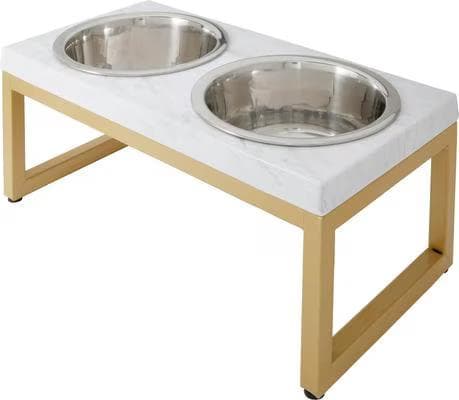
Raised stainless steel double bowl on a marble-look stand. Easier on the neck and joints and a clean, tip-resistant way to keep fresh water available all day.
Webvet may earn a commission when you click through to Chewy, at no extra cost to you.
Age and a reduced thirst drive The veterinary term for a near-total loss of the urge to drink is adipsia, and it most often reflects an underlying illness rather than a problem with thirst itself.
Thirst is a drive, and like most drives it can dull with age. Older dogs sometimes feel thirst less keenly, forget to visit the bowl, or simply find the trip across the house not worth the effort when joints ache. The risk is that a senior's body also holds onto water less efficiently, so a blunted thirst signal and faster fluid loss combine into a dog that quietly slides toward dehydration.
Cognitive decline can compound this. A dog with canine cognitive dysfunction may wander away from the bowl mid-drink or lose the habit of seeking it out on a schedule. For these dogs the fix is often environmental: make water impossible to miss and easy to reach, then prompt and supervise drinks.
Other signs to watch: advancing age, stiffness or reluctance to move, disorientation, and a gradual rather than sudden decline in drinking. A senior's reduced thirst should never be assumed benign without ruling out kidney or dental disease first.
Recent vaccination, anesthesia, or medication
Recent veterinary care can suppress drinking for a short window. After a vaccination, many dogs feel briefly off color, sleepy, and slightly feverish for 24 to 48 hours, and may eat and drink a little less. After anesthesia for a dental or surgery, grogginess and lingering nausea commonly dampen thirst for the first day. Medications matter too: sedatives and drugs like gabapentin can cause nausea that suppresses drinking, while others such as prednisone tend to increase it.
The reassuring version of this is short-lived and self-resolving: a dog that is groggy the evening after anesthesia but drinking normally by the next morning. If a change in drinking started within days of a new prescription, call the prescribing vet before stopping anything, and bring the medication name and dose to the call.
Other signs to watch: the timing is the tell. A dip that begins within a day or two of a shot, a procedure, or a new drug, paired with grogginess or mild queasiness, points here. Refusal that lasts beyond 48 hours or worsens is no longer just a side effect and needs a call.
How much water should a dog drink?
As a rule of thumb, a healthy dog needs about 1 ounce of water per pound of body weight per day. A 25-pound dog needs roughly 25 ounces (about 3 cups), and a 75-pound dog closer to 75 ounces. Hot weather, exercise, and dry food all push the number up. For a fuller breakdown, see our guide on how much water a dog should drink.
The exact ounces matter less than the trend. A dog that consistently drank a full bowl and now barely touches it has changed, and that change is the signal worth acting on. The reverse is also useful: a dog that is suddenly draining the bowl and peeing a lot more needs a vet for the opposite reason, so track intake in both directions.
 $65 · no membership
Have a health question about your dog?
A licensed vet can assess your dog over video and prescribe online when it's appropriate.
 Talk to a vet
- Licensed vets
- All 50 states
- same-day Rx
Webvet may earn a commission if you book.
Cause, other signs, and what to do
Use this table to match what you are seeing with a likely reason and the right next step.
| Likely cause | Other signs to look for | What to do |
|---|---|---|
| Wet-food diet | Bright, normal energy, normal urination | No action; intake is offset by food moisture |
| New, dirty, or moved bowl | Sniffs and walks away, otherwise well | Scrub or swap the bowl, refresh cool water, recheck |
| New place / stress | Recent move or travel, hiding, otherwise well | Quiet bowl location, patience; recheck in 24 hours |
| Dental / mouth pain | Drooling, bad breath, dropping food, pawing at mouth | Vet exam within a few days |
| Recent vaccine / anesthesia | Grogginess within 24-48 hours, mild fever | Watch; call if it lasts beyond 48 hours |
| Nausea / GI upset | Vomiting, diarrhea, lip-licking, not eating | Vet within 24 hours; sooner if vomiting repeatedly |
| Kidney disease / illness | Weight loss, bad breath, lethargy, older dog | Prompt vet visit and bloodwork |
| Dehydration already present | Tacky gums, sunken eyes, skin tenting, weakness | Same-day or emergency vet for fluids |
How to spot dehydration in a dog at home
Dehydration is the real danger when a dog stops drinking, and you can screen for it at home in under a minute. The checks below are the same ones a vet performs first in the exam room, so learning them on a healthy day gives you a reliable baseline to compare against later. Run them in order, and let any abnormal result move your dog up the urgency ladder.
The skin-tent (skin turgor) test, step by step
- With your dog standing or sitting calmly, find the loose skin over the shoulder blades, between the neck and the back.
- Gently pinch and lift that skin straight up into a small tent, then let go.
- Watch how fast it falls. In a well-hydrated dog the skin snaps back flat almost instantly. If it sinks back slowly or stays tented for a second or more, the dog is meaningfully dehydrated.
Read the result with caution. Very thin, overweight, very young, or older dogs can give a misleading skin tent because their skin elasticity differs, so always pair this test with the gum check below rather than trusting it alone.
Gum moisture, color, and capillary refill time
Healthy gums are slick, wet, and bubblegum pink. Lift your dog's lip and run a fingertip along the gum: tacky, sticky, or dry gums suggest dehydration. Pale, white, grey, or bluish gums are a separate emergency that points to poor circulation or low oxygen, not just fluid loss.
Now check capillary refill time. Press a fingertip firmly on the gum until the spot blanches white, then lift and count. The pink color should flood back in under 2 seconds. A refill that takes longer than 2 seconds points to poor circulation and warrants a same-day vet call.
Sunken eyes, lethargy, and other signs
Beyond the two core tests, watch for eyes that look sunken or dull, thick ropey saliva, panting that is out of proportion to the heat, weakness, and loss of appetite. A dog that is also losing fluid to vomiting and diarrhea dehydrates far faster than one that is simply drinking less. Our full guide to dehydration in dogs walks through every warning sign and the vet treatment that follows.
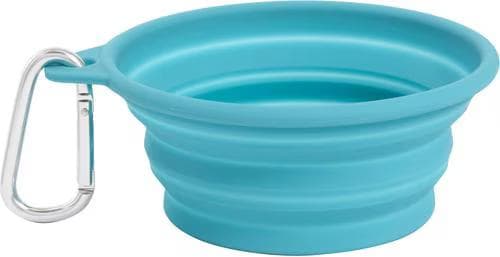
Collapsible silicone travel bowl with a carabiner that clips to a leash or bag, so your dog always has fresh water on walks, hikes, and car trips.
Webvet may earn a commission when you click through to Chewy, at no extra cost to you.
How to get a dog to drink more water
If your dog is otherwise bright and the cause looks behavioral or environmental, the tactics below often restore normal drinking within a day. Work down the list in order, give each change a few hours, and stop to call a vet the moment new symptoms appear or the dog still refuses everything. These methods encourage a healthy dog to drink; they do not treat a sick one.
Fix the bowl, the water, and the placement first
- Refresh and clean the bowl: offer cool, fresh water in a scrubbed stainless steel or ceramic bowl, and wash it daily so biofilm and odors do not build up.
- Get the temperature right: many dogs that ignore lukewarm water will drink cool, freshly poured water, and a few ice cubes can tempt a dog on a hot day.
- Move the bowl to a calm, easy spot: place it in a quiet corner away from noisy appliances and foot traffic, on a non-slip mat so it does not slide.
- Offer multiple stations: set bowls in several rooms and on every floor the dog uses, so a drink is never more than a few steps away.

Make water more appealing
- Flavor it: stir in a splash of low-sodium, onion- and garlic-free chicken or bone broth to make the bowl more enticing.
- Offer ice or frozen broth cubes: many dogs that ignore a standing bowl will happily lick ice or chase a few cubes around the floor.
- Try a pet water fountain: some dogs strongly prefer moving, aerated water and will drink from a circulating fountain when they snub a still bowl.
- Add water to food: mix warm water or broth into kibble, or switch a meal to wet food, so hydration comes in alongside calories.
- Hand-offer and reward: for anxious dogs, offer water from a cupped hand or a favorite cup, and praise calmly when they take a few laps.
These tactics treat the behavioral and environmental causes. They will not fix a sick dog, so if your dog also has any red-flag symptom from the dehydration section, skip the home tricks and go straight to a vet. Once a dog is back to drinking and eating, supporting steady gut health with a consistent diet helps prevent the nausea that suppresses thirst in the first place.
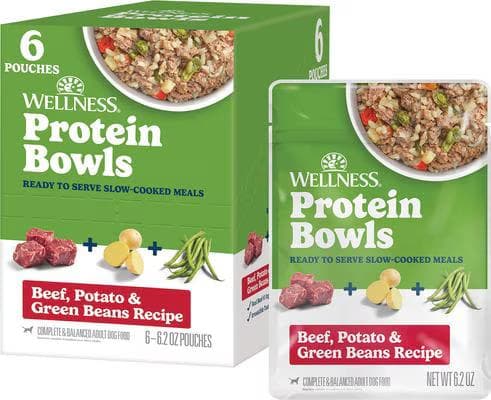
Slow-cooked, complete and balanced wet dog food with real beef as the #1 ingredient. Case of six 6.2 oz pouches.
Webvet may earn a commission when you click through to Chewy, at no extra cost to you.

Senior dogs and not drinking
Older dogs deserve a lower threshold for concern. A senior that stops drinking may have kidney disease, dental pain, arthritis that makes reaching the bowl hard, or cognitive decline that disrupts routine. Because aging bodies dehydrate faster and mask illness well, do not wait a full day with a senior. Reviewing senior dog health changes and calling your vet sooner is the safer play.
Small mechanical fixes help a stiff senior as well. Raise the bowl to chest height so a dog with neck or hip arthritis does not have to crane down, add a non-slip mat under the bowl, and keep water on every floor the dog uses so it never has to climb stairs for a drink. A clear drop in drinking that arrives alongside falling energy levels for the dog's age is worth a vet check rather than chalking it up to simply slowing down.
How long can a dog go without water?
A healthy adult dog can generally survive about 72 hours without water, but that is a survival limit, not a safe one. Meaningful dehydration and organ stress begin within the first 24 hours, and faster in puppies, seniors, sick dogs, or hot weather. The Merck Veterinary Manual describes how fluid loss quickly impairs circulation and organ function, which is why 24 hours without drinking is the practical line for calling a vet, not three days.
Puppies are the clearest exception. Their small size and high metabolism mean they can become dangerously dehydrated in a matter of hours, especially with vomiting or diarrhea, so a puppy that refuses water should be seen the same day rather than watched overnight.
Frequently Asked Questions
When should I worry about my dog not drinking water?
Worry and call your vet if your dog has not drunk water in 24 hours, or at any point shows tacky or dry gums, sunken eyes, skin that stays tented when lifted, lethargy, or vomiting. A brief dip in drinking in an otherwise bright, normal dog on a cool day can be watched for a day. But combine reduced drinking with any of those red flags and it becomes urgent. For puppies and seniors, lower the threshold and call the same day, since both dehydrate faster than a healthy adult.
How do you hydrate a dog that won't drink water?
Encourage drinking with fresh cool water, a splash of low-sodium broth, ice cubes, water mixed into food, or a pet fountain. Offering water from a cupped hand can coax an anxious dog. If a dog still will not drink and is dehydrated or sick, it needs a veterinarian, who can give fluids under the skin or into a vein. Do not force large amounts of water by syringe in a weak dog, since it can be inhaled into the lungs and cause aspiration pneumonia.
What can dogs drink if they won't drink water?
Safe alternatives include water flavored with low-sodium, onion- and garlic-free chicken or bone broth, plain tuna water (packed in spring water, not brine), diluted goat milk, or ice cubes made from broth. Unflavored pediatric or canine electrolyte solutions can help a recovering dog, but only on a vet's advice. Avoid milk-heavy drinks, sugary liquids, caffeine, and human sports drinks. These are encouragements, not replacements: plain water should always be available.
Why has my dog stopped drinking water but is acting normal?
A dog that has stopped drinking but seems normal is often getting moisture from wet food, reacting to cooler weather or less exercise, or put off by a dirty bowl, a moved bowl, or a recent change in routine. A metallic-tasting or stale bowl of water is a common, easily fixed culprit, and some dogs simply refuse lukewarm water that perks up the moment you serve it cool. Early dental pain or mild nausea can also reduce drinking before other signs appear. Monitor closely, and if it lasts beyond 24 hours or any other symptom shows up, see your vet.
Why is my dog not drinking water but still eating?
A dog that eats normally but skips the water bowl is usually getting enough moisture from food, especially on a wet or freshly moistened diet, or is reacting to the bowl, the water taste, or cooler weather rather than to illness. Because eating is a strong sign of general wellbeing, this pattern is often benign and resolves once you refresh the bowl and water. Still, keep watching: if the dog also begins to slow down, vomit, or show tacky gums, the picture changes. The mirror-image problem, a dog not eating but still drinking water, tends to be more concerning and is worth reading about separately.
How does a dog act when their kidneys are shutting down?
A dog in advanced kidney failure typically shows marked lethargy, refusal of food and water, vomiting, ammonia-like or foul breath, mouth ulcers, weight loss, and sometimes seizures or collapse. Earlier kidney disease often causes the opposite, increased drinking and urination, before appetite and thirst fall away. Any combination of these signs warrants an immediate veterinary visit and bloodwork, because supportive care started early makes a real difference.
Can you syringe water to a dog?
You can offer small amounts of water by syringe to an alert dog, squirting it slowly into the side of the cheek and letting the dog swallow on its own. Never syringe water into a weak, drowsy, or unconscious dog, because it can be inhaled into the lungs and cause aspiration pneumonia. Syringing also does little for a truly dehydrated dog, since it cannot replace the volume lost. If a dog is too weak to drink, it needs veterinary fluids, not home syringing.
How long is it safe for a dog to go without drinking water?
A healthy adult dog can physically survive roughly 72 hours without water, but it is only safe to go a few hours under normal conditions. Dehydration and organ stress begin within 24 hours, and much faster in puppies, seniors, sick dogs, and hot weather. Use 24 hours with no drinking as the point to call a vet, and call sooner if the dog is also vomiting, very young, very old, or already showing dehydration signs.
$65 · no membershipHave a health question about your dog?
A licensed vet can assess your dog over video and prescribe online when it's appropriate.
Talk to a vet- Licensed vets
- All 50 states
- same-day Rx
Webvet may earn a commission if you book.

Editor
The Webvet Editorial Team is the in-house group of pet-care editors and writers behind Webvet, operated by Smart Pet Collective. The team researches, writes, and maintains Webvet's pet health, behavior, and medication content. Every article follows a defined editorial process: research from reputable veterinary and scientific sources, careful drafting, mandatory review of medical content by a credentialed veterinarian, and dated publication. Health and medication articles are medically reviewed by a licensed veterinary professional before they go live and are kept current over time.
Veterinarian · BVMS MRCVS
Dr. Pippa Elliott, BVMS, MRCVS, is a veterinarian with nearly 30 years of experience in companion animal practice. Dr. Elliott earned her Bachelor of Veterinary Medicine and Surgery from the University of Glasgow. She was also designated a Member of the Royal College of Veterinary Surgeons. Married with 2 grown-up kids, Dr. Elliott has a naughty Puggle named Poggle, 3 cats and a bearded dragon.


