Dog Vomiting and Diarrhea: When to Worry & What to Do
A vet-reviewed guide to dog vomiting and diarrhea: the emergency red flags, the exact chicken-and-rice recovery plan, a day-by-day timeline, and when to call.

BVMS MRCVS
Medically reviewed by Dr. Pippa Elliott, BVMS MRCVS · Last reviewed

This article contains affiliate links. Webvet may earn a commission when you buy through them, at no extra cost to you.
This article contains affiliate links. Webvet may earn a commission when you buy through them, at no extra cost to you.
Dog vomiting and diarrhea at the same time usually means the whole digestive tract is irritated, often from dietary indiscretion, a sudden food change, infection, parasites, or a swallowed object. Mild cases with a bright, alert dog can be managed at home, but blood, weakness, or symptoms lasting beyond 24 hours need a vet.
Dog Vomiting and Diarrhea: What It Means When They Happen Together
Vomiting is the forceful ejection of stomach contents, while diarrhea is loose, watery, or frequent stool. When both appear together, vets often call it gastroenteritis, meaning inflammation of the stomach and intestines. The two symptoms together cause faster fluid loss than either alone, which is why hydration becomes the first thing to watch.
Most short-lived bouts come from a simple upset stomach after a dog eats something it should not have. The good news is that a single episode in an otherwise bright, playful dog is often self-limiting. The job for you as the owner is to sort the mild cases you can support at home from the red-flag cases that need a clinic.
Use this 30-second triage table to place your dog before you do anything else.
| Situation | What you see | What to do |
|---|---|---|
| Mild / monitor at home | 1-2 episodes, dog is alert, gums pink and moist, drinking, no blood | Rest the gut, offer water, start the bland-diet plan below |
| Call your vet today | Symptoms past 24 hours, not eating, mild lethargy, mucus in stool | Phone the clinic for a same-day or next-morning appointment |
| Emergency now | Blood, black tarry stool, pale gums, collapse, swollen belly, unproductive retching, puppy, suspected toxin | Go to the ER or emergency vet immediately |
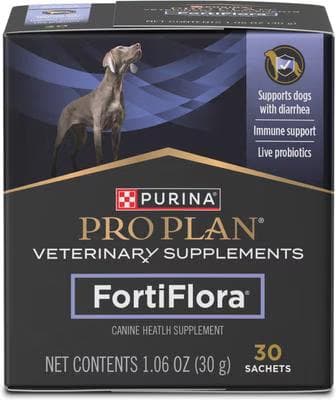
The #1 vet-recommended probiotic for dogs. Daily powder sachets with live probiotics support healthy digestion and firmer stools, and can help dogs coping with diarrhea or GI upset.
Webvet may earn a commission when you click through to Chewy, at no extra cost to you.
Why Is My Dog Vomiting and Having Diarrhea at the Same Time? (Common Causes)
Many different problems can irritate the gut from top to bottom at once. The most common reasons a dog throws up and has diarrhea at the same time include:
- Dietary indiscretion (garbage, table scraps, rich or fatty food, a sudden diet switch) is the single most common trigger.
- Infections including viruses (parvovirus, coronavirus), bacteria (Salmonella, Clostridium), and intestinal parasites (roundworms, giardia, hookworms).
- Toxins and poisons such as chocolate, xylitol, grapes, certain plants, medications, or cleaning products.
- Foreign objects like toys, socks, bones, or corn cobs that partly block the intestines.
- Pancreatitis, often after a high-fat meal, which causes painful inflammation of the pancreas.
- Chronic disease such as inflammatory bowel disease, kidney disease, liver disease, or endocrine disorders.
If diarrhea is the louder symptom, our guide to the causes of dog diarrhea breaks down stool colors and consistencies in detail. If your dog is mostly bringing up yellow foam, see what it means when a dog is throwing up yellow, which often points to an empty stomach and bile.
- 1Vomiting plus diarrhea together is usually gastroenteritis: the whole gut is irritated at once.
- 2Dietary indiscretion is the most common cause, but infection, toxins, and foreign objects are serious possibilities.
- 3The combo drains fluids fast, so dehydration is the first thing to monitor.
When to Worry: Emergency Warning Signs That Need a Vet Now
You should be concerned about a dog throwing up and having diarrhea when the dog seems genuinely unwell, not just temporarily queasy. Call your vet or head to an emergency clinic right away if you notice any of the following:
- Blood in the vomit (bright red or coffee-ground) or stool (red streaks, black tarry, or raspberry-jam).
- Repeated unproductive retching with a swollen, firm, or distended belly (a possible bloat emergency).
- Weakness, collapse, fainting, or trouble standing.
- Pale, white, gray, or blue gums.
- Signs of significant pain: a hunched posture, a praying stretch, crying out, or a tense abdomen.
- A known or suspected toxin, medication, or swallowed object.
- A puppy, a senior, or a dog with a chronic illness, where reserves run out quickly.
- Continuous vomiting or diarrhea where the dog cannot keep even water down.

 $65 · no membership
Worried about your dog's vomiting or diarrhea?
A licensed vet can examine your dog over video and prescribe treatment online when it's appropriate.
 Talk to a vet
- Licensed vets
- All 50 states
- same-day Rx
Webvet may earn a commission if you book.
Blood in Vomit or Stool, Black Tarry Diarrhea, and Other Red Flags
Blood is never something to monitor casually. Its color and location tell you where the bleeding is coming from, and several patterns mean you should not wait until morning.
Compare coverage choices for your pet, then request a quote directly on Lemonade.
- Check a price for your pet
- Review available coverage choices
- See the terms before you decide
Eligibility, waiting periods, limits and exclusions apply.
Webvet may earn a commission when you click through to Lemonade, at no extra cost to you.
Bright red blood in vomit, or vomit that looks like coffee grounds, suggests bleeding in the stomach or upper gut and warrants an urgent call. We cover this in depth in our guide to a dog vomiting blood. Black, tarry, sticky stool (called melena) is digested blood from higher in the tract and is an emergency sign.
| What you see | What it may mean | Urgency |
|---|---|---|
| Bright red streaks in soft stool | Lower-gut irritation or colitis | Vet within a day; sooner if large amount |
| Black, tarry, sticky stool (melena) | Digested blood from the stomach or upper gut | Emergency |
| Raspberry-jam, profuse bloody diarrhea | Acute hemorrhagic diarrhea syndrome (AHDS/HGE) | Emergency |
| Bright red or coffee-ground vomit | Bleeding in the stomach or esophagus | Emergency |
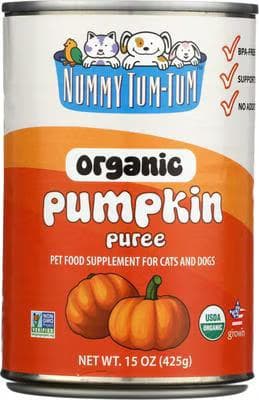
Pure USDA-organic pumpkin puree, no fillers or additives. Adds gentle soluble fiber to firm up loose stool and settle a mildly upset stomach. A simple vet-favorite topper.
Webvet may earn a commission when you click through to Chewy, at no extra cost to you.
What to Give a Dog With Vomiting and Diarrhea: The Bland-Diet Recovery Plan
If your dog is bright, alert, keeping water down, and showing none of the red flags above, you can usually support recovery at home. The plan is simple: rest the gut briefly, rehydrate slowly, then feed a gentle, low-fat bland diet for a few days before returning to normal food.
The exact bland-diet recipe
Use roughly 25 percent boiled skinless chicken to 75 percent plain white rice (about one part chicken to three parts rice). Boil the chicken with no oil, salt, garlic, onion, or seasoning, and shred it. Cook the rice plain. Serve it lukewarm in small portions.

Other vet-friendly bland choices include plain boiled white-meat turkey, low-fat cottage cheese, or boiled white fish in place of the chicken. Lean, low-fat, and unseasoned is the rule.
What food will firm up my dog's poop?
Plain, fiber-rich foods help bulk and firm the stool. The most useful are:
- Plain canned pumpkin (not pie filling): one to four tablespoons depending on the dog's size adds soluble fiber.
- White rice: gentle, easily digested, and binding.
- A dog-specific probiotic: can help rebalance the gut. Learn more about supporting gut health for dogs during and after a flare-up.

Fasting, Chicken and Rice, and Reintroducing Food (Day-by-Day)
To settle a dog's stomach after vomiting, you give the gut a short rest and then reintroduce food slowly. Healthy adult dogs can usually have food withheld for around 12 hours (never fast a puppy, a tiny breed, or a diabetic dog without vet advice), then start tiny bland meals. Use this timeline as your map.
| Day | What to feed | How to do it |
|---|---|---|
| Day 1 | Rest the gut, then water | Withhold food about 12 hours for a healthy adult. Offer small sips of water often, or ice cubes. No fasting for puppies or toy breeds. |
| Day 2 | Small bland meals | If vomiting has stopped, offer a few tablespoons of 25/75 chicken and rice every 3-4 hours. |
| Day 3 | Larger bland meals | If stool is firming up, increase portion size and space meals further apart. |
| Day 4 | Transition back | Mix the bland diet 50/50 with the regular food, then return fully to normal food over 1-2 days. |
Hydration: The Skin-Tent and Gum-Moisture Self-Check
Because vomiting and diarrhea drain fluids quickly, dehydration is the danger that creeps up fastest. Even if your dog is drinking, you can run two simple checks at home in under a minute.

The skin-tent test: gently pinch and lift the loose skin over the shoulder blades, then let go. In a well-hydrated dog it snaps back instantly. If it stays tented or returns slowly, your dog is likely dehydrated and needs to be seen.
The gum-moisture test: run a finger along the gums. They should feel slick and wet, and pressing a spot should make it blanch white and refill pink within about two seconds. Dry, tacky, or pale gums, or a slow refill, are warning signs of dehydration or shock.
- 1Skin that stays tented when pinched is a sign of dehydration.
- 2Gums should be moist and pink, and refill within about 2 seconds when pressed.
- 3Dry, tacky, or pale gums plus ongoing fluid loss means see a vet promptly.
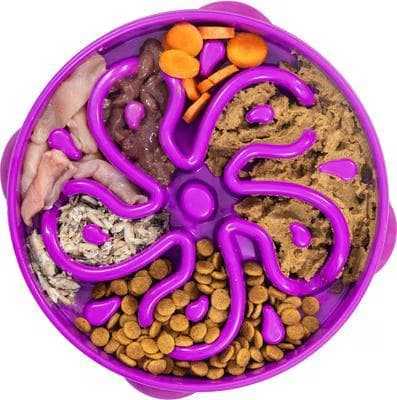
A maze-pattern slow-feeder bowl that makes fast eaters work for each bite, reducing the gulping and swallowed air that trigger regurgitation and vomiting. Holds up to 4 cups.
Webvet may earn a commission when you click through to Chewy, at no extra cost to you.
Vomiting and Diarrhea but Acting Normal and Still Eating: What to Do
This is the reassuring branch, and it is common. A dog that vomits once or has a soft stool but is still bright, playful, eating, and drinking is usually dealing with a passing tummy upset rather than something serious. In this situation you can take a measured wait-and-watch approach.

- Skip the next meal to rest the gut, keep water available in small amounts, and offer a small bland meal once the stomach settles.
- Keep your dog calm and indoors so you can monitor every trip outside and every meal.
- Run the skin-tent and gum checks once or twice through the day.
- If the dog stays bright and symptoms fade within a day, you are usually in the clear. If a single sign tips into the red-flag list, or symptoms keep going, call your vet.
How Long Is Too Long? When 24 to 72 Hours Means a Vet Visit
Time is one of your clearest decision tools. A single episode that resolves quickly in a bright dog is reassuring. Symptoms that persist or escalate are not.
- Under 24 hours, dog bright and hydrated: home monitoring and a bland diet are usually reasonable.
- Past 24 hours, or not improving: call your vet for an appointment.
- Vomiting and diarrhea for 3 days (72 hours): this is too long to keep waiting, even in a dog that still seems okay. Persistent symptoms point to something that needs diagnosis and treatment.
- Any red flag at any point: do not watch the clock. Blood, collapse, a swollen belly, or pale gums means go now.
Parvo, Bloat (GDV), and Pancreatitis: Dangerous Conditions to Rule Out
Three conditions sit behind many of the scariest vomiting-and-diarrhea cases. Knowing their fingerprints helps you act fast when minutes matter.
Parvovirus (parvo)
Parvo is a highly contagious, often fatal virus that mainly strikes unvaccinated puppies aged roughly 6 weeks to 6 months. Classic signs are severe, foul-smelling, often bloody diarrhea with intense vomiting, lethargy, and refusal to eat. The vomit and diarrhea are frequently yellow-brown to bloody, and the smell is distinctive. Signs usually appear 5 to 7 days after exposure. Any suspected parvo case is an immediate emergency.
Bloat and GDV
Gastric dilatation and volvulus (GDV, or bloat) is a minutes-matter killer, especially in large, deep-chested breeds. The giveaway is a dog that retches repeatedly without bringing anything up, paces restlessly, drools heavily, and has a visibly swollen or distended belly. This is true unproductive vomiting and demands emergency surgery. Do not wait.
Pancreatitis
Pancreatitis is painful inflammation of the pancreas, often triggered by a fatty meal. Dogs show vomiting, diarrhea, belly pain (sometimes a hunched, praying stretch), and loss of appetite. It needs veterinary care, fluids, and pain control, so call your vet if you suspect it.
- 1Parvo: unvaccinated puppy, foul bloody diarrhea, intense vomiting, an emergency.
- 2Bloat/GDV: unproductive retching plus a swollen belly in a big dog, surgery within hours.
- 3Pancreatitis: vomiting, diarrhea, and belly pain after a fatty meal, needs a vet.
Frequently Asked Questions
What should I give my dog that has diarrhea and vomiting?
Once vomiting has stopped and your dog is bright, give a bland diet of about 25 percent boiled skinless chicken to 75 percent plain white rice in small portions, plus small frequent sips of water. Plain canned pumpkin and a dog-specific probiotic can help. Do not give human Imodium, Pepto-Bismol, or any medication without your vet's guidance, since dosing is weight-based and some drugs are unsafe for dogs.
When should I be concerned about my dog throwing up and diarrhea?
Be concerned if you see blood in vomit or stool, black tarry or raspberry-jam diarrhea, pale gums, weakness or collapse, a swollen belly with unproductive retching, signs of pain, or a known toxin. Also worry if a puppy, senior, or sick dog is affected, if your dog cannot keep water down, or if symptoms last more than 24 hours. Any of these means call your vet or an emergency clinic right away.
How do you settle a dog's stomach after vomiting?
Rest the gut by withholding food for around 12 hours in a healthy adult dog (never fast puppies or toy breeds), while offering small sips of water or ice cubes. Once vomiting stops, reintroduce food with tiny portions of bland chicken and rice every few hours, gradually increasing over the next two to three days before returning to normal food. If vomiting continues or red flags appear, see your vet.
What would cause a dog to throw up and have diarrhea at the same time?
When both happen together, the whole digestive tract is inflamed, which vets call gastroenteritis. The most common cause is dietary indiscretion, meaning the dog ate garbage, scraps, rich food, or switched diets suddenly. Other causes include infections (parvovirus, bacteria, parasites like giardia), swallowed toxins, foreign objects, pancreatitis, and chronic diseases of the gut, liver, kidneys, or pancreas. Persistent or severe cases need a veterinary diagnosis.
What settles a dog's stomach from throwing up?
A short gut rest followed by a gentle, low-fat bland diet is what settles most upset stomachs. Boiled chicken and white rice, plain pumpkin, and small frequent amounts of water are the mainstays. A dog-specific probiotic can support recovery. Avoid fatty foods, treats, and human stomach medicines. If your dog keeps vomiting, cannot hold water down, or shows any red-flag sign, your vet may prescribe a safe anti-nausea medication like maropitant or metoclopramide.
What food will firm up my dog's poop?
Fiber-rich, easily digested foods firm up loose stool. Plain canned pumpkin (not pie filling) is the classic choice, adding soluble fiber that bulks the stool, typically one to four tablespoons depending on the dog's size. Plain white rice is gentle and binding, and a bland chicken-and-rice mix helps too. A dog-specific probiotic supports gut balance. If diarrhea persists beyond a couple of days or contains blood, see your vet rather than relying on food alone.
What color is parvo throw up?
Parvo vomit is often yellow or brown and can become blood-tinged as the disease progresses, and it is usually accompanied by severe, foul-smelling, frequently bloody diarrhea. There is no single guaranteed color, so the bigger clues are the combination: an unvaccinated puppy with intense vomiting, watery bloody diarrhea, lethargy, and refusal to eat. Parvo is a life-threatening emergency, so any suspected case needs immediate veterinary testing and treatment.
What is the silent killer of dogs?
Bloat, or gastric dilatation and volvulus (GDV), is often called the silent killer because it strikes fast and can kill a healthy dog within hours. The stomach fills with gas and twists, cutting off blood flow. Watch for a swollen belly, repeated retching with nothing coming up, restlessness, and drooling, especially in large, deep-chested breeds. It is a minutes-matter surgical emergency. Some people also use the phrase for kidney disease, which can progress quietly before signs appear.
$65 · no membershipWorried about your dog's vomiting or diarrhea?
A licensed vet can examine your dog over video and prescribe treatment online when it's appropriate.
Talk to a vet- Licensed vets
- All 50 states
- same-day Rx
Webvet may earn a commission if you book.

Editor
The Webvet Editorial Team is the in-house group of pet-care editors and writers behind Webvet, operated by Smart Pet Collective. The team researches, writes, and maintains Webvet's pet health, behavior, and medication content. Every article follows a defined editorial process: research from reputable veterinary and scientific sources, careful drafting, mandatory review of medical content by a credentialed veterinarian, and dated publication. Health and medication articles are medically reviewed by a licensed veterinary professional before they go live and are kept current over time.
Veterinarian · BVMS MRCVS
Dr. Pippa Elliott, BVMS, MRCVS, is a veterinarian with nearly 30 years of experience in companion animal practice. Dr. Elliott earned her Bachelor of Veterinary Medicine and Surgery from the University of Glasgow. She was also designated a Member of the Royal College of Veterinary Surgeons. Married with 2 grown-up kids, Dr. Elliott has a naughty Puggle named Poggle, 3 cats and a bearded dragon.


