Dog Throwing Up Yellow? Causes, Fixes & When to Worry
Yellow dog vomit is usually bile from an empty stomach, but it can signal pancreatitis, a blockage, or worse. A vet explains the causes, the morning-vomit fix, and the exact red flags that mean call now.

BVMS MRCVS
Medically reviewed by Dr. Pippa Elliott, BVMS MRCVS · Last reviewed

This article contains affiliate links. Webvet may earn a commission when you buy through them, at no extra cost to you.
This article contains affiliate links. Webvet may earn a commission when you buy through them, at no extra cost to you.
A dog throwing up yellow is almost always bringing up bile, a digestive fluid that pools in an empty stomach. It is most common in the early morning and is usually mild. But yellow vomit can also signal pancreatitis, a blockage, or other emergencies, so watch how your dog acts and how often it happens.
Why Is My Dog Throwing Up Yellow? What Yellow Vomit Means
The yellow (sometimes greenish) color comes from bile, a fluid made by the liver and stored in the gallbladder. Bile is released into the small intestine to help digest fat. It is alkaline, so it helps neutralize stomach acid.
When the stomach is empty for a long stretch, bile can wash backward from the intestine into the stomach. The stomach lining is not built to handle bile, so it gets irritated. The result is nausea, then a small puddle of yellow foam or liquid, often with no food in it.
Mechanically, this backward flow is called bile reflux. It happens when the muscular valve between the stomach and small intestine relaxes during a long fast. Stomach acid normally keeps things moving downward, but on an empty stomach the acid level drops and the pressure shifts, letting bile drift up where it does not belong.
Watch the texture too, because it tells you how irritated the stomach was. Thin, watery yellow usually means a fast-moving, mild episode, while thick yellow foam suggests bile sat and churned with stomach mucus for a while.
Either way, a single small puddle from a dog that perks right back up, drinks normally, and eats its next meal rarely points to anything beyond a temporarily empty gut.
So the color tells you what came up, not why. Yellow bile from an empty stomach is usually harmless. The same yellow color can appear when something more serious, like pancreatitis or an intestinal blockage, is making your dog vomit. That is why the rest of this guide focuses on the clues that separate a minor empty-stomach episode from a real problem.
- 1Yellow vomit = bile, usually from an empty stomach.
- 2The color alone is not an emergency; how often your dog vomits and how it acts matter far more.
- 3One yellow puke from a bright, hungry dog is very different from repeated vomiting in a lethargic dog.

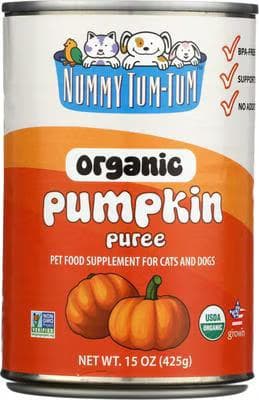
Pure USDA-organic pumpkin puree, no fillers or additives. Adds gentle soluble fiber to firm up loose stool and settle a mildly upset stomach. A simple vet-favorite topper.
Webvet may earn a commission when you click through to Chewy, at no extra cost to you.
Yellow Bile vs. Yellow Foam vs. White Foam: A Color and Texture Decoder
What your dog brings up, and how it looks, gives real clues. Use this chart as a starting point, not a diagnosis. When in doubt, take a quick phone photo to show your vet.
| What you see | Likely meaning | What to do |
|---|---|---|
| Yellow liquid or yellow foam | Bile, usually an empty stomach (bilious vomiting syndrome) | Often mild; adjust feeding and monitor |
| White or clear foam | Acid reflux, nausea, or an empty stomach; can also be early bloat | Usually mild, but watch for retching with a swollen belly |
| Yellow with food | Stomach emptied bile plus a recent meal | Monitor; recheck the diet and feeding times |
| Brown or coffee-ground | Possible digested blood, ulcer, or eating something brown | Call your vet, especially if repeated |
| Red streaks or fresh blood | Bleeding in the stomach or throat | Urgent: call your vet now |
| Green | Bile, grass, or bowel-level material (possible blockage) | Watch closely; call if not eating or repeated |
Yellow and white foam are easy to confuse, especially first thing in the morning. If your dog tends to bring up froth rather than bile, our guide to why dogs throw up white foam breaks down the acid-reflux and bloat angles in more detail.
Bilious Vomiting Syndrome: Why Dogs Throw Up Yellow in the Morning
If your dog reliably throws up yellow bile early in the morning or right before a meal, then bounces back and eats breakfast happily, the most likely cause is bilious vomiting syndrome (BVS). It is one of the most common and most treatable reasons dogs vomit yellow.
What causes it
During a long overnight fast, the stomach sits empty while bile keeps trickling in from the intestine. With no food to act as a buffer, bile irritates the stomach lining. By morning, your dog feels queasy and vomits a small amount of yellow foam. The fix is simple: do not let the stomach stay empty so long.
Signs it is bilious vomiting syndrome
Classic clues include vomiting on an empty stomach (early morning or late evening), a small volume of yellow or foamy bile, and a dog that otherwise feels fine. You may notice early nausea signs like lip-licking, drooling, or grass-eating before the vomit.


Dog Throwing Up Yellow but Acting Normal: Is It Serious?
A dog throwing up yellow but acting normal (bright, alert, eating, drinking, and active) is usually not an emergency. A single episode in an otherwise happy dog often points to an empty stomach or a minor stomach upset rather than a serious disease.
Compare coverage choices for your pet, then request a quote directly on Lemonade.
- Check a price for your pet
- Review available coverage choices
- See the terms before you decide
Eligibility, waiting periods, limits and exclusions apply.
Webvet may earn a commission when you click through to Lemonade, at no extra cost to you.
That said, "acting normal" is not a free pass. Dogs are good at hiding illness, and conditions like an early blockage can look mild at first. Use this quick triage to decide between monitoring at home and calling your vet.

 $65 · no membership
Worried about your dog's vomiting or diarrhea?
A licensed vet can examine your dog over video and prescribe treatment online when it's appropriate.
 Talk to a vet
- Licensed vets
- All 50 states
- same-day Rx
Webvet may earn a commission if you book.
6 Causes of Yellow Vomit in Dogs (From Harmless to Emergency)
Yellow is just bile staining whatever comes up, so the list of possible causes is long. Here are the six most important, roughly from most common and mild to least common and dangerous.
1. Empty stomach (bilious vomiting syndrome)
The most common cause, covered above. Long gaps between meals let bile irritate the stomach. It is closely related to a simple dog upset stomach and usually resolves with feeding changes.
2. Dietary indiscretion
Garbage, table scraps, a new treat, a sudden food change, or eating grass can all irritate the stomach and trigger yellow vomit. This is often a one-and-done event in a dog that otherwise feels well.
3. Acid reflux and GI irritation
Inflammation of the stomach (gastritis), ulcers, or acid reflux in dogs can cause repeated bile vomiting, sometimes with foam. Intestinal parasites and infections belong in this group too.
4. Pancreatitis
Inflammation of the pancreas often follows a fatty meal (it can show up a few days later) and causes vomiting, a painful belly, low energy, and loss of appetite. Some dogs take a "praying" stance with their front end down. Pancreatitis is serious and needs a vet.
The mechanism is that digestive enzymes activate too early and start to inflame the pancreas itself. That triggers heavy nausea, so the bile vomiting tends to be repeated rather than a one-off.
Overweight dogs, certain breeds like miniature schnauzers, and dogs who raided a fatty holiday plate are at higher risk. That is one more reason a low-fat diet matters for any dog prone to stomach upset.
5. Intestinal blockage (foreign body)
A swallowed toy, sock, bone, or corn cob can block the gut. Classic signs are repeated vomiting, refusing food, a painful abdomen, and extreme lethargy. A blockage is a medical emergency that often needs surgery, so do not wait.
The telltale clue is that the vomiting will not stop even when the stomach is empty, because nothing can pass the obstruction. Linear objects like string or thread are especially dangerous, since they can saw through the intestinal wall.
If your dog vomits repeatedly and you cannot account for a missing toy or sock, treat it as a blockage until a vet rules it out. Early imaging and surgery save lives, while a delay of even a day can let the gut tissue die.
6. Addison's disease and other systemic illness
Hormonal and organ diseases (Addison's disease, kidney or liver problems) can cause on-and-off vomiting that may look yellow. These need bloodwork to diagnose, so chronic or recurring yellow vomit always deserves a vet visit.

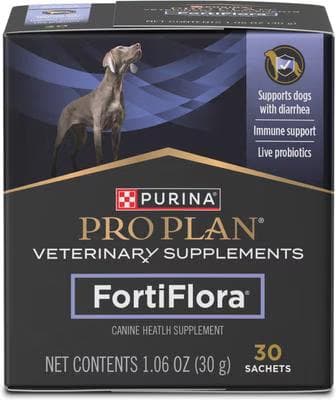
The #1 vet-recommended probiotic for dogs. Daily powder sachets with live probiotics support healthy digestion and firmer stools, and can help dogs coping with diarrhea or GI upset.
Webvet may earn a commission when you click through to Chewy, at no extra cost to you.
Home Remedies and a Vet-Approved Bland Diet Plan
If your dog vomited yellow once but is otherwise bright, eating, and drinking, you can usually start with simple home care. These steps are for mild cases only. If your dog is unwell or the vomiting repeats, skip home remedies and call your vet.
A short, gentle reset usually looks like this:
Hold off on food briefly. Many adult dogs do fine with a short rest of 6 to 12 hours for the stomach, but never fast a puppy, a tiny breed, or a diabetic dog. Keep small amounts of water available.
Reintroduce a bland diet. Offer a small meal of plain boiled, skinless chicken breast and white rice, or boiled lean ground turkey, in a roughly 1-part-protein to 2-parts-rice mix. A spoonful of plain canned pumpkin (not pie filling) can help too.
Feed small and frequent. Give small portions every few hours rather than one big meal. If your dog keeps it down for a day, gradually mix the bland food back into the regular diet over 2 to 3 days.
How to Stop Your Dog From Throwing Up Yellow (Feeding Fixes)
For empty-stomach (bilious) vomiting, the cure is usually in the feeding schedule, not the medicine cabinet. The goal is to keep some food in the stomach so bile has something to work on overnight.
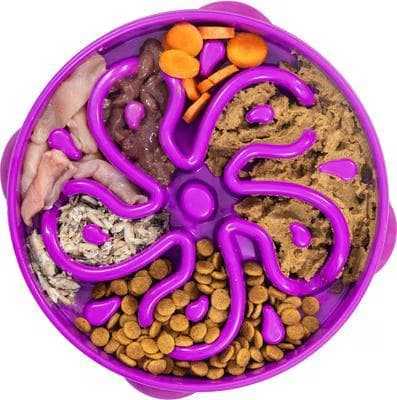
A maze-pattern slow-feeder bowl that makes fast eaters work for each bite, reducing the gulping and swallowed air that trigger regurgitation and vomiting. Holds up to 4 cups.
Webvet may earn a commission when you click through to Chewy, at no extra cost to you.
The morning-vomit feeding protocol
| Change | Why it helps |
|---|---|
| Add a small bedtime snack (a few kibble or a low-fat biscuit) | Shortens the overnight empty-stomach gap, the #1 fix |
| Split the daily food into 3 to 4 smaller meals | Keeps the stomach from sitting empty for long stretches |
| Feed the first meal early, right after waking | Buffers bile before nausea sets in |
| Keep meal times consistent day to day | A steady routine reduces reflux episodes |
| Choose a low-fat, easily digestible food | Easier on the stomach and on the pancreas |
If your dog eats just once a day, that long gap is often the whole problem. Restructuring meals using a sensible dog feeding schedule solves most morning bile vomiting within a week.
- 1The bedtime snack is the single most effective fix for morning bile vomiting.
- 2Smaller, more frequent meals beat one large meal for sensitive stomachs.
- 3If feeding changes do not help within 1 to 2 weeks, see your vet for a workup.
When to Worry: Emergency Signs and When to Call the Vet
Most yellow vomit is harmless, but some patterns are red flags. The fear behind searches like "my dog threw up yellow then died" is almost always one of two true emergencies: bloat (GDV) or an intestinal blockage. Knowing their signs can save your dog's life.
Bloat / GDV: the can't-wait emergency
Gastric dilatation-volvulus (GDV, or bloat) is when the stomach fills with gas and twists. Watch for a swollen, hard belly, restlessness or pacing, drooling, and trying to vomit but bringing up little or nothing. It is most common in large, deep-chested breeds and is fatal within hours. Go to an emergency vet immediately.
Other reasons to call right away
Get veterinary help promptly for any of these:
Vomiting more than once or twice in 24 hours, or that will not stop
Blood in the vomit (red streaks or a coffee-ground look)
Lethargy, weakness, or collapse
A painful, tense, or swollen abdomen
Refusing food or water for more than a day, or signs of dehydration
Yellow vomiting paired with diarrhea, especially in a puppy, can point to infection or parvovirus and needs prompt care. Our guide to dog vomiting and diarrhea covers that combination in depth.
Puppies, Senior Dogs, and Other Special Cases
Puppies
Never fast a puppy. Puppies dehydrate fast and are vulnerable to low blood sugar. Yellow vomiting in an unvaccinated or partly vaccinated puppy, especially with diarrhea or lethargy, can mean parvovirus, parasites, or a swallowed object. Call your vet the same day.
Senior dogs
New, recurring yellow vomiting in an older dog deserves a closer look. Kidney disease, liver disease, and certain cancers become more common with age and can all cause vomiting. Do not assume it is "just an empty stomach" without a vet check.
Female dogs
In an unspayed female, vomiting along with lethargy, increased thirst, or vaginal discharge can be a sign of pyometra (a serious uterine infection), usually a few weeks after a heat cycle. This is an emergency. Pregnant dogs can also have mild morning nausea, but persistent vomiting still warrants a call.
- 1Puppies and tiny breeds should never be fasted; vomiting plus diarrhea in a pup is a same-day vet call.
- 2Recurring yellow vomit in a senior dog needs bloodwork, not just feeding tweaks.
- 3Unspayed females with vomiting and discharge may have pyometra, which is an emergency.
Frequently Asked Questions
Should I feed my dog after yellow vomit?
If your dog is bright, alert, and hungry, yes, offer a small bland meal a couple of hours after the vomit rather than a full bowl. Plain boiled chicken and white rice in small portions is gentle on the stomach. A smaller portion is deliberate: it tests whether the stomach can hold food down without overwhelming an already irritated gut. Wait a couple of hours so the nausea settles, then watch the next hour closely. If your dog is lethargic, in pain, or keeps vomiting, do not force food and call your vet instead.
What home remedy can I give my dog for vomiting yellow?
For a mild, one-off case, the best home remedies are feeding-based: a brief food rest with water available, then small frequent meals of bland food, plus a small bedtime snack to stop morning bile. Plain canned pumpkin can help firm the gut because its soluble fiber absorbs excess water and slows things down. Make sure water is offered in small, frequent sips rather than a big bowl gulped at once, which can trigger another round of vomiting. Avoid human medications like Pepto-Bismol unless your vet specifically tells you to give them, since some contain ingredients that are unsafe for dogs.
Does yellow vomit mean a dog is hungry?
Often, yes. Yellow vomit frequently happens because the stomach is empty and bile has built up, which is closely tied to hunger and long gaps between meals. That is why morning bile vomiting usually improves with a bedtime snack and more frequent feeding. A useful test is whether your dog eats breakfast eagerly right after vomiting; a hearty appetite points strongly to a simple empty-stomach episode rather than illness. But an empty stomach is not the only cause, so watch for other symptoms, and do not assume hunger if the vomiting keeps repeating despite regular meals.
How do you treat yellow vomit?
Mild empty-stomach vomiting is treated with feeding changes: smaller, more frequent meals, a bedtime snack, and a low-fat diet. A short bland-diet reset can settle the gut. If vomiting is frequent or your dog is unwell, the vet treats the underlying cause and may prescribe anti-nausea medication. Never give human medicine without veterinary guidance.
Why is my dog throwing up yellow but acting normal?
A dog that throws up yellow but is otherwise bright, eating, and active most likely brought up bile from an empty stomach or had a brief stomach upset. A single episode in a normal-acting dog is usually not an emergency. Still, monitor closely, and call your vet if the vomiting repeats or any new symptoms appear.
What is the 7 7 7 rule for dogs?
The "7-7-7 rule" is not a recognized veterinary guideline for vomiting, and you should not rely on it to decide whether your dog needs care. Different sources online use it for unrelated things (such as socialization or training milestones). For vomiting, ignore catchy rules and judge by frequency, your dog's energy, and whether warning signs are present.
Should I be worried if my dog's puke is yellow?
Not usually, if it is a single episode and your dog feels fine. Yellow simply means bile, which often reflects an empty stomach. Be worried, and call your vet, if vomiting repeats, contains blood, or comes with lethargy, a painful or swollen belly, diarrhea, or refusal to eat. Those signs can mean pancreatitis, a blockage, or another serious problem.
Does yellow vomit always mean an empty stomach?
No. An empty stomach is the most common reason, but it is not the only one. The same yellow bile color can appear with pancreatitis, gastritis, intestinal blockages, parasites, infections, and hormonal or organ diseases. If yellow vomiting keeps happening or comes with other symptoms, do not assume it is just hunger, and have your vet investigate.
$65 · no membershipWorried about your dog's vomiting or diarrhea?
A licensed vet can examine your dog over video and prescribe treatment online when it's appropriate.
Talk to a vet- Licensed vets
- All 50 states
- same-day Rx
Webvet may earn a commission if you book.

Editor
The Webvet Editorial Team is the in-house group of pet-care editors and writers behind Webvet, operated by Smart Pet Collective. The team researches, writes, and maintains Webvet's pet health, behavior, and medication content. Every article follows a defined editorial process: research from reputable veterinary and scientific sources, careful drafting, mandatory review of medical content by a credentialed veterinarian, and dated publication. Health and medication articles are medically reviewed by a licensed veterinary professional before they go live and are kept current over time.
Veterinarian · BVMS MRCVS
Dr. Pippa Elliott, BVMS, MRCVS, is a veterinarian with nearly 30 years of experience in companion animal practice. Dr. Elliott earned her Bachelor of Veterinary Medicine and Surgery from the University of Glasgow. She was also designated a Member of the Royal College of Veterinary Surgeons. Married with 2 grown-up kids, Dr. Elliott has a naughty Puggle named Poggle, 3 cats and a bearded dragon.


