Acid Reflux in Dogs: A Vet's Symptom & Relief Guide
Acid reflux in dogs (GERD) causes lip-licking, gulping and early-morning bile vomiting. Learn the signs, food triggers, famotidine vs omeprazole, home diet fixes, and the red flags that mean call your vet.


BVMS MRCVS
Medically reviewed by Dr. Pippa Elliott, BVMS MRCVS · Last reviewed

This article contains affiliate links. Webvet may earn a commission when you buy through them, at no extra cost to you.
This article contains affiliate links. Webvet may earn a commission when you buy through them, at no extra cost to you.
Acid reflux in dogs (canine GERD) happens when stomach acid flows backward into the esophagus, irritating its lining. Tell-tale signs include lip-licking, gulping or repeated swallowing, gurgling, bad breath, and vomiting pale yellow bile, often early in the morning. Most cases respond well to diet changes and vet-prescribed acid reducers.
What Is Acid Reflux in Dogs? (GERD Explained)
Acid reflux, formally called gastroesophageal reflux disease (GERD), is the backward flow of stomach contents into the esophagus, the muscular tube connecting the throat to the stomach. Stomach acid is harsh, and the esophagus has no protective mucus layer to defend against it.
A ring of muscle called the lower esophageal sphincter normally stays closed to keep acid in the stomach. When that sphincter relaxes or weakens, acid splashes upward and inflames the esophageal lining, a condition vets call reflux esophagitis. According to VCA Animal Hospitals, GERD is a chronic condition in which stomach acid damages the esophagus through repeated acid exposure.
What actually washes back up is rarely just acid. The refluxed mixture can also carry pepsin (a protein-digesting enzyme) and, when bile flows back from the small intestine, bile salts. Each one injures the esophagus in a different way, which is part of why reflux is more damaging than its mild symptoms suggest.
Bile salts in particular strip the surface cells and let acid penetrate deeper, so a dog whose reflux carries bile often has more inflammation than the acid level alone would predict.
The damage also tends to be worst in the lowest few inches of the esophagus, just above the sphincter, because that segment sits closest to the refluxed pool and gets the longest contact time. As the lining thins, the nerve endings underneath become exposed, which is why a dog with established reflux esophagitis often acts more uncomfortable than the amount of vomiting alone would suggest. This is the burning, raw sensation a person would describe as heartburn.
Occasional mild reflux is common and often harmless. The problem becomes a disease when it happens often enough to inflame, scar, or narrow the esophagus, which is painful and can make eating difficult. Repeated acid exposure can create a self-feeding cycle: inflammation makes the sphincter work even less well, which lets more acid through, which causes more inflammation. Catching it early breaks that loop. If your dog has a generally sensitive gut, our guide to a dog upset stomach covers the broader picture of digestive upset.
- 1Acid reflux (GERD) is stomach acid flowing back into the esophagus, which has no protective lining of its own.
- 2It usually stems from a weak or relaxed lower esophageal sphincter.
- 3Occasional reflux is normal; frequent reflux can inflame and scar the esophagus and needs treatment.
Symptoms of Acid Reflux in Dogs (Lip-Licking, Gulping, Regurgitation)
Dogs can't tell us their chest burns, so the signs are behavioral and easy to miss. Watch for these symptoms, which can appear right after meals, at night, or first thing in the morning:
Lip-licking and excessive swallowing. Frequent, deliberate licking or repeated gulping is a classic discomfort signal as the dog tries to clear acid from the throat.
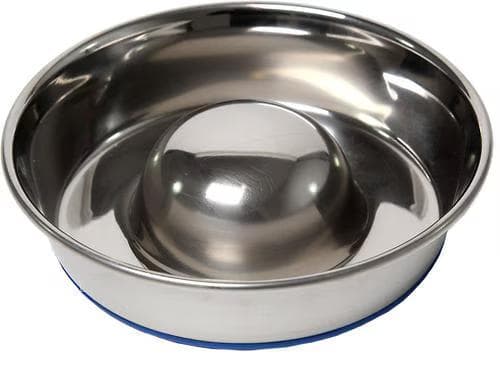
Webvet may earn a commission when you click through to Chewy, at no extra cost to you.
Gulping, gurgling, or air-licking. Audible swallowing, throat gurgles, or snapping at the air as if catching a fly.

Regurgitation. Effortless bringing up of undigested food or frothy liquid, often a tube-shaped lump, with no heaving (more on how this differs from vomiting below).
Other common signs:
Bad breath that smells sour or acidic
Drooling or foamy saliva (ptyalism)
A change in bark or voice, or a persistent dry cough
Reluctance to eat, painful or careful swallowing, or whining and pacing around mealtimes
Restlessness at night, or weight loss in long-standing cases
- 1The earliest signs are subtle: lip-licking, gulping, air-licking, and sour breath.
- 2Regurgitation (effortless) is the hallmark sign, not heaving vomiting.
- 3Voice changes, a dry cough, and night-time restlessness are easy-to-miss clues.

Regurgitation vs Vomiting: Why the Difference Matters
Owners often use these words interchangeably, but your vet needs the distinction because they point to different problems. Vomiting comes from the stomach; regurgitation comes from the esophagus and is the signature of reflux and other esophageal disease.
| Feature | Regurgitation (esophagus) | Vomiting (stomach) |
|---|---|---|
| Effort | Passive, effortless, no warning | Active heaving, abdominal contractions |
| Warning signs | Often none | Drooling, lip-licking, retching first |
| Material | Undigested food, water, frothy mucus, often tube-shaped | Partly digested food, often with yellow or green bile |
| Timing | Soon after eating or drinking | Any time, minutes to hours after eating |
| pH | Usually neutral or slightly acidic | Acidic, may smell sour |
If your dog is truly vomiting rather than regurgitating, especially bringing up yellow bile, our article on why a dog throws up yellow explains the bile-vomiting overlap with reflux.
Night-Time Reflux and Morning Bile Vomiting: What It Means
Reflux often gets worse at night and overnight. When a dog lies flat for hours with an empty stomach, gravity no longer helps keep acid down, and the long gap between dinner and breakfast lets acid and bile pool against the lower esophagus and stomach lining.
Posture is a bigger factor than most owners realize. A standing dog has its esophagus running downhill into the stomach, so gravity keeps stray acid where it belongs. A curled, side-lying dog loses that advantage entirely, and any acid that slips past a relaxed sphincter spreads sideways along the esophagus instead of draining back down. This is why the same dog can seem fine all day and only show signs in the small hours.
The result many owners recognize: a dog that wakes, paces, smacks its lips, then throws up a small amount of foamy yellow or green bile on an empty stomach, classically in the early morning before the first meal. Vets sometimes call this bilious vomiting syndrome, and it overlaps closely with reflux.
Night-time reflux can also disturb sleep without any visible vomiting. If your dog repeatedly gets up, stretches its neck, swallows hard, or seems restless in the small hours, silent overnight reflux may be the reason. Acid irritation can also trigger a dry cough or throat-clearing that's worse when lying down, which is sometimes mistaken for a respiratory problem.
There is a reason this cough deserves attention rather than a cough suppressant. When acid or tiny amounts of refluxed liquid reach the back of the throat, some can be inhaled into the airway, a process called micro-aspiration. Over time that irritates the windpipe and lungs and can set up a low-grade cough or even pneumonia, which is why a reflux cough that never quite clears should be mentioned to your vet rather than treated as a separate kennel-cough-style problem.
One detail worth tracking: when the bile vomiting happens. If it lands almost exclusively in the early-morning hours and stops once your dog eats breakfast, an empty-stomach pattern (and a bedtime snack) is the likely answer. If it happens at random times, comes with retching, or includes food, that points away from simple reflux.
Jotting down the timing for a few days gives your vet a far clearer picture than a single description at the appointment, and it helps separate true reflux from a problem that needs a different workup.

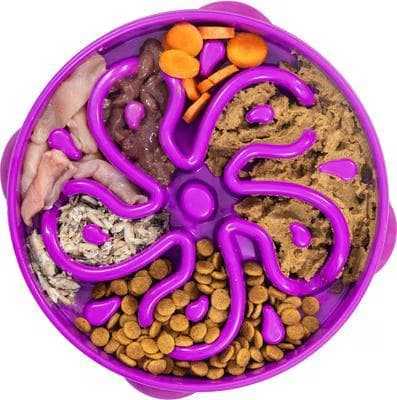
A maze-pattern slow-feeder bowl that makes fast eaters work for each bite, reducing the gulping and swallowed air that trigger regurgitation and vomiting. Holds up to 4 cups.
Webvet may earn a commission when you click through to Chewy, at no extra cost to you.
 $65 · no membership
Worried about your dog's vomiting or diarrhea?
A licensed vet can examine your dog over video and prescribe treatment online when it's appropriate.
 Talk to a vet
- Licensed vets
- All 50 states
- same-day Rx
Webvet may earn a commission if you book.
What Causes Acid Reflux in Dogs? Food Triggers and Risk Factors
Acid reflux usually comes down to a sphincter that isn't sealing properly, a stomach producing too much acid, or food sitting in the stomach too long. Common causes and risk factors include:
Anesthesia and surgery. A leading cause. Anesthetic drugs relax the lower esophageal sphincter, and head-down positioning during surgery (or skipped pre-op fasting) lets acid creep up. Reflux after a recent procedure is common.
High-fat meals and treats. Fat both relaxes the sphincter and stimulates extra stomach acid. Fatty table scraps, rich treats, and high-fat foods are frequent triggers.
Obesity. Extra abdominal fat pushes on the stomach and weakens the sphincter seal, a major and reversible risk factor. The fat acts like a constant hand pressing on a full water balloon, raising the pressure inside the belly so that even a normal sphincter is more easily overwhelmed. Because this trigger responds to weight loss, getting an overweight dog back to a lean body condition is one of the most powerful long-term fixes an owner controls.
Hiatal hernia and anatomy. A congenital or acquired hiatal hernia lets the stomach slip upward. Flat-faced (brachycephalic) breeds like French Bulldogs, English Bulldogs, and Pugs are predisposed because of their airway pressure.
Young age. Puppies and young dogs have an underdeveloped sphincter, so they reflux more easily.
Chronic vomiting and infrequent meals. Ongoing vomiting from any cause can inflame the esophagus, and one big daily meal leaves the stomach empty for long acidic stretches.
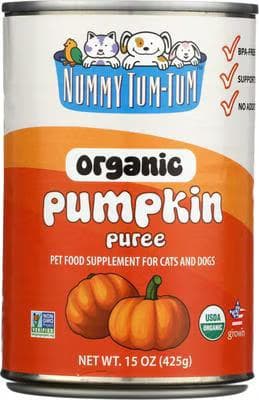
Pure USDA-organic pumpkin puree, no fillers or additives. Adds gentle soluble fiber to firm up loose stool and settle a mildly upset stomach. A simple vet-favorite topper.
Webvet may earn a commission when you click through to Chewy, at no extra cost to you.
What Foods Trigger Acid Reflux in Dogs?
The biggest dietary culprits are fatty and rich foods, because fat is the main driver of excess acid and a relaxed sphincter. Common trigger foods to avoid:
Fatty meats, bacon, sausage, skin, and fat trimmings
Fried foods, butter, oily leftovers, and rich gravy
High-fat dairy like cheese and cream
Spicy or heavily seasoned human food
Acidic foods like tomatoes and citrus, plus very large single meals
- 1Anesthesia, high-fat food, and obesity are the top triggers for acid reflux in dogs.
- 2Flat-faced breeds and young dogs are predisposed.
- 3Fatty, fried, and rich foods are the worst dietary offenders; trim the treats first.
Conditions Mistaken for Acid Reflux in Dogs
Several conditions mimic reflux but need very different treatment, and some are serious. This is why a vet exam matters before you assume it's just heartburn.
| Condition | How it looks like reflux | The key difference |
|---|---|---|
| Megaesophagus | Frequent regurgitation of undigested food | Esophagus is dilated and weak; needs upright feeding and a workup, not just acid reducers |
| Kennel cough | Gulping, gagging, hacking cough | Honking cough plus recent boarding or dog-park exposure; contagious |
| Foreign body | Drooling, swallowing trouble, retching | Sudden onset, distress, possible gagging on a stuck object; an emergency |
| Pancreatitis | Vomiting, nausea, lip-licking, appetite loss | Painful belly, lethargy, often after a fatty meal; needs urgent care |
| Bloat (GDV) | Retching, drooling, discomfort | Swollen hard abdomen, unproductive retching, collapse; a true emergency |
How Vets Diagnose Acid Reflux in Dogs
You can't confirm reflux at home, but you can give your vet a head start. Note when the signs happen (after meals, overnight, on an empty stomach), what comes up, and any recent anesthesia, diet changes, or new medications.

At the clinic, your vet will typically:
Take a full history and physical exam, and ask you to describe whether your dog is regurgitating or vomiting (a key clue).
Run bloodwork and urinalysis (complete blood count, biochemistry, urinalysis) to rule out other causes such as pancreatitis or kidney disease.
Take X-rays or ultrasound of the chest and abdomen to check for hiatal hernia, megaesophagus, or a foreign body.
Recommend endoscopy in unclear or severe cases. Esophagoscopy, passing a small camera down the esophagus under anesthesia, is the gold-standard test and lets the vet directly see acid damage. Both VCA and the Merck Veterinary Manual describe endoscopy as the diagnostic tool of choice.
Treatment: Famotidine vs Omeprazole and Other Medications
Most dogs improve quickly with a combination of diet change and acid-reducing medication. Treatment targets three things: cut acid production, protect the raw esophagus, and (sometimes) tighten the sphincter and speed stomach emptying. All of these are vet-directed, and dosing is always based on your dog's weight.
Famotidine vs Omeprazole: How They Compare
These two are the most common acid reducers, and they work differently. Don't pick one yourself, your vet matches the drug to how severe the reflux is and how long it has been going on. Famotidine (brand name Pepcid) is an H2 blocker that reduces acid and works fast, making it useful for milder or short-term cases. Omeprazole (brand name Prilosec) is a proton pump inhibitor that suppresses acid more completely and is generally preferred for moderate-to-severe or chronic reflux esophagitis.
| Famotidine (Pepcid) | Omeprazole (Prilosec) | |
|---|---|---|
| Drug class | H2-receptor blocker | Proton pump inhibitor (PPI) |
| How it works | Blocks one acid-signaling pathway | Shuts down the stomach's acid pumps more fully |
| Onset | Fast (within about an hour) | Builds over a few days to full effect |
| Best for | Mild or short-term reflux | Moderate-to-severe or chronic reflux esophagitis |
| Dosing | Weight-based, vet-directed | Weight-based, vet-directed; taper, don't stop abruptly |
Two practical points your vet weighs. Current veterinary guidance leans toward omeprazole over famotidine for true esophagitis, because a proton pump inhibitor controls acid more reliably across a full day. Famotidine's effect can also fade with daily use as the body adapts to it.
Timing matters too. Omeprazole is usually given on an empty stomach about 30 minutes before a meal so it can prime the acid pumps, while timing is less critical for famotidine. After several weeks of healing, your vet may taper omeprazole rather than stopping it cold to avoid a rebound surge of acid.
Other Medications Your Vet May Use
Sucralfate is a protectant given as a slurry (mixed with water) that coats and bandages the inflamed esophagus, helping ulcers heal. It is often paired with an acid reducer. Prokinetics such as metoclopramide and cisapride increase lower esophageal sphincter tone and speed up stomach emptying, so there's less acid sitting around to reflux.
These pieces work as a team, and the order matters. Sucralfate needs an acidic environment to activate and form its protective barrier, so it is usually given separately from antacids and at least an hour apart from other oral medications, which it can otherwise bind and block from being absorbed. A prokinetic addresses the mechanical side of the problem (a lazy sphincter and a slow-emptying stomach) that an acid reducer alone cannot fix, which is why severe or stubborn cases often need more than one drug rather than a higher dose of just one.
Can I Give My Dog Pepcid or Prilosec From the Cabinet?
This is the question vets hear most, and the honest answer is: not on your own. Famotidine and omeprazole are the same molecules whether they come from a pharmacy shelf or a veterinary prescription, but the safe amount for a 10-pound terrier and an 80-pound retriever is wildly different.
Human tablets also come in strengths that are hard to split for a small dog, so guessing risks underdosing or overdosing. There is a second reason vets want to examine your dog first: acid reducers can mask a more serious problem, like a stomach ulcer, a foreign body, or early kidney disease.
Dosing a dog blindly can delay a diagnosis that matters. Your vet sets the exact milligram amount by weight, picks the right product, and tells you how long to give it and when to stop. Always make that call before opening the medicine cabinet.
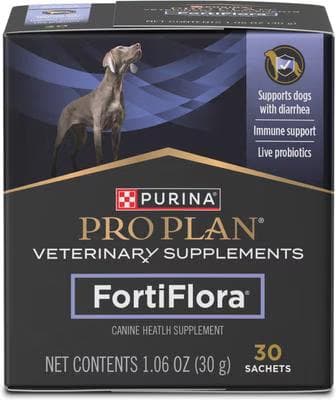
The #1 vet-recommended probiotic for dogs. Daily powder sachets with live probiotics support healthy digestion and firmer stools, and can help dogs coping with diarrhea or GI upset.
Webvet may earn a commission when you click through to Chewy, at no extra cost to you.
What to Feed a Dog With Acid Reflux (Low-Fat Diet and Feeding Changes)
Diet is half the battle and often makes the biggest difference. The goal is a low-fat, easily digestible diet fed in small, frequent meals so the stomach is never overloaded or sitting empty for long. Low fat matters because fat is the strongest dietary trigger for reflux: it both relaxes the sphincter and slows how fast the stomach empties, so a fatty meal lingers and ferments while the gateway to the esophagus sits open.
Smaller, more frequent meals help for a simple mechanical reason. A stomach that is only ever half full sits under less pressure, so there is less force pushing contents up against the sphincter, and an easily digestible meal clears faster and spends less time generating acid. Plain, gentle ingredients also give an already-inflamed esophagus nothing extra to react to while it heals. Give any new food at least a few days of consistency before judging it, since one good or bad day is not a fair test.

Foods That Help
Low-fat, high-quality protein: skinless chicken breast, white fish, lean turkey
Plain cooked white rice, plain pumpkin, and cooked sweet potato for gentle fiber
A veterinary low-fat or gastrointestinal prescription diet for ongoing cases
A quality dog food for sensitive stomachs for dogs that need a long-term maintenance option
Feeding a dog with acid reflux: do's and don'ts
Pros
- Feed several small meals a day instead of one or two large ones
- Keep total fat low; fat is the main acid trigger
- Add a small bedtime snack to buffer overnight acid
- Use an elevated bowl and a slow-feeder to reduce gulped air
- Transition to any new food gradually over 7 to 10 days
Cons
- Don't feed fatty meat, fried food, bacon, or rich table scraps
- Don't give one giant meal that overloads the stomach
- Don't exercise hard right after eating
- Don't free-feed all day if reflux is active
- Don't add new supplements or human antacids without vet input
Natural Acid Reducers and Home Remedies for Dog Acid Reflux
For mild, occasional reflux, several gentle home measures can soothe your dog while you work with your vet. These support, but do not replace, proper diagnosis and treatment.
Slippery elm. A herbal demulcent that forms a soothing gel-like coating over irritated tissue. It's the most popular natural acid reducer for dogs; ask your vet for a weight-appropriate amount and timing, since it can affect absorption of other medications.
Plain canned pumpkin. A spoonful of plain pumpkin (not pie filling) adds gentle, settling fiber.
Smaller, more frequent meals and a bedtime snack. The single most effective at-home change, and free.
Weight loss and elevated feeding. Trimming excess weight and raising the food bowl both reduce pressure that pushes acid upward.
How to Prevent Acid Reflux in Dogs (Prevention Checklist)
Once reflux is under control, a few habits keep it from coming back:
Keep your dog at a healthy weight; lean dogs reflux far less.
Feed multiple small low-fat meals instead of one big one.
Add a small bedtime snack to prevent the overnight acid gap.
Skip fatty treats and table scraps; use a slow-feeder to cut gulped air.
Wait 30 to 60 minutes after meals before vigorous play or walks.
Remind your vet about any reflux history before procedures requiring anesthesia.
- 1Weight control plus small, frequent low-fat meals prevents most recurrences.
- 2A bedtime snack and an elevated, slow-feeder bowl are simple, effective tweaks.
- 3Flag any reflux history before your dog has anesthesia.
Prognosis: Long-Term Outlook for Dogs With Acid Reflux
The outlook is good. Most dogs improve rapidly once acid is controlled and the diet is fixed, and many need treatment only for a few weeks while the esophagus heals. VCA notes that most dogs show rapid improvement in clinical signs with appropriate treatment.
Some dogs, especially flat-faced breeds, those with a hiatal hernia, or those with chronic reflux, need long-term diet management and intermittent or ongoing medication. Left untreated, persistent reflux can scar and narrow the esophagus (a stricture), so early, consistent treatment is what protects the long-term outcome. A stricture can make swallowing genuinely difficult and may need a separate procedure to stretch the esophagus, which is exactly the outcome early treatment helps you avoid. Work with your vet on a maintenance plan, keep your dog lean, and recheck promptly if signs return so small flare-ups don't become chronic damage.
When to Worry: Emergency Warning Signs and When to Call Your Vet
Mild, occasional reflux can usually wait for a regular appointment. But some signs mean something more serious is going on. Book a vet visit soon if your dog has reflux that lasts more than a few days, recurs often, is losing weight, or refuses to eat.
Frequently Asked Questions
How do I cure acid reflux in my dog?
There's no instant cure, but most acid reflux is controlled and resolved with a two-part plan from your vet: a low-fat, easily digestible diet fed in small, frequent meals, plus an acid-reducing medication like famotidine or omeprazole, sometimes with sucralfate to protect the esophagus. Many dogs heal within a few weeks. Treating the underlying cause, such as obesity or a high-fat diet, is what prevents it returning.
How can you tell if your dog has acid reflux?
Look for lip-licking, frequent gulping or swallowing, gurgling, sour breath, drooling, and bringing up undigested food or foamy bile (often in the early morning). Some dogs gag, cough, have a changed bark, or seem reluctant to eat. These signs often appear after meals or overnight. The most useful thing you can do is keep a short log noting when each episode happens, whether your dog heaved or brought food up effortlessly, and what came up, because that pattern helps your vet separate reflux from look-alike problems. Only a vet can confirm reflux, sometimes with bloodwork, X-rays, or an esophageal endoscopy, so see your vet if signs persist.
What foods trigger acid reflux in dogs?
Fatty and rich foods are the main triggers because fat relaxes the esophageal sphincter and boosts stomach acid. Common offenders include fatty meats, bacon, sausage, fried foods, butter, oily leftovers, high-fat cheese and cream, spicy seasoned human food, and acidic foods like tomatoes and citrus. Very large single meals also trigger reflux by overloading the stomach. Cutting fatty treats and table scraps is usually the most effective first step.
What is a natural acid reducer for dogs?
Slippery elm is the most popular natural acid reducer for dogs. It's a herbal demulcent that coats and soothes irritated tissue. Plain canned pumpkin adds gentle settling fiber. The most effective natural approach, though, is feeding smaller, more frequent low-fat meals, adding a bedtime snack, and keeping your dog lean. Ask your vet before using slippery elm, since it can interfere with the absorption of other medications.
What not to feed a dog with acid reflux?
Avoid all high-fat foods: fatty meats, bacon, sausage, fried food, butter, gravy, and full-fat dairy like cheese and cream. Skip spicy or heavily seasoned human food and acidic foods such as tomatoes and citrus. Don't feed one large meal, and avoid fatty treats and table scraps entirely. Also steer clear of human antacids like Pepto-Bismol, Tums, or Gaviscon unless your vet specifically directs it, as some are unsafe for dogs.
What soothes a dog's acid reflux?
A small, bland low-fat meal (like plain rice with a little lean chicken) can buffer acid and soothe the stomach, especially a bedtime snack to ease early-morning reflux. Slippery elm and plain pumpkin may calm an irritated esophagus. Raising the food bowl so your dog eats with its head and neck slightly elevated also lets gravity help keep acid down during and just after a meal. For real relief in persistent cases, vet-prescribed acid reducers (famotidine or omeprazole) and sucralfate work best, because they cut acid production and physically coat the raw lining so it can heal. Keeping meals small and frequent and your dog lean soothes reflux long-term.
What is the silent killer of dogs?
The silent killer most often refers to bloat, or gastric dilatation-volvulus (GDV), where the stomach fills with gas and twists, cutting off blood supply. It can be fatal within hours. It is not acid reflux, but the early signs (drooling, retching, discomfort) can look similar. Warning signs are a swollen, hard belly, unproductive retching, restlessness, and collapse. Deep-chested breeds are most at risk. It is a life-threatening emergency requiring immediate veterinary care.
$65 · no membershipWorried about your dog's vomiting or diarrhea?
A licensed vet can examine your dog over video and prescribe treatment online when it's appropriate.
Talk to a vet- Licensed vets
- All 50 states
- same-day Rx
Webvet may earn a commission if you book.

Wendy Toth is an entrepreneurial writer, editor, and mom of two humans, two dogs and one cat. She’s currently Content Director here at PetFul. For the last 15 years she has held positions at Parents Magazine, NBC, PetSmart, and GreatPetCare, where she was co-founder. Her writing has appeared in many national outlets including Pet Lab Co., Retail Me Not, Ask Men, Wild Society Nutrition, and The New York Times. Because she loves her work so much, she’s obsessed with helping others find career fulfillment, and covers it regularly at PowerSuiting.
Veterinarian · BVMS MRCVS
Dr. Pippa Elliott, BVMS, MRCVS, is a veterinarian with nearly 30 years of experience in companion animal practice. Dr. Elliott earned her Bachelor of Veterinary Medicine and Surgery from the University of Glasgow. She was also designated a Member of the Royal College of Veterinary Surgeons. Married with 2 grown-up kids, Dr. Elliott has a naughty Puggle named Poggle, 3 cats and a bearded dragon.


