Famotidine for Dogs and Cats (Pepcid): Dosage Chart and Safety
Is Pepcid safe for dogs? Get the famotidine dosage chart by weight, the right timing before meals, which OTC products to avoid, and when vomiting needs a vet.

BVMS MRCVS
Medically reviewed by Dr. Pippa Elliott, BVMS MRCVS · Last reviewed

Drug facts
Famotidine
Famotidine is an H2-blocker acid-suppressant used in dogs and cats. It reduces stomach acid, raises stomach pH, and supports healing for conditions like gastritis, vomiting, and medication-related stomach irritation.
Treats
 $65 · no membership
Need a prescription for Famotidine?
A licensed vet can assess your pet over video and prescribe Famotidine online when it's appropriate.
 Talk to a vet
- Licensed vets
- All 50 states
- same-day Rx
Webvet may earn a commission if you book.
Famotidine for dogs, best known by the brand name Pepcid, is an over-the-counter H2 blocker that reduces stomach acid. Veterinary references report a dose of 0.5 to 1 mg/kg, approximately 0.23 to 0.45 mg per pound, by mouth every 12 to 24 hours. Consumer charts often round that to about 0.25 to 0.5 mg per pound, but the source-derived mg/kg range should guide veterinary calculation. Only your veterinarian can decide whether an antacid fits your dog's diagnosis and confirm the exact dose.
Famotidine Dosage for Dogs by Weight
When considering famotidine for dogs, use the veterinarian-confirmed product and plan for that animal. The chart below converts the published veterinary range of 0.5 to 1 mg/kg into milligrams per dose. It is not a direction to start treatment. Tablet strengths do not line up neatly for every dog, and kidney function, other medicines, age, and the cause of vomiting can change the dose or make famotidine the wrong treatment.
| Dog's weight | Published reference range per dose | Common tablet-strength issue | Frequency |
|---|---|---|---|
| 5 lb | About 1.1 to 2.3 mg | Usually needs a veterinary liquid or custom strength | Every 12 to 24 hours only as prescribed |
| 10 lb | About 2.3 to 4.5 mg | A 10 mg tablet is too large for the reference range | Every 12 to 24 hours only as prescribed |
| 20 lb | About 4.5 to 9.1 mg | The prescribed amount may require a liquid or divided tablet | Every 12 to 24 hours only as prescribed |
| 30 lb | About 6.8 to 13.6 mg | Confirm the exact tablet fraction rather than rounding | Every 12 to 24 hours only as prescribed |
| 40 lb | About 9.1 to 18.1 mg | Either OTC strength could fit only after vet confirmation | Every 12 to 24 hours only as prescribed |
| 50 lb | About 11.3 to 22.7 mg | Do not round automatically to a shelf strength | Every 12 to 24 hours only as prescribed |
| 60 lb | About 13.6 to 27.2 mg | A veterinarian may choose within the range based on the case | Every 12 to 24 hours only as prescribed |
| 80 lb | About 18.1 to 36.3 mg | Confirm whether one or two daily doses are intended | Every 12 to 24 hours only as prescribed |
| 100 lb | About 22.7 to 45.4 mg | Higher body weight does not remove the need for diagnosis | Every 12 to 24 hours only as prescribed |
The range is broad because famotidine is used for different acid-related problems and because pets handle medicines differently. Do not calculate a dose from body weight alone. Ask the clinic to state the milligrams per dose, the tablet or liquid strength, the frequency, how many days to give it, and what should trigger a recheck.
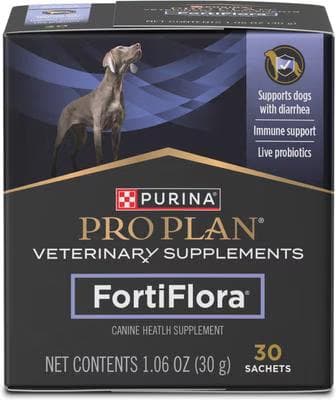
The #1 vet-recommended probiotic for dogs. Daily powder sachets with live probiotics support healthy digestion and firmer stools, and can help dogs coping with diarrhea or GI upset.
Webvet may earn a commission when you click through to Chewy, at no extra cost to you.

Tablet strengths and liquid famotidine
Plain famotidine tablets are commonly sold in 10 mg and 20 mg strengths, with other strengths also available. Small dogs often need a fraction that is difficult to measure accurately from an over-the-counter tablet. A veterinary compounded liquid or a smaller prescribed strength may be safer than guessing at a crumb.
Check the concentration on any liquid because milligrams and milliliters are not interchangeable. Use the measuring syringe supplied by the pharmacy. Human liquids and flavored products can contain inactive ingredients that were not chosen for a dog, so the veterinary team should approve the exact bottle before it is used.
If a dose is missed, follow the clinic's directions or give it when remembered unless the next dose is close. Do not give two doses at once. If the dog vomits soon after receiving famotidine, call before repeating it because some of the medicine may already have been absorbed.
Is Famotidine (Pepcid) Safe for Dogs?
Famotidine can be safe for dogs when a veterinarian has confirmed an acid-related reason to use it and selected the dose. It is not FDA approved specifically for animals, so veterinary use is extra-label. Extra-label prescribing is common and legal under veterinary oversight, but over-the-counter access does not turn the medicine into a diagnosis-free home remedy.
Famotidine blocks histamine-2 receptors on acid-producing stomach cells. With less histamine signaling, the stomach releases less acid. That can give an irritated stomach lining, esophagus, or ulcer a less acidic environment in which to heal. Famotidine does not directly stop every form of nausea, cure an obstruction, kill parasites, treat pancreatitis, or correct kidney or liver disease.
The OTC shelf check
Before buying or giving a product, read the entire active-ingredient panel rather than relying on the word Pepcid on the front. The safe-versus-avoid decision is:
- Choose a plain tablet or veterinary preparation containing famotidine as the only active drug.
- Match the milligram strength to the veterinarian's written instructions.
- Avoid products labeled Complete, Duo, combination, dual action, or multi-symptom.
- Avoid an effervescent, gummy, chew, or flavored liquid unless the clinic approves its inactive ingredients.
- Do not substitute another heartburn medicine because it sits beside famotidine on the shelf.
Human famotidine and veterinary famotidine contain the same active molecule. What differs is the strength, dosage form, flavoring, combination ingredients, and precision needed for the animal's dose. A quick photograph of the front and ingredient panel can help the clinic verify a product before purchase.
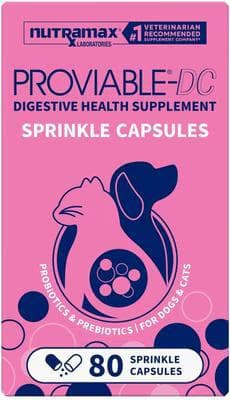
Multi-strain probiotic plus prebiotic sprinkle capsules for dogs and cats; supports digestive balance during diarrhea, diet changes, and antibiotic courses.
Webvet may earn a commission when you click through to Chewy, at no extra cost to you.
What Famotidine Helps With in Dogs
Veterinarians use famotidine for selected acid-related conditions, including gastritis, gastric or duodenal ulcers, esophagitis, reflux, and some cases of acid-related vomiting. It may be part of supportive care for a pet whose primary illness raises ulcer risk, but routine preventive use is not automatically beneficial.
Famotidine is most useful when acid is a meaningful part of the problem. It is less useful when vomiting comes from an intestinal blockage, toxin exposure, pancreatitis, motion sickness, infection, organ failure, or another cause that needs different treatment. A dog can temporarily vomit less while the underlying disease continues, which is why symptom relief cannot replace a diagnosis.
- 1Repeated vomiting needs a veterinarian, not repeated antacid doses.
- 2Bright red blood or material that resembles coffee grounds can signal stomach bleeding.
- 3Black tarry stool can be digested blood from higher in the gastrointestinal tract.
- 4A painful or swollen abdomen, unproductive retching, weakness, pale gums, or collapse is urgent.
- 5Puppies, frail seniors, and dogs with chronic disease can dehydrate quickly and should be assessed early.

Upset stomach and vomiting
An owner searching for famotidine for an upset stomach usually wants to stop vomiting quickly. The safer first question is what is causing the vomiting. A dog that vomited once but remains bright, hydrated, and interested in food is different from a dog that repeatedly vomits, cannot keep water down, or appears painful.
Call the veterinarian before using famotidine if vomiting is recurrent, the dog has another illness, a foreign object or toxin is possible, or the dog already takes prescription medicine. Famotidine can reduce acid, but it does not restore hydration or correct an obstruction. It also is not a treatment for diarrhea, which points mainly to the intestines rather than stomach acid.
Ulcers, gastritis, reflux, and esophagitis
Acid suppression can support healing when a veterinarian diagnoses or strongly suspects an ulcer or acid injury. Famotidine's effect begins relatively quickly, but stronger sustained acid suppression may be needed for significant ulcer disease. The veterinary plan may include diagnosis and treatment of the original cause, such as stopping an irritating medicine or managing another illness.
Esophagitis can occur when acidic stomach contents move backward into the esophagus. Signs may include repeated swallowing, lip licking, regurgitation, discomfort after eating, poor appetite, or reluctance to swallow. Those signs overlap with several other disorders, so treatment should follow an examination rather than a label-based guess.
When and How to Give Famotidine
Famotidine generally works best on an empty stomach, 30 to 60 minutes before the first meal. Food can reduce or delay absorption and weaken the acid-suppressing effect. If the dog refuses a bare tablet, ask whether a very small bite of food is an acceptable compromise rather than hiding it in a full meal.
For a twice-daily prescription, the clinic may direct doses about 12 hours apart. For once-daily use, pairing the dose with a consistent morning routine makes missed doses less likely. The label controls the schedule. Do not change once daily to twice daily because symptoms return before the next dose.
The medicine may begin affecting acid production within about 1 to 2 hours, but the improvement can be hard to see. A dog with an irritated stomach lining still needs time to heal, and a dog with the wrong diagnosis may not improve at all. Call if signs worsen or fail to improve on the timeline the veterinarian gave you.
A practical administration checklist
- Confirm the dog's current weight and the exact milligrams per dose.
- Confirm that famotidine is the only active ingredient in the product.
- Give the medicine before food when the veterinarian directs it.
- Use a pharmacy syringe for liquid rather than a kitchen spoon.
- Record doses if more than one person cares for the dog.
- Do not double a missed dose or repeat a vomited dose without advice.
- Store the bottle where children and pets cannot reach it.
If a dog accidentally eats many tablets, call a veterinarian or animal poison service with the product name, strength, estimated amount, time, body weight, and current signs. Even a drug with a relatively wide safety margin deserves professional triage after a bottle exposure.
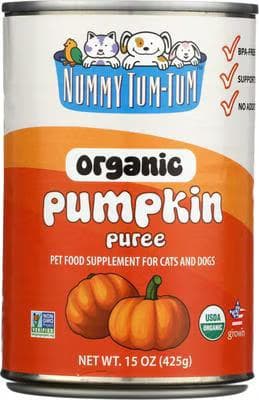
Pure USDA-organic pumpkin puree, no fillers or additives. Adds gentle soluble fiber to firm up loose stool and settle a mildly upset stomach. A simple vet-favorite topper.
Webvet may earn a commission when you click through to Chewy, at no extra cost to you.
Famotidine Side Effects and When It Is Not Enough

Famotidine has a limited side-effect profile at standard veterinary doses. Possible effects include reduced appetite, vomiting, diarrhea or soft stool, and temporary tiredness. Because these signs can also come from the illness being treated, a new or worsening pattern should be reported rather than assumed to be harmless.
Stop and call promptly for:
- vomiting that begins or worsens after starting the drug
- refusal to eat, especially in a small, young, senior, or chronically ill dog
- hives, facial swelling, or another possible allergic reaction
- unusual bruising, bleeding, weakness, or pale gums
- signs that persist despite the veterinarian's expected response window
Kidney disease and drug interactions
The kidneys help clear famotidine. Dogs with reduced kidney function may need a lower dose or a longer interval so the drug does not accumulate. This is one reason the same body weight does not guarantee the same prescription.
Famotidine changes stomach acidity and can reduce absorption of medicines that need an acidic environment, including some antifungal drugs. Do not stack it with another H2 blocker, proton pump inhibitor, or antacid unless the veterinarian intentionally built the combination. Share prescription drugs, preventives, supplements, and over-the-counter products with the clinic.
Why daily famotidine can stop working
Repeated daily use can lead to tachyphylaxis, meaning the stomach's acid response adapts and the drug becomes less effective. In a controlled study in dogs, famotidine's acid-suppressing effect had diminished by roughly day 13 of consecutive twice-daily dosing. Veterinary guidance commonly treats famotidine as a short-term tool rather than a permanent answer for chronic acid disease.
Loss of effect is not a reason to increase the dose. It is a reason to revisit the diagnosis and treatment strategy. A dog needing continued acid suppression may need a different class of medicine, additional testing, or treatment of the underlying disease.
Famotidine vs Omeprazole and Other Antacids
Famotidine is an H2 receptor antagonist. Omeprazole is a proton pump inhibitor that blocks a later and more powerful step in acid production. Proton pump inhibitors generally produce stronger, more sustained acid suppression, while famotidine begins working faster and is often used for short-term acid control.
| Question | Famotidine | Omeprazole |
|---|---|---|
| Drug class | H2 receptor antagonist | Proton pump inhibitor |
| How it reduces acid | Blocks a histamine signal to acid-producing cells | Blocks the acid pump itself |
| Onset | Often begins within 1 to 2 hours | Full effect builds over several days |
| Typical role | Short-term or milder acid-related use | Stronger sustained suppression for ulcers or reflux when prescribed |
| Long-term limitation | Daily effect can fade after roughly two weeks | Different stopping and treatment considerations apply |
| Owner action | Use only the confirmed plain product and dose | Do not substitute or switch without veterinary direction |
The full antacid-choice decision belongs to WebVet's guide to omeprazole for dogs compared. Do not treat the table as a ranking that applies to every dog. A stronger acid suppressant is not automatically better when acid is not the reason for the symptoms.
Other over-the-counter antacids have different active ingredients, dosing, interactions, and electrolyte effects. Calcium carbonate, magnesium-containing products, and multi-ingredient remedies should not be substituted for famotidine. A veterinarian may choose a different medicine after considering the diagnosis, kidney function, hydration, and other drugs.
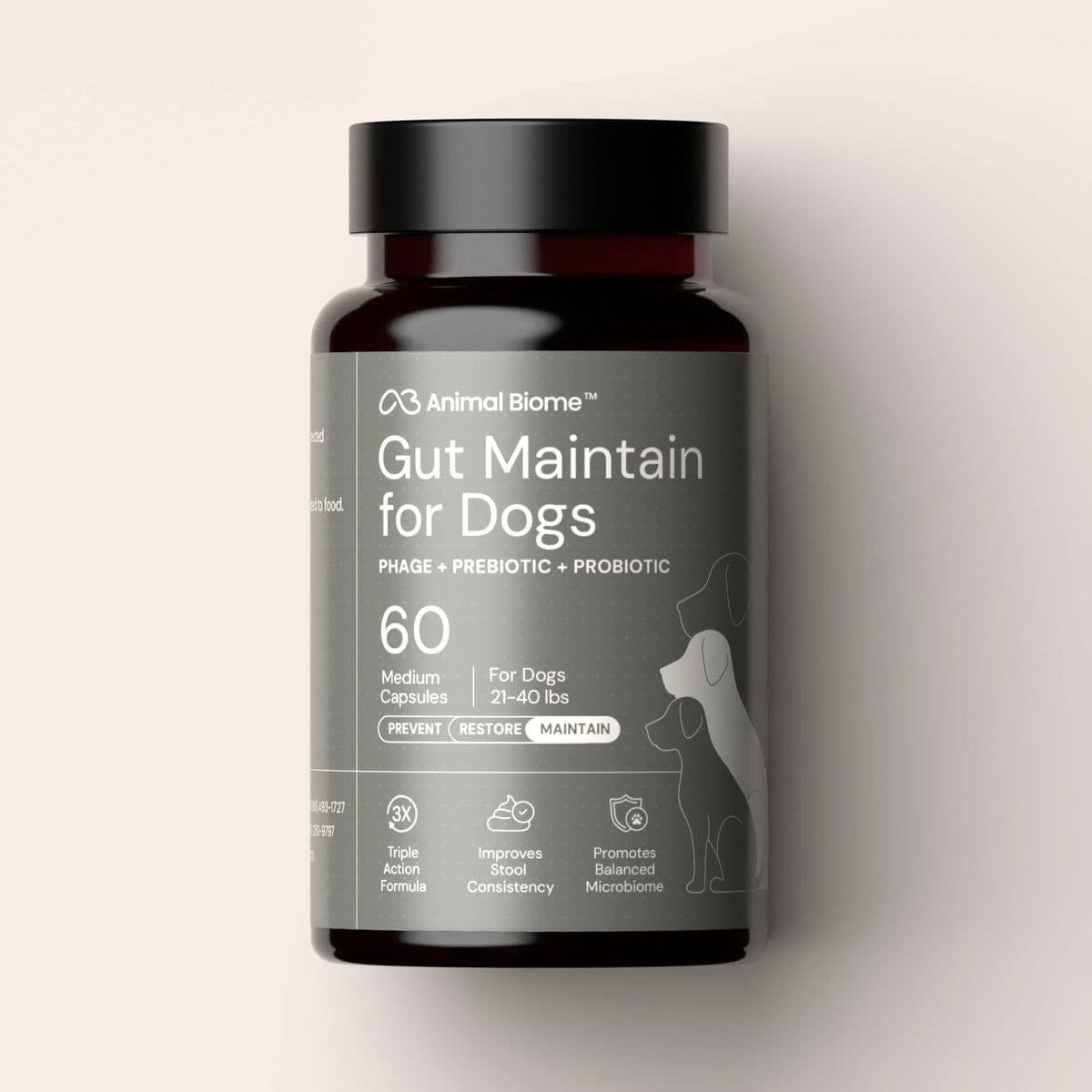
Triple-action phage, prebiotic, and probiotic capsules for everyday maintenance of a balanced gut microbiome once a dog's digestive flare has settled.
Webvet may earn a commission when you click through to Animal Biome, at no extra cost to you.
Honest Cost Expectations
Plain generic famotidine is usually inexpensive compared with many prescription veterinary medicines. The real cost depends on tablet strength, dose frequency, treatment length, pharmacy, and whether a small dog needs a compounded liquid. A low shelf price is not a reason to buy a combination product or an inaccurate strength.
For a brief, appropriate course, the diagnostic examination may cost more than the tablets. That is not wasted spending. The examination protects against using an antacid to hide an obstruction, ulcer, pancreatitis, kidney disease, toxin exposure, or another problem that becomes more expensive when care is delayed.
Ask for three numbers:
- the expected medication cost for the prescribed course
- the cost of any recommended examination or diagnostic testing
- the cost and timing of a recheck if signs do not resolve
For chronic symptoms, repeated over-the-counter purchases can create false economy. A clear diagnosis and durable plan often cost less than cycling through antacids while the disease continues.
Supporting Recovery Without Masking Disease
Food and hydration plans depend on the diagnosis. A veterinarian may recommend an easily digested complete diet, controlled meal size, or a gradual transition back to the normal food. Do not assume fasting is safe for every dog, particularly puppies, tiny breeds, diabetic dogs, frail seniors, or dogs with another medical condition.
Some digestive support products may fit selected cases. If the veterinarian recommends a probiotic, Nutramax Proviable for dogs and cats is one product to ask about, but it does not make repeated vomiting safe to manage at home. The medical decision comes first: acid suppression, hydration, anti-nausea therapy, diet, parasite treatment, imaging, or surgery solve different problems.
Keep a short log of dose time, meals, vomiting, stool, water intake, urination, energy, and abdominal comfort. A pattern helps the veterinarian decide whether famotidine is working or merely changing one symptom. Photos of vomit or stool can be useful, but collecting evidence should never delay urgent care.
How Veterinarians Decide Whether Famotidine Fits
The prescribing decision starts with the pattern of illness, not the medicine cabinet. The veterinarian asks when vomiting began, how often it occurs, whether it is vomiting or passive regurgitation, what the material looks like, whether stool has changed, and whether the dog can keep water down. Diet changes, scavenging, toxin access, foreign-object risk, travel, current medicines, and chronic disease all change the short list of causes.
A physical examination can reveal dehydration, fever, abdominal pain, a distended stomach, pale gums, jaundice, a heart-rate change, or another finding that makes home antacid care inappropriate. Depending on the pattern, the next step may include:
- bloodwork to assess hydration, anemia, infection, kidney values, liver values, glucose, and electrolytes
- urinalysis to add context about hydration and kidney function
- fecal testing when parasites or infectious diarrhea are plausible
- abdominal radiographs or ultrasound when obstruction, bloat, pancreatitis, a mass, or organ disease is possible
- review of every prescription and supplement for stomach irritation or interaction risk
- a diet trial or other targeted gastrointestinal plan after urgent causes are excluded
The useful question is not simply, "Can my dog take Pepcid?" It is, "What finding makes reduced stomach acid likely to help this dog?" That question ties the medication to a diagnosis and creates a measurable response plan.
How to judge response
Before the first dose, note the dog's appetite, vomiting frequency, abdominal comfort, energy, stool color, and water intake. Improvement may look like fewer acid-related episodes, a return of appetite, and more comfortable rest. Those observations are more useful than assuming the drug worked because one scheduled dose was given.
Call for reassessment if:
- vomiting continues or returns on the agreed timeline
- the dog becomes less interested in food or water
- new diarrhea, blood, black stool, pain, weakness, or lethargy appears
- symptoms improve only while famotidine is given and recur whenever it stops
- the dog needs daily acid control beyond the short course the veterinarian planned
Persistent dependence on an over-the-counter antacid is a diagnostic clue. It can point to a chronic acid problem, but it can also reflect an untreated disorder that famotidine only partially masks. A recheck lets the veterinarian decide whether to test, change the medicine class, or address another cause.
Famotidine for Cats
Veterinarians also use famotidine extra-label in cats for selected acid-related conditions. The same core cautions apply: vomiting in a cat is a sign rather than a diagnosis, small doses are hard to measure from human tablets, and reduced kidney function can change drug clearance. Cats that stop eating need prompt attention because prolonged poor intake can create serious metabolic complications.
Published veterinary references include a feline range similar to the canine mg/kg range, but a cat should not be dosed from the dog chart. The veterinarian may choose a liquid or compounded strength for accuracy. Injectable famotidine belongs in a hospital, where administration can be controlled and monitored.
If a cat receives a dog's dose or gets into a bottle, call the veterinarian with the exact product, strength, amount, time, and the cat's weight. Do not wait for signs and do not attempt to induce vomiting unless a veterinary professional specifically directs it.
Famotidine for Dogs FAQs
Frequently Asked Questions
What is the best time to give dog famotidine?
The best time to give a dog famotidine is before the first meal when that matches the veterinarian's directions. Give it on an empty stomach, ideally thirty to sixty minutes beforehand. A consistent pre-breakfast routine can make the schedule easier to follow. If the dog vomits, refuses food, or needs other medicines, ask the clinic before changing the timing.
Is human famotidine the same as dog famotidine?
Human famotidine and dog famotidine can use the same active ingredient, but that does not make every human product safe to substitute. Product strength and added ingredients differ. Use plain tablets only after the veterinarian confirms the exact product, strength, and prescribed amount for the dog. Do not choose a combination medicine or copy a person's directions.
Can dogs be on famotidine long term?
Dogs can be on famotidine long term only with veterinary oversight and a clear reason for continued treatment. The acid-suppressing effect fades with daily use, so a vet review is needed rather than an owner-directed dose increase. Chronic or returning symptoms may call for a different acid reducer, diagnostic testing, or treatment aimed at the underlying cause.
The Bottom Line
Famotidine can be a useful short-term acid reducer for dogs, but over-the-counter availability does not make it a universal vomiting remedy. The published reference range is 0.5 to 1 mg/kg, approximately 0.23 to 0.45 mg per pound, every 12 to 24 hours, and the veterinarian must convert that range into the exact dose, product, duration, and follow-up plan.
Choose plain famotidine only, give it before food when directed, and do not use it to mask repeated vomiting, blood, black stool, abdominal pain, weakness, or collapse. If the drug seems to lose effect with daily use, revisit the diagnosis rather than raising the dose.
Bring the exact package or a clear ingredient-panel photograph to the veterinary discussion. Verifying the product is as important as calculating the milligrams because combination ingredients can turn a familiar brand name into a different medication decision.
$65 · no membershipNeed a prescription for Famotidine?
A licensed vet can assess your pet over video and prescribe Famotidine online when it's appropriate.
Talk to a vet- Licensed vets
- All 50 states
- same-day Rx
Webvet may earn a commission if you book.

Editor
The Webvet Editorial Team is the in-house group of pet-care editors and writers behind Webvet, operated by Smart Pet Collective. The team researches, writes, and maintains Webvet's pet health, behavior, and medication content. Every article follows a defined editorial process: research from reputable veterinary and scientific sources, careful drafting, mandatory review of medical content by a credentialed veterinarian, and dated publication. Health and medication articles are medically reviewed by a licensed veterinary professional before they go live and are kept current over time.
Veterinarian · BVMS MRCVS
Dr. Pippa Elliott, BVMS, MRCVS, is a veterinarian with nearly 30 years of experience in companion animal practice. Dr. Elliott earned her Bachelor of Veterinary Medicine and Surgery from the University of Glasgow. She was also designated a Member of the Royal College of Veterinary Surgeons. Married with 2 grown-up kids, Dr. Elliott has a naughty Puggle named Poggle, 3 cats and a bearded dragon.


