Ondansetron for Dogs and Cats

BVMS MRCVS
Medically reviewed by Dr. Pippa Elliott, BVMS MRCVS · Last reviewed

Drug facts
Ondansetron
Ondansetron is a 5-HT3 receptor antagonist antiemetic used off-label in dogs and cats to control nausea and vomiting. It does not treat the underlying disease but helps pets feel more comfortable and more willing to eat.
Treats
 $65 · no membership
Need a prescription for Ondansetron?
A licensed vet can assess your pet over video and prescribe Ondansetron online when it's appropriate.
 Talk to a vet
- Licensed vets
- All 50 states
- same-day Rx
Webvet may earn a commission if you book.
What is Ondansetron for Dogs and Cats
Overview
Ondansetron is a 5-HT3 receptor antagonist, which means it blocks serotonin type 3 receptors involved in the vomiting reflex. It acts on receptors in the emetic center and chemoreceptor trigger zone in the brain, as well as on 5-HT3 receptors on the vagus nerve in the gastrointestinal tract. By blocking these receptors, ondansetron helps reduce both nausea and vomiting.In veterinary medicine, ondansetron is used off label. It is not currently approved for dogs as an antiemetic. The only anti-vomiting medication officially approved for dogs is maropitant citrate. However, ondansetron is often chosen when other medications are not enough, not tolerated, or not affordable for the owner, especially in hospitalized dogs that are very nauseous.Explore more digestive and GI medications in our Digestive section.
What Is Ondansetron for Dogs and Cats Used For
| Condition | Notes |
|---|---|
| Acute vomiting in hospitalized dogs | Frequently used intravenously when dogs are vomiting or very nauseous in the hospital. |
| Nausea from vestibular disease | IV ondansetron at 0.5 mg/kg significantly reduced nausea scores and signs such as salivation, lip licking, and restlessness. |
| Chemotherapy-related nausea | Given before chemotherapy to lessen nausea and vomiting, often 30 minutes prior to treatment. |
| Support in inappetent or nauseous dogs | Used when dogs will not eat or feel unwell due to GI disease, systemic illness, or other treatments. |
| When maropitant cannot be used or is not enough | Sometimes chosen due to cost, availability, or clinical judgment. |
How Ondansetron for Dogs and Cats Works
Ondansetron works by blocking 5-HT3 receptors in both the brain and the gut. These receptors respond to serotonin, a key chemical that triggers nausea and vomiting. By blocking serotonin at these receptors, ondansetron reduces nausea signals from the gut to the brain and directly within the brain’s vomiting centers, helping to stop or prevent vomiting.
Drug Facts
Ondansetron is an antiemetic and antinausant classified as a 5-HT3 receptor antagonist. It is originally a human medication but is widely used in dogs off label. It does not treat the underlying disease but helps control nausea and vomiting so that pets can feel more comfortable and may be more willing to eat and take other medications. It can be given intravenously (IV) in the hospital or by mouth (PO) as tablets or liquid.
Compare coverage choices for your pet, then request a quote directly on Lemonade.
- Check a price for your pet
- Review available coverage choices
- See the terms before you decide
Eligibility, waiting periods, limits and exclusions apply.
Webvet may earn a commission when you click through to Lemonade, at no extra cost to you.
Common Brands
Zofran, Wigodan, Emikind
Drug Class
5-HT3 receptor antagonist antiemetic
Substance Classification
Not a controlled medication
Generic Status
Generic widely available
Availability
Off label for veterinary use
Available forms
Ondansetron for Dogs and Cats Dosage Forms
Ondansetron is available as oral tablets, oral liquid, and injectable solution for human use, which veterinarians adapt for animals. In dogs, IV ondansetron is commonly given in the hospital, and oral tablets may be used when a dog can take medication by mouth.Oral ondansetron in dogs has very low bioavailability. In one study, the estimated oral bioavailability in healthy dogs was only about 5 percent, and many hospitalized dogs had plasma levels that were undetectable after oral dosing. This means oral forms may not always work as expected, especially in very sick or inappetent dogs.
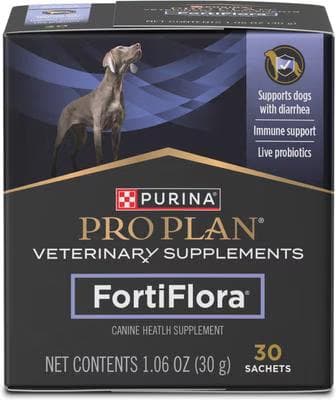
The #1 vet-recommended probiotic for dogs. Daily powder sachets with live probiotics support healthy digestion and firmer stools, and can help dogs coping with diarrhea or GI upset.
Webvet may earn a commission when you click through to Chewy, at no extra cost to you.
Oral Tablets (30 pcs)
| Qty/Size | Price as low as | Price per unit |
|---|---|---|
| 4 mg | $10.00 | $0.33 |
| 8 mg | $18.00 | $0.60 |
Oral liquid (4 mg/mL)
| Qty/Size | Price as low as | Price per unit |
|---|---|---|
| 50 mL | $55.00 | $1.10 |
| 100 mL | $95.00 | $0.95 |
Injectable solution (2 mg/mL)
| Qty/Size | Price as low as | Price per unit |
|---|---|---|
| 20 mL | $25.00 | $1.25 |
| 40 mL | $40.00 | $1.00 |
Typical Dosing For Ondansetron for Dogs and Cats
In dogs, ondansetron can be given intravenously or orally, with dosing adjusted based on the cause and severity of nausea and the dog’s health status.
Published and recommended doses include:
- 0.2 to 1 mg/kg every 8 to 12 hours by mouth or injection
- Commonly 0.5 mg/kg by mouth or IV every 12 to 24 hours
- Up to 1 mg/kg IV every 12 to 24 hours in some cases
- 30 minutes before chemotherapy when used to prevent chemo-related nausea
Oral dosing
| Group | Typical Dose | Notes |
|---|---|---|
| Dogs (general range) | 0.2 to 1 mg/kg PO every 8 to 12 hours | Within recommended oral dosing range. |
| Chemotherapy patients | 0.5 to 1 mg/kg PO, 30 minutes before chemotherapy | Used to prevent chemo-related nausea and vomiting. |
Important: Even at 1 mg/kg orally, many dogs had very low or undetectable blood levels of ondansetron. Some dogs showed clinical improvement in nausea scores, but this may have been due to other supportive treatments or local GI effects rather than reliable systemic levels.
Webvet may earn a commission when you click through to Chewy, at no extra cost to you.
Intravenous dosing
| Group | Typical Dose | Notes |
|---|---|---|
| Dogs (general range) | 0.5 to 1 mg/kg IV every 12 to 24 hours | Common IV dosing for hospitalized patients. |
| Dogs with vestibular syndrome | 0.5 mg/kg IV as a single dose | Nausea scores dropped significantly 2 hours after dosing, and vomiting resolved. |
IV administration bypasses first-pass metabolism and gives much higher and more reliable blood levels compared to oral dosing.
Reported side effects
Risks and Warnings for Ondansetron for Dogs and Cats
Ondansetron is generally well tolerated in dogs, especially when used short term. However, several important points should be considered.
Webvet may earn a commission when you click through to Chewy, at no extra cost to you.
The biggest concern with ondansetron in dogs is the poor and unpredictable absorption when given by mouth. Many dogs in studies had plasma levels below the measurable limit, even when given 1 mg/kg orally. This raises questions about how effective oral ondansetron really is in very sick or inappetent dogs.
When given intravenously, ondansetron should be diluted and administered carefully, as fast or concentrated IV injections may irritate veins. As with many medications, rare reactions are possible, including changes in heart rhythm, although these were not specifically highlighted in the veterinary studies summarised in your document.
Because ondansetron is off label in dogs, it should be used only when a veterinarian determines that the benefits outweigh potential risks and that maropitant or other approved options are not suitable alone.
Ondansetron for Dogs and Cats Warnings and Precautions
Use ondansetron with care and always under veterinary supervision.
- Not approved for dogs, use is off label.
- Oral absorption is often poor, especially in hospitalized or very sick dogs.
- IV doses should be diluted with saline to reduce risk of vein irritation.
- Use cautiously in pets with heart disease or arrhythmia risk.
- Use with caution in pets with liver disease, as metabolism may be affected.
- Do not use without veterinary direction, especially if the cause of vomiting is unknown.
Disclaimer: This information is for educational purposes only and should not replace professional veterinary advice. Always consult your veterinarian before using or combining any medications for your pet.
Frequently Asked Questions (FAQ)
Is ondansetron approved for use in dogs?
No.
Ondansetron is not currently approved for dogs
as an anti-vomiting medication. It is used off label under veterinary guidance. Maropitant is the only antiemetic approved for dogs.
Is oral ondansetron effective in dogs?
Studies show that
oral bioavailability is very low
in dogs, and many dogs have undetectable blood levels after oral dosing. Some dogs still show improved nausea scores, but IV administration is more reliable.
When is ondansetron preferred over maropitant?
Ondansetron may be used when
additional anti-nausea support is needed
, when maropitant alone is not enough, or when cost or other factors limit maropitant use.
How fast does ondansetron start working?
Given IV, ondansetron can start reducing nausea
within a couple of hours
, as shown in vestibular syndrome dogs whose nausea scores dropped significantly after dosing.
Can ondansetron be used long term?
Long-term use should be carefully supervised. Ondansetron is mainly used
short term
in hospitalized or acutely ill dogs. Any long-term plan should be discussed with your veterinarian.
$65 · no membershipNeed a prescription for Ondansetron?
A licensed vet can assess your pet over video and prescribe Ondansetron online when it's appropriate.
Talk to a vet- Licensed vets
- All 50 states
- same-day Rx
Webvet may earn a commission if you book.

Editor
The Webvet Editorial Team is the in-house group of pet-care editors and writers behind Webvet, operated by Smart Pet Collective. The team researches, writes, and maintains Webvet's pet health, behavior, and medication content. Every article follows a defined editorial process: research from reputable veterinary and scientific sources, careful drafting, mandatory review of medical content by a credentialed veterinarian, and dated publication. Health and medication articles are medically reviewed by a licensed veterinary professional before they go live and are kept current over time.
Veterinarian · BVMS MRCVS
Dr. Pippa Elliott, BVMS, MRCVS, is a veterinarian with nearly 30 years of experience in companion animal practice. Dr. Elliott earned her Bachelor of Veterinary Medicine and Surgery from the University of Glasgow. She was also designated a Member of the Royal College of Veterinary Surgeons. Married with 2 grown-up kids, Dr. Elliott has a naughty Puggle named Poggle, 3 cats and a bearded dragon.


