Metoclopramide for Dogs and Cats

BVMS MRCVS
Medically reviewed by Dr. Pippa Elliott, BVMS MRCVS · Last reviewed

Drug facts
Metoclopramide
Metoclopramide is a prokinetic and antiemetic medication used in dogs and cats. It controls vomiting while improving stomach and intestinal motility, making it useful for vomiting associated with decreased stomach motility.
Treats
 $65 · no membership
Need a prescription for Metoclopramide?
A licensed vet can assess your pet over video and prescribe Metoclopramide online when it's appropriate.
 Talk to a vet
- Licensed vets
- All 50 states
- same-day Rx
Webvet may earn a commission if you book.
What is Metoclopramide for Dogs and Cats
Overview
Metoclopramide is a multifunctional drug that affects both the gastrointestinal tract and the central nervous system. It is classified as a D2 dopamine antagonist, a 5-HT3 antagonist, and a 5-HT4 receptor agonist. These combined actions allow it to control vomiting while improving stomach and intestinal motility.
It is particularly effective for conditions where the stomach is not emptying normally or when vomiting is triggered by chemicals that affect the brain’s vomiting center. Because it crosses the blood brain barrier, it can also cause some nervous system side effects, especially at higher doses or when combined with other drugs that affect dopamine receptors.
Explore more digestive and GI medications in our Digestive section.
What Is Metoclopramide for Dogs and Cats Used For
| Condition | Notes |
|---|---|
| Vomiting from GI disease or illness | Commonly used for nausea and vomiting, particularly when related to reduced stomach movement. |
| Chemotherapy-related vomiting | Helps manage vomiting associated with cancer treatment. |
| Parvoviral enteritis | Supports vomiting control in affected dogs. |
| Gastroesophageal reflux | Increases lower esophageal sphincter tone to reduce reflux. |
| Postoperative ileus | Helps restore motility after abdominal surgery. |
| Ileus diagnosed by imaging | Frequently chosen when imaging shows poor GI movement. |
| Prophylaxis after abdominal surgery | Often used preventively in hospitalized dogs. |
How Metoclopramide for Dogs and Cats Works
Metoclopramide works in two main ways:Antiemetic effect: It blocks dopamine receptors in the chemoreceptor trigger zone in the brain, preventing vomiting signals.Prokinetic effect: It increases acetylcholine activity in the upper GI tract, improving movement of food through the esophagus, stomach, pylorus, and duodenum. This strengthens motility and coordinates contractions.
Compare coverage choices for your pet, then request a quote directly on Lemonade.
- Check a price for your pet
- Review available coverage choices
- See the terms before you decide
Eligibility, waiting periods, limits and exclusions apply.
Webvet may earn a commission when you click through to Lemonade, at no extra cost to you.
Drug Facts
Metoclopramide is a prokinetic and antiemetic medication used in both dogs and cats. Its combined effects make it useful for vomiting associated with decreased stomach motility. It is available in tablet, liquid, injectable, and CRI (continuous rate infusion) forms.
Webvet may earn a commission when you click through to Chewy, at no extra cost to you.
Common Brands
Reglan, Gimoti, Maxolon
Drug Class
Prokinetic agent, dopamine antagonist
Substance Classification
Not a controlled medication
Generic Status
Generic widely available
Availability
Prescription
Available forms
Metoclopramide for Dogs and Cats Dosage Forms
Metoclopramide is available as oral tablets, oral liquid, injectable solution, and CRI formulations used in hospitals. Oral forms are convenient for home use, while injectable and CRI methods are preferred for hospitalized pets with continuous vomiting or ileus.
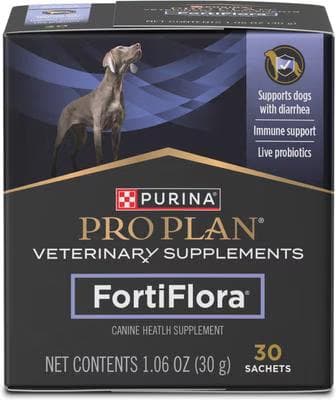
The #1 vet-recommended probiotic for dogs. Daily powder sachets with live probiotics support healthy digestion and firmer stools, and can help dogs coping with diarrhea or GI upset.
Webvet may earn a commission when you click through to Chewy, at no extra cost to you.
Oral Tablets (30 pcs)
| Qty/Size | Price as low as | Price per unit |
|---|---|---|
| 5 mg | $7.00 | $0.23 |
| 10 mg | $9.00 | $0.30 |
Oral liquid (1 mg/mL)
| Qty/Size | Price as low as | Price per unit |
|---|---|---|
| 30 mL | $28.00 | $0.93 |
| 60 mL | $45.00 | $0.70 |
Injectable solution (5 mg/mL)
| Qty/Size | Price as low as | Price per unit |
|---|---|---|
| 20 mL | $20.00 | $1.00 |
| 50 mL | $35.00 | $0.70 |
Typical Dosing For Metoclopramide for Dogs and Cats
Dosing depends on the pet’s species, size, illness, and route of administration.
Oral, Subcutaneous, or Intramuscular dosing
| Group | Typical Dose | Notes |
|---|---|---|
| Dogs and cats | 0.2 to 0.5 mg/kg every 8 hours | Used for vomiting and prokinetic support. |
| Hospitalized dogs | Up to 2 mg/kg per day | Higher doses seen in retrospective studies. |
IV constant-rate infusion (CRI)
| Group | Typical Dose | Notes |
|---|---|---|
| Dogs and cats | 0.01 to 0.02 mg/kg per hour | Equivalent to 1 to 2 mg/kg per day. |
Reported side effects
Risks and Warnings for Metoclopramide for Dogs and Cats
Metoclopramide crosses the blood brain barrier and may cause CNS side effects, including restlessness, agitation, hyperactivity, or aggression. In severe cases, dogs may experience extrapyramidal signs, which are involuntary muscle spasms or abnormal movements caused by dopamine receptor blockade. These reactions may occur more often when combined with drugs such as phenothiazines or butyrophenones.
Other risks may include sedation, behavioral changes, or diarrhea. Pets with GI obstruction must not receive metoclopramide, since stimulating the gut could worsen an obstruction. Conditions like intussusception must be ruled out.
Concurrent use of opioid pain medications or anticholinergic drugs may negate metoclopramide’s prokinetic effects.
Metoclopramide for Dogs and Cats Warnings and Precautions
Use metoclopramide cautiously and under veterinary supervision.
- Do not use in animals with suspected GI obstruction.
- Avoid combining with other dopamine-blocking medications.
- Monitor for involuntary muscle movements or agitation.
- Reduce dose in pets with kidney or liver disease.
- Stop medication if behavior changes worsen.
Disclaimer: This information is for educational purposes only and should not replace professional veterinary advice. Always consult your veterinarian before using or combining any medications for your pet.
Frequently Asked Questions (FAQ)
What conditions does metoclopramide treat in dogs?
It is used for vomiting, reflux, delayed gastric emptying, and postoperative ileus.
How fast does metoclopramide work?
Many dogs respond within one to two hours when given by injection. Oral forms may take longer.
Can metoclopramide be used long term?
Long-term use is uncommon and should only be done under veterinary supervision.
What signs indicate side effects?
Restlessness, agitation, unusual aggression, tremors, or muscle twitching.
Can cats receive metoclopramide?
Yes, but its antiemetic effect in cats may be less reliable than in dogs.
$65 · no membershipNeed a prescription for Metoclopramide?
A licensed vet can assess your pet over video and prescribe Metoclopramide online when it's appropriate.
Talk to a vet- Licensed vets
- All 50 states
- same-day Rx
Webvet may earn a commission if you book.

Editor
The Webvet Editorial Team is the in-house group of pet-care editors and writers behind Webvet, operated by Smart Pet Collective. The team researches, writes, and maintains Webvet's pet health, behavior, and medication content. Every article follows a defined editorial process: research from reputable veterinary and scientific sources, careful drafting, mandatory review of medical content by a credentialed veterinarian, and dated publication. Health and medication articles are medically reviewed by a licensed veterinary professional before they go live and are kept current over time.
Veterinarian · BVMS MRCVS
Dr. Pippa Elliott, BVMS, MRCVS, is a veterinarian with nearly 30 years of experience in companion animal practice. Dr. Elliott earned her Bachelor of Veterinary Medicine and Surgery from the University of Glasgow. She was also designated a Member of the Royal College of Veterinary Surgeons. Married with 2 grown-up kids, Dr. Elliott has a naughty Puggle named Poggle, 3 cats and a bearded dragon.


