When to Give a Dog Probiotics: Vet Timing Guide
A vet-reviewed guide to when to give a dog probiotics, covering the best time of day, life stages, giving them after antibiotics, how long they take to work, and when to hold off.

BVMS MRCVS
Medically reviewed by Dr. Pippa Elliott, BVMS MRCVS · Last reviewed

This article contains affiliate links. Webvet may earn a commission when you buy through them, at no extra cost to you.
WebVet may earn a commission from qualifying purchases made through links on this page, at no additional cost to you.
Knowing when to give a dog probiotics comes down to timing three separate things: the situation that calls for them, the time of day you give the dose, and how long you keep it going. Probiotics are live, beneficial bacteria that support the gut microbiome, and they tend to help most when you start them at the right moment, such as during a stressful change or after a bout of digestive upset. This vet-reviewed guide walks through exactly when to start, the best time of day, how long they take to work, and when to hold off entirely.
You do not need a prescription for most canine probiotics. Popular, vet-trusted options include Purina Pro Plan FortiFlora, Nutramax Proviable, and Zesty Paws gut-support chews, each built around researched strains and measured in colony-forming units (CFU). This article focuses on timing rather than crowning a single winner, so for a full product breakdown see our guide to the best probiotics for dogs. Always loop in your veterinarian before starting any supplement, especially if your dog is already unwell.
- 1Start probiotics during predictable stress (travel, boarding, a diet switch) or after antibiotics or a diarrhea flare.
- 2Give the dose with a meal at the same time each day for the most consistent results.
- 3Acute loose stool may improve within 24 to 48 hours, while a steady digestive baseline takes about four weeks.
- 4Hold off in critically ill or severely immunocompromised dogs until your veterinarian clears them.
- 5Probiotics support the gut but never replace a veterinary exam for ongoing vomiting, blood, or lethargy.
 Sponsored
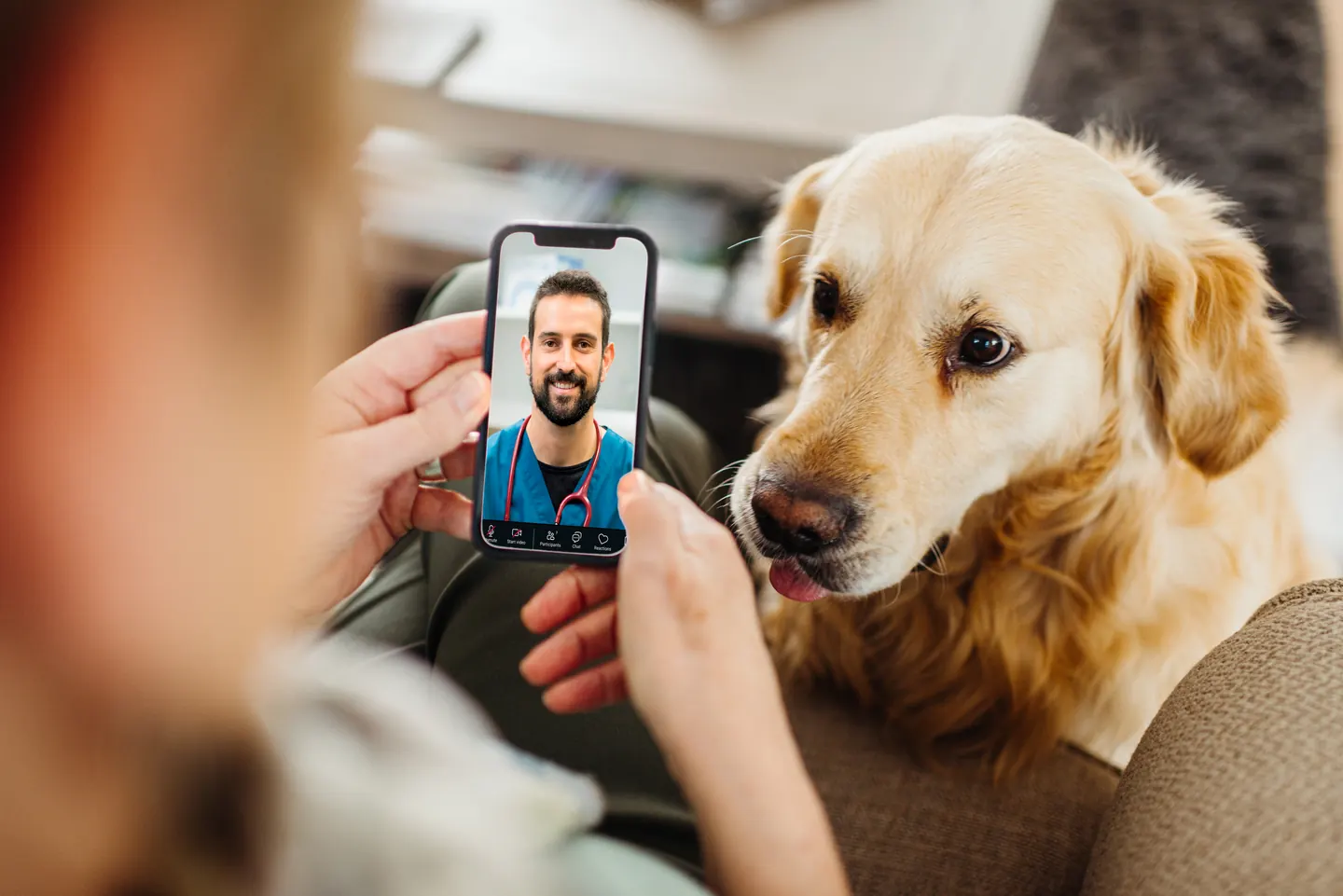
Want a vet's take on your dog's upset stomach?
Talk to a licensed vet at Dutch over video, often the same day. They can recommend treatment and prescribe it when it's appropriate.
Use code Pets60
Plans start at $12/month · covers up to 5 pets
- Licensed vets in most states
- Rx for 150+ conditions
- 4.7 on Trustpilot
When should you start giving your dog probiotics?
The best time to start giving your dog probiotics is right before or during a period that stresses the gut, and the moment a known trigger appears. Give probiotics during stress such as travel, boarding, or a household change, and start after antibiotics or at the first sign of a mild diarrhea flare. Starting early, rather than waiting for symptoms to peak, gives the beneficial bacteria time to establish before the challenge is at its worst.
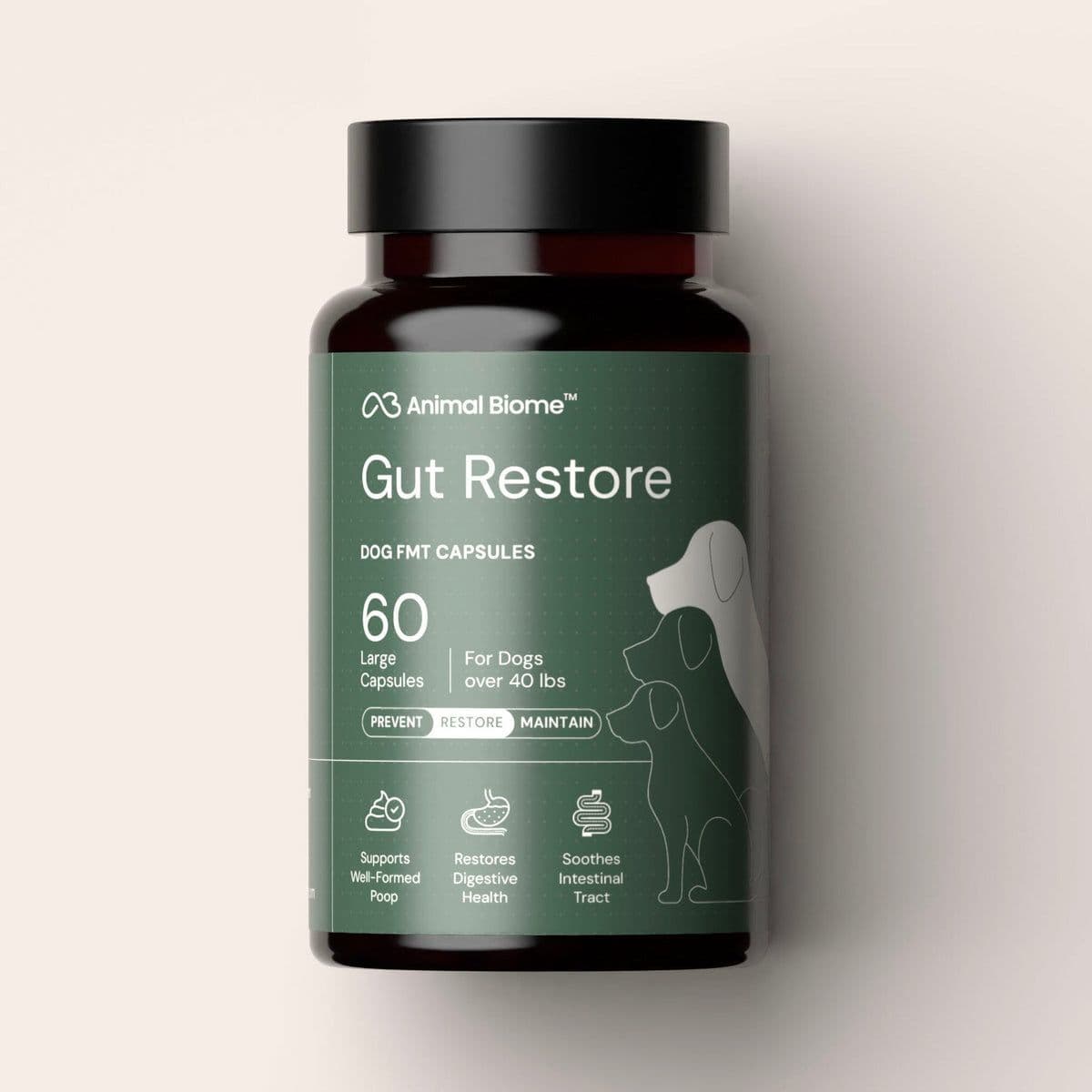
Veterinarian-developed oral fecal microbiota transplant (FMT) capsules that reintroduce a full community of dog-specific gut bacteria; used to support dogs with ongoing soft stools, diarrhea, or recovery after antibiotics.
Webvet may earn a commission when you click through to Animal Biome, at no extra cost to you.
Veterinary references support this situational approach. The Merck Veterinary Manual notes that probiotics can help minimize gastrointestinal upset and help animals cope with stress from weaning, transport, or changes in weather and environment. That is precisely why the strongest moment to begin is around a predictable stressor, not weeks after the gut is already in trouble.
So what are the signs a dog needs probiotics? There is no simple lab test that says a dog is low on good bacteria, so owners and vets instead watch for patterns that suggest the gut microbiome is off balance. These clues are most meaningful when several show up together or when they follow an obvious trigger like a medication course or an abrupt diet change.
- Loose stool, frequent soft stool, or mild recurring diarrhea without another clear cause
- Excess gas, gurgling, or an unsettled stomach after meals
- A recent or current course of antibiotics, which can thin out normal gut flora
- A sudden diet change or a switch to an unfamiliar food
- Stress from travel, boarding, moving house, or a new pet arriving
- Frequent scavenging or dietary indiscretion (eating things they should not)
- Weaker stool quality in a senior dog whose digestion is naturally slowing
- Recovery from a gastrointestinal illness once your vet has ruled out serious causes
- A dull coat, itchy skin, or low energy that your vet links to poor nutrient absorption
- A recent kennel stay, dog show, or long car trip that left the stomach unsettled
Because these signs overlap with more serious conditions, treat probiotics as support rather than a diagnosis. Blood in the stool, repeated vomiting, a painful or swollen belly, lethargy, or diarrhea lasting more than 48 hours all warrant a veterinary visit first. If your dog simply has a lingering upset stomach, probiotics can sit alongside veterinary care, but they should never delay it.
When does a dog need probiotics as an ongoing routine rather than a short course? Senior dogs, dogs with chronic soft stool, and dogs on repeated antibiotic courses often do better with steady daily support. Younger, healthy dogs eating a consistent diet usually only need probiotics around a specific event, then can stop once things settle back down.
The situation-based probiotic timing table below works as a when-to-start trigger checklist. It pairs the common situations that upset a dog’s gut with the moment to begin and what to watch for, so you are acting on a real trigger instead of guessing.
| Trigger situation | When to start | Why the timing helps | Watch for |
|---|---|---|---|
| Course of antibiotics | Day one of the antibiotics, spaced about 2 hours apart | Antibiotics thin out gut bacteria; probiotics help refill them | Loose stool that lingers after the course ends |
| Planned diet change | 3 to 5 days before and through the transition | Eases the microbiome onto a new food | Gas or soft stool that persists past the switch |
| Travel or boarding | 3 to 5 days before the event | Stress colitis often appears during and just after | Stress diarrhea, reduced appetite |
| Mild diarrhea flare | At the first loose stool, with a bland approach | May shorten a mild, acute bout | Blood, vomiting, or no improvement in 48 hours |
| Senior gut support | As an ongoing daily routine | Aging digestion benefits from steady support | New weight loss or appetite change |
| After a GI illness | Once your vet has diagnosed and cleared serious causes | Rebuilds a disrupted gut during recovery | Relapse of the original symptoms |
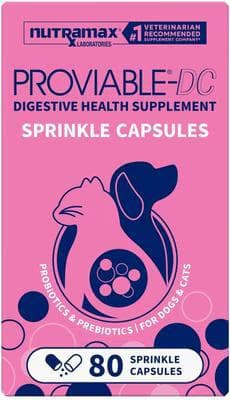
Multi-strain probiotic plus prebiotic sprinkle capsules for dogs and cats; supports digestive balance during diarrhea, diet changes, and antibiotic courses.
Webvet may earn a commission when you click through to Chewy, at no extra cost to you.

For predictable stress, the single biggest timing advantage owners miss is starting a few days ahead. If you know your dog boards next week or you are switching foods, begin the probiotic three to five days early so the beneficial bacteria are already working when the challenge actually hits. Life stage matters too: weaning puppies, adult dogs facing a one-off stressor, and slowing senior guts each call for a slightly different plan, which is worth a quick word with your vet.
 Sponsored
Vet care that's always there
Unlimited video calls and messaging with licensed vets for less than a typical vet visit. One membership covers up to five pets.
Use code Pets60
Plans start at $12/month · covers up to 5 pets
- Licensed vets in most states
- Rx for 150+ conditions
- 4.7 on Trustpilot
What time of day should you give a dog probiotics?
If a daily probiotic is not moving the needle, a one-time microbiome reset such as AnimalBiome Gut Restore is another option to discuss with your veterinarian.
There is no single magic hour, but the best time of day to give a dog probiotics is with a meal, at the same time each day. Giving the dose with food, usually breakfast or dinner, helps buffer the live bacteria from stomach acid and makes the habit easy to keep. Consistency matters far more than choosing morning over night.
Should you give your dog probiotics with food or on an empty stomach? For most products, with a meal is the gentler and more reliable choice. Food raises the stomach’s pH and helps more organisms survive the trip down to the intestines, where they actually do their work. Only give a probiotic on an empty stomach if the specific label tells you to.
- Give the probiotic with or just after a meal to protect the live cultures
- Pick one time, morning or night, and keep it the same every single day
- If your dog eats twice daily, splitting the dose across both meals is fine unless the label says otherwise
- Space probiotics about two hours apart from any antibiotic dose so the drug does not kill the fresh bacteria
- Mix powders thoroughly into wet food, and hide capsules in a treat if your dog tends to pick around them
- Store the product exactly as directed, since heat and moisture quietly reduce the live count
- Give the dose at roughly the same clock time daily, since a steady rhythm supports a steady gut

Follow the label’s serving instructions first. Some strains are freeze-dried and shelf-stable, while others need refrigeration to keep the colony-forming units alive and effective. Whatever you choose, tying the dose to an existing routine, such as the morning feed, is the easiest way to never miss one.
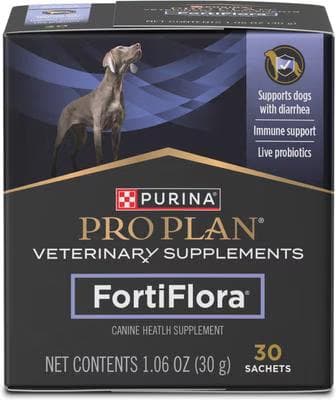
The #1 vet-recommended probiotic for dogs. Daily powder sachets with live probiotics support healthy digestion and firmer stools, and can help dogs coping with diarrhea or GI upset.
Webvet may earn a commission when you click through to Chewy, at no extra cost to you.
If you do forget a dose, do not double up the next day. Simply give the normal amount at the next meal and carry on. A single missed dose has little impact because probiotics work through steady, repeated exposure rather than one large hit.
How long do probiotics take to work in dogs?
How long does it take for a probiotic to kick in for a dog? It depends on what you are treating. For an acute bout of loose stool, many dogs show improvement within 24 to 48 hours. For steady, everyday digestive support, give it about four weeks before judging whether it is helping, and for stress- or anxiety-linked signs, a strain studied for behavior can take up to about six weeks to show its full effect.
Probiotics are not a switch you flip. They gradually shift the balance of bacteria in the gut, and the living organisms mostly pass through rather than permanently colonizing. That is why ongoing daily dosing, not a one-off, is what keeps the benefit going for most dogs.
| Goal | Typical timeline | What improvement looks like |
|---|---|---|
| Acute loose stool | 24 to 48 hours | Firmer stool and fewer urgent trips outside |
| Everyday digestive baseline | About 4 weeks | More consistent stool, less gas and gurgling |
| Stress or anxiety-linked signs | Up to about 6 weeks | Calmer digestion through triggers |
| Recovery after antibiotics | 1 to 4 weeks | Normal stool returns as gut flora rebuild |

How long should a dog stay on probiotics? For a short-term problem like antibiotic-related diarrhea or travel stress, a one to four week course is often enough. For chronic digestive issues, food sensitivities, or older dogs, your vet may recommend long-term or even indefinite daily use. A useful clue: if you stop and the old symptoms drift back, that is a sign your dog genuinely benefits from staying on them.
Results vary from dog to dog because every gut microbiome is different, and diet, age, and any underlying disease all influence the response. If you have given a quality product consistently for four to six weeks with no change at all, tell your veterinarian. Persistent symptoms can mean the underlying cause, such as a food allergy, a parasite, or a chronic enteropathy, needs direct treatment rather than more supplements.
When NOT to give your dog probiotics
When should you not give probiotics to dogs? Probiotics are generally very safe, but there are clear situations to pause and call your vet first. The main caution is any dog whose immune system is compromised or who is critically ill, because introducing live bacteria carries a small but real risk in those specific patients.

Pure USDA-organic pumpkin puree, no fillers or additives. Adds gentle soluble fiber to firm up loose stool and settle a mildly upset stomach. A simple vet-favorite topper.
Webvet may earn a commission when you click through to Chewy, at no extra cost to you.
- Severely immunocompromised dogs, or those on drugs that suppress the immune system, without veterinary guidance
- Critically ill or hospitalized dogs, where live cultures carry a small risk of bloodstream infection
- Dogs with serious, undiagnosed symptoms, since a probiotic can mask a problem that needs real treatment
- Any dog whose diarrhea is bloody or severe, or paired with vomiting, lethargy, or a painful belly (see a vet first)
- Very young puppies or pregnant dogs, unless your vet recommends a specific, suitable product
Can probiotics hurt a dog? For a healthy dog, side effects are usually mild and temporary. Some dogs have a little more gas, bloating, or soft stool in the first few days as the gut adjusts, and these probiotic side effects typically settle on their own. Starting with a smaller amount and building up to the full dose over several days can ease the transition.
One real limitation is quality control. Pet supplements are not regulated as tightly as prescription drugs, so the live count printed on the label does not always match what is actually in the container. That is exactly why vets tend to recommend established products with published research and clear strain information rather than the cheapest tub on the shelf.
Finally, mention any medications your dog takes when you ask about probiotics. While direct interactions are uncommon, your veterinarian may want to time the probiotic around certain drugs, and they can flag whether your dog’s specific health conditions change the safety picture at all.

Giving probiotics after a course of antibiotics
Antibiotics are one of the most common reasons dogs need probiotics, because they kill helpful gut bacteria along with the harmful ones they are meant to target. Starting a probiotic during and after the course, spaced about two hours from each antibiotic dose, can help limit the loose stool that so often follows treatment. Many vets suggest continuing the probiotic for one to several weeks after the last pill, giving the gut flora time to rebuild before you stop.
The exact protocol, including how long to continue after the final pill and which strains hold up best against antibiotics, has its own dedicated guide. For the full step-by-step, see our article on probiotics after antibiotics, which covers timing, spacing, and gut recovery in far more depth than we can here.
Choosing the right probiotic for your dog
Timing only matters once you have a product worth giving. The best probiotic for your dog depends on the goal: a strain like Enterococcus faecium is well studied for canine digestive upset, while others are aimed at stress, immune support, or skin health. Look for a clearly named strain, a stated CFU count, and ideally veterinary or published research backing rather than vague marketing claims.
Rather than repeat the full comparison here, we keep product selection in one place. Our pillar guide to the best probiotics for dogs breaks down chews versus powders versus capsules, strain choices, and how to actually read a label, while our overview of gut health for dogs puts probiotics in the bigger picture of diet, fiber, and prebiotics.
It also helps to keep expectations honest. Cornell University’s Riney Canine Health Center points out in its overview of canine probiotics that the evidence is still developing and that probiotics are best chosen for a specific purpose rather than used as a cure-all. That is a good reason to match a product to your dog’s actual need instead of buying on hype.
Chews vs. powders: a quick timing view
Pros
- Chews are easy to give as a same-time-each-day treat
- Powders mix invisibly into a meal, ideal for picky dogs
- Both absorb best when given with food
Cons
- Flavored chews add a few calories to watch in small dogs
- Powders need thorough mixing so the whole dose is eaten
- Refrigerated products lose potency if left out too long
Frequently asked questions about when to give a dog probiotics
Frequently Asked Questions
Can I give my dog probiotics every day?
Yes. For most dogs, daily use is both safe and the way probiotics work best, since the organisms pass through rather than permanently settling in the gut. Give the dose at the same time each day, with food, and continue for as long as your dog benefits or your veterinarian advises.
Can puppies have probiotics?
Many probiotics are safe for puppies and can help with the loose stool that comes with weaning, new homes, and diet changes. Choose a product labeled for puppies or ask your vet, and start with the amount listed for your puppy’s current weight rather than a full adult dose.
Should probiotics be given with or without food?
With food is best for most products. A meal buffers stomach acid and helps more live bacteria reach the intestines intact. Unless the label specifically says to give it on an empty stomach, simply pair the dose with breakfast or dinner.
Can I give my dog human probiotics?
It is better to use a canine product. Dogs have a different mix of gut bacteria than people, so probiotics formulated and dosed for dogs are more likely to contain useful strains at an appropriate level. Check with your vet before using any human supplement.
How long can a dog stay on probiotics?
There is no set limit for a healthy dog. Many stay on them long term for ongoing digestive or senior support with no problem at all. If you are using them for a short issue like antibiotic recovery, a one to four week course is usually enough, and you can always taper off and watch whether the earlier symptoms return.
Do probiotics need to be refrigerated?
It depends on the product. Some strains are freeze-dried and shelf-stable, while others must stay refrigerated to keep the live count intact. Always follow the storage line on the label, because a probiotic that has been left warm may deliver far fewer live organisms than it promises.
The bottom line
The right time to give a dog probiotics is early and consistent: start at the first sign of a trigger, give the dose with a meal at the same time each day, and hold off only when your dog is critically ill or has symptoms that clearly need a diagnosis. Most benefits build over days to weeks rather than overnight, so patience and consistency pay off.
Used this way, probiotics are a low-risk tool that supports a healthy gut. They are not a substitute for veterinary care, so when in doubt, or when symptoms are severe, let your veterinarian lead and use probiotics as the supporting player they are meant to be.
Sources

Editor
The Webvet Editorial Team is the in-house group of pet-care editors and writers behind Webvet, operated by Smart Pet Collective. The team researches, writes, and maintains Webvet's pet health, behavior, and medication content. Every article follows a defined editorial process: research from reputable veterinary and scientific sources, careful drafting, mandatory review of medical content by a credentialed veterinarian, and dated publication. Health and medication articles are medically reviewed by a licensed veterinary professional before they go live and are kept current over time.
Veterinarian · BVMS MRCVS
Dr. Pippa Elliott, BVMS, MRCVS, is a veterinarian with nearly 30 years of experience in companion animal practice. Dr. Elliott earned her Bachelor of Veterinary Medicine and Surgery from the University of Glasgow. She was also designated a Member of the Royal College of Veterinary Surgeons. Married with 2 grown-up kids, Dr. Elliott has a naughty Puggle named Poggle, 3 cats and a bearded dragon.
Related reading

Gastroenteritis in Cats: Symptoms, Causes, Treatment, and When to See a Vet

Gastroenteritis in Dogs: Symptoms, Causes, Treatment, and Recovery Time

Hemorrhagic Gastroenteritis in Dogs (HGE): Symptoms, Causes, Treatment, and Survival
