Dog Vomiting Blood: Is It an Emergency? Vet Answers
A dog vomiting blood is almost always an emergency. A vet explains the causes, what the blood color means, the red flags of internal bleeding, and exactly what to do right now.

BVMS MRCVS
Medically reviewed by Dr. Pippa Elliott, BVMS MRCVS · Last reviewed

This article contains affiliate links. Webvet may earn a commission when you buy through them, at no extra cost to you.
A dog vomiting blood is almost always an emergency. Hematemesis (the medical term) can signal a bleeding ulcer, a swallowed object, toxin ingestion, bloat, or a clotting problem. Even a small amount of blood warrants a call to your vet or the nearest ER now. Do not wait to see if it passes.
Dog Vomiting Blood: Is It an Emergency? (Start Here)
Blood in vomit means tissue somewhere in the mouth, esophagus, stomach, or upper intestine is bleeding, or that your dog has a clotting or whole-body problem. Because the list of causes includes several rapidly fatal ones, the safest default is to treat any episode as an emergency until a vet rules those out.
This guide is built to be read fast under stress. Start with the red-flag box above, use the blood color decode to describe what you saw to your vet, then read the cause and triage sections while you arrange care. It does not replace an exam, but it will help you act correctly in the next ten minutes.
- 1Vomiting blood (hematemesis) is almost always an emergency in dogs.
- 2Bright red blood is fresh; dark, coffee-ground vomit is partly digested blood from the stomach.
- 3The dangerous causes (bloat, poisoning, internal bleeding, parvo) can kill within hours.
- 4Do not give human medicines or food. Call your vet or an ER now and photograph the vomit.

Is a Dog Vomiting Blood Always an Emergency?
Functionally, yes. A handful of causes (a tiny scratch from a swallowed treat, a single hard retch that nicked the throat) are minor. But you cannot tell those apart from a bleeding ulcer or early bloat by looking, and the costly mistake is assuming it is nothing. The responsible move is a same-day call to a veterinarian, who can decide whether your dog needs to be seen immediately or monitored.
Vomiting blood sits on a more serious tier than a routine dog upset stomach or a one-off case of regular vomit. Plain vomiting and diarrhea can sometimes be watched at home for a few hours; blood changes the math and shortens your timeline.
What Vomiting Blood (Hematemesis) Means in Dogs
Hematemesis simply means vomiting that contains blood. The blood can come from anywhere along the upper digestive tract, from the mouth and esophagus down to the stomach and the first part of the small intestine. Sometimes the blood is not even from the gut: a dog with a clotting disorder, severe nosebleed, or lung bleed can swallow blood and then bring it back up.

Adhesive double-door cabinet locks made for homes with dogs, no drilling. Bait stations, cleaners, and medications belong behind a latch a nose cannot open, which is the prevention step every poison-control call ends with.
Webvet may earn a commission when you click through to Chewy, at no extra cost to you.
According to the Merck Veterinary Manual, the most common reasons dogs develop gastrointestinal bleeding include anti-inflammatory medications (NSAIDs), tumors, liver disease, kidney disease, and severe systemic illness. The bleeding can be a slow ooze that turns vomit dark, or a brisk bleed that produces obvious red.
It helps to separate two different worries. The first is the bleeding itself: where is it coming from, and how much blood is your dog losing? The second is the underlying cause: a swallowed bone behaves very differently from a clotting disorder or a tumor, even if both produce red vomit. Your vet has to answer both questions, which is why a thorough exam and testing matter more than any single home observation. What you notice (color, amount, timing, and your dog's overall state) gives them the starting point.
What the Color and Consistency of the Blood Tells You
The look of the blood helps your vet localize the bleeding, so describe it carefully (or photograph it). No competitor offers this decode, and it is one of the most useful things you can report. Use the table below as a starting point, not a diagnosis.
| What you see | What it often suggests | Urgency |
|---|---|---|
| Bright red, fresh blood (streaks or clots) | Active or recent bleeding from the mouth, throat, or esophagus, or a brisk stomach bleed | Emergency, especially if more than a fleck |
| Dark brown or black, coffee-ground texture | Blood partly digested by stomach acid, usually from the stomach or upper intestine (an ulcer or bleed) | Emergency, call now |
| Pink or red foam, frothy | Irritation of the throat or stomach lining; often less severe, but blood still warrants a vet call | Call your vet today |
| Blood mixed with mucus or slime | Inflammation of the stomach or intestinal lining (gastritis, hemorrhagic gastroenteritis) | Same-day vet, urgent if repeated |
| Large volume of blood or many episodes | Significant ongoing bleed; risk of dangerous blood loss | Go to an ER immediately |
The single most useful distinction is bright red versus coffee-ground. Bright red blood has not been sitting in stomach acid, so it usually points to a bleed high up (mouth, throat, or esophagus) or a fast, fresh stomach bleed that came up quickly.
Coffee-ground material is the opposite: the blood has spent time in the stomach, where acid turns red hemoglobin into dark brown hematin. That brown, granular look tells your vet the bleed is likely lower (stomach or upper small intestine) and has been going for a while, which is a classic sign of an ulcer.
Pink or red foam is a different signal again. Frothy pink usually means a little blood mixed with saliva and air from retching, often from mild throat or stomach irritation rather than a heavy bleed. Blood streaked through mucus or slime suggests the stomach or intestinal lining is inflamed and shedding, typical of gastritis or hemorrhagic gastroenteritis.
None of these descriptions replaces an exam, but reporting them accurately can change how urgently your vet wants to see your dog and what they reach for first.
If your dog is also coughing up frothy material rather than vomiting it, that is a different problem. Our guide on a dog throwing up white foam explains how to tell vomiting from coughing or regurgitation, which matters for what the vet looks at.
 $65 · no membership
Worried about your dog's vomiting or diarrhea?
A licensed vet can examine your dog over video and prescribe treatment online when it's appropriate.
 Talk to a vet
- Licensed vets
- All 50 states
- same-day Rx
Webvet may earn a commission if you book.
Common Causes of a Dog Vomiting Blood
Causes range from minor irritation to immediately life-threatening. The grouping below, drawn from the Merck Veterinary Manual and emergency veterinary guidance, sorts them by how fast you need to move. This per-cause urgency triage is something competing pages skip entirely, yet it is exactly what you need when you are deciding whether to drive to the ER tonight or call in the morning.
Compare coverage choices for your pet, then request a quote directly on Lemonade.
- Check a price for your pet
- Review available coverage choices
- See the terms before you decide
Eligibility, waiting periods, limits and exclusions apply.
Webvet may earn a commission when you click through to Lemonade, at no extra cost to you.
| Cause | Typical clues | How fast to act |
|---|---|---|
| Bloat (GDV) | Unproductive retching, swollen hard belly, drooling, restlessness, large breed | ER immediately, minutes matter |
| Poisoning (rat poison, NSAIDs) | Known or possible toxin exposure, bleeding, weakness | ER immediately, bring the product if possible |
| Foreign body or sharp object | Recent chewing of bones, toys, or trash; straining; no stool | ER same day, sooner if obstructed |
| Parvovirus | Unvaccinated puppy, bloody diarrhea, lethargy | ER immediately |
| Stomach or intestinal ulcer | On an NSAID or steroid, dark coffee-ground vomit, poor appetite | Same-day vet |
| Severe gastritis or AHDS | Sudden bloody vomit and diarrhea, often small breeds | Same-day vet, urgent if repeated |
| Minor throat or mouth scratch | Single streak, dog bright and acting normal | Call your vet, monitor closely |
Read that last column as a triage rule, not a label. The minutes-matter causes (bloat, poisoning, a sharp foreign body, parvo) can move from worrying to fatal inside a single evening, so they belong at an emergency clinic the moment you suspect them, not on a morning call list.
The same-day causes (ulcers, hemorrhagic gastroenteritis, severe gastritis) are serious but usually buy you hours rather than minutes, so a prompt vet visit is appropriate while you watch closely. The catch is that you often cannot tell which tier you are in from home, so always call and let a professional decide.
Minutes-matter causes (go now)
These can kill within hours and need an emergency clinic immediately:
Bloat (GDV): A twisted, gas-filled stomach, most common in large deep-chested breeds. Look for unproductive retching, a swollen hard belly, drooling, and restlessness. Merck notes mortality reaches 20 to 45 percent even with surgery, and that prognosis worsens sharply after about six hours.
Poisoning: Rat poison (anticoagulant rodenticide) blocks clotting and causes internal and GI bleeding, sometimes a day or more after ingestion. Human NSAIDs (ibuprofen, naproxen), and other toxins also damage the stomach. If poisoning is possible, call your vet, the ASPCA Animal Poison Control Center, or the Pet Poison Helpline.
Foreign body or sharp object: A swallowed bone shard, stick, toy, or trash can cut or block the gut, causing bleeding and obstruction.
Parvovirus: In unvaccinated puppies, parvo causes severe bloody vomiting and diarrhea, dehydration, and shock. It is an emergency.
Serious causes (same-day vet)
Stomach or intestinal ulcers: Per Merck, NSAIDs are a leading cause; combining an NSAID with a steroid is contraindicated because it sharply raises ulcer risk. Liver disease, kidney disease, tumors (including mast cell tumors), and pancreatitis can also drive ulcers.
Hemorrhagic gastroenteritis (AHDS): A sudden onset of bloody vomiting and diarrhea, often in small breeds, that can cause dangerous fluid loss.
Severe gastritis, parasites, and clotting disorders: Intense inflammation, heavy parasite loads, and bleeding disorders can all put blood in vomit.
Usually milder causes (still call your vet)
Repeated retching that irritates and slightly tears the esophagus or stomach lining, a small mouth or gum wound, or swallowed blood from a nosebleed can produce a streak of blood without a deep underlying disease. These are still worth a call, because you cannot confirm the cause is minor from home.

Warning Signs of Internal Bleeding and a True Emergency
One of the most important things you can do is check your dog for signs that they are losing significant blood, inside or out. These are the findings that turn a worrying situation into a drive-to-the-ER-now situation.
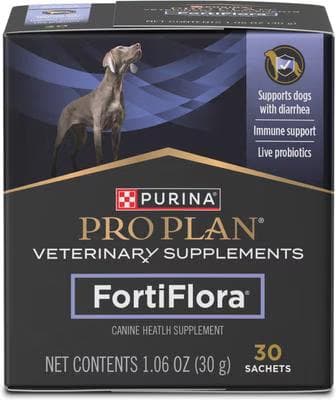
The #1 vet-recommended probiotic for dogs. Daily powder sachets with live probiotics support healthy digestion and firmer stools, and can help dogs coping with diarrhea or GI upset.
Webvet may earn a commission when you click through to Chewy, at no extra cost to you.
Pale, white, or bluish gums (healthy gums are bubblegum pink)
Weakness, wobbliness, or collapse
Fast heart rate or fast, shallow breathing
Black, tarry stool (melena), which is digested blood from the gut
A cold body, cold paws, or shaking
A distended, painful, or hard belly
Collapse, very pale gums, or a swollen belly point toward shock or active internal bleeding and need an emergency clinic without delay. These signs do not wait for business hours.
My Dog Vomited Blood but Is Acting Normal: Now What?
This is one of the most common and most misunderstood scenarios, and no competing page answers it directly. A dog can vomit a small amount of blood once, then seem completely fine: eating, wagging, behaving normally. That is reassuring, but it is not a guarantee. Some serious bleeds (early ulcers, slow toxin effects, internal bleeding from rat poison) can look mild at first and worsen over hours.
Webvet may earn a commission when you click through to Chewy, at no extra cost to you.
What to do: Call your veterinarian and describe what you saw, even if your dog seems normal. They may have you watch closely for a few hours or ask you to come in. Check the gums for pink color, watch for a second episode, black stool, or any drop in energy, and keep your dog calm and quiet.
Can a dog throw up blood and be fine? Sometimes, yes, when the cause is a minor scratch or a single hard retch. But because the dangerous causes can begin subtly, a vet should always be the one to confirm your dog is in the clear, not your phone search.
- 1Acting normal does not rule out a serious cause; rat poison and early ulcers can look mild at first.
- 2Always call your vet to report blood, even one small episode.
- 3Watch the gums, energy level, stool color, and for any repeat vomiting over the next several hours.
- 4If anything worsens, go to an emergency clinic immediately.
What to Do Right Now (and Why Home Remedies Are Risky)
When a dog is vomiting blood, the internet is full of home remedies. Most are unsafe here. The goal in the first ten minutes is to stabilize, gather information, and get professional help, not to medicate.
While you are on the phone, get ready to leave the moment the clinic says come in. Save the photo of the vomit, grab any medication bottles or the packaging of anything your dog may have eaten or chewed, and write down when the vomiting started and how many episodes there have been.
If you have a recent prescription (especially an NSAID or steroid) or know your dog ate something unusual in the last day or two, mention it first, because it can short-cut the diagnosis.
On the way in, keep your dog as still as possible. If you suspect bloat or active bleeding, gentle handling matters: carry a weak or collapsing dog rather than making them walk, line the car with a towel in case of more vomit, and have a second person sit with them if you can.
Do not stop to offer water or a treat to settle the stomach. The single most valuable thing you can deliver to the clinic is your dog, your photos, and your timeline, fast.
Why common home remedies are dangerous here
Home remedies vs. calling the vet for a dog vomiting blood
Pros
- Calling a vet first gets a professional triage decision in minutes.
- Photographing the vomit and checking gums gives the vet real data.
- Resting the stomach (no food or water) avoids triggering more vomiting before you get advice.
- A vet can prescribe the correct medication at the correct dose if one is needed.
Cons
- Inducing vomiting can be deadly if your dog swallowed something sharp, caustic, or is already bleeding.
- Human NSAIDs (ibuprofen, naproxen, aspirin) and Pepto-Bismol can worsen GI bleeding and are unsafe.
- OTC acid reducers are weight-based prescription decisions; dosing must come from your vet, not a chart.
- Feeding a bland diet while a dog is actively vomiting blood can delay urgent care and mask worsening signs.

How Vets Diagnose and Treat a Dog Vomiting Blood
At the clinic, the vet first stabilizes your dog (IV fluids, oxygen, or a transfusion if blood loss is severe), then works to find the source. Stabilization comes before diagnosis, because a dog in shock from blood loss needs support immediately, not a long workup. Once your dog is stable, diagnostics commonly include:
A physical exam, gum-color and hydration check, and history (medications, diet, possible toxins)
Bloodwork and clotting tests to assess blood loss, organ function, and poisoning
X-rays and abdominal ultrasound to look for bloat, obstruction, tumors, or free fluid
Endoscopy in some cases to see ulcers directly, and a parvo test for at-risk puppies
Treatment depends on the cause. For bleeding ulcers, the Merck Veterinary Manual lists proton pump inhibitors as the treatment of choice. A vet may prescribe omeprazole to reduce stomach acid and sucralfate to coat and protect the ulcer. Anti-nausea medication, IV fluids, and a temporary bland diet often follow. Bloat and many foreign bodies need emergency surgery; poisoning may need antidotes and vitamin K (for rat poison).

How to Lower Your Dog's Risk
You cannot prevent every cause, but you can remove many of the common triggers:
Never give human pain medicine, and only use vet-prescribed NSAIDs at the exact prescribed dose.
Lock away rat poison, antifreeze, medications, and toxic foods; supervise around trash and bones.
Keep puppies fully vaccinated against parvovirus.
Avoid feeding bones, rawhide chunks, and objects that splinter or can be swallowed.
For large deep-chested breeds, ask your vet about bloat prevention, including a preventive stomach-tacking surgery (gastropexy) and feeding habits that lower risk.
- 1Most ulcer-related bleeds trace back to NSAIDs and toxins, both largely preventable.
- 2Pet-proof your home against poisons, bones, and small swallowable objects.
- 3Vaccinate puppies and ask about gastropexy for at-risk large breeds.
- 4When in doubt about any vomiting with blood, call your vet rather than wait.
Frequently Asked Questions
Is dog vomiting blood an emergency?
Yes, treat it as an emergency until a vet says otherwise. A dog vomiting blood can signal a bleeding ulcer, swallowed object, poisoning, bloat, or a clotting disorder, several of which can be fatal within hours. Even a small amount of blood warrants a same-day call to your veterinarian or the nearest emergency clinic. If you also see pale gums, weakness, collapse, repeated vomiting, or a swollen belly, go in immediately.
What to give a dog that is throwing up blood?
Do not give anything by mouth without veterinary direction, no food, water, or medicine. Human pain relievers like ibuprofen, aspirin, and Pepto-Bismol can worsen GI bleeding and are unsafe. Acid reducers such as famotidine or omeprazole are sometimes used, but only at a vet-determined, weight-based dose. The right move is to remove food and water, photograph the vomit, and call your vet or an emergency clinic right away so they can choose any treatment.
How do vets treat blood in vomit?
Vets first stabilize the dog with IV fluids and, if blood loss is severe, oxygen or a transfusion. They then find the source using bloodwork, clotting tests, X-rays, ultrasound, and sometimes endoscopy. Treatment targets the cause: proton pump inhibitors like omeprazole and protectants like sucralfate for ulcers, surgery for bloat or a foreign body, antidotes and vitamin K for rat poison, and intensive care for parvovirus. Anti-nausea medicine and a temporary bland diet often follow.
What home remedy can I give my dog for vomiting?
When there is blood in the vomit, skip home remedies and call your vet. For mild, blood-free vomiting, a vet may suggest briefly withholding food, then a small bland meal of plain boiled chicken and rice once vomiting stops. But blood changes everything: do not induce vomiting, do not give human medications, and do not feed through it. A bland-diet approach is only appropriate after a vet confirms there is no serious underlying cause.
Can you treat a dog throwing up blood at home?
No, you should not try to treat a dog throwing up blood at home. The causes range from minor irritation to bloat, poisoning, and internal bleeding, and you cannot tell them apart without an exam. Home care is limited to safe first steps: keep your dog calm, remove food and water, photograph the vomit, check the gums, and call your veterinarian or an emergency clinic. Let a professional decide on any treatment.
How much blood in vomit is concerning?
Any blood is worth a vet call. A single small fleck or streak in a bright, otherwise normal dog usually means a same-day visit. But a tablespoon or more, visible clots, coffee-ground material, repeated bloody vomiting, or any red flag (pale gums, weakness, collapse, swollen belly) means go to an emergency clinic now. When you are unsure whether the amount is too much, treat it as urgent and have your dog seen.
Can a dog throw up blood and be fine?
Sometimes, yes. A dog can vomit a tiny streak of blood from a minor throat scratch or a single hard retch and then act completely normal. But acting normal does not rule out a serious cause, because early ulcers and slow-acting toxins like rat poison can look mild at first and worsen over hours. Always call your vet to report the blood, watch the gums and energy, and seek care if anything changes.
What are signs of internal bleeding in dogs?
Signs of internal bleeding include pale, white, or bluish gums, weakness, wobbliness, or collapse, a fast heart rate, and fast or shallow breathing. You may also see black, tarry stool (melena), a distended or painful belly, cold paws, or shaking. These point toward shock or significant blood loss and are a true emergency. If you notice any of them in a dog that has vomited blood, go to an emergency clinic immediately.
Sources: Merck Veterinary Manual (gastrointestinal ulcers and bleeding in small animals; gastric dilatation-volvulus); VCA Animal Hospitals; PetMD; ASPCA Animal Poison Control Center and Pet Poison Helpline. This article is for education and does not replace an exam by your veterinarian.
$65 · no membershipWorried about your dog's vomiting or diarrhea?
A licensed vet can examine your dog over video and prescribe treatment online when it's appropriate.
Talk to a vet- Licensed vets
- All 50 states
- same-day Rx
Webvet may earn a commission if you book.

Editor
The Webvet Editorial Team is the in-house group of pet-care editors and writers behind Webvet, operated by Smart Pet Collective. The team researches, writes, and maintains Webvet's pet health, behavior, and medication content. Every article follows a defined editorial process: research from reputable veterinary and scientific sources, careful drafting, mandatory review of medical content by a credentialed veterinarian, and dated publication. Health and medication articles are medically reviewed by a licensed veterinary professional before they go live and are kept current over time.
Veterinarian · BVMS MRCVS
Dr. Pippa Elliott, BVMS, MRCVS, is a veterinarian with nearly 30 years of experience in companion animal practice. Dr. Elliott earned her Bachelor of Veterinary Medicine and Surgery from the University of Glasgow. She was also designated a Member of the Royal College of Veterinary Surgeons. Married with 2 grown-up kids, Dr. Elliott has a naughty Puggle named Poggle, 3 cats and a bearded dragon.


