Dog Ear Infection Symptoms: Signs, Stages and Pictures
Recognize dog ear infection symptoms with sign-by-sign guidance and real clinical photographs. Learn what appearances cannot tell you, which changes are urgent, and what to report to your vet.

BVMS MRCVS
Medically reviewed by Dr. Pippa Elliott, BVMS MRCVS · Last reviewed

This article contains affiliate links. Webvet may earn a commission when you buy through them, at no extra cost to you.
Dog ear infection symptoms include repeated head shaking, scratching, odor, redness, swelling, and unusual discharge. A dog may pull away when you touch the head or hold one ear differently. These changes suggest an ear problem, but they cannot tell you whether the cause is yeast, bacteria, parasites, allergy, or something stuck in the canal.
Arrange a veterinary examination when you notice a persistent change. The useful job at home is to observe and describe what is happening, without probing the canal or testing different cleaners. A picture can help you recognize redness or wax; it cannot show whether the eardrum is intact or which medicine is needed.
- 1Repeated head shaking, scratching, smell, or discharge warrants an ear examination.
- 2A small visible change can accompany substantial pain; there is no reliable home staging test.
- 3Color and odor cannot separate yeast, bacteria, mites, or mixed problems.
- 4Describe which ear changed, when it began, and whether balance, appetite, or behavior changed too.
 Sponsored
Have a health question about your dog?
Talk to a licensed vet at Dutch over video or message, including nights and weekends.
Use code Pets30
Plans start at $11/month · covers up to 5 pets
- Licensed vets in most states
- Rx for 150+ conditions
- 4.7 on Trustpilot
Dog ear infection symptoms, sign by sign
When an ear is bothering your dog, compare its behavior and appearance with that dog’s normal ears.
An occasional shake after waking is different from a new pattern of repeated shaking, rubbing, or scratching. Symptoms may involve one ear or both. Puppies, small dogs, and senior dogs can all develop ear disease; size or age does not make a painful, smelly ear normal.
To tell whether your dog’s ears may be infected, look for a pattern of changed behavior and ear appearance, then arrange an examination. A sore ear can remain hidden under a heavy flap, and some dogs show pain before an owner notices wax. Do not wait until every symptom on a checklist is present before calling.
- Head shaking and scratching: itchy ears can lead to repeated shaking, pawing, or rubbing the side of the head against furniture.
- Odor and discharge: a new unpleasant smell or material that is wetter, thicker, or more abundant than usual.
- Redness or swelling: irritated skin, narrowing at the canal entrance, scabs, or changes to the ear flap.
- Pain or sensitivity: pulling away, crying, guarding the head, or resisting a normally comfortable touch.

Head shaking, scratching, and scabs
Frequent scratching can injure the outer flap and leave scabs, hair loss, or raw patches. Describe whether scratching started before or after you noticed discharge. Do not assume a scab is the whole problem: irritation farther inside the canal can make the dog keep reopening the skin. Conversely, a scratch on the flap does not by itself establish an infection inside the ear.
Smell, wax, and discharge
Earwax and other discharge may be brown, black, yellow, bloody, thick, or watery. A changed smell and heavy buildup deserve attention, but neither is a dependable test for yeast versus bacteria. The Merck Veterinary Manual notes that dark discharge can occur with yeast, parasites, bacteria, or mixed infections. Photograph what is visible if your dog is comfortable; do not dig out a sample yourself.
Do not buy a product simply because a label mentions the color or smell you noticed. For example, Zymox Plus Advanced Formula is an ear product to discuss with your veterinarian, not a test that reveals why the ear is sore. Its directions and compatibility with other products matter. Stop and seek advice if any product causes pain or your dog’s signs worsen.
Possible signs of a ruptured eardrum overlap with other ear problems, including pain, discharge, hearing changes, or signs of deeper disease. You cannot confirm a rupture by looking at the flap. This uncertainty is another reason to avoid pouring an unapproved liquid into a sore ear. Tell the clinic about any sudden change after cleaning or applying drops.

Webvet may earn a commission when you click through to Chewy, at no extra cost to you.
Dog ear infection symptoms pictures: what they show
These clinical photographs show visible ear redness and, in some panels, waxy ear buildup.
They come from dogs in a published study of otitis and Malassezia, rather than staged illustrations. The panels show different patients, not before-and-after images. They should not be read as a sequence from mild to severe disease or used to choose an antifungal medicine.

Photographs cannot identify the organism, show the full depth of the canal, or confirm an intact eardrum. Lighting and skin pigmentation also change how redness appears. In the Olabode and colleagues study, laboratory work established the yeast findings; the pictures alone did not. Figure 1a-d is reproduced without changes under Creative Commons Attribution 4.0.
| What you can see | What it may tell you | What it cannot tell you |
|---|---|---|
| Red or swollen skin | The visible tissue looks irritated | Cannot identify yeast versus bacteria or show how far disease extends |
| Waxy or wet discharge | There is material worth showing the clinic | Cannot select an antibiotic, antifungal, or parasite medicine |
| Scabs or hair loss | Scratching or another skin problem may be present | Cannot establish that the ear canal itself is infected |
| A normal-looking outer flap | No obvious change is visible in this view | Cannot exclude a painful problem deeper in the canal |
Dog ear infection or just dirty ears?
A small amount of wax in an otherwise comfortable ear may be normal for that dog. New odor, persistent scratching, tenderness, or increasing discharge changes the decision: arrange an examination. Cleaning is not a diagnostic test. An ear that looks cleaner afterward can still be inflamed or infected, and painful cleaning can make the situation harder to assess.
When yeast is suspected
A dog ear yeast infection can cause itching, wax, odor, and redness, but those signs overlap with bacterial and mixed infections. The yeast guide shows additional documented appearances and explains the role of cytology. A dark or greasy ear is a reason to have the material examined, not confirmation that an antifungal or an over-the-counter yeast product is the correct next step.
Could dark crumbs be ear mites?
Coffee-ground-like discharge is an appearance description, not a diagnosis. A photograph records material at the opening but cannot show whether it contains mites, yeast, bacteria or a mixture. The ear-mite symptoms guide distinguishes this debris from images of the actual organism under magnification. Report the change and arrange an examination instead of choosing a parasite medicine by matching photographs.
 Sponsored
Vet care that's always there
Unlimited video calls and messaging with licensed vets for less than a typical vet visit. One membership covers up to five pets.
Use code Pets30
Plans start at $11/month · covers up to 5 pets
- Licensed vets in most states
- Rx for 150+ conditions
- 4.7 on Trustpilot
Early signs, persistent changes, and severe symptoms
There is no fixed sequence of stages that an owner can diagnose from an ear photograph.
Early signs can be subtle, such as more frequent scratching or reluctance to have the head touched. Persistent inflammation may produce thicker skin or recurring discharge. Severe pain or neurological changes can appear without the owner having noticed an earlier stage.
| Pattern noticed at home | Useful observations | Next step |
|---|---|---|
| Early or mild-looking changes | New scratching, shaking, smell, or discomfort | Contact the clinic for an ear examination; do not wait for heavy discharge |
| Persistent changes | Repeated episodes, thickened skin, or symptoms returning after treatment | Give the clinic the history and product names; reassessment is needed |
| Severe or deeper-disease warning signs | Marked pain, head tilt, loss of balance, facial changes, or vomiting with dizziness | Seek urgent veterinary advice |
A symptom settling briefly does not prove the problem has gone away. Record changes after prescribed treatment, especially a return of odor, pain, or discharge. Do not label a recurrence as “the same infection” without reassessment: a different organism, incomplete resolution, foreign material, or an underlying skin condition may require a different plan.
Inner and middle ear infection symptoms
Dog inner ear infection symptoms can include a persistent head tilt, leaning or falling to one side, circling, rapid eye movements (nystagmus), hearing changes, nausea, and vomiting.
Middle-ear disease can also affect nearby nerves or make opening the mouth uncomfortable. These signs do not prove an ear infection because other neurological disorders can look similar. They do mean the dog needs prompt assessment.

- Call the clinic and describe the balance or facial change clearly, even if the outer ear looks normal.
- Prevent falls by keeping the dog on a safe, level surface away from stairs.
- Do not force food, water, drops, or cleaning into a struggling dog.
- Tell the clinic if vomiting, poor drinking, or difficulty eating accompanies the dizziness.
VCA’s inner-ear infection guidance describes balance, facial-nerve, hearing, and nausea-related changes. A senior dog that suddenly becomes unsteady needs an assessment too; age alone cannot distinguish an ear infection from another vestibular problem. The veterinarian may need a neurological examination and additional tests, rather than simply treating visible wax.
Can an ear infection spread to the brain?
A severe deep infection can rarely extend to nearby tissues, which is one reason neurological signs deserve urgent attention. There is no useful home countdown for how fast an ear infection could become life-threatening. Do not wait for a dramatic picture or a particular discharge color. Prompt assessment addresses the current symptoms and avoids guessing about how far disease has spread.
How ear pain changes behavior
Ear pain may make a dog restless, withdrawn, unusually irritable, or reluctant to rest the head on one side.
Some dogs resist a collar, grooming, or a familiar touch because moving the ear hurts. Reduced appetite can reflect discomfort, but it may also signal another problem. Lethargy, refusing food, or vomiting should be reported rather than assumed to be a routine ear symptom.
Watch without repeatedly testing the painful area. A dog that pulls away has already provided useful information; there is no need to press harder or open the ear farther. Keep children from handling the sore head. If your dog normally tolerates ear care but now growls or snaps during it, stop, give space, and call the clinic for a safer plan.
If your dog also has diarrhea, tell the veterinarian about it rather than assuming the ear infection explains it. Give the timing of both problems and mention recent diet changes or medicines. An ear complaint does not rule out a separate digestive problem. Repeated vomiting, bloody stool, poor drinking, or marked lethargy changes what the clinic needs to know when advising you.
A swollen ear flap needs a separate check
A soft, fluid-filled swelling in the flap may be a dog ear hematoma, which can occur alongside vigorous scratching or head shaking. It is different from discharge inside the canal. Tell the clinic whether the flap suddenly became puffy or heavy. Do not puncture, drain, squeeze, or tightly wrap it yourself; the swelling and the reason for the original irritation both need attention.
What to do before the appointment
- Write down which ear is affected and when you first noticed the change.
- Note the smell, discharge, scratching, pain, and any balance or appetite changes.
- Bring the names of cleaners, drops, parasite preventives, and other medicines already used.
- Take a brief behavior video if it is easy and safe. Do not delay the call to collect pictures.
If a veterinarian has already recommended TrizULTRA + Keto Flush, confirm when it may be used relative to the prescribed ear medicine. It is a cleansing product with specific ingredients and directions, not a universal first step for every sore ear. Tell the clinic when it was last applied, since that detail may affect the examination and sampling plan.
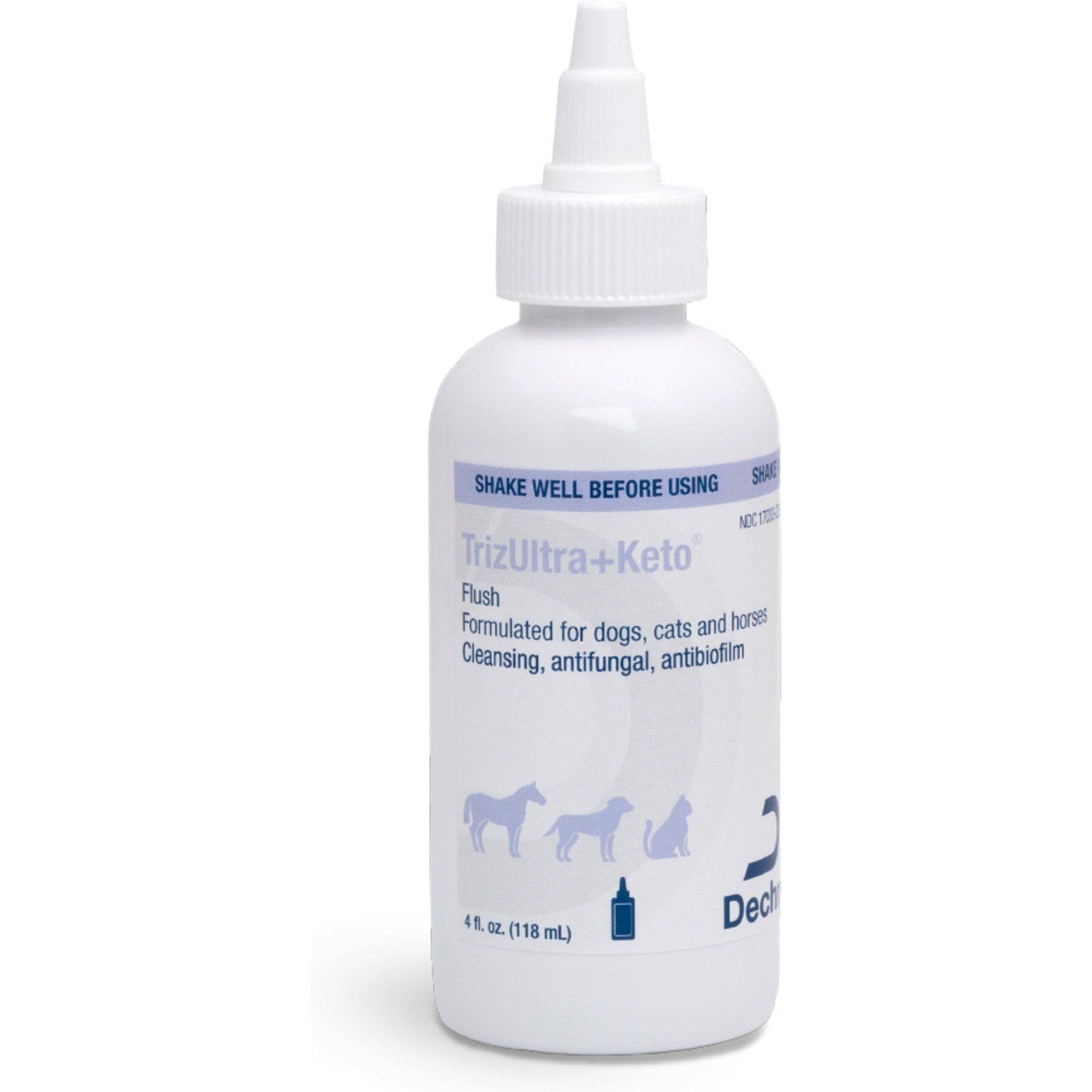
A ketoconazole-containing ear flush to discuss with your veterinarian when routine cleaning is not enough. Use only as directed for your dog.
Webvet may earn a commission when you click through to Chewy, at no extra cost to you.

What happens after the ear examination
An otoscope lets the veterinarian assess the canal, look for foreign material, and examine the eardrum when possible.
Cytology means looking at an ear sample under a microscope. These are different parts of the visit: a photograph of the flap does not replace either. A painful or blocked ear may need sedation before it can be examined and cleaned safely.
The dog ear infection treatment guide explains how findings guide antibiotics, antifungals, anti-inflammatory medicine, and follow-up. Treatment does not always mean cleaning first at home: longer-acting clinic medicines and some enzyme-based products have different instructions. Ask which ear needs which product, whether cleaning is allowed, and when the clinic wants to reassess progress.
For limited outer-flap care that your vet approves, Pet MD Ear Wipes are a wipe format, not a way to reach or sample the deep canal. They are labeled for dogs over 12 weeks. Avoid rubbing a painful, raw, or bleeding flap, and do not push a wipe down the canal. A cleaner-looking surface does not demonstrate that the underlying problem has cleared.

Webvet may earn a commission when you click through to Chewy, at no extra cost to you.
Why signs return in some dogs
The broader dog ear infection guide explains allergies, ear shape, moisture, parasites, and other factors that can contribute to repeated episodes. No breed is exempt. A dog with recurrent ear signs needs the underlying problem considered along with the current episode, rather than a permanently repeated bottle of drops selected from symptoms alone.
Food changes are not a general symptom treatment. If food allergy is suspected, the veterinarian may recommend a controlled diet trial with strict rules, rather than switching among foods advertised for itchy dogs.
Likewise, routine cleaning frequency should be individualized. A comfortable ear that stays clean may need a different plan from a dog with repeatedly waxy ears.
A routine cleanser such as Virbac Epi-Otic Advanced may belong in an approved maintenance plan after the painful episode is assessed. Confirm the product, frequency, and stop signs with the clinic. If a new smell, redness, or pain appears during routine care, pause and ask for advice instead of increasing the amount or frequency yourself.
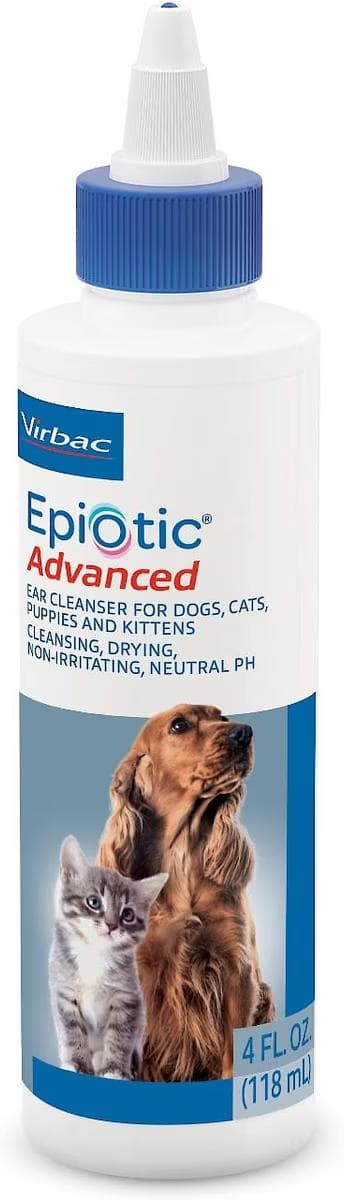
Webvet may earn a commission when you click through to Chewy, at no extra cost to you.
More questions about ear symptoms
Frequently Asked Questions
What can be mistaken for an ear infection in dogs?
Allergic inflammation, foreign material such as a grass awn, parasites, and some growths can cause overlapping signs. More than one problem may be present. The distinction matters because removing foreign material or treating parasites is different from choosing an antibiotic. Arrange an examination rather than deciding from odor or discharge color; tell the clinic if the problem began suddenly or affects only one ear.
What can I give my dog if her ears are bothering her?
Call the clinic for advice before giving a human pain reliever, antihistamine, or leftover ear medicine. A product that was suitable for another dog or an earlier episode may not be appropriate now. Explain whether the dog is in severe pain, unsteady, vomiting, or unable to tolerate handling. While arranging care, avoid forced cleaning and keep the ear dry; the clinic can advise on safe pain relief.

Editor
The Webvet Editorial Team is the in-house group of pet-care editors and writers behind Webvet, operated by Smart Pet Collective. The team researches, writes, and maintains Webvet's pet health, behavior, and medication content. Every article follows a defined editorial process: research from reputable veterinary and scientific sources, careful drafting, mandatory review of medical content by a credentialed veterinarian, and dated publication. Health and medication articles are medically reviewed by a licensed veterinary professional before they go live and are kept current over time.
Veterinarian · BVMS MRCVS
Dr. Pippa Elliott, BVMS, MRCVS, is a veterinarian with nearly 30 years of experience in companion animal practice. Dr. Elliott earned her Bachelor of Veterinary Medicine and Surgery from the University of Glasgow. She was also designated a Member of the Royal College of Veterinary Surgeons. Married with 2 grown-up kids, Dr. Elliott has a naughty Puggle named Poggle, 3 cats and a bearded dragon.
Related reading

Best Dog Boots for Traction, Weather, and Paw Protection

Vestibular Disease in Dogs: Symptoms, Diagnosis, and Recovery Timeline

In Home Pet Euthanasia: Cost, What Happens, and How to Choose a Provider
