Medicated Dog Shampoo: Ingredients and Safe Bathing
Understand common medicated dog shampoo ingredients, compare three veterinary formulas, and build a label-directed bathing routine with appropriate contact time, rinsing and follow-up.

BVMS MRCVS
Medically reviewed by Dr. Pippa Elliott, BVMS MRCVS · Last reviewed

This article contains affiliate links. Webvet may earn a commission when you buy through them, at no extra cost to you.
Medicated dog shampoo can be useful when a veterinarian has identified a skin problem that needs topical treatment. The right choice depends on the active ingredients, the condition being treated and the directions for that particular bottle. A product that helps one itchy dog may be unsuitable for another.
Start with the diagnosis, then build a bathing plan you can follow. This guide explains common ingredients, compares three medicated formulas and shows what to check before applying them. The product discussion uses published labels and manufacturer information; we have not performed hands-on tests of these shampoos.
 Sponsored
Want a vet's take on your dog's skin or coat?
Talk to a licensed vet at Dutch over video, often the same day. They can recommend treatment and prescribe it when it's appropriate.
Use code Pets60
Plans start at $12/month · covers up to 5 pets
- Licensed vets in most states
- Rx for 150+ conditions
- 4.7 on Trustpilot
Which medicated dog shampoo fits the diagnosis?
Choose medicated shampoo for dogs by matching the formula to your veterinarian’s recommendation. “Medicated” describes a broad product category, not one interchangeable treatment. An antibacterial wash, an antifungal combination and a soothing grooming shampoo have different jobs even when their bottles all mention itching.
The best medicated dog shampoo for your dog is one that addresses the diagnosed problem and can be used correctly at home. Ask the clinic to identify the exact product, not simply “an antiseptic shampoo.” A disinfecting or degreasing claim does not identify which formula your dog needs. If the shop has a different size or a similar-looking bottle, compare the full product name and active ingredients before buying. For an anti-bacterial and anti-fungal dog shampoo, confirm that both actions are actually supported by the labeled ingredients; similar product names do not establish equivalent treatment.
| Formula | Active ingredients | Main distinction |
|---|---|---|
| MiconaHex+Triz | 2% chlorhexidine + 2% miconazole | Antiseptic and antifungal combination; confirm the exact regimen |
| Pet Honesty Chlorhexidine | 2% chlorhexidine + 1% ketoconazole | Different antifungal ingredient; includes fragrance |
| Veterinary Formula Antiseptic & Antifungal | 0.2% benzethonium chloride + 1% ketoconazole | Contains benzethonium rather than chlorhexidine |
- 1Use this bottle-check checklist: confirm the diagnosis, exact product name and active ingredients with your veterinarian.
- 2Read the current label for contact time, frequency, age restrictions and areas to avoid.
- 3Ask before substituting another formula or combining skin treatments.
For example, MiconaHex+Triz Shampoo combines chlorhexidine with miconazole. It is an option to discuss when your veterinarian wants that combination. Buying it because a dog smells yeasty is a different decision: odor alone does not establish which organisms are present or whether shampoo will be enough.
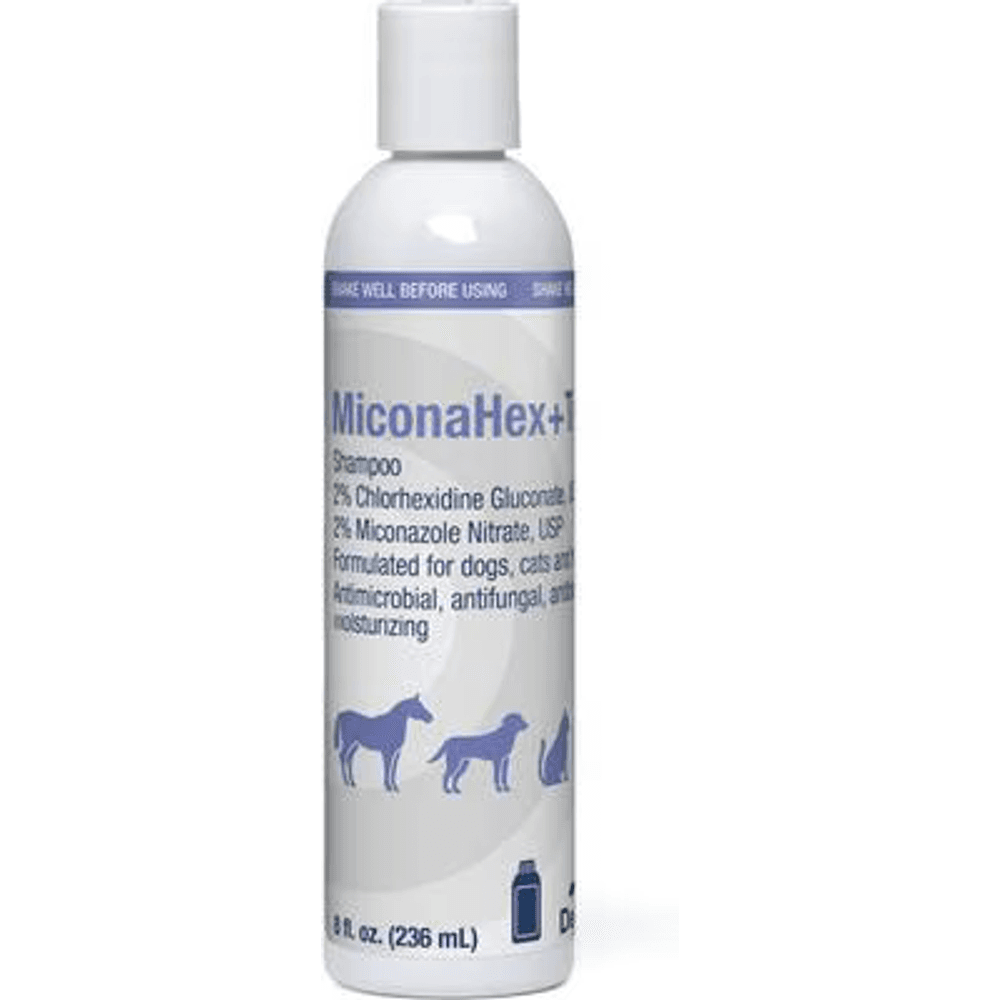
A vet-strength medicated shampoo pairing 2% chlorhexidine and 2% miconazole, a potent antifungal and antibacterial combination widely used to help clear ringworm and yeast or bacterial skin infections.
Webvet may earn a commission when you click through to Chewy, at no extra cost to you.
Use the bottle-check checklist to confirm active ingredients and label directions before you begin your written bath plan. Bring a photograph of the label to the appointment or send it to the clinic when confirming a substitute. Include the back panel with the ingredients and instructions. That makes it easier to catch a shampoo-versus-spray mix-up or a concentration difference before the first bath.
What the veterinarian is trying to identify
Skin redness, licking, odor and scratching can occur together for different reasons. An examination and appropriate tests help separate infection, parasites and allergic disease. The AAHA allergic skin disease guidelines recommend a dermatologic workup that can include skin cytology, flea combing and skin scrapings. Cytology means examining a collected sample under a microscope.
That distinction matters because treating a secondary infection does not automatically resolve the underlying reason it developed. Our guide to dermatitis in dogs explains the broader inflammation question. Use the diagnosis to decide what belongs in the bathing routine rather than adding multiple products in response to every visible symptom.
Allergies, yeast, dandruff and itchy skin
Medicated shampoo for dog allergies may be one part of a care plan, especially when allergic skin also has a secondary infection. It does not identify the allergen or replace the rest of allergy management. Ask whether the bath is intended to remove surface material, deliver an antimicrobial ingredient, or provide routine skin support; those are different jobs.
A medicated dog shampoo for yeast infection needs an appropriate antifungal ingredient and a diagnosis. A musty smell alone cannot distinguish yeast from other skin problems. Chlorhexidine combinations, miconazole and ketoconazole products have different labels, so match the complete formula to the veterinary recommendation instead of treating all antifungal shampoos as interchangeable.
- For dry skin or dandruff, medicated shampoo is not automatically the next step. Flakes can occur with mild dryness or an underlying skin disorder such as seborrhea; choosing a stronger wash without identifying the problem can miss the reason for the scaling. The same distinction applies to dermatitis, hair loss and hot spots: visible irritation describes a symptom, not a universal shampoo prescription.
Mange caused by mites, ringworm and bacterial pyoderma are different diagnoses. A rash, scabs or flaky skin cannot tell you which one is present. Ask your vet whether an antiparasitic or antiseborrheic product has a role in the treatment plan rather than choosing from reviews or a “top rated” label.

Ask these questions before checkout:
- What condition is this shampoo intended to address?
- Is the bath the main treatment or one part of a larger plan?
- Which areas should receive the product, and which should be avoided?
- When should the clinic reassess the skin?
Flea shampoo is a different treatment
Fleas and mites require a parasite-specific plan. An antibacterial or antifungal shampoo is not automatically a flea treatment. Our flea shampoo for dogs guide covers that separate product category; suspected mange or another mite problem needs veterinary diagnosis and treatment.
Before buying a flea shampoo, check what its label actually promises:
- Does it kill adult fleas, or does the label also address eggs and larvae? These are separate claims. A product that kills fleas on contact should not be assumed to prevent another infestation or provide the same lasting protection as a preventive.
- How long should you leave it on, how thoroughly should you rinse, and how often can you repeat it? Use the specific instructions rather than a generic flea-bath schedule, and do not combine a homemade flea wash with another pesticide.
- Is it labeled for your dog’s age and circumstances? Puppies and dogs already receiving flea or tick treatment need an appropriate product and compatible plan. “Natural” does not establish that a shampoo is the safest choice.
Whether flea shampoos work, and how fast they work, depends on the active ingredients and correct use. Check the label before using flea shampoo for lice: coverage of one parasite does not establish coverage of another. Do not make your own flea shampoo: a home remedy, including apple cider vinegar, does not reproduce a labeled pesticide. If you accidentally used an unsuitable flea shampoo on a puppy, contact your veterinarian promptly with the bottle in hand.
 Sponsored
Vet care that's always there
Unlimited video calls and messaging with licensed vets for less than a typical vet visit. One membership covers up to five pets.
Use code Pets60
Plans start at $12/month · covers up to 5 pets
- Licensed vets in most states
- Rx for 150+ conditions
- 4.7 on Trustpilot
Chlorhexidine, miconazole and other active ingredients
Chlorhexidine shampoo for dogs is commonly used in veterinary skin care for its antiseptic action. Chlorhexidine dog shampoo is not a single standardized formula, however. Products can contain different concentrations, additional active ingredients and different cleansing bases. The Merck Veterinary Manual’s pyoderma guidance discusses chlorhexidine among topical options for bacterial skin disease and emphasizes choosing a formulation appropriate to the lesions and practical application.
An antibacterial dog shampoo and an antifungal shampoo for dogs may share an ingredient, but their complete labels still matter. Miconazole and ketoconazole are antifungal ingredients found in some combination products. A dog shampoo for yeast infection should be selected around a veterinary assessment, not around a home guess that every musty smell is yeast.
Benzoyl peroxide is another topical ingredient a veterinarian may choose for a particular skin problem; it is not present in the three formulas compared here. Pyoderma, yeast dermatitis and ringworm are different diagnoses, and one shampoo cannot be assumed to cover them all. If the recommendation names an active ingredient, confirm that the exact bottle contains it before considering the price or reviews.
Three formulas to compare with your veterinarian
MiconaHex+Triz: The published product label lists 2% chlorhexidine gluconate and 2% miconazole nitrate. This is an example of a chlorhexidine and miconazole shampoo for dogs, with a different antifungal ingredient from the ketoconazole products below. The label also includes a ceramide complex. That ingredient list identifies the formula; it does not establish that it will outperform a different product for your dog.
Pet Honesty Chlorhexidine Shampoo: For owners comparing a dog shampoo with chlorhexidine and ketoconazole, the manufacturer’s ingredient panel lists 2% chlorhexidine gluconate and 1% ketoconazole. It also lists fragrance. Mention previous reactions to fragranced grooming products when asking whether this particular formula fits your dog’s care plan. You can review the Pet Honesty shampoo listing once that match is confirmed.
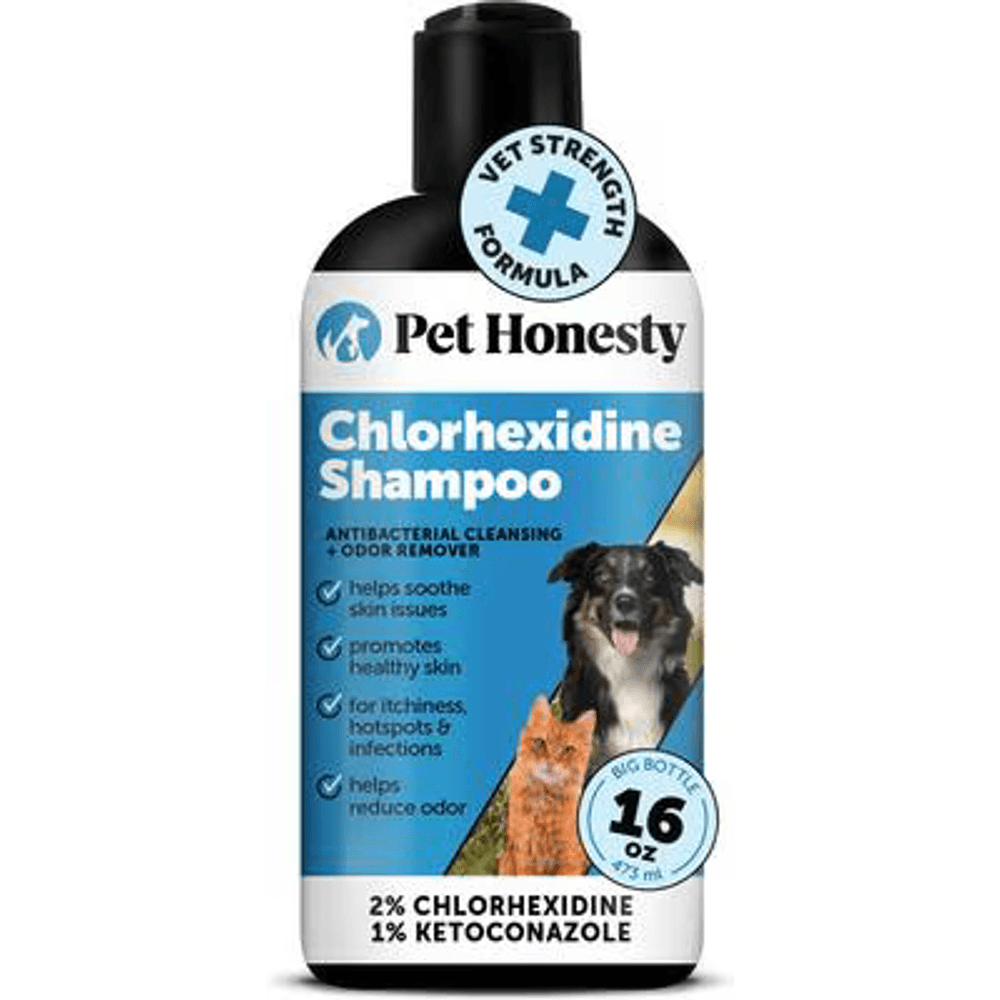
A vet-strength medicated shampoo with 2% chlorhexidine and 1% ketoconazole, the antifungal and antibacterial combination vets use to help clear ringworm and skin infections and to cut fungal spore shedding during treatment.
Webvet may earn a commission when you click through to Chewy, at no extra cost to you.
Veterinary Formula Clinical Care Antiseptic & Antifungal: This manufacturer-listed formula contains 1% ketoconazole and 0.2% benzethonium chloride. Benzethonium chloride is a different antiseptic ingredient from chlorhexidine. The Veterinary Formula shampoo therefore should not be treated as an automatic substitute when the clinic specifically requested chlorhexidine. Confirm the intended antiseptic with the veterinary team before changing from the recommended bottle.
Why the percentages do not pick the winner
A higher number on the bottle is not a simple ranking of quality. Two active ingredients can have different purposes, and the percentages of different substances are not directly comparable. An owner choosing between 2% miconazole and 1% ketoconazole cannot infer that one bottle is “twice as strong” from those numbers.
Consider the entire formula and the intended use. If a product is unavailable, ask the clinic whether the replacement matches the clinical plan. Avoid adding a second medicated shampoo to compensate for uncertainty about the first. That makes the routine harder to interpret and may expose the skin to ingredients the veterinarian did not intend to combine.
Useful details to compare include:
- Exact active ingredients and their concentrations.
- Whether the product is a rinse-off shampoo or a leave-on preparation.
- Age and species restrictions on the current package.
- Contact time, application frequency and any repeat-wash instruction.
- Fragrance or other ingredients associated with your dog’s previous reactions.
How to use medicated dog shampoo
Follow the current product label and the directions your veterinarian gives for your dog. There is no universal answer to how often to use medicated dog shampoo. Frequency and treatment duration are separate from contact time: one describes the schedule across days, while the other describes how long the applied shampoo stays on during each bath. Thorough rinsing is another separate step: complete the recommended contact time, then remove the rinse-off product instead of leaving residue on the coat.
If you are asking, “How often should I bathe my dog with medicated shampoo?”, get the intended starting schedule and the follow-up point in writing. Do not borrow another dog’s schedule, even if the two dogs use the same brand. For ordinary grooming outside a treatment course, see our guide to how often you should bathe your dog.
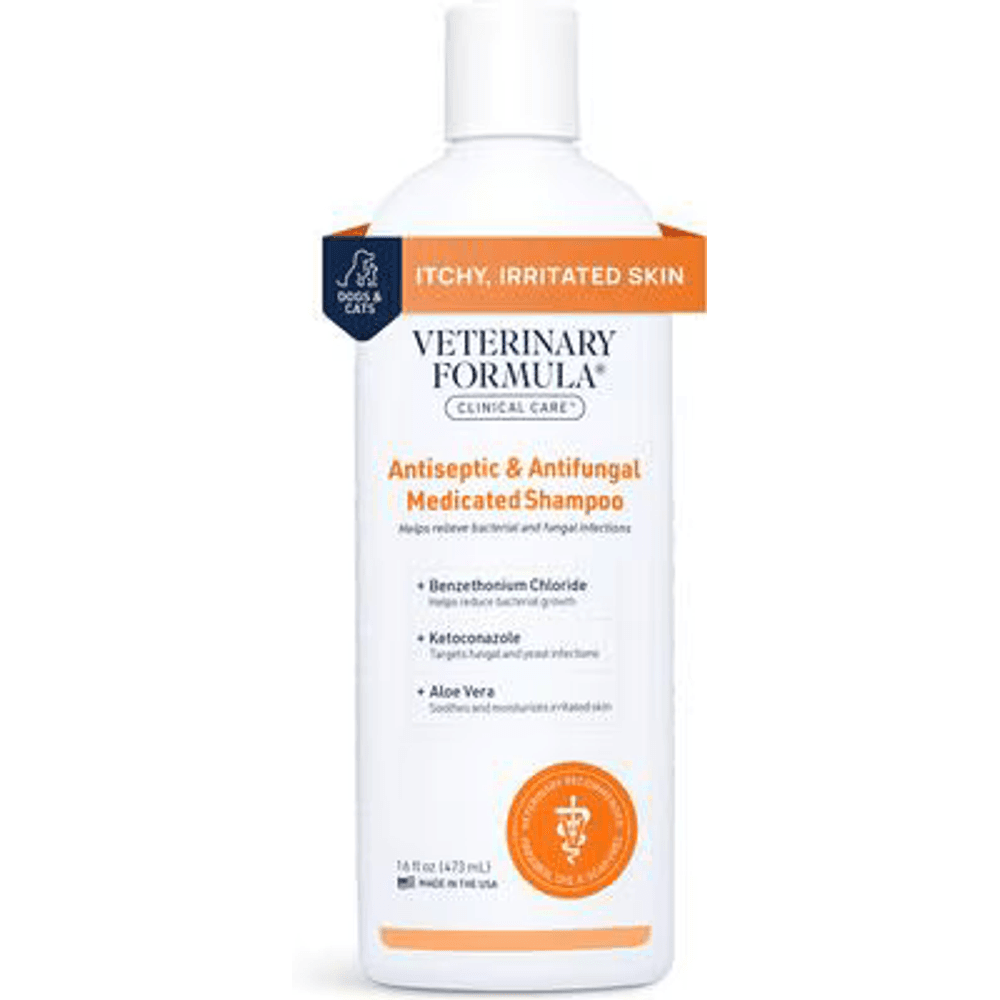
A budget-friendly medicated shampoo with ketoconazole and benzethonium chloride that helps control the fungal and bacterial skin infections behind ringworm, with aloe to soothe irritated skin.
Webvet may earn a commission when you click through to Chewy, at no extra cost to you.
Prepare before the dog gets wet
Put the bottle, a timer and clean towels within reach. Use a nonslip surface and a setting where you can rinse thoroughly without rushing. If your dog is painful, panics in water or is difficult to handle safely, tell the veterinary team. A bathing plan needs to be realistic for the dog and the person administering it.
Confirm whether a dirty coat needs a preliminary wash and which cleanser is appropriate. Do not assume that combining a routine shampoo with a medicated wash is always needed. Read the directions while the dog is still dry, especially any instruction to shake the bottle, avoid certain areas or repeat the wash.
Apply, time and rinse
Use this sequence as a way to organize the label instructions:
- Wet the intended coat area with comfortably lukewarm water.
- Apply the specified product as directed, keeping it away from the eyes and preventing licking.
- Work it through the coat gently so it reaches the skin where instructed. Avoid vigorous scrubbing of sore areas.
- Set a timer for the advised contact time and supervise throughout.
- Give thorough rinsing priority, including places where lather can remain beneath the coat.
- Dry the dog gently and follow any separate instructions for an approved conditioner or leave-on product.

As concrete label examples, MiconaHex+Triz and Veterinary Formula Antiseptic & Antifungal both specify a 5–10-minute contact time in the sources checked for this guide. That does not make their ingredients or ongoing schedules identical. Read the directions on the bottle you receive; if the clinic’s instructions differ, clarify the intended plan before starting.
Avoid homemade medicated mixtures
DIY medicated shampoo and home remedies do not reproduce a finished veterinary formula. Homemade recipes may combine ordinary soap or baking soda with concentrated antiseptics, but choosing a concentration, a compatible cleansing base and an appropriate formulation requires more than mixing ingredients into bathwater. Use the recommended finished product rather than making your own substitute.
- Do not mix bleach, hydrogen peroxide, vinegar, castile soap or household cleaners into a dog shampoo. Do not substitute baby shampoo or a human medicated product for the veterinary formula. These mixtures do not reproduce its concentration, cleansing base or safety directions.
If you run out of the recommended shampoo
If you have run out, ask the clinic what can safely be used until the regular product is available. Dawn dish soap, a normal human shampoo and a natural homemade pet shampoo are not equivalent substitutes for a treatment bath. A simple or easy recipe does not establish safety, whether it includes glycerin or leaves it out. Puppies need a puppy-appropriate product, too: do not assume a mild adult formula is suitable.
Likewise, do not dilute a ready-to-use shampoo unless its directions or your veterinarian specifically call for dilution. More water, extra contact time or a second product should not become workarounds for a confusing label. Ask the clinic to translate the instructions into one clear routine you can repeat.
Shelf life, storage and skin reactions
Check the expiration date and storage directions on the original bottle before using a medicated shampoo. Do not guess how long a diluted mixture remains usable or transfer it to an unlabeled container. Keep the formula, batch details and directions available so the clinic can identify exactly what was applied.
Possible side effects depend on the formula. New irritation or increased itching after a wash is a reason to stop and contact the veterinary team, rather than extend contact time or add another product. Keep shampoo away from the eyes and mouth, prevent licking, and follow the bottle’s instructions if accidental exposure occurs.
When oatmeal shampoo is the right alternative
Oatmeal shampoo for dogs belongs in a different decision category when the goal is gentle cleansing or soothing dry skin rather than a diagnosed antimicrobial treatment. An oatmeal medicated dog shampoo may also contain active drugs or antiseptics, so the word “oatmeal” alone does not tell you which category the bottle belongs to. Read the complete formula.
Earthbath Oatmeal & Aloe Shampoo is included here as a nonmedicated alternative to discuss when that is the appropriate goal. It is not a substitute for an antifungal or antibacterial treatment that your veterinarian has prescribed. Our oatmeal shampoo for dogs guide explains that ingredient-focused choice in more detail.
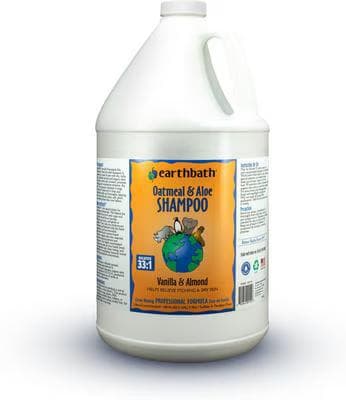
Webvet may earn a commission when you click through to Chewy, at no extra cost to you.
If treatment has finished and the dog needs a regular grooming product, ask whether the skin is ready to return to a routine wash. Keep any medicated bottle clearly separated from ordinary shampoo so another family member or groomer does not accidentally continue the treatment schedule. Share the same written instructions with everyone who bathes the dog.
When an itchy dog needs a different shampoo
Medicated dog shampoo for itchy skin is appropriate only when its ingredients fit the reason for the itch. A dog with mild dryness may need a different approach from a dog with a documented infection. The phrase “vet recommended dog shampoo for itchy skin” is useful only when the recommendation applies to the individual dog, rather than being a general marketing claim.
Our dog shampoo for itchy skin guide covers the broader product-selection decision, including situations where a gentle grooming shampoo is more relevant. It also keeps questions about general itch relief separate from this guide’s narrower task of understanding medicated ingredients and applying them correctly.
Tell the clinic about all skin products already in use, including wipes, sprays, conditioners and parasite preventives. Ask how bathing should fit around a topical flea treatment rather than assuming every product has the same water-exposure instructions. Keep the approved list short enough that you can tell which product was used and when.
After the bath: comfort and follow-up
Judge progress using the signs your veterinarian asked you to monitor. A cleaner smell is useful to notice, but it is not proof that an infection has cleared. Record whether licking, scratching, odor or discomfort is improving between baths, and attend the recommended recheck. Avoid stopping a treatment course early simply because the coat looks better.

If skin irritation develops or increases, stop using the product and contact the veterinarian. The MiconaHex+Triz label specifically gives this instruction. Pain, worsening sores or a dog who seems unwell also warrant veterinary assessment rather than a more intensive home-bathing attempt. Explain what changed and when it happened relative to the bath.
A short record makes the next conversation more useful:
- Product name and date of the bath.
- Actual contact time and whether the dog tolerated the process.
- Areas that appeared more comfortable or more irritated afterward.
- Any missed applications, licking incidents or changes to other treatments.
For example, write “licked paws less on Tuesday, tolerated the bath, no new sores noticed” rather than “infection gone.” Keep observation separate from diagnosis. If you take progress photographs, use similar lighting and distance, but do not delay a call about worsening skin while collecting pictures. Note practical problems such as a slippery tub, difficulty rinsing the underside or trouble standing: the veterinary team needs to know whether the routine is manageable.
Medicated shampoo questions
Frequently Asked Questions
What is the best medicated dog shampoo?
There is no single best medicated dog shampoo for every diagnosis. A useful recommendation identifies the diagnosis, the intended active ingredients and a routine the owner can carry out. Check whether the recommendation refers to the exact formula you are buying. A ranking or a favorable customer review cannot establish whether a product matches your dog’s skin problem, and none of the formulas discussed here has been tested hands-on by our team.
What is the best shampoo for treating dog skin infections?
The best shampoo for treating dog skin infections depends on the type and extent of infection. A veterinarian may use a topical antiseptic for some bacterial skin problems, while deeper or more extensive disease can require additional treatment. Ask whether shampoo is sufficient in your dog’s case and how response will be checked. Do not substitute a different antiseptic ingredient simply because another bottle also says “medicated.” The diagnosis should drive both product selection and follow-up.
What shampoo is best for dogs with fungal infections?
The best shampoo for dogs with fungal infections must fit the diagnosis. An antifungal ingredient may be appropriate, but “fungal infection” is not a complete treatment plan. The veterinarian needs to identify the problem and decide whether topical treatment is enough. Some formulas combine an antiseptic with miconazole or ketoconazole. A product recommended for one condition is not automatically the right choice for another, and a dog with suspected ringworm needs guidance about diagnosis and household management as well as any shampoo.
How do you treat a dog's skin infection without going to the vet?
Trying to treat a dog's skin infection without going to the vet can delay the correct treatment. You cannot reliably confirm a skin infection or choose its full treatment from appearance alone. If access or cost is the obstacle, contact a veterinary clinic and explain those limits so they can discuss an appropriate first assessment. Avoid repeatedly switching shampoos while sores, pain or irritation continue. A practical next step is to photograph the affected area, list the products already used and arrange advice about an examination.
Can I use human medicated shampoo on my dog?
Use a canine product recommended for the purpose unless your veterinarian specifically directs otherwise. A familiar ingredient on a human bottle does not make the complete formula, concentration or directions appropriate for a dog. Bring the exact label to the clinic if a particular product has been suggested. Do not assume an anti-dandruff shampoo for people is a substitute for the veterinary wash named in your dog’s treatment plan.
What if my dog licks medicated shampoo?
If your dog licks medicated shampoo, prevent further licking and rinse away the product as its directions require. Contact your veterinarian for product-specific advice, keeping the bottle available and noting when the exposure happened and approximately how much was involved. MiconaHex+Triz labeling warns that licking or ingestion can irritate the gastrointestinal or respiratory tract. Do not induce vomiting or give a home remedy without veterinary direction, and seek urgent care for breathing difficulty or other severe signs.

Editor
The Webvet Editorial Team is the in-house group of pet-care editors and writers behind Webvet, operated by Smart Pet Collective. The team researches, writes, and maintains Webvet's pet health, behavior, and medication content. Every article follows a defined editorial process: research from reputable veterinary and scientific sources, careful drafting, mandatory review of medical content by a credentialed veterinarian, and dated publication. Health and medication articles are medically reviewed by a licensed veterinary professional before they go live and are kept current over time.
Veterinarian · BVMS MRCVS
Dr. Pippa Elliott, BVMS, MRCVS, is a veterinarian with nearly 30 years of experience in companion animal practice. Dr. Elliott earned her Bachelor of Veterinary Medicine and Surgery from the University of Glasgow. She was also designated a Member of the Royal College of Veterinary Surgeons. Married with 2 grown-up kids, Dr. Elliott has a naughty Puggle named Poggle, 3 cats and a bearded dragon.
Related reading

Apoquel vs Cytopoint: How a Vet Chooses Between Them for an Itchy Dog

Over the Counter Allergy Medicine for Dogs: What Is Safe, What Helps, and What to Skip

Antihistamines for Dogs: Which Ones Vets Use, Typical Doses, and When They Are Not Enough
