Antihistamines for Dogs: Which Ones Vets Use, Typical Doses, and When They Are Not Enough
A veterinarian compares the antihistamines used in dogs, explains the dose ranges vets actually prescribe, which human products are dangerous, why antihistamines only help some allergic dogs, and what to ask for when they stop working.

BVMS MRCVS
Medically reviewed by Dr. Pippa Elliott, BVMS MRCVS · Last reviewed

This article contains affiliate links. Webvet may earn a commission when you buy through them, at no extra cost to you.
Antihistamines for dogs come down to five drugs: diphenhydramine, cetirizine, loratadine, chlorpheniramine, and hydroxyzine. Vets use all five off label, at a dose set for the individual dog, and only as plain single-ingredient products. The danger is the combination product that adds a decongestant such as pseudoephedrine, which the Merck Veterinary Manual says can be fatal.
Whether antihistamines for dogs are worth trying depends on the problem. Hives and sting swelling have histamine at their center. Chronic allergic itch mostly does not: in a survey cited by the 2015 ICADA guideline, about 25 percent of owners who gave oral antihistamines to atopic dogs rated them at least very effective.

 Sponsored
Want a vet's take on your dog's skin or coat?
Talk to a licensed vet at Dutch over video, often the same day. They can recommend treatment and prescribe it when it's appropriate.
Use code Pets60
Plans start at $12/month · covers up to 5 pets
- Licensed vets in most states
- Rx for 150+ conditions
- 4.7 on Trustpilot
How antihistamines work in dogs and why they help only some allergic itch
Vets use antihistamines in dogs for allergic itch, hives, and bee sting swelling, and they work for some dogs, far from all. The five antihistamines vets use all act on the same target, the H1 receptor, and none is safe as a combination product with a decongestant.

The mechanism is simple. The Merck Veterinary Manual explains that H1 receptors drive itch and leaky blood vessels, and an H1 blocker competes with histamine for those receptor sites without stopping histamine from being released. Merck's toxicology chapter adds that the same drugs double as sedatives and anti-nausea agents.
- 1Antihistamines compete with histamine at the H1 receptor, so they work best given before a flare, not during one.
- 2The five antihistamines vets use are diphenhydramine, cetirizine, loratadine, chlorpheniramine, and hydroxyzine, all of them off label in dogs.
- 3Only about one atopic dog in four responds well, so persistent skin-allergy itch usually ends up on a prescription drug.
- 4Plain single-ingredient products only, at the dose your veterinarian sets; a decongestant combination can be fatal.
Diphenhydramine is the one most owners know because it is the active ingredient in Benadryl. VCA Animal Hospitals lists it for allergic reactions, motion sickness, and vomiting in dogs, calls it a mild sedative, and says it takes effect in about 1 to 2 hours.
Chewy sells the generic Diphenhydramine HCl (Generic) Capsules, 25-mg, 120 capsules through its pharmacy on a veterinary prescription, listed at $8.40 for 120 when we checked in October 2026.
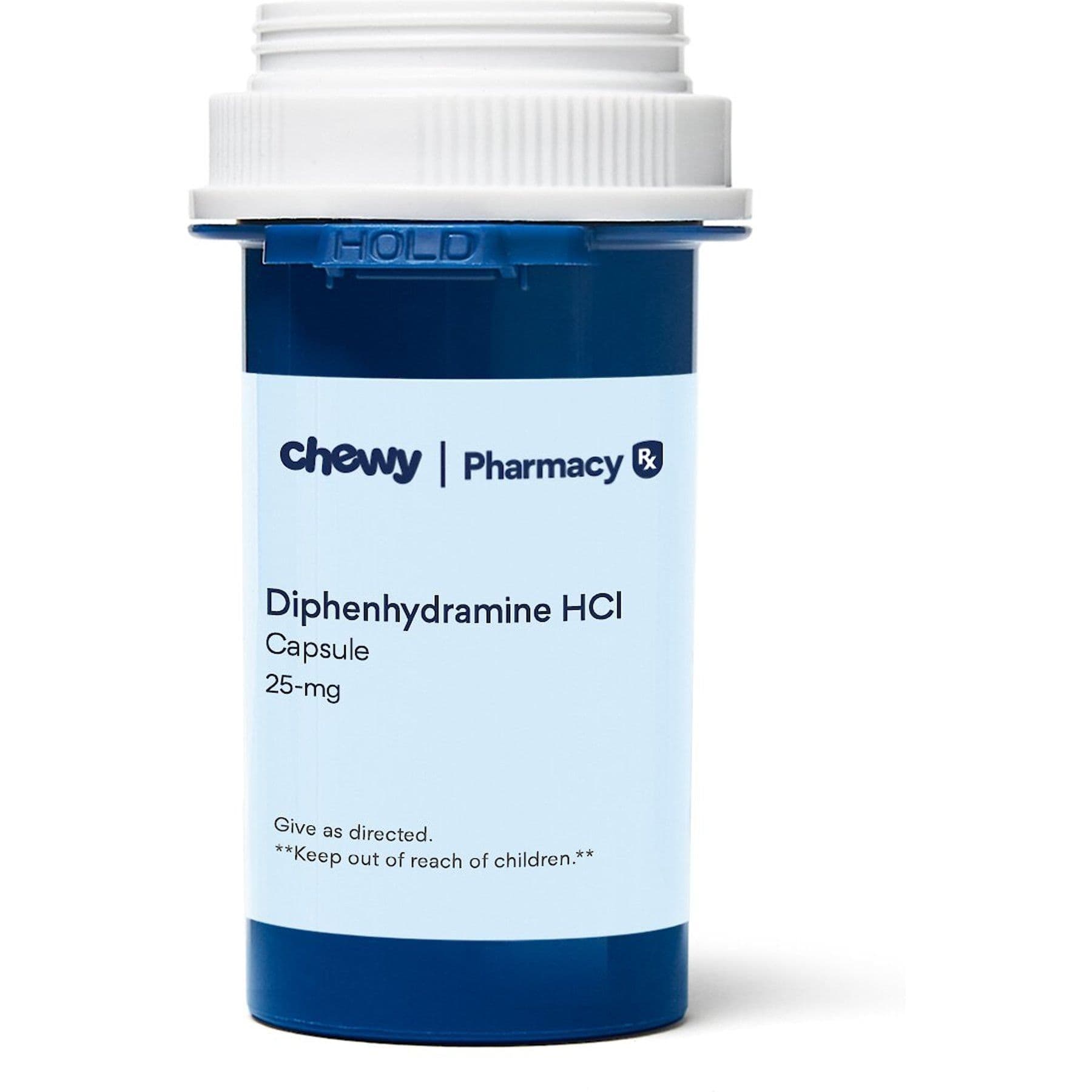
Plain generic diphenhydramine capsules, 25 mg, filled by Chewy's pharmacy on your veterinarian's prescription.
Webvet may earn a commission when you click through to Chewy, at no extra cost to you.
Merck's atopic dermatitis chapter explains the mixed results:
- Histamine is not the only itch signal in a dog with skin allergies; Merck names IL-31, a pruritogenic cytokine, as another, so blocking the H1 receptor leaves part of the itch running.
- Antihistamines have very little efficacy in an acute flare.
- They can help alongside other treatments in chronic disease, and they work best when started before a flare.
What the published evidence says about antihistamines for dogs with skin allergies:
- The 2015 ICADA guideline rates oral type 1 antihistamines as a small and limited benefit in some atopic dogs, with an effect that varies between individuals, and places them in daily preventive use rather than mid-flare rescue.
- The 2010 ICADA guideline found no conclusive evidence that they treat active atopic dermatitis, and ICADA notes some of the benefit may simply be the sedative effect of first-generation drugs such as diphenhydramine and chlorpheniramine.
- A Veterinary Evidence appraisal of two randomized trials and one crossover trial rated the evidence weak and the outcomes conflicting; in the crossover trial, antihistamines did not reduce itch enough unless combined with prednisone.
- Merck says the second-generation drugs cetirizine and loratadine cross into the brain less but have not proved useful for controlling itch in small animals to date.
Hives and bee stings are different. Merck's hives chapter describes urticaria as mast cells releasing histamine into the skin, causing vasodilation and dermal swelling, exactly the signal an H1 blocker interrupts. So an antihistamine for a dog's bee sting has a clearer rationale than one for year-round itching.
Gross swelling of the face or a limb, which Merck calls severe angioedema, means the clinic, not the medicine cabinet. For chronic dog skin allergies, the useful antihistamine is whichever one your veterinarian can fit into a wider plan.
Which antihistamine is best for a dog: the five vets use
Almost none of these drugs is made for dogs. They are human generics given off label, which VCA explains means the FDA and Health Canada have not reviewed that use in pets. Chlorpheniramine is the other first-generation option; VCA says it works best given regularly before allergen exposure and takes effect in 1 to 2 hours.
Chewy fills the generic Chlorpheniramine Maleate (Generic) Tablets, 4-mg, 120 tablets through its pharmacy on a veterinary prescription, listed at $8.40 for 120 when we checked in October 2026.
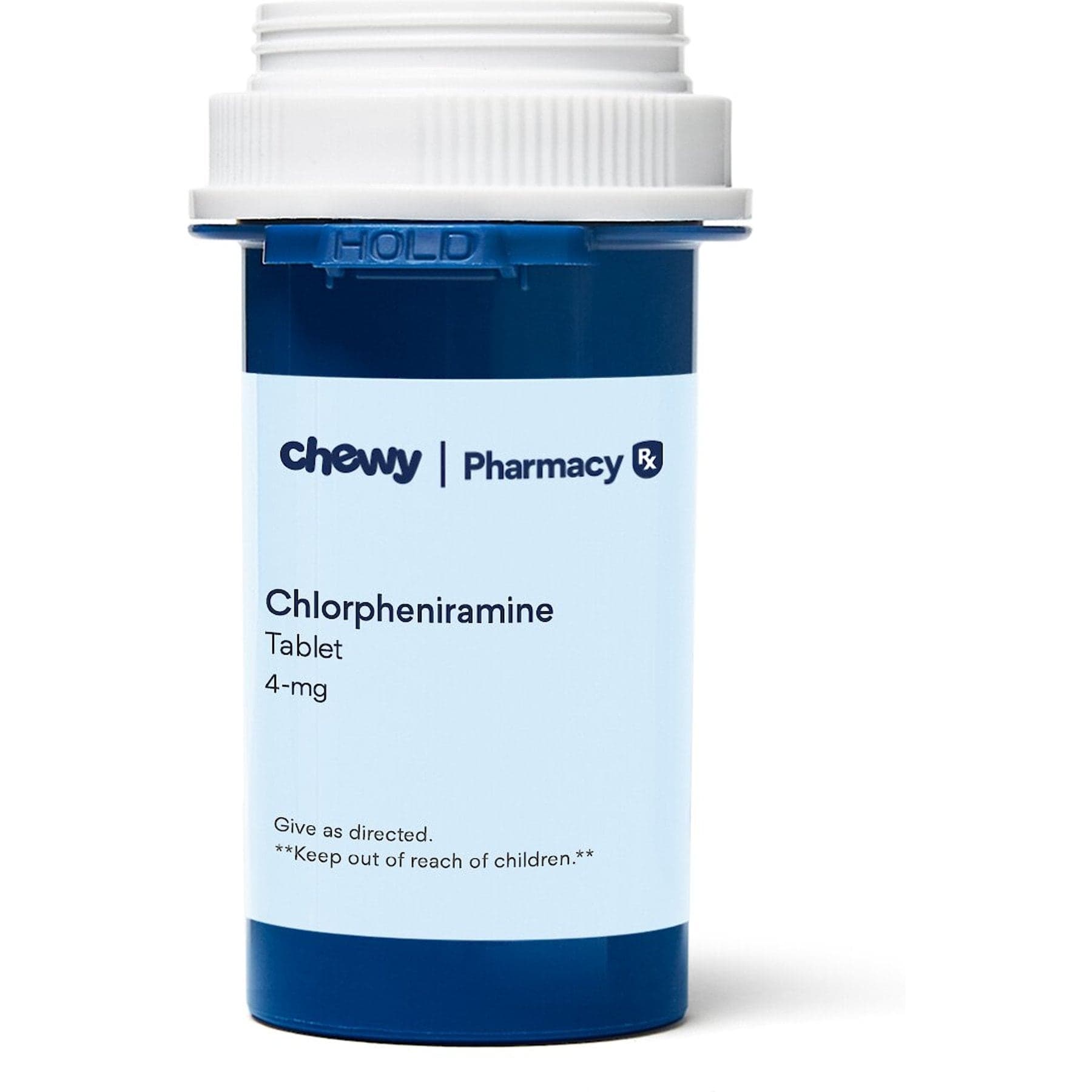
Plain chlorpheniramine 4 mg tablets for allergies and atopy, filled by Chewy's pharmacy on a veterinary prescription.
Webvet may earn a commission when you click through to Chewy, at no extra cost to you.
What separates the five is sedation, onset, and the dose range each source publishes for veterinarians. Where sources disagree we give both: Merck's hives chapter says loratadine is not an effective antihistamine for dogs, while Merck's toxicology table and the 2023 AAHA table both list a loratadine dose.
| Drug (brand) | Dose range vets prescribe | Sedation | Onset | Safe form |
|---|---|---|---|---|
| Diphenhydramine (Benadryl) | 2–4 mg/kg every 8–12 hours (Merck); 2–3 mg/kg every 12 hours (AAHA) | First-generation: drowsiness expected | About 1–2 hours (VCA) | Plain diphenhydramine only, no decongestant |
| Cetirizine (Zyrtec) | 1 mg/kg or 10–20 mg per dog every 12–24 hours (Merck); 1–2 mg/kg every 24 hours (AAHA) | Second-generation: minimal; sleepiness in small dogs at high doses (VCA) | 1–2 hours (VCA) | Plain cetirizine only, never the pseudoephedrine combination |
| Loratadine (Claritin) | 0.25–1.1 mg/kg every 24 hours (Merck toxicology); 1 mg/kg every 12 hours (AAHA); Merck's hives chapter calls it ineffective in dogs | Second-generation: minimal | Not stated by the veterinary sources | Plain loratadine only, never the pseudoephedrine combination |
| Chlorpheniramine (Chlor-Trimeton) | 4 mg per dog under 20 kg; 8 mg per dog or 0.25–0.5 mg/kg over 20 kg; every 8 hours (Merck); 0.4 mg/kg every 12 hours (AAHA) | First-generation: sleepiness listed by VCA | About 1–2 hours (VCA) | Chlorpheniramine-only tablets; liquids must be xylitol-free |
| Hydroxyzine (Atarax) | 0.5–2 mg/kg every 6–8 hours (Merck dermatology); 2 mg/kg every 12 hours (AAHA and Merck atopy chapter) | First-generation: sedation is first on VCA's side-effect list | About 1–2 hours (VCA) | Prescription only; hydroxyzine as the sole active ingredient |
Fexofenadine (Allegra) is a sixth option in the Merck and AAHA dose tables: Merck's atopy chapter calls it helpful for mild itch and best as part of combination therapy at 18 mg/kg once daily, while AAHA lists 5–15 mg/kg once daily.

What is the best antihistamine for my dog?
There is no single best antihistamine for every dog; Merck says responses vary considerably and several trials may be needed. Where the evidence leans, it is toward cetirizine and hydroxyzine: the 2010 ICADA summary says both have demonstrable antihistaminic action in dogs and should be the preferable antihistamine. Loratadine ranks lowest, since Merck's hives chapter calls it ineffective in dogs.
Plain diphenhydramine, cetirizine, loratadine, and chlorpheniramine are sold over the counter as tablets, capsules, or liquids. Hydroxyzine is prescription only; Hydroxyzine HCl (Generic) Tablets, 25-mg, 90 tablets go through Chewy's pharmacy with a veterinary prescription.
Topical antihistamines are a different question: ICADA found no evidence supporting topical type 1 antihistamine formulations for atopic dermatitis. The plain drugs are not harmful at a veterinarian's dose; the harm comes from combination products, overdoses, and dogs with conditions that rule them out.
Benadryl vs Zyrtec vs Claritin for dogs: a vet's comparison
The best head-to-head data comes from Banovic and colleagues (Veterinary Dermatology, 2020), a randomized, double-blinded crossover study in 12 healthy beagles. Cetirizine at 2 mg/kg twice daily significantly reduced histamine-induced wheals and late-phase reactions from baseline; diphenhydramine at 2.2 mg/kg twice daily showed no significant difference, even at blood levels considered therapeutic in people.
Neither drug caused adverse effects or behavior changes over the six-day courses. The study's own background states there is insufficient evidence that oral diphenhydramine prevents mast cell degranulation in dogs, and the 2023 AAHA table flags oral diphenhydramine as having questionable efficacy.
Is Benadryl or Zyrtec better for dogs?
On the evidence, Zyrtec (cetirizine). It reduced histamine reactions in the beagle study when Benadryl (diphenhydramine) did not, and Merck's toxicology table calls its toxic dose unknown but well tolerated by dogs. Benadryl's one edge is sedation, which ICADA notes may be part of its benefit.
The Zyrtec dose is a weight-based number your veterinarian sets inside the Merck and AAHA ranges; the walkthrough is in our Zyrtec for dogs guide, and the diphenhydramine equivalent is in our Benadryl for dogs guide.
Side effects by brand, as VCA lists them for each drug:
- Benadryl (diphenhydramine): lethargy, dry mouth, urinary retention, vomiting, diarrhea, and lack of appetite; first-generation, so drowsiness is expected.
- Zyrtec (cetirizine): vomiting and increased salivation, both rare, with sleepiness only in small dogs at high doses.
- Claritin (loratadine): Merck groups it with the second-generation drugs thought to lack CNS effects at therapeutic doses.
- Chlor-Trimeton (chlorpheniramine): sleepiness, diarrhea, vomiting, lack of appetite, dry mouth, and mild straining to urinate.
- Atarax (hydroxyzine): sedation first on VCA's list, then excitability, tremors, dry mouth, increased drinking, and constipation.
Merck sums up the split: first-generation antihistamines may cause drowsiness or gastrointestinal signs and carry anticholinergic effects, while second-generation drugs are thought to lack CNS and cholinergic effects at therapeutic doses, with CNS signs possible only in overdose.
Claritin's position is the weakest of the three. Merck's hives chapter states loratadine is not an effective antihistamine for dogs, AAHA and Merck's toxicology table list doses anyway, and no primary source recommends it over cetirizine. Merck also notes loratadine is often sold combined with pseudoephedrine, which can cause more serious signs.
 Sponsored
Vet care that's always there
Unlimited video calls and messaging with licensed vets for less than a typical vet visit. One membership covers up to five pets.
Use code Pets60
Plans start at $12/month · covers up to 5 pets
- Licensed vets in most states
- Rx for 150+ conditions
- 4.7 on Trustpilot
Antihistamine doses vets prescribe for dogs and how to give them
The dose ranges a veterinarian prescribes are published in milligrams per kilogram, and they differ between sources, so the number your vet writes may not match a chart found online. These are published ranges for veterinarians, not home-dosing instructions. Drug by drug, from Merck and the 2023 AAHA table:
- Diphenhydramine: 2–4 mg/kg every 8–12 hours as needed (Merck dermatology table, and the same range for 3–5 days in hives); 2–3 mg/kg every 12 hours (AAHA).
- Cetirizine: 1 mg/kg or 10–20 mg per dog every 12–24 hours (Merck dermatology); 1–4 mg/kg once daily (Merck toxicology and hives chapters); 1–2 mg/kg once daily (AAHA); 0.5–1 mg/kg every 12 hours (Merck atopy chapter).
- Loratadine: 0.25–1.1 mg/kg once daily (Merck toxicology); 1 mg/kg every 12 hours (AAHA).
- Chlorpheniramine: 4 mg per dog under 20 kg, and 8 mg per dog or 0.25–0.5 mg/kg over 20 kg, every 8 hours (Merck dermatology); 2–8 mg per dog every 8–12 hours (Merck toxicology); 0.4 mg/kg every 12 hours (AAHA).
- Hydroxyzine: 0.5–2 mg/kg every 6–8 hours (Merck dermatology); 2 mg/kg every 12 hours (AAHA, and as hydroxyzine pamoate for 3–5 days in Merck's hives chapter).

Give only the drug, and the amount, your veterinarian has named. VCA's drug handouts give no dose and tell owners to follow the veterinarian's directions, because off-label use can differ significantly from the label.
The amount is your vet's number, not a per-pound rule of thumb. No primary veterinary source publishes a dosage chart by pound: AAHA, Merck, and ICADA state doses in mg/kg or per dog. The only per-pound chart is the PetArmor 25 mg product label.
A few practical points from VCA and Merck on how to give them:
- Oral diphenhydramine can go with or without food; if the dog vomits on an empty stomach, give later doses with food or a treat.
- Stop diphenhydramine at least 2 weeks before skin allergy testing, because it alters the results.
- For hives, Merck lists a 3–5 day course after initial treatment to prevent acute recurrence as the drugs wear off.
- Dogs that cannot avoid the allergens or insects that trigger hives may need daily dosing.
- Timing matters: chlorpheniramine and hydroxyzine work best given regularly and before exposure, and ICADA says preventive daily use beats mid-flare dosing.
Hydroxyzine shows how wide the published spread gets. Beyond the two ranges in that list, Merck's toxicology table gives 2–3 mg/kg every 8–12 hours and Merck's atopy chapter 2 mg/kg every 12 hours, so four Merck and AAHA tables give three different answers. We cover the drug in depth in our hydroxyzine for dogs guide.
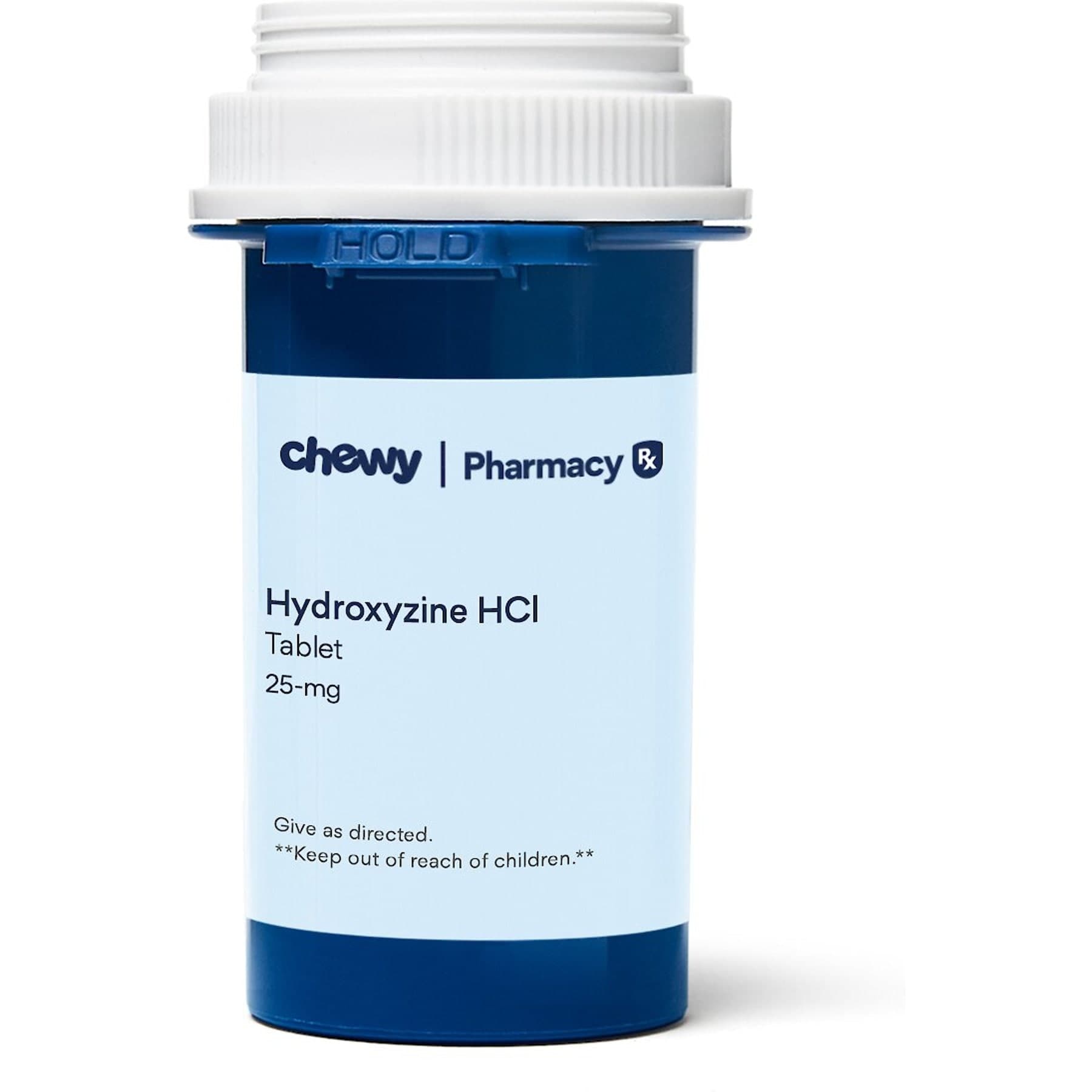
Hydroxyzine 25 mg tablets, the prescription antihistamine ICADA calls preferable in dogs, filled by Chewy's pharmacy.
Webvet may earn a commission when you click through to Chewy, at no extra cost to you.
The 25 mg tablets go through Chewy's pharmacy on a veterinary prescription, listed at $15.30 for 90 when we checked in October 2026.
Side effects, unsafe formulations, and dogs that should not take antihistamines
The plain drugs, at a veterinarian's dose, are generally tolerated: Merck's toxicology table calls cetirizine's toxic dose unknown but well tolerated, and the beagle study saw no adverse effects at 2 to 2.2 mg/kg twice daily. Side effects at those doses are mostly drowsiness and stomach upset.
Safety comes down less to the drug than to the formulation. The unsafe products are the ones that add a second ingredient: Merck says OTC cold, sinus, and allergy medicines often pair an antihistamine with a decongestant or a painkiller such as acetaminophen or an NSAID.
Pseudoephedrine is the decongestant to fear. Merck puts clinical signs at 5–6 mg/kg and death at 10–12 mg/kg in dogs. ASPCA Animal Poison Control says signs from liquids and immediate-release tablets can start within 15 to 30 minutes, and extended-release forms may take 3 to 6 hours or longer.
Pet Poison Helpline lists restlessness, a racing heart, high blood pressure, muscle tremors, seizures, and death. VCA's rule for each drug is the same: use products with hydroxyzine as the only active ingredient, check a chlorpheniramine label for chlorpheniramine alone and xylitol-free liquids, and never give the cetirizine and pseudoephedrine combination to dogs or cats.

Dogs that should not take antihistamines, or need extra caution, per VCA and Merck:
- Dogs allergic to the drug or a related one (VCA cross-lists cetirizine and hydroxyzine), and pediatric or neonatal pets in the case of diphenhydramine.
- Dogs with heart disease or glaucoma: Merck says the anticholinergic effects of first-generation drugs raise blood pressure and blur vision, so they are contraindicated in both.
- Hydroxyzine is ruled out in heart failure, urinary obstruction, or stomach obstruction, needs extreme caution with seizures and in very young, old, or first-trimester dogs, and Merck says it is teratogenic.
- Cetirizine needs caution with seizure disorders, trouble urinating or constipation, thyroid or prostate problems, heart, kidney, or liver disease, glaucoma, and in senior, working, pregnant, or nursing dogs.
- Diphenhydramine needs caution with prostate enlargement, intestinal or bladder obstruction, COPD, high thyroid hormone, high blood pressure, pregnancy or lactation, and in geriatric or working dogs.
- Chlorpheniramine needs caution in geriatric, pregnant, or lactating dogs, and Merck notes mild depression and stomach upset can appear below 1 mg/kg.
Interactions matter too. VCA pairs diphenhydramine cautiously with anticholinergic drugs, tricyclic antidepressants, and CNS depressants such as sedatives, anesthetics, and pain medications, and chlorpheniramine with anticoagulants, CNS depressants, MAOIs, and phenytoin. Tell your vet every drug and supplement the dog takes.
Stop the drug and call your veterinarian immediately for any of these signs. VCA lists the first five as serious reactions to chlorpheniramine, and Merck's description of antihistamine toxicosis adds the rest:
- Seizures
- Abnormal breathing
- Incoordination
- Muscle tremors
- Coma
- Lethargy or agitation
- A racing heart
- Vomiting
- Low blood pressure
- Dilated pupils
Natural antihistamines and supplements: what the evidence supports
The over-the-counter options are the plain human generics, bought as single-ingredient tablets, plus one product labeled for dogs. PetArmor Antihistamine Medication for Allergies for Dogs, 100 count contains 25 mg of diphenhydramine per tablet, the same active ingredient as Benadryl Allergy Ultratabs, according to the label listing at 1-800-PetMeds.
Chewy sells it over the counter, listed at $6.99 for 100 (down from $8.99) when we checked in October 2026.
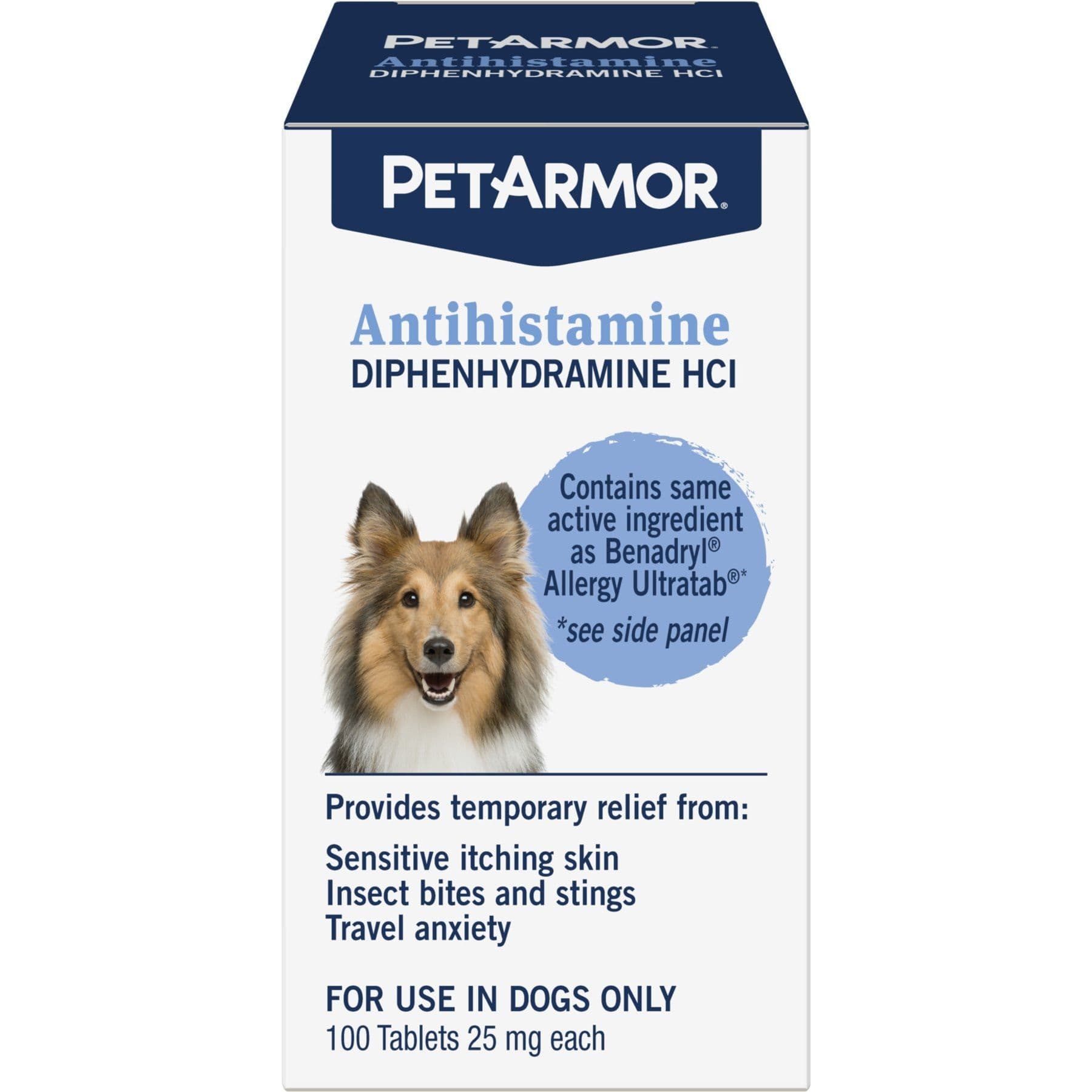
PetArmor diphenhydramine 25 mg tablets labeled for dogs, sold over the counter with a weight-band label.
Webvet may earn a commission when you click through to Chewy, at no extra cost to you.
The manufacturer's label doses by weight; this is the label's chart, not a veterinary dose, and the amount for your dog is still your veterinarian's call:
- 14 to 30 pounds: 1 tablet twice a day, which is 60 tablets a month, about $4.20 at the October 2026 Chewy price.
- Over 30 pounds: 2 tablets twice a day, which is 120 a month, more than a bottle.
- Under 14 pounds: ask a veterinarian.
A dog label does not make diphenhydramine an FDA-reviewed dog drug: VCA says every antihistamine use in dogs is off label.
What can I give my dog for allergies without going to the vet?
Less than you would hope, because the drug and the dose are your veterinarian's call, so a phone call still comes first. Reasonable without an appointment:
- A plain antihistamine your vet has already approved for that dog.
- An omega-3 fish oil.
- Flea control, since Merck lists fleas among the flare factors.
The wider field is ranked in our over-the-counter allergy medicine for dogs guide.
What is a natural antihistamine for a dog?
There is no proven one. No primary veterinary source shows quercetin, bromelain, or nettle acting as a natural antihistamine in dogs, and VCA notes that few supplements and herbs have been through rigorous efficacy trials, that natural does not mean safe, and that the FDA does not review such products before sale.
The nearest thing with evidence is omega-3 supplementation, which Merck lists among measures that can help prevent hives.
What the guidelines say about supplements for allergic dogs:
- Oral essential fatty acids are not useful for an acute flare: Merck says they can take up to 2 months to work, and ICADA found no evidence for them in flares.
- As an add-on they earn their place: Merck says several studies show EFAs increase the efficacy and lower the required dose of glucocorticoids, cyclosporine, and oclacitinib, and its atopy table lists fish oil with EPA and DHA at 65–90 mg/kg once daily.
- ICADA finds insufficient evidence for oral probiotics in preventing or treating atopic dermatitis.
- One 2026 randomized placebo-controlled trial in 56 dogs (Qian and colleagues, Veterinary Dermatology) found oral baicalin, a plant flavonoid, improved itch and lesion scores over 90 days; it is a single trial so far.
Two supplements, as their makers describe them. Nutramax Welactin Omega-3 Fish Oil Liquid Softgels Skin & Coat Supplement for Dogs, 360 count delivers 300 mg of omega-3s per softgel (155 mg EPA, 100 mg DHA), given at one softgel per 20 pounds daily or as a veterinarian directs, and Nutramax claims skin and coat support, not allergy relief.
Zesty Paws Allergy & Immune Bites Allergies, Immune, & Gut Support Peanut Butter Flavored Soft Chews Supplement for Dogs, 180 count bundle contains no antihistamine drug: per chew it lists bovine colostrum (200 mg), EpiCor Pets dried fermentate (170 mg), and astragalus root (100 mg), with a label claim of helping maintain normal histamine levels that no primary veterinary source has tested.
When antihistamines are not enough: moving to Apoquel, Cytopoint, or steroids
Move to a prescription drug when a fair daily trial has failed, or when the itch is severe from the start. Before switching, Merck says to investigate the flare factors that drive itch on their own:
- Fleas.
- Food and environmental allergens.
- Secondary infections such as Malassezia, pyoderma, and otitis externa.
Food is one of those factors, covered in our hypoallergenic dog food guide, and a single raw, chewed patch belongs in our guide to hot spots on dogs. The whole field of allergy drugs is ranked in our dog allergy medicine hub.

Apoquel for dogs (oclacitinib) is a JAK inhibitor that Merck calls fast-acting for both acute flares and chronic atopic dermatitis, with onset inside 24 hours. VCA says in many patients it is as effective as corticosteroids with fewer side effects, and that it can be safely combined with antihistamines. It is prescription only.
What the Apoquel label and the guidelines set as its limits:
- Merck lists 0.4–0.6 mg/kg twice daily for 2 weeks, then once daily; ICADA gives the same twice-daily dose for up to 14 days its strongest recommendation grade.
- Zoetis says not to use it in dogs under 12 months or with serious infections.
- The label warns it may increase the chance of serious infections, may worsen parasitic skin infestations or existing cancers, and that new neoplastic conditions were seen in studies and after approval.
- VCA adds dogs with cancer or a history of cancer, and pregnant, nursing, or breeding dogs, to the do-not-use list.
Cytopoint for dogs (lokivetmab) is an injectable antibody against IL-31. Merck says it has a quick onset, works for acute flares and chronic disease, and carries no age restrictions or reported drug interactions; its table lists 2 mg/kg under the skin every 4–8 weeks, with onset in 1–3 days.
It is given and priced at the clinic, and VCA says each injection lasts at least 4 to 8 weeks. The trade-offs between the two are in our Apoquel vs Cytopoint comparison.
Steroids are the fast option for a severe flare, and cyclosporine is the slow long-term alternative:
- ICADA gives oral prednisolone, prednisone, or methylprednisolone at 0.5–1.0 mg/kg per day its strongest recommendation for severe or extensive atopic dermatitis.
- Merck lists 0.5–1.1 mg/kg once daily with a taper and warns that long-term use carries a high risk of adverse effects; the full picture is in our prednisone for dogs and cats guide.
- For hives, Merck says a single prednisone dose of 0.5–1.0 mg/kg is generally enough in mild to moderate cases.
- For long-term control, Merck names oral cyclosporine at 5 mg/kg daily, with a slow onset of up to 4–6 weeks.
Antihistamines for dogs questions
Frequently Asked Questions
How long does an antihistamine take to work in a dog?
About 1 to 2 hours for diphenhydramine, cetirizine, chlorpheniramine, and hydroxyzine, according to VCA's drug handouts, with improvement in signs following. Those hours matter for a sting or hives; for allergic itch, ICADA says the drugs work as preventives, so steady daily dosing started before the season beats a tablet given mid-flare.
Can I give my dog an antihistamine every day?
Daily dosing is what the guidelines expect for allergies: ICADA says antihistamines should preferably be given on a continuous daily basis, and Merck says dogs that cannot avoid the insects or allergens that trigger hives may need daily administration. The drug, the dose, and how long to continue are your veterinarian's decisions, tapered to the lowest dose that holds.
Do antihistamines make dogs sleepy?
The first-generation ones often do. Merck says first-generation antihistamines may cause drowsiness or gastrointestinal signs, and VCA lists lethargy for diphenhydramine, sedation for hydroxyzine, and sleepiness for chlorpheniramine. Cetirizine, a second-generation drug, causes sleepiness only in small dogs at high doses. ICADA notes the sedative effect may be part of why some itchy dogs seem better.
Can a dog have an antihistamine for a bee sting?
Yes, with your vet's say-so: Merck lists bee and wasp stings among the most common causes of hives, and VCA says mild cases may need only antihistamines, possibly corticosteroids, and 24 to 48 hours of monitoring. Spreading swelling or any sign of anaphylaxis is a medical emergency; Merck's first-line drug for anaphylaxis is epinephrine, not an antihistamine.
Which over-the-counter antihistamine is safest for dogs?
No veterinary source ranks one as safest; all agree on the form. Buy the plain, single-ingredient tablet with no decongestant, no acetaminophen or NSAID, and no xylitol in a liquid. Among plain products, Merck's toxicology table says cetirizine's toxic dose is unknown but it is well tolerated by dogs, and VCA lists its side effects as rare.
Are antihistamines bad for dogs long term?
No veterinary source documents tolerance building up in dogs; VCA's only long-term note is that drug sensitivities can develop with repeated exposure. Merck says long-term therapy is often needed to keep atopic signs controlled, tapered to the lowest dose and frequency that works, and VCA flags caution with cetirizine in dogs with heart, kidney, or liver disease.
Is there a dog antihistamine dosage chart by weight?
Not a veterinary one. AAHA, Merck, and ICADA publish doses per kilogram or per dog, never per pound, and your veterinarian converts those to your dog's weight. The only per-pound chart is the PetArmor product label for its 25 mg diphenhydramine tablet: one tablet twice daily at 14 to 30 pounds, two above 30.
Can dogs take antihistamines for itching alone?
They can, but expect partial relief at best. ICADA rates oral antihistamines as a small and limited benefit in some atopic dogs, Merck says they have very little efficacy in an acute flare, and the crossover trial appraised by Veterinary Evidence found the itch did not drop enough unless prednisone was added.
Do antihistamines work for dog skin allergies?
For a minority. About 25 percent of owners in a survey ICADA cites rated oral antihistamines at least very effective for their atopic dogs, the 2010 guideline found no conclusive evidence for active atopic dermatitis, and Merck says second-generation drugs have not proved useful for itch. Atopic dogs that fail a trial move on to Apoquel, Cytopoint, or steroids.
Are there topical antihistamines for dogs?
Not ones with evidence behind them. ICADA found no evidence supporting topical type 1 antihistamine formulations for canine atopic dermatitis. No veterinary guideline addresses a dog licking an antihistamine spray off its coat, so there is no published safety figure for licking; ask your veterinarian before using any spray.
Can you buy antihistamines made for dogs?
You can buy antihistamines labeled for dogs, such as PetArmor's tablets, but the label shows 25 mg of diphenhydramine per tablet, the same drug as Benadryl Allergy Ultratabs. VCA points out every antihistamine use in dogs is off label, so a dog label does not make it an FDA-reviewed dog medicine, and the dose still belongs to your veterinarian.
Are there prescription antihistamines for dogs?
Hydroxyzine is the prescription antihistamine vets use for allergic and itchy conditions in dogs, per VCA, and the 2010 ICADA summary names it and its metabolite cetirizine as the preferable antihistamines in this species. Chewy fills generic hydroxyzine, diphenhydramine, and chlorpheniramine through its pharmacy on a veterinary prescription. Apoquel and Cytopoint are prescription itch drugs but are not antihistamines.
What antihistamine can I give my dog for a skin reaction?
For hives, Merck's chapter lists diphenhydramine, cetirizine, and hydroxyzine pamoate, each for 3–5 days, and says urticaria and angioedema generally respond quickly to antihistamines and glucocorticoids; a vet may add a single prednisone dose. Swelling of the whole face, a limb, or the belly is severe angioedema in Merck's description and needs a clinic visit, not a home trial.
Veterinarian · BVMS MRCVS
Dr. Pippa Elliott, BVMS, MRCVS, is a veterinarian with nearly 30 years of experience in companion animal practice. Dr. Elliott earned her Bachelor of Veterinary Medicine and Surgery from the University of Glasgow. She was also designated a Member of the Royal College of Veterinary Surgeons. Married with 2 grown-up kids, Dr. Elliott has a naughty Puggle named Poggle, 3 cats and a bearded dragon.
Related reading

Apoquel vs Cytopoint: How a Vet Chooses Between Them for an Itchy Dog

Over the Counter Allergy Medicine for Dogs: What Is Safe, What Helps, and What to Skip

Dog Allergy Medicine: A Vet's Guide to Over-the-Counter and Prescription Options for Itchy Dogs
