Benadryl for Dogs: Dosage Chart by Weight and Safety Guide
How much Benadryl can you give a dog? Get the vet-reviewed dosage chart by weight, liquid ml conversions, which products are never safe, and when to skip it.

BVMS MRCVS
Medically reviewed by Dr. Pippa Elliott, BVMS MRCVS · Last reviewed

Drug facts
Rx Database sponsored by
Diphenhydramine
Diphenhydramine is the medication or medication group covered in this vet-reviewed WebVet consumer safety guide.
 Sponsored
Is Diphenhydramine right for your dog?
Ask a licensed vet at Dutch over video before you start Diphenhydramine. Unlimited calls and messaging are included.
Use code Pets30
Plans start at $11/month · covers up to 5 pets
- Licensed vets in most states
- Rx for 150+ conditions
- 4.7 on Trustpilot
Benadryl for dogs can be appropriate when a veterinarian recommends plain diphenhydramine for a mild allergic problem, but the product and the dog must be checked first. Merck Veterinary Manual lists 2 to 4 mg/kg by mouth every 8 to 12 hours for selected canine skin conditions. The familiar shortcut of roughly 1 mg per pound is only the rounded low end, not a universal prescription.
Benadryl Dosage for Dogs by Weight: The Chart
| Dog's weight | Rounded low-end amount at about 1 mg/lb | If the veterinarian approves plain liquid labeled 12.5 mg/5 mL | What must be confirmed first |
|---|---|---|---|
| 5 lb | 5 mg | 2 mL | Very small dogs need an accurately measured, xylitol-free product |
| 10 lb | 10 mg | 4 mL | Confirm the active ingredient, concentration, reason, and interval |
| 15 lb | 15 mg | 6 mL | A 25 mg tablet is not automatically the right unit for this weight |
| 20 lb | 20 mg | 8 mL | Do not round up without veterinary direction |
| 25 lb | 25 mg | 10 mL | Use only plain diphenhydramine, never a combination cold product |
| 50 lb | 50 mg | 20 mL | Liquid volume becomes large, so the veterinarian may prefer another form |
| 75 lb | 75 mg | 30 mL | Medical history and other sedatives still control safety |
| Any dog with breathing trouble, collapse, severe swelling, or a possible overdose | Do not use this chart | Do not give oral liquid | Seek emergency veterinary care now |
When considering benadryl for dogs, use the veterinarian-confirmed product and plan for that animal. How much Benadryl can you give a dog? Merck's veterinary reference range for selected canine skin disease is 2 to 4 mg/kg by mouth every 8 to 12 hours as needed. The table shows only the rounded low-end 1 mg/lb calculation and the arithmetic conversion for one specific 12.5 mg/5 mL liquid concentration. Confirm with your vet before using either.
Two products with similar front labels can contain different active ingredients or liquid concentrations. Read the Drug Facts panel, not the color or brand family. If the bottle does not say diphenhydramine is the only active drug, or if the liquid has xylitol, alcohol, or another unsuitable ingredient, do not give it.

How to read the chart without turning it into a prescription
The weight row is a calculation aid for a veterinarian-approved situation. It does not establish that diphenhydramine is the right medicine, that the low end is appropriate, or that repeated dosing is safe. The 2 to 4 mg/kg source range is broad because indication and patient factors matter. Never use the upper end simply because the lower amount did not work.
Before the first dose, confirm:
- current body weight from a reliable scale
- the reason the veterinarian is recommending diphenhydramine
- exact product and active-ingredient list
- tablet strength or liquid concentration
- milligrams and milliliters, when a liquid is used
- interval, maximum daily administrations, and stop date
- what improvement and adverse effects to watch for
Do not repeat a dose early because itching continues. For a possible double dose, wrong product, or unknown amount, call the veterinarian or an animal poison control service with the package in hand.
A safer decision path than starting with the calculator
The chart answers only the arithmetic after a veterinarian has decided diphenhydramine fits. Start with the symptom. A few hives on a dog who breathes, walks, and responds normally is different from muzzle swelling, repeated vomiting, breathing change, collapse, or a painful infected ear.
Use this sequence:
- identify whether the sign is mild, urgent, or an emergency
- call the veterinarian with the dog's weight, history, and photographs when useful
- identify every active and inactive ingredient in the proposed product
- confirm the veterinary amount, interval, and stop date
- measure the approved formulation accurately
- record the response and know when to seek reassessment
This sequence prevents a mathematically correct amount of the wrong medicine. It also protects against a delay when an injectable emergency treatment, oxygen, fluids, or diagnosis is needed.
Administering a tablet or approved liquid
Give only the route and product the veterinarian approved. If a tablet must be split, use a scored tablet and method the pharmacist considers accurate. A crumbled or uneven fragment can be difficult to measure for a small dog, and an extended-release unit should not be altered without direct instruction.
For an approved liquid, read the concentration before every use. Draw the exact volume into an oral syringe, place the tip in the side of the mouth, and allow the dog to swallow without force. Stop if the dog coughs, chokes, cannot swallow, or is too sedated to protect the airway.
Never hide an unknown combination product in food. If the dog spits out part of the dose, call before replacing it because the swallowed amount cannot be known.

Webvet may earn a commission when you click through to Chewy, at no extra cost to you.
Is Benadryl Safe for Dogs?
Plain diphenhydramine can be safe for some dogs under veterinary direction. It is an older first-generation antihistamine that blocks H1 histamine receptors and commonly causes drowsiness. Safety depends on the dog's diagnosis, weight, age, health conditions, other medicines, and the exact formulation.
Can I give my dog Benadryl? Ask before the first dose, especially when the dog has not been examined for the current problem. Itching can come from fleas, bacterial or yeast infection, mites, pain, food allergy, environmental allergy, or contact irritation. An antihistamine may do little for several of those causes and can delay effective treatment.
Use diphenhydramine only, never a decongestant combination, and treat the veterinarian's written amount and interval as the limit. A dog with facial swelling plus breathing changes, weakness, or collapse needs emergency care, not a home antihistamine trial.
Dogs that need extra review
Tell the veterinarian about glaucoma, heart disease, high blood pressure, urinary retention, prostate disease, seizure history, pregnancy, nursing, and liver or kidney problems. Sedation can be stronger when diphenhydramine is combined with another calming, pain, behavior, or sleep-inducing medicine.
Extra caution is appropriate for:
- puppies, frail seniors, and very small dogs
- dogs already quiet, weak, dehydrated, or mentally dull
- dogs with breathing disease or a narrowed airway
- dogs taking trazodone, gabapentin, opioids, sedatives, or other antihistamines
- dogs with a prior paradoxical excitement response
- working dogs whose coordination and alertness are safety critical
Do not use drowsiness as proof that the allergy is controlled. A sleepy dog can still have a worsening infection, painful ear disease, or an allergic reaction that needs urgent treatment.
What to record after a veterinarian-approved dose
Write down the product, milligrams, liquid volume if used, time, reason, and the dog's response. Note whether itching, hives, or swelling improved and whether the dog became sleepy, agitated, unsteady, unable to urinate, or developed vomiting or diarrhea.
That timeline helps the clinic decide whether the medicine helped. It also prevents a second caregiver from repeating the dose. Store the product in its original labeled package and keep it away from pets, since dogs can chew bottles or flavored liquids.
Which Benadryl Products Are Safe (and Which Never Are)
The only formulation a veterinarian may approve for this use is one in which diphenhydramine is the sole active ingredient. Human product families often sell plain allergy tablets beside multi-symptom, cold, sinus, nighttime, and decongestant versions. The brand name on the front is not enough.


Third-party-tested omega-3 softgels (EPA and DHA) that support skin, coat, and joint health in dogs. Fish oil is one of the first things many vets suggest for a dull, dry, or flaky coat.
Webvet may earn a commission when you click through to Chewy, at no extra cost to you.
Human Benadryl tablets
Can I use human Benadryl for my dog? A veterinarian may direct the use of a plain human tablet containing only diphenhydramine, but the tablet strength and dog-specific amount must match the written plan. Do not assume one tablet is a dose. A 25 mg tablet represents 5 mg/kg in an 11-pound dog but only about 1.1 mg/kg in a 50-pound dog.
Those examples illustrate why the tablet unit is not the prescription. Use the exact milligrams the veterinarian approved and a form that can be measured accurately. Do not split an extended-release or combination product, and do not guess at an uneven tablet fragment.
Liquid and children's Benadryl
Liquid Benadryl for dogs requires more checking than the name suggests. Concentrations differ, inactive ingredients differ, and some sugar-free liquids can contain xylitol. If the veterinarian approves a liquid, match the concentration exactly and use an oral syringe, not a kitchen spoon.
The chart's mL values apply only to 12.5 mg per 5 mL, which equals 2.5 mg per mL. If the bottle has any other concentration, those volumes are wrong. Children's Benadryl for dogs is not automatically gentler or safer, and a child-resistant cap does not protect a bottle from a chewing dog.
Products with decongestants or added pain medicine
Avoid labels that include pseudoephedrine, phenylephrine, acetaminophen, or another active ingredient. A dog exposed to a combination product needs case-specific poison advice because the added drug can create a different emergency from diphenhydramine alone.
Have the entire package ready when you call. The front label may omit the information the professional needs, while the Drug Facts panel shows active ingredients, strength, concentration, and dosing unit.
What Benadryl Helps With (and What It Does Not)
Veterinarians may use diphenhydramine for selected mild allergic skin reactions, hives, or insect-related reactions. Merck's urticaria reference lists 2 to 4 mg/kg by mouth every 8 to 12 hours for 3 to 5 days in dogs, but that is an indication-specific veterinary regimen, not permission to treat every itch at home.
Can Benadryl help with my dog's itching? It may help when histamine is an important part of the reaction, but many chronic canine allergies respond poorly to antihistamines alone. Flea allergy, atopic dermatitis, food allergy, skin infection, and ear disease each require diagnosis and targeted control.
Benadryl may be discussed for:
- hives or a mild allergic skin reaction after veterinary triage
- itching related to a suspected histamine-driven event
- a bee or insect sting when breathing and circulation are normal
- a vaccine reaction only when the veterinarian provides a plan
- motion-related or situational sedation only when a veterinarian intentionally selects it
It should not be used to delay emergency care for facial swelling, breathing difficulty, collapse, severe weakness, or rapidly spreading signs. It also does not neutralize venom, reverse shock, kill fleas, treat yeast or bacteria, or diagnose why a dog is scratching.
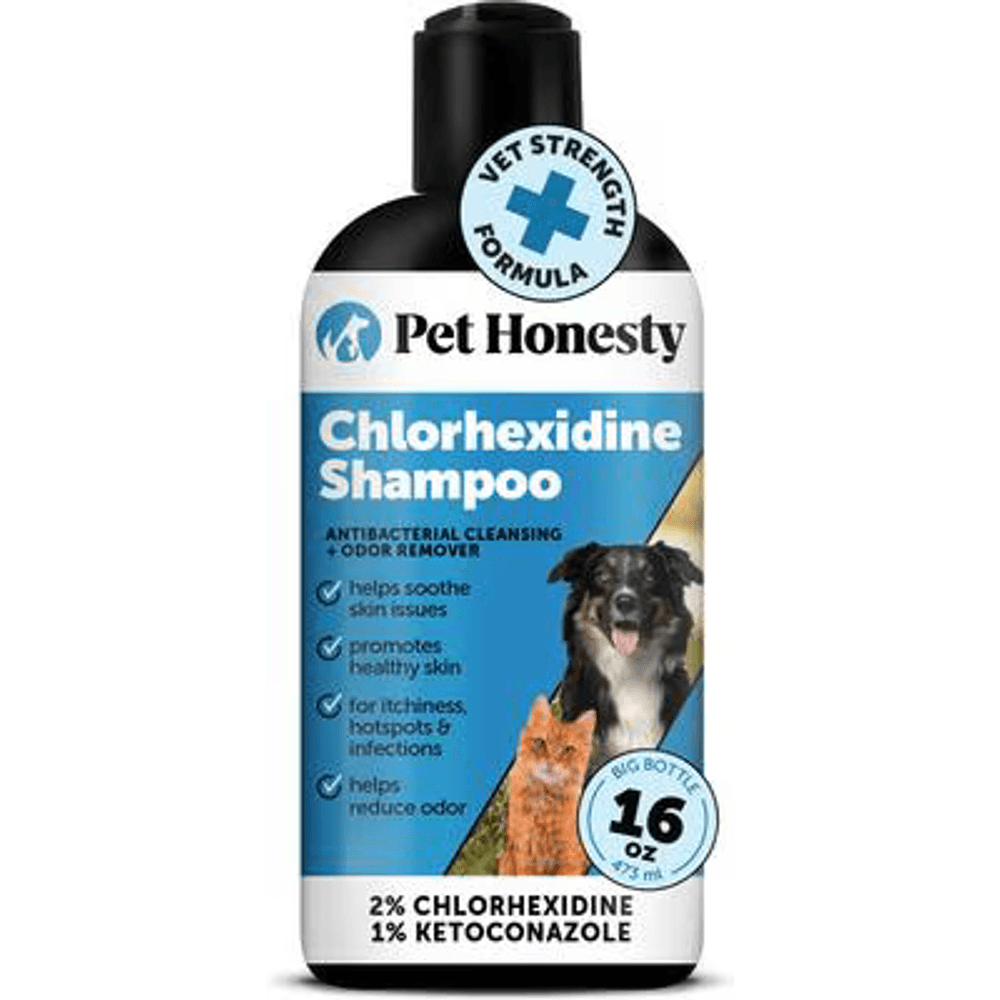
A vet-strength medicated shampoo with 2% chlorhexidine and 1% ketoconazole, the antifungal and antibacterial combination vets use to help clear ringworm and skin infections and to cut fungal spore shedding during treatment.
Webvet may earn a commission when you click through to Chewy, at no extra cost to you.
Why chronic itching often needs more than an antihistamine
Histamine is only one part of canine itch biology. Environmental allergy can involve other inflammatory signals, while self-trauma damages the skin barrier and encourages yeast or bacterial overgrowth. Flea bites, mites, food reactions, and ear inflammation add different drivers. That is why repeated Benadryl can leave a dog sleepy but still scratching.
Look for clues that point beyond a mild one-time reaction:
- recurring paw licking, face rubbing, or ear trouble
- odor, greasy coat, pustules, crusts, or hair loss
- a seasonal pattern or worsening after outdoor exposure
- flea dirt or missing parasite-prevention doses
- vomiting or diarrhea alongside skin signs
- only partial or brief response to an antihistamine
A veterinarian may use skin cytology, parasite testing, an ear examination, diet history, or allergy workup. Treating infection and restoring the skin barrier can improve comfort more than increasing an antihistamine.
What a treatment response should look like
Define the target before dosing. For hives, the veterinarian may expect wheals and mild swelling to recede without new emergency signs. For itch, track scratching episodes, sleep interruption, redness, and self-trauma. Sedation alone is not a successful response.
Take photographs of the same area in similar light and note dose time, symptom change, and alertness. Call when the reaction spreads, persists beyond the expected plan, or returns after the course ends. A recurring reaction needs a cause-focused plan rather than an open-ended antihistamine supply.
Benadryl for bee stings and sudden swelling
A local sting can cause pain and swelling, while a systemic allergic reaction can progress quickly. Remove the dog from the insect area, look for a visible stinger only if doing so is safe, and call the veterinarian. Swelling around the muzzle or eyes deserves prompt advice because it may progress even when breathing initially appears normal.
Emergency signs include:
- noisy, difficult, or rapid breathing
- pale or blue gums
- collapse, severe weakness, or confusion
- repeated vomiting or diarrhea with swelling
- widespread hives plus worsening behavior
Do not spend time calculating Benadryl when those signs are present. Veterinary teams can provide oxygen, injectable medicines, fluids, and monitoring that an oral tablet cannot replace.
 Sponsored
Vet care that's always there
Unlimited video calls and messaging with licensed vets for less than a typical vet visit. One membership covers up to five pets.
Use code Pets30
Plans start at $11/month · covers up to 5 pets
- Licensed vets in most states
- Rx for 150+ conditions
- 4.7 on Trustpilot
Mild, same-day, and emergency triage
A useful triage framework keeps the dog, not the tablet, at the center:
- Mild and stable: a limited skin reaction in a bright, normally breathing dog still deserves a veterinary call before home treatment.
- Same-day evaluation: persistent facial swelling, widespread hives, vomiting, diarrhea, marked discomfort, or a reaction that returns after medication needs prompt examination.
- Emergency: breathing difficulty, pale or blue gums, collapse, severe weakness, confusion, or rapidly worsening swelling requires immediate hospital care.
Do not drive while trying to give medicine to a distressed dog. Call the hospital on the way, keep the airway unobstructed, and avoid tight muzzles when facial swelling or breathing is abnormal.
Benadryl for anxiety or sleep
Benadryl for dog anxiety is unreliable because sedation is not the same as reduced fear. A dog may look quieter while remaining distressed, or may become paradoxically excited. Travel, fireworks, separation distress, and veterinary fear benefit from situation-specific behavior work and, when appropriate, a prescription selected for anxiety.
Tablet strength should never be chosen to produce sleep. The sedating response depends on weight, sensitivity, health, and other medicines, and sleepiness remains a side effect rather than a reliable anxiety treatment. Do not combine diphenhydramine with another sedative without veterinary direction.

Side Effects, Overdose Signs, and When to Skip Benadryl
- 1Skip Benadryl until a veterinarian reviews glaucoma, heart disease, urinary problems, seizures, pregnancy, and interacting sedatives.
- 2Expected sleepiness should remain mild enough that the dog wakes, walks, breathes, drinks, and responds normally.
- 3Agitation, marked unsteadiness, abnormal heart rate, tremors, seizures, collapse, or a dosing error needs urgent advice.
- 4Facial swelling with breathing changes or collapse is an emergency even if diphenhydramine has already been given.
Common diphenhydramine side effects in dogs include drowsiness, dry mouth, and sometimes gastrointestinal upset. Some dogs become restless or excited instead of sleepy. Difficulty urinating, marked confusion, severe weakness, rapid heart rate, or poor coordination deserves a prompt call.
Benadryl overdose in a dog can cause profound sedation or agitation, abnormal heart rhythm, tremors, seizures, and other serious signs. Risk depends on the amount, product, dog, and added ingredients. Call before symptoms develop when a dog gets an extra dose, chews a package, or consumes a combination product.
When not to give a dog Benadryl
Do not give it as a home trial when:
- the dog has difficulty breathing, collapse, blue or pale gums, or severe weakness
- swelling is rapidly progressing or involves the mouth and throat
- the active-ingredient list is not plain diphenhydramine
- the liquid contains xylitol or has an unknown concentration
- another sedative or antihistamine was already given without a combination plan
- the dog has a condition the veterinarian has not reviewed
- the problem is chronic itching that needs diagnosis rather than repeated sedation
If the dog is already taking a veterinarian-approved regimen, call when the response changes. A medicine that was tolerated months ago may be inappropriate after a new diagnosis, weight change, surgery, or medication addition.
Webvet may earn a commission when you click through to Chewy, at no extra cost to you.
Missed doses and accidental extra doses
Follow the veterinary label for a missed dose and never double the next amount. If a caregiver is unsure whether the dose was given, it is safer to call than to repeat it. A shared medication log can prevent duplicate dosing in busy households.
For accidental exposure, provide:
- dog weight
- exact product and every active ingredient
- tablet strength or liquid concentration
- maximum amount missing
- earliest and latest possible exposure time
- current signs and other medicines
Do not induce vomiting unless a veterinary professional directs you. Combination products or a dog that is already drowsy can make unsupervised vomiting especially unsafe.
If Itching Keeps Coming Back: Beyond Benadryl
What is the best thing to give a dog with itchy skin? The best treatment addresses the cause. A flea-allergic dog needs reliable flea control, an infected dog needs antimicrobial treatment chosen from examination and testing, and a dog with atopic dermatitis may need prescription itch control plus skin-barrier and trigger management.
Questions about daily prescription allergy medicine, including Apoquel vs Benadryl and other Benadryl alternatives for dogs, belong in WebVet's Apoquel for dogs guide. Oral options for recurrent itchy skin should be compared by diagnosis, age, health history, infection risk, monitoring, response, and cost, not by which one makes the dog sleep.
A useful chronic-itch workup may include:
- flea and mite assessment
- skin cytology for yeast or bacteria
- ear examination and cytology
- food-trial discussion when indicated
- review of seasonal and environmental patterns
- a long-term plan for flare control and skin-barrier care
Repeated diphenhydramine can create a false sense that something is being treated while infection or allergy damage continues. Bring a calendar of flare dates, photographs, food and parasite-prevention history, and every product tried to the veterinary visit.
Building a long-term itch plan
A sustainable plan separates flare relief from prevention. The veterinarian may combine parasite control, treatment of infection, bathing or topical care, environmental management, diet evaluation, and a prescription anti-itch medicine. When the veterinarian selects chlorhexidine bathing for a diagnosed skin problem, Pet Honesty Chlorhexidine dog shampoo is one product to ask about; it does not replace the diagnosis or prescription plan. Each piece has a defined job and monitoring plan.
Ask these questions at the recheck:
- what diagnosis best explains the current pattern?
- is infection present today?
- what should be used for a sudden mild flare?
- what medicine, if any, belongs in daily control?
- what signs mean the plan has failed or become urgent?
- when should skin, ears, weight, or laboratory work be rechecked?
This makes Benadryl a limited tool when appropriate rather than the default response to every scratch.
Special Situations That Change the Benadryl Decision
Vaccines and prior allergic reactions
Do not premedicate every vaccine visit because a dog once had a reaction. The veterinarian should review what happened, when signs started, how severe they were, and which vaccine or injection was involved. Premedication can be appropriate in a written plan, but it does not guarantee prevention and should not replace post-vaccine observation.
If swelling, vomiting, weakness, or breathing change occurs after vaccination, call immediately. Bring the vaccine record and list of anything given at home. Do not repeat diphenhydramine because the first amount did not stop progression.
Surgery, travel, and other sedatives
Tell the surgical or emergency team about recent Benadryl even when it was over the counter. Diphenhydramine can add to anesthesia, opioids, trazodone, gabapentin, and other sedating medicines. The team needs the product, amount, and time to plan monitoring.
For travel, do not test sedation for the first time after the vehicle is moving. Drowsiness can worsen balance, while paradoxical excitement can make restraint more difficult. Motion sickness and travel fear also need different treatment targets.
Pregnancy, nursing, and chronic disease
Pregnant or nursing dogs need a veterinary risk-benefit decision. Heart disease, glaucoma, urinary problems, seizures, and serious respiratory disease also change the safety picture. A prior tolerated dose does not override a new diagnosis.
When another clinic prescribes medicine, update every provider. Over-the-counter drugs are part of the medication list and can create the same interaction risks as a prescription.
Storing Diphenhydramine and Preventing Household Errors
Keep each product in its original container with the Drug Facts panel readable. Store plain diphenhydramine away from combination cold products so a caregiver cannot grab the wrong bottle during a stressful event. Do not leave flavored liquid, chewable products, or tablets where a dog can reach them.
Use a written log with:
- dog name and weight
- veterinarian-approved product
- exact tablet strength or liquid concentration
- amount and time given
- reason for use
- response and adverse effects
- next permitted time, if another dose is part of the plan
Discard or return expired medicine according to pharmacy guidance. Do not keep an unlabeled syringe filled for a future reaction, since concentration and product identity can be lost.
If several pets live in the home, never assume the same plan applies. Species, weight, disease, medicines, and diagnosis differ. A cat should not receive the dog's chart or product without direct veterinary instructions.
When Benadryl Did Not Help
Failure can be useful diagnostic information. The problem may not be histamine driven, the product may have been wrong, the timing may not fit, or infection and self-trauma may be sustaining the itch. Do not respond by moving to the high end of Merck's range without the prescriber.
Bring the veterinarian:
- product and ingredient panel
- exact dose times and amounts
- photographs before and after
- itch location and severity
- flea-prevention and diet history
- new odor, discharge, sores, or ear signs
The next step may be testing, infection treatment, another medication class, or emergency care. The goal is a correct diagnosis, not proof that a higher Benadryl amount can make the dog quiet.
Ask whether the original symptom should be treated at home again if it recurs. A veterinarian may approve a defined plan for a known mild reaction while requiring an examination for any change in pattern. Keep the instruction with the product so a future caregiver does not rely on memory.
If the dog needs diphenhydramine repeatedly, schedule a medication review. Ongoing exposure increases the chance of a product mix-up, interaction, or missed underlying disease, even when individual doses appeared tolerated.
Benadryl for Dogs FAQs
Frequently Asked Questions
Will 25 mg of Benadryl make my dog sleepy?
A 25 mg Benadryl tablet may make a dog sleepy, but it is not a universal dose and drowsiness at a standard dose is not guaranteed. Paradoxical excitement is also possible. The same tablet creates different mg/kg exposure at different weights. Health conditions and other sedatives also matter. Never choose 25 mg simply to make a dog sleep, and call for marked weakness, agitation, wobbliness, or an abnormal heartbeat.
How fast does Benadryl work on dogs for itching?
How fast Benadryl works on a dog's itching varies, and the available primary veterinary evidence does not establish a universal thirty minute onset. If a veterinarian recommends it for a mild reaction, follow the expected timeline they provide. Never re-dose early to force a faster response. Do not wait for an oral antihistamine to work when swelling is progressing, breathing changes, the dog collapses, or another emergency sign appears.
How many days in a row can my dog have Benadryl?
The number of days in a row that a dog can have Benadryl depends on the diagnosis and veterinary plan. In the available primary veterinary evidence, a few days is the maximum unaided period to discuss for the specified urticaria regimen, and chronic itching needs diagnosis rather than indefinite treatment. Merck lists a 3 to 5 day course for canine urticaria at its specified veterinary regimen, but that does not authorize repeated treatment for chronic itch or another problem. If signs persist, return, or require daily medicine, the dog needs reassessment rather than an indefinite refill.

Editor
The Webvet Editorial Team is the in-house group of pet-care editors and writers behind Webvet, operated by Smart Pet Collective. The team researches, writes, and maintains Webvet's pet health, behavior, and medication content. Every article follows a defined editorial process: research from reputable veterinary and scientific sources, careful drafting, mandatory review of medical content by a credentialed veterinarian, and dated publication. Health and medication articles are medically reviewed by a licensed veterinary professional before they go live and are kept current over time.
Veterinarian · BVMS MRCVS
Dr. Pippa Elliott, BVMS, MRCVS, is a veterinarian with nearly 30 years of experience in companion animal practice. Dr. Elliott earned her Bachelor of Veterinary Medicine and Surgery from the University of Glasgow. She was also designated a Member of the Royal College of Veterinary Surgeons. Married with 2 grown-up kids, Dr. Elliott has a naughty Puggle named Poggle, 3 cats and a bearded dragon.


