Milk Thistle for Dogs: Uses, Safety, and Choosing a Supplement
Milk-thistle supplements differ in active ingredients and concentration. Learn what the canine evidence shows, which safety questions matter, and how to compare real powders, liquids and tablets.

BVMS MRCVS
Medically reviewed by Dr. Pippa Elliott, BVMS MRCVS · Last reviewed

This article contains affiliate links. Webvet may earn a commission when you buy through them, at no extra cost to you.
Milk thistle for dogs is used as a liver-support supplement, often alongside a veterinarian's diagnosis and treatment plan. Its compounds have antioxidant activity, but clinical evidence is limited, and one bottle's milligram amount may mean something very different from another's.
Before choosing a powder, liquid or chewable, check what the label actually measures: whole seed, standardized extract, silymarin or silybin. That distinction helps you avoid an inappropriate substitution and gives your vet the information needed to recommend a product and dose.
What is milk thistle for dogs?
Milk thistle is the plant Silybum marianum. Its seed contains a mixture of compounds called silymarin; silybin is one component of that mixture. These names appear on dog supplements, sometimes alongside other ingredients such as SAMe.
Products sold for dogs may contain ground seed, a concentrated extract or a preparation designed to change absorption. They are not all the same supplement in different packaging. Nor does “natural” establish that a product is safe for every dog or useful for every liver problem.
A whole-seed powder such as Herbsmith illustrates the starting point: ground plant material that can be measured into food when your veterinarian recommends it. It is a practical format to discuss if your dog will not take tablets. The powder's amount must be interpreted as seed weight rather than concentrated extract.
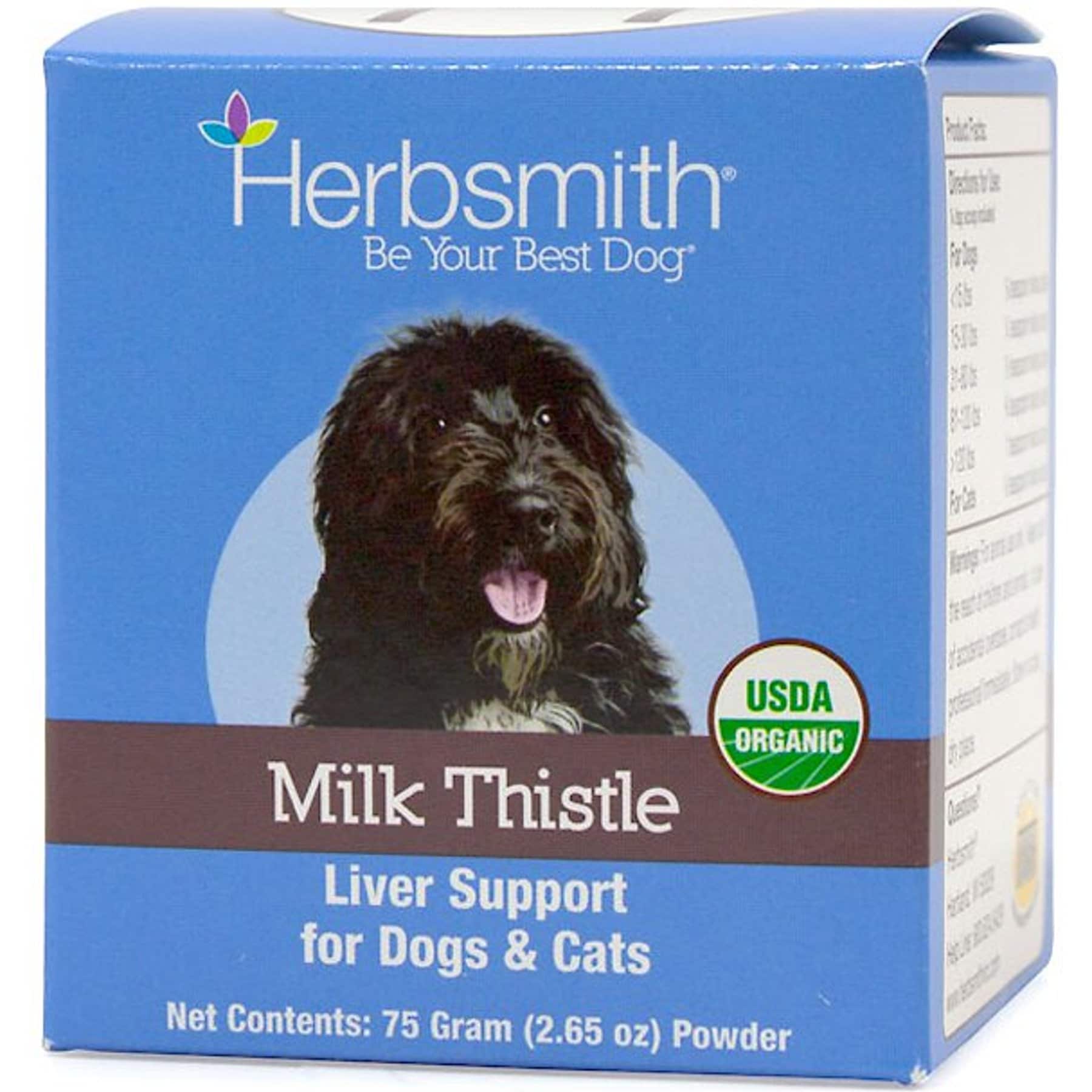
A whole milk-thistle seed powder, distinct from concentrated extracts and combination supplements. Confirm whether it fits the veterinary plan before adding it.
Webvet may earn a commission when you click through to Chewy, at no extra cost to you.

Milk thistle is a supplement, not an FDA-approved drug treatment for canine liver disease. VCA's veterinary overview describes its use and the limits of available safety information. A senior dog does not automatically need it, and a healthy dog does not need a routine “liver cleanse” simply because it eats commercial food or receives prescribed medication.
Whole seed, silymarin and silybin are different
The largest number on a bottle is not necessarily the largest amount of the compound your veterinarian wants. Seed weight is not silymarin content, and the weight of a silybin complex is not the same as its silybin content. A standardized extract identifies the proportion of a specified compound; a plain seed amount does not provide that same information.
Capsules, tablets, chewable pills and liquid drops are delivery formats. A tincture or liquid may use a different extraction method and carrier from a powder. Those format names alone do not tell you the active amount, absorption or appropriate dog dose.
- 1Identify whether the label gives whole seed weight, extract weight, silymarin content or silybin content.
- 2Check the amount per tablet, scoop or milliliter and any additional active ingredients.
- 3Compare the complete formulation with your veterinarian's recommendation before substituting products.
| Formula comparison | What the manufacturer identifies | What that means when comparing labels |
|---|---|---|
| Herbsmith powder | Organic ground whole seed; manufacturer reports approximately 3% silymarin | Milligrams of seed are not milligrams of concentrated extract |
| Pet Wellbeing liquid | Organic milk-thistle seed preparation, 333 mg per mL; water, glycerin and bacon flavor | The ingredient panel does not identify 333 mg of silymarin per mL |
| K9 Select chewable tablets | 100 mg seed extract standardized to 80% silymarin per tablet | The standardized extract supplies a different active concentration from whole seed |
| Original Denamarin chewables | 225 mg SAMe plus 82 mg silybin-phosphatidylcholine complex, providing 24 mg silybin A+B per tablet | This is a combination formula; neither 82 mg nor 225 mg is its silybin amount |
These are label comparisons, not a dosing chart. They do not establish that the products are interchangeable or that the most concentrated one is best for your dog. Manufacturer sources are linked with the product discussions below.
The Pet Wellbeing liquid is the measured-drop option in this comparison. Its glycerin-based format can be useful when the veterinary plan calls for a liquid; measuring the amount in milliliters and checking the ingredient panel matter more than an imprecise description such as “a dropperful.” Confirm the amount for that specific bottle before buying it.
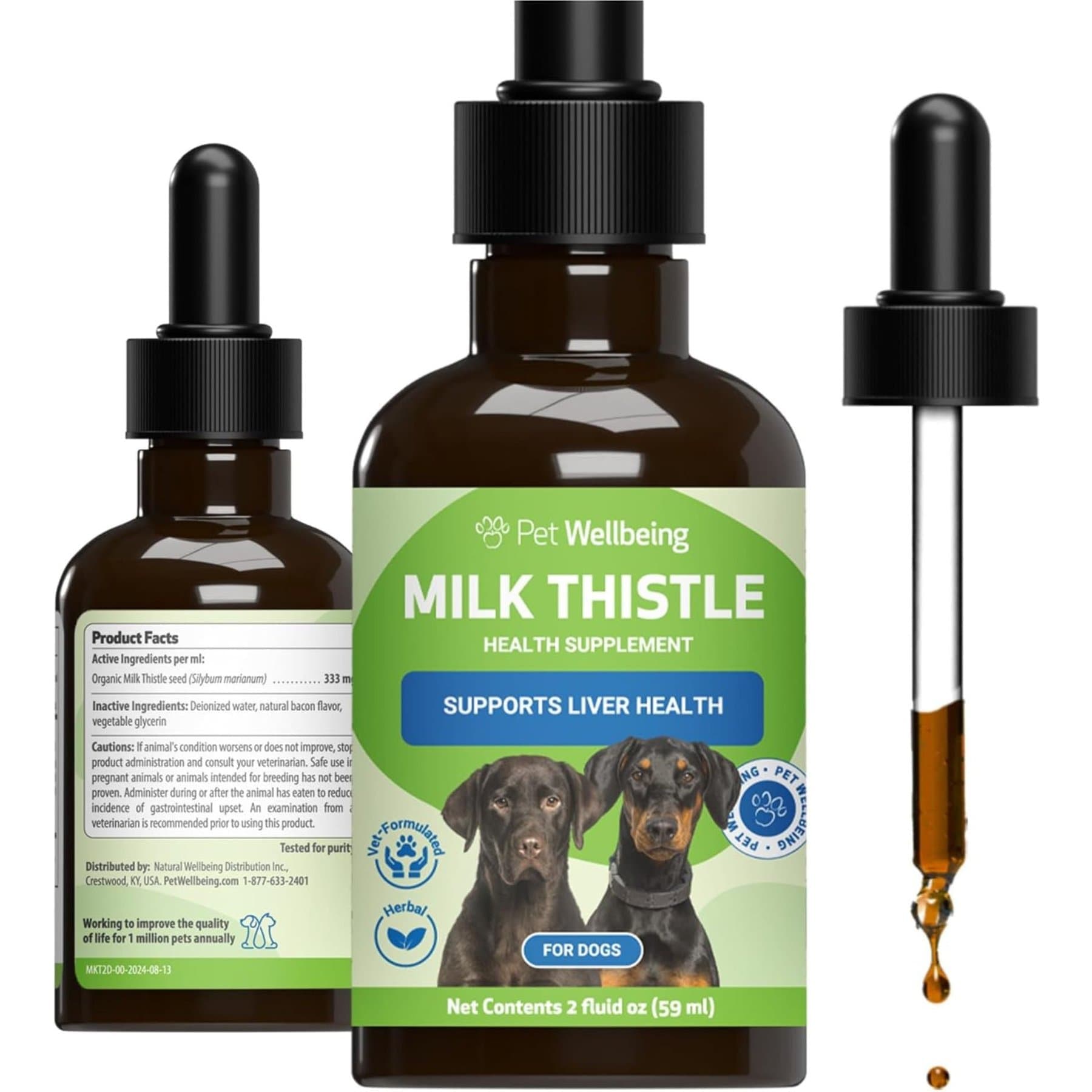
A liquid milk-thistle seed preparation with a measured dropper format. Follow its own label and veterinary guidance; liquid volume is not interchangeable with tablet count.
Webvet may earn a commission when you click through to Chewy, at no extra cost to you.
What milk thistle may help with
Milk-thistle-derived compounds are studied for antioxidant and liver-support effects. A veterinarian may include them in the care of a dog with liver disease or a particular risk of liver injury. The potential benefit depends on the condition, the formulation and the other treatment the dog receives.
The supplement evidence has important limitations. The ACVIM consensus on chronic hepatitis describes uncertainty about clinical benefit and the need for better studies. It also cautions that differences in compounds and active amounts make the research difficult to compare.
One 2021 canine study tested silybin in healthy dogs and a commercial combination in dogs with liver abnormalities. Some liver markers decreased. That is useful research, but it does not prove that every milk-thistle product reverses liver damage, repairs scarring or prolongs life. Ingredient studies and product evidence are different things.
Does it treat other illnesses?
A dog with Cushing's disease, diabetes, a gallbladder problem or a liver shunt may also have abnormal liver tests. Milk thistle does not correct the underlying hormonal or structural disorder. Kidney-support claims likewise should not be confused with proof that it treats kidney disease; the 2021 study's healthy-dog findings do not establish that benefit in sick kidneys.
Laboratory findings about inflammation or cancer cells are not proof of treatment for allergies, arthritis, lipomas, lymphoma or other cancers in pet dogs. Nor should a liver-support supplement replace care for pancreatitis. If the reason you are considering milk thistle is a specific diagnosis, ask what evidence applies to that diagnosis and exact formulation.
The practical questions are:
- What problem is the supplement intended to help with?
- Is the recommendation based on this formula or on research into a different preparation?
- Which symptoms or test results will be monitored?
- What treatment is still needed for the underlying disease?
 $65 · no membership
Need a prescription or refill for your dog?
A licensed vet can assess your dog over video and prescribe online when it's appropriate.
 Talk to a vet
- Licensed vets
- All 50 states
- same-day Rx

Webvet may earn a commission if you book.
Choosing a milk-thistle supplement
The best milk-thistle supplement for your dog is one whose formulation, directions and tolerability fit the veterinary plan. Reviews and star ratings can describe purchase or administration experiences, but they cannot show that a product treats your dog's liver disease. “Organic” describes a sourcing standard, not proven clinical superiority.
Compare the actual active amount rather than bottle size. Also check added ingredients, expiration date, measuring instructions and whether the manufacturer supplies clear contact information. When buying online or through a clinic, verify the exact product rather than choosing a similarly named bottle. The four examples here illustrate distinct formulas; they have not been tested head to head in our hands.
Whole-seed powder: Herbsmith
Herbsmith's label lists organic ground milk-thistle seed as the sole ingredient. This format can suit a dog whose veterinarian recommends whole seed mixed with food and whose owner can measure a powder consistently. It avoids a flavored chew, but it does not provide the concentration of a standardized extract.
The manufacturer estimates about 3% silymarin and publishes its own serving directions. That percentage helps interpret the label; it does not justify substituting a powder serving for a prescribed extract dose. The 75-gram Herbsmith jar was listed at $25.99 when checked. Compare the vet-directed daily amount before deciding whether a larger container would be better value.
Measured liquid: Pet Wellbeing
Pet Wellbeing's dog formula lists organic milk-thistle seed at 333 mg per milliliter, with water, vegetable glycerin and natural bacon flavor. A liquid may be useful when tablets are difficult, provided you can measure the amount accurately and your dog accepts the flavor.
Use the ingredient panel when interpreting the strength: 333 mg of seed preparation is not a verified 333 mg of silymarin. The 2-ounce bottle was listed at $40.95. A low price per bottle does not necessarily mean a lower cost per day; that depends on the exact amount your veterinarian recommends.

Standardized extract: K9 Select
K9 Select's beef-flavored tablets contain 100 mg milk-thistle seed extract standardized to 80% silymarin per tablet. This gives the vet a different concentration to evaluate than whole seed or an unspecified extract. It is an option when a chewable standardized product fits the plan.
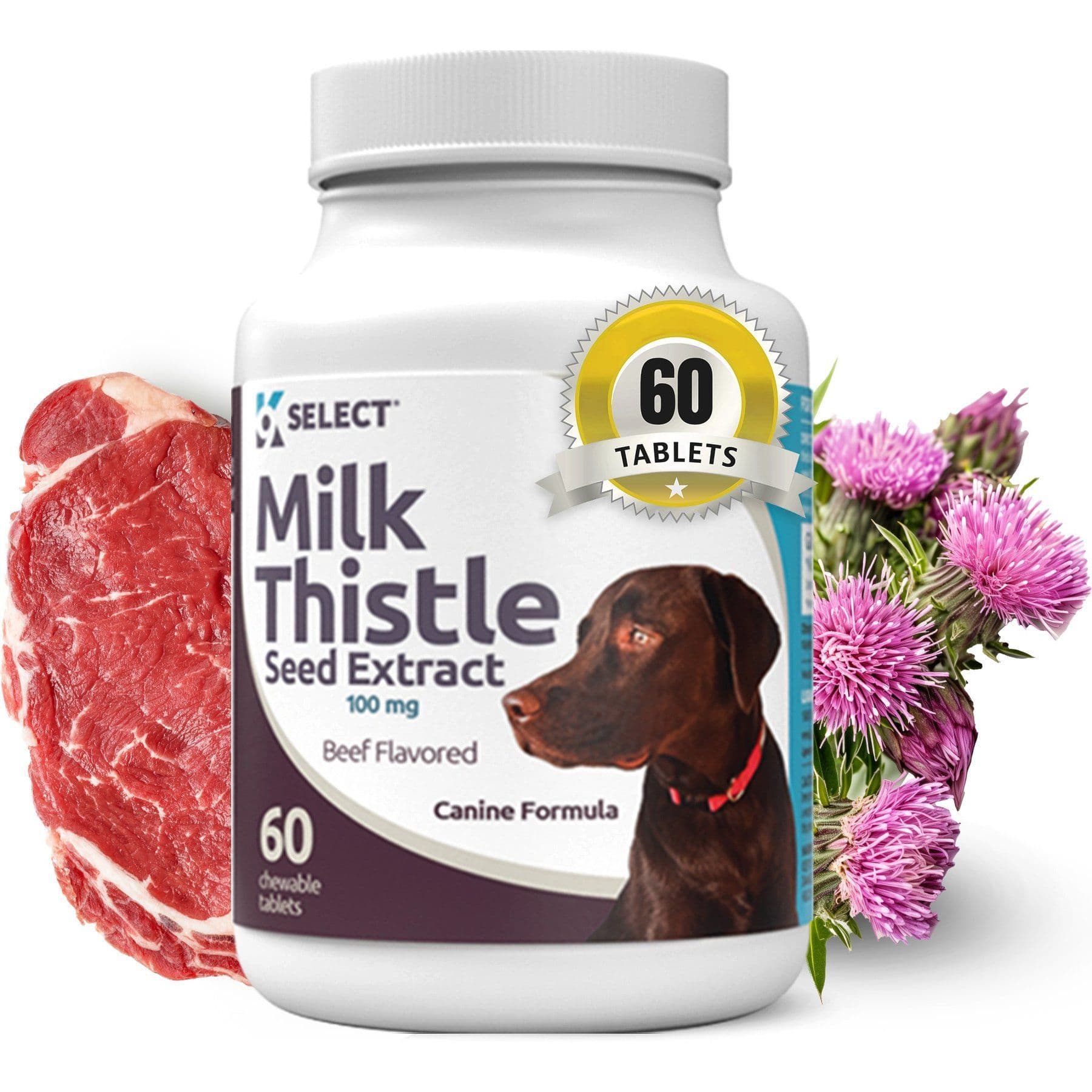
K9 Select offers a standardized seed-extract tablet. The stated extract weight and silymarin percentage are different label figures to compare.
Webvet may earn a commission when you click through to Chewy, at no extra cost to you.
Check the full ingredient label if your dog has food sensitivities, and confirm whether the tablet can deliver the recommended amount for your dog's size. The 60-count bottle was listed at $18.99. That is a package-price comparison, not evidence of better effectiveness or a guaranteed 60-day supply.
Milk thistle versus Denamarin and SAMe
SAMe, or S-adenosylmethionine, is a different compound from milk thistle. Some liver-support products combine it with silybin; others contain milk thistle alone. Choosing “SAMe or milk thistle” therefore requires knowing what the vet is trying to accomplish, not assuming the ingredients are two names for the same treatment.
Original Denamarin chewables combine SAMe with a silybin-phosphatidylcholine complex. That is the fourth formulation in the comparison table. The 30-count package was listed at $44.99. It is relevant when your veterinarian recommends this combination, rather than as a universally stronger replacement for plain milk thistle.
Avoid duplicate silybin when combining products. Giving Denamarin and another milk-thistle supplement together adds overlapping compounds and may change the intended total intake. There is no general reason to stack them without the prescriber's direction.
When you need Denamarin-specific directions
Our Denamarin for dogs guide explains the branded formulas, tablet handling, timing and costs. Original coated tablets, original chewables and Advanced products have distinct instructions. A general milk-thistle dose or a label on another brand cannot replace those directions. Take a picture of the exact package if you need the clinic to confirm a substitution before buying it.
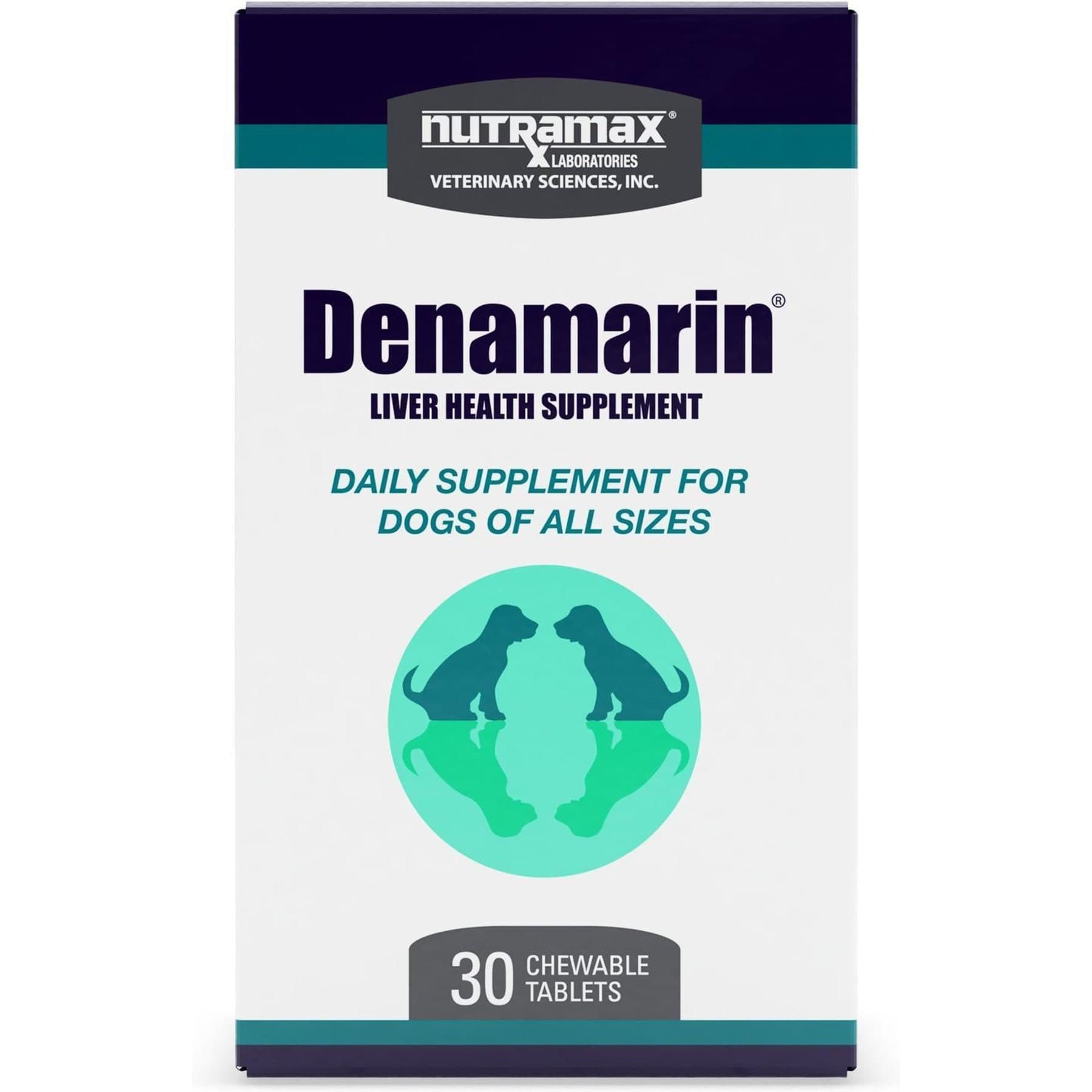
Chewable Denamarin for dogs whose veterinarian recommends this formulation. Follow its own label rather than substituting a coated-tablet schedule.
Webvet may earn a commission when you click through to Chewy, at no extra cost to you.
How much milk thistle can a dog take?
There is no universal weight-based dose that safely covers every milk-thistle powder, extract, liquid and combination. Even a dosage expressed in mg/kg is incomplete unless it identifies what those milligrams represent. A dose of whole seed is not automatically a dose of silymarin, and silymarin is not identical to silybin.
An online dosage chart or weight calculator can conceal that distinction. Use the veterinarian's directions for the exact product, including concentration, serving amount and frequency. A dog with liver disease or Cushing's disease does not get a reliable dose merely by selecting that condition from a generic chart.
Before the first dose, confirm:
- Your dog's current weight and the precise product name.
- The amount per dose in tablets, measured powder or milliliters.
- Whether that amount refers to seed, extract, silymarin or silybin.
- How often to give it, how to measure it and whether food timing matters.
Human supplements should also be assessed individually. The label may use a different concentration, include additional herbs or contain ingredients unsuitable for dogs. Do not convert the human serving by body weight or assume that a capsule labeled “milk thistle” matches a veterinary product. Ask the clinic to review the full ingredient panel and strength.
Side effects and dogs that need extra caution

Milk thistle appears to be tolerated by many animals, but evidence about side effects and pregnancy is limited. That is different from proving that every product has no side effects. Vomiting, loose stools or other new digestive changes after starting a supplement warrant a call to the veterinary team, particularly in a dog already being treated for liver disease.
Do not use a product if your dog is allergic to an ingredient. An allergy to the formula can involve flavorings or other components, not only the milk-thistle extract. Facial swelling, trouble breathing, collapse or another severe reaction needs urgent care.
Extra caution is appropriate for:
- Pregnant or nursing dogs, because safety is not established for every formulation.
- Dogs with estrogen-related disorders.
- Dogs receiving several medicines or supplements.
- Dogs with significant liver or kidney disease whose care and monitoring need individual planning.
Milk thistle should not be started to increase milk production in a lactating dog without veterinary advice. Poor milk supply and illness in a mother or puppies need their own assessment. Check the specific product's cautions as well: Herbsmith advises against its product in pregnant pets and within 48 hours of surgery or anesthesia. A restriction on one label should not be replaced with a general reassurance from another brand.
Milk thistle with other medicines
Tell your vet about all medications before adding milk thistle. The ACVIM consensus discusses potential effects on drug-metabolizing enzymes and transport proteins, particularly with high-dose silybin and multiple medications. This does not prove a dangerous interaction with every drug; it is a reason to assess the actual combination.
For a dog taking phenobarbital for epilepsy, prednisone, Rimadyl or another long-term medicine, liver support does not make medication monitoring unnecessary. Do not stop the prescribed treatment or add extra supplement doses in response to one abnormal result. The prescriber should interpret the medicine history and bloodwork together.
Milk thistle is not a proven routine “detox” after NexGard, vaccination or anesthesia. A dog having seizures needs veterinary assessment, not a detoxing protocol. If your dog is receiving chemotherapy, the oncology team should approve supplements; evidence involving one chemotherapy drug and one formulation cannot be generalized to every cancer regimen. Discuss supplements before surgery, too, including the exact product and last dose.
How to give it and monitor the response
Some veterinary plans use milk thistle every day. That does not mean all dogs should take it daily, indefinitely or in repeated detox cycles. Duration depends on why it was recommended, tolerance and the results of follow-up assessment. Agree on a review point rather than automatically renewing it forever.
Follow the product-specific directions for food timing. Pet Wellbeing advises administration during or after eating to reduce digestive upset. Original Denamarin chewables have different instructions: the manufacturer recommends an empty stomach, at least an hour before a meal. Do not apply one product's timing to every milk-thistle supplement.
The response may not be visible at home. Better appetite or energy is welcome but does not by itself prove the supplement worked, especially if diet or other treatments changed at the same time. Your vet may recheck laboratory results after several weeks or on a different schedule appropriate to the condition. A drop in ALT is only one part of the assessment. Keep a simple record of:
- The product, amount and start date.
- Any changes in appetite, stool or behavior.
- Planned recheck dates and the results when available.
Ask what testing will be needed and budget for dog blood work costs as part of the plan. If the dog worsens, contact the clinic instead of waiting for a supplement to take effect.
High liver enzymes still need a diagnosis
No single food or supplement can be promised to repair a dog's liver. Helping enzymes come down starts with identifying the cause and treating it appropriately. High results also do not automatically mean your dog needs a low-protein liver diet; nutritional changes depend on the diagnosis.
Avoid adding organ-meat treats, mineral supplements or a homemade restrictive diet without advice, especially if the vet has recommended copper restriction. Our guide to elevated liver enzymes in dogs explains ALT and ALP, the next diagnostic tests and when diet changes fit. Milk thistle is one possible part of care, not a substitute for that workup.
Practical questions about milk thistle
Frequently Asked Questions
What if I miss a dose of milk thistle?
Follow the prescribing clinic's instructions. General veterinary guidance is to give a missed dose when remembered unless it is almost time for the next scheduled dose; in that case, skip it and resume the schedule. Do not give a double dose to catch up. Product-specific directions take priority.
How should I store a milk-thistle supplement?
Follow the package label for temperature, light, moisture and any refrigeration instructions. Keep the container securely closed and out of reach of children and pets. A flavored chew or liquid can be attractive to a dog, so a countertop or an unlatched cupboard may not be secure storage.
What if my dog eats too much milk thistle?
The safest response to a suspected overdose is to contact your veterinary clinic or an emergency veterinary service promptly. Have the product label, estimated amount eaten, your dog's weight and any symptoms ready. The other ingredients in a combination matter too. Do not induce vomiting or wait for symptoms before seeking advice.
$65 · no membershipNeed a prescription or refill for your dog?
A licensed vet can assess your dog over video and prescribe online when it's appropriate.
Talk to a vet- Licensed vets
- All 50 states
- same-day Rx
Webvet may earn a commission if you book.
Veterinarian · BVMS MRCVS
Dr. Pippa Elliott, BVMS, MRCVS, is a veterinarian with nearly 30 years of experience in companion animal practice. Dr. Elliott earned her Bachelor of Veterinary Medicine and Surgery from the University of Glasgow. She was also designated a Member of the Royal College of Veterinary Surgeons. Married with 2 grown-up kids, Dr. Elliott has a naughty Puggle named Poggle, 3 cats and a bearded dragon.


