Dog Blood Work Cost in 2026: Full Price Breakdown
Real 2026 prices for every dog blood panel, from a basic CBC to a senior wellness workup, plus what each test checks and seven ways to pay less.

BVMS MRCVS
Medically reviewed by Dr. Pippa Elliott, BVMS MRCVS · Last reviewed

This article contains affiliate links. Webvet may earn a commission when you buy through them, at no extra cost to you.
The typical dog blood work cost in 2026 runs from about $60 for a basic complete blood count to $300 or more for a full senior wellness panel, before the office visit fee is added. Most healthy adult dogs land in the $80 to $200 range for a standard workup. Prices swing widely because of one factor almost no vet explains out loud: whether your clinic runs the sample on its own in-house machine or ships it to an outside reference lab. This guide breaks down real US ranges for every panel, shows what each test actually measures, and lays out seven honest ways to pay less.
- 1A basic CBC costs about $60 to $90; a blood chemistry panel runs $120 to $180; a combined full panel is usually $100 to $200.
- 2Add-ons like a heartworm test ($35 to $75) or a thyroid (T4) panel ($50 to $150) stack on top of the base panel.
- 3The single biggest reason for a $100+ price gap on the same panel is in-house analyzer versus send-out reference lab.
- 4The office visit or exam fee ($50 to $80) is charged separately from the lab work itself.
- 5You can lower the bill with wellness plans, low-cost clinics, price-shopping, and pet insurance, all covered below.

Dog blood work cost at a glance (2026 price table)
Here are defensible 2026 US general-practice ranges for the most common canine blood tests. These are lab-fee ranges for the test itself. Expect a separate office or exam fee of roughly $50 to $80 on top, and higher numbers in major metro areas and emergency settings.
| Blood test | Typical 2026 cost | What it checks |
|---|---|---|
| Complete blood count (CBC) | $60 - $90 | Red cells, white cells, platelets |
| Blood chemistry panel | $120 - $180 | Organs, electrolytes, blood sugar |
| Combined CBC + chem (full panel) | $100 - $200 | Broad health snapshot |
| Pre-anesthetic blood work | $80 - $200 | Anesthesia safety screen |
| Senior wellness blood panel | $150 - $300 | Full panel plus thyroid and urine |
| Heartworm test (antigen) | $35 - $75 | Heartworm infection |
| Thyroid (T4) panel | $50 - $150 | Thyroid hormone level |
Blood work is often bundled into an annual visit, so it helps to know where these lab fees fit against the total. Our guide to how much a routine visit runs breaks that down.
See the full picture in our breakdown of how much a vet visit costs, which includes exam fees, vaccines, and common add-on diagnostics.
How much does dog blood work cost?
For a healthy adult dog getting a standard workup, plan on $80 to $200 for the lab work, plus the exam fee. A single basic test like a CBC can be under $90. A comprehensive senior panel with thyroid and urine can top $300. Emergency and specialty hospitals charge more, sometimes double, because of higher overhead and stat processing.
Three things move the number most: which panel your vet orders, whether the sample is run in-house or sent out, and where you live. The sections below break out each panel so you can see exactly what you are paying for.

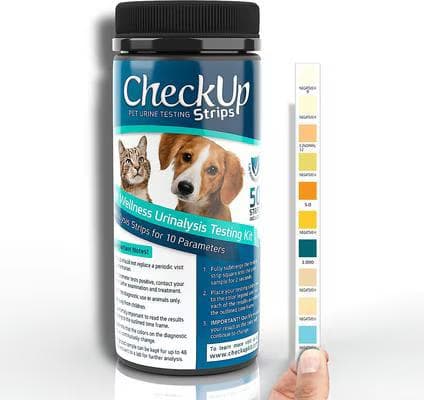
At-home urine test strips that screen for glucose, blood, pH, and protein in seconds, so you can catch early signs of diabetes, kidney disease, or a UTI and bring real numbers to your vet.
Webvet may earn a commission when you click through to Chewy, at no extra cost to you.
Cost of a complete blood count (CBC): $60-$90
A complete blood count (CBC) counts and measures the cells floating in your dog's blood: red cells, white cells, and platelets. It is the fastest way to flag anemia, infection, inflammation, and clotting problems. A CBC is one of the cheapest tests because most clinics can run it on an in-house analyzer in minutes.
On its own a CBC usually costs $60 to $90. It is rarely ordered alone, though, because red and white cell counts tell you something is wrong without telling you where. Vets almost always pair it with a chemistry panel for the full story.
Cost of a blood chemistry panel: $120-$180
A blood chemistry panel measures substances in the liquid part of the blood: enzymes, proteins, glucose, and electrolytes. It is how your vet checks kidney function, liver function, blood sugar, and hydration. This panel costs more than a CBC because it screens more values and more often gets sent to an outside reference lab.
A chemistry panel typically runs $120 to $180. A shorter panel of six to eight values costs less; a full panel of 20-plus values costs more. If your dog is being worked up for a specific illness, expect the broader, pricier version.
Cost of a combined CBC + chem panel (full panel): $100-$200
When people say their dog got a full panel, they usually mean a CBC and a chemistry panel run together. This combination gives the broadest routine snapshot of health and is the workhorse of both wellness checks and sick visits. Bundled together, it commonly costs $100 to $200, which is often less than buying the two tests separately.
Many clinics offer preset wellness bundles at a flat price that packages the combined panel with a urinalysis or a heartworm test. Bundles are usually the best value if your dog needs the whole workup anyway.
Cost of pre-anesthetic blood work: $80-$200
Before surgery, most vets require pre-anesthetic blood work to confirm the organs can safely process anesthesia. It checks kidney and liver values, blood sugar, and often a CBC. A short screen for a young, healthy dog can be as low as $80; a full panel for an older dog runs toward $200.
This screen is standard for procedures like a professional dog dental cleaning or a spay or neuter surgery, both of which require general anesthesia. The blood work fee is sometimes quoted inside the procedure estimate rather than as a separate line.

Cost of a senior wellness blood panel: $150-$300
A senior wellness panel is the most complete routine screen, built for dogs roughly seven years and older. It usually combines a CBC, a full chemistry panel, a thyroid (T4) test, and a urinalysis, so it can catch kidney disease, diabetes, and thyroid problems before symptoms show. Because it bundles several tests, it costs $150 to $300.
Compare coverage choices for your pet, then request a quote directly on Lemonade.
- Check a price for your pet
- Review available coverage choices
- See the terms before you decide
Eligibility, waiting periods, limits and exclusions apply.
Webvet may earn a commission when you click through to Lemonade, at no extra cost to you.
For older dogs this panel is worth budgeting for once or twice a year, since early detection can dramatically cut later treatment costs. Learn more about routine screening in our guide to senior dog health.

Cost of a heartworm test: $35-$75
A heartworm test is a quick blood test, usually run in-house in about ten minutes, that detects heartworm infection before you refill a prevention prescription. It typically costs $35 to $75 and is one of the most affordable diagnostics you will see on the bill.
An annual heartworm test is cheap insurance against a disease that costs thousands to treat. Read why yearly testing matters in our guide to heartworm in dogs and how to prevent this silent killer.
Cost of a thyroid (T4) panel: $50-$150
A thyroid panel measures thyroid hormone, most often the T4 level. Vets order it when a dog shows weight gain, hair loss, or low energy that points to hypothyroidism. A basic total-T4 screen runs about $50; a full thyroid panel with free-T4 and antibodies, usually sent to a reference lab, climbs toward $150.

The number-one veterinarian-recommended joint supplement brand. Glucosamine, chondroitin, and MSM support cartilage and cushion the joints, easing the stiffness and hind-end weakness that can leave an older or arthritic dog trembling.
Webvet may earn a commission when you click through to Chewy, at no extra cost to you.
 $65 · no membership
Have a health question about your dog?
A licensed vet can assess your dog over video and prescribe online when it's appropriate.
 Talk to a vet
- Licensed vets
- All 50 states
- same-day Rx

Webvet may earn a commission if you book.
What each blood test actually measures (and why your vet orders it)
Understanding what each panel checks makes the bill make sense. Here is the plain-English version of what your money buys.
- CBC: counts red cells, white cells, and platelets to flag anemia, infection, and clotting issues.
- Chemistry panel: checks kidney, liver, blood sugar, protein, and electrolytes for organ disease and dehydration.
- Pre-anesthetic screen: confirms the organs can clear anesthesia safely before surgery.
- Heartworm test: detects heartworm infection so prevention can be prescribed or continued safely.
- Thyroid (T4): measures thyroid hormone to diagnose or rule out hypothyroidism.
Why is dog blood work so expensive? (where your money goes)
Blood work feels expensive because the price tag hides a lot of work. You are not just paying for a vial of blood. You are paying for the draw, the machine time or lab courier, the reagents each test consumes, and a licensed veterinarian's time to interpret the results and act on them.
The main cost drivers are:
- Equipment and reagents. In-house analyzers cost tens of thousands of dollars, and each test burns single-use reagents and cartridges.
- Skilled labor. A technician draws and preps the sample, and a veterinarian reads and interprets every result.
- Reference lab fees. Send-out labs charge the clinic per panel, plus courier and handling, which gets passed to you.
- Clinic overhead. Rent, staff, licensing, and quality control all fold into the posted price.
In-house lab vs. send-out lab: why the same panel varies $100+
This is the difference almost nobody explains, and it is the biggest single reason two clinics quote wildly different prices for the same test. An in-house lab means the clinic runs your dog's sample on its own machine and has results in minutes. A send-out lab means the sample is couriered to a large outside reference lab, with results back in one to three days.
In-house is faster and can be cheaper for simple tests, but the clinic eats the equipment and reagent cost. Send-out is often cheaper per panel for the clinic on complex tests but adds courier and handling. Neither is universally cheaper, which is exactly why the same panel can vary by $100 or more from one clinic to the next.
In-house vs. send-out lab
Pros
- In-house: results in minutes, ideal for emergencies
- In-house: no courier delay for urgent decisions
- Send-out: often broader, specialized panels available
- Send-out: can be lower cost per panel on complex tests
Cons
- In-house: equipment and reagent cost can raise the price
- In-house: fewer specialized or esoteric tests
- Send-out: results take one to three days
- Send-out: courier and handling fees added on
What affects the price of your dog's blood work
Beyond the lab choice, several factors nudge the final number up or down:
- Location. Big-city and coastal clinics charge more than rural ones for the same panel.
- Clinic type. Emergency and specialty hospitals cost more than a general-practice vet.
- Panel scope. A six-value screen costs far less than a comprehensive 25-value panel.
- Urgency. Stat or after-hours processing adds a premium over routine timing.
- Your dog's size and temperament. A fractious dog needing sedation to draw blood adds a sedation fee.
If blood work is drawn during an after-hours crisis, the whole bill climbs. See our breakdown of emergency vet costs to understand how urgent-care pricing works.
Does pet insurance cover dog blood work?
It depends on the plan and why the blood work was ordered. Accident-and-illness policies generally cover blood work when it is part of diagnosing or treating a covered condition, after your deductible and up to your reimbursement percentage. Blood work for a suspected illness is usually reimbursable.
Routine or wellness blood work, like an annual senior panel on a healthy dog, is typically not covered by a standard accident-and-illness plan unless you add a separate wellness rider. Pre-existing conditions are excluded. Always read the policy before assuming a panel is covered.

How to lower the cost of dog blood work (7 real ways)
You do not have to overpay to keep your dog healthy. These seven strategies genuinely cut the cost of blood work:
- Ask for an itemized estimate first. A written quote lets you see each test and skip anything non-essential.
- Use a wellness plan or bundle. Preset annual packages often price the combined panel well below buying tests separately.
- Try a low-cost or nonprofit clinic. Shelters, humane societies, and vet-school teaching hospitals often run panels at reduced rates.
- Price-shop a few clinics. For non-urgent testing, call two or three practices; the in-house versus send-out difference alone can save $100.
- Keep up with preventive care. Routine screening catches problems early, when they are cheaper to treat than an emergency workup.
- Consider pet insurance early. Enrolling a young, healthy dog locks in coverage before conditions become pre-existing exclusions.
- Ask about payment options. Many clinics offer payment plans or accept veterinary credit lines to spread the cost.

The #1 vet-recommended probiotic for dogs. Daily powder sachets with live probiotics support healthy digestion and firmer stools, and can help dogs coping with diarrhea or GI upset.
Webvet may earn a commission when you click through to Chewy, at no extra cost to you.
Are dog blood tests worth it?
In almost every case, yes. Blood work reveals problems that a physical exam cannot, often before your dog looks sick. A panel can catch early kidney disease, diabetes, liver issues, or infection while they are still treatable and cheaper to manage. For a sick dog, blood work is the fastest way to a correct diagnosis instead of guesswork.
The value is highest for senior dogs, dogs about to undergo anesthesia, and any dog with symptoms. For a young, healthy dog, an annual baseline panel gives your vet a reference point to compare against later in life, which pays off when something changes.
How often does a dog need blood work?
General guidance from veterinary practice is:
- Healthy adult dogs: a baseline panel once a year at the annual wellness exam.
- Senior dogs (about 7-plus): a fuller panel once or twice a year to catch age-related disease early.
- Before anesthesia: a pre-anesthetic screen every time, regardless of age.
- Sick or on medication: as often as your vet recommends to monitor the condition or drug side effects.
What to do if you can't afford your dog's blood work
If the cost is out of reach right now, you still have options. Do not simply skip care for a sick dog. Instead:
- Talk to your vet honestly. Many will prioritize the most essential tests or set up a payment plan.
- Contact charities. The Pet Fund, RedRover, Frankie's Friends, and Brown Dog Foundation help with vet bills.
- Use a low-cost clinic. Local shelters and vet schools offer diagnostics at reduced rates.
- Apply for veterinary credit. Medical credit lines and clinic financing let you spread payments over time.
- Try crowdfunding. For a large bill, an online fundraiser among friends and family can bridge the gap.
Frequently asked questions
How much is a regular blood test for a dog?
A regular blood test for a dog usually costs $80 to $200 for the lab work, plus a separate exam fee of about $50 to $80. A basic CBC alone runs $60 to $90, while a combined CBC and chemistry panel is commonly $100 to $200. Prices are higher at emergency clinics and in major cities.
Why is pet bloodwork so expensive?
Pet bloodwork is expensive because the price covers far more than a vial of blood. You are paying for costly analyzer equipment and single-use reagents, a technician to draw and prep the sample, a veterinarian to interpret every result, and either in-house machine time or outside reference-lab and courier fees, all on top of clinic overhead.
Are dog blood tests worth it?
Yes, in almost every case. Blood tests reveal problems a physical exam cannot, often before a dog looks sick, catching kidney disease, diabetes, liver issues, and infection while they are still treatable and cheaper to manage. They are especially worth it for senior dogs, dogs facing anesthesia, and any dog showing symptoms.
What is a full blood panel for a dog?
A full blood panel for a dog is a complete blood count (CBC) and a blood chemistry panel run together. The CBC counts red cells, white cells, and platelets, while the chemistry panel checks organ function, blood sugar, protein, and electrolytes. Together they give the broadest routine snapshot of your dog's health and typically cost $100 to $200.
Why is bloodwork so expensive for dogs?
Bloodwork is expensive for dogs largely because of one hidden factor: whether the sample is run on the clinic's own in-house analyzer or shipped to an outside reference lab. In-house testing carries steep equipment and reagent costs, while send-out testing adds courier and handling fees. That difference, plus location, panel scope, and vet interpretation time, is why the same panel can vary by $100 or more.
What do vets do if you can't afford treatment?
If you cannot afford treatment, most vets will work with you rather than turn you away. They often prioritize the most essential tests, offer a payment plan, point you to charities like The Pet Fund or RedRover, refer you to a low-cost or shelter clinic, or accept veterinary credit financing. The key is to tell your vet honestly and early so they can help you find a workable path.
Is it worth it to get a dog's blood test?
Yes, it is usually worth it to get a dog's blood test. For a sick dog, it is the fastest route to a correct diagnosis instead of guesswork. For a healthy dog, an annual baseline gives your vet a reference to compare against later, and for a senior dog it can catch age-related disease early, when treatment is cheaper and more effective.
What happens if you cannot afford a vet bill?
If you cannot afford a vet bill, ask the clinic about payment plans and in-house financing, apply for a veterinary medical credit line, and seek help from charities such as RedRover, Frankie's Friends, or the Brown Dog Foundation. Low-cost clinics and veterinary teaching hospitals can also reduce the total, and a crowdfunding campaign can cover a large emergency bill. Reach out before care is needed if you can, so options are lined up.
$65 · no membershipHave a health question about your dog?
A licensed vet can assess your dog over video and prescribe online when it's appropriate.
Talk to a vet- Licensed vets
- All 50 states
- same-day Rx
Webvet may earn a commission if you book.

Editor
The Webvet Editorial Team is the in-house group of pet-care editors and writers behind Webvet, operated by Smart Pet Collective. The team researches, writes, and maintains Webvet's pet health, behavior, and medication content. Every article follows a defined editorial process: research from reputable veterinary and scientific sources, careful drafting, mandatory review of medical content by a credentialed veterinarian, and dated publication. Health and medication articles are medically reviewed by a licensed veterinary professional before they go live and are kept current over time.
Veterinarian · BVMS MRCVS
Dr. Pippa Elliott, BVMS, MRCVS, is a veterinarian with nearly 30 years of experience in companion animal practice. Dr. Elliott earned her Bachelor of Veterinary Medicine and Surgery from the University of Glasgow. She was also designated a Member of the Royal College of Veterinary Surgeons. Married with 2 grown-up kids, Dr. Elliott has a naughty Puggle named Poggle, 3 cats and a bearded dragon.


