Emergency Vet Cost in 2026: Prices by Emergency
A vet-reviewed guide to emergency vet cost in 2026, with real US price ranges by emergency, itemized bill breakdowns, deposit rules, insurance math, and how to pay if you are short.

BVMS MRCVS
Medically reviewed by Dr. Pippa Elliott, BVMS MRCVS · Last reviewed

This article contains affiliate links. Webvet may earn a commission when you buy through them, at no extra cost to you.
An emergency vet cost in 2026 typically runs from about $150 for a walk-in exam to $5,000 or more for major surgery, with most serious overnight cases landing between $800 and $4,000. The exact number depends on what is wrong, how sick your pet is, how long they stay, and where you live.
This vet-reviewed guide breaks down real US 2026 price ranges by emergency, shows what an itemized bill is actually made of, and walks you through deposits, insurance math, and how to get care you can afford if money is tight right now.
- 1A typical emergency exam and triage fee runs $100 to $250, before any tests or treatment.
- 2Most serious emergencies (bloat, blockages, trauma, poisoning) land between $1,000 and $8,000 once imaging, surgery, and hospitalization are added.
- 3Most ER hospitals ask for an upfront deposit, often 50 to 100 percent of the low estimate, before treatment begins.
- 4CareCredit, Scratchpay, payment plans, and charitable funds exist so you rarely have to choose between your cash and your pet's life.
- 5A true emergency is never a wait-and-see: delaying care for bloat, blockages, or poisoning can cost your pet's life within hours.

Emergency vet cost at a glance (2026 quick-reference table)
Here is the fast answer most people are searching for. These are defensible US 2026 ranges for the whole visit, not just the exam fee, and they include the usual diagnostics and treatment for each scenario. Prices are higher in major metro areas and at specialty referral hospitals.
| Emergency vet service | Typical 2026 US cost |
|---|---|
| Emergency exam / triage fee only | $100 - $250 |
| Minor issue (ear infection, small wound, mild upset) | $150 - $500 |
| Vomiting / diarrhea workup + fluids | $500 - $3,000+ |
| Toxin or poison ingestion | $300 - $5,000+ |
| Cat urinary blockage (male cat) | $1,500 - $3,500+ |
| Bloat / GDV surgery (dog) | $2,500 - $8,000+ |
| Foreign-body / obstruction surgery | $800 - $7,000+ |
| Hit by car / major trauma | $1,000 - $6,000+ |
| Overnight hospitalization / ICU (per day) | $600 - $3,500+ |
| Breathing difficulty / oxygen therapy | $1,000 - $5,000+ |
| Blood transfusion (per unit + workup) | $400 - $1,500+ |
| After-hours humane euthanasia + aftercare | $150 - $700+ |
How much does an emergency vet visit cost on average?
For a straightforward after-hours visit, the average emergency vet bill lands between $400 and $1,500 once you add the exam fee to basic diagnostics and treatment. Simple problems can resolve for a few hundred dollars. Anything involving surgery, imaging, or an overnight stay climbs quickly into the thousands.
Two visits with the same symptom can produce very different bills. A dog that vomits once but looks bright may just need an exam, a shot, and a bland-diet plan. A dog that vomits repeatedly and looks dull may need bloodwork, X-rays, fluids, and admission.
This is why an emergency vet cost without insurance is best thought of as a range, not a single number, until the vet has examined your pet.
Geography matters too. The same emergency dog surgery cost can differ by hundreds of dollars between a rural clinic and a big-city specialty hospital, because rent, wages, and equipment costs are all higher in dense metro areas. Always ask for a written estimate specific to your location and your pet.
The single biggest cost driver is how long your pet needs to stay. A pet that comes in, gets fluids, and goes home the same evening is far cheaper than one that needs 48 hours in the ICU on a monitor.
Costs also differ by species and size, because larger patients need more anesthesia, more fluids, and more medication than smaller ones.

Emergency vet cost for dogs vs. cats
The exam fee is usually similar for both species. Where the emergency vet cost for dogs and cats diverges is the specific condition. Male cats are prone to life-threatening urinary blockages, while large-breed dogs carry the risk of bloat. Here is a rough species comparison for the visit exam and initial workup.
| Item | Dog (2026) | Cat (2026) |
|---|---|---|
| Emergency exam fee | $110 - $250 | $110 - $260 |
| Basic bloodwork panel | $100 - $300 | $90 - $280 |
| X-rays (2-3 views) | $150 - $450 | $150 - $400 |
| IV fluids + hospitalization (per day) | $600 - $3,500+ | $500 - $3,000+ |
| Common major surgery | $2,000 - $8,000+ | $1,500 - $5,000+ |
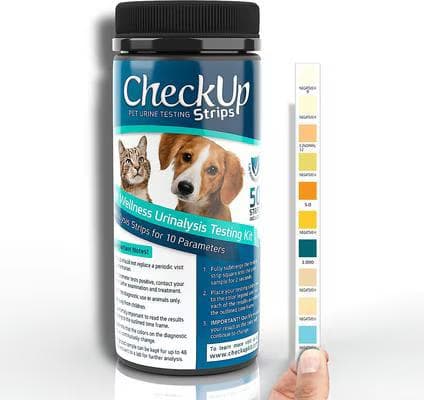
At-home urine test strips that screen for glucose, blood, pH, and protein in seconds, so you can catch early signs of diabetes, kidney disease, or a UTI and bring real numbers to your vet.
Webvet may earn a commission when you click through to Chewy, at no extra cost to you.
How location and time of day change the price
Two owners with the same emergency can pay very different totals depending only on where they live and when they arrive. A coastal metro like San Francisco, New York, or Boston commonly runs 30 to 50 percent above the national average, while a rural clinic in the Midwest or South often sits below it.
Time of day matters at some hospitals too. A daytime urgent-care clinic that closes at midnight is usually cheaper than a true 24-hour emergency and specialty hospital. If your pet is stable enough to be seen at an urgent-care clinic during its open hours, you may save several hundred dollars over a full overnight ER.
Ownership model is another quiet driver. Large corporate ER groups and university teaching hospitals often price higher than an independently owned emergency clinic, though the corporate and academic sites may also offer the deepest specialist bench for the most complex cases.
Why the emergency vet costs more than your regular vet
It is a common sticker shock: the same X-ray that might cost $150 at your daytime clinic can be $400 at the ER. The higher price is not a markup for its own sake. Emergency hospitals carry costs a general practice does not.
- Round-the-clock staffing. A 24 hour emergency vet cost reflects paying veterinarians, technicians, and support staff overnight, on weekends, and on holidays.
- Advanced equipment. Ventilators, ultrasound, in-house labs, and continuous monitors sit idle much of the time but must be ready instantly.
- Specialist expertise. Board-certified criticalists and surgeons command higher fees than a general practitioner.
- Immediate, all-in-one care. You skip the wait and the referral. Everything happens in one place, right now, which is what saves lives.
 $65 · no membership
Have a health question about your pet?
A licensed vet can assess your pet over video and prescribe online when it's appropriate.
 Talk to a vet
- Licensed vets
- All 50 states
- same-day Rx

Webvet may earn a commission if you book.
What an emergency vet bill is actually made of (itemized cost breakdown)
Your total is a stack of individual line items, not one flat fee. Understanding each part helps you read the estimate and ask smart questions. For a baseline on routine pricing, see our guide to how much a vet visit costs. Below is what each layer of an emergency bill typically adds.
Emergency exam and triage fee ($100-$250)
This is the price of walking through the door and having a veterinarian assess your pet. The emergency vet exam fee is almost always higher than a daytime visit and is charged even if the outcome is reassuring. It covers the initial triage that decides how urgent your pet's condition is.
Bloodwork and lab panels ($80-$300)
Blood tests tell the vet what is happening inside your pet: organ function, blood sugar, red and white cell counts, and clotting. A basic panel starts around $80, while a full emergency workup with electrolytes and specialized markers can reach $300 or more. For a deeper look, read our dog bloodwork cost guide.
Compare coverage choices for your pet, then request a quote directly on Lemonade.
- Check a price for your pet
- Review available coverage choices
- See the terms before you decide
Eligibility, waiting periods, limits and exclusions apply.
Webvet may earn a commission when you click through to Lemonade, at no extra cost to you.
X-rays and ultrasound imaging ($150-$700)
Imaging shows the vet what they cannot feel from the outside: a swallowed toy, a twisted stomach, a broken bone, or fluid in the chest. X-rays typically run $150 to $450, and an emergency ultrasound adds $300 to $700. Our dog X-ray and ultrasound cost guide breaks these down further.
IV fluids and medications ($50-$300)
IV catheter placement plus a bag of fluids supports pets that are dehydrated, in shock, or unable to keep water down. Pain relief, anti-nausea drugs, antibiotics, and sedation are billed separately. This layer commonly adds $50 to $300 depending on how many medications your pet needs.

Hospitalization and ICU per day ($600-$3,500+)
This is where bills grow fastest. A day of hospitalization bundles the cage, continuous monitoring, repeated medications, nursing care, and overnight staffing. A stable pet on fluids might cost $600 to $1,200 a day. A critical patient in intensive care on a ventilator or multiple drips can exceed $3,500 a day.
Emergency surgery ($1,500-$8,000+)
Surgery adds the surgeon's time, anesthesia, monitoring, an operating theater, and post-op recovery care. A simpler procedure like a laceration repair or a straightforward foreign-body removal may start around $1,500. Complex or lengthy surgeries such as bloat correction routinely reach $5,000 to $8,000 or more.
After-hours euthanasia and aftercare ($150-$700+)
Not every emergency ends in treatment. When a pet's condition is untreatable or the kind course is to let them go, the ER can perform humane euthanasia. The service itself often runs $100 to $300, with sedation and the exam sometimes billed on top.
Aftercare is a separate choice. Communal cremation (no ashes returned) is the least costly option, private cremation with ashes returned adds more, and a paw print or clay impression is a small extra. Ask for these prices plainly. Staff handle this conversation gently and every day, and knowing the numbers ahead removes one hard decision from an already painful moment.
Emergency vet cost by common emergency (2026 price table)
The following ranges cover the full treatment for each emergency, from exam and diagnostics through surgery and recovery. Use them to set expectations, then rely on the written estimate your ER gives you, which is specific to your pet.
| Common emergency | Typical 2026 cost | Species most affected |
|---|---|---|
| Vomiting / diarrhea / gastroenteritis | $500 - $3,000+ | Dogs & cats |
| Toxin or poison ingestion | $300 - $5,000+ | Dogs & cats |
| Bloat / GDV | $2,500 - $8,000+ | Large-breed dogs |
| Urinary blockage | $1,500 - $3,500+ | Male cats |
| Trauma / fractures / hit by car | $1,000 - $6,000+ | Dogs & cats |
| Foreign-body obstruction | $800 - $7,000+ | Dogs & cats |
| Heatstroke | $1,500 - $7,000+ | Dogs |
| Parvovirus | $1,000 - $5,000+ | Puppies |
| Seizures / neurologic crisis | $1,500 - $8,000+ | Dogs & cats |
| Respiratory distress / heart failure | $1,000 - $6,000+ | Dogs & cats |
| Diabetic ketoacidosis (DKA) | $1,500 - $6,000+ | Dogs & cats |
| Whelping / dystocia + C-section | $1,500 - $5,000+ | Dogs & cats |
Vomiting, diarrhea, and gastroenteritis ($500-$3,000+)
Sudden, severe vomiting or bloody diarrhea often means an exam, bloodwork, X-rays, and fluids. Mild cases resolve for a few hundred dollars. Cases that need overnight fluids and anti-nausea care climb past $2,000. Persistent vomiting can cause dehydration in dogs, which is itself a reason to go in.
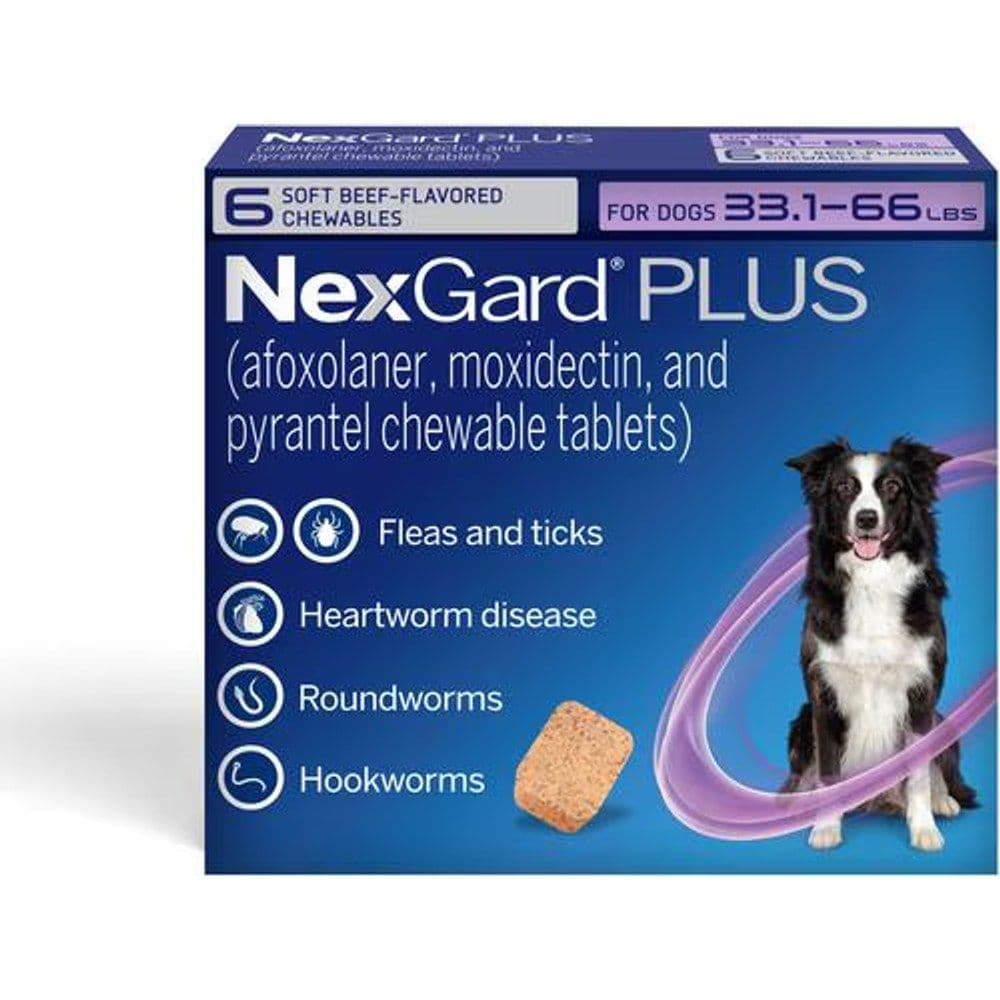
Beef-flavored monthly chew that protects dogs from fleas, ticks, heartworm disease, roundworms, and hookworms.
Webvet may earn a commission when you click through to Chewy, at no extra cost to you.
Toxin or poison ingestion ($300-$5,000+)
Cost depends entirely on what was eaten and how much. A quick dose of induced vomiting and activated charcoal for a mild toxin might be $300 to $600. Antifreeze, rat poison, xylitol, or grapes can require days of IV treatment and antidotes, pushing the bill past $5,000.
Bloat / GDV in dogs ($2,500-$8,000+)
Gastric dilatation-volvulus, where the stomach twists, is a true race against the clock in deep-chested breeds. It nearly always means emergency surgery, intensive monitoring, and several days in the hospital. This is one of the most expensive common emergencies and one of the most time-critical.
Urinary blockage in male cats ($1,500-$3,500+)
A male cat straining in the litter box and producing nothing is a medical emergency. A blocked cat needs sedation, a urinary catheter, fluids, and 2 to 4 days of hospitalization to recover. Left untreated, a blockage becomes fatal within a day or two, so this is never something to sleep on.

Trauma, fractures, and being hit by a car ($1,000-$6,000+)
Trauma cases vary enormously. Stabilization, imaging, and pain control form the baseline. A simple fracture repair or wound care may land near $1,000 to $2,500. Multiple injuries, internal bleeding, or orthopedic surgery with a specialist can exceed $6,000.
Foreign-body obstruction ($800-$7,000+)
Dogs and cats swallow socks, toys, bones, and string. If the object passes with medical management, the cost stays lower. If it lodges and needs surgery to remove, especially with a bowel resection, the bill climbs steeply. String and linear foreign bodies in cats are particularly dangerous.
For an itemized look at this specific emergency, our dog intestinal blockage surgery cost guide explains assessment and stabilization, possible procedures, hospital care, and questions to ask about the estimate.
Heatstroke ($1,500-$7,000+)
Heatstroke can damage multiple organs and requires aggressive cooling, fluids, plasma, and intensive monitoring. Costs rise fast when the kidneys or clotting system are affected. Learn the warning signs in our guide to dog heatstroke signs and what to do.
Parvovirus in puppies ($1,000-$5,000+)
Parvo is a severe, contagious virus in unvaccinated puppies. Treatment means several days of isolation hospitalization with IV fluids, anti-nausea drugs, and antibiotics. Survival rates are good with prompt care, but the intensive support needed makes it a costly, multi-day stay.
Seizures and neurologic crises ($1,500-$8,000+)
A first seizure, cluster seizures, or sudden paralysis often needs bloodwork, advanced imaging like an MRI, and sometimes a specialist. Advanced neurologic imaging alone can add $2,000 to $4,000, which is why these cases sit at the higher end.
Breathing difficulty and heart failure ($1,000-$6,000+)
Labored breathing, a cat breathing with its mouth open, or a dog that cannot settle and coughs at night can all signal fluid around or inside the lungs. These pets go straight into an oxygen cage while the team works, which is part of why the cost climbs.
Diagnostics usually include chest X-rays, a heart ultrasound, and blood tests, followed by oxygen support and medications to pull fluid off the lungs. A pet that stabilizes overnight lands at the lower end. One that needs several days of oxygen and cardiac care reaches the higher end. Breathing trouble is always a same-hour emergency, never a wait-until-morning problem.
Diabetic emergencies and DKA ($1,500-$6,000+)
A diabetic pet that stops eating, vomits, and grows weak may be sliding into diabetic ketoacidosis, a dangerous swing in blood sugar and body chemistry. It is common in newly diagnosed or under-regulated diabetics and needs prompt hospital care.
Treatment means several days of hospitalization with IV fluids, a carefully controlled insulin drip, and repeated bloodwork every few hours to track electrolytes. That around-the-clock monitoring is labor-intensive, which is why even a good outcome carries a multi-day bill.
Do you have to pay upfront? Emergency vet deposits explained
Yes, most emergency hospitals ask for payment upfront. Unlike your family doctor, veterinary ERs are not set up to bill you later, so they collect at the time of service. When a pet is admitted for treatment, the hospital estimates the cost and asks for a deposit before care begins.
The emergency vet deposit is often 50 to 100 percent of the low end of the estimate. If the estimate is $2,000 to $3,000, expect to leave roughly $1,000 to $2,000. You settle the balance, up or down, at discharge. Ask for a written estimate and an itemized invoice so there are no surprises.
The deposit is not an extra charge. It is credit toward the final bill. If the care ends up costing less than estimated, the difference is refunded to your card at discharge. If it costs more, you cover the remainder. Good hospitals call you before crossing the estimate so you are never surprised by a bigger number than you agreed to.
One important exception: initial triage and stabilization for a life-threatening condition is typically started right away, with the financial conversation happening in parallel rather than before a single thing is done. Hospitals will not let a pet suffer at the door over paperwork, but sustained treatment and hospitalization do require the deposit to proceed.
Emergency vet cost with vs. without insurance
Pet insurance does not change the sticker price at the ER. You still pay the hospital, then submit a claim and get reimbursed, usually 70 to 90 percent of covered costs after your deductible. On a large emergency bill, that math is powerful.
| Scenario | $4,000 bloat surgery | $2,500 cat blockage |
|---|---|---|
| Without insurance | You pay $4,000 | You pay $2,500 |
| With 80% plan ($250 deductible) | You net ~$1,050 after reimbursement | You net ~$700 after reimbursement |
| Reimbursement received | ~$2,950 | ~$1,800 |
The catch is that insurance only helps if you enroll before the emergency, because pre-existing conditions are excluded. If your pet is healthy today, comparing plans now is one of the smartest financial moves you can make.
Two details decide how much an accident-and-illness plan actually returns on an emergency. First is the waiting period: most plans cover illness only after 14 days, and some impose longer waits on specific conditions like cruciate injuries, so a policy bought the night of the emergency will not pay. Second is whether the plan covers the exam fee, which many budget plans exclude.
Reimbursement is not instant, either. You front the full bill at the ER, then file a claim and typically wait one to three weeks to be paid back. A few insurers now pay the hospital directly at checkout, which removes the cash-flow crunch, so ask about direct-pay if a large deductible would strain you.

The #1 vet-recommended probiotic for dogs. Daily powder sachets with live probiotics support healthy digestion and firmer stools, and can help dogs coping with diarrhea or GI upset.
Webvet may earn a commission when you click through to Chewy, at no extra cost to you.
What to do if you can't afford the emergency vet bill
If the number on the estimate feels impossible, take a breath. You have more options than you think, and the hospital would rather help you find a way to treat your pet than turn you away. Be upfront about your budget from the very first conversation.
Ask about CareCredit, Scratchpay, and payment plans
CareCredit and Scratchpay are medical financing lines that many veterinary ERs accept. They let you spread the bill over months, sometimes with a promotional interest-free window. You can often apply on your phone in the waiting room and get a decision in minutes. Some hospitals also offer in-house payment plans.

Charitable and breed-specific assistance funds
National charities and breed clubs run funds that help owners in financial hardship cover emergency care. Examples include the Pet Fund, RedRover Relief grants, Frankie's Friends, and disease-specific or breed-specific rescue funds. Your ER's social worker or front desk can often point you to the right one.
- Nonprofit grants: RedRover Relief, the Pet Fund, and Frankie's Friends assist with urgent, life-threatening care.
- Breed rescues: Many breed-specific clubs maintain emergency medical funds for their breed.
- Crowdfunding: A same-day fundraiser can raise real money fast when friends and family share it.
Talk to the vet about a phased or minimum-treatment plan
Ask the veterinarian to outline the minimum needed to stabilize your pet versus the ideal gold-standard plan. Many emergencies can be handled in stages: stabilize now, then decide on further diagnostics once your pet is safe. A phased plan spreads both the medical decisions and the cost.
How to prepare financially before an emergency happens
The least stressful way to face an emergency vet cost is to have a plan in place before you need one. Two habits make the biggest difference.
Build a pet emergency fund
Set aside a dedicated savings buffer just for your pet. Even $20 or $30 a month adds up. Aim for $1,000 to $2,000 over time, which covers most mid-range emergencies outright and softens the blow of a bigger one. Keep it separate so you are not tempted to spend it.
Compare pet insurance before you need it
Insurance premiums are far easier to absorb than a surprise $5,000 bill. Enroll while your pet is young and healthy to lock in the widest coverage, because plans exclude any condition your pet already has. Cat owners weighing premiums against this risk can use our guide to whether pet insurance is worth it for cats.
Compare a few providers on reimbursement rate, annual limit, deductible, and whether they cover exam fees, then pick the plan whose monthly premium fits your budget. Emergency risk climbs as pets age, so the earlier you enroll, the more you protect.
When is it truly an emergency? Signs you should not wait
Some symptoms mean you get in the car now, no matter the hour. If you see any of the following, go to the nearest emergency hospital and call on the way so they can prepare.
- Trouble breathing, blue or pale gums, or open-mouth breathing in a cat.
- A swollen, hard belly with retching and nothing coming up (possible bloat).
- A male cat straining in the litter box and producing little or no urine.
- Known poison ingestion, seizures, collapse, or unresponsiveness.
- Uncontrolled bleeding, major trauma, or a suspected fracture.
- Repeated vomiting, inability to stand, or signs of severe pain that will not settle.
How to lower your emergency vet bill (without skipping care)
You can trim an emergency bill without gambling with your pet's health. The goal is smart care, not skipped care.
- Ask for the itemized estimate and go through it line by line with the vet. Ask which items are essential now and which can wait.
- Request a transfer to your regular vet once your pet is stable, since daytime follow-up care usually costs less than the ER.
- Prevent the big ones. Keeping vaccines, parasite prevention, and dental care current heads off many pricey emergencies before they start.
Preventive routines are the cheapest medicine there is. Staying current on flea and tick prevention and other basics keeps small problems from becoming emergency ones.
Frequently asked questions
How expensive is the emergency vet?
An emergency vet visit in 2026 usually costs from about $150 for a simple walk-in exam to $5,000 or more for major surgery. The exam and triage fee alone runs $100 to $250. Serious cases needing imaging, surgery, or an overnight stay land between $800 and $4,000. The two biggest swing factors are whether your pet needs surgery and how many nights they stay, since each day of hospitalization can add $600 to $3,500 on its own.
What happens if you can't pay an emergency vet?
Tell the hospital immediately, before treatment starts. They may offer a payment plan, medical financing like CareCredit or Scratchpay, or a phased plan that stabilizes your pet first. Vets are not obligated to treat for free, and unpaid bills can go to collections, so an honest conversation upfront almost always leads to a workable option.
Do you have to pay for emergency vets?
Yes. Emergency veterinary care is a paid service, and most hospitals require payment at the time of service, often with a deposit before treatment begins. There is no universal free emergency vet care in the US. Financing, payment plans, insurance reimbursement, and charitable grants exist to help, but the care itself is not free.
How much do vets charge for ringworm treatment?
Ringworm is not usually an emergency, but since it comes up alongside cost questions: treating ringworm typically costs $100 to $400. That covers the exam, a diagnostic test, and topical or oral antifungal medication. Stubborn or multi-pet cases that need repeat testing and longer courses of medication can run higher.
What if I can't afford an emergency vet bill?
Ask for the itemized estimate and tell the vet your budget honestly. Apply for CareCredit or Scratchpay, ask about in-house payment plans, and request a phased plan that stabilizes your pet first. Look into charitable funds like RedRover Relief, the Pet Fund, and Frankie's Friends. Do not walk away from a treatable emergency.
What are the signs of a pet emergency?
Go to an emergency vet right away for trouble breathing, pale or blue gums, a swollen hard belly with unproductive retching, a male cat straining to urinate, known poison ingestion, seizures, collapse, uncontrolled bleeding, major trauma, or severe unrelenting pain. When in doubt, call your nearest ER.
What if my dog has an emergency and I have no money?
Do not delay a true emergency. Go in and be upfront that you have no funds available. Ask about on-the-spot medical financing, in-house payment plans, and a minimum-stabilization plan. Charitable grants (RedRover Relief, the Pet Fund, Frankie's Friends) and breed-rescue funds exist for exactly this. A quick crowdfunding page can raise money within hours. If financing is declined and no fund can move fast enough, ask the vet directly which lower-cost path still gives your dog a fair chance, and whether transfer to a nonprofit or teaching hospital is an option. An honest budget conversation almost always produces more choices than an owner expects.
Why is the emergency vet so much more expensive than my regular vet?
Emergency hospitals staff licensed veterinarians and technicians around the clock, keep advanced equipment like ventilators and ultrasound on standby, and often employ board-certified specialists. That overnight, holiday, and specialist capacity costs far more to run than a daytime clinic, so the same X-ray or fluids can cost two to three times as much at the ER. You are paying for immediate, all-in-one critical care at any hour.
Can an emergency vet refuse to treat my pet if I can't pay?
In most US states, private veterinary hospitals are not legally required to treat an animal whose owner cannot pay, the way a human ER must. In practice, though, ER teams will usually provide pain relief and basic stabilization while you work through financing, and many are bound by professional guidance to relieve suffering. Some states also have a duty to provide emergency first aid. Be honest about your budget on arrival so the team can build a plan you can actually afford.
How much does it cost to put a pet down at an emergency vet?
Humane euthanasia at an emergency hospital typically costs $100 to $300 for the procedure, sometimes with sedation and the exam billed on top. Aftercare is separate: communal cremation is the least expensive option, while private cremation with ashes returned costs more. It is a fair question to ask plainly, and the team will walk you through the choices with care.
What is silent pain in dogs?
Silent pain is discomfort a dog hides because their instinct is to mask weakness. Instead of crying out, they show subtle signs: reduced appetite, reluctance to jump or climb stairs, restlessness, panting, a hunched posture, or licking one spot. Because dogs hide pain so well, these quiet changes are worth a vet check.
$65 · no membershipHave a health question about your pet?
A licensed vet can assess your pet over video and prescribe online when it's appropriate.
Talk to a vet- Licensed vets
- All 50 states
- same-day Rx
Webvet may earn a commission if you book.

Editor
The Webvet Editorial Team is the in-house group of pet-care editors and writers behind Webvet, operated by Smart Pet Collective. The team researches, writes, and maintains Webvet's pet health, behavior, and medication content. Every article follows a defined editorial process: research from reputable veterinary and scientific sources, careful drafting, mandatory review of medical content by a credentialed veterinarian, and dated publication. Health and medication articles are medically reviewed by a licensed veterinary professional before they go live and are kept current over time.
Veterinarian · BVMS MRCVS
Dr. Pippa Elliott, BVMS, MRCVS, is a veterinarian with nearly 30 years of experience in companion animal practice. Dr. Elliott earned her Bachelor of Veterinary Medicine and Surgery from the University of Glasgow. She was also designated a Member of the Royal College of Veterinary Surgeons. Married with 2 grown-up kids, Dr. Elliott has a naughty Puggle named Poggle, 3 cats and a bearded dragon.


