Solensia for Cats: Benefits, Side Effects, Cost, and What to Expect
Solensia is a monthly veterinary injection for arthritis pain in cats. Learn how to assess benefits, recognize possible side effects, compare clinic costs, and prepare for treatment and rechecks.

BVMS MRCVS
Medically reviewed by Dr. Pippa Elliott, BVMS MRCVS · Last reviewed

Drug facts
Solensia· Frunevetmab
A feline monoclonal antibody prescribed to control pain associated with osteoarthritis in cats.
 $65 · no membership
Need a prescription for Solensia?
A licensed vet can assess your cat over video and prescribe Solensia online when it's appropriate.
 Talk to a vet
- Licensed vets
- All 50 states
- same-day Rx
Webvet may earn a commission if you book.
Solensia for cats is a monthly prescription injection that controls pain associated with osteoarthritis. Its active ingredient, frunevetmab, targets a protein involved in pain signaling. For a cat that struggles with stairs, grooming or getting onto a favorite resting spot, treatment may make everyday movement more comfortable.
The useful question is whether it helps your cat enough to justify continuing it. Solensia does not repair an arthritic joint, every cat does not respond, and new symptoms after an injection deserve attention. A clear plan for measuring benefit, watching for adverse effects and reviewing the total monthly cost makes that decision easier.
- 1Solensia controls osteoarthritis pain; it does not cure arthritis or replace an assessment of other causes of reduced mobility.
- 2Treatment involves monthly veterinary visits, a weight-based dose and reassessment of your cat's response.
- 3Record changes in normal activities, appetite, skin and behavior, and contact your veterinarian about problems before the next injection.
What is Solensia for cats?
Solensia's manufacturer is Zoetis. The brand's active ingredient, frunevetmab, is a feline monoclonal antibody. It binds to nerve growth factor, or NGF, reducing its involvement in pain signaling. The U.S. prescribing information identifies what Solensia is used for: controlling osteoarthritis pain in cats, with an injection under the skin once monthly.
It is a biologic medicine, not a steroid and not a nonsteroidal anti-inflammatory drug, or NSAID. Those distinctions explain why your vet may discuss it as a different approach to pain control; they do not make it automatically safe for every cat or compatible with every other medicine. Its mechanism of action, sometimes abbreviated MOA, targets pain signaling rather than rebuilding worn cartilage.
Solensia is formulated for cats, not dogs or people. It is not for human use, and it is not the canine product Librela. The products are not interchangeable. Frunevetmab on a medication record refers to the active ingredient, rather than a second drug your cat is receiving.
- The solution contains 7mg/mL of frunevetmab in a single-use vial.
- Solensia is available through veterinary practices in the USA; ask your clinic about local availability and scheduling. It requires a veterinary prescription and a plan for monthly administration.
- The FDA approved Solensia in 2022. An advertisement describing it as a new arthritis injection does not mean that it is a cure or the best choice for every patient.
Keep the product insert available when discussing risks. Owner handouts and online summaries can help you prepare questions, but your cat's health and the current prescribing information should guide treatment.
Confirming arthritis before choosing an injection
A stiff cat or one that no longer jumps onto furniture may have arthritis, but these changes alone do not establish that Solensia is the right treatment. Injury, weakness and other painful conditions can produce similar changes. A vet needs the history and examination findings, and may recommend imaging or other tests, before choosing arthritis pain management.
Arthritis signs can be subtle: hesitating at a jump, choosing lower resting places, grooming less effectively, becoming less playful or resisting handling. Cats do not have to limp to be uncomfortable, and osteoarthritis is not restricted to a particular birthday. Our guide to a cat not jumping anymore explains the signs and competing causes in more detail.
- Bring short videos of movements that have changed, without making your cat repeat something painful.
- Describe whether the change was sudden or gradual and whether one limb seems worse.
- Mention appetite, thirst, litterbox habits and behavior as well as mobility.
For older cats, changes in senior cat mobility can help frame the appointment. Sudden inability to use the back legs or severe distress needs urgent care, not a trial of an arthritis injection at home.
What benefits can you realistically expect?

The goal is a noticeable improvement in comfortable daily activity. Your cat might use a low step more readily, groom a difficult area or return to a resting place they had abandoned. A monthly injection can also reduce the burden of giving daily oral medication when Solensia fits the veterinary treatment plan.
There is clinical evidence that this arthritis injection works for some cats. In the larger field study described in the prescribing information, 75.1% of Solensia-treated cats met the defined owner-assessed activity success measure at day 56, compared with 64.8% receiving the vehicle control. That comparison matters: the result does not mean three-quarters of cats were cured, and improvement also occurred in the control group.
The study assessed difficulty with activities selected for each cat. It did not establish that Solensia is the most effective injection for every cat, or that it is superior to every alternative in a direct comparison. A treatment can have a useful overall effect while an individual patient improves little or develops a reason to stop.
- Look for repeatable improvement in ordinary activities, rather than one unusually active afternoon.
- Balance the benefit against adverse effects, the stress of visits and your cat's other treatment needs.
- Agree with your vet on what would count as enough improvement to continue paying for monthly care.
Solensia reviews, complaints and before-and-after stories can suggest questions to ask, but they cannot predict your cat's response. A video rarely shows the full medical history, concurrent treatments or what happened afterward. Whether Solensia is worth it for your cat depends on a documented individual response, not the most dramatic online example.
How long does Solensia take to work?
How quickly a Solensia shot starts to work varies between cats. Some show a change after the first injection, while others need more than one monthly dose before the benefit becomes clear. Zoetis's owner information emphasizes that results vary and that two doses may be needed to see a clinical effect. Solensia is not a reliably immediate rescue treatment for sudden severe pain.
Before treatment, choose three activities your cat normally attempts. Watch those same activities under the same conditions and record the difficulty. A monthly recheck is more useful when you can compare specific observations, rather than trying to remember whether your cat seemed generally happier several weeks ago.
| Activity | Baseline before treatment | Recheck observation | Notes to share |
|---|---|---|---|
| Reaching a familiar low resting spot | Note hesitation, effort and use of an intermediate step | Easier, unchanged or harder during normal use | Keep the height and surface comparable |
| Entering the usual litterbox | Note difficulty stepping over the entrance or turning | Compare the same movement without forcing it | Record any box change separately |
| Grooming a usual body area | Note whether the cat reaches the area comfortably | Record a consistent change in grooming | Include skin problems or sensitivity |
This simple record is a conversation aid, not a validated pain score or a home diagnostic test. If you add a ramp, change the litterbox or start another medication, record that too. Several changes at once can help your cat, but they make it harder to tell which intervention caused the improvement.
- Take brief videos when your cat chooses to move; do not repeatedly encourage a painful jump.
- Note appetite, vomiting, skin changes and unusual sleepiness alongside activity.
- Contact the clinic sooner if comfort deteriorates rather than waiting for the scheduled recheck.
Solensia is scheduled monthly, but that does not guarantee identical pain control on every day of the interval. If it seems to wear off early, stops working or never produces a meaningful benefit, your vet should reassess the diagnosis and plan. The label describes the possibility of anti-drug antibodies reducing effectiveness, but that is not the only explanation for a disappointing response. Do not shorten the interval or increase the dose yourself.
Solensia dosage and monthly veterinary visits
The U.S. Solensia dosing chart uses weight bands, not a home calculation or an adjustable amount based on how painful your cat looks. Solensia is injected under the skin, called a subcutaneous injection. The veterinary team gives the full contents of one or two 1 mL vials. Each vial supplies 7mg of frunevetmab, a concentration of 7mg/mL. The labeled minimum target dose is 1 mg/kg, given once a month. Do not change how often it is given yourself.
| Cat's weight | Weight in kilograms | Injection volume | Single-use vials |
|---|---|---|---|
| 5.5–15.4 lb | 2.5–7 kg | 1 mL | 1 |
| 15.5–30.8 lb | 7.1–14 kg | 2 mL | 2 |
These are the label's published bands, not instructions to divide vials or choose a dose at home. A cat's current measured weight matters, particularly near a boundary. The vial contains no preservative; the label directs that punctured contents be used immediately and remaining solution discarded.
- Ask when the next injection and reassessment are due before leaving the clinic.
- Tell the team about changes in weight, appetite, mobility or medication since the previous visit.
- If you miss an appointment, call for a revised plan rather than trying to double a dose or catch up yourself.
The appointment also provides an opportunity to review whether treatment is helping. A monthly injection should not become an automatic purchase that continues despite worsening function or unresolved adverse effects. If your cat finds travel difficult, discuss a calmer visit plan with the clinic rather than giving an unapproved sedative on your own.
Solensia side effects and when to call your vet

Solensia can cause adverse effects. Vomiting and injection site pain were among the most common events reported in the clinical study. The prescribing information also describes diarrhea, reduced appetite, lethargy and skin problems, including dermatitis, itching, hair loss and scabbing around the head or neck. The full label contains the complete study findings and their context.
Watch for changes that are new for your cat. For example, a small scab may be easy to overlook under the fur, while repeated scratching can cause a more extensive lesion. Photographs, the date symptoms began and a record of other treatments help your vet assess what happened. Do not apply a human skin cream or give an over-the-counter painkiller without instructions.
Solensia may be associated with lethargy. If it seems to make your cat unusually sleepy, do not automatically interpret that change as comfortable relaxation. A cat that is difficult to rouse, weak, eating poorly or moving abnormally needs assessment. Neurological-looking symptoms such as loss of coordination also warrant prompt veterinary attention; an owner cannot determine their cause from timing alone.
Contact your veterinarian about persistent vomiting or diarrhea, declining appetite, substantial behavior changes or new skin lesions. Ask whether the cat should be examined and whether the next dose should be delayed while the problem is investigated. Serious allergic reactions require immediate treatment and a veterinary decision about discontinuing the medicine.
- Record the injection date and when each symptom first appeared.
- List all other medicines, supplements, recent vaccines and diet changes.
- Describe the severity and whether the problem is improving, recurring or getting worse.
There is no single reliable answer to how long Solensia side effects last. A brief injection-site response, a skin reaction and an unrelated illness do not follow the same course. The drug's monthly schedule is not a reason to tolerate a problem for a month, and another dose should not be used to test whether a concerning reaction happens again.
Is Solensia safe for elderly cats?
Old age alone is not a listed contraindication. The larger field study included cats up to 22.4 years old, but that does not make the drug appropriate for every elderly cat. The decision depends on the source of pain, current health, prior reactions, other medications and what improvement is realistically possible.
The label says Solensia should not be used in cats with known hypersensitivity to frunevetmab or in breeding, pregnant or lactating cats. It has not been evaluated in cats younger than seven months or weighing less than 5.5 pounds. Those minimums should not be confused with a blanket safety guarantee for every animal above them.
- Give your vet the complete medical history, including kidney disease and recent weight loss.
- Mention previous reactions to injections or other medicines, even if they seemed minor.
- Ask which changes should trigger an earlier examination and what follow-up testing, if any, your cat needs.
For a frail senior cat, easier litterbox access or grooming may be a meaningful goal even if vigorous play is unrealistic. A discussion about safety should connect the expected benefit with the individual risks, rather than treating either age or the absence of a daily pill as the deciding factor.
Can cats with kidney disease receive Solensia?
Kidney disease requires an individual discussion with the veterinarian. Solensia is a monoclonal antibody, which is handled differently from many small-molecule drugs, but that does not establish that it is risk-free for kidneys or suitable for every stage of chronic kidney disease.
The U.S. label's larger field study reported renal insufficiency in 6.6% of Solensia-treated cats and 4.3% of vehicle-control cats. Its footnote identifies these events as worsening of existing disease. Those figures are study observations, not proof that Solensia caused kidney failure in a particular cat, and they do not justify dismissing a change in a cat that already has renal disease.
Ask your vet how kidney status changes the treatment decision and monitoring plan. Appetite, hydration, weight and any recommended laboratory results should be considered alongside mobility. A cat that walks more comfortably but becomes dehydrated or stops eating still needs prompt attention.
- Report new thirst or urination changes, vomiting, poor appetite or weakness.
- Bring previous kidney test results and the complete medication list if you are visiting a new clinic.
- Ask what would lead the vet to pause treatment or investigate another cause of decline.
Neither “Solensia cannot affect kidneys” nor “every kidney problem after an injection was caused by Solensia” is a sound conclusion. The useful next step is assessment of the individual cat, including the timing and alternative explanations, rather than reassurance or blame based only on an online account.
Can Solensia be combined with other medicines?

Your vet needs to review every medicine before combining treatments. The U.S. prescribing information states that safe concurrent use of Solensia with NSAIDs has not been established in cats. That includes the question of adding meloxicam, sold under brands such as Metacam, or another NSAID because the injection does not seem sufficient.
The warning draws partly on rapidly progressing osteoarthritis seen in human anti-NGF studies, particularly with long-term NSAID use. The label says that condition has not been characterized or reported in cats. Do not turn a human-study observation into a claimed feline diagnosis, but do not ignore the stated uncertainty about the combination either.
- Ask specifically about gabapentin, prednisolone or another steroid, and any additional pain medicine your cat receives.
- Include nonprescription supplements and products prescribed by a different clinic.
- Tell the team about planned vaccines or another monoclonal-antibody treatment; the label identifies evidence gaps for these combinations.
Solensia and gabapentin, or Solensia and prednisolone, should not be combined on the assumption that different drug classes cannot interact. Your vet may judge that more than one treatment is needed, but the purpose, dose, monitoring and stopping instructions need to be clear. Our meloxicam guide provides background on that separate medicine; it is not permission to add it to Solensia.
Solensia alternatives and other pain medicines
If Solensia is unsuitable, too difficult to sustain or not providing enough benefit, your vet can discuss a different pain-management plan. The alternative may involve another prescription medicine, rehabilitation and home changes, or treatment of a different diagnosis. Supplements and environmental adjustments can support care, but they are not equivalent replacements for effective analgesia when a cat is in pain.
Gabapentin may be used by veterinarians in a cat's pain-management plan, but it is not the same kind of medicine as frunevetmab. Whether it is useful for arthritis, alone or alongside another treatment, depends on the patient and the veterinarian's assessment. Do not convert a dog dose or borrow medication from another animal.
Adequan and Solensia also are not interchangeable injections. A discussion of Adequan for cats needs to address its off-label use, different active ingredient and different administration plan. An online comparison or a canine product's dosing schedule cannot determine the right choice for a cat.
- Librela contains bedinvetmab and is the dog-specific anti-NGF product; it is not feline Solensia under another name.
- The current U.S. sources checked for this guide identify Solensia as the frunevetmab product; they do not verify an available generic alternative. Frunevetmab is the ingredient name, not evidence of a lower-cost substitute.
- Ask the clinic to identify any proposed substitute precisely, including its feline approval status, evidence and full treatment cost.
There is no universal best arthritis injection that can be selected from a review score. An affordable plan that gives your cat reliable comfort and appropriate monitoring is more useful than switching solely because another product sounds similar.
What do FDA warnings and adverse-event reports mean?
Start with the current approved label when you read a Solensia safety claim. It contains contraindications, human handling warnings, precautions, study adverse events and limits in the evidence. Approved label findings and suspected adverse-event reports require different interpretation: study results have a defined comparison group, while a spontaneous report identifies a possible problem for individual assessment. A promotional webpage or social-media post may emphasize only part of that information.
The FDA's February 2025 untitled letter to Zoetis addressed promotional presentation, including inadequate communication of risks for Solensia. That letter is not itself a recall notice or an instruction that every cat must stop treatment. It also discusses other products, so a warning about a dog medication should not be attributed automatically to Solensia.
An adverse-event report records a suspected problem after a drug was used. It does not by itself establish that the drug caused the problem. Reports of cat deaths, neurological signs or cancer concerns need investigation; counting them without the number of treated animals, medical histories and other information cannot produce a reliable risk percentage.
- Do not dismiss a serious change because causation has not yet been proved.
- Do not assume that every illness developing after an injection was caused by it.
- Ask the veterinarian how to document and report a suspected reaction, including the product and dose dates.
If you encounter a claim that Solensia caused cancer, or that it killed a particular cat, the account alone cannot establish that conclusion or predict what will happen to your cat. Your vet can discuss the known evidence and uncertainty in light of your cat's examination and history. Owners can also use the FDA's animal adverse-event reporting guidance to report a suspected problem.
How long can a cat stay on Solensia?

There is no single treatment duration or life expectancy for a cat receiving Solensia. Osteoarthritis is a chronic condition, so a cat that benefits may need ongoing pain management, with regular reassessment. Continued injections should depend on useful benefit and tolerability rather than an assumption that starting commits the cat to treatment for life.
The prescribing information states that long-term effects occurring more than six months after use have not been evaluated. That is an evidence limitation, not a requirement to stop at six months and not proof that unlimited treatment is safe. Discuss it with your vet when weighing continuing treatment and alternatives.
- Review the same activity record over time, including any loss of benefit.
- Reassess new disease, weight changes and other medicines rather than carrying forward an old plan unchanged.
- Consider comfort, eating, grooming, litterbox access and interaction when discussing quality of life.
Solensia has not been shown here to extend life. A cat's prognosis depends on much more than the presence of arthritis, including other illnesses and the ability to maintain an acceptable quality of life. Ask about changes you can observe and decisions you may face, rather than relying on a promised number of months or years.
Solensia cost and questions to ask your clinic
Solensia cost varies between veterinary practices, and the price of one vial is not necessarily the total monthly bill. A larger cat may need two vials under the U.S. weight bands. The clinic may also charge for administration, an examination or a recheck, with other tests billed separately when recommended for the individual cat.
For a concrete example, Animal Hospital Southwest in Fort Worth, Texas listed its monthly Solensia injection at $96 when checked on October 4, 2026. The clinic describes its prices as starting points, not quotes. That is one practice's listed price, not a national average or an all-inclusive treatment total.
Ask for an itemized estimate before starting, and distinguish the first visit from ongoing visits. A first appointment that includes diagnosis and testing can cost more than a subsequent injection. Conversely, a quoted injection-only price may exclude follow-up care that you will still need.
| Estimate component | What to clarify before comparing prices |
|---|---|
| Vial count | Whether the price covers the one or two vials required by your cat's weight |
| Injection administration | Whether giving the injection is included in the quoted charge |
| Examination or recheck | Whether a consultation is included, separate or recommended at a different interval |
| Diagnostic or monitoring tests | Which tests the vet recommends for this cat and whether they are billed separately |
| Rewards or discounts | Eligibility, expiration and which part of the visit the offer covers |
- How many vials does my cat's measured weight require?
- Does this quote include the injection and the examination or recheck?
- What testing is recommended, why is it needed and how often might it recur?
- Is there a current eligible Zoetis reward or rebate, and what are the terms?
- When will we review the response and decide whether to continue?
For budgeting, multiplying the clinic's current monthly quote by 12 gives a simple annualized estimate. It is arithmetic, not a guaranteed annual cost: treatment may change, extra visits may be needed and prices can change. Ask whether a discount applies to the whole appointment or only a component before comparing offers.
Searching for Solensia near you, a coupon or a place to buy it online will not resolve those differences. An online listing offering Solensia for sale is not necessarily a quote for the veterinary service your cat needs. Do not assume that a Chewy search or another retail listing supplies the same care. Solensia requires a prescription and an administration plan with your clinic; verify an unfamiliar seller with the veterinarian before purchase.
Bring the three-activity record and tolerability notes to the cost conversation. If a monthly expense is difficult to maintain, say so early. The decision should connect what you are paying with the improvement your cat actually experiences, while giving the vet room to discuss another workable pain-control plan. Cost is a legitimate part of treatment planning, not a reason to improvise a smaller dose or stretch the schedule without advice.
Helping your cat at home between injections

A cat arthritis injection addresses part of the problem. Everyday access, body condition and a comfortable routine still matter, particularly when stiffness affects the back legs or getting into a litterbox. Our guide to arthritis relief for cats covers the broader combination of veterinary treatment and home support.
Start with movements your cat finds difficult. A stable ramp or intermediate step can reduce the size of a jump to a familiar resting place. Choose a nonslip surface, a manageable incline and a structure that stays secure under your cat's weight. Let the cat investigate voluntarily rather than using treats to lure them into a movement that hurts.
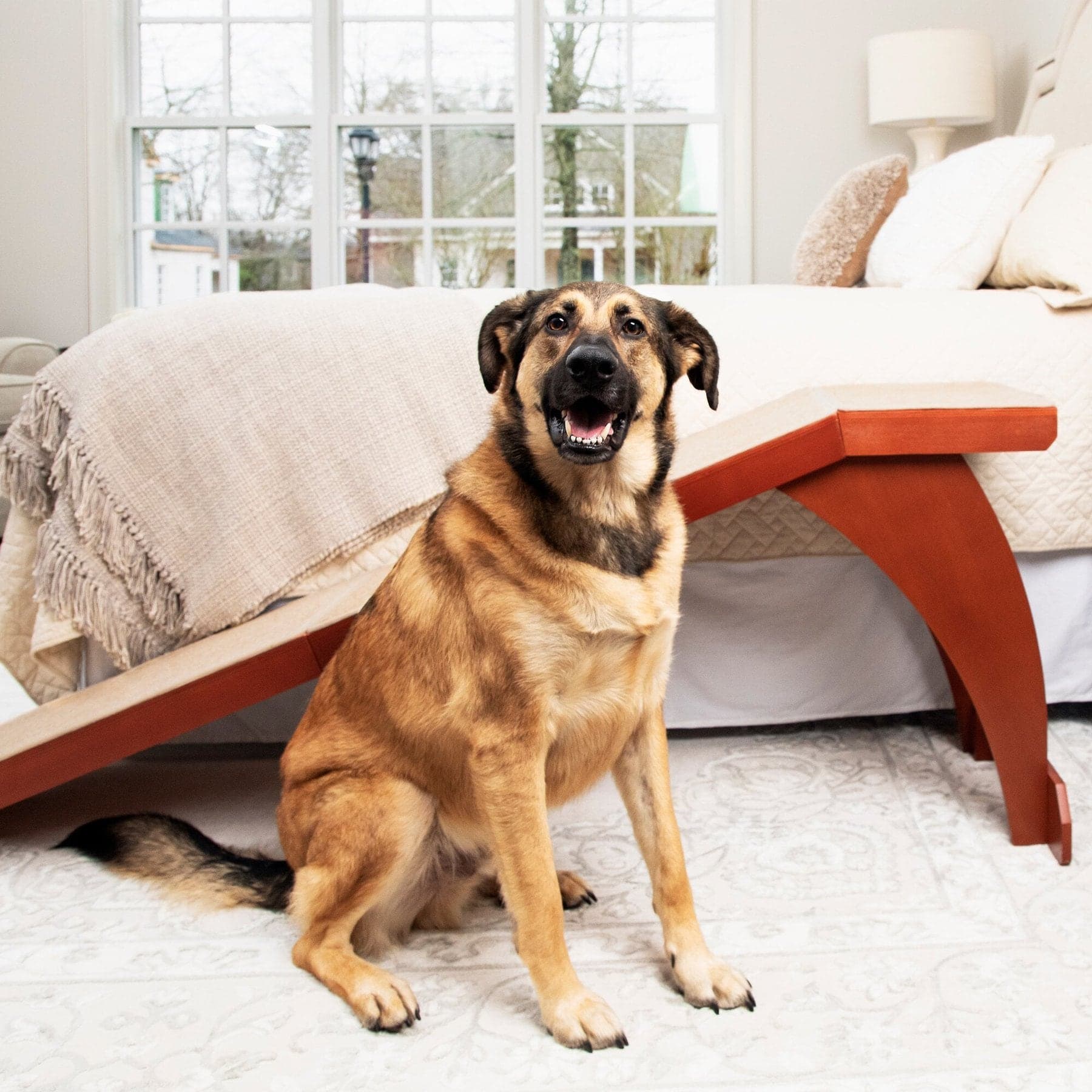
Indoor furniture ramp with a defined height and footprint. Compare the listed dimensions and care instructions with your setup.
Webvet may earn a commission when you click through to Chewy, at no extra cost to you.
A roomy, low-entry litterbox can make stepping in and turning easier. Keep it on an accessible floor, away from a route that requires repeated stairs, and preserve familiar litter if a sudden change would discourage use. Difficulty entering the box is different from straining to urinate; a possible urinary problem needs veterinary attention.
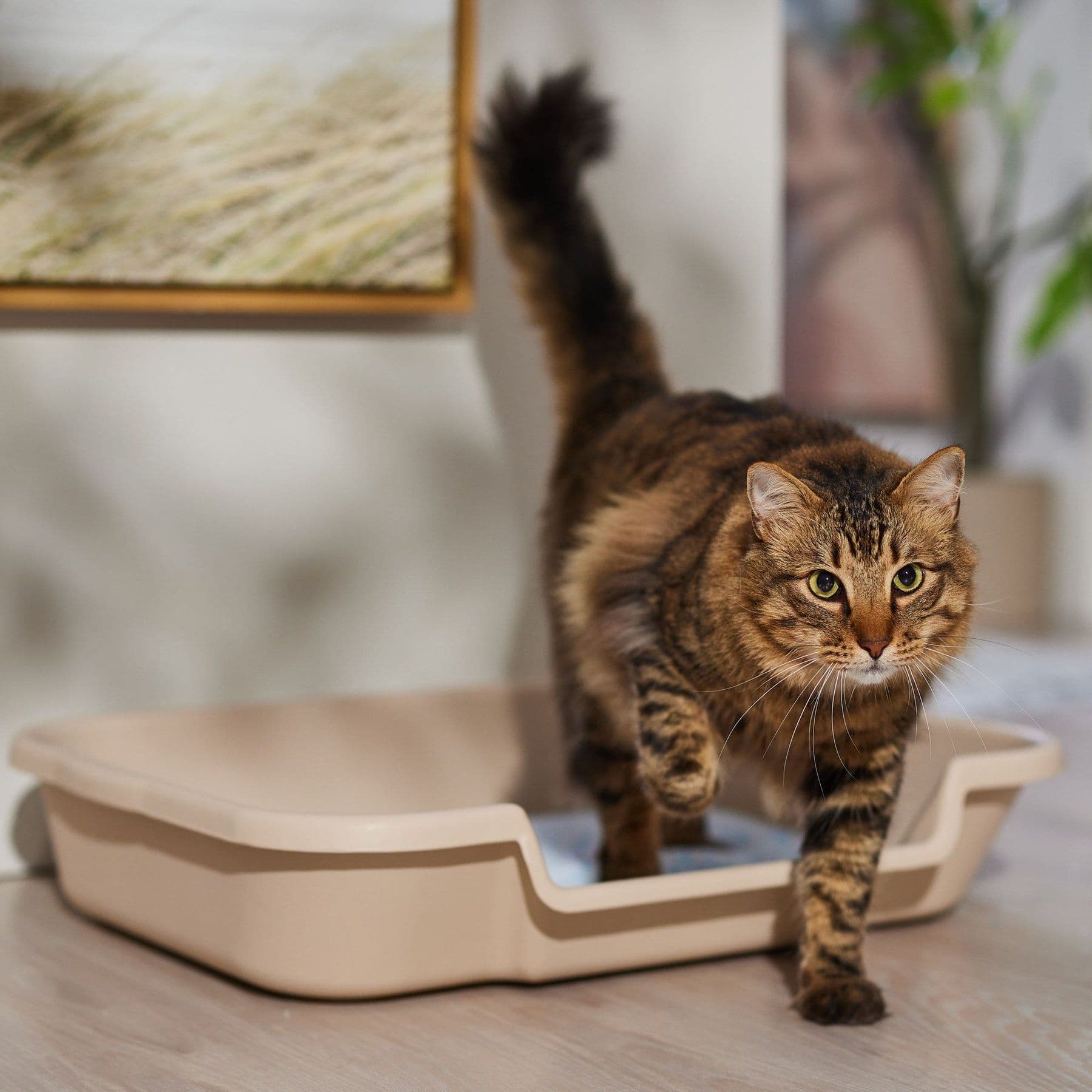
A low-entry litter pan can make access easier for a stiff cat. Choose enough turning space and keep the box on the same floor as resting areas.
Webvet may earn a commission when you click through to Chewy, at no extra cost to you.
A heating pad is not automatically safe for a cat with arthritis. VCA warns that heating pads can cause burns, especially in sleeping or arthritic pets that have difficulty moving away. A comfortable nest of bedding and blankets in a warm spot is a safer way to offer warmth between injections. Keep it easy to enter and leave; pain relief does not remove the need to protect your cat from excessive heat.
- Keep food, water and comfortable resting places within easy reach.
- Use secure footing on slippery routes and avoid forcing exercise or stretching a painful joint.
- Ask your vet about a suitable body-weight goal and gentle activity appropriate for your cat.
There is no single best food for every senior cat with arthritis. A complete diet that meets the cat's other medical needs and supports an appropriate body condition is the starting point. Kidney disease, poor appetite or unwanted weight loss can change priorities. Discuss therapeutic diets, omega-3 products or joint supplements with your vet rather than assuming “natural” means an effective substitute for pain medicine.
Home remedies and massage should not delay diagnosis or replace treatment when pain persists. The most useful plan combines appropriate analgesia with practical changes your cat can actually use, then checks whether eating, grooming, resting and moving remain comfortable.
Who gives Solensia and how is it stored?
If you are considering giving Solensia at home, arrange administration through your veterinary professional instead of attempting to administer it yourself. The veterinary team should coordinate injection and handling. Solensia is not a product to transfer into a different container, divide for later use or inject according to an online demonstration. Its single-use format, cold-storage requirements and lack of preservative make handling part of the treatment plan.
The U.S. label instructs that vials be stored upright in a refrigerator at 2–8°C, protected from light, and never frozen. Once a vial is punctured, the contents should be used immediately and any remaining solution discarded. If a vial has been left out of the fridge, do not assume a particular number of hours is acceptable; ask the dispensing veterinary team to assess the temperature and time involved with the manufacturer if necessary.
- Keep the original packaging and handling instructions with any dispensed product.
- Report a broken cold chain or suspected freezing rather than simply refrigerating the vial again and assuming it is usable.
- Ask the vet before changing a monthly appointment to every three weeks or using a different dosing interval.
Uncertainty about storage, administration or a missed appointment is a reason to call the clinic. It is not something to resolve by injecting first and checking afterward.
Frequently asked questions
Can I give my cat Solensia myself?
Arrange administration through your veterinary professional. Do not attempt self-injection or follow a video as a substitute for the clinic's treatment plan. Accidental injection into a person can cause serious allergic reactions; the label directs immediate medical advice and showing the product label to the clinician. Pregnancy, plans to conceive and breastfeeding require particular care to avoid accidental exposure.
Can people take Solensia?
No. Solensia is for cats only and is not for human use. Its active ingredient is a feline monoclonal antibody; the existence of human treatments that also target nerve growth factor does not make this veterinary product interchangeable with them. If a person is accidentally injected, seek medical advice immediately and bring the packaging or label.
$65 · no membershipNeed a prescription for Solensia?
A licensed vet can assess your cat over video and prescribe Solensia online when it's appropriate.
Talk to a vet- Licensed vets
- All 50 states
- same-day Rx
Webvet may earn a commission if you book.
Veterinarian · BVMS MRCVS
Dr. Pippa Elliott, BVMS, MRCVS, is a veterinarian with nearly 30 years of experience in companion animal practice. Dr. Elliott earned her Bachelor of Veterinary Medicine and Surgery from the University of Glasgow. She was also designated a Member of the Royal College of Veterinary Surgeons. Married with 2 grown-up kids, Dr. Elliott has a naughty Puggle named Poggle, 3 cats and a bearded dragon.


