Hypoallergenic Dog Food: A Buyer's Guide to Skin and Digestive Comfort
A vet-informed buyer's guide to hypoallergenic dog food. Compare novel-protein, hydrolyzed, and limited-ingredient diets, learn how to choose one with your vet, transition safely, and know what to expect on cost and timing.

BVMS MRCVS

This article contains affiliate links. Webvet may earn a commission when you buy through them, at no extra cost to you.
This article contains affiliate links. Webvet may earn a commission when you buy through them, at no extra cost to you.
If your dog scratches constantly, licks their paws raw, or lives with loose stools that never quite settle, you have probably wondered whether hypoallergenic dog food could help. It is one of the most searched questions in pet nutrition, and also one of the most confusing, because the label covers several very different kinds of diets. This buyer's guide breaks down what the term actually means, how the three main diet types work, and how to choose one thoughtfully alongside your veterinarian.
The goal here is not to sell you on a single miracle bag. Food sensitivities are individual, and the right choice depends on your dog's history, your budget, and what your vet finds. What this guide can do is make you a sharper shopper: someone who understands novel-protein, hydrolyzed, and limited-ingredient formulas, knows the difference between prescription and over-the-counter options, and can transition a new food safely without triggering the very digestive upset you are trying to calm.
- 1Hypoallergenic dog food is not one product. It is an umbrella for three approaches: novel-protein, hydrolyzed-protein, and limited-ingredient diets.
- 2The core idea is simplicity: fewer and less familiar ingredients give a sensitive dog's system fewer things to react to.
- 3Novel-protein and limited-ingredient fresh foods are the accessible over-the-counter lane; hydrolyzed formulas are usually the vet-directed prescription lane.
- 4A proper food trial takes 8 to 12 weeks. Always loop in your veterinarian before starting, because skin and gut signs can have many causes.
What Is Hypoallergenic Dog Food?
Hypoallergenic dog food is any diet built to reduce the chance of an adverse food reaction by limiting or altering the ingredients most likely to provoke one. "Hypoallergenic" means "less likely to cause a reaction," not "allergy-proof." These foods generally do one of three things: use a protein your dog has never eaten, break the protein into fragments too small to be recognized, or strip the recipe down to a short, transparent ingredient list.
That gives you three broad categories to shop from:
- Novel-protein diets built around a single protein your dog has not been exposed to before, such as venison, fish, duck, or rabbit.
- Hydrolyzed-protein diets in which the protein is chemically broken into pieces small enough that the immune system is less likely to flag them.
- Limited-ingredient diets that keep the whole recipe short and readable, often a single protein and a single carbohydrate, so you can see exactly what your dog is eating.
It helps to know what actually triggers reactions in the first place. Contrary to popular belief, grain is rarely the culprit. The most common food allergens in dogs are animal proteins, especially beef, dairy, and chicken, followed by wheat and egg. Our deeper explainer on the most common allergens in dog food walks through why these ingredients cause trouble and how to spot them on a label.
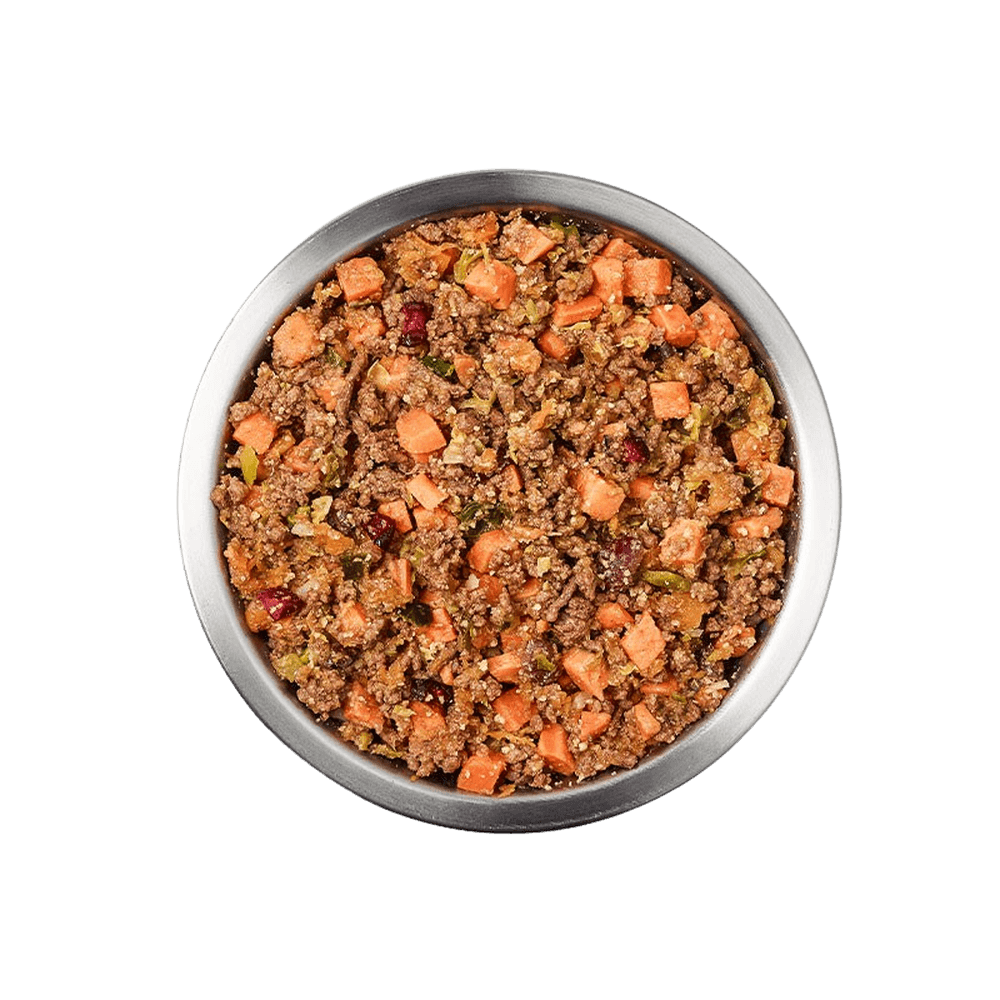
Starting an over-the-counter novel-protein trial? Compare these single-protein fresh recipes with your vet.
- Venison paired with squash and vegetables
- Fresh Frozen recipe for adult maintenance
- See the complete ingredient list
Novel protein depends on your dog’s own diet history.
Webvet may earn a commission when you click through to JustFoodForDogs, at no extra cost to you.
It is also worth knowing that "hypoallergenic" is a descriptive marketing word, not a legally regulated one. No agency certifies a food as hypoallergenic, and there is no standard test a product must pass to use the term. That is not a reason to distrust these diets, but it is a reason to shop by ingredients and formulation rather than by the word on the front of the bag. A recipe earns its place through what it contains and leaves out, not through a label claim.
This is also why grain-free is not the same as hypoallergenic. Because grains are an uncommon trigger, dropping them rarely solves an itch that is actually driven by an animal protein. Some dogs do better without certain grains, but for most sensitive dogs the more productive lever is the protein source, not the presence or absence of rice or oats. Keep your attention on the protein first.

How Hypoallergenic Food Can Help Support Dogs With Food Sensitivities
Does hypoallergenic dog food really work? For many dogs with a genuine food sensitivity, yes, when it is used correctly and guided by a vet. The mechanism is simple: an adverse food reaction happens when the immune or digestive system overreacts to a specific ingredient the dog has eaten before. Remove that ingredient, replace it with something the body does not recognize as a threat, and you give the system far fewer things to react to.
This is why the gold standard for identifying a food trigger is an elimination diet trial. Your dog eats one carefully chosen hypoallergenic diet, and nothing else, no table scraps, flavored chews, or non-approved treats, for 8 to 12 weeks. If the skin and digestive signs ease during the trial and then return when the old food is reintroduced, that pattern points strongly to a food component. A hypoallergenic diet does not cure an allergy, but it can help support a more comfortable baseline by keeping the trigger off the plate.
Novel-Protein Diets: A Fresh Starting Point
A novel-protein diet is often the most approachable first step, especially over the counter. The logic is intuitive: the immune system can only react to a protein it has encountered before. If your dog has spent years eating chicken and beef, a protein like venison or whitefish is genuinely new to their body and far less likely to set off a reaction. That makes novel proteins a sensible starting point for owners who want to try a simplified diet before, or alongside, a prescription workup.
Fresh, whole-food recipes are a natural fit here, because a short cook list of recognizable ingredients makes it easy to see exactly what your dog is eating. JustFoodForDogs is a leading option in this lane. Its fresh novel-protein recipes, Venison & Squash and Fish & Sweet Potato, use an uncommon animal-protein source with clearly named carbohydrate ingredients and are formulated to meet AAFCO nutrient profiles for complete and balanced daily feeding. They can help support selected dogs with food sensitivities as accessible over-the-counter daily foods used alongside veterinary guidance, but they are not equivalent to a prescription hydrolyzed diet or a controlled diagnostic elimination trial.

Venison sits well outside the everyday protein rotation for most dogs, which is exactly what you want in a first trial food. Paired with squash, a mild and digestible carbohydrate, the Venison & Squash recipe keeps the ingredient list short and the palate unfamiliar, so a sensitive system has less to work against.

Fish & Sweet Potato works on the same principle, with whitefish as the named animal-protein source and both sweet potato and russet potato among its carbohydrate ingredients. Fish also brings naturally occurring omega-3 fatty acids, which help support healthy skin and coat, a welcome bonus for itchy dogs. If you want a closer look at how these fresh recipes fit a sensitive dog's routine, see our detailed look at JustFoodForDogs for dogs with allergies.
One point worth understanding as an informed buyer: JustFoodForDogs backs its approach with published nutrition science, including six published peer-reviewed studies involving its foods or whole-food approach, plus an earlier published feeding-trial abstract on the digestibility and use of fresh, whole-food diets. That research supports findings for the specific foods, dogs, and outcomes studied, but it does not show that these retail recipes diagnose or treat food allergy.
Over-the-counter novel-protein fresh food as a starting point
Pros
- Widely available without a prescription, so you can start without delay
- Short, recognizable ingredient lists make label-reading straightforward
- Fresh recipes formulated to meet AAFCO nutrient profiles for complete daily feeding
- Uncommon proteins give a sensitive system fewer familiar triggers
- Fish-based recipes add omega-3s that help support skin and coat
Cons
- Over-the-counter foods are not held to the same trace-contamination controls as prescription elimination diets
- A dog with a severe or long-standing allergy may still need a vet-directed hydrolyzed diet
- Fresh food generally costs more per day than standard kibble
- Results still require a strict, treat-free trial period to interpret correctly
If refrigeration or freezer space is a concern, there are also shelf-stable fresh options that keep the whole-food philosophy while fitting a busier household. Our overview of shelf-stable fresh dog food covers how those formats compare on convenience and storage.
One nuance to understand about novel proteins is that "novel" is relative to your individual dog. A protein that is exotic for one dog may be old news for another that has eaten a rotation of varied recipes and flavored treats over the years. This is why writing down your dog's full diet history matters so much: the more proteins they have already been exposed to, the fewer genuinely novel options remain, and the more valuable a fresh, single-protein recipe becomes as a clean starting point.
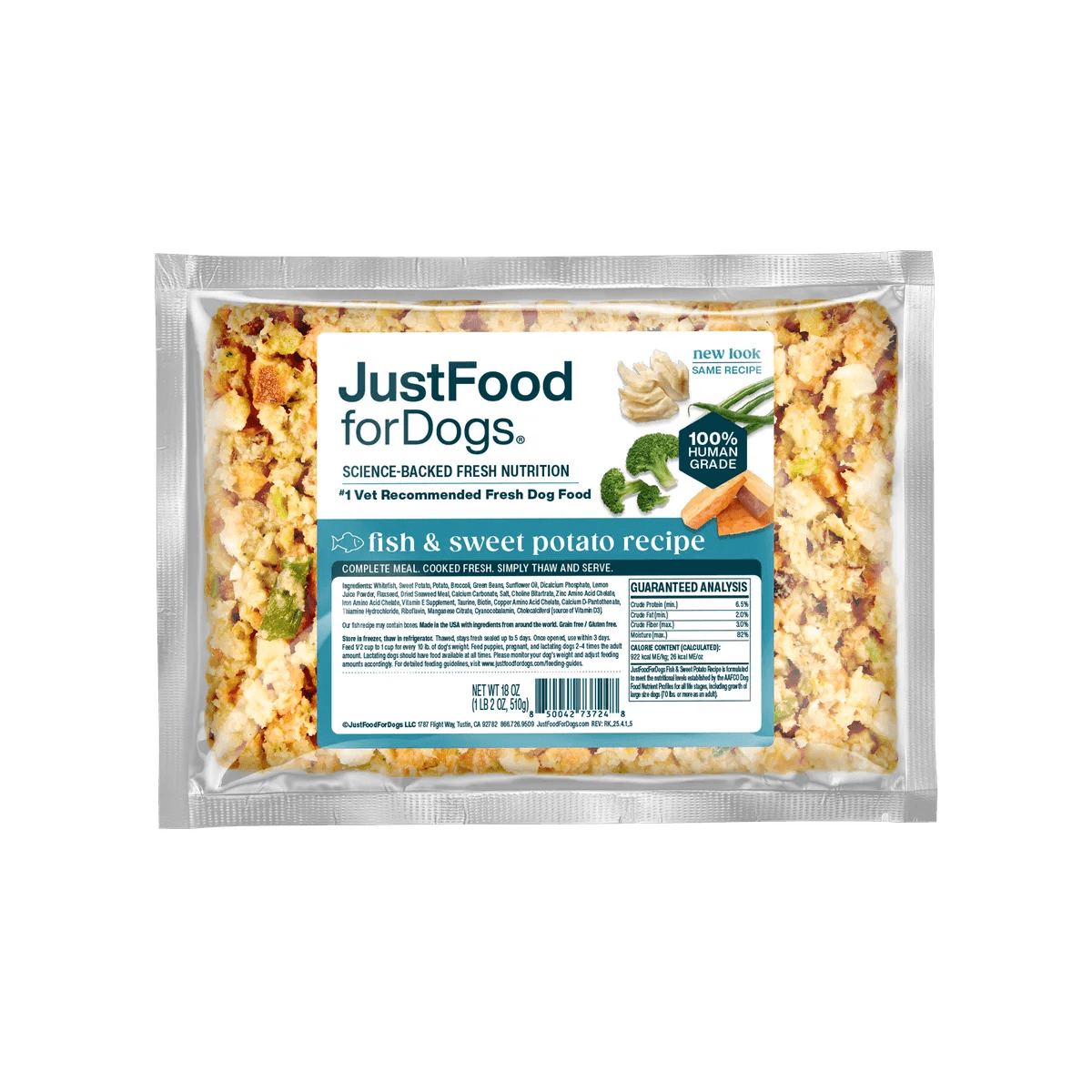
Starting an over-the-counter novel-protein trial? Compare these single-protein fresh recipes with your vet.
- Whitefish with sweet potato
- Fresh Frozen meals with whole-food ingredients
- View the recipe and life-stage guidance
Webvet may earn a commission when you click through to JustFoodForDogs, at no extra cost to you.
Hydrolyzed-Protein Diets Explained
Hydrolyzed-protein diets take a different route. Instead of swapping in an unfamiliar protein, they take a standard protein and chemically break it down through hydrolysis into fragments so small that the immune system is far less likely to recognize and react to them. Think of it as making the protein invisible to the body's allergy radar rather than avoiding it entirely.
These diets are typically prescription products, formulated and sold through veterinarians, and they are often the choice for a strict diagnostic elimination trial. Because the protein is pre-broken, a hydrolyzed diet sidesteps the risk that your dog has quietly become sensitized to a protein you thought was novel. That precision is why vets lean on hydrolyzed formulas for dogs with complex, multiple, or hard-to-pin-down sensitivities.
The trade-offs are cost, palatability, and access. Hydrolyzed diets tend to be pricier, some dogs find the taste less appealing, and you cannot buy them without a vet's authorization. That is by design: they are a clinical tool, not a casual purchase, and they belong squarely in the vet-directed lane.
Vets often reach for a hydrolyzed diet when a case is murky: multiple suspected triggers, a dog that has already eaten many proteins, or signs that did not improve on an over-the-counter novel-protein trial. Because the protein is pre-broken, the diet removes the guesswork of whether a chosen protein was truly novel. If your veterinarian suggests this route, it usually reflects the complexity of the case rather than a failure on your part, and it does not mean fresh food has no place in your dog's future once the trigger is identified.
Limited-Ingredient Diets Explained
A limited-ingredient diet, often labeled LID, does exactly what the name suggests: it keeps the recipe as short as possible. A typical limited-ingredient formula centers on one protein and one carbohydrate, plus the vitamins and minerals needed to stay complete and balanced. The value is transparency. When there are only a handful of ingredients, it is much easier to identify and avoid a suspected trigger, and much harder for a hidden allergen to sneak in.
Limited-ingredient and novel-protein approaches overlap heavily, and many of the best over-the-counter options are both at once: a single novel protein plus a single carbohydrate. That combination is a strong starting profile for a dog with a suspected sensitivity, which is why fresh recipes like the JustFoodForDogs novel-protein line fit the limited-ingredient philosophy so naturally.
Starting an over-the-counter novel-protein trial? Compare these single-protein fresh recipes with your vet.
- Venison paired with squash and vegetables
- Fresh Frozen recipe for adult maintenance
- See the complete ingredient list
Novel protein depends on your dog’s own diet history.
Webvet may earn a commission when you click through to JustFoodForDogs, at no extra cost to you.
One caution when shopping LID: read the full panel, not just the front of the bag. "Limited ingredient" is a marketing phrase, not a regulated term, so the only way to confirm a recipe is genuinely simple is to check the ingredient list yourself. If digestive upset is your main concern, our guide to dog food for sensitive stomachs covers what to look for beyond the label claim.

Prescription vs. Over-the-Counter: What's the Difference?
One of the most confusing parts of shopping for a hypoallergenic diet is figuring out when you need a prescription and when an over-the-counter food will do. Both lanes have a role. The difference comes down to manufacturing controls, purpose, and how your veterinarian plans to use the diet.
| Factor | Over-the-Counter (novel-protein / limited-ingredient) | Prescription (usually hydrolyzed) |
|---|---|---|
| Best for | A first simplified-diet trial; mild or suspected sensitivities | Strict diagnostic trials; complex or severe sensitivities |
| How you buy it | No prescription needed; retail and online | Requires a veterinarian's authorization |
| Ingredient approach | Uncommon protein and short, readable recipe | Protein broken into fragments the immune system is less likely to flag |
| Contamination control | Standard production; cross-contact controls vary by brand | Tighter controls to avoid trace allergens during a trial |
| Typical cost | Moderate to higher, especially fresh food | Often the highest per-day cost |
A practical way to think about it: over-the-counter novel-protein and limited-ingredient foods are the accessible starting lane you can enter on your own, while hydrolyzed prescription diets are the vet-directed lane your veterinarian reaches for when a case needs diagnostic precision. Many owners begin in the first lane and only move to the second if a strict trial or a stubborn case calls for it. Neither lane is "better"; they solve slightly different problems.
Signs of Food Sensitivities to Watch For
What are the signs of food allergies in dogs? Food reactions tend to show up in two places, the skin and the gut, and often both at once. The signs below are worth noting, but none of them are unique to food, which is exactly why a vet visit matters before you draw conclusions.
Skin and coat signs
- Persistent itching, scratching, or rubbing against furniture
- Frequent paw licking or chewing, sometimes to the point of staining or raw skin
- Recurring ear infections or red, waxy, itchy ears
- Red, inflamed, or thickened skin, hot spots, or hair loss from overgrooming
Digestive signs
- Loose stools, chronic soft stool, or intermittent diarrhea
- More frequent bowel movements than normal for your dog
- Gassiness, gurgling, occasional vomiting, or nausea

A useful clue: food-related itching often persists year-round rather than following seasons, which can help distinguish it from environmental allergies to pollen or dust. So what foods stop dogs from itching? No single food is a cure, but if the itch is truly food-driven, removing the offending ingredient, usually through a novel-protein, hydrolyzed, or limited-ingredient diet under veterinary guidance, is what tends to bring the most relief. The food that helps is simply the one that no longer contains your dog's trigger.
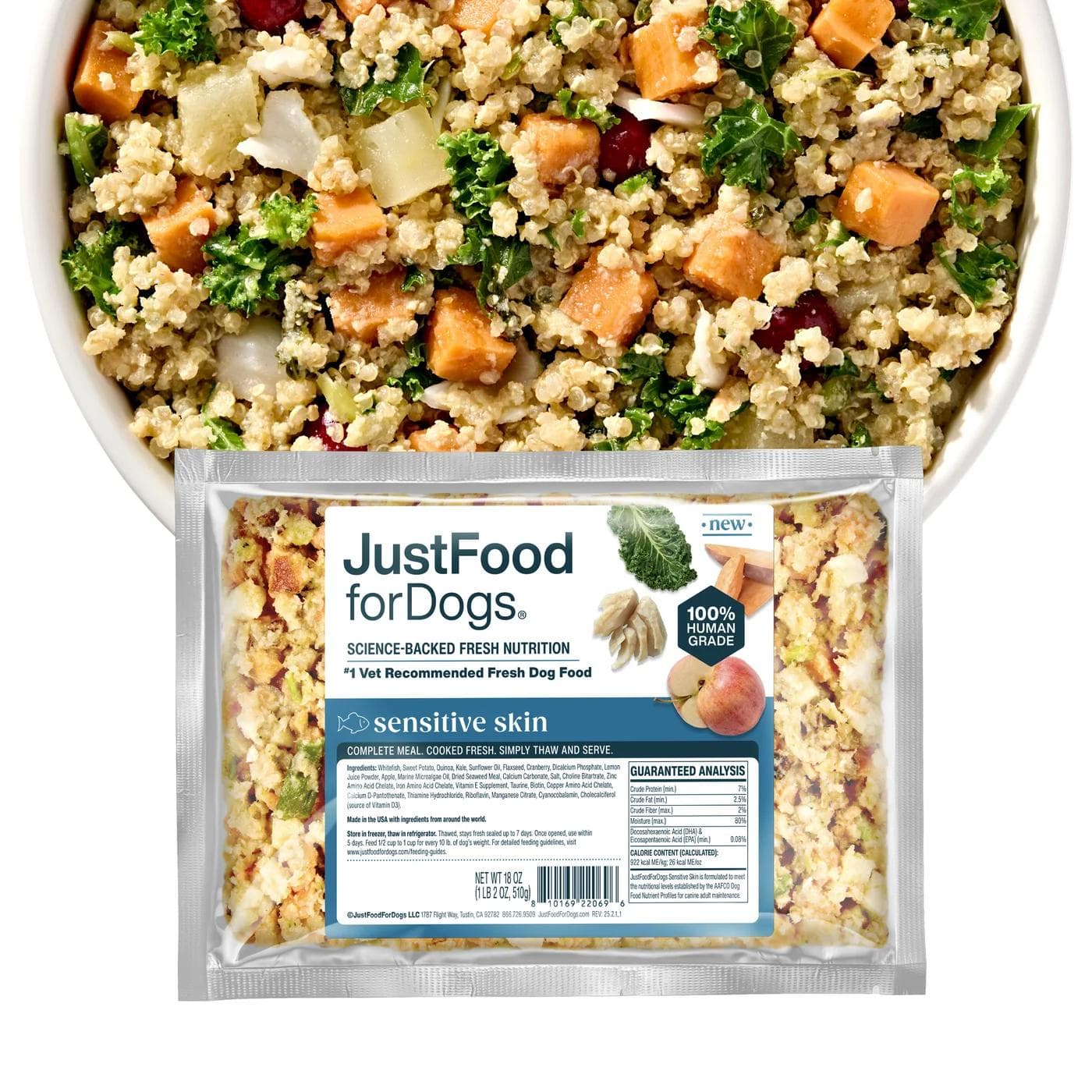
Starting an over-the-counter novel-protein trial? Compare these single-protein fresh recipes with your vet.
- Whitefish-based Fresh Frozen recipe
- Made for adult dogs
- Review the full ingredient list with your vet
Choose a recipe around your dog’s known food triggers.
Webvet may earn a commission when you click through to JustFoodForDogs, at no extra cost to you.
Timing can add another clue. Food sensitivities can appear at any age and often develop after a dog has eaten the same protein for months or years, so a reaction to a long-time food is entirely possible even if your dog ate it happily before. Many dogs also carry both a food component and an environmental one at the same time, which is why signs sometimes improve only partly on a food trial. Sorting out that overlap is a job for your veterinarian, not guesswork at the pet-store shelf.
How to Choose the Right Hypoallergenic Food for Your Dog
What food do vets recommend for dogs with allergies? There is no universal answer, because the right diet depends on the individual dog. What veterinarians consistently recommend is a process rather than a product: identify the trigger through a controlled trial, then feed a complete and balanced diet that reliably excludes it. Here is how to narrow the field.
- Start with your vet. Rule out non-food causes first, then decide together whether to begin with an over-the-counter novel-protein diet or go straight to a prescription hydrolyzed trial.
- Review the diet history. List every protein your dog has eaten. A truly novel protein is one they have not had before, so past foods and treats determine which options qualify.
- Confirm it is complete and balanced. Choose a food formulated to meet AAFCO nutrient profiles for your dog's life stage so the simplified recipe still delivers full nutrition.
- Keep the ingredient list short and readable. Fewer ingredients means fewer potential triggers and easier troubleshooting if signs do not improve.
- Commit to a strict trial. Whatever you choose, feed it exclusively for the full trial window. One flavored treat or a shared snack can invalidate the whole effort.
For owners who want an accessible, whole-food place to begin, a fresh novel-protein recipe like JustFoodForDogs Venison & Squash or Fish & Sweet Potato checks most of these boxes at once: a single uncommon protein, a short list of recognizable ingredients, and a formula built to meet AAFCO nutrient profiles. Used alongside your veterinarian's plan, it can help support a sensitive dog while you work out what does and does not agree with them.
Finally, match the food to your real life, not just the ideal. The best diet on paper does you no good if it is too expensive to sustain, too hard to store, or something your dog refuses to eat. Consider portion cost, prep and storage, and your dog's palate preferences honestly, then choose the option you can actually stick with for a full trial and beyond. Consistency, more than any single premium feature, is what turns a good diet choice into a comfortable dog.

How to Transition Your Dog to a New Food
Switching foods too fast is a common cause of the very digestive upset you are trying to calm. A sensitive dog needs a gradual transition, usually over 7 to 10 days, so their gut can adjust. Mix a little of the new food into the old, then slowly shift the ratio.
| Days | Old food | New food |
|---|---|---|
| Days 1 to 3 | 75% | 25% |
| Days 4 to 6 | 50% | 50% |
| Days 7 to 9 | 25% | 75% |
| Day 10 onward | 0% | 100% |
Go slower if your dog has a delicate stomach, stretching the change across two weeks or more. Watch stool quality at each step, and if you see loose stools or vomiting, hold at the current ratio for a few extra days before advancing. For fresh food specifically, our JustFoodForDogs feeding guide covers portioning and storage so the switch goes smoothly.

How Long Does It Take to See Results?
Patience is the hardest part of a food trial. Digestive signs sometimes ease within a week or two, which is encouraging, but skin and coat improvements take much longer. Because the skin cycle is slow and inflammation lingers, veterinarians ask for a full 8 to 12 week trial before judging whether a diet is working. Stopping early is the most common reason owners conclude, wrongly, that a hypoallergenic diet failed.
Keep a simple log through the trial: note itching, ear comfort, paw licking, and stool quality each week. That record helps you and your vet see gradual trends that are easy to miss day to day, and it makes the eventual reintroduction step, feeding the old food to confirm the trigger, far more meaningful.
It also helps to set expectations with everyone in the household. A dog that seems only slightly less itchy at week four may still be on track, because inflammation calms in stages rather than all at once. Resist the urge to judge the diet at the halfway point. If you reach the end of the trial with clear, sustained improvement and the signs return on reintroduction, you have your answer, and that answer is worth far more than a fast but uncertain guess.
What Does Hypoallergenic Dog Food Cost?
Cost varies widely by type, format, and your dog's size. As a rough guide, over-the-counter limited-ingredient kibble tends to be the most budget-friendly, prescription hydrolyzed diets sit at the higher end, and fresh whole-food recipes fall in between to premium depending on portion size. A large dog eating fresh food will naturally cost more per day than a small dog on kibble.
When you compare prices, think in cost per day rather than price per bag, and factor in the value of getting it right. A diet that actually calms your dog's signs can reduce the frequency of vet visits and add-on care over time. Many fresh-food brands also offer portioned subscription plans sized to your dog's weight, which makes budgeting predictable and cuts waste. Talk with your vet about where to start given your dog's needs and your budget, since the least expensive option is not always the one that resolves the problem.
Remember to budget for the whole trial, not just the food. During an elimination trial you will likely replace flavored treats with pieces of the trial diet, and you may pay for a recheck visit or two so your vet can track progress. Those are worthwhile costs, because a well-run trial gives you a durable answer instead of an endless cycle of switching foods. Once the trigger is known, you often gain flexibility to choose a maintenance diet that fits both your dog and your wallet.
How much you spend depends on three things: the type of diet, your dog's size, and whether the food is prescription or over the counter. Prescription hydrolyzed diets tend to sit at the top of the range because of the specialized processing and the veterinary oversight they involve. Over-the-counter novel-protein and limited-ingredient foods span a wider band, from moderately priced dry formulas to premium fresh recipes that cost more per day but use whole-food ingredients your dog may find easier to eat.
There are sensible ways to manage the cost without cutting corners. Buy the bag or box size that matches your dog's daily portion so nothing spoils, watch for first-order discounts from fresh brands, and remember that a food your dog actually tolerates is cheaper over time than a bargain option that triggers flare-ups and repeat vet visits. If your budget is tight, ask your veterinarian which single feature matters most for your dog, a truly novel protein or a genuinely short ingredient list, and prioritize that one rather than paying for both.
Frequently Asked Questions
What are hypoallergenic dog foods?
Hypoallergenic dog foods are diets designed to be less likely to trigger an adverse food reaction. They fall into three main types: novel-protein diets that use an uncommon protein your dog has not eaten, hydrolyzed-protein diets that break the protein into fragments the immune system is less likely to react to, and limited-ingredient diets that keep the whole recipe short and transparent. "Hypoallergenic" means less likely to cause a reaction, not allergy-proof.
What is the best hypoallergenic dog food?
There is no single best food for every dog, because the right choice depends on which ingredient your dog reacts to and what your vet advises. The best diet is simply the complete and balanced one that reliably excludes your dog's specific trigger and that your dog will eat consistently. For many owners, an accessible starting point is a fresh novel-protein recipe such as JustFoodForDogs Venison & Squash or Fish & Sweet Potato, formulated to meet AAFCO nutrient profiles and used alongside veterinary guidance.
What is the best hypoallergenic food for dogs?
The best option is the one matched to your dog's diet history. If your dog has only ever eaten chicken and beef, a novel protein like venison or fish is a strong first choice. For complex or severe cases, a veterinarian may recommend a prescription hydrolyzed diet instead. Confirm the food is complete and balanced, keep the ingredient list short, and commit to a full trial so you can tell whether it is working.
What is the best dog food for allergy prone dogs?
For allergy-prone dogs, a limited-ingredient or novel-protein diet is usually the most sensible everyday choice, because a short, unfamiliar ingredient list gives their system fewer things to react to. Fresh whole-food recipes with one clearly named animal-protein source and a short, transparent ingredient list may fit this profile for selected dogs. Dogs with confirmed, harder-to-manage allergies may do better on a vet-prescribed hydrolyzed diet. Your veterinarian can help you decide which lane fits your dog.
What are signs of food allergies in dogs?
The most common signs are itchy skin, frequent paw licking, recurring ear infections, red or inflamed skin, and hair loss from overgrooming, often paired with digestive signs like loose stools, gassiness, or occasional vomiting. Food-related itching tends to persist year-round rather than following the seasons. Because these signs overlap with environmental allergies and other conditions, have your vet confirm the cause before starting a food trial.
What food do vets recommend for dogs with allergies?
Veterinarians recommend a process more than a specific brand: identify the trigger through a controlled 8 to 12 week elimination trial, then feed a complete and balanced diet that excludes it. Depending on the case, that means an over-the-counter novel-protein or limited-ingredient food, or a prescription hydrolyzed diet for stricter diagnostic trials. The common thread is a short, controlled ingredient list fed exclusively during the trial.
Does hypoallergenic dog food really work?
For dogs with a genuine food sensitivity, yes, when the diet is chosen correctly and fed strictly. Removing the offending ingredient and replacing it with something the body does not recognize as a threat gives a sensitive system fewer things to react to, which can help support more comfortable skin and digestion. It works as management, not a cure, and it depends on a disciplined, treat-free trial period guided by your vet.
What foods stop dogs from itching?
No single food stops itching on its own. If the itch is truly food-driven, relief comes from removing the specific ingredient causing it, typically by feeding a novel-protein, hydrolyzed, or limited-ingredient diet under veterinary guidance. Recipes rich in omega-3 fatty acids, such as fish-based formulas, can also help support skin and coat health. If itching continues despite a strict food trial, ask your vet to check for environmental allergies or skin infections.

Editor
The Webvet Editorial Team is the in-house group of pet-care editors and writers behind Webvet, operated by Smart Pet Collective. The team researches, writes, and maintains Webvet's pet health, behavior, and medication content. Every article follows a defined editorial process: research from reputable veterinary and scientific sources, careful drafting, mandatory review of medical content by a credentialed veterinarian, and dated publication. Health and medication articles are medically reviewed by a licensed veterinary professional before they go live and are kept current over time.
Veterinarian · BVMS MRCVS
Dr. Pippa Elliott, BVMS, MRCVS, is a veterinarian with nearly 30 years of experience in companion animal practice. Dr. Elliott earned her Bachelor of Veterinary Medicine and Surgery from the University of Glasgow. She was also designated a Member of the Royal College of Veterinary Surgeons. Married with 2 grown-up kids, Dr. Elliott has a naughty Puggle named Poggle, 3 cats and a bearded dragon.


