Food Intolerance in Dogs: Symptoms, Diagnosis & Allergy Differences
Food intolerance in dogs is a non-immune digestive reaction to specific ingredients, distinct from a true food allergy. Learn the symptoms, common triggers, diagnosis, and treatment.

BVMS MRCVS
Medically reviewed by Dr. Pippa Elliott, BVMS MRCVS · Last reviewed

This article contains affiliate links. Webvet may earn a commission when you buy through them, at no extra cost to you.
WebVet may earn a commission on purchases made through links in this article, at no extra cost to you. Brand selection is independent. This product is intended for use under veterinary supervision. Nutritional recommendations should be discussed with your veterinarian to determine the most appropriate diet for your dog's individual needs.
- 1Food intolerance in dogs is a non-immune digestive reaction to food ingredients, distinct from a true food allergy (which involves the immune system).
- 2Common symptoms include vomiting, diarrhea, bloating, and excessive gas. These primarily affect the gastrointestinal tract rather than the skin.
- 3Unlike allergies, food intolerances can occur on the first exposure to an ingredient (no sensitization period required).
- 4Common suspected triggers include dairy (lactose intolerance), beef, chicken, wheat, soy, and food additives like artificial colors or preservatives; specific triggers vary by dog and are best confirmed through a veterinarian-supervised elimination diet.
- 5Treatment involves veterinarian-guided elimination diets, ingredient identification, and switching to highly digestible options. Limited-ingredient recipes such as Just Food For Dogs Sensitive Stomach (frozen, adult, single-protein turkey + rice) and the JFFD Fish & Sweet Potato recipe (frozen, adults and puppies) are commonly used options to discuss with your veterinarian, alongside prescription hydrolyzed protein formulations for severe or diagnosed cases.
Food intolerance in dogs is a non-immunological adverse reaction to specific food ingredients, distinct from a true food allergy. Consistent with educational materials from the American Veterinary Medical Association (AVMA) and the Merck Veterinary Manual, many dogs presenting with what owners describe as 'food allergies' are evaluated and found to have food intolerances rather than true immune-mediated allergies; the exact frequency varies by source. Symptoms cluster in the digestive tract: chronic vomiting, soft or watery stools, excessive gas, audible stomach rumbling, and bloating. Unlike allergies, intolerances can occur on a dog's first exposure to an ingredient. Common suspected triggers include dairy (lactose intolerance), beef, chicken, wheat, soy, and food additives. Diagnosis follows the same elimination diet protocol as allergies; mild dietary upset may improve within days of removing the trigger, while persistent or recurrent symptoms need veterinary evaluation.
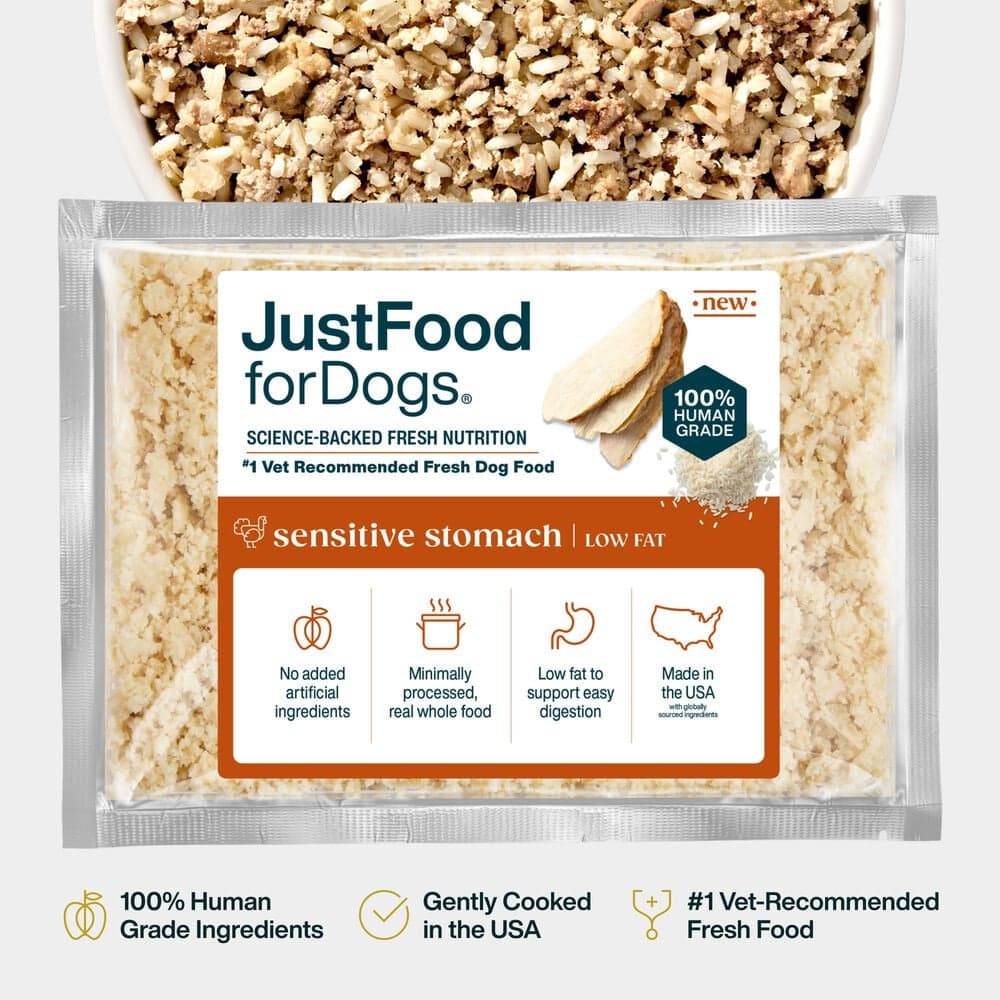
Discuss these limited-ingredient recipes with your veterinarian when a food intolerance is suspected.
- Turkey with white and brown rice
- Gently cooked Fresh Frozen meals
- View the full recipe and feeding guidance
A fresh-food option to discuss with your veterinarian.
Webvet may earn a commission when you click through to JustFoodForDogs, at no extra cost to you.
What Is the Difference Between a Food Allergy and a Food Intolerance?
Food allergy and food intolerance are often confused, but they are distinct clinical conditions with different mechanisms, symptoms, and treatments. Veterinary literature on adverse food reactions distinguishes immune-mediated reactions (true food allergy) from non-immune reactions (intolerance, idiosyncratic reactions, or pharmacologic reactions to food components such as histamine), each requiring a different diagnostic and therapeutic approach. Consult your veterinarian for an individualized workup.

Food Allergy: An Immune Response
A food allergy is an immune-mediated reaction. The dog's immune system mistakenly identifies a normally harmless food protein as a threat, then mounts an inflammatory response on every subsequent exposure. The immune response requires prior sensitization, so symptoms appear only after the dog has eaten the trigger food for an extended period (usually months to years). Symptoms are primarily dermatological: chronic itching, recurring ear infections, hot spots, and hair loss. See our companion article on allergens in dog food for a deep dive on the top allergens and elimination protocol.
Food Intolerance: A Digestive Response
A food intolerance is a non-immune reaction. The dog's digestive system cannot properly break down or process a specific ingredient, leading to gastrointestinal distress. The most familiar example in mammals is lactose intolerance: adult dogs produce limited lactase enzyme, so dairy causes osmotic diarrhea and gas. Food intolerances can also be triggered by chemical sensitivities (artificial colors, preservatives), histamine-rich foods, or fat malabsorption. Because no immune sensitization is required, symptoms can appear the first time a dog eats the trigger food.

 Sponsored
Want a vet's take on your dog's upset stomach?
Talk to a licensed vet at Dutch over video, often the same day. They can recommend treatment and prescribe it when it's appropriate.
Use code Pets60
Plans start at $12/month · covers up to 5 pets
- Licensed vets in most states
- Rx for 150+ conditions
- 4.7 on Trustpilot
What Are the Common Symptoms of Food Intolerance in Dogs?
Food intolerance symptoms cluster in the digestive tract, though some dogs also develop secondary skin issues from chronic gastrointestinal inflammation. The VCA Animal Hospitals clinical guide identifies four main symptom categories.
- Frequent vomiting or regurgitation within hours of eating, especially if the same food consistently triggers it
- Soft, loose, or watery stools (chronic diarrhea), often with mucus or undigested food visible
- Excessive flatulence and audible stomach rumbling (borborygmi), especially within 2 to 8 hours after meals
- Bloating, abdominal discomfort, or visible distension of the abdomen after eating
- Increased frequency of bowel movements (some dogs go from twice daily to 4 to 6 times daily)
- Skin and ear issues in a minority of cases, as a downstream effect of chronic gut inflammation
Symptoms often appear within hours of eating the trigger food. Mild dietary upset may improve within days of removing the suspected trigger, but persistent or recurrent symptoms need veterinary evaluation rather than continued at-home dietary experimentation. Chronic exposure can cause weight loss, poor coat quality, and reduced appetite as the dog associates eating with discomfort.
 Sponsored
Vet care that's always there
Unlimited video calls and messaging with licensed vets for less than a typical vet visit. One membership covers up to five pets.
Use code Pets60
Plans start at $12/month · covers up to 5 pets
- Licensed vets in most states
- Rx for 150+ conditions
- 4.7 on Trustpilot
What Causes Food Intolerance in Dogs?
The Purina Institute clinical review and Diamond Pet Foods veterinary guide identify five main mechanisms behind food intolerances in dogs.
1. Lactose Intolerance
Lactose intolerance is one of the most-frequently-discussed canine food intolerances in veterinary client-education materials. Puppies produce lactase enzyme to digest mother's milk, but lactase production drops sharply after weaning. By adulthood, most dogs cannot fully digest lactose (the sugar in milk). Cheese, yogurt, milk, ice cream, and butter can trigger gas, loose stool, or vomiting in lactase-deficient adult dogs, with severity varying by individual.
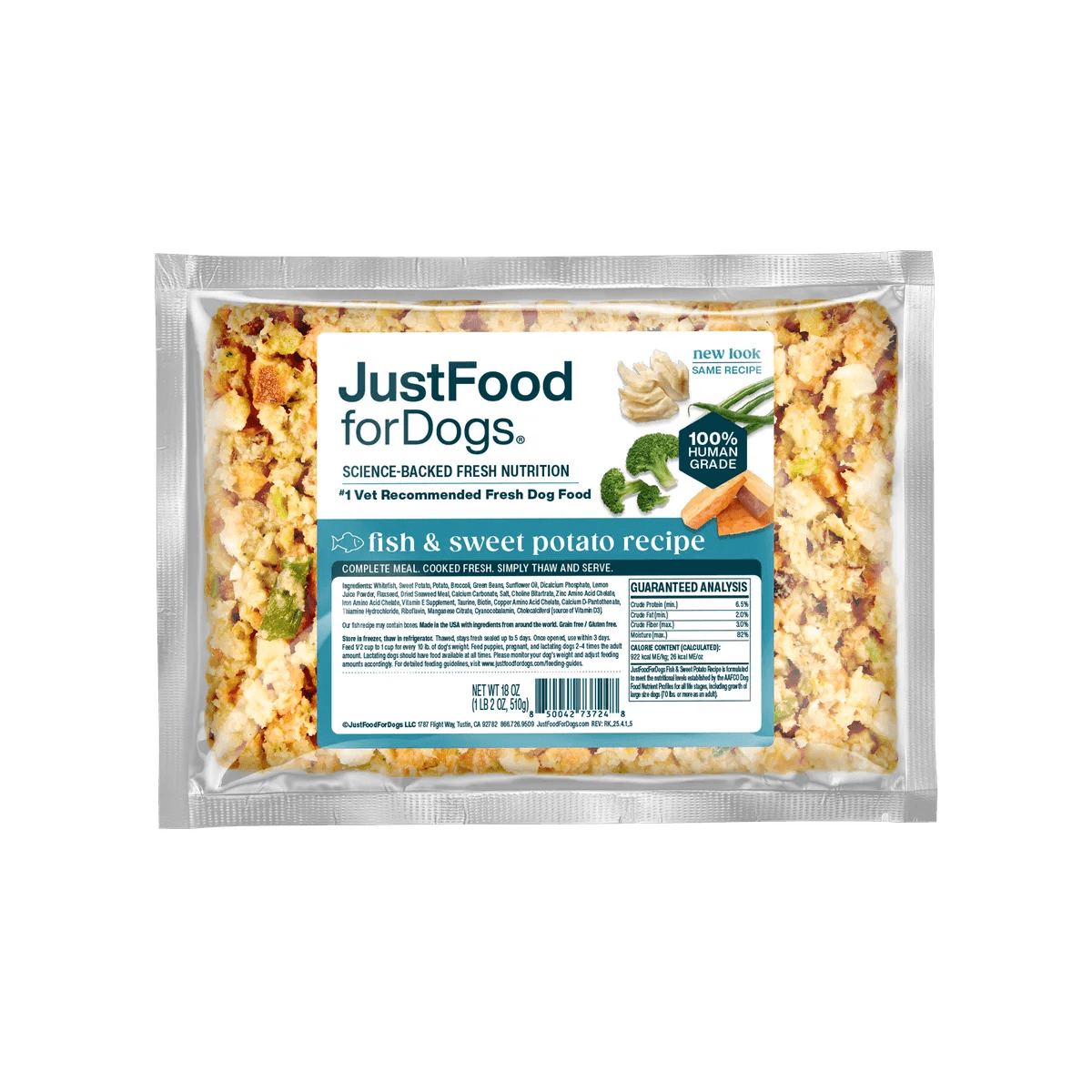
Discuss these limited-ingredient recipes with your veterinarian when a food intolerance is suspected.
- Whitefish with sweet potato
- Fresh Frozen meals with whole-food ingredients
- View the recipe and life-stage guidance
Webvet may earn a commission when you click through to JustFoodForDogs, at no extra cost to you.
2. Sensitivity to Specific Proteins
Beef and chicken proteins can cause non-immune digestive sensitivities even in dogs who do not have true allergies. The mechanism is not fully understood, but may involve incomplete protein breakdown or sensitivity to the amino acid profile. Symptoms are exclusively gastrointestinal, distinguishing intolerance from a beef or chicken allergy.
3. Carbohydrate Maldigestion
Some dogs have trouble digesting specific carbohydrates, particularly wheat, corn, or legumes (soy, peas, lentils). The undigested carbohydrates ferment in the large intestine, producing gas and loose stools. This is not gluten sensitivity in the human sense, but a more general carbohydrate maldigestion.
4. Sensitivity to Additives
Food additives (artificial colors, BHA, BHT, ethoxyquin, sodium nitrite, and certain flavor enhancers) can trigger non-immune reactions in sensitive dogs. The reaction is often dose-dependent: small amounts may be tolerated, but kibble with high additive concentrations or treats containing artificial colors can cause flare-ups.
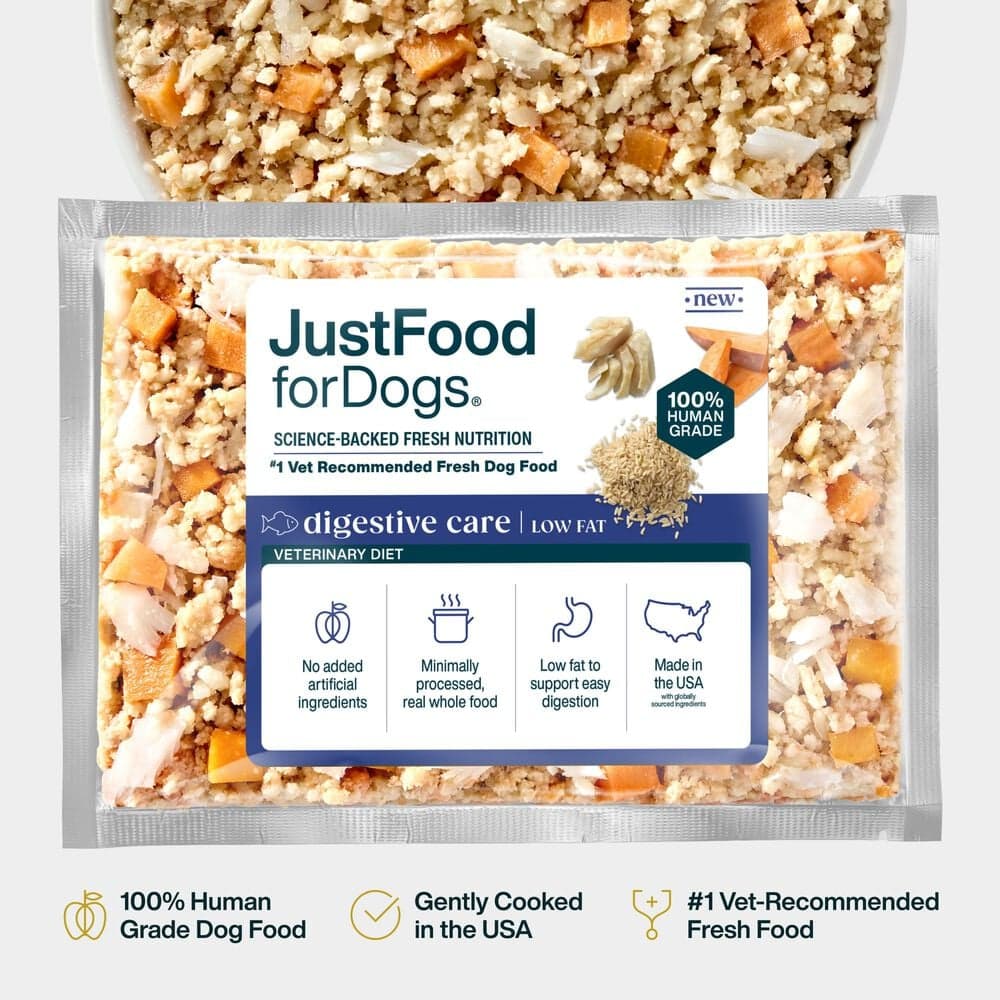
Discuss these limited-ingredient recipes with your veterinarian when a food intolerance is suspected.
- Whitefish single novel protein
- 1 to 4% crude fat, 26 kcal per ounce
- For diagnosed GI disorders and fat sensitivity
Vet Support diet: requires your veterinarian’s information to ship.
Webvet may earn a commission when you click through to JustFoodForDogs, at no extra cost to you.
5. Fat Malabsorption
Dogs with pancreatic insufficiency or chronic gastrointestinal disease cannot properly digest dietary fat. Symptoms include greasy, foul-smelling stools (steatorrhea) and weight loss despite normal appetite. This is technically a medical condition rather than a food intolerance, but presents similarly and is managed with a low-fat diet.
How Is Food Intolerance in Dogs Diagnosed?
Diagnosis follows the same protocol as food allergies but typically resolves faster. The Lincoln Animal Hospital clinical guide describes the standard approach.
- Step 1: Veterinary examination to rule out other causes (parasites, infections, inflammatory bowel disease, pancreatic insufficiency). Blood work and fecal testing are typical.
- Step 2: Detailed dietary history covering all foods, treats, supplements, table scraps, and flavored medications. Many owners overlook treats and dental chews as potential triggers.
- Step 3: Elimination diet trial for 1 to 4 weeks (intolerances resolve faster than allergies). A single novel protein and single carb diet, or a hydrolyzed diet.
- Step 4: Provocative challenge once symptoms resolve, reintroduce suspected ingredients one at a time, watching for symptom return within 24 to 48 hours.
How Do You Treat Food Intolerance in Dogs?
Once the trigger ingredient is identified, treatment is straightforward: avoid that ingredient. Most dogs can return to a fairly normal commercial diet that simply excludes the trigger. For dogs with multiple sensitivities or complex GI presentations, the four diet categories listed below work well, in order of clinical evidence.
1. Just Food For Dogs Sensitive Stomach and Fish & Sweet Potato (frozen limited-ingredient recipes)
Just Food For Dogs offers two frozen limited-ingredient recipes that may be options to discuss with a veterinarian for dogs with suspected food intolerance. The Sensitive Stomach recipe is a single-protein turkey + rice formulation labeled for adult maintenance; the Fish & Sweet Potato recipe uses a white fish blend (cod, pollock, and haddock per the JFFD product page) with sweet potato and limited additional whole-food ingredients, labeled for adults and puppies. Both use transparent whole-food ingredients (significantly fewer inclusions than the typical 8 to 12 ingredients in conventional kibble), are gently cooked from USDA-inspected human-grade ingredients, and contain no artificial preservatives, colors, or flavor enhancers. JFFD's shelf-stable JustFresh pouches offer a convenient shelf-stable option for households that prefer not to manage freezer storage. Daily cost runs $4 to $7 for a 30-pound dog.
Pros
- Limited-ingredient, novel-protein recipes reduce the field of possible triggers
- Human-grade ingredients with no artificial preservatives or colors
- Gently cooked at low temperatures, preserving digestibility
- Multiple JFFD formats available (frozen entrees plus shelf-stable JustFresh pouches) for different storage needs
- Board-certified veterinary nutritionist-developed recipes
Cons
- $4 to $7 per day for a 30-pound dog (higher than mainstream kibble)
- Frozen entrees require freezer storage
- Sensitive Stomach is labeled for adult maintenance; Fish & Sweet Potato is labeled for adults and puppies per the JFFD product page
Discuss these limited-ingredient recipes with your veterinarian when a food intolerance is suspected.
- Turkey with white and brown rice
- Gently cooked Fresh Frozen meals
- View the full recipe and feeding guidance
A fresh-food option to discuss with your veterinarian.
Webvet may earn a commission when you click through to JustFoodForDogs, at no extra cost to you.
2. Single Novel Protein Commercial Diets
Natural Balance Limited Ingredient Diets and Zignature offer over-the-counter single novel-protein recipes (venison, duck, salmon, kangaroo). These may be options to discuss with a veterinarian for dogs with confirmed protein sensitivities and are more affordable than fresh alternatives ($1.50 to $3 per day for a 30-pound dog).
Pros
- Single named novel protein narrows the field of common trigger proteins (does not eliminate cross-reactivity in every case)
- Available without prescription
- More affordable than fresh or prescription options ($1.50 to $3 per day)
- Wide flavor variety (venison, duck, salmon, kangaroo, rabbit)
Cons
- Shared production lines at some kibble facilities may carry cross-contact risk; consult the brand's published cross-contact statement
- Kibble format generally has lower moisture and may be slower for some dogs to digest than fresh formats
- Some grain-free LIDs contain pulses and potatoes (discuss with your veterinarian given the FDA's open investigation into reports of non-hereditary canine DCM)
3. Prescription Hydrolyzed Diets
For dogs with severe symptoms, suspected food allergy overlap, or a diagnostic elimination trial, prescription hydrolyzed protein diets are used under veterinary direction. Hill's Prescription Diet z/d, Royal Canin Veterinary Diet Hydrolyzed Protein HP, and Purina Pro Plan Veterinary Diets HA are the main options. They require veterinary authorization, and product choice (and trial duration) should be set by your veterinarian based on the specific differential. Prescription hydrolyzed diets are not a generic intolerance solution; they are a clinical tool for adverse food reaction workups and confirmed food-allergy management.
4. Home-Cooked Balanced Diets
For owners committed to cooking, a board-certified veterinary nutritionist can design an AAFCO-balanced home-cooked recipe that excludes the trigger ingredient. Balance.It is a veterinary nutritionist-developed recipe builder; some recipes require Balance.it's own supplement products or specific veterinary review to be considered complete and balanced. See our companion article on vet-reviewed homemade dog food recipes for examples and safety guidelines.
Which Dog Breeds Are Most Prone to Food Intolerance?
Some breeds are more frequently presented to veterinary dermatology and gastroenterology clinics with cutaneous adverse food reactions and chronic gastrointestinal sensitivity. Labrador Retrievers, Golden Retrievers, German Shepherds, French Bulldogs, English Bulldogs, and West Highland White Terriers are among the breeds clinicians commonly cite in this context, though specific predisposition data varies by source. Discuss your dog's individual risk with your veterinarian rather than relying on a breed list alone.
Why Food Intolerance Tests Aren't Reliable
Commercial blood tests, saliva tests, and hair-sample tests for food intolerance in dogs lack veterinary validation. These tests typically measure IgE or IgG antibody levels against various food proteins, but published reviews of canine cutaneous adverse food reactions note poor correlation between antibody presence and clinical intolerance or allergy. Elimination diet trials under veterinary supervision remain the validated diagnostic approach.
Frequently Asked Questions
What is the most common food intolerance in dogs?
Lactose intolerance is one of the most commonly cited food intolerances in adult dogs. Puppies produce lactase enzyme to digest milk, but lactase production drops sharply after weaning. By adulthood, most dogs cannot fully digest dairy products, which trigger osmotic diarrhea, gas, and bloating. Beef and chicken protein sensitivities are the second and third most common.
How do you treat food intolerance in dogs?
Treatment begins with identifying the trigger ingredient through an elimination diet trial (1 to 4 weeks on a single novel protein and single carbohydrate). Once the trigger is identified, simply exclude that ingredient from the dog's diet. Most dogs can return to a regular commercial diet that does not contain the trigger. For dogs with multiple sensitivities, single-protein limited ingredient diets or veterinary-formulated home-cooked recipes work well.
Can a dog suddenly become intolerant to their food?
Yes. Unlike food allergies (which require months to years of sensitization), food intolerances can develop suddenly or appear on the first exposure to a trigger ingredient. Aging dogs may also develop new intolerances as their digestive function changes. A change in food, manufacturer reformulation, or addition of new treats can also reveal a previously-unrecognized intolerance.
What dog breeds are most prone to food intolerance?
Boxer, Bulldog, Cocker Spaniel, Dalmatian, German Shepherd, Golden Retriever, Labrador Retriever, Lhasa Apso, Pug, Schnauzer, and West Highland White Terrier are mentioned more frequently in veterinary dermatology literature on food sensitivity, though prevalence rates vary by source. However, any breed can develop food intolerance. Genetics and environmental factors both play a role.
How long does it take to recover from food intolerance?
Once the trigger ingredient is removed from the diet, most dogs show improvement within 24 to 48 hours. Full resolution of digestive symptoms typically occurs within 1 to 4 weeks. If symptoms persist beyond 4 weeks on a strict elimination diet, the diagnosis may be a true food allergy (which takes 8 to 12 weeks to resolve), inflammatory bowel disease, or another GI condition requiring veterinary investigation.
Is food intolerance the same as IBS in dogs?
No. Inflammatory bowel disease (IBD) is a separate condition involving chronic inflammation of the GI tract lining, typically diagnosed via biopsy. Food intolerance is a sensitivity to specific ingredients without ongoing inflammation. However, the two can overlap: dogs with IBD often have multiple food intolerances, and untreated chronic intolerance can contribute to GI inflammation. A veterinarian can distinguish the two through blood work, fecal testing, and (when indicated) endoscopic biopsy.
Explore More Dog Food Guides
Each of these companion guides drills into a related dog food topic:
- Allergens in Dog Food, the top 9 food allergens for dogs and how they differ from intolerances
- Dog Food for Sensitive Stomachs, the best foods for dogs with chronic digestive sensitivity
- Best Dog Food for Allergies, a vet-reviewed buyer's guide for diagnosed food allergies
- Fresh Dog Food, fresh, gently cooked options for sensitive digestive systems
- Vet-Reviewed Homemade Dog Food Recipes, vet-reviewed recipe templates for owners cooking for sensitive dogs
- Best Wet Dog Food, wet food picks that suit dogs with chronic digestive sensitivity
Which Diet Approach Should You Choose for an Intolerant Dog?
Start with a veterinary visit to confirm the diagnosis and rule out other GI conditions. Once food intolerance is suspected, the simplest approach is to identify the trigger through an elimination trial and exclude it. For dogs with multiple sensitivities or who do not improve on a standard exclusion diet, JFFD Sensitive Stomach (frozen, adult, single-protein turkey + rice) and the JFFD Fish & Sweet Potato recipe (frozen, adults and puppies) are commonly used options to discuss with your veterinarian: limited-ingredient, gently cooked from USDA-inspected human-grade ingredients, with no artificial preservatives or colors. For severe or diagnosed cases, prescription hydrolyzed protein diets (Purina Pro Plan HA, Hill's z/d, Royal Canin Veterinary Diet Hydrolyzed Protein HP) are the standard.
Veterinarian · BVMS MRCVS
Dr. Pippa Elliott, BVMS, MRCVS, is a veterinarian with nearly 30 years of experience in companion animal practice. Dr. Elliott earned her Bachelor of Veterinary Medicine and Surgery from the University of Glasgow. She was also designated a Member of the Royal College of Veterinary Surgeons. Married with 2 grown-up kids, Dr. Elliott has a naughty Puggle named Poggle, 3 cats and a bearded dragon.
Related reading

Gastroenteritis in Cats: Symptoms, Causes, Treatment, and When to See a Vet

Gastroenteritis in Dogs: Symptoms, Causes, Treatment, and Recovery Time

Hemorrhagic Gastroenteritis in Dogs (HGE): Symptoms, Causes, Treatment, and Survival
