Homemade Dog Food Recipes: 5 Templates and Vet Safety Guidelines
5 homemade dog food recipes adapted from veterinary nutritionist source materials, with safety guidelines, ingredient warnings, and AAFCO balance considerations. These are starting points for veterinarian-guided feeding, not complete daily diets.

BVMS MRCVS

This article contains affiliate links. Webvet may earn a commission when you buy through them, at no extra cost to you.
WebVet may earn a commission on purchases made through links in this article, at no extra cost to you. Brand selection is independent.
- 1Homemade dog food recipes for daily feeding must meet AAFCO nutrient profile standards for the dog's life stage. Unbalanced homemade diets are the most common cause of nutritional deficiencies in home-fed dogs.
- 2Always consult a veterinarian or board-certified veterinary nutritionist before transitioning your dog to a homemade diet, especially for puppies, seniors, or dogs with health conditions.
- 3The 5 recipes below are starting points adapted from veterinary nutritionist source materials, covering the most common dog dietary scenarios: balanced maintenance, sensitive stomach recovery, allergy management, senior nutrition, and weight management. They are not individually AAFCO-balanced complete daily diets. For sustained homemade feeding, work with a board-certified veterinary nutritionist or use Balance.it, a veterinary-developed home-cooked recipe builder (some Balance.it recipes require the platform's own supplement products to be considered complete and balanced).
- 4For owners who want commercial-grade balance with home cooking, Just Food For Dogs DIY Nutrient Blend is a powdered supplement designed to complete JFFD's specific DIY recipes (chicken, beef, fish, turkey, or lamb) when used exactly as the product directions specify. For owners who want fresh, vet-developed nutrition without cooking at all, JFFD's refrigerated frozen entrees (Chicken & Rice, Fish & Sweet Potato, and other named recipes) and the shelf-stable JustFresh pouches both come from board-certified veterinary nutritionist formulation.
- 5Toxic foods to avoid in any homemade recipe: chocolate, xylitol, grapes, raisins, onions, garlic, macadamia nuts, avocado, raw bread dough, and alcohol.
Homemade dog food recipes should be evaluated against AAFCO nutrient profile standards for the dog's life stage to be considered nutritionally complete. A 2013 UC Davis veterinary nutrition study evaluated 200 homemade recipes from cookbooks, websites, and pet stores; 95 percent contained at least one nutrient deficiency, and over 80 percent contained multiple deficiencies. The five recipes below are templates adapted from veterinary nutritionist source materials. They are not a substitute for an individually formulated AAFCO-complete daily diet. For sustained daily feeding, work with a board-certified veterinary nutritionist or use a tool like Balance.It, a veterinary-developed home-cooked recipe builder. Some Balance.it recipes require the platform's own supplement products or specific veterinary review to be considered complete and balanced.
What Safety Guidelines Should You Follow Before Making Homemade Dog Food?
Raw meat creates a separate household pathogen question from nutrient balance; see WebVet’s raw meat safety guide for CDC and FDA evidence, high-risk households, sanitation, and complete cooked alternatives.
Switching a dog from commercial food to homemade requires more care than most owners expect. Veterinary nutrition guidance from organizations such as the American College of Veterinary Internal Medicine and the American Veterinary Medical Association consistently emphasizes the following safety practices for home-cooked feeding.
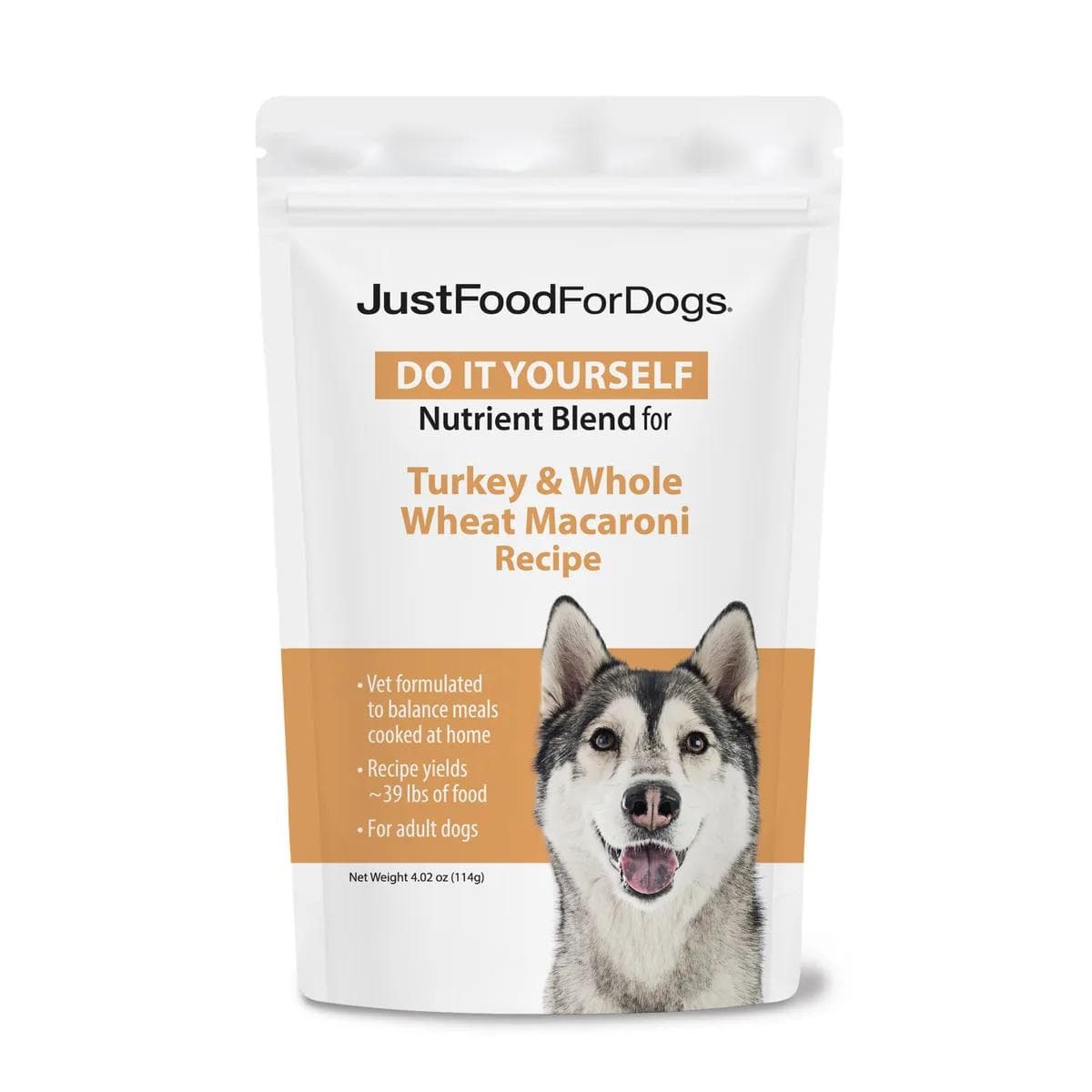
Cooking at home? Match the official DIY Nutrient Blend to its recipe so every batch stays complete and balanced.
- Made for the Turkey & Whole Wheat Macaroni recipe
- Pair with the exact official cooking guide
- Measure every ingredient and the blend as directed
Recipe-specific blend; follow the complete recipe exactly.
Webvet may earn a commission when you click through to JustFoodForDogs, at no extra cost to you.
1. Consult a Veterinarian Before Starting
Every dog has individual nutritional needs based on age, breed, size, activity level, and health conditions. A veterinarian can flag any preexisting conditions (kidney disease, diabetes, food allergies, pancreatitis) that require diet modifications. For complex cases or long-term homemade feeding, ask for a referral to a board-certified veterinary nutritionist (DACVN).

2. Recipes Must Meet AAFCO Nutrient Profiles
AAFCO publishes the canonical nutrient profile for adult maintenance and growth/reproduction. A balanced recipe must hit minimum levels for protein, fat, calcium, phosphorus, all essential vitamins, and trace minerals. The most commonly missed nutrients in homemade recipes are calcium, vitamin D, vitamin E, iodine, zinc, copper, and choline. Use only the supplements and doses specified by your veterinarian or board-certified veterinary nutritionist for your dog's specific weight, age, and health profile.
3. Avoid Toxic Ingredients Absolutely
Never include chocolate, xylitol, grapes, raisins, onions, garlic, macadamia nuts, or avocado in any homemade recipe. Even small amounts can cause kidney failure, severe anemia, or fatal toxicity. Raw bread dough, alcohol, caffeine, and stone fruits (peach, plum, cherry pits) are also off-limits. Cooked bones can splinter and cause GI obstruction or perforation.
4. Use a Reliable Recipe Source
Internet recipes (Pinterest, Facebook, food blogs) are rarely AAFCO-balanced. The 2013 UC Davis study found 95 percent of evaluated recipes were nutritionally deficient. Reliable sources include Balance.It, the Tufts veterinary nutrition service, and recipes developed by individual board-certified veterinary nutritionists (Dr. Lisa Freeman, Dr. Joe Bartges).
5. Monitor Your Dog Carefully
Schedule a veterinary checkup every 3 to 6 months during the first year of homemade feeding. Bloodwork can detect emerging deficiencies before they become symptomatic. Watch your dog's body condition score (target: ribs easily felt but not visible), coat quality, energy level, and stool consistency.
What Are the 5 Homemade Dog Food Recipes Below?
Recipe 1: Basic Balanced Maintenance (Adult Dogs)
Template adapted from veterinary nutritionist source materials. Designed as a starting point for healthy adult dogs 25 to 50 pounds. Yields roughly 1,200 to 1,500 kcal per recipe; consult your veterinarian for individual portioning.
Ingredients:
- 2 pounds ground turkey (90 percent lean) or ground chicken, cooked
- 1.5 cups cooked brown rice
- 1 cup steamed carrots, chopped
- 1 cup steamed green beans, chopped
- 1 cup steamed spinach
- 2 large eggs, cooked
Fish oil (omega-3 supplement), dose per veterinary guidance
Supplements only at the specific product and dose prescribed by your veterinarian or a board-certified veterinary nutritionist
- 1 calcium supplement (eggshell powder or veterinary calcium carbonate) per veterinary nutritionist guidance
Preparation: Cook meat thoroughly. Cook rice. Steam vegetables until tender. Hard-boil eggs. Mix everything together. Store in refrigerator for up to 5 days or freeze in portion-sized containers for up to 3 months.
Feeding: This recipe is an example template for a balanced-maintenance batch, not a daily diet. Calorie needs vary by dog size, age, activity, and body condition. Confirm the right daily portion for your specific dog with your veterinarian or a board-certified veterinary nutritionist before using as a primary food.

Cooking at home? Match the official DIY Nutrient Blend to its recipe so every batch stays complete and balanced.
- Made for the Chicken & Rice recipe
- Pair with the exact official cooking guide
- Measure every ingredient and the blend as directed
Recipe-specific blend; follow the complete recipe exactly.
Webvet may earn a commission when you click through to JustFoodForDogs, at no extra cost to you.
Recipe 2: Sensitive Stomach Bland Diet (Recovery)
For short-term recovery from gastrointestinal upset. NOT designed for long-term feeding (lacks key nutrients). Use for 3 to 5 days max, then transition back to a balanced diet.
Ingredients:
- 1 pound boneless, skinless chicken breast, boiled (no seasoning)
- 2 cups white rice, cooked plain
- 1 cup pumpkin puree (100 percent pumpkin, no sugar added)
- 1 tablespoon plain low-fat cottage cheese (optional, for picky eaters)
Preparation: Boil chicken until fully cooked. Shred and cool. Cook rice in plain water. Mix chicken, rice, and pumpkin in a 1:2:1 ratio (chicken:rice:pumpkin). Serve at room temperature in small, frequent meals (every 4 to 6 hours).
Feeding: This is a short-term recovery template, not a daily diet. Start with small portions appropriate to your dog's size and your veterinarian's guidance. Increase gradually as appetite returns. Discontinue if vomiting persists or stool does not improve in 48 hours, and contact your veterinarian.
Recipe 3: Allergy-Conscious Limited Ingredient (Novel Protein)
For dogs with confirmed or suspected food allergies. Uses a novel protein the dog has not been exposed to before.
Ingredients:
- 2 pounds ground venison or ground rabbit (novel proteins for most dogs)
- 2 cups sweet potato, cubed and steamed
- 1 cup green peas
- 1 cup chopped kale or spinach
Fish oil (omega-3 supplement for skin support), dose per veterinary guidance
Supplements only at the specific product and dose prescribed by your veterinarian or a board-certified veterinary nutritionist
- Calcium supplement per veterinary nutritionist guidance
Preparation: Cook venison or rabbit thoroughly. Steam sweet potato and peas. Mix everything together. Refrigerate up to 5 days or freeze for 3 months.
Cooking at home? Match the official DIY Nutrient Blend to its recipe so every batch stays complete and balanced.
- Made for the Turkey & Whole Wheat Macaroni recipe
- Pair with the exact official cooking guide
- Measure every ingredient and the blend as directed
Recipe-specific blend; follow the complete recipe exactly.
Webvet may earn a commission when you click through to JustFoodForDogs, at no extra cost to you.
For diagnosed food allergies, this recipe should be used as part of an 8 to 12-week elimination trial supervised by a veterinarian. See our companion article on allergens in dog food for the full elimination protocol.
Recipe 4: Senior Dog Nutrition (Joint and Cognitive Support)
For dogs 7 years and older. Lower in fat, moderate in protein, with added supplements for joint and cognitive health.
Ingredients:
- 1.5 pounds boneless, skinless chicken thighs (slightly higher fat than breast aids palatability for seniors)
- 2 cups cooked quinoa (complete protein, gentle on aging digestion)
- 1 cup steamed butternut squash
- 1 cup blueberries (antioxidants for cognitive support)
Fish oil (omega-3 for joints and brain), dose per veterinary guidance
Turmeric (anti-inflammatory) is optional only at a dose specified by your veterinarian for your dog's weight and any concurrent medications
- Glucosamine and chondroitin supplement per veterinary guidance (for joint support)
- Calcium and multivitamin supplements per veterinary nutritionist guidance
Preparation: Bake or boil chicken thighs (skinless). Cool, then chop. Cook quinoa per package instructions. Steam squash. Mix everything together. Refrigerate 3 to 4 days or freeze for up to 3 months.
See our companion article on senior dog food for more on cognitive and joint nutrition for older dogs.
Recipe 5: Weight Management (Reduced-Calorie Maintenance)
For overweight adult dogs (body condition score 7 or higher). Lower in fat and calorie density, higher in fiber for satiety.
Ingredients:
- 2 pounds ground turkey (99 percent lean) or white fish, cooked
- 1 cup cooked barley or brown rice
- 2 cups chopped zucchini (low calorie, high water content)
- 2 cups steamed green beans (high fiber, low calorie)
- 1 cup chopped carrots
Fish oil, dose per veterinary guidance
- Calcium and multivitamin supplements per veterinary nutritionist guidance
Preparation: Cook turkey or fish until done. Cook barley or rice. Steam vegetables. Mix together. Refrigerate 3 to 4 days or freeze for up to 3 months.
Portioning: This is a weight-management template, not a daily diet. Any calorie reduction for weight loss should be set by your veterinarian based on your dog's body condition and concurrent conditions, not by a generic percentage. Weigh your dog every 2 weeks. Aggressive weight loss can cause loss of lean muscle mass, electrolyte imbalances, and other metabolic complications; coordinate any weight-loss plan with your veterinarian, especially for senior dogs or dogs with concurrent disease.
Cooking at home? Match the official DIY Nutrient Blend to its recipe so every batch stays complete and balanced.
- Made for the Chicken & Rice recipe
- Pair with the exact official cooking guide
- Measure every ingredient and the blend as directed
Recipe-specific blend; follow the complete recipe exactly.
Webvet may earn a commission when you click through to JustFoodForDogs, at no extra cost to you.
When Is Commercial Fresh Food Better Than Homemade?
Homemade feeding makes sense for owners who want maximum control over ingredients and have time to source, cook, and supplement carefully. For owners who want fresh-food nutrition without the time investment, commercially formulated fresh foods offer comparable nutritional quality with AAFCO-complete balance built in by formulation. Just Food For Dogs Fresh Frozen (Chicken & Rice or Fish & Sweet Potato) is the editorial pick at the over-the-counter tier for owners who want homemade-style nutrition with vet-developed AAFCO balance, with the shelf-stable JustFresh line as the no-freezer option.
JFFD DIY Nutrient Blend: Homemade-Style with Commercial Balance
For owners who want to cook their own dog food but want commercial-grade nutritional balance, Just Food For Dogs DIY Nutrient Blend is a powdered supplement designed to complete JFFD's specific DIY recipes (chicken, beef, fish, turkey, or lamb) when used exactly as the product directions specify. The DIY Nutrient Blend itself is a shelf-stable powdered supplement (not a cooked product); it is intended to be mixed into the owner's home-cooked protein-and-carb meal to supply the calcium, vitamin D, vitamin E, iodine, zinc, copper, and choline that are most often missing from unsupplemented homemade recipes. JFFD's separate fully formulated product lines (refrigerated Fresh Frozen entrees like Chicken & Rice and Fish & Sweet Potato, shelf-stable JustFresh pouches, and targeted Vet Support recipes for sensitive stomach, joint and skin, and other dietary needs) are developed by board-certified veterinary nutritionists from USDA-inspected human-grade ingredients (the Fresh Frozen line is cooked in JFFD's own kitchens; the JustFresh line is shelf-stable). Daily cost runs $3 to $7 per day for a 30-pound dog depending on the line, often comparable to or less than the true cost of properly balanced homemade feeding (which requires fresh ingredients, supplements, and weekly cooking time).
Pros
- DIY Nutrient Blend completes JFFD's specific DIY recipes when used exactly as directed (addresses the calcium, vitamin D, iodine, zinc, copper, and choline gaps found in 95 percent of homemade recipes in the 2013 UC Davis review)
- DIY Nutrient Blend is a shelf-stable powdered supplement (not cooked); mixed into owner-prepared meals
- JFFD's separate Fresh Frozen and JustFresh lines are fully formulated from USDA-inspected human-grade ingredients
- Multiple JFFD formats available (DIY Nutrient Blend for cooking, Fresh Frozen entrees, shelf-stable JustFresh, targeted Vet Support recipes)
- No artificial preservatives, colors, or flavor enhancers across the JFFD lineup
- Comparable cost to properly balanced homemade feeding
Cons
- $4 to $7 per day for a 30-pound dog
- Less ingredient customization than true homemade
- Limited recipe variety compared to home-cooked options
Frequently Asked Questions
What do vets recommend for homemade dog food?
Veterinarians recommend that any homemade dog food meet AAFCO nutrient profile standards for the dog's life stage. The general framework is a cooked protein source (chicken, turkey, beef, fish), a digestible carbohydrate (rice, sweet potato, quinoa), cooked vegetables (carrots, green beans, spinach), a source of healthy fat (fish oil), and supplementation per a board-certified veterinary nutritionist for your dog's specific needs. Always consult a veterinarian or board-certified veterinary nutritionist before transitioning to homemade. Most online recipes are nutritionally incomplete.
Is homemade dog food healthier than commercial dog food?
Not automatically. The 2013 UC Davis study found that 95 percent of homemade recipes failed to meet at least one AAFCO nutrient profile standard. A well-formulated homemade diet can be excellent when supplemented correctly under nutritionist guidance. Premium commercial fresh foods like Just Food For Dogs Fresh Frozen offer consistent, vet-developed AAFCO-complete balance without the weekly cooking and supplementation effort homemade requires. For owners who do want to cook, JFFD's DIY Nutrient Blend is designed to complete the specific JFFD DIY recipe when used exactly as the product directions specify.
What ingredients should I never put in homemade dog food?
Toxic ingredients: chocolate, xylitol, grapes, raisins, onions, garlic, macadamia nuts, avocado, raw bread dough, alcohol, caffeine, and stone fruits with pits (peach, plum, cherry). Hazardous: cooked bones (splinter risk), high-salt foods, processed meats with nitrites or sweeteners, and any ingredient your dog has a confirmed allergy to. When in doubt, check the AKC's list of foods dogs can and can't eat.
How long can I store homemade dog food?
Refrigerated cooked dog food keeps 3 to 4 days in airtight containers (the conservative FDA-aligned window for cooked perishable foods). Frozen dog food keeps 2 to 3 months in airtight containers or freezer bags. Reheat thoroughly before serving (room temperature or slightly warm). Discard any food that smells off, develops mold, or has been left at room temperature for more than 2 hours.
Can I feed my puppy homemade dog food?
Puppies have very specific nutritional needs (higher protein, fat, calcium, and DHA for growth). Most adult-dog homemade recipes do not meet puppy growth requirements. If you want to feed puppies homemade, work directly with a board-certified veterinary nutritionist to formulate a recipe that meets AAFCO growth standards. Improperly balanced homemade puppy food can cause skeletal development issues that may not appear until months later.
How much homemade food should I feed my dog daily?
Daily caloric needs vary by weight, activity, and life stage. General baselines: 10-pound dog needs 346 kcal/day, 20 pounds needs 587 kcal, 30 pounds needs 800 kcal, 50 pounds needs 1,168 kcal, and 75 pounds needs 1,605 kcal. Most homemade recipes provide 400 to 600 kcal per cup. Start with the brand's specific feeding guide or a veterinary calculator, then adjust based on your dog's body condition score (ribs easily felt but not visible = ideal).
What is the one meat to never feed your dog in a homemade recipe?
Avoid processed meats: hot dogs, deli meats, bacon, sausage, and any cured or smoked meat. The added salt, nitrites, nitrates, sweeteners, and preservatives are harmful at any meaningful quantity. Avoid raw pork (risk of trichinella parasites). Avoid cooked bones of any species (splinter risk causes GI obstruction or perforation). High-fat meats like fatty ground beef or untrimmed lamb should be limited because they can trigger pancreatitis. Safe protein choices include lean chicken, turkey, beef, fish, lamb (lean cuts), and eggs.
What are the most common mistakes when making homemade dog food?
The most common homemade dog food mistakes are: (1) not balancing for AAFCO nutrient profiles (95 percent of online recipes are nutritionally incomplete); (2) feeding only protein and rice without calcium, vitamin, or mineral supplementation; (3) including toxic ingredients like onions, garlic, grapes, raisins, or xylitol; (4) feeding raw or cooked bones; (5) switching from commercial to homemade abruptly (causes acute GI upset); (6) not adjusting recipes as the dog ages or develops health conditions; (7) skipping veterinary checkups during the dietary transition. Nutritional deficiencies typically appear in months 6 to 18 of imbalanced homemade feeding.
Explore More Dog Food Guides
Each of these companion guides drills into a related dog food topic:
- Human-Grade Dog Food, what 'human-grade' actually means under AAFCO 2019 standards
- Fresh Dog Food, commercially formulated fresh alternatives to homemade
- Senior Dog Food, nutritional needs for dogs 7 years and older
- Allergens in Dog Food, the top food allergens for dogs and how to avoid them in recipes
- Dog Food for Sensitive Stomachs, commercial alternatives for dogs with chronic digestive sensitivity
Is Homemade Dog Food Right for Your Dog?
Homemade dog food can be excellent when properly balanced and supplemented under veterinary guidance. The recipes in this article are starting points, not complete daily diets. For sustained homemade feeding, work with a board-certified veterinary nutritionist or use Balance.it to develop a recipe with veterinary nutritionist input (some Balance.it recipes require the platform's own supplement products or vet review to be considered complete and balanced). Just Food For Dogs DIY Nutrient Blend is the commercial homemade-style option (a powdered supplement designed to complete the specific JFFD DIY recipe when used exactly as directed; the blend itself is not cooked and is added to the owner's home-prepared meal). For owners who want the benefits of fresh, whole-food nutrition without any cooking complexity, JFFD's refrigerated Fresh Frozen entrees and shelf-stable JustFresh pouches deliver veterinary-developed meals made from USDA-inspected human-grade ingredients, nutritionally complete by formulation. Whatever path you choose, schedule a veterinary checkup every 3 to 6 months during the first year of any dietary change.
Veterinarian · BVMS MRCVS
Dr. Pippa Elliott, BVMS, MRCVS, is a veterinarian with nearly 30 years of experience in companion animal practice. Dr. Elliott earned her Bachelor of Veterinary Medicine and Surgery from the University of Glasgow. She was also designated a Member of the Royal College of Veterinary Surgeons. Married with 2 grown-up kids, Dr. Elliott has a naughty Puggle named Poggle, 3 cats and a bearded dragon.


