What Makes a Dog Food Complete and Balanced? A Vet's Guide
Complete and balanced means a dog food supplies every essential nutrient in the right proportions for a specific life stage. Here is how to find the AAFCO statement on the bag, read the label in order, and spot the foods that fall short.

BVMS MRCVS

This article contains affiliate links. Webvet may earn a commission when you buy through them, at no extra cost to you.
"Complete and balanced" is the single most important phrase on a dog food label, and also one of the most confusing. Every premium brand uses it. Every budget brand uses it. It appears on bags of kibble next to the word "formulated" or sometimes "proven," and the difference between those words is the difference between a food that was calculated to meet a nutritional minimum and a food that was actually tested on dogs and observed to work.
As a veterinarian, here's a plain-English breakdown of what complete and balanced really means, what the AAFCO statement on the bag is telling you, and how to read a dog food label so you actually know what you're feeding.
- 1"Complete and balanced" means the food provides all essential nutrients in the right amounts for a specific life stage, it's the single most important claim on a dog food label.
- 2The official proof is the AAFCO nutritional adequacy statement. Look for it on the back or side of the bag, usually in small print.
- 3There are two ways a food earns the claim: meeting AAFCO nutrient profiles (formulated) or passing AAFCO feeding trials (tested on real dogs). Feeding-trial foods are the gold standard.
- 4Match the life-stage statement to your dog: growth/puppies, adult maintenance, gestation/lactation, or all life stages.
- 5Treats, toppers, and supplements usually are NOT complete and balanced, they should stay under 10% of daily calories.
What does complete and balanced dog food actually mean on a label?
A "complete and balanced" dog food is one that contains all the nutrients a dog needs in the right proportions to sustain health as the only source of food, over the long term. If a food is complete and balanced for your dog's life stage, you can feed it alone, no supplementation needed, and your dog will get every essential nutrient.
The standard those foods are measured against comes from the Association of American Feed Control Officials, or AAFCO.
The AAFCO statement: how to find it and what it tells you
Every complete-and-balanced commercial dog food sold in the United States carries an AAFCO nutritional adequacy statement somewhere on the label. This statement is the most important thing on the bag. It tells you:
- Whether the food is complete and balanced
- Which life stage it's complete for (adult maintenance, growth, gestation/lactation, all life stages)
- How that completeness was verified (formulation or feeding trial)
Where to find the AAFCO statement on the bag
The statement is usually in small print near the ingredient list, the guaranteed analysis, or the feeding guidelines. It won't be on the front of the bag, the front is marketing. Look at the back or side panel for language that starts with something like:
"[Product name] is formulated to meet the nutritional levels established by the AAFCO Dog Food Nutrient Profiles for [life stage]."
Or:
"Animal feeding tests using AAFCO procedures substantiate that [product name] provides complete and balanced nutrition for [life stage]."
If you can't find a statement like this on the bag, the food is not nutritionally complete as a sole diet, regardless of what the front of the bag claims.

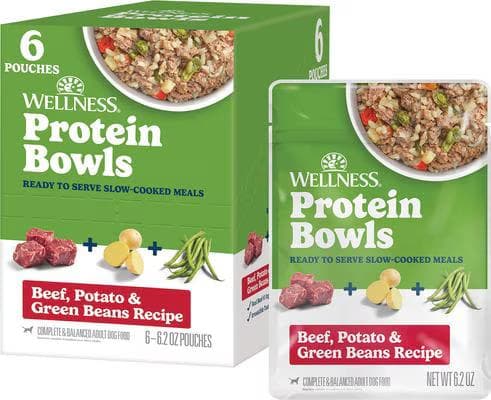
Slow-cooked, complete and balanced wet dog food with real beef as the #1 ingredient. Case of six 6.2 oz pouches.
Webvet may earn a commission when you click through to Chewy, at no extra cost to you.
The two methods food can be proven complete and balanced
AAFCO recognizes two different methods, and there's a meaningful difference between them.
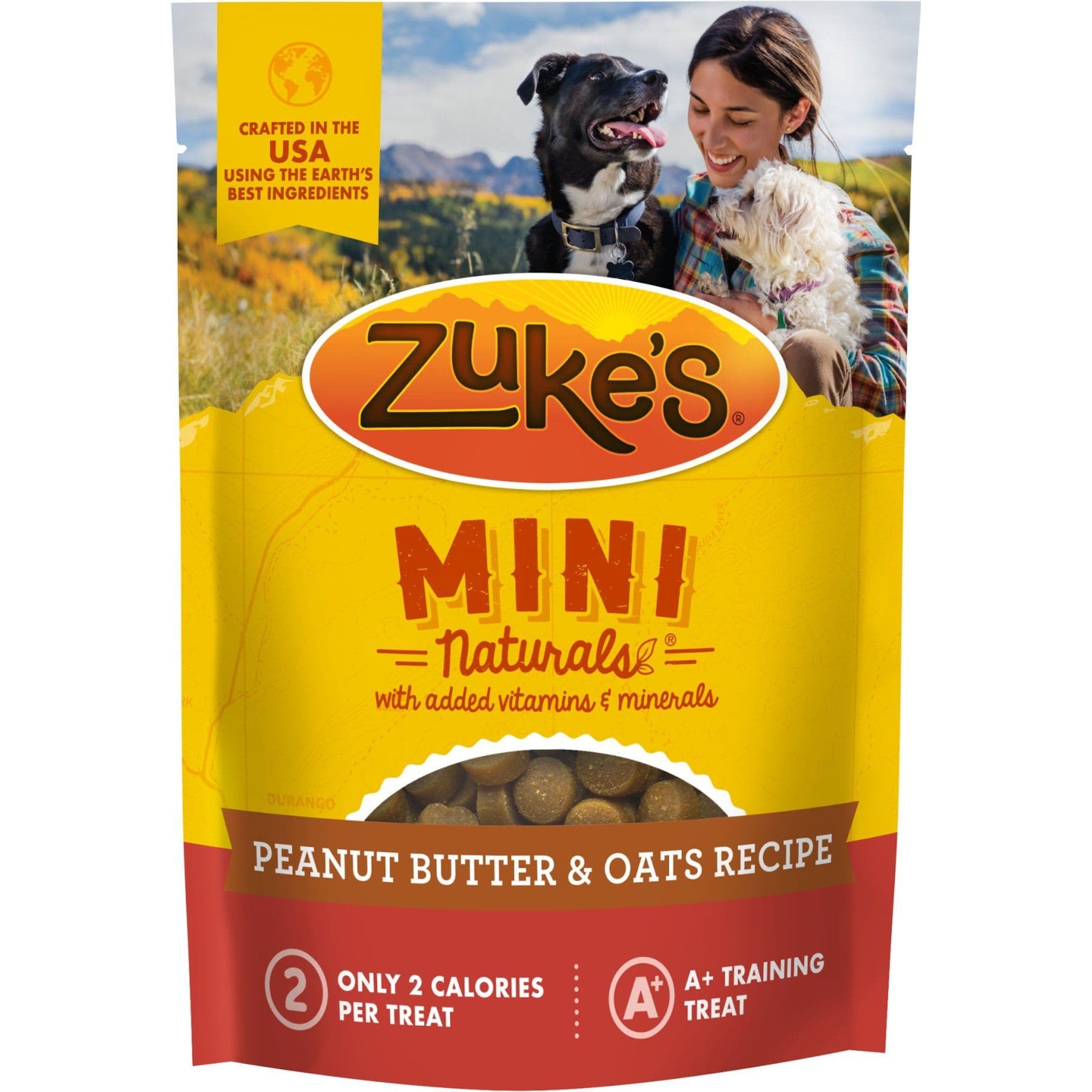
Soft, pea-sized training treats made with peanut butter and oats. Small enough to reward often while keeping treats inside the 10% of daily calories vets recommend.
Webvet may earn a commission when you click through to Chewy, at no extra cost to you.
What "formulated to meet" really means
Formulated foods are designed on paper. A nutritionist calculates the ingredient recipe so that the final product meets AAFCO's nutrient minimums on a per-nutrient basis. The food is then manufactured and typically tested (via chemical analysis) to verify it matches the formula.
Formulation is faster, cheaper, and more common, most dog foods on the market are formulated rather than feeding-trial-tested. A formulated food that's well-designed by a qualified nutritionist can be excellent. But the approval is based on nutrient math, not on dogs actually thriving on the food.
What "feeding trial" really means
Feeding trial foods have been tested on real dogs under AAFCO-regulated conditions. A minimum number of dogs must eat the food as their sole diet for a defined period (26 weeks for adult maintenance), and specific health markers must remain within acceptable ranges throughout the trial.
Feeding trials are the gold standard because they test the food as it's actually digested and used by dogs, not just the nutrient profile on paper. They're expensive and time-consuming, which is why fewer foods carry this statement. When a food says "animal feeding tests using AAFCO procedures substantiate" or similar, it's a meaningful signal of quality control.
The World Small Animal Veterinary Association (WSAVA), the most widely respected voice in veterinary nutrition globally, considers feeding trial validation one of the key markers of a well-researched food.
AAFCO nutrient profiles: the minimums a complete food must meet
AAFCO's nutrient profiles spell out minimum (and sometimes maximum) levels for protein, fat, minerals, vitamins, and specific amino acids and fatty acids. These minimums are the floor, a food below them cannot be marketed as complete and balanced.
Life stage matters
Dogs have different nutrient requirements at different life stages, and the AAFCO statement must specify which stage the food is complete for:
- Adult maintenance, healthy adult dogs not in growth, reproduction, or heavy work. Protein minimum: 18% on a dry matter basis.
- Growth and reproduction, puppies, pregnant or nursing dogs. Protein minimum: 22.5% on a dry matter basis. Also tighter requirements for calcium, phosphorus, and other growth-critical nutrients.
- All life stages, meets the requirements for both adult maintenance AND growth/reproduction. Can be fed to any healthy dog of any age, though it's essentially a growth formula.
- Supplemental feeding only, NOT complete and balanced. This is toppers, treats, and some specialty foods. Can't be used as a sole diet.
Feeding an adult-maintenance food to a puppy can cause real harm. Puppies, especially large-breed puppies, have specific calcium-to-phosphorus ratio requirements that adult foods don't guarantee. Always feed a puppy a food labeled for "growth" or "all life stages."

The key nutrients and why they're regulated
The AAFCO profile covers dozens of nutrients. The most important categories:
- Crude protein and specific amino acids, building blocks for muscle, enzymes, and immune function
- Fats and essential fatty acids (linoleic acid, EPA/DHA), energy, skin, coat, cognitive function
- Calcium and phosphorus (and their ratio), critical for bone development in puppies
- Vitamins A, D, E, K, and the B-complex, countless metabolic functions
- Minerals, iron, copper, zinc, iodine, selenium, and more, each with specific roles
When any one of these is insufficient, or sometimes, when it's in excess, dogs develop deficiency or toxicity diseases over weeks to months. The AAFCO profile exists to prevent exactly that.
Is AAFCO-approved the same as vet-approved?
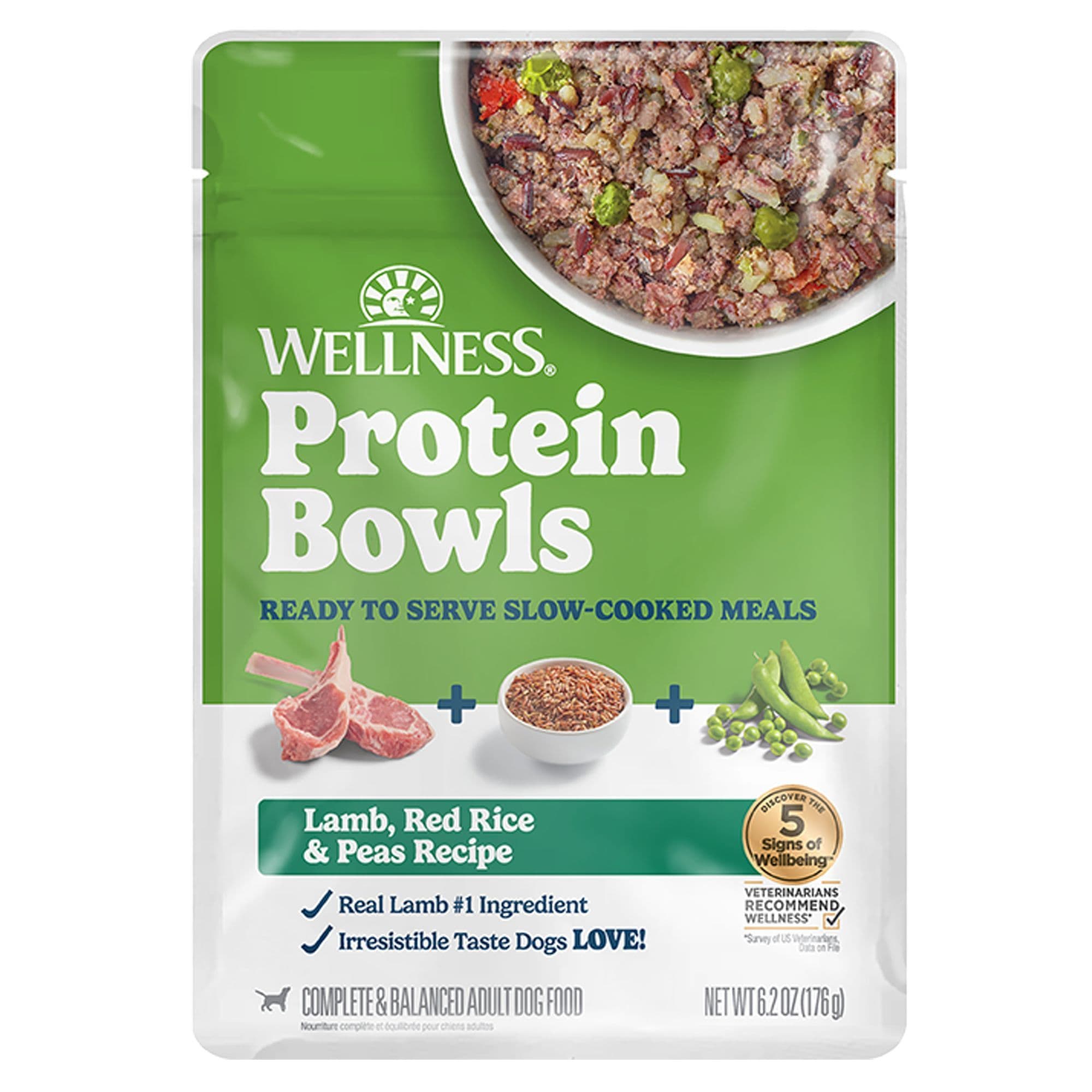
Slow-cooked, complete and balanced wet dog food with real lamb as the #1 ingredient. Single 6.2 oz pouch.
Webvet may earn a commission when you click through to PetSmart, at no extra cost to you.
No, and AAFCO itself doesn't actually "approve" individual foods. AAFCO sets the standards; manufacturers self-verify that their foods meet those standards through either formulation or feeding trials. State feed regulators spot-check compliance after the fact.
"Vet-approved" is a marketing phrase with no standardized meaning. It might mean the brand has veterinarians on staff, or it might just mean that the marketing team ran the copy past one vet. A meaningful veterinary endorsement comes from the WSAVA Global Nutrition Committee guidelines, which recommend choosing brands that:
- Employ a full-time qualified nutritionist (ideally a board-certified veterinary nutritionist, DACVN)
- Conduct feeding trials for their foods
- Publish detailed nutrient information beyond what's required
- Own and operate their own manufacturing facilities
These signals are more meaningful than any "vet-approved" claim on a bag.
How to read a dog food label for nutritional completeness
Here's the sequence to work through on any bag:
1. The nutritional adequacy statement
First, confirm the AAFCO statement exists and specifies the right life stage for your dog. Without this, the food isn't complete, stop here and pick a different food.
2. The guaranteed analysis
This panel lists minimum percentages of crude protein and crude fat, and maximum percentages of crude fiber and moisture. It also sometimes lists specific nutrients the brand wants to highlight (omega fatty acids, glucosamine, calcium).
Compare coverage choices for your pet, then request a quote directly on Lemonade.
- Check a price for your pet
- Review available coverage choices
- See the terms before you decide
Eligibility, waiting periods, limits and exclusions apply.
Webvet may earn a commission when you click through to Lemonade, at no extra cost to you.
Use this to compare foods of the same type (dry vs dry, wet vs wet). Remember: to compare wet and dry foods fairly, you need to calculate dry matter basis by subtracting the moisture percentage.

3. The ingredient list (first five ingredients matter most)
Ingredients are listed in descending order by weight before cooking. The first five ingredients give you the most meaningful picture of what the food really is:
- Named animal proteins (chicken, beef, lamb, salmon) are ideal as the first ingredient
- Named whole grains or starches (brown rice, sweet potato, quinoa) are better than generic "grain"
- Short, recognizable lists are generally better than long ones full of unfamiliar additives, though some additives (specific vitamins, taurine, fish oil) are legitimate inclusions
A well-made complete-and-balanced food is straightforward to read. For instance, the Wellness Protein Bowls line uses a pattern that's easy to evaluate, a named protein as the first ingredient, visible vegetables and wholesome grains, no meat by-products, wheat, corn, or artificial colors, flavors, or preservatives, and an AAFCO statement confirming complete and balanced for adult dogs. That's the pattern to look for on any bag.
4. The feeding guidelines
Slow-cooked, complete and balanced wet dog food with real beef as the #1 ingredient. Case of six 6.2 oz pouches.
Webvet may earn a commission when you click through to Chewy, at no extra cost to you.
A complete-and-balanced food will include feeding guidelines based on your dog's weight. These are starting points, not prescriptions, adjust based on your dog's body condition and activity level. If a food has no feeding guidelines, that's a red flag.
Complete and balanced vs "supplement," "topper," or "treat"
Complete and balanced vs supplements, toppers, and treats
| Product Type | AAFCO Complete & Balanced? | Role in the Diet |
|---|---|---|
| Complete and balanced dog food | Yes, carries the AAFCO statement | Can be fed as the sole diet for the specified life stage |
| Food topper / mixer | Usually no | Meant to be added on top; keep under 10% of daily calories |
| Dietary supplement | No | Targets a specific nutrient (e.g., joint, skin, GI); vet-directed use |
| Dog treat | No | Training, bonding, enrichment; 10% rule applies |
| Therapeutic / prescription diet | Yes, for the targeted condition and life stage | Use only under veterinary supervision |
Not every dog food product on the shelf is designed as a sole diet. Treats, toppers, mixers, and supplements are labeled "for supplemental or intermittent feeding only", they don't meet AAFCO's complete-and-balanced profile and shouldn't make up the bulk of your dog's diet.

Treats should stay a measured extra rather than displacing the complete and balanced main diet. WebVet’s guide to healthy dog treats shows how to compare calories, ingredients, purpose, and dog-specific fit while keeping extras within a sensible daily allowance.
As a general rule:
- Complete-and-balanced food, can be 100% of the diet
- Toppers and mixers, limit to no more than 10% of daily calories (so you don't unbalance the complete diet underneath)
- Treats, limit to no more than 10% of daily calories for health
- Home-cooked food, usually not complete-and-balanced unless specifically formulated by a veterinary nutritionist
Adding too much "supplemental" food (even high-quality toppers) to a complete-and-balanced diet can dilute the balance in ways that cause problems over months to years.
Also available at PetcoWhat if my dog needs a therapeutic or prescription diet?
Dogs with specific medical conditions, kidney disease, pancreatitis, food allergies, inflammatory bowel disease, liver disease, urinary stones, diabetes, severe obesity, often need therapeutic diets that are specifically formulated for their condition. These diets are typically sold through veterinarians and may not match the AAFCO profile for healthy dogs.
A therapeutic diet is not just a marketing label, it's a clinical tool. If your veterinarian prescribes a therapeutic diet, stick with it. Don't swap to a cheaper "over-the-counter" food that "looks similar on the label." The specific nutrient adjustments in a therapeutic diet are usually what make it work.
Red flags that suggest a food is NOT complete and balanced
Frequently Asked Questions
Is all commercial dog food considered complete and balanced dog food?
No. Most main-meal dog foods sold in pet stores and supermarkets are complete and balanced (they must carry an AAFCO statement to be marketed as a full meal), but many treats, toppers, broths, jerky products, and specialty foods are not. Always check the label.
Is AAFCO an official government agency?
No. AAFCO is a non-governmental organization made up of state and federal feed regulatory officials. It sets the nutrient profiles and labeling standards that states and the FDA enforce. The FDA regulates pet food under broader food safety law; AAFCO provides the detailed nutrient standards.
What's the difference between AAFCO-approved and human-grade?
"Complete and balanced" (the AAFCO standard) is about nutritional adequacy. "Human-grade" is a specific AAFCO-regulated label meaning every ingredient and the manufacturing facility meet human-food standards. A food can be complete and balanced without being human-grade, and vice versa. Many human-grade foods are also complete and balanced, but always check both claims on the label.
Is homemade dog food complete and balanced?
Usually not, unless specifically formulated by a board-certified veterinary nutritionist (DACVN). Even well-researched homemade recipes often have nutritional gaps that cause deficiencies over time. If you want to home-cook for your dog, work with a veterinary nutritionist, services like BalanceIT.com or the University of California Davis Nutrition Support Service can help you get a balanced recipe tailored to your dog.
How do I know if a food has passed AAFCO feeding trials?
Look for the phrase "Animal feeding tests using AAFCO procedures substantiate" in the nutritional adequacy statement. If the statement says "formulated to meet" instead, the food passed by calculation rather than feeding trial. Both are legitimate, but feeding-trial validation is considered a stronger signal of food quality.
The bottom line from a veterinarian
"Complete and balanced" is the baseline, not the ceiling. A food that carries an AAFCO statement for your dog's life stage is nutritionally adequate, meaning it won't cause deficiency disease. Beyond that minimum, food quality varies widely based on ingredient sourcing, protein quality, manufacturing standards, and whether the brand invests in feeding trials and veterinary nutrition research.
When you pick up a new bag of dog food, work through it in this order:
- AAFCO statement. Confirm it exists and names the right life stage for your dog. If it is missing, stop here and pick a different food.
- Guaranteed analysis. Compare like with like, dry against dry and wet against wet, and convert to a dry matter basis before comparing across types.
- Ingredient list. The first five ingredients carry most of the meaning, since ingredients are listed by weight before cooking.
- Feeding guidelines. Treat them as a starting point for your dog’s weight, then adjust based on body condition.
The information in this article is educational and not a substitute for veterinary care. For specific dietary recommendations, consult your veterinarian or a board-certified veterinary nutritionist.
Veterinarian · BVMS MRCVS
Dr. Pippa Elliott, BVMS, MRCVS, is a veterinarian with nearly 30 years of experience in companion animal practice. Dr. Elliott earned her Bachelor of Veterinary Medicine and Surgery from the University of Glasgow. She was also designated a Member of the Royal College of Veterinary Surgeons. Married with 2 grown-up kids, Dr. Elliott has a naughty Puggle named Poggle, 3 cats and a bearded dragon.
Related reading

Low Calorie Dog Treats: Calories and Portion Guide

Minimally Processed Dog Food: What It Means and Why It Matters

Best Soft Dog Food for Senior Dogs: Gentle, Nutrient-Dense Options
