What Is the Best Protein for Senior Dogs (and Active Dogs)?
High-protein dog food is a powerful tool for maintaining muscle, supporting recovery, and managing weight in senior and active dogs. A vet explains what counts as high protein, which dogs benefit, and how to choose the best protein for senior dogs.

BVMS MRCVS

This article contains affiliate links. Webvet may earn a commission when you buy through them, at no extra cost to you.
The best protein for senior dogs and active dogs is one of the most common questions in nutrition consults. "High-protein" is one of the most-used labels on pet food shelves, and for good reason: for many dogs, a higher-protein diet is a real clinical upgrade, more muscle maintenance, better body condition, better recovery. The key is knowing what the label actually means, because the word itself is easy to misread at point-of-sale.
As a veterinarian, here's a straightforward breakdown of what actually counts as high-protein dog food, which dogs genuinely benefit, which dogs should avoid it, and how to pick a quality product, whether your dog is a senior slowing down, an athlete in his prime, or somewhere in between.
- 1"High protein" in dog food has no official definition, but 30%+ crude protein (dry matter basis) is a reasonable practical threshold.
- 2Active, working, and senior dogs benefit the most, higher protein preserves lean muscle during exercise, recovery, and aging.
- 3Healthy kidneys handle high protein fine. The old "high protein harms kidneys" warning applies to dogs with already-diagnosed kidney disease, not healthy adults.
- 4Look for named animal proteins (chicken, beef, salmon) as the top ingredients, an AAFCO complete-and-balanced statement, and the right life stage.
- 5Always transition gradually over 7–10 days to avoid GI upset when switching to a higher-protein formula.
What counts as "high protein" in dog food?
There's no regulatory definition of "high-protein" on a dog food label. It's a marketing term. To use it meaningfully, you need to understand the baseline first.
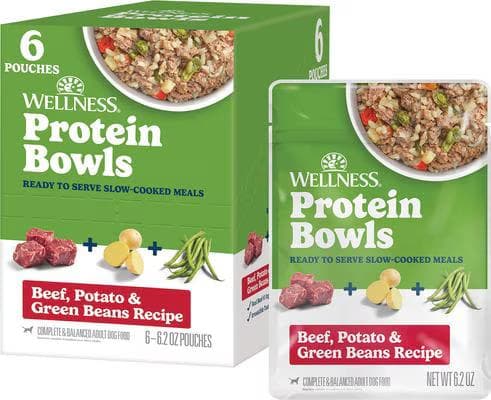
Slow-cooked, complete and balanced wet dog food with real beef as the #1 ingredient. Case of six 6.2 oz pouches.
Webvet may earn a commission when you click through to Chewy, at no extra cost to you.

Crude protein percentages explained
"Crude protein" is the percentage of protein in the food by weight, as listed on the guaranteed analysis panel. The Association of American Feed Control Officials (AAFCO) sets minimum protein requirements:
- Adult maintenance: minimum 18% crude protein on a dry matter basis
- Growth and reproduction (puppies, pregnant/nursing dogs): minimum 22.5% crude protein on a dry matter basis
These are minimums, the floor below which a food cannot be marketed as complete and balanced. Many standard commercial diets sit at 20 to 25% for adults. "High-protein" dog foods usually land at 30% or above for dry food, and some performance formulas reach 35% or higher.
For wet food and shelf-stable fresh food, raw percentages are much lower because most of the weight is water, a wet food at 10% crude protein on the label can be equivalent to a dry food at 35% on a dry matter basis.
The AAFCO minimums, and why "high protein" goes well above them
The 18% minimum is designed to prevent deficiency, not to define an optimum. Research and clinical experience both suggest that many adult dogs thrive at protein levels closer to 25 to 30%, and active, working, and senior dogs often benefit from even higher levels. The minimum is a floor; it's not a target.
Why dry matter basis matters when comparing foods
A dry food at 30% crude protein and a wet food at 10% crude protein look dramatically different on the label, but on a dry matter basis (subtracting water), they can be nearly identical. To compare any two foods apples-to-apples, use the dry matter calculation:
Dry matter protein % = (Crude protein % ÷ (100 − Moisture %)) × 100
For a wet food at 10% crude protein and 78% moisture: 10 ÷ (100 − 78) × 100 = 45% protein on a dry matter basis. That's genuinely high-protein, it just doesn't look that way on the label.
Do dogs actually need high-protein food?
Dogs are facultative carnivores, they evolved from wolves and still thrive on primarily animal-based diets, but they can also digest carbohydrates and plant proteins reasonably well. They genuinely need protein for:
- Building and maintaining muscle
- Producing enzymes, hormones, and antibodies
- Maintaining skin, coat, and nail health
- Energy (though fat and carbohydrates are more efficient energy sources)
Most healthy adult dogs do well on moderate-protein commercial diets. The question of whether "high protein" is better depends entirely on the individual dog.
Which dogs benefit most from a high-protein diet
Active and working dogs
Dogs who work (herding, hunting, sled pulling, search and rescue, police/military) or who do serious recreational activity (agility, flyball, daily off-leash running) have higher protein needs than couch dogs. Protein supports muscle repair, recovery, and sustained energy. Performance diets at 30 to 35% crude protein (dry basis) are common and appropriate for these dogs.
Slow-cooked, complete and balanced wet dog food with real beef as the #1 ingredient. Case of six 6.2 oz pouches.
Webvet may earn a commission when you click through to Chewy, at no extra cost to you.

Senior dogs
This is the area where veterinary thinking has shifted the most in recent years. Older conventional wisdom held that senior dogs needed less protein to "protect the kidneys." Current research suggests the opposite, healthy senior dogs often benefit from more high-quality protein, not less.
The reason: aging dogs naturally lose muscle mass (a condition called sarcopenia), and adequate, high-quality protein is the most effective countermeasure. Unless a senior dog has diagnosed kidney disease (which is different), reducing protein can accelerate muscle loss and frailty.
For healthy senior dogs, a diet providing 28 to 32% crude protein (dry basis) with high-quality animal protein sources is often ideal.
Dogs recovering from illness or surgery
Post-surgical, post-illness, or post-injury dogs have increased protein needs during recovery. A higher-protein diet supports wound healing, immune function, and the rebuilding of tissue. Your veterinarian may recommend a temporary shift to a recovery or higher-protein formula while healing is underway.
Dogs needing weight management
High-protein, moderate-fat diets can help dogs lose weight without losing muscle. Protein has a higher thermic effect (more calories are used digesting it) than fat or carbohydrates, and it helps dogs feel full at lower calorie intakes. Specifically formulated high-protein, low-fat diets exist for this purpose, and are often more effective than calorie-restricted lower-protein diets.
Puppies (special considerations)
Growing puppies need more protein than adult dogs (minimum 22.5% AAFCO vs 18%), but they also need specific calcium and phosphorus ratios that aren't always present in "high-protein performance" adult formulas. Feed puppies a food specifically labeled for growth or all life stages, not an adult high-protein formula. Large-breed puppies in particular need carefully controlled calcium levels, not just high protein.
Which dogs should avoid high-protein diets
High-protein food for senior dogs: the real story
Because the outdated "seniors need less protein" idea is still common, it's worth a direct answer: healthy senior dogs generally do better on higher-protein diets, not lower ones.

What you actually want in a senior dog's food:
- High-quality animal protein as the primary source (30% or more crude protein on a dry basis is reasonable for a healthy senior)
- Slightly lower calorie density if your senior is less active (to prevent weight gain)
- Joint support ingredients, glucosamine, chondroitin, omega-3 fatty acids (especially EPA and DHA from fish oil)
- Moderate fiber for digestive regularity
- Lower sodium if your senior has cardiac issues
Unless your dog has been diagnosed with kidney disease, don't reduce protein for "preventive" reasons. Talk to your vet about bloodwork if you're concerned about kidney function rather than adjusting protein empirically.
Best Protein for Senior Dogs: Quick Comparison
Every senior dog is an individual, but the strongest options share the same backbone: named animal protein first, complete-and-balanced formulation, and a texture your dog enjoys. Fresh, gently cooked options such as Wellness Protein Bowls stand out here, pairing high-quality named proteins with the palatability and moisture that aging dogs appreciate. Use this quick comparison to match a protein pick to your dog's needs, then confirm the fit with your veterinarian.
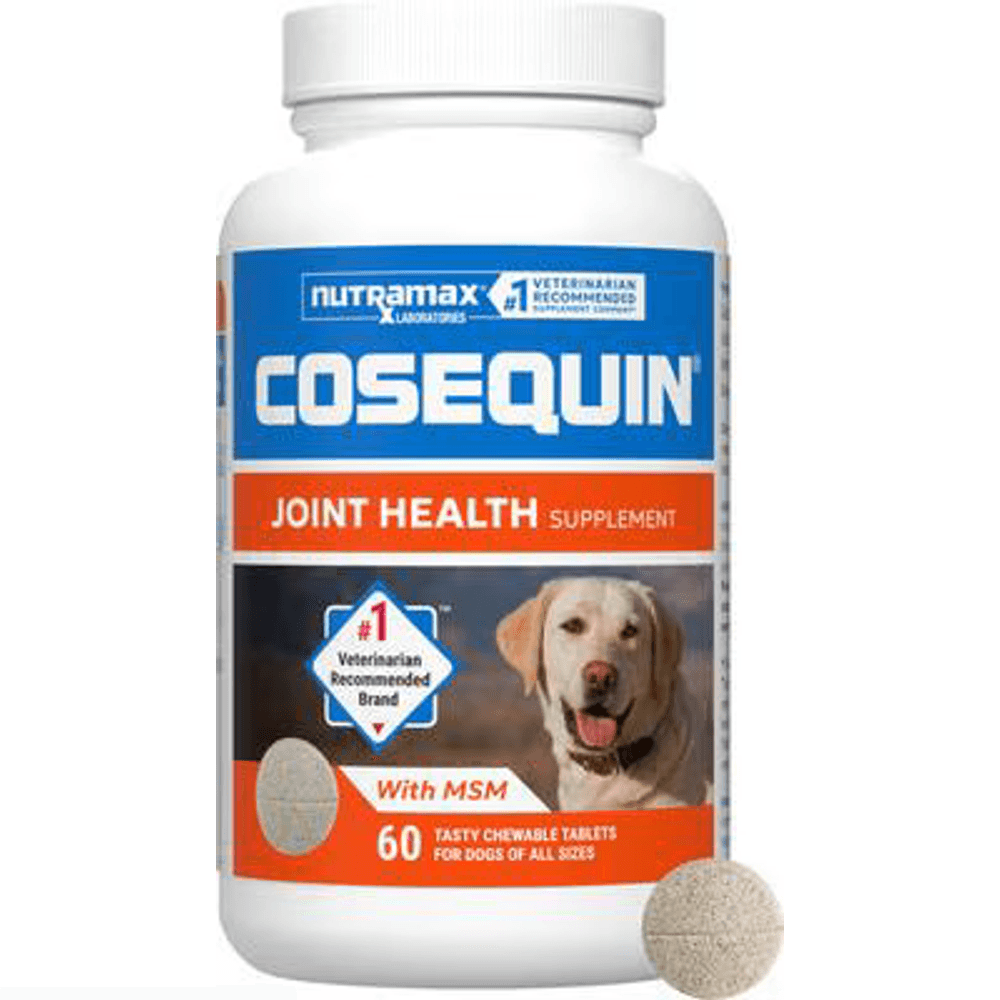
The number-one veterinarian-recommended joint supplement brand. Glucosamine, chondroitin, and MSM support cartilage and cushion the joints, easing the stiffness and hind-end weakness that can leave an older or arthritic dog trembling.
Webvet may earn a commission when you click through to Chewy, at no extra cost to you.
| Pick | Format | Why It Works for Seniors | Best For |
|---|---|---|---|
| Wellness Protein Bowls | Fresh, shelf-stable bowls | Named animal protein first, complete and balanced, soft high-moisture texture that is easy on older teeth | Seniors and active dogs who thrive on a fresh, protein-forward meal |
| Senior-specific high-protein kibble | Dry | Concentrated protein with joint-support extras; easy to store and measure | Everyday feeding on a budget with healthy teeth |
| High-protein wet food | Canned | High dry-matter protein plus moisture for hydration and palatability | Picky eaters and seniors needing extra moisture |
| Fresh-cooked recipes | Refrigerated or frozen | Highly digestible whole-food protein with strong palatability | Dogs on a dedicated fresh-food routine with fridge space |
| Freeze-dried raw toppers | Freeze-dried | Very high protein density; boosts intake for dogs whose appetite is fading | Boosting protein in an existing balanced diet |
What makes a quality high-protein dog food
Named animal proteins as the first ingredients
The first two to three ingredients should be specific named animal proteins, chicken, beef, salmon, lamb, turkey, duck, not "meat meal," "animal protein," or "meat by-products." Named proteins are traceable and typically higher quality.
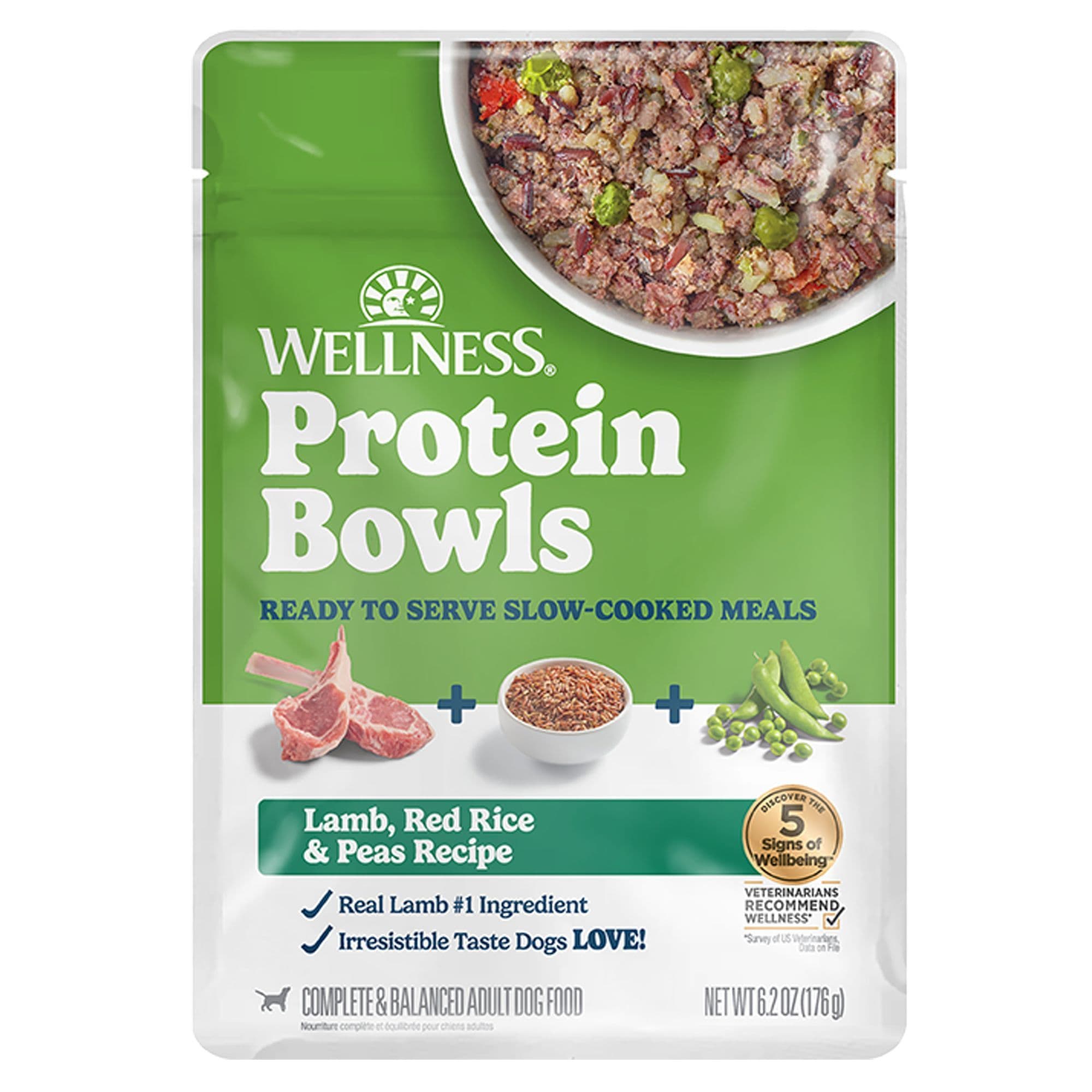
Slow-cooked, complete and balanced wet dog food with real lamb as the #1 ingredient. Single 6.2 oz pouch.
Webvet may earn a commission when you click through to PetSmart, at no extra cost to you.
Protein quality and digestibility
Not all proteins are equal. Animal proteins are generally more digestible and more complete in amino acids than plant proteins for dogs. A food with 30% crude protein from chicken, eggs, and fish is nutritionally better than a food with 30% crude protein padded with pea protein, potato protein, and corn gluten meal.
Balanced with healthy fats and fiber
High-protein is one piece of a balanced diet, not the whole story. Look for:
- 10 to 18% fat for most adult dogs (higher for performance dogs, lower for weight management)
- Named fat sources, chicken fat, salmon oil, sunflower oil
- Fiber sources, sweet potato, brown rice, oats, beet pulp, peas
- Omega-3 fatty acids, ideally from fish, flaxseed, or algae sources
Complete and balanced (AAFCO statement)
Every dog food you feed as a full meal must carry an AAFCO complete-and-balanced statement for the appropriate life stage. Without that statement, the food is not nutritionally complete regardless of its protein percentage.
Types of high-protein dog food
Whether you're feeding high-protein dry dog food (kibble) or high-protein wet dog food (canned or shelf-stable fresh), the principles are the same: compare crude protein on a dry-matter basis, verify the named animal proteins sit at the top of the ingredient list, and match the AAFCO statement to your dog's life stage.

High-protein dog food types compared
| Type | Typical Protein % (DMB) | Best For |
|---|---|---|
| High-protein dry kibble | 28–40% | Everyday feeding; budget-friendly; easy to store and measure |
| High-protein wet / shelf-stable fresh | 35–50% | Picky eaters, seniors, dogs needing moisture and palatability |
| Freeze-dried raw / air-dried | 40–55% | Active and working dogs; minimally processed feeding style |
| Fresh-cooked (frozen subscription) | 35–45% | Dogs on a dedicated fresh-food routine with fridge space |
High-protein dry kibble
Most common and typically the most cost-effective. Performance and sport formulas routinely hit 30 to 35% crude protein. Good for daily feeding at scale, especially for larger active dogs.
High-protein wet and shelf-stable fresh food
Wet and shelf-stable fresh foods usually have higher dry-matter protein content than the equivalent kibble because they can accommodate more real meat without needing binding starches. Wellness Protein Bowls, for example, are built around protein as the #1 ingredient, the product name itself reflects the design philosophy. Slow-cooked, shelf-stable pouch formats like this deliver high-quality protein in a high-palatability package, which can be particularly useful for senior dogs whose appetites have softened.
Freeze-dried raw and air-dried foods
Freeze-dried and air-dried foods concentrate protein dramatically, because most of the water is removed, crude protein percentages on the label can be 40 to 50%. These foods are typically the most expensive per calorie but offer very high-quality protein and minimal processing. They can be fed as a full meal, rehydrated, or used as a topper.
How to switch your dog to a high-protein diet safely
A protein change is still a diet change. Sudden switches can cause diarrhea, vomiting, or gassiness even when the new food is higher quality. Use a 7 to 10 day transition:

- Days 1–3: 25% new food, 75% old food
- Days 4–6: 50% new, 50% old
- Days 7–9: 75% new, 25% old
- Day 10+: 100% new food
Watch for digestive upset, skin issues, or changes in stool during the transition. If your dog has a sensitive stomach, stretch the transition to 14 days.
Frequently Asked Questions
Is high-protein dog food good for all dogs?
For healthy dogs, yes, most do well on diets with 25 to 35% crude protein on a dry matter basis. Exceptions include dogs with advanced kidney disease, certain liver conditions, and specific urinary conditions. Talk to your vet if your dog has a known medical condition before switching.
How much protein should a senior dog get?
Healthy senior dogs generally benefit from the same or slightly higher protein levels as adult dogs, roughly 28 to 32% crude protein on a dry matter basis from high-quality animal sources. The idea that seniors should automatically eat lower-protein food has been largely retired in the veterinary nutrition literature.
Can too much protein hurt my dog's kidneys?
In healthy dogs, no, there is no strong evidence that high-protein diets damage kidneys. Dietary protein restriction is a treatment for existing advanced kidney disease, not a prevention strategy for healthy dogs. If you're worried about your dog's kidney health, ask your vet for bloodwork rather than empirically lowering protein.
What protein percentage counts as "high"?
For dry food, 30% crude protein or above is typically considered high. For wet food, it depends on moisture content, calculate dry matter protein percentage to compare fairly (see the formula earlier in this article). Some performance formulas reach 35% or higher; freeze-dried raw foods can reach 40 to 50%.
Is high-protein dry food or wet food better?
Neither is categorically better. Dry food is more convenient and cost-effective per calorie; wet and shelf-stable fresh food usually has higher palatability, higher moisture (which helps dogs prone to urinary issues), and often higher dry-matter protein. Many veterinarians recommend a combination, kibble as the base with wet or fresh food as a topper.
The bottom line from a veterinarian
High-protein dog food isn't a gimmick, and it isn't a universal upgrade. It's a tool. For active and working dogs, recovering dogs, dogs managing their weight, and healthy senior dogs, a higher-quality, higher-protein diet can be a genuinely better option than a standard commercial formula. For most other healthy adult dogs, a moderate-protein complete-and-balanced diet works fine.
The specific protein percentage matters less than the quality of the protein. A food with 28% crude protein from chicken, eggs, and fish is a better choice than a food with 35% crude protein padded with plant protein concentrates.
If you're thinking about switching your dog to a higher-protein food, especially if your dog is a senior, managing weight, or recovering from something, a quick conversation with your vet will help you pick the right protein level and form factor for your specific dog.
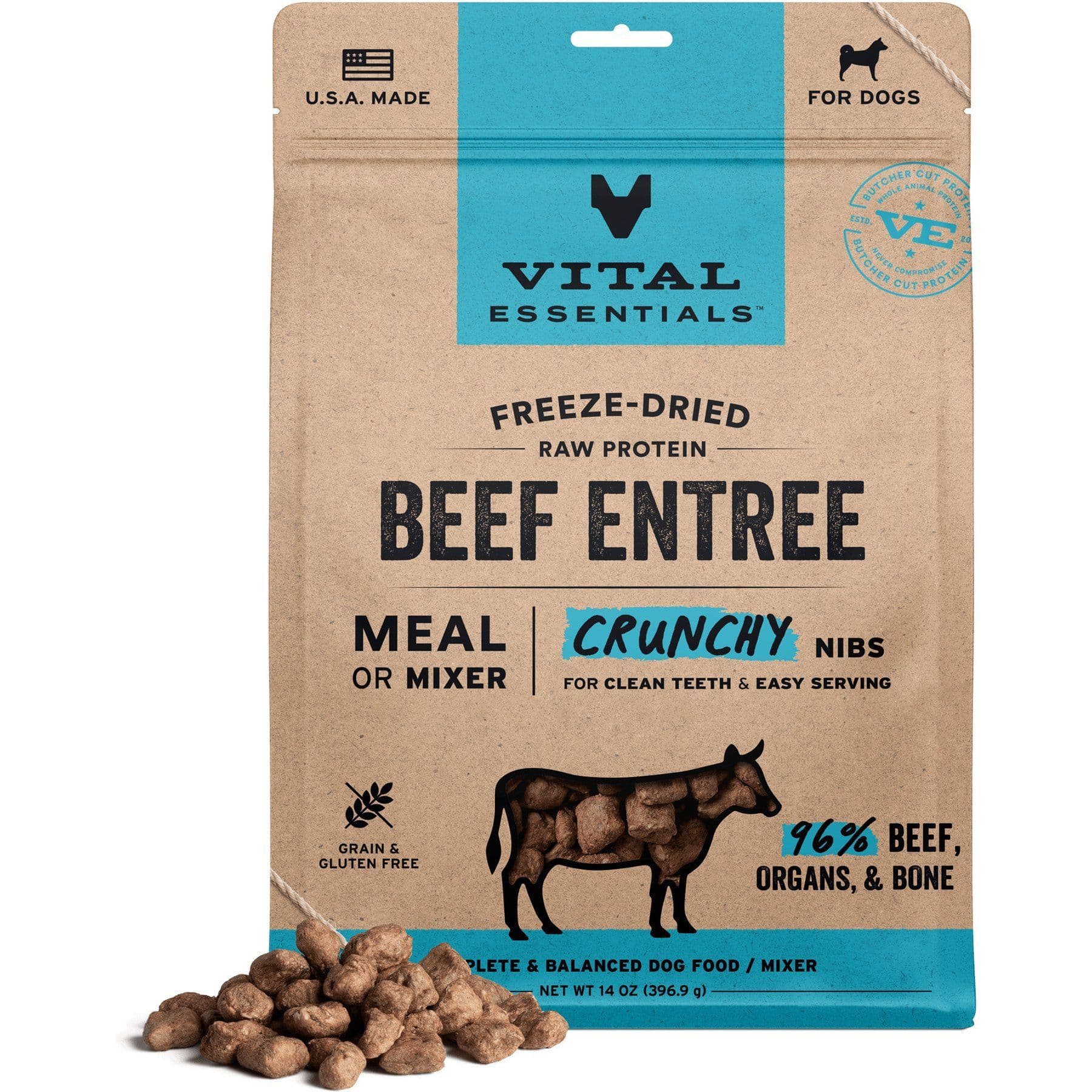
Freeze-dried raw beef nibs made from one protein and nothing else. A clean, high-value everyday reward or food topper, and an easy way to treat with real meat instead of table food.
Webvet may earn a commission when you click through to Chewy, at no extra cost to you.
The information in this article is educational and not a substitute for veterinary care. If your dog has a known medical condition, consult your veterinarian before making a significant dietary change.
Veterinarian · BVMS MRCVS
Dr. Pippa Elliott, BVMS, MRCVS, is a veterinarian with nearly 30 years of experience in companion animal practice. Dr. Elliott earned her Bachelor of Veterinary Medicine and Surgery from the University of Glasgow. She was also designated a Member of the Royal College of Veterinary Surgeons. Married with 2 grown-up kids, Dr. Elliott has a naughty Puggle named Poggle, 3 cats and a bearded dragon.
Related reading

Low Calorie Dog Treats: Calories and Portion Guide

Minimally Processed Dog Food: What It Means and Why It Matters

Best Soft Dog Food for Senior Dogs: Gentle, Nutrient-Dense Options
