How to Increase Dog Appetite at Mealtime: A Vet's Guide
A veterinarian explains the most common reasons dogs lose their appetite, when it's an emergency, what to feed a reluctant eater, and the mealtime strategies that actually help your dog start eating again.

BVMS MRCVS

This article contains affiliate links. Webvet may earn a commission when you buy through them, at no extra cost to you.
If you're wondering how to increase dog appetite at mealtime, whether your dog is leaving food in the bowl, walking away after a few bites, or eating less than usual, you're asking one of the most common questions veterinarians hear. A soft appetite in dogs (veterinarians call complete refusal anorexia, and reduced eating hyporexia) can come from dozens of causes, some minor and some serious. The right response depends entirely on which kind you're dealing with. For the separate question of when a dog stops eating entirely, the diagnostic side, with full medical differentials, our companion guide covers that in depth.
As a veterinarian, here's how to think through your dog's reduced appetite: when to worry, what to feed, and the mealtime techniques that actually move the needle on a reluctant eater.
- 1A dog refusing food for more than 24 hours (12 hours for a puppy or small dog) needs a vet visit, not a food switch, appetite loss is one of the earliest signs of illness.
- 2Warming wet food to about 100°F dramatically boosts aroma and is the single most effective trick for reluctant eaters.
- 3Switch to scheduled meals and a 15- to 20-minute eating window, free-feeding and between-meal snacks quietly kill appetite.
- 4High-aroma, visible-ingredient foods (shelf-stable fresh, slow-cooked wet, or quality canned) outperform plain kibble when a dog is off their food.
- 5If your dog has vomiting, diarrhea, lethargy, weight loss, pale gums, or abdominal swelling alongside appetite loss, go to the vet immediately.
How to Increase Dog Appetite: 7 Vet-Approved Steps
- Set a consistent meal schedule. Offer food at the same times daily and pick the bowl up after 15 to 20 minutes so mealtime has a rhythm your dog can count on.
- Warm the food. Heating wet food to about 100 degrees Fahrenheit releases aroma, the strongest natural appetite trigger for dogs.
- Add a fresh, high-aroma topper. A spoonful of a fresh-style food such as Wellness Protein Bowls mixed into the regular meal adds savory scent and texture that reluctant eaters find hard to resist.
- Serve meals in a calm spot. A quiet corner away from foot traffic, other pets, and loud noise helps anxious or distractible dogs settle in and eat.
- Take a short walk before meals. Light activity 20 to 30 minutes before feeding naturally stimulates hunger.
- Check the food itself. Confirm the kibble is fresh, stored in a sealed container, and within its best-by date; stale fats dull both smell and taste.
- Loop in your veterinarian early. If the soft appetite lasts more than a day, a quick check-up finds and fixes any underlying cause while it's still simple to treat.
How to improve dog appetite: first, rule out medical causes
A dog's appetite is a signal. When it drops, your job as a pet parent is to figure out whether the signal is minor (new food he doesn't love, hot weather, mild stress) or major (illness, pain, organ disease).
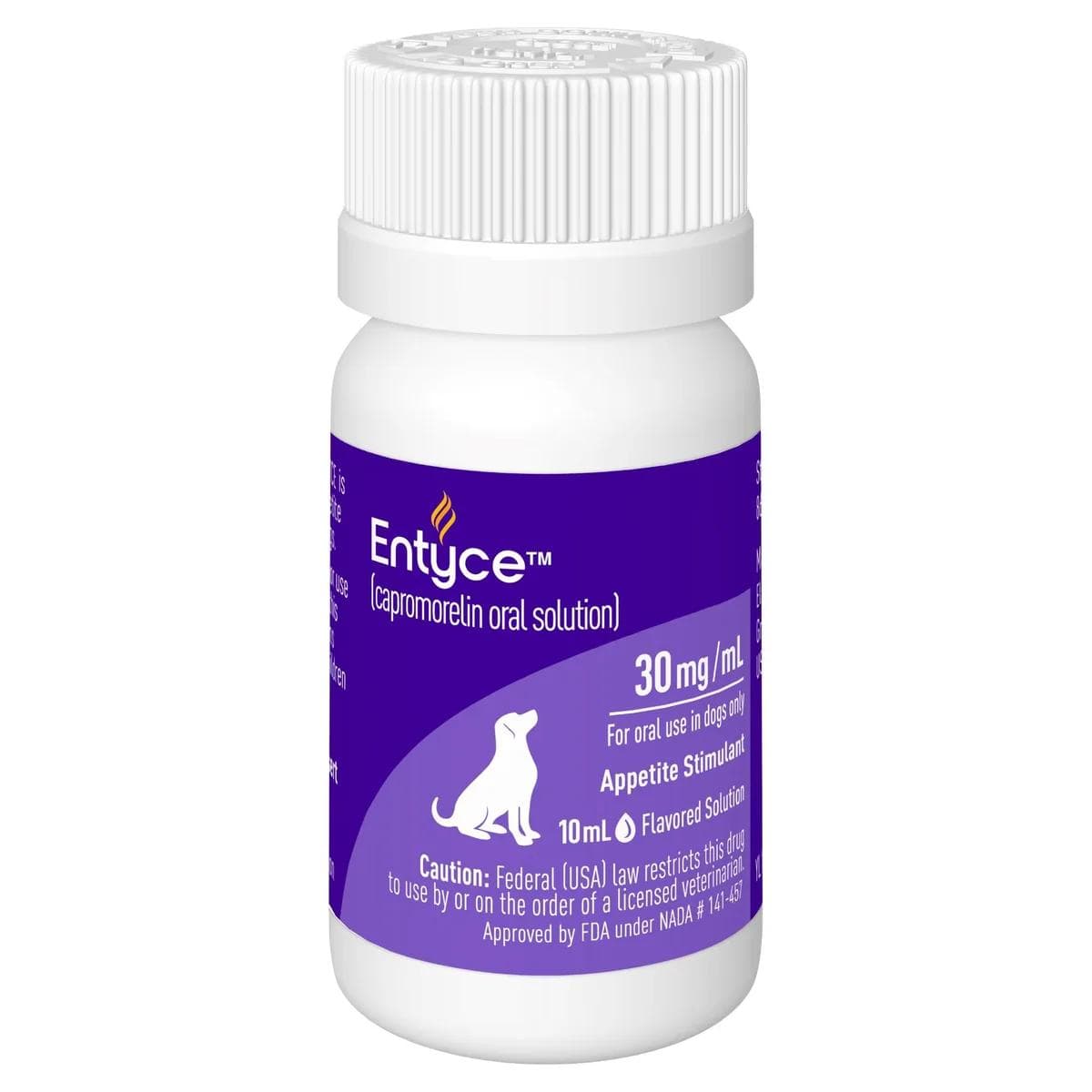
A prescription appetite stimulant vets reach for once they have worked out why a dog stopped eating. It restarts the appetite, it does not treat the cause, so it follows the diagnosis rather than standing in for one.
Webvet may earn a commission when you click through to Chewy, at no extra cost to you.
Common medical causes
Medical reasons a dog stops eating include:
- Dental disease, cracked teeth, abscesses, severe gingivitis. Dogs with mouth pain often drop food while trying to eat, drool more, or paw at their face.
- Gastrointestinal problems, nausea, vomiting, diarrhea, constipation, pancreatitis, foreign body obstruction, inflammatory bowel disease
- Kidney disease, especially in senior dogs, often causing nausea and a metallic taste that suppresses appetite
- Liver disease, reduces appetite and may cause a yellow tint to the gums or the whites of the eyes
- Infections, systemic infections and fevers suppress appetite the same way they do in people
- Pain, arthritis, back pain, recent injury. Pain anywhere in the body can reduce appetite.
- Cancer, especially in older dogs with gradual, unexplained appetite loss and weight loss
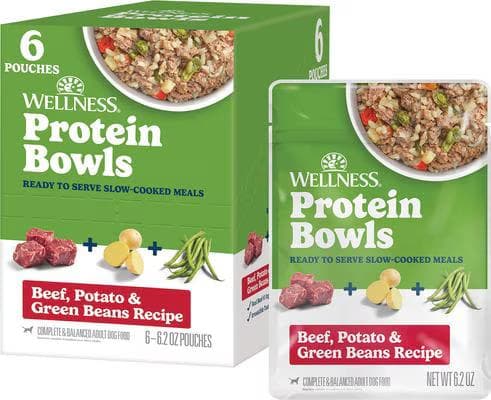
Slow-cooked, complete and balanced wet dog food with real beef as the #1 ingredient. Case of six 6.2 oz pouches.
Webvet may earn a commission when you click through to Chewy, at no extra cost to you.
- Medication side effects, many antibiotics, NSAIDs, and chemotherapy drugs cause nausea
- Recent vaccines or anesthesia, usually resolves within 24 to 48 hours
Common behavioral and environmental causes
Behavioral and environmental causes are usually less worrying but still real:
- A new food or brand change, dogs can be surprisingly resistant to change, even to "upgraded" food
- Spoiled food, stale kibble or wet food past its date tastes and smells off
- Heat, dogs eat less in hot weather, especially mid-day
- Stress, a new home, a new pet, a new baby, boarding, travel, or fireworks can all suppress appetite temporarily
- Being in heat or recent breeding, unspayed females often lose appetite around estrus
- Too many treats, a dog who gets substantial treats through the day may simply not be hungry at dinner
- Boredom, especially in dogs free-fed the same food for months or years
When is loss of appetite an emergency?
How long can a healthy dog go without eating?
A healthy adult dog can generally go three to five days without food if he's still drinking water, though this is not something you should let happen on purpose. After about 24 hours of not eating, most veterinarians want to examine the dog to rule out underlying disease. Puppies and small dogs have much tighter windows, 12 to 24 hours is the limit before you need medical attention.
Dogs who stop drinking water should be seen the same day. Dehydration progresses quickly and can cause significant organ stress in 24 to 48 hours.
What to feed a dog with a poor appetite
Best foods for a dog with a poor appetite
| Food Type | Why It Works | Best For |
|---|---|---|
| Bland, easily digestible | Gentle on the stomach; low aromas won't overwhelm a nauseous dog | Dogs recovering from GI upset or medications |
| Warm, aromatic wet food | Warming releases volatile aroma compounds that trigger appetite | Most reluctant eaters; seniors with a weak sense of smell |
| High-protein, visible-ingredient | Real meat pieces and strong meaty aroma restore interest in the bowl | Dogs bored with kibble; pickier eaters |
| Toppers and mixers | Adds flavor and moisture on top of the regular diet without a full switch | Dogs on a specific kibble who just need encouragement |
Once medical causes are ruled out (or treated, if present), the next lever is food itself. Different foods tempt different dogs.
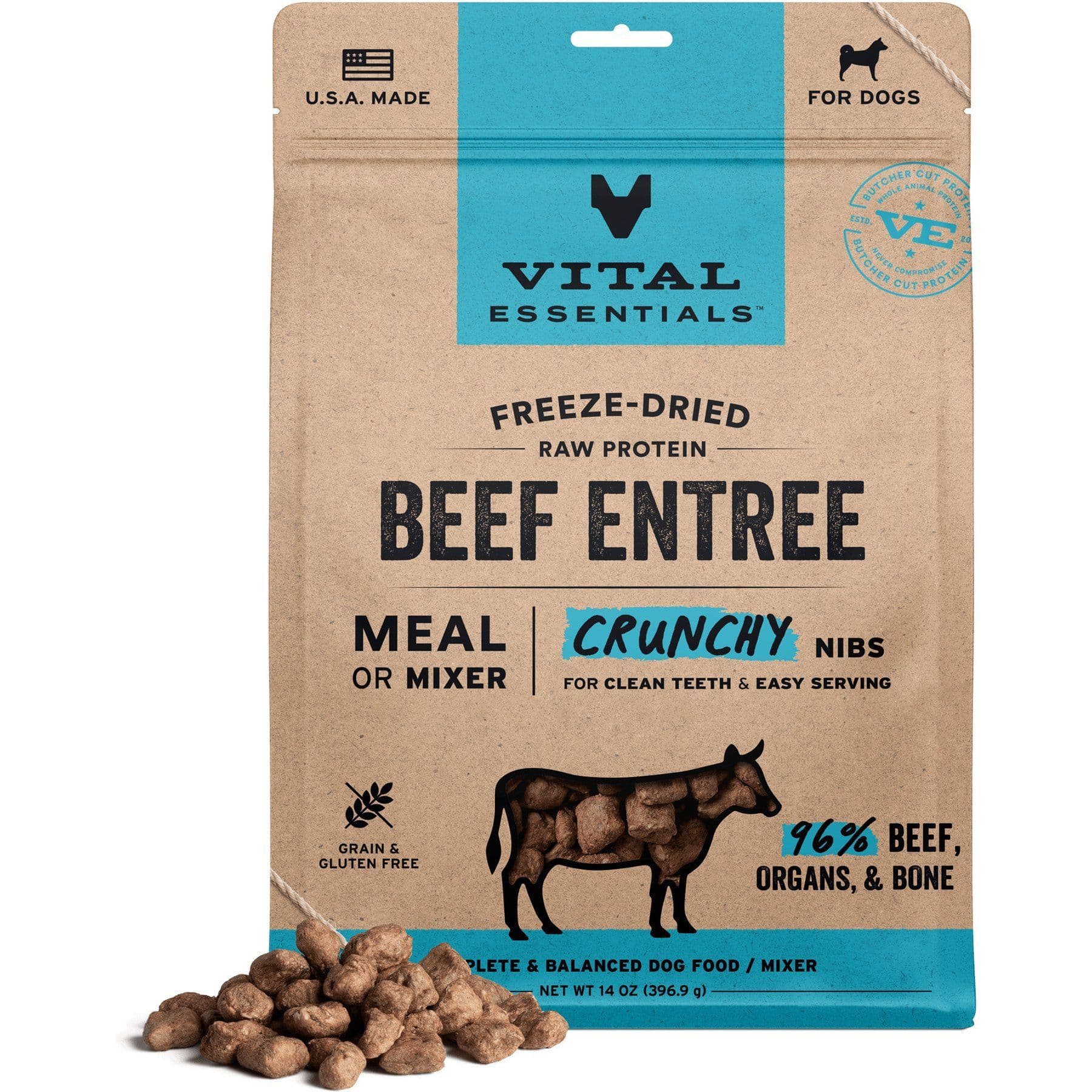
Freeze-dried raw beef nibs made from one protein and nothing else. A clean, high-value everyday reward or food topper, and an easy way to treat with real meat instead of table food.
Webvet may earn a commission when you click through to Chewy, at no extra cost to you.
Bland, easily digestible foods
For a dog who's been mildly ill, a bland diet is often the gentlest reset. A simple mix of plain boiled chicken breast (no skin, no seasoning) and plain cooked white rice, in a roughly 2-to-1 chicken-to-rice ratio, is the veterinary standard for a short-term bland diet. Serve small portions, warm. Use for 2 to 5 days, not longer, a bland diet is not nutritionally complete and shouldn't replace a balanced diet for more than a few days.
Warm, aromatic foods
Aroma is the single biggest driver of appetite in dogs. Warming wet food to about body temperature (100°F / 38°C) releases aromatic compounds and makes the food dramatically more appealing. Microwave in short 5-second bursts, stir thoroughly, and check the temperature with your finger before serving, hot spots can burn a dog's mouth and create lasting food aversion.
High-protein, visible-ingredient foods
Foods with a high proportion of real, named protein tend to have the strongest aroma and the best palatability factors for picky dogs. For a dog who's rejecting his usual food, switching to a gently cooked, visible-ingredient option can work where a simple brand swap failed. Shelf-stable fresh foods like Wellness Protein Bowls are built around this principle, real protein as the #1 ingredient, slow-cooked to preserve aroma, and packaged in a pouch so each serving is fresh. The product is designed for pet parents dealing with exactly this problem.
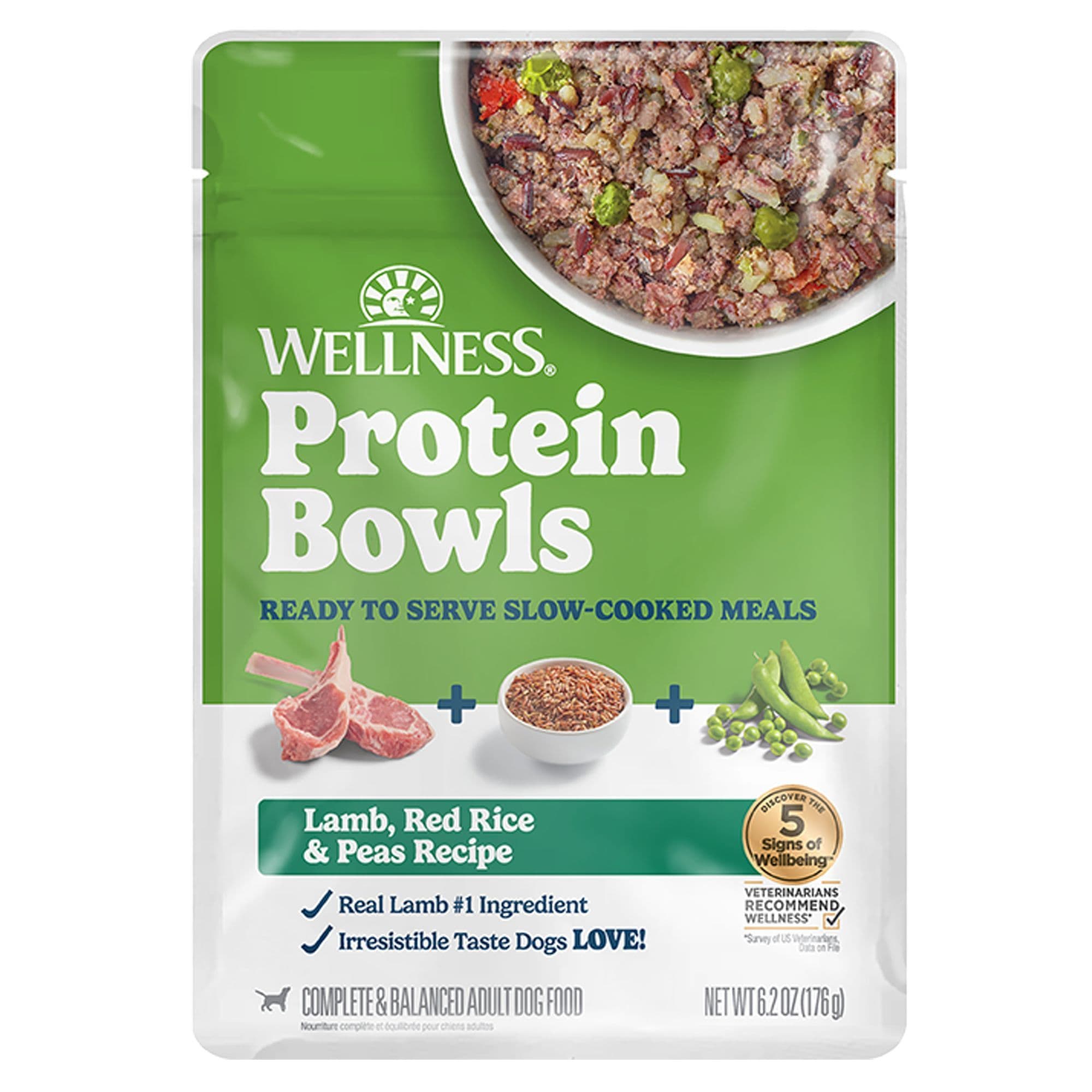
Slow-cooked, complete and balanced wet dog food with real lamb as the #1 ingredient. Single 6.2 oz pouch.
Webvet may earn a commission when you click through to PetSmart, at no extra cost to you.
Toppers and mixers
If your dog is still eating some of his usual food but needs encouragement, a small amount of wet food or a commercial topper mixed into his kibble can boost aroma and palatability without fully changing the diet. Keep toppers to no more than about 10 percent of daily calories so you don't unbalance a complete diet. Warm bone broth (sodium-free and onion-free) poured over kibble is another gentle option.
9 techniques to improve your dog's appetite at mealtime
1. Switch to scheduled meals
If you free-feed (leave food out all day), switch to two scheduled meals a day for adults or three to four for puppies. Put food down for 15 to 20 minutes, then pick it up. Most dogs learn the new schedule within a week and develop a stronger appetite at mealtimes.
2. Warm the food
Warm wet food to body temperature before serving. For dry kibble, a splash of warm (not hot) low-sodium chicken broth poured over the food releases aroma and adds moisture.
3. Add a palatable topper
A spoonful of wet food, a warm tablespoon of broth, a small portion of shelf-stable fresh food, or a sprinkle of freeze-dried raw can turn a rejected bowl of kibble into a meal your dog finishes.
4. Create a calm eating environment
Feed in a quiet, consistent spot. Some dogs, especially those in multi-pet homes, eat better when separated from other pets at mealtime. Remove stress and distractions.
5. Use food puzzles for distraction
For some dogs, making mealtime a game (slow-feeder bowls, puzzle feeders, snuffle mats) stimulates interest. This works especially well for high-drive breeds who find their regular bowl boring.
6. Hand-feed only when clinically indicated
Hand-feeding a sick or recovering dog, briefly, can help jumpstart appetite after illness. Don't make it a long-term habit, dogs who learn they only need to eat when hand-fed become harder to feed normally.
7. Walk before meals
A 15 to 20-minute walk before dinner often stimulates appetite. Physical activity and the natural routine of "come in, get fed" works for many dogs.
8. Check the food itself
Sniff the bag. Check the "best by" date. Store dry food in an airtight container and don't buy more than a month's supply at once, kibble loses palatability as it oxidizes. For wet food, check that cans or pouches aren't dented, bulging, or past their date. And once a wet-food can or pouch is opened, refrigerate the unused portion right away and use within 3–5 days.
9. Rotate proteins within the same brand
Slow-cooked, complete and balanced wet dog food with real beef as the #1 ingredient. Case of six 6.2 oz pouches.
Webvet may earn a commission when you click through to Chewy, at no extra cost to you.
Dogs get bored eating the same recipe every day. Rotating between two or three recipes within the same brand line (chicken one week, salmon the next, beef the next) keeps mealtime interesting while keeping the nutritional profile consistent.
Home remedies that actually have evidence behind them
Not every "natural appetite booster" online is based on anything. A few that do have reasonable support:
- Pumpkin, plain canned pumpkin (not pumpkin pie filling) is well-tolerated, adds fiber, and has a mild flavor most dogs accept. Useful as a topper for dogs with mild GI upset.
- Bone broth, low-sodium, onion-free, garlic-free bone broth is aromatic, highly palatable, and useful for adding moisture to kibble. Homemade or commercial dog-safe versions work.
- Ginger, a small amount of fresh ginger (roughly 1/8 teaspoon grated for a medium dog) may help with mild nausea. Check with your vet before using regularly.
- Probiotics, for dogs with appetite loss connected to GI upset, a veterinary-grade probiotic may help restore appetite over days to weeks.
What does not have evidence: essential oils rubbed on food, homeopathic appetite tinctures, CBD for appetite in otherwise healthy dogs (CBD has some evidence for anxiety and pain but not as a direct appetite booster in dogs).
When to ask your vet about an appetite stimulant
Prescription appetite stimulants exist. The most commonly used in dogs is capromorelin (Entyce), a liquid medication that directly stimulates hunger. It's used for dogs recovering from illness, surgery, or going through treatment for chronic diseases like cancer or kidney failure.
Appetite stimulants are not a first-line solution for a dog who's just picky. They're used when an underlying condition is suppressing appetite and your dog needs to eat to recover. Ask your vet if:
- Your dog has been eating poorly for more than 3 to 5 days despite home tactics
- Your dog has a diagnosed condition (kidney disease, cancer, recovery from surgery)
- Your dog is losing weight
Frequently Asked Questions
Why is my dog not eating, and when should I be concerned about their loss of appetite?
Call your vet if your adult dog refuses food for more than 24 hours, or if appetite loss comes with vomiting, diarrhea, lethargy, weight loss, changes in drinking, or any of the emergency signs listed above. For puppies and toy breeds, reduce that window to 12 hours. When in doubt, call, phone triage is quick and cheap compared to an emergency visit.
What is the most common cause of loss of appetite in dogs?
In healthy adult dogs, the most common causes are gastrointestinal upset (often from getting into something they shouldn't have eaten), stress or environmental change, and dental disease that's gradually made eating uncomfortable. In senior dogs, kidney disease becomes a much more common cause.
Why is my dog suddenly not eating?
Sudden appetite loss, especially if complete, is more concerning than a gradual decline. Common reasons include GI upset, nausea from a medication, a new food he doesn't like, or the first sign of an illness. If the appetite loss is sudden and comes with any other symptom, call your vet.
How do you treat a dog with loss of appetite?
Treatment depends on the cause. For a medical cause, treating the underlying condition (antibiotics for an infection, dental cleaning for mouth pain, fluids for kidney disease) usually restores appetite. For a behavioral or environmental cause, the techniques above, scheduled meals, warm food, toppers, reduced stress, typically work within days to a couple of weeks. Don't try to treat appetite loss at home for more than 24 to 48 hours without a vet check if your dog has other symptoms.
What can I give my dog to increase appetite naturally?
Warm wet food, plain canned pumpkin as a topper, low-sodium bone broth over kibble, or a switch to a more aromatic food (shelf-stable fresh, canned wet) are the natural options with the best evidence. Scheduled meals and a 15-minute pre-meal walk also help.
How long can a dog go without eating?
A healthy adult dog can go about 3 to 5 days without eating if still drinking water, though veterinary evaluation is recommended after 24 hours. Puppies, small dogs, and dogs with chronic conditions need attention within 12 to 24 hours.
Are there over-the-counter dog appetite stimulants that actually work?
Options available without a prescription are limited and mostly weak. The home remedies with the best evidence are plain canned pumpkin, low-sodium onion-free bone broth, a small amount of fresh ginger for mild nausea, and a veterinary-grade probiotic for GI-linked appetite loss. Products sold as "natural appetite boosters" typically contain B vitamins, herbs, and digestive enzymes, evidence for those is thin. The stronger appetite stimulants (capromorelin/Entyce, mirtazapine) are prescription-only and appropriate when appetite loss is tied to illness, surgical recovery, or a chronic condition like kidney disease or cancer. If your dog has been eating poorly for more than 3–5 days despite home tactics, talk to your vet rather than cycling through OTC supplements.
How long does a dog appetite stimulant take to work?
Prescription appetite stimulants act quickly. Capromorelin (Entyce), a daily oral liquid, typically produces a noticeable appetite increase within 1–2 hours of dosing with sustained effect across the treatment course. Mirtazapine, a human antidepressant used off-label in veterinary medicine for appetite, also works within a day, with effects lasting up to 3 days per dose. Home tactics (warming food, adding toppers, switching to shelf-stable fresh formats) often produce results within a single meal but require consistency over 1–2 weeks to reset the feeding routine. If a prescription stimulant isn't working after 48 hours, that's a signal to recheck the underlying cause with your vet rather than escalate the dose.
What's the difference between appetite loss and picky eating in dogs?
Appetite loss (what veterinarians call anorexia or hyporexia) is a clinical sign, your dog isn't eating when they normally would, regardless of what's offered. Picky eating is a behavioral pattern, your dog is eating, but holding out for specific foods or flavors. A practical test: offer a food you're confident your dog usually loves (plain boiled chicken, a favorite treat). A picky eater will usually take it. A dog with true appetite loss often won't. Appetite loss is the more serious signal and warrants a vet visit within 24 hours (12 hours for puppies or small-breed dogs); picky eating is usually a feeding-routine issue that resolves at home with scheduled meals and no between-meal snacks.
The bottom line from a veterinarian
A dog who stops eating is telling you something, and your job is to figure out what. Rule out medical causes first, any dog refusing food with other symptoms (vomiting, lethargy, changes in drinking, weight loss) needs veterinary attention, not a new bag of food.
For an otherwise healthy dog with a soft appetite, the winning combination is: scheduled meals, warm aromatic food, a palatable topper, and patience. Within a week or two of consistent routine, most healthy dogs eat reliably and enthusiastically again.
If your dog is on the recovery end of an illness or a chronic condition is pulling down his appetite, your vet has more tools, from therapeutic diets to prescription appetite stimulants, and can help you get him back to a healthy weight.
The information in this article is educational and not a substitute for veterinary care. If your dog isn't eating and has other symptoms, consult your veterinarian right away.
Veterinarian · BVMS MRCVS
Dr. Pippa Elliott, BVMS, MRCVS, is a veterinarian with nearly 30 years of experience in companion animal practice. Dr. Elliott earned her Bachelor of Veterinary Medicine and Surgery from the University of Glasgow. She was also designated a Member of the Royal College of Veterinary Surgeons. Married with 2 grown-up kids, Dr. Elliott has a naughty Puggle named Poggle, 3 cats and a bearded dragon.
Related reading

Low Calorie Dog Treats: Calories and Portion Guide

Minimally Processed Dog Food: What It Means and Why It Matters

Best Soft Dog Food for Senior Dogs: Gentle, Nutrient-Dense Options
