Best Senior Dog Food 2026: 10 Vet Picks for Joints & Cognition
The 10 best senior dog foods of 2026, vet-vetted. Just Food For Dogs Joint & Skin Support (board-certified veterinary nutritionist formulation), Open Farm, Purina Pro Plan Bright Mind, Hill's, and more.

BVMS MRCVS

This article contains affiliate links. Webvet may earn a commission when you buy through them, at no extra cost to you.
WebVet may earn a commission on purchases made through links in this article, at no extra cost to you. Brand selection is independent.
- 1Just Food For Dogs Joint & Skin Support is our editorial pick for senior dogs in 2026, formulated by board-certified veterinary nutritionists with omega-3 sources from marine algae oil and a recipe built around pork, quinoa, kale, carrots, and Fuji apples for joint and skin support.
- 2Senior dog nutrition prioritizes high-quality protein (to preserve muscle), moderate calories (to prevent age-related weight gain), joint support nutrients (glucosamine, chondroitin, omega-3), and cognitive support (DHA, B vitamins).
- 3AAHA defines the senior canine life stage as the last 25 percent of a dog's estimated lifespan; there is no fixed senior age, and the transition point varies by breed and individual. Discuss when to transition with your veterinarian.
- 4Top mainstream senior formulas include Purina Pro Plan Bright Mind (cognitive), Hill's Science Diet Adult 7+ (vet-recommended), and Open Farm Senior Grain-Free (sustainable).
- 5Switch your senior dog to age-appropriate food gradually over 10 to 14 days. Senior digestive systems are more sensitive to abrupt changes than adult dogs.
The best senior dog food in 2026 balances four nutritional priorities: high-quality protein to preserve aging muscle, moderate calorie density to prevent weight gain, joint support nutrients like glucosamine and omega-3 fatty acids, and cognitive support ingredients like DHA and B vitamins. Our editorial pick is Just Food For Dogs Joint & Skin Support, a frozen fresh recipe formulated by board-certified veterinary nutritionists with marine algae oil and pork-stock-derived type II collagen for joint support, plus glucosamine listed at 500 mg/kg in the product guaranteed analysis. The American Animal Hospital Association (AAHA) 2023 Senior Care Guidelines define the senior canine life stage as the last quarter of a dog's estimated lifespan, which varies by breed and individual; AAHA does not publish fixed senior-age cutoffs by breed size. Mainstream alternatives include Purina Pro Plan Bright Mind, Hill's Science Diet Adult 7+, and Open Farm Senior Grain-Free. Daily cost ranges from $1.50 (Hill's Senior) to $6.50 (JFFD Joint & Skin Support) for a 50-pound senior dog.
A senior dog losing weight after surgery or illness needs more than a routine senior formula; see WebVet’s high-calorie recovery feeding guide for urgent signs, calorie targets, and monitored meal progression.
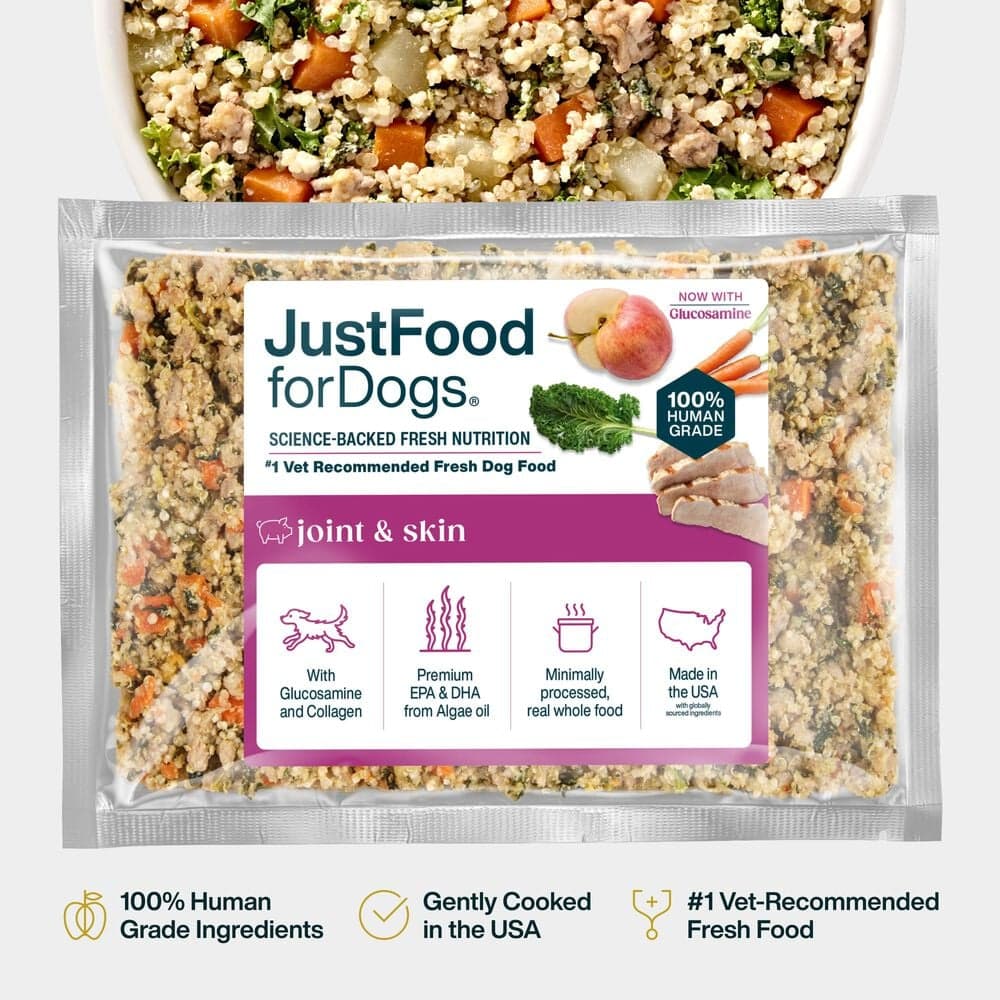
The fresh senior pick in this roundup: compare its glucosamine, omega-3 and calorie density with your dog’s needs.
- Single-protein pork recipe with glucosamine
- EPA and DHA from marine microalgae oil
- 32 kcal per ounce, adult maintenance
Webvet may earn a commission when you click through to JustFoodForDogs, at no extra cost to you.
| Brand | Format | Best For | Daily Cost (50-lb dog) |
|---|---|---|---|
| 1. Just Food For Dogs Joint & Skin Support | Fresh Frozen | Senior joint and skin support | $6.50 |
| 2. Open Farm Senior Grain-Free Dry | Dry kibble | Sustainable mainstream | $2.75 |
| 3. Purina Pro Plan Bright Mind Adult 7+ | Dry kibble | Cognitive health | $2.25 |
| 4. Hill's Science Diet Adult 7+ Chicken | Dry kibble | Vet-recommended mainstream | $2.50 |
| 5. The Farmer's Dog (personalized senior plan) | Fresh subscription | Subscription convenience | $7.00 |
| 6. Royal Canin Aging Care 12+ | Dry kibble | Geriatric (12+ years) | $3.00 |
| 7. Blue Buffalo Life Protection Senior | Dry kibble | Mid-range mainstream | $2.00 |
| 8. Wellness Complete Health Senior | Dry kibble | Probiotics + sensitive stomachs | $2.50 |
| 9. Stella & Chewy's freeze-dried raw recipes | Freeze-dried raw | Raw-feeding seniors | $5.50 |
| 10. Iams ProActive Health Mature Adult | Dry kibble | Best budget | $1.25 |
What Should Senior Dog Food Provide?
Senior dogs need a different nutritional profile than younger adults. The AAFCO nutrient profile for adult maintenance serves as a baseline, but senior formulas adjust five key categories.

High-Quality Protein (Higher, Not Lower)
Outdated advice once recommended lowering protein for senior dogs due to assumed kidney concerns. Current veterinary nutrition research, including a 2020 review by the WSAVA Global Nutrition Committee, emphasizes that healthy senior dogs do not require routine protein restriction and may benefit from moderate-to-high protein intake to preserve muscle mass; specific dry-matter protein targets vary by source and by individual dog. Discuss the appropriate protein level for your senior dog with your veterinarian, especially if your dog has kidney or liver disease.
Moderate Calorie Density
Senior dogs typically have lower activity levels and slower metabolism, so daily caloric needs commonly drop relative to adult maintenance, with the magnitude varying by individual dog, breed, and source. Mainstream senior formulas are formulated with lower caloric density than adult formulas to help prevent age-related weight gain. Confirm a target daily intake with your veterinarian for your specific senior. Watch your senior's body condition score carefully; obesity is the single biggest preventable risk factor for arthritis, diabetes, and heart disease.
Joint Support Nutrients
Glucosamine and chondroitin support cartilage health in joint-targeted supplements. Omega-3 fatty acids (EPA and DHA from fish oil or marine algae) reduce joint inflammation. Veterinary recommendations for senior-dog omega-3 dosing vary by source and clinical context; confirm a target dose with your veterinarian for your dog's body weight and any concurrent conditions. Look for formulas that publish omega-3 levels in the guaranteed analysis.
Cognitive Support
Cognitive dysfunction syndrome (the canine equivalent of dementia) is commonly described in the veterinary literature as a substantial concern in dogs over age 11; published prevalence estimates vary widely by study and age group. DHA, B vitamins, and antioxidants are commonly cited in veterinary nutrition guidance for cognitive support. Purina Pro Plan Bright Mind targets cognitive aging with enhanced botanical oils and is among the senior formulas with published Purina-funded research on alertness and engagement in older dogs. For a separate look at supplements, see our guide to senior dog vitamins.
Highly Digestible Carbohydrates and Fiber
Senior dogs benefit from easily digestible carbohydrates (white rice, oatmeal, sweet potato) and moderate prebiotic fiber (beet pulp, chicory) to support gut health. Many senior formulas list 'guaranteed live probiotics' on the label (commonly Enterococcus faecium SF68, the same strain used in Purina's FortiFlora supplement, or Bifidobacterium animalis); these can help maintain microbiome balance as the digestive system ages.
Named Compounds Worth Looking For on the Label
Specific nutrients with veterinary-nutrition support for senior dog clinical efficacy include DHA (docosahexaenoic acid) for cognitive support and brain aging, sourced from fish oil and the basis for Purina Pro Plan Bright Mind's cognitive formula. For joint support, glucosamine hydrochloride paired with chondroitin sulfate addresses cartilage health (these are the active mechanisms in many supplemental joint products); Just Food For Dogs Joint & Skin Support takes a different approach, using pork stock as a natural source of type II collagen alongside marine microalgae oil and flaxseed for omega-3 fatty acids. Omega-3 EPA (eicosapentaenoic acid) reduces inflammation system-wide and supports skin and coat aging. L-carnitine helps preserve lean muscle mass, the protein the senior body progressively loses with age. Reading a senior dog food label for these named compounds, rather than relying on marketing terminology like premium or holistic, is the difference between paying for branded nutrition and actually delivering it.
The fresh senior pick in this roundup: compare its glucosamine, omega-3 and calorie density with your dog’s needs.
- Single-protein pork recipe with glucosamine
- EPA and DHA from marine microalgae oil
- 32 kcal per ounce, adult maintenance
Webvet may earn a commission when you click through to JustFoodForDogs, at no extra cost to you.
What Are the 10 Best Senior Dog Foods in 2026?
1. Just Food For Dogs Joint & Skin Support: Best Overall for Senior Joint Health
Just Food For Dogs Joint & Skin Support is our editorial pick for senior joint support. Formulated by board-certified veterinary nutritionists, the recipe is built around ground pork, quinoa, kale, carrots, and Fuji apples, with Omega Marine Microalgae Oil, pork stock (a natural source of type II collagen), and flaxseed providing joint-supportive omega-3 fatty acids and connective-tissue precursors. The product's guaranteed analysis lists glucosamine at 500 mg/kg. Gently cooked at low temperatures from USDA-inspected human-grade ingredients, the recipe preserves bioavailable nutrients and supports easier digestion in aging dogs. Available as a frozen entree, formulated for canine adult maintenance per AAFCO. Daily cost runs $6 to $7 for a 50-pound senior dog. One-time purchase available; subscription not required.
Pros
- Pork stock provides natural type II collagen for joint support
- Marine microalgae oil and flaxseed for omega-3 fatty acids to support a normal inflammatory response
- Glucosamine listed at 500 mg/kg in the product guaranteed analysis
- Human-grade ingredients (USDA-inspected at the ingredient level)
- Gently cooked for easier senior digestion
- Board-certified veterinary nutritionist-formulated
Cons
- $6 to $7 per day for a 50-pound dog (premium pricing)
- Requires freezer storage
- Adult maintenance only (not formulated for puppies or all-life-stages)
2. Open Farm Senior Support Lineup: Best Sustainable Mainstream
Open Farm Senior Grain-Free is a strong sustainable-sourcing pick in the senior category. The recipe leads with humanely raised chicken and turkey, with added pumpkin and apples for digestive support. Open Farm publishes farm-level ingredient traceability through their LotID tool, allowing owners to trace sourcing for every batch. Protein content sits at the higher end of senior kibble formulas per the current Open Farm product page. Grain-free formulation; the FDA's open investigation into reports of non-hereditary canine DCM associated with certain diets (especially diets high in pulses or potatoes) has not established a causal relationship, so discuss any grain-free diet with your veterinarian for breeds with hereditary DCM risk.
Pros
- Industry-leading sustainable-sourcing credentials in the senior category, with LotID farm-level traceability
- Higher-protein senior formulation for muscle preservation
- Farm-level ingredient traceability via LotID
- Sustainably sourced humanely raised proteins
- Available at premium pet retailers nationwide
Cons
- Grain-free formulation (the FDA's open investigation into non-hereditary canine DCM has not established causality; discuss with your veterinarian for DCM-predisposed breeds)
- Premium pricing for kibble ($2.75 per day)
- Limited senior-specific recipes vs adult line
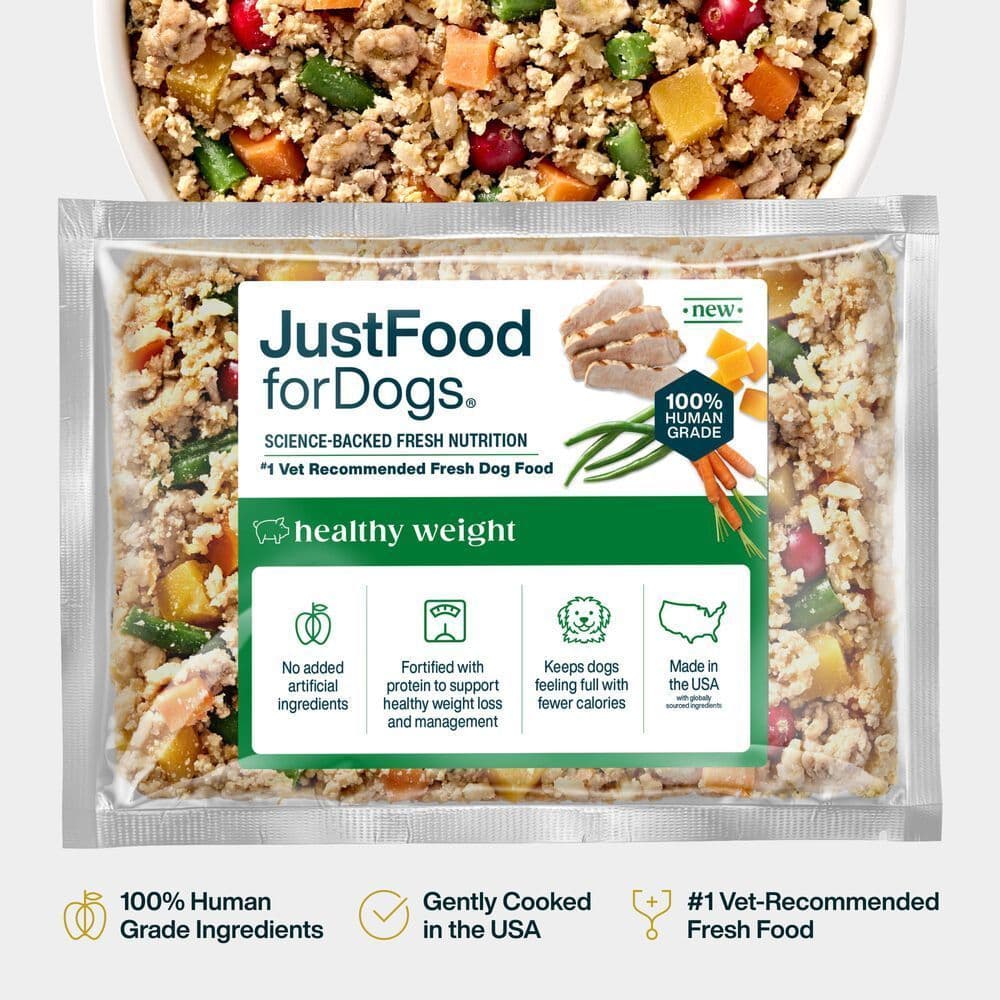
The fresh senior pick in this roundup: compare its glucosamine, omega-3 and calorie density with your dog’s needs.
- Explore the everyday Healthy Weight formula
- Fresh Frozen meals with portion guidance
- Compare the recipe with your vet’s feeding plan
Veterinary Metabolic Support is a separate diet.
Webvet may earn a commission when you click through to JustFoodForDogs, at no extra cost to you.
3. Purina Pro Plan Bright Mind Adult 7+: Best for Cognitive Health
Purina Pro Plan Bright Mind is one of the most-cited cognitive-support senior formulas, with published research from Purina showing measurable improvements in alertness and engagement in dogs aged 7 and older. Enhanced botanical oils provide medium-chain triglycerides (MCTs) as an alternative energy source for the aging brain. Chicken-first protein. Purina publishes responses to WSAVA's manufacturer-selection questions, including in-house veterinary nutritionists and feeding-trial substantiation for the Pro Plan line. Available at most pet retailers.
4. Hill's Science Diet Adult 7+: Best Vet-Recommended Mainstream
Hill's Science Diet Adult 7+ is one of the mainstream senior kibbles most frequently stocked in U.S. veterinary clinics. Easily digestible chicken, rice, and barley, with controlled minerals to support kidney health in aging dogs. The Adult 7+ line uses AAFCO feeding-trial substantiation per the Hill's product page, and Hill's publicly answers WSAVA's manufacturer-selection questions about ingredient sourcing and nutritionist oversight.
5. The Farmer's Dog (personalized fresh plan for senior dogs): Best Subscription Fresh
The Farmer's Dog uses a personalized-recipe approach, with fresh, gently cooked meals tailored to your dog's weight, age, activity level, and health profile (the brand does not currently market a separately named 'Senior Blend' SKU; the personalized plan is the senior path). Veterinary nutritionists develop the recipes; meals arrive frozen on a subscription schedule. Strong satisfaction guarantee. Higher cost than store-bought options at $7 per day for a 50-pound dog.
6. Royal Canin Aging Care 12+: Best for Geriatric Dogs
Royal Canin Aging Care 12+ is one of the mainstream formulas marketed specifically for dogs 12 years and older. Per the Royal Canin product page, the recipe uses smaller kibble size for dental sensitivity, palatability optimization for declining appetites, and reduced phosphorus to support aging kidneys. Available in small-breed and medium-breed sizes.
7. Blue Buffalo Life Protection Senior: Best Mid-Range
Blue Buffalo Life Protection Senior delivers reliable senior nutrition at a mainstream price point. Deboned chicken first, with glucosamine and chondroitin added for joint support. Includes Blue's LifeSource Bits (vitamin-mineral pellets) for additional micronutrient support. No corn, wheat, soy, or artificial preservatives.delivers reliable senior nutrition at a mainstream price point. Deboned chicken first, with glucosamine and chondroitin added for joint support. Includes Blue's LifeSource Bits (vitamin-mineral pellets) for additional micronutrient support. No corn, wheat, soy, or artificial preservatives.
The fresh senior pick in this roundup: compare its glucosamine, omega-3 and calorie density with your dog’s needs.
- Single-protein pork recipe with glucosamine
- EPA and DHA from marine microalgae oil
- 32 kcal per ounce, adult maintenance
Webvet may earn a commission when you click through to JustFoodForDogs, at no extra cost to you.
8. Wellness Complete Health Senior: Best for Sensitive Stomachs
Wellness Complete Health Senior combines easily digestible deboned chicken, brown rice, and oatmeal with probiotics and prebiotics for gut health. Glucosamine and chondroitin support joints. Suitable for senior dogs with mild digestive sensitivity in addition to age-related needs.combines easily digestible deboned chicken, brown rice, and oatmeal with probiotics and prebiotics for gut health. Glucosamine and chondroitin support joints. Suitable for senior dogs with mild digestive sensitivity in addition to age-related needs.
9. Stella & Chewy's Senior Freeze-Dried Raw Options: Best Freeze-Dried Raw
Stella & Chewy's offers freeze-dried raw senior-suitable options for owners interested in raw feeding without the food-safety risks of frozen raw. Raw-food product lines are reformulated and renamed periodically; consult the current Stella & Chewy's product catalog for the specific senior-suitable recipe before purchasing.
10. Iams ProActive Health Mature Adult: Best Budget
Iams Mature Adult is the most affordable senior formula meeting AAFCO maintenance standards. Chicken-first protein with added prebiotics for digestive health. Less ingredient transparency than premium brands, but reliable nutrition at $1.25 per day for a 50-pound dog.is the most affordable senior formula meeting AAFCO maintenance standards. Chicken-first protein with added prebiotics for digestive health. Less ingredient transparency than premium brands, but reliable nutrition at $1.25 per day for a 50-pound dog.
When Should You Switch to Senior Dog Food?
When to transition to a senior formula is a clinical judgment, not a fixed age. The AAHA Canine Life Stage Guidelines define senior as the last 25 percent of a dog's estimated lifespan, which varies by breed and individual. In practice, many veterinarians begin discussing senior nutrition with owners of large and giant breeds earlier in calendar age than owners of small breeds, because smaller dogs typically live longer. Your veterinarian knows your dog's expected lifespan, current health, and body condition, and is the right source for when the transition is appropriate.
How to Transition (10 to 14 Days)
Senior digestive systems are more sensitive to abrupt food changes than younger adults. Use a longer transition window than the standard 7 days.
- Days 1 to 3: 75 percent old food, 25 percent senior food
- Days 4 to 6: 50 percent old, 50 percent senior
- Days 7 to 10: 25 percent old, 75 percent senior
- Days 11 to 14: 100 percent senior food
Watch for signs of digestive upset during the transition. If symptoms appear, hold the current ratio for 3 to 4 extra days before continuing.
How Does Senior Dog Food Address Common Age-Related Conditions?
Arthritis and Joint Pain
Look for senior or joint-support formulas with added glucosamine, chondroitin sulfate, and omega-3 fatty acids. Specific minimum glucosamine concentrations vary between veterinary references; ask your veterinarian for a target level appropriate for your dog. JFFD Joint & Skin Support uses pork stock (natural type II collagen) and marine microalgae oil as its joint-support approach rather than glucosamine/chondroitin. Discuss supplemental joint support like Cosequin or Dasuquin with your veterinarian, especially if your dog has been diagnosed with osteoarthritis.
Cognitive Dysfunction (Canine Dementia)
Up to 50 percent of dogs over age 12 show some cognitive decline. Bright Mind formulas, DHA-supplemented foods, and brain-supportive supplements (SAM-e, Senilife) can help slow progression. Behavioral changes (disorientation, altered sleep, interaction changes) warrant veterinary evaluation to rule out other conditions.
Kidney Disease (Chronic Renal Insufficiency)
Affects roughly 1 in 10 dogs over age 12. If diagnosed, your veterinarian will prescribe a renal diet (Hill's Prescription Diet k/d, Royal Canin Renal Support) with controlled phosphorus and high-quality protein. Do NOT lower protein preemptively in healthy senior dogs; current research shows this is more harmful than beneficial.
Diabetes Mellitus
Senior dogs are at elevated risk for diabetes. Diabetic dogs need consistent meal timing, moderate fiber (8 to 18 percent), and controlled carbohydrate sources. Prescription Hill's w/d or Royal Canin Diabetic are the standard.
Heart Disease
Reduced sodium (under 0.3 percent dry matter) and added taurine support heart health. Hill's Prescription Diet h/d and Royal Canin Cardiac are standard prescription options for diagnosed heart conditions.
Frequently Asked Questions
What is the best food for senior dogs?
Just Food For Dogs Joint & Skin Support is our overall pick for senior dogs in 2026, formulated by board-certified veterinary nutritionists with marine microalgae oil and pork-stock-derived collagen for joint support, gently cooked from human-grade ingredients. For mainstream kibble alternatives, Open Farm Senior Grain-Free, Purina Pro Plan Bright Mind Adult 7+, and Hill's Science Diet Adult 7+ are all strong choices. The best choice depends on your dog's specific needs (cognitive, joint, kidney, weight) and your budget.
At what age should I switch my dog to senior food?
There is no fixed age for senior transition. The AAHA Canine Life Stage Guidelines define senior as the last 25 percent of a dog's estimated lifespan, which varies by breed and individual rather than a single age cutoff. Because smaller dogs typically live longer than larger ones, small-breed dogs commonly reach senior life stage later (often in their double-digit ages) while large and giant breeds reach it earlier. Discuss the right transition for your specific dog with your veterinarian, who knows your dog's expected lifespan, current health, and body condition.
What should I NOT feed a senior dog?
Avoid high-fat foods (over 18 percent fat) unless your veterinarian specifically recommends them. Avoid very high-protein raw diets if your senior has chronic kidney disease. Avoid foods with artificial preservatives, colors, and unidentified meat by-products. Toxic ingredients (chocolate, xylitol, grapes, raisins, onions, garlic, macadamia nuts) are dangerous at every age. Reduce table scraps; senior dogs gain weight more easily than adults.
Should senior dogs eat wet food or dry food?
Either format can work. Wet food has higher moisture (70 to 82 percent) which supports hydration and is easier to chew for dogs with dental disease. Dry kibble offers convenience and is easier to portion than wet. Mechanical 'dental benefits' from chewing kibble should not be assumed unless the specific product is on the Veterinary Oral Health Council (VOHC) accepted-products list; ordinary kibble does not meet that bar. Fresh food (like JFFD) combines the moisture of wet food with the digestibility of gentle cooking. Many senior dogs benefit from a mix: dry kibble for primary feeding with a small amount of wet food as a topper for palatability.
How much should I feed my senior dog?
Daily caloric needs commonly decrease from adult maintenance for most senior dogs, with the magnitude varying by individual dog, breed, and source. Use the specific senior formula's published feeding guide as a starting point, then adjust based on your senior's body condition score and your veterinarian's guidance. Use the brand's specific feeding guide as a starting point, then adjust based on your dog's body condition score. Weigh your senior monthly and aim for stable weight at an ideal body condition (ribs easily felt but not visible).
What vet-recommended supplements support senior dog nutrition?
Vet-recommended supplements for senior dogs commonly include glucosamine and chondroitin (joint cartilage support), omega-3 fatty acids from fish oil or marine algae (joint inflammation and cognitive support), SAM-e and Senilife (cognitive function in dogs with early cognitive decline), probiotics like FortiFlora or Proviable-DC (digestive health), and a senior-targeted multivitamin if blood work indicates specific deficiencies. Omega-3 dosing recommendations vary between veterinary sources and clinical contexts, so confirm the right dose with your veterinarian based on your dog's body weight and any concurrent medications or conditions.
Explore More Dog Food Guides
Each of these companion guides drills into a related dog food topic:
- Best Dog Food Brands, a vet-reviewed hub covering the 10 best dog food brands across categories
- Fresh Dog Food, fresh and frozen options for senior dogs with sensitive digestion
- Best Wet Dog Food, wet food picks including options for senior dogs with dental issues
- Dog Food for Sensitive Stomachs, for senior dogs who develop digestive sensitivity
- Vet-Reviewed Homemade Dog Food Recipes, including a senior-specific homemade recipe with joint and cognitive support
Which Senior Dog Food Should You Choose?
Start with your dog's specific health profile. For joint-focused senior nutrition, Just Food For Dogs Joint & Skin Support is the editorial pick (a frozen entree built around pork, quinoa, kale, marine microalgae oil, and pork-stock-derived type II collagen, with glucosamine listed at 500 mg/kg in the guaranteed analysis). For cognitive support, Purina Pro Plan Bright Mind has published Purina-funded research describing measurable cognitive-function differences in dogs over age seven on the formula; the Bright Mind research is the most prominent cognitive-support study within the Purina line, though it is brand-funded and should be interpreted alongside independent veterinary nutrition guidance. For owners wanting an AAFCO-balanced mainstream kibble at moderate cost, Hill's Science Diet Adult 7+ is widely stocked in veterinary clinics. For sustainable sourcing with full ingredient transparency, Open Farm Senior Grain-Free leads (note that the FDA's open investigation into non-hereditary canine DCM associated with certain diets has not established causality; discuss with your veterinarian if your dog is in a DCM-predisposed breed). For owners on a tight budget, Iams ProActive Health Mature Adult is formulated to meet AAFCO standards. Whatever you choose, schedule a senior wellness exam every 6 to 7 months to monitor weight, organ function, and emerging conditions.
Veterinarian · BVMS MRCVS
Dr. Pippa Elliott, BVMS, MRCVS, is a veterinarian with nearly 30 years of experience in companion animal practice. Dr. Elliott earned her Bachelor of Veterinary Medicine and Surgery from the University of Glasgow. She was also designated a Member of the Royal College of Veterinary Surgeons. Married with 2 grown-up kids, Dr. Elliott has a naughty Puggle named Poggle, 3 cats and a bearded dragon.
Related reading

Best Dog Advent Calendars and Cat Advent Calendars for 2026: Vet-Reviewed Picks

How to Help a Cat Lose Weight: A Safe Weight Loss Plan

When Can Puppies Eat Solid Food? Weaning Timeline and Tips
