Dog Flatulence: Causes, Remedies & When to Worry
A vet-reviewed guide to dog flatulence: what causes gassy, stinky dogs, the diet and medical reasons behind it, proven ways to reduce gas, and the red flags that mean see a vet now.


BVMS MRCVS
Medically reviewed by Dr. Pippa Elliott, BVMS MRCVS · Last reviewed

This article contains affiliate links. Webvet may earn a commission when you buy through them, at no extra cost to you.
This article contains affiliate links. Webvet may earn a commission when you buy through them, at no extra cost to you.
Dog flatulence is the buildup and release of excess gas from a dog's digestive tract, and it is usually harmless. Most gas comes from swallowed air and from gut bacteria fermenting food. Occasional, mild farts are normal. Sudden, very stinky gas paired with diarrhea, vomiting, or weight loss is a reason to call your vet.
If your dog clears a room on a regular basis, you are not alone, and in most cases the cause is simple: how fast they eat, what they eat, and how their gut bacteria handle it. This vet-reviewed guide walks through what counts as normal, why some dogs are gassier than others, the foods and medical conditions behind excessive gas, the home remedies that actually help, and the red flags that mean stop and call the vet. We cover both halves of the picture so you do not have to read five different pages: the at-home diet and feeding fixes, and the medical differentials your vet will think about.
Dog Flatulence: What It Is and Why Dogs Fart
Flatulence is simply excess gas in the stomach or intestines that gets expelled through the anus. That gas comes from three places: air your dog swallows, gas produced when gut bacteria ferment undigested food, and a small amount that diffuses from the bloodstream. Of these, swallowed air (aerophagia) makes the single largest contribution to most farts.
Here is the part owners are often surprised by: most flatus is odorless. The smell comes from sulfur-containing gases, mainly hydrogen sulfide, which is produced when bacteria in the large intestine ferment certain proteins and fibers. The more poorly digested food that reaches the colon, the more sulfur gas the bacteria make, and the worse the rotten-egg smell becomes.
This is also why diet changes can shift the smell so dramatically. Healthy digestion finishes most of the work in the small intestine, where nutrients are absorbed cleanly. When a meal is high in fermentable protein or fiber, more of it slips past that point undigested, and the colon becomes a fermentation tank. The trapped gas then builds until it has to escape, which is why a single rich treat can announce itself hours later.
- 1Gas has three sources: swallowed air, bacterial fermentation in the gut, and diffusion from blood.
- 2Swallowed air is the biggest contributor to overall fart volume.
- 3Odor comes from sulfur gases like hydrogen sulfide, made when undigested food reaches the colon.
How Much Gas Is Normal for a Dog? (And When It's Not)
There is no official fart counter, but a useful baseline is this: a healthy dog passes gas several times a day, often around 5 to 20 times, and most of it is silent and odorless. You probably never notice the majority of it. Normal flatulence does not come with any other symptoms. Your dog feels fine, eats well, and has firm, regular stool.
Gas crosses from normal into a problem when the volume, frequency, or smell ramps up noticeably and stays that way, or when it shows up alongside other signs. Watch for gas paired with loose stool, a gurgling, noisy belly, scooting, a tense or bloated-looking abdomen, reduced appetite, or weight loss. Those combinations point to a digestive issue worth investigating rather than a one-off bad dinner.
If the noise is the main thing you notice, a rumbling or gurgling gut is usually just normal digestion, and our guide to why your dog's stomach is making noises explains when those sounds matter and when they do not.
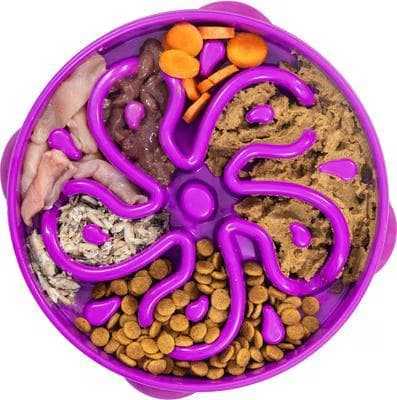
A maze-pattern slow-feeder bowl that makes fast eaters work for each bite, reducing the gulping and swallowed air that trigger regurgitation and vomiting. Holds up to 4 cups.
Webvet may earn a commission when you click through to Chewy, at no extra cost to you.
Why Is My Dog So Gassy? The Most Common Causes
Most cases of excessive dog gas trace back to one of a handful of everyday causes. Often more than one is in play at once.
Eating too fast (swallowed air)
A dog that inhales dinner in ten seconds swallows a lot of air with it. That air has to go somewhere. Gulping is one of the most common and most fixable reasons for a gassy dog, and it is why feeding speed matters as much as feeding content.
Competitive feeding makes this worse. In a multi-dog home, a dog that feels it has to defend its bowl tends to bolt food faster, swallowing even more air. Feeding dogs in separate rooms or at a calmer pace often reduces gas on its own, with no change to the food at all.
Diet and poorly digested food
Foods that are hard to digest, or that are highly fermentable, leave more material for colon bacteria to work on, which means more gas. Common culprits include soybeans and soy fiber, peas, beans, dairy, beet pulp, bran, and high-fat or spicy table scraps. A diet that simply does not agree with your individual dog can do the same thing even if it is a quality food.
Sudden diet changes and dietary indiscretion
Switching foods overnight, raiding the trash, or scarfing a new treat can throw the gut bacteria out of balance and trigger a gassy, loose-stool stretch. This kind of garden-variety gut upset usually settles within a day or two. Our guide to a dog's upset stomach covers what to do and what to watch for when it does not settle.
Compare coverage choices for your pet, then request a quote directly on Lemonade.
- Check a price for your pet
- Review available coverage choices
- See the terms before you decide
Eligibility, waiting periods, limits and exclusions apply.
Webvet may earn a commission when you click through to Lemonade, at no extra cost to you.
Food intolerance and sensitivity
Some dogs simply cannot tolerate a specific ingredient, and chronic gas can be one of the more obvious clues. If gas tracks with a particular protein or carbohydrate, you may be dealing with food intolerance in dogs, which an elimination diet can help pin down.
Breed and body type
Flat-faced (brachycephalic) breeds such as Bulldogs, French Bulldogs, Pugs, and Boxers swallow far more air than long-nosed dogs because of how they breathe and eat. That extra aerophagia makes them famously gassy. Deep-chested breeds are a separate concern: they are at higher risk of bloat, which we cover in the emergency section.

- 1Eating too fast and swallowing air is one of the most common, most fixable causes.
- 2Fermentable foods (soy, peas, beans, dairy, high-fat scraps) feed gas-making gut bacteria.
- 3Flat-faced breeds gulp more air and are naturally gassier.

 $65 · no membership
Worried about your dog's vomiting or diarrhea?
A licensed vet can examine your dog over video and prescribe treatment online when it's appropriate.
 Talk to a vet
- Licensed vets
- All 50 states
- same-day Rx
Webvet may earn a commission if you book.
Foods That Cause Dog Gas (and the Best Diet for Gassy Dogs)
If diet is the engine of most dog gas, then changing the menu is the most powerful lever you have. The goal is a highly digestible, lower-residue diet, so less food reaches the colon for bacteria to ferment. Below is a quick reference for ingredients that tend to make gas worse versus those that tend to be easier on a gassy gut.
| Gas-causing foods to limit | Gas-friendly choices to favor |
|---|---|
| Soybeans and soy fiber | Highly digestible, rice-based formulas |
| Peas, beans, and legumes | Lean, single-source proteins |
| Dairy (milk, cheese) | Low to moderate fiber (around 5% or less) |
| High-fat or spicy table scraps | Plain cooked chicken or turkey |
| Beet pulp, bran, high-fructose corn syrup | Plain pumpkin in small amounts |
| Sudden full diet switches | Gradual 7-to-10-day transitions |
For dogs that get gassy on standard kibble, a purpose-built dog food for sensitive stomachs is often the simplest fix, since these formulas are built around digestibility and limited, gentle ingredients.

Why Does My Dog Suddenly Have Very Stinky Gas?
A sudden jump in foul, rotten-egg gas usually means more poorly digested, sulfur-rich material is reaching the colon than usual. The trigger is often recent and identifiable: a new food or treat, table scraps, getting into the trash or something outdoors, or a quick diet change. In those cases the smell typically improves within a day or two once the offending item is out of the system.
What changes the picture is what comes with the gas. Use this quick triage path:
Sudden stinky gas alone, dog otherwise fine: likely a recent diet or dietary-indiscretion blip. Hold the new item, keep meals plain and small, and it should settle in 24 to 48 hours.
Stinky gas plus mild loose stool, still eating and bright: monitor closely for a day, offer a bland diet, and ensure water intake. Call your vet if it is not improving in 48 hours.
Stinky gas plus vomiting, ongoing diarrhea, blood in stool, lethargy, refusing food, or a painful belly: call your vet promptly. This combination can signal infection, parasites, pancreatitis, or another condition that needs diagnosis.
Medical Conditions That Cause Excessive Gas (EPI, IBD, SIBO, Parasites)
When gas is chronic, severe, or comes with weight loss or persistent diarrhea, your vet starts thinking beyond diet. Excess gas is a known feature of several digestive diseases, because all of them leave more undigested food for gut bacteria to ferment.
Exocrine pancreatic insufficiency (EPI)
In EPI the pancreas does not make enough digestive enzymes, so food passes through poorly digested. Classic signs are weight loss despite a big, even ravenous appetite, plus voluminous, often greasy or pale stool and a lot of gas. EPI is diagnosed with a blood test (TLI) and treated by adding pancreatic enzymes to every meal, often alongside a special diet.
German Shepherds are over-represented for EPI, and the disease often appears in young adult dogs. The telling combination is a dog that eats hungrily yet keeps losing condition. Because the undigested fat and protein feed colon bacteria heavily, the gas tends to be both abundant and foul, and it usually improves once enzyme replacement is started.
Small intestinal bacterial overgrowth (SIBO)
SIBO means too many bacteria in the small intestine, which damages the gut lining and impairs absorption. Increased gas, flatulence, and bloating are commonly noted, along with chronic loose stool and sometimes weight loss. SIBO can occur with or without EPI. It is often treated with a course of antibiotics (such as tylosin or metronidazole) plus dietary support, and probiotics may help.
Inflammatory bowel disease (IBD) and chronic enteropathy
Chronic inflammation of the intestinal lining interferes with normal digestion and absorption, producing ongoing gas, intermittent diarrhea or vomiting, and weight loss. Diagnosis can require diet trials, bloodwork, imaging, and sometimes biopsies. Management centers on diet, and in some cases anti-inflammatory or immune-modulating medication, under veterinary supervision.
Intestinal parasites
Worms and protozoa such as Giardia irritate the gut and disrupt digestion, which can show up as gas, diarrhea, and a dull coat or poor condition, especially in puppies. A fecal test diagnoses them and targeted deworming treats them. Routine parasite prevention is the easiest way to keep this off the list.
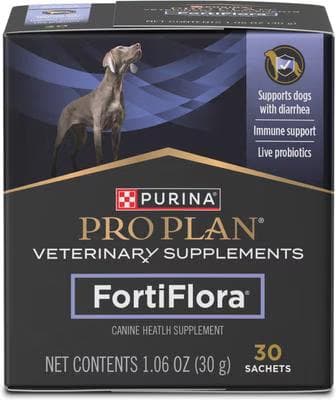
The #1 vet-recommended probiotic for dogs. Daily powder sachets with live probiotics support healthy digestion and firmer stools, and can help dogs coping with diarrhea or GI upset.
Webvet may earn a commission when you click through to Chewy, at no extra cost to you.
What to Give a Dog for Gas: Remedies, Probiotics, and Supplements
The single best remedy for most gassy dogs is not a pill, it is fixing the diet and the way they eat. That said, a few supportive options can help, and your vet can tell you which fit your dog.
Probiotics: a vet-recommended canine probiotic can help rebalance gut bacteria, especially after antibiotics or a bout of diarrhea. Supporting overall gut health in dogs is one of the most reliable long-term ways to cut down on gas.
A highly digestible diet: switching to a low-residue, easily digested food is the change that most often makes a visible difference, because less fermentable material reaches the colon.
Plain pumpkin: a small spoonful of plain canned pumpkin (not pie filling) adds gentle fiber that some dogs tolerate well and that can firm up stool.
Over-the-counter gas products: some owners ask about simethicone or activated charcoal, and there are veterinary diets and supplements that include odor-reducing ingredients like yucca schidigera or zinc acetate. Do not give any human medication or supplement without your vet's go-ahead and a vet-determined, weight-based dose. Human gas products are not automatically safe for dogs.
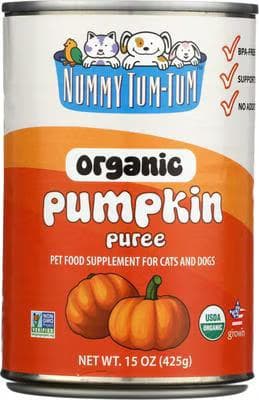
Pure USDA-organic pumpkin puree, no fillers or additives. Adds gentle soluble fiber to firm up loose stool and settle a mildly upset stomach. A simple vet-favorite topper.
Webvet may earn a commission when you click through to Chewy, at no extra cost to you.
How to Reduce and Prevent Dog Flatulence
Most gassy dogs improve a lot with a few practical changes. Stack several of these and give them a couple of weeks.
1. Slow down eating. Use a slow-feeder bowl, a puzzle feeder, or spread kibble on a tray so your dog cannot gulp and swallow so much air.
2. Feed smaller, more frequent meals. Two or three smaller meals a day are easier to digest than one large one. A consistent routine helps, and our dog feeding schedule guide can help you set one up.
3. Switch to a more digestible diet. Favor a high-quality, low-residue food and cut the gas-causing ingredients from the table above.
4. Cut the table scraps. Fatty, spicy, or dairy-heavy human food is a frequent gas trigger and is best avoided entirely.
5. Add gentle daily exercise. A short walk helps keep the gut moving. A relaxed stroll within about half an hour of meals can aid digestion (avoid vigorous exercise right after a big meal, especially in deep-chested breeds).
6. Keep food off the floor and the trash secured. Less dietary indiscretion means fewer surprise gas episodes.

- 1Slow eating, smaller frequent meals, and a digestible diet fix most gas.
- 2Cut fatty, spicy, and dairy table scraps entirely.
- 3Probiotics and gentle daily exercise support a calmer gut; give changes two weeks.
When to See a Vet: Red Flags and Bloat (GDV) Emergencies
Routine farts are not a medical problem. Book a (non-urgent) vet visit if your dog has chronic, worsening gas, gas with persistent diarrhea or vomiting, gas with weight loss or a drop in appetite, blood in the stool, or visible discomfort. These point to a digestive condition that deserves a proper workup rather than another diet tweak.
There is one scenario that is a true emergency and must not be confused with ordinary flatulence: bloat, or gastric dilatation-volvulus (GDV).

What bloat (GDV) is, and who is at risk
In GDV the stomach fills with gas and then twists on itself, trapping the gas and cutting off blood flow. It is rapidly life-threatening, and roughly a quarter to a third of affected dogs die even with treatment. This is not the same as passing gas. The danger is the trapped, twisted stomach, not flatulence.
Deep-chested, large breeds are most at risk, including Great Danes, German Shepherds, Standard Poodles, Weimaraners, Boxers, and Setters. Risk rises with eating one large meal a day, eating too fast, and heavy exercise right after eating. This is the opposite of flat-faced breeds, whose main gas issue is harmless air-gulping.
Frequently Asked Questions About Dog Flatulence
Frequently Asked Questions
What can I give my dog for flatulence?
The most effective fix is a highly digestible, lower-residue diet plus slower, smaller meals, not a product. A vet-recommended probiotic can help rebalance gut bacteria, and a little plain pumpkin adds gentle fiber. Some veterinary diets include odor-reducing ingredients such as yucca or zinc acetate. Give any new approach a couple of weeks, since the gut bacteria take time to adjust. Never give human anti-gas medicines or supplements without your vet's approval and a weight-based dose, because a safe human dose can be wrong, or even harmful, for a dog.
What food is good for gassy dogs?
Choose a high-quality, highly digestible, low-residue diet built around lean, single-source proteins and rice-based carbohydrates, with fiber kept low (around 5% or less). Avoid soy, peas, beans, dairy, and high-fat or spicy foods. Plain cooked chicken and rice or a sensitive-stomach formula often help. Transition any new food gradually over 7 to 10 days.
Why does my dog suddenly have very stinky gas?
Sudden rotten-egg gas usually means more poorly digested, sulfur-rich food is reaching the colon, often after a new food, treat, table scraps, or trash raid. The sulfur gases produced there carry that distinctive smell. It typically settles within a day or two once the trigger is removed and the gut bacteria rebalance. Keep meals plain and small while it passes. If the stinky gas comes with vomiting, ongoing diarrhea, blood in the stool, a painful belly, or lethargy, call your vet, since those signs point to more than a simple dietary blip.
Do dogs get more flatulence with age?
Often, yes. Older dogs can become gassier because digestion and gut motility slow with age, and senior dogs are more prone to digestive conditions and food sensitivities. Age itself is not a disease, though. A clear increase in gas in an older dog, especially with weight loss or diarrhea, is worth a vet check rather than writing it off as just getting older.
Why does my dog fart so much and so stinky?
Frequent, smelly gas usually comes from eating too fast (swallowing air) plus a diet that ferments heavily in the gut, producing sulfur gases like hydrogen sulfide. Flat-faced breeds gulp extra air and are naturally gassier. If it is persistent and paired with loose stool or weight loss, an underlying condition like SIBO, EPI, IBD, or parasites may be involved and warrants a vet visit.
What are signs your dog is going to pass away?
Ordinary gas is not a sign of dying. But certain emergencies can be fatal fast, especially bloat (GDV): a swollen, hard belly, unproductive retching, restlessness, drooling, pale gums, weakness, or collapse all mean go to an emergency vet now. General decline signs include refusing food and water, extreme lethargy, labored breathing, and unresponsiveness. Any of these is an urgent veterinary situation.
What is the best gas relief for dogs?
The best relief is prevention through management: a highly digestible diet, smaller and slower meals, no fatty or dairy scraps, gentle daily exercise, and a vet-recommended probiotic to support gut health. A slow-feeder bowl that stops gulping often helps the fastest, because it cuts the swallowed air that drives most farts. There is no single magic pill. If gas stays severe, worsens, or comes with diarrhea, vomiting, or weight loss, your vet should look for an underlying cause such as EPI, SIBO, IBD, or parasites rather than just treating the gas.
The Bottom Line
For most dogs, flatulence is a normal, manageable nuisance driven by swallowed air and diet, and it responds well to slower feeding, smaller meals, a more digestible diet, fewer scraps, and a little support for gut health. Pay attention when gas turns chronic, very stinky, or arrives with diarrhea, vomiting, or weight loss, and treat a swollen, hard belly with unproductive retching as the emergency it is. Most gassy dogs improve within a couple of weeks once you slow their eating, simplify the menu, and rule out the easy triggers, so start there and give the changes time to work. When in doubt, or when the easy fixes are not enough, your veterinarian is the right call and can pinpoint any underlying cause.
$65 · no membershipWorried about your dog's vomiting or diarrhea?
A licensed vet can examine your dog over video and prescribe treatment online when it's appropriate.
Talk to a vet- Licensed vets
- All 50 states
- same-day Rx
Webvet may earn a commission if you book.

Wendy Toth is an entrepreneurial writer, editor, and mom of two humans, two dogs and one cat. She’s currently Content Director here at PetFul. For the last 15 years she has held positions at Parents Magazine, NBC, PetSmart, and GreatPetCare, where she was co-founder. Her writing has appeared in many national outlets including Pet Lab Co., Retail Me Not, Ask Men, Wild Society Nutrition, and The New York Times. Because she loves her work so much, she’s obsessed with helping others find career fulfillment, and covers it regularly at PowerSuiting.
Veterinarian · BVMS MRCVS
Dr. Pippa Elliott, BVMS, MRCVS, is a veterinarian with nearly 30 years of experience in companion animal practice. Dr. Elliott earned her Bachelor of Veterinary Medicine and Surgery from the University of Glasgow. She was also designated a Member of the Royal College of Veterinary Surgeons. Married with 2 grown-up kids, Dr. Elliott has a naughty Puggle named Poggle, 3 cats and a bearded dragon.


