JustFoodForDogs for Dogs with Allergies: Limited Ingredient Vet Nutrition Guide
Is JustFoodForDogs a good fit for your itchy dog? Dr. Pippa Elliott explains food allergy vs. environmental atopy, vet-directed elimination diets, and how limited ingredient fresh recipes can help support skin health.

BVMS MRCVS

This article contains affiliate links. Webvet may earn a commission when you buy through them, at no extra cost to you.
This article contains affiliate links. Webvet may earn a commission when you buy through them, at no extra cost to you.
If you live with an itchy dog, you know the cycle by heart. The scratching that becomes the soundtrack of your evenings. The paw licking at 2 a.m. The ear infection that clears, then returns. Somewhere in that cycle, most owners start asking whether food is the problem, and many end up researching JustFoodForDogs for dogs with allergies, wondering whether a fresh, limited ingredient diet could be the missing piece.
Here's the honest answer from a veterinarian: food is sometimes the cause, often a contributing factor, and almost always part of the solution conversation. But the order matters: diagnosis first, diet second, both under veterinary guidance.
In this guide, I'll walk you through how vets sort out itchy dogs: food allergy versus food intolerance versus environmental allergies (the most common culprit by far), the elimination diet that settles the question, and where JustFoodForDogs' limited ingredient recipes, novel proteins, and omega-3 rich formulas realistically fit.
- 1Most itchy dogs have environmental allergies (atopy), not food allergy. A vet-directed workup tells you which one you're dealing with before you change the bowl.
- 2The elimination diet trial, run strictly for 8 to 12 weeks on a novel or hydrolyzed protein, is the only reliable way to diagnose food allergy. Blood and skin tests are not dependable for diagnosing it.
- 3For the diagnostic trial itself, vets choose between two strict approaches: a prescription hydrolyzed diet, where the protein is broken down so the immune system cannot recognize it, and a single-novel-protein limited ingredient fresh recipe such as JustFoodForDogs Venison & Squash, which uses one whole protein the dog has never eaten. Both are used under veterinary direction, and the fresh, whole-food option can make a strict trial easier to stick to because dogs tend to eat it readily.
- 4Even when the allergy is environmental, nutrition still matters: many dogs with skin issues may benefit from more EPA and DHA support, and omega-3 rich recipes, like the JustFoodForDogs Sensitive Skin recipe, can help support skin and coat health.
- 5No food prevents or cures allergies. The right diet is a support tool that works alongside your veterinarian's diagnosis and plan.

Food Allergy, Intolerance, or Environmental? Why the Label Matters
"My dog is allergic to his food" is one of the most common opening lines I hear in consult rooms. Statistically, it's also one of the least likely explanations. Three categories matter.
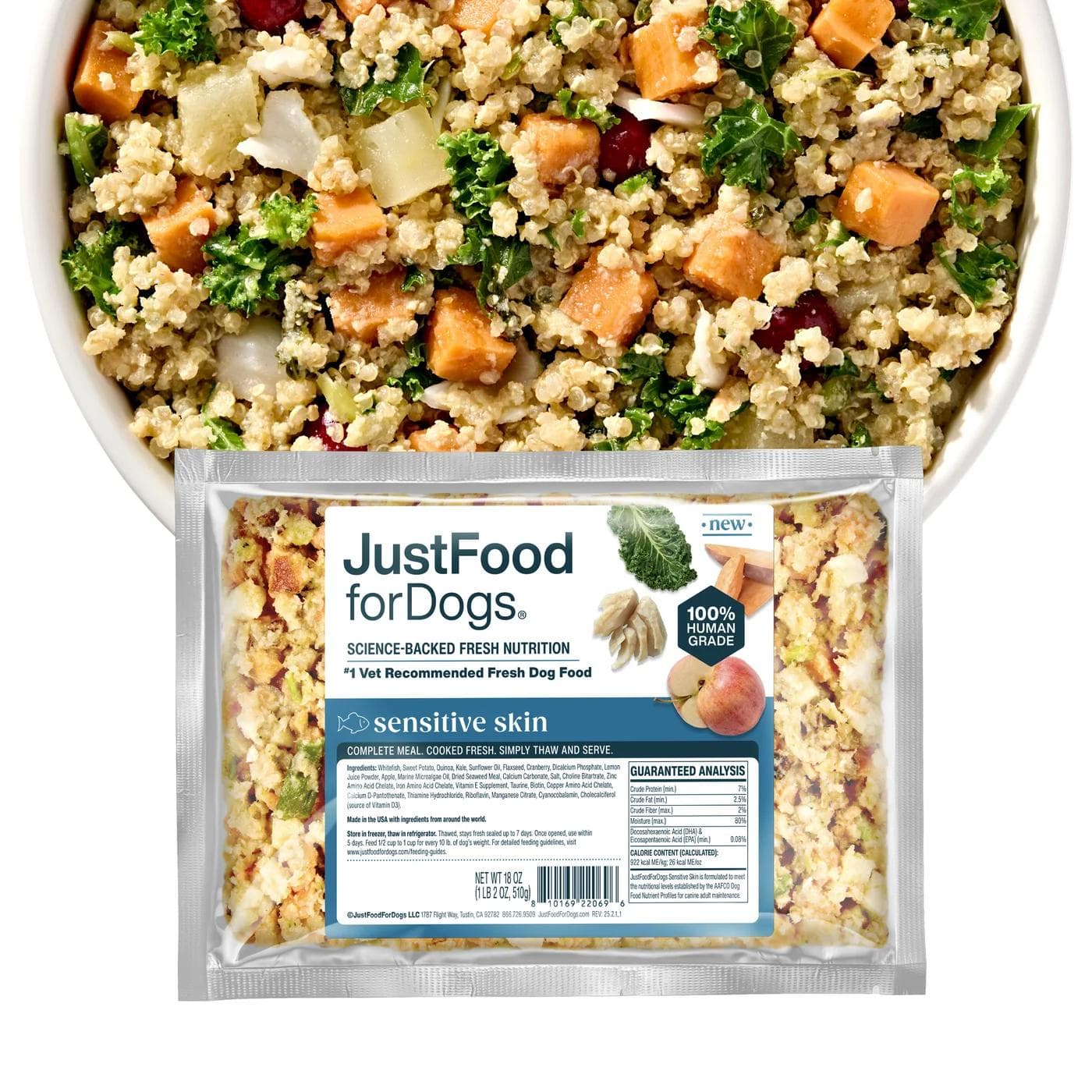
Compare the allergy-focused recipes in this guide with your dog’s diet history before a food trial.
- Whitefish-based Fresh Frozen recipe
- Made for adult dogs
- Review the full ingredient list with your vet
Choose a recipe around your dog’s known food triggers.
Webvet may earn a commission when you click through to JustFoodForDogs, at no extra cost to you.
Environmental allergy (atopic dermatitis) is the heavyweight. Dogs with atopy react to airborne and contact allergens: pollens, dust mites, mold spores, grasses. The classic picture is a dog who itches seasonally at first, then year-round; face rubbing, paw chewing, belly redness, and recurrent ear infections are typical. Among dogs with allergic skin disease, atopy is far more common than food allergy.
True food allergy (vets call it cutaneous adverse food reaction) is an immune response to a specific protein the dog has eaten before, usually for months or years. That surprises people: dogs become allergic to familiar proteins, not new ones. The most commonly implicated ingredients are beef, dairy, chicken, wheat, lamb, and egg. The itch is typically non-seasonal, often targets the ears, paws, and rear end, and sometimes comes with digestive signs like soft stool or gas.
Food intolerance is different again. No immune response is involved; the digestive system simply struggles with an ingredient, the way a lactose-intolerant person struggles with milk. Intolerances usually show up as digestive upset, not itchy skin.
Why does the label matter? Because the response differs for each. An atopic dog needs an environmental allergy plan, with diet in a supporting role. A food-allergic dog needs the offending protein identified and removed, which only a proper elimination trial can do.
The Merck Veterinary Manual is blunt on this point: signs of food allergy and environmental allergy overlap heavily, and an elimination diet trial is the reliable way to tell them apart. Blood and skin tests are not a reliable way to diagnose food allergy in dogs.
The Elimination Diet: How Vets Actually Diagnose Food Allergy
If your vet suspects food is involved, they won't reach for a test tube. They'll reach for a calendar.
The trial works like this: for 8 to 12 weeks, your dog eats one carefully chosen diet and nothing else. The diet is built around a novel protein (one your dog has never eaten, such as venison) or a hydrolyzed protein (a prescription diet with the protein broken into pieces too small for the immune system to recognize). If the itching meaningfully improves, your vet re-challenges with the old food. If signs flare within days to two weeks, you have your answer: food allergy, confirmed.
Three rules make or break the trial:
- One protein, no passengers. The trial diet must contain the novel protein and little else. This is where limited ingredient recipes earn their name: fewer ingredients, fewer variables, a cleaner read.
- Truly novel means truly novel. If your dog has eaten venison treats before, venison isn't novel for them. Your vet will take a diet history before choosing the trial protein.
- Strictness is everything. One pilfered piece of cheese or one flavored heartworm chewable can reset the clock. More trials fail from leaks than from the wrong diet choice.
This is exactly the niche where fresh, limited ingredient recipes fit. A diet like JustFoodForDogs Venison & Squash gives you a single novel animal protein with a short, fully disclosed ingredient list, which is precisely what an elimination trial needs. Because every recipe is cooked from whole-food ingredients you can read in plain English, your vet can check the ingredient deck against your dog's diet history in seconds.
One caveat: for dogs with severe or complicated signs, your vet may prefer a prescription hydrolyzed diet for the trial itself. That's a clinical judgment call. Many dogs, though, run their trials on well-chosen novel protein diets, and many dogs with food sensitivities do well on limited-ingredient diets long after the trial.
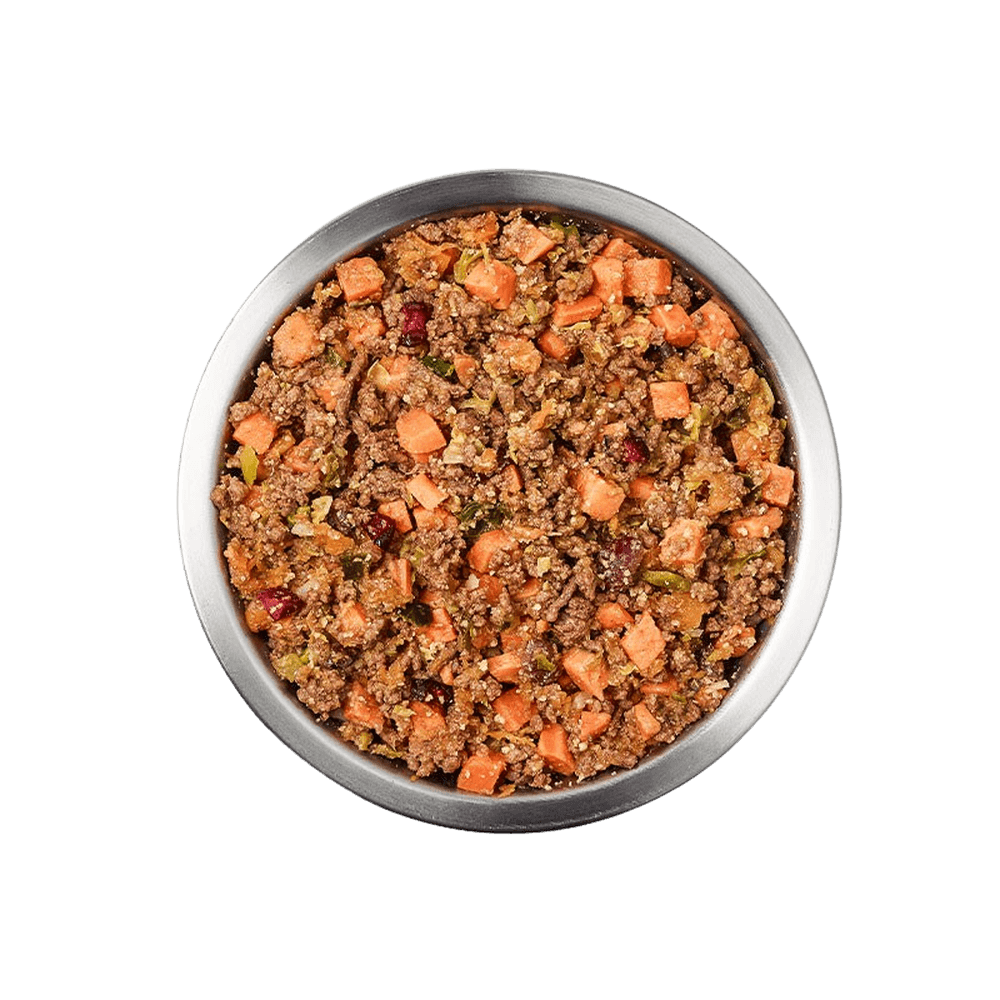
Compare the allergy-focused recipes in this guide with your dog’s diet history before a food trial.
- Venison paired with squash and vegetables
- Fresh Frozen recipe for adult maintenance
- See the complete ingredient list
Novel protein depends on your dog’s own diet history.
Webvet may earn a commission when you click through to JustFoodForDogs, at no extra cost to you.
Why Nutrition Still Matters Even for Environmental Allergies
Here's the part that surprises many owners: even if the workup points to environmental atopy rather than food allergy, what's in the bowl still matters.
The reason is the skin barrier. Atopic dogs have a compromised skin barrier; think of it as a brick wall with crumbling mortar. Allergens penetrate more easily, moisture escapes, and the itch cycle gets a head start. Nutrition is one of the levers that supports the barrier from the inside.
Omega-3 fatty acids, particularly EPA and DHA, are the stars here. They are incorporated into skin cell membranes, support a normal inflammatory response, and contribute to coat quality and skin hydration. The practical problem: many everyday diets skew more heavily toward omega-6 fatty acids than marine-sourced omega-3s, so dogs with skin issues may benefit from targeted EPA and DHA support.
That's why veterinary dermatology plans so often include omega-3 supplementation or a transition to an omega-3 rich diet. It is not a cure, and no honest vet or brand will tell you otherwise. But many dogs with itchy, flaky, or dull coats benefit visibly from omega-3 rich diets over a period of weeks.
This is what makes JustFoodForDogs' fish-based formulas relevant beyond the food-allergy conversation: a fish and sweet potato style recipe is naturally rich in omega-3 fatty acids, so it can help support skin health whether the underlying issue is food-related or environmental.
JustFoodForDogs for Dogs With Allergies: The Recipe Options
JustFoodForDogs cooks its fresh frozen recipes from human-grade ingredients in open kitchens and develops them with input from veterinarians and veterinary nutritionists. For allergy-prone dogs, four products are worth knowing. (Prices are regular, non-discounted prices as of June 2026; the brand runs frequent autoship promotions.)
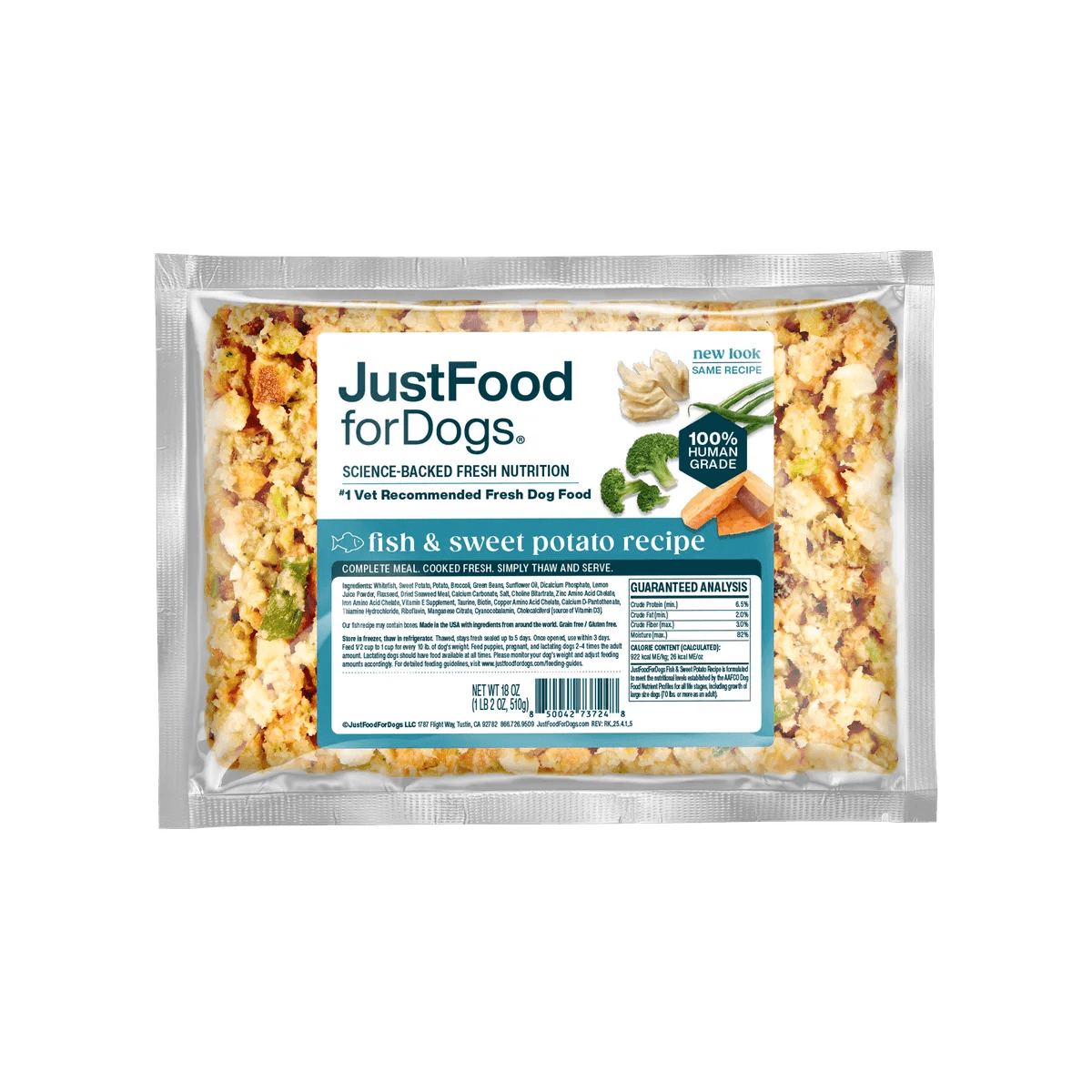
Compare the allergy-focused recipes in this guide with your dog’s diet history before a food trial.
- Whitefish with sweet potato
- Fresh Frozen meals with whole-food ingredients
- View the recipe and life-stage guidance
Webvet may earn a commission when you click through to JustFoodForDogs, at no extra cost to you.

Sensitive Skin Recipe: The Omega-3 Workhorse
The Sensitive Skin recipe is JustFoodForDogs' purpose-built answer for itchy, allergy-prone dogs, and the one I'd point most owners to first.
The protein is white fish, which serves double duty: it's a single animal protein most dogs haven't been sensitized to, and fish is naturally rich in omega-3 fatty acids. The recipe is fortified with omega-3 and omega-6 fatty acids and includes omega marine microalgae oil, a direct source of EPA and DHA, with a guaranteed minimum of 0.08% EPA and DHA.
Around the fish, the ingredient list stays short: sweet potatoes, quinoa, kale, sunflower oil, flaxseed, cranberries, and apples. The formula is legume-free and is built on quinoa, a grain-like seed, rather than wheat or corn. A small box (7 packs of 18 oz) runs $97.99 as of June 2026, with larger boxes available.
Best fit: dogs with itchy skin or dull coats where omega-3 support is the goal, on a poultry-free, beef-free single protein.
Fish & Sweet Potato: The Classic Skin-Support Recipe
Fish & Sweet Potato is the longstanding fish recipe in the JustFoodForDogs daily lineup, built on the same white fish with sweet potatoes, russet potatoes, green beans, and broccoli.
Its omega-3 story comes from two directions: naturally occurring marine omega-3s in the fish, plus flaxseed oil, a rich plant source of alpha-linolenic acid for skin and coat health. It's also the gentler price point: a small box (7 packs of 18 oz) is $83.99 as of June 2026.
Best fit: everyday omega-3 rich feeding for dogs avoiding poultry and beef, without the full Sensitive Skin formulation.
Compare the allergy-focused recipes in this guide with your dog’s diet history before a food trial.
- Whitefish-based Fresh Frozen recipe
- Made for adult dogs
- Review the full ingredient list with your vet
Choose a recipe around your dog’s known food triggers.
Webvet may earn a commission when you click through to JustFoodForDogs, at no extra cost to you.

Venison & Squash: The Novel Protein Specialist
The supporting cast is short and grain-free: butternut squash, sweet potatoes, Brussels sprouts, cranberries, sunflower oil, and omega marine microalgae oil, which supplies guaranteed minimums of the omega-3s EPA and DHA. Many novel protein diets skimp on marine omega-3s; this one doesn't.
A small box (7 packs of 18 oz, about 7.8 lbs) is $111.99 as of June 2026, reflecting a single novel protein your dog's immune system has likely never encountered, which is the entire point of a limited-ingredient diet for allergy-prone dogs.
Best fit: vet-directed elimination trials, and long-term feeding for dogs with confirmed sensitivities to common proteins. Loop your vet in first so the diet history check happens before you buy.
Skin & Allergy Aid Chews: The Supplement Sidekick
For dogs staying on their current diet, the Skin & Allergy Aid soft chews ($29.99 for 45 chews as of June 2026) concentrate the skin-support nutrients into supplement form: 200 mg of EPA and DHA from algae oil per chew, plus olive leaf extract, vitamins C and E, a probiotic, and ingredients formulated to help maintain a normal histamine response. A sensible add-on for seasonal itch support, but a complement to good nutrition, not a substitute.
JustFoodForDogs Options for Allergy-Prone Dogs
| Recipe | Protein | Key Nutrients | Best Fit |
|---|---|---|---|
| Sensitive Skin | white fish | Omega-3 & 6 fatty acids, EPA + DHA (0.08% min combined), flaxseed, marine microalgae oil | Itchy or flaky skin, dull coat, omega-3 support under vet guidance |
| Fish & Sweet Potato | white fish | Marine omega-3s, flaxseed oil (alpha-linolenic acid) | Everyday omega-3 rich feeding; dogs avoiding beef and poultry |
| Venison & Squash | New Zealand venison (novel protein) | Single novel animal protein, guaranteed EPA + DHA minimums, grain-free | Vet-directed elimination trials; dogs avoiding beef, fish, lamb, and poultry |
| Skin & Allergy Aid chews | n/a (supplement) | 200 mg EPA & DHA per chew, olive leaf extract, probiotic, vitamins C & E | Seasonal itch support alongside any complete diet |
Running a Food Trial With Fresh Food: A Practical Guide
Suppose your vet has signed off on a trial using a novel protein fresh diet. Here's how to give it the best chance of a clear answer.
Transition gradually, then hold the line. Take 5 to 7 days to mix the new food in increasing proportions. Once fully switched, the trial clock starts and the rules become absolute.
Everything that crosses the lips counts. This is the rule that sinks most trials. Treats, dental chews, flavored medications, the toddler's dropped toast: all of it counts. During the trial, treats must be the trial protein only (plain cooked venison if you're trialing Venison & Squash) or pieces of the trial diet itself. Ask your vet about unflavored parasite preventives for the trial window.
Brief the whole household. In multi-dog homes, feed separately and pick up bowls. One well-meaning grandparent with a biscuit habit can quietly erase six weeks of progress.
Track, don't trust memory. Take weekly photos of the worst skin spots and jot a 0-to-10 itch score every few days. A written record shows trends your memory will flatten.
If the trial succeeds and a re-challenge confirms food allergy, the long-term plan is simple: stay on a diet that avoids the trigger protein. That's where limited ingredient fresh recipes shine, because you can read every ingredient and nothing hides in a vague "animal digest" line. If the trial shows no improvement, that's valuable too: your vet can pursue environmental allergy with confidence, and an omega-3 rich diet can stay on as nutritional support. For a wider look, our sister site's guide to vet recommended diets for dogs with allergies is a useful companion read.
Frequently Asked Questions
Is JustFoodForDogs good for dogs with allergies?
It can be a strong option, used the right way. JustFoodForDogs offers limited ingredient recipes with single animal proteins, including a novel protein option (Venison & Squash) suited to vet-directed elimination trials, and omega-3 rich fish recipes (Sensitive Skin, Fish & Sweet Potato) that can help support skin and coat health. No food prevents or cures allergies, so pair any diet change with your veterinarian's plan.
What is the best diet for a dog with allergies?
There is no single best diet, because the right choice depends on what your dog is actually allergic to. The reliable process is a veterinary workup followed by an 8 to 12 week elimination trial on a novel or hydrolyzed protein diet. If a food trigger is confirmed, the best long-term diet is one that avoids it; many dogs with food sensitivities do well on limited-ingredient diets with a single, clearly identified protein.
How long does it take to see skin improvement after a diet change?
Plan for 8 to 12 weeks. Digestive signs can improve within 2 to 4 weeks, but skin renews slowly, so coat and itch changes lag behind. In a formal elimination trial, judge the result only at the end.
Is JustFoodForDogs recommended by vets?
JustFoodForDogs develops its recipes with input from veterinarians and veterinary nutritionists, formulates its daily diets to be complete and balanced. Many vets do recommend fresh, limited ingredient diets for suitable patients, but the recommendation that matters most comes from the vet who has examined your dog.
What is a novel protein diet?
A novel protein diet is built around a protein source your dog has never eaten before, such as venison for a dog raised on chicken and beef. Because food allergies develop against familiar proteins, a truly novel protein gives the immune system nothing to react to, which is why these diets are the backbone of elimination trials. "Novel" is individual: check your dog's full diet and treat history with your vet first.
The Bottom Line: Diagnosis First, Diet as the Ally
Allergic skin disease is a marathon, and the owners who do best stop guessing and start testing. Let your veterinarian sort out whether you're dealing with food allergy, environmental atopy, or something else. Then make the bowl work for you: a single novel protein for a clean elimination trial, an omega-3 rich recipe to help support the skin barrier, and a strict no-leaks policy while the trial clock runs.
JustFoodForDogs has built a useful toolkit for this journey: readable ingredient lists, a true novel-protein option, and fish-based recipes that deliver EPA and DHA as skin-supportive nutrition. Your dog doesn't need a miracle food. They need a good diagnosis, a patient owner, and a bowl that's working with the plan instead of against it.
Veterinarian · BVMS MRCVS
Dr. Pippa Elliott, BVMS, MRCVS, is a veterinarian with nearly 30 years of experience in companion animal practice. Dr. Elliott earned her Bachelor of Veterinary Medicine and Surgery from the University of Glasgow. She was also designated a Member of the Royal College of Veterinary Surgeons. Married with 2 grown-up kids, Dr. Elliott has a naughty Puggle named Poggle, 3 cats and a bearded dragon.
Related reading

Low Calorie Dog Treats: Calories and Portion Guide

Minimally Processed Dog Food: What It Means and Why It Matters

Best Soft Dog Food for Senior Dogs: Gentle, Nutrient-Dense Options
