Vet-Recommended Diets for Dogs With Sensitive Skin
A vet-guided look at feeding dogs with sensitive skin: the skin and coat nutrients that matter, ingredients to watch, how to choose a diet, and the signs that mean it is time to call your veterinarian.

BVMS MRCVS

This article contains affiliate links. Webvet may earn a commission when you buy through them, at no extra cost to you.
This article contains affiliate links. Webvet may earn a commission when you buy through them, at no extra cost to you.
If your dog cannot seem to stop scratching, licking a paw raw, or rubbing against the furniture, you are not alone. Dogs with sensitive skin are one of the most common reasons owners end up at the vet, and diet is one of the levers you can actually control at home. This guide looks at what sensitive skin in dogs really means, the nutrients that can help support a healthy skin barrier and coat, the ingredients vets suggest watching for, and how to choose a food with confidence. It is written to help you make a calmer, more informed decision, not to replace your veterinarian's advice.
One honest note up front: food is only part of the picture. Skin problems can also point to fleas, mites, infections, or environmental allergies that no bowl of food will fix. We will flag exactly when to stop experimenting with diet and call your vet.
- 1Sensitive skin in dogs shows up as itching, redness, flaky or greasy skin, recurrent ear or paw issues, and a dull coat.
- 2Diet can help support the skin barrier, mainly through omega-3 and omega-6 fatty acids, quality protein, and steady, complete nutrition.
- 3Only about 10 percent of canine allergies are food related; environment and parasites cause far more itching, so diet is one tool, not a cure.
- 4Look for named proteins, added EPA and DHA, and a food formulated to meet AAFCO nutrient profiles.
- 5See your veterinarian if the skin is broken, infected, rapidly worsening, or not improving after a proper diet trial.
What Sensitive Skin in Dogs Actually Looks Like (Signs to Watch For)
Sensitive skin is a pattern, not a single symptom. Dogs with sensitive skin tend to react more easily to food ingredients, environmental triggers, and grooming products, and the reaction usually shows up as itch and inflammation. Because dogs cannot tell us they feel itchy, you often notice the behavior before you notice the skin.
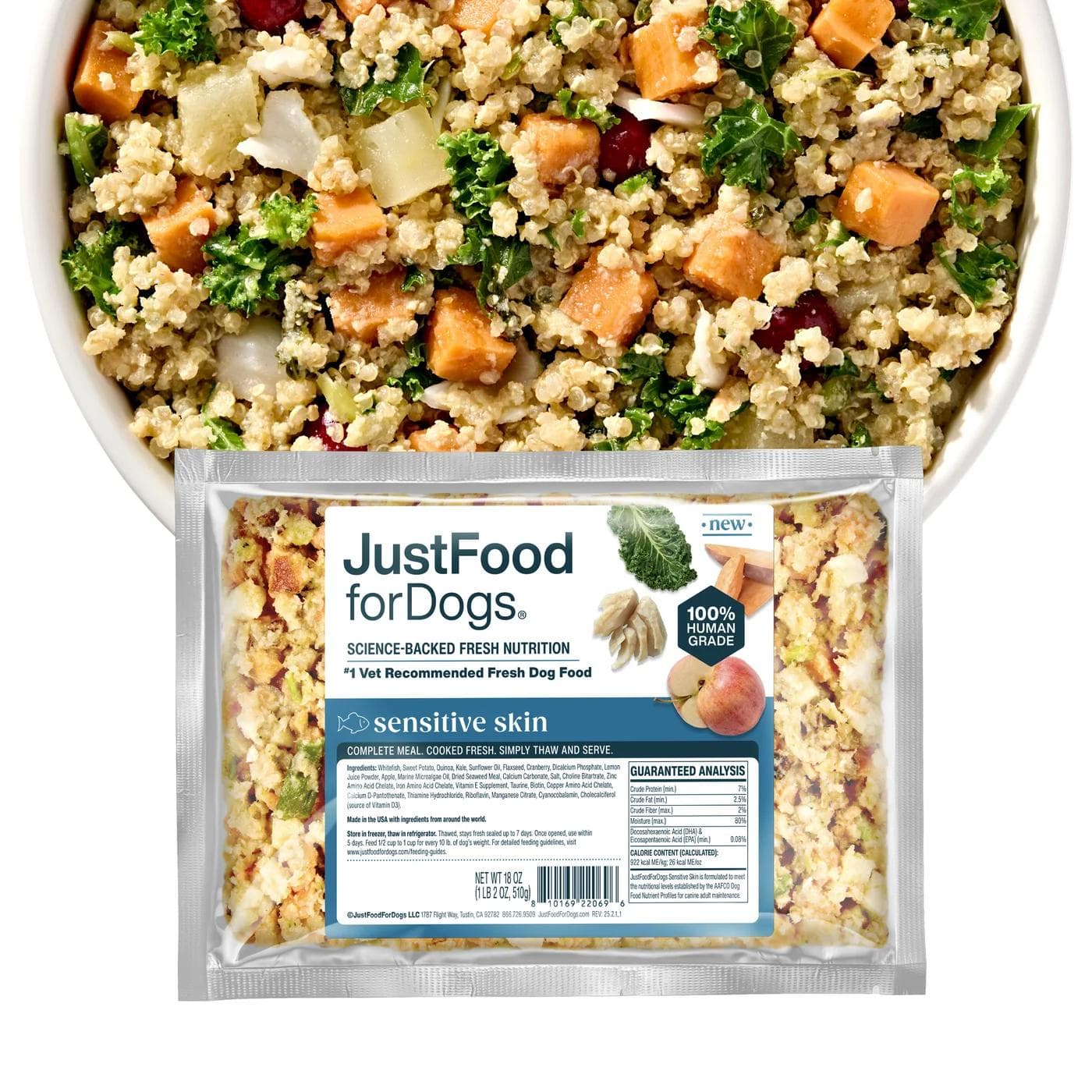
Explore the omega-3 rich, single-protein options discussed in this guide for itchy, sensitive skin.
- Whitefish-based Fresh Frozen recipe
- Made for adult dogs
- Review the full ingredient list with your vet
Choose a recipe around your dog’s known food triggers.
Webvet may earn a commission when you click through to JustFoodForDogs, at no extra cost to you.
Common signs to watch for:
- Frequent scratching, licking, chewing, or biting, especially at the paws, belly, groin, and rear
- Redness, rashes, small bumps, or visibly irritated skin
- Flaky, dry, or dandruff-covered skin, or the opposite, a greasy coat with an odor
- A dull, brittle coat, thinning fur, or patchy hair loss from constant scratching
- Recurrent ear infections or head shaking
- Reddish-brown saliva staining on light-colored paws from persistent licking
- Hot spots, which are raw, inflamed patches that can appear and spread quickly
A little seasonal scratching is normal. The pattern that suggests true sensitivity is itch that is frequent, that keeps returning, or that comes with visible skin changes. Some breeds are more prone to skin issues, including Bulldogs, West Highland White Terriers, Golden Retrievers, Labrador Retrievers, and Shar-Peis, so a genetic tendency plus the wrong diet can stack the deck.

What Causes Sensitive Skin in Dogs: Food, Environment, and Allergy
Sensitive skin is a symptom with many possible causes. Sorting them out matters, because the fix for a flea allergy is very different from the fix for a food sensitivity. Broadly, the culprits fall into three buckets.
Environmental allergies (atopy)
Pollens, dust mites, mold, and grasses are among the most common triggers of itchy skin in dogs. Environmental allergies often flare seasonally and tend to concentrate on the paws, face, ears, armpits, and belly. Diet does not cause atopy, but good nutrition can help support the skin barrier so it copes better with environmental triggers.
Parasites
Fleas are the single most common cause of allergic skin disease in dogs. A flea-allergic dog can react to just one or two bites. Mites (mange) and lice cause intense itching too. This is why year-round parasite prevention is a first step no diet can replace.
Food allergies and food intolerance
Food is a real but overrated villain. Most veterinary sources put true food allergies at roughly 10 percent of all canine allergies. A food allergy is an immune reaction, usually to a protein, while a food intolerance in dogs is a non-immune digestive reaction. Both can show up as itchy skin, and the most commonly reported food allergens in dogs are beef, dairy, chicken, wheat, and egg. Notice that these are the everyday proteins in many popular foods, not exotic ingredients.
What are signs of food allergies in dogs?
Signs of a food allergy in dogs include year-round (non-seasonal) itching, recurrent ear infections, itchy paws and rear, red or inflamed skin, and sometimes digestive upset such as loose stools or more frequent bowel movements. A telling clue is itch that does not follow the seasons and does not fully respond to flea control. Food allergies can appear at any age, even after a dog has eaten the same diet for years. The only reliable way to confirm a food allergy is a strict elimination diet trial supervised by your veterinarian, not an over-the-counter blood or saliva test. To see what an allergic rash looks like from early redness to chronic changes, browse our dog food allergy rash pictures.
How Diet Can Help Support Healthy Skin and Coat
The skin is the largest organ in your dog's body, and it renews itself constantly. Building healthy new skin cells and a strong coat takes a steady supply of protein, fats, vitamins, and minerals. When any of those run short, or when a specific ingredient triggers a reaction, the skin barrier suffers first. That is why the right food can help support skin and coat health, even when it is not the sole cause of the problem.
Diet helps in two main ways. First, by removing or avoiding an ingredient the dog reacts to, which lowers the immune trigger. Second, by supplying nutrients that strengthen the skin barrier and calm inflammation, which is where omega fatty acids do their best work. A stronger barrier holds moisture in and keeps irritants out, so the skin is less reactive overall.
What foods stop dogs from itching?
No single food stops itching on its own, and any product that promises to is overselling. What genuinely helps is a complete, balanced diet built around a protein your dog tolerates, generously supplied with omega-3 fatty acids (EPA and DHA), and free of the specific ingredient triggering your individual dog. For a food allergy, the diet that stops the itch is the one that removes the offending protein, confirmed through a proper elimination trial. For general skin support, a diet rich in omega-3s and quality protein can help support a calmer, less reactive coat over several weeks.
Key Nutrients That Support Skin and Coat Health
When vets look at a food for a dog with sensitive skin, a handful of nutrients matter most. Think of these as the building blocks and the anti-inflammatory support that a healthy coat depends on.
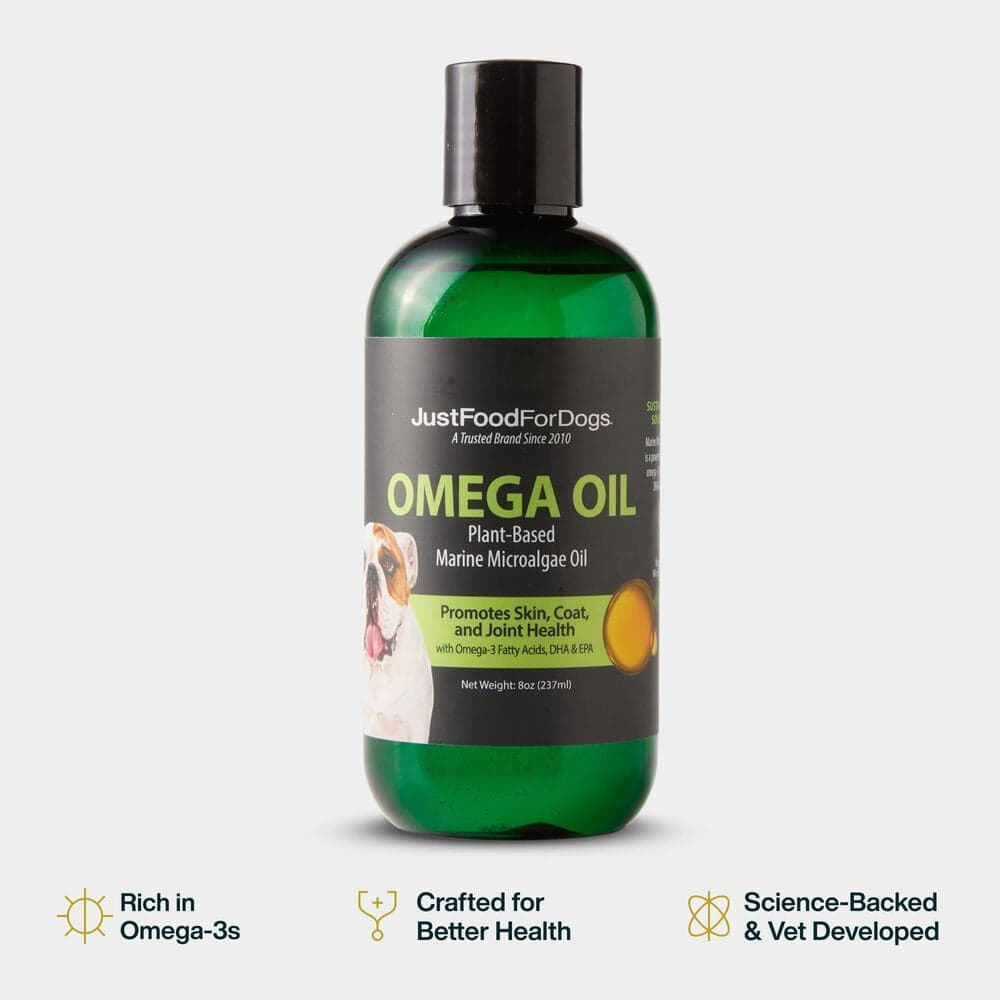
Explore the omega-3 rich, single-protein options discussed in this guide for itchy, sensitive skin.
- Marine microalgae oil with vitamin E
- EPA 8% and DHA 36% minimum
- For supplemental feeding; dose by weight
Intermittent or supplemental feeding only.
Webvet may earn a commission when you click through to JustFoodForDogs, at no extra cost to you.
| Nutrient | Why it matters for skin and coat | Common sources |
|---|---|---|
| Omega-3 fatty acids (EPA and DHA) | Help calm skin inflammation and support the skin barrier; the most evidence-backed nutrients for itchy, sensitive skin | Fish, fish oil, marine microalgae oil |
| Omega-6 fatty acids (linoleic acid) | Support the skin barrier and coat shine; needs to be balanced with omega-3 | Sunflower oil, poultry fat, plant oils |
| High-quality protein | The raw material for skin cells and hair; a tolerated, named protein is key | Fish, novel meats, named animal proteins |
| Zinc | Supports skin healing and barrier function; deficiency causes crusting and hair loss | Meat, fish, whole foods |
| Vitamin E | An antioxidant that protects skin cells and works with omega fatty acids | Plant oils, leafy greens, added supplements |
| Vitamin A and B vitamins | Support normal skin cell turnover and coat quality | Liver, eggs, whole-food diets |
Omega-3 and omega-6: the skin duo
If you remember only one thing, remember omega-3s. The long-chain omega-3s EPA and DHA, found in fish and marine oils, are the most researched nutrients for canine skin, and they help calm the inflammation that drives itch. Omega-6s support the barrier and coat shine but are already abundant in most diets, so the goal is a sensible ratio rather than piling on more omega-6. A food that adds concentrated EPA and DHA gives your dog a head start on skin support.
What food is good for dogs with sensitive skin, and what food is good for dogs with itchy skin?
The best food for dogs with sensitive or itchy skin is a complete, balanced diet built on a single, tolerated protein, enriched with omega-3 fatty acids, and free of fillers and known triggers for your dog. Fish-based recipes are a popular starting point because fish is both a less common protein for many dogs and a natural source of skin-supporting omega-3s. Limited-ingredient and novel-protein diets are frequent choices, and fresh, whole-food diets appeal to owners who want to see recognizable ingredients. The right answer is dog-specific, so the food that helps an itchy Labrador may differ from the one that helps an itchy terrier.

Novel and limited-ingredient proteins
A novel protein is simply one your dog has rarely or never eaten, such as whitefish, venison, or rabbit. Because the immune system reacts to proteins it has already met, switching to a novel protein can help support a dog whose skin flares on common meats. A limited-ingredient diet keeps the recipe short, which makes it easier to spot and avoid a trigger. Neither is magic, but both reduce the number of things your dog's immune system has to argue with.
Explore the omega-3 rich, single-protein options discussed in this guide for itchy, sensitive skin.
- Whitefish-based Fresh Frozen recipe
- Made for adult dogs
- Review the full ingredient list with your vet
Choose a recipe around your dog’s known food triggers.
Webvet may earn a commission when you click through to JustFoodForDogs, at no extra cost to you.
Ingredients Vets Suggest Watching For When Skin Is Sensitive
There is no universal list of bad ingredients, because a dog can only be allergic to something it has eaten. Still, some ingredients are worth extra scrutiny when skin is sensitive, either because they are common allergens or because they add little nutritional value.
What foods should I avoid for dogs with itchy skin?
For an itchy dog, the ingredients most worth watching are:
- The most-reported food allergens: beef, dairy, chicken, wheat, and egg, especially if your dog currently eats one of them and keeps flaring
- Vague or unnamed meat sources like meat by-product or animal fat, which make it hard to know what your dog is actually eating
- Artificial colors, flavors, and unnecessary fillers that add little for a sensitive dog
- Multiple overlapping protein sources in one recipe, which make an elimination trial nearly impossible to interpret
One myth worth retiring: grain is rarely the problem. Corn, wheat, and other grains are far less common triggers than animal proteins, so grain-free is not automatically better for skin, and it is not a treatment for allergies. For a fuller breakdown of what actually triggers reactions, see our guide to allergens in dog food.
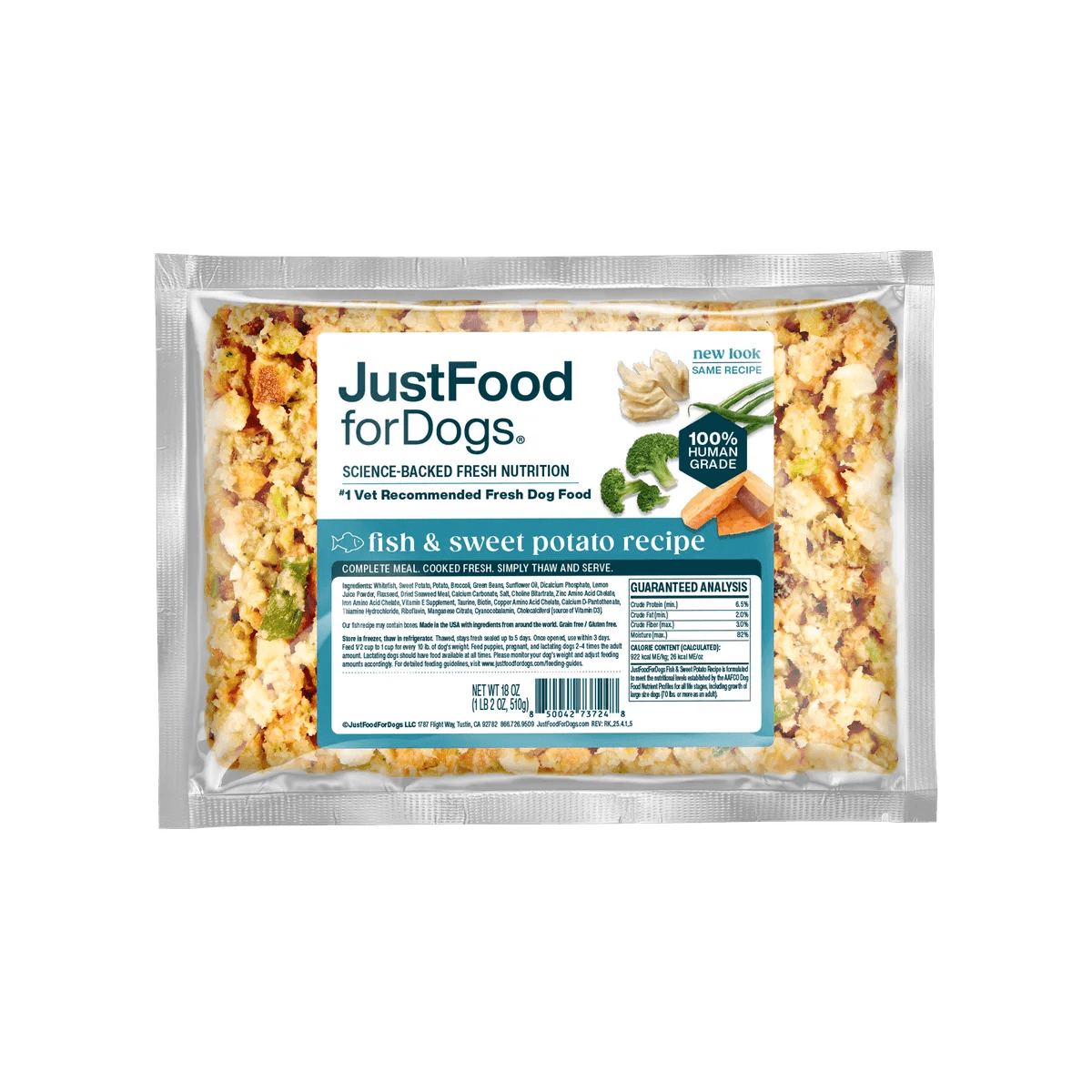
Explore the omega-3 rich, single-protein options discussed in this guide for itchy, sensitive skin.
- Whitefish with sweet potato
- Fresh Frozen meals with whole-food ingredients
- View the recipe and life-stage guidance
Webvet may earn a commission when you click through to JustFoodForDogs, at no extra cost to you.

How to Choose a Diet That Can Help Support Your Dog's Skin
Choosing a food for a dog with sensitive skin is less about finding a magic bag and more about reading labels well and changing one thing at a time. Here is a practical checklist you can use in the aisle or online.
- Check the AAFCO statement. Choose a food formulated to meet AAFCO nutrient profiles for your dog's life stage. This confirms the diet is complete and balanced, not just a topper.
- Look for a single, named protein. A recipe built on one clearly named protein (for example, whitefish) is far easier to evaluate than one with several meats.
- Confirm added omega-3s. Look for EPA and DHA, or a fish or marine oil, listed on the label for real skin support.
- Keep the ingredient list short and recognizable. Fewer ingredients means fewer suspects if you need to run an elimination trial.
- Transition slowly. Mix the new food in over 7 to 10 days to avoid stomach upset, and give any new diet at least 8 to 12 weeks before judging its effect on the skin.
- Change one variable at a time. If you switch food, treats, and supplements all at once, you will never know what helped.
What do vets recommend for dogs with itchy skin?
Vets typically start by ruling out fleas and other parasites with reliable prevention, then treat any secondary skin infection. If diet is suspected, they recommend a strict elimination trial using either a veterinary hydrolyzed diet or a carefully chosen novel-protein, limited-ingredient food for 8 to 12 weeks, feeding nothing else. Alongside diet, vets often add omega-3 supplementation and may use anti-itch medication for comfort during flares. For environmental allergies, options range from medicated shampoos to prescription therapies. The through-line is that vets treat the cause they can identify rather than guessing, which is why a professional diagnosis beats trial and error.
What about hypoallergenic and prescription diets?
Hypoallergenic dog foods are diets designed to be less likely to trigger an allergic reaction. In the strictest sense, veterinary hypoallergenic diets use hydrolyzed proteins, meaning the protein is broken into pieces too small for the immune system to recognize, so the body is far less likely to react. Over-the-counter limited-ingredient and novel-protein foods are often marketed as hypoallergenic too, and they can help many dogs, but they are not equivalent to a prescription hydrolyzed diet for a confirmed, severe food allergy. We answer the common hypoallergenic questions directly in the FAQ below.
Fresh, Whole-Food Options: Where JustFoodForDogs Fits
For owners who want to see recognizable ingredients rather than an unfamiliar list, fresh, whole-food diets have become a popular choice for sensitive dogs. Cooked from whole ingredients rather than rendered and extruded, these diets make it easy to know exactly what your dog is eating, which is genuinely helpful when you are trying to pin down a trigger.
One example in this space is the JustFoodForDogs Sensitive Skin recipe. It is built around wild-caught whitefish (cod, pollock, and haddock) as a single novel protein, paired with sweet potato, quinoa, kale, apples, and cranberries. The recipe is fortified with omega-3 and omega-6 fatty acids, including concentrated EPA and DHA from marine microalgae oil, which are exactly the skin-supporting nutrients discussed above. It is legume-free and formulated to meet AAFCO nutrient profiles for adult maintenance, so it is a complete diet rather than a supplement. As a fresh whole-food option built on a novel fish protein with added omega-3s, it can help support skin and coat health for dogs whose skin flares on more common proteins.

It is worth noting that JustFoodForDogs also funds nutrition research. The company has supported six published peer-reviewed studies involving its foods or whole-food approach, plus an earlier published feeding-trial abstract on its whole-food diets, which provides a documented research program owners and veterinarians can evaluate directly. That does not make any diet right for every dog, and a fresh diet is one tool among several, but it is a reasonable, vet-informed pick to consider and discuss with your veterinarian.
Fresh whole-food diets for sensitive skin: the honest trade-offs
Pros
- Recognizable, whole ingredients make it easy to see exactly what your dog eats
- Novel single proteins like whitefish suit dogs that flare on common meats
- Often fortified with omega-3s (EPA and DHA) that support the skin barrier
- Complete diets formulated to meet AAFCO nutrient profiles, not just toppers
- Higher moisture and palatability can help picky or uncomfortable dogs eat
Cons
- Cost more per serving than most kibble
- Refrigeration or freezer space and a little prep or portioning are needed
- Not a substitute for a veterinary hydrolyzed diet in a confirmed severe food allergy
- Any diet still needs an 8 to 12 week trial to judge its effect on skin
A quick caution for the DIY-minded: cooking for a sensitive dog at home is possible, but a homemade diet that is not properly balanced can create nutrient gaps that make skin worse, not better. If you go that route, follow vet safety guidelines for homemade dog food recipes and work from a formulation reviewed by a veterinary nutritionist.
When to See Your Veterinarian
Diet is a powerful lever, but it is not a diagnosis. Because skin issues can signal infection, parasites, hormonal disease, or non-food allergies, there are clear moments when home experimenting should stop and a professional should step in.
Call your veterinarian if you notice any of the following:
- Broken, bleeding, oozing, or crusted skin, or a fast-spreading hot spot
- A bad odor, discharge, or signs of a skin or ear infection
- Itching so intense it disrupts sleep or causes self-trauma
- Hair loss, thickened or darkened skin, or symptoms that keep returning
- Any facial swelling, hives, or trouble breathing, which is an emergency
- No improvement after a proper 8 to 12 week diet trial
Your veterinarian can rule out parasites and infection, guide a real elimination trial, and prescribe treatment that no over-the-counter food can provide. Partnering with them turns diet from a guessing game into part of a plan that actually works.

Frequently Asked Questions
What is the best hypoallergenic food for dogs, and what is the best hypoallergenic dog food?
There is no single best hypoallergenic dog food for every dog, because the ideal diet depends on which ingredient your individual dog reacts to. For a confirmed, severe food allergy, the strongest option is a veterinary hydrolyzed diet, in which the protein is broken down so the immune system cannot recognize it. For milder sensitivity, a limited-ingredient or novel-protein food, such as a fish-based recipe, often works well. The best choice is the one that removes your dog's specific trigger, ideally identified with your veterinarian through an elimination trial.
What are hypoallergenic dog foods?
Hypoallergenic dog foods are diets designed to be less likely to trigger an allergic reaction. They generally fall into two groups. Veterinary hydrolyzed diets break proteins into fragments too small for the immune system to react to. Novel-protein and limited-ingredient diets use a single, uncommon protein and a short ingredient list to reduce the number of potential triggers. The term is not tightly regulated, so read the label and check with your vet rather than relying on the marketing word alone.
Does hypoallergenic dog food really work?
Yes, when it is matched to a real food allergy and fed correctly. Veterinary hydrolyzed and novel-protein diets have a strong track record for dogs with confirmed food allergies, provided the diet is fed exclusively during an 8 to 12 week trial with no other treats or table food. What hypoallergenic food cannot do is fix itching caused by fleas, mites, or environmental allergies, which is why it works best after a proper diagnosis. If a dog reacts to something other than food, even a perfect diet will not stop the itch.
What is the best dog food for allergy prone dogs?
For allergy-prone dogs, the best food is a complete, balanced diet built on a single novel or hydrolyzed protein the dog has not reacted to, with a short ingredient list, added omega-3 fatty acids, and no known triggers. Fish-based, limited-ingredient, and fresh whole-food diets are popular starting points. Because allergy triggers vary from dog to dog, the best food is the one your veterinarian helps you confirm through an elimination trial rather than any one brand.
What food do vets recommend for dogs with allergies?
Vets most often recommend a strict elimination diet using either a prescription hydrolyzed protein diet or a carefully selected novel-protein, limited-ingredient food, fed exclusively for 8 to 12 weeks. They usually pair it with year-round parasite prevention and omega-3 supplementation. Fresh whole-food diets built on a single novel protein, such as a whitefish recipe formulated to meet AAFCO nutrient profiles, can also be part of the plan for milder sensitivity. The specific recommendation depends on your dog's history, so it is always individualized.
How long before a new diet helps my dog's skin?
Give any new diet at least 8 to 12 weeks before judging its effect on the skin. Skin cells and coat renew slowly, and a food allergy trial only counts if the diet is fed exclusively, with no other treats, flavored medications, or table scraps. Transition to the new food gradually over 7 to 10 days to avoid stomach upset, then be patient and keep a simple diary of the itching so you can see real change over time.
Sensitive skin can be frustrating, but it is manageable. Focus on the fundamentals: rule out parasites, feed a complete diet built on a tolerated protein and rich in omega-3s, change one thing at a time, and give it enough weeks to work. Diet can genuinely help support healthier skin and a shinier coat, and when you pair the right food with your veterinarian's guidance, many dogs can improve once the underlying cause is identified and managed.

Editor
The Webvet Editorial Team is the in-house group of pet-care editors and writers behind Webvet, operated by Smart Pet Collective. The team researches, writes, and maintains Webvet's pet health, behavior, and medication content. Every article follows a defined editorial process: research from reputable veterinary and scientific sources, careful drafting, mandatory review of medical content by a credentialed veterinarian, and dated publication. Health and medication articles are medically reviewed by a licensed veterinary professional before they go live and are kept current over time.
Veterinarian · BVMS MRCVS
Dr. Pippa Elliott, BVMS, MRCVS, is a veterinarian with nearly 30 years of experience in companion animal practice. Dr. Elliott earned her Bachelor of Veterinary Medicine and Surgery from the University of Glasgow. She was also designated a Member of the Royal College of Veterinary Surgeons. Married with 2 grown-up kids, Dr. Elliott has a naughty Puggle named Poggle, 3 cats and a bearded dragon.


