Dog Skin Allergies: Symptoms, Causes, Testing, and Treatment
Dog skin allergies are an immune overreaction to fleas, food, or environmental allergens that shows up as itching, red skin, ear infections, and hot spots. Here are the symptoms, the three allergy types, how vets test for them, and treatment.

BVMS MRCVS
Medically reviewed by Dr. Pippa Elliott, BVMS MRCVS · Last reviewed

This article contains affiliate links. Webvet may earn a commission when you buy through them, at no extra cost to you.
Dog skin allergies are an immune overreaction to fleas, food, or environmental allergens that shows on the skin as itching and inflammation. A dog with skin allergies usually scratches, licks, or chews, and the skin turns red, sore, or infected.
Dog skin allergies fall into three types: flea allergy, food allergy, and environmental allergy (atopic dermatitis). Diagnosis means ruling out fleas and food first, and most allergic dogs need long-term management rather than a one-time cure.
- 1Dog skin allergies are an immune overreaction to fleas, food, or environmental allergens that shows on the skin.
- 2Watch for the signs: itching, red skin, ear infections, paw licking, hot spots.
- 3The three types are flea allergy, food allergy, and environmental allergy, also called atopic dermatitis.
- 4Diagnosis rules out fleas first, then uses an elimination diet, and allergy testing comes last.
- 5Atopic dogs likely need lifelong treatment, so the goal is control of flares, not a cure.

 Sponsored
Want a vet's take on your dog's skin or coat?
Talk to a licensed vet at Dutch over video, often the same day. They can recommend treatment and prescribe it when it's appropriate.
Use code Pets60
Plans start at $12/month · covers up to 5 pets
- Licensed vets in most states
- Rx for 150+ conditions
- 4.7 on Trustpilot
What Are Dog Skin Allergies?
Dog skin allergies are an immune overreaction to fleas, food, or environmental allergens that causes itching and skin inflammation, and VCA Animal Hospitals calls atopic dermatitis a common itchy skin condition. The three types are flea, food, and environmental allergy, and diagnosis means ruling out fleas and food first.
The Merck Veterinary Manual says dogs are thought to be genetically predisposed to become sensitized to environmental allergens. A review in PMC calls canine atopic dermatitis a chronically relapsing, itchy inflammatory disease, which is why a dog with severe skin allergies often has bad flares again and again.
If you are asking what to give a dog for skin allergies, start with what vets recommend. Omega-3 and omega-6 fatty acids, such as fish oil, give some relief to many pets with allergic skin disease, VCA says. What helps and what is unproven:
- Helps many dogs, per VCA: omega-3 fish oil, regular medicated baths, and strict flea control
- Not described by veterinary references as proven treatments: probiotics, vitamins, brewer's yeast, and essential oils, so ask your vet before adding any of them
When food allergy is suspected, the first step is usually a prescription elimination diet chosen by your vet, fed with no other foods or treats.
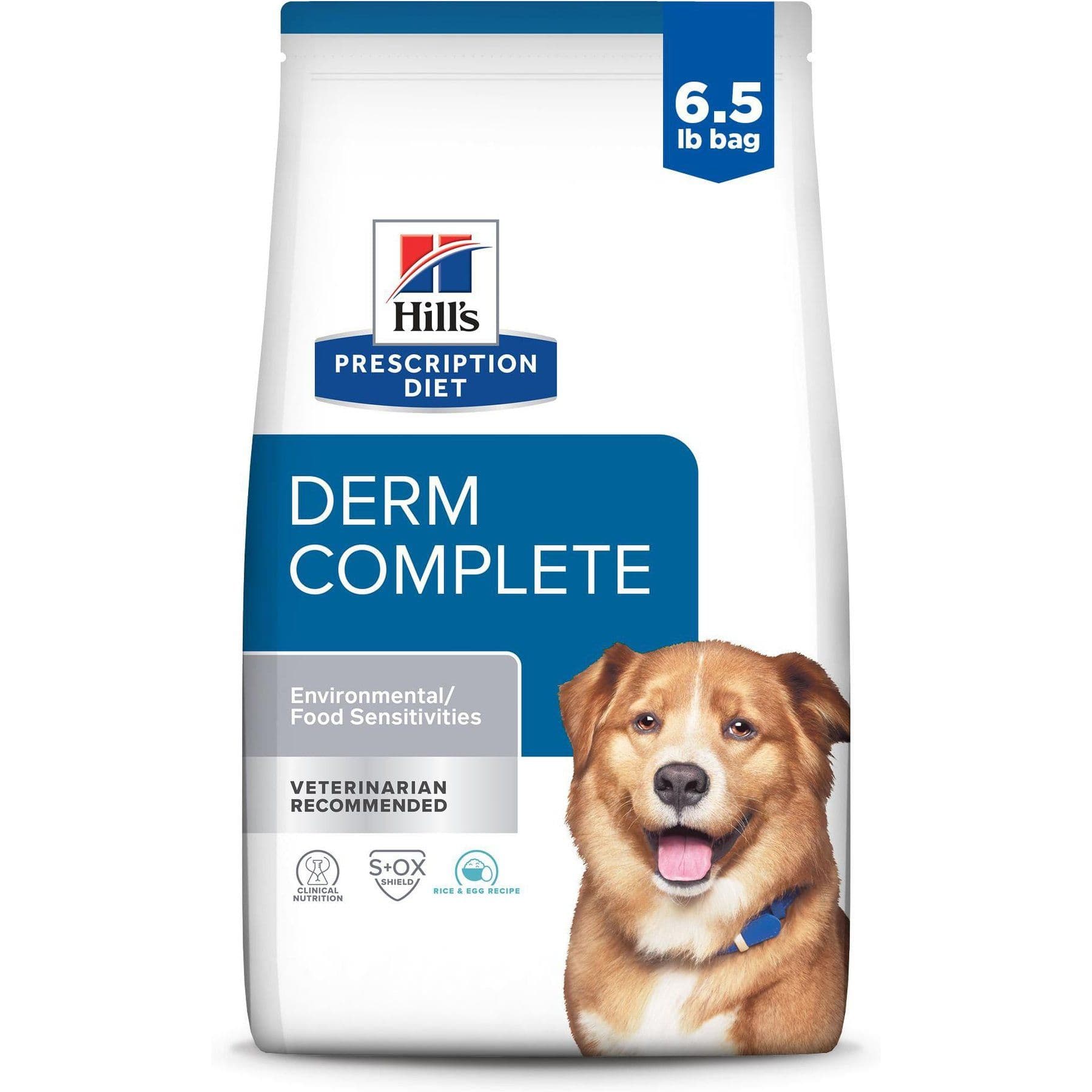
Hill's Prescription Diet Derm Complete is a prescription dry dog food for skin and food sensitivities, 6.5-lb bag.
Webvet may earn a commission when you click through to Chewy, at no extra cost to you.
Symptoms of Dog Skin Allergies
The main symptom of dog skin allergies is itching, followed by red skin, rash, bumps, and sores from scratching. Merck says itching is the most typical sign of airborne allergy, and the feet, face, ears, front legs, and abdomen are the most frequently affected areas.

What do dog skin allergies look like in pictures? Look for these signs on the skin and coat:
- Itchy skin with scratches, abrasions, and reddish-brown saliva staining on the paws or legs (VCA)
- A red rash or small bumps on the belly, armpits, and inner legs
- Paw licking and chewing at the feet
- Ear infections, which VCA says involve allergies in as many as 43 percent of cases, especially recurrent ones
- Hot spots, which VCA describes as red, inflamed, oozing lesions that appear quickly from self-trauma
Food allergy shows as itchy skin, paws, or ears, sometimes with vomiting or diarrhea, according to VCA. You can compare photos on our page of dog food allergy rash pictures, and our guide on why a dog is so itchy covers other causes.
Many atopic dogs benefit from frequent bathing with special shampoos, sprays, or mousses, VCA says. Home remedies for itching rarely replace that routine, and veterinary references describe no homeopathic remedy for allergic itching. A soothing shampoo is the simplest place to start between vet visits.
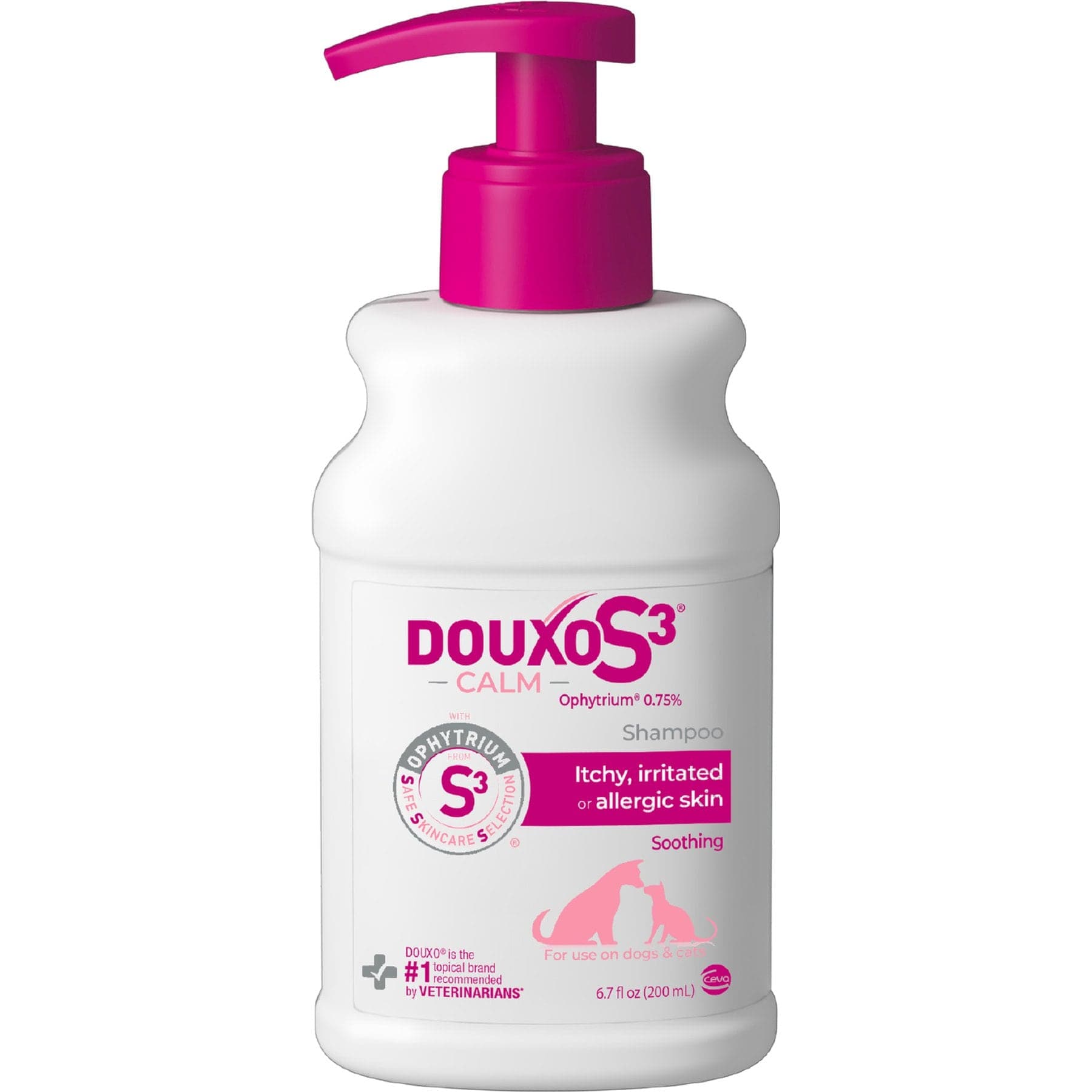
Douxo S3 CALM is a soothing shampoo for itchy dogs and cats, 6.7-fl oz.
Webvet may earn a commission when you click through to Chewy, at no extra cost to you.
Types of Skin Allergies in Dogs
There are three types of dog skin allergies: flea allergy dermatitis, food allergy, and environmental allergy (atopic dermatitis). Merck's owner page says food allergies are less common than airborne allergies, and its professional page puts food allergy at about 1 to 2 percent of dogs seen in veterinary care. Veterinary references do not give a ranked split of all three.
The three types overlap. VCA notes that dogs with food allergy often have another allergy, such as atopy, at the same time. VCA says atopic itching may be seasonal or non-seasonal, and Merck says flea allergy is most prevalent in summer.
The table below compares the three allergy types by signs, body areas, season, and how each is confirmed.
| Type | Typical signs | Body areas | Season | How it is confirmed |
|---|---|---|---|---|
| Flea allergy dermatitis | Itching and hair loss | Mid-back to tail base, rear thighs | Most prevalent in summer, can be year-round | Fleas or flea dirt plus matching signs |
| Food allergy | Itchy skin, paws, or ears, sometimes vomiting or diarrhea | Paws, ears, skin | Not described as seasonal | Elimination diet, then a food challenge |
| Environmental allergy (atopic dermatitis) | Chronic or recurrent itching, saliva staining | Paws, face, ears, front legs, armpits, abdomen | Seasonal or non-seasonal | Exclusion of other causes, then allergy testing |
Merck describes flea allergy dermatitis as most prevalent in summer, and VCA notes most flea infestations occur in warmer weather but can happen year-round. Our sibling guide on flea allergy dermatitis in dogs covers that type in depth.
What Causes Dog Skin Allergies?
Dog skin allergies are caused by pollen, dust mites, mold, fleas, plus food proteins, each of which triggers an immune reaction in a sensitized dog. VCA lists tree and grass pollens, weeds, molds, and dust mites as common atopy triggers, the same allergens that affect humans.
- Flea allergy: a reaction to proteins in flea saliva (VCA)
- Food allergy: a reaction to proteins such as dairy, beef, chicken, eggs, soy, and wheat gluten (VCA)
- Environmental allergy: pollens, weeds, molds, and dust mites (VCA)
VCA says food allergy usually appears after prolonged exposure to one food, so a dog can react to a diet it has eaten for years.
What is the most common allergy in dogs?
Veterinary references do not name one single most common allergy in dogs. Merck says food allergy is less common than airborne allergy, affecting about 1 to 2 percent of dogs in veterinary care, while VCA calls food allergy one of the most common allergies. Vets check for fleas first, then run a food trial before testing for environmental triggers.
 Sponsored
Vet care that's always there
Unlimited video calls and messaging with licensed vets for less than a typical vet visit. One membership covers up to five pets.
Use code Pets60
Plans start at $12/month · covers up to 5 pets
- Licensed vets in most states
- Rx for 150+ conditions
- 4.7 on Trustpilot
How Are Dog Skin Allergies Diagnosed?
Dog skin allergies are diagnosed by ruling out fleas, running an elimination diet, plus allergy testing for environmental triggers. The Merck Veterinary Manual says atopic dermatitis is diagnosed by signs, history, and exclusion of other itchy skin diseases, and VCA says no definitive test for atopy exists.

- Check for fleas. A PMC guideline says clinicians should check every itchy dog for fleas.
- Run a food trial. VCA says it lasts 8 to 12 weeks, the PMC guideline sets at least 8 weeks, Merck's professional page says at least 10 weeks may be needed to identify 95 percent of food-allergic dogs, and Merck's owner page says up to 3 months.
- Confirm with a challenge. VCA says food allergy is confirmed when signs return within one week of feeding the old food again.
- Test for environmental triggers. VCA says an intradermal skin test is considered more reliable than blood testing, which is often cheaper and needs no sedation.
Dog allergy testing confirms a suspicion; it does not diagnose allergy alone, since Merck says results reflect exposure. Merck also says serum and saliva tests could not consistently prove or disprove food allergy, which is why an at-home dog allergy test kit is not a substitute for a vet workup. Our dog allergy testing guide explains the options.
VCA notes that diphenhydramine can alter skin test results and should be stopped at least 2 weeks before testing, so tell your vet about every medicine your dog takes.
Treatment for Dog Skin Allergies
Treatment for dog skin allergies combines flea control, medicated baths, prescription drugs, immunotherapy, and diet changes matched to the type. Merck says the first step for flea allergy is eliminating fleas on the dog, other pets, and the home, and VCA says modern oral or topical flea prevention is the best treatment.
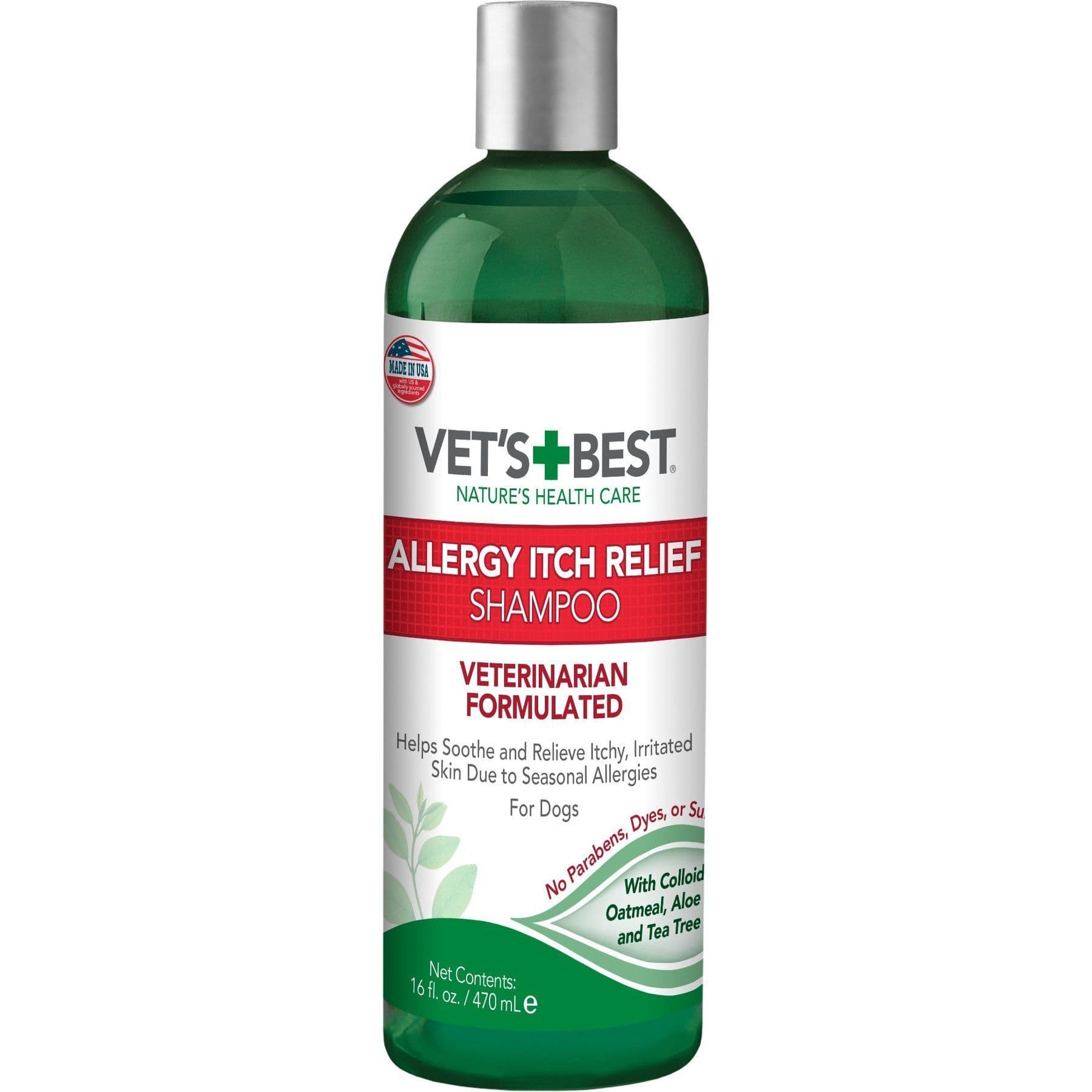
Vet's Best Allergy Itch Relief is an oatmeal and aloe dog shampoo, 16-fl oz.
Webvet may earn a commission when you click through to Chewy, at no extra cost to you.
How can I treat my dog's skin allergies?
Treat your dog's skin allergies by starting strict flea control, bathing with a medicated or soothing shampoo, and asking your vet about prescription itch medicine. VCA says many atopic dogs benefit from frequent bathing with special shampoos, sprays, or mousses. A food trial is needed if food allergy is suspected.
Medicated baths are the core home treatment. Shampoo for dog skin allergies, such as Douxo S3 CALM Soothing Itchy, Hydrated Skin Dog & Cat Shampoo, is used on a regular schedule. Veterinary references do not rate hypoallergenic wipes for dogs, so treat them as a convenience, not a substitute for baths. Our guide to dog shampoo for itchy skin compares the best medicated options.

Prescription options treat the immune reaction directly. VCA lists corticosteroids and cyclosporine for itch relief, with newer options oclacitinib and ilunocitinib. Merck says cyclosporine takes 4 to 6 weeks to work, and oral glucocorticoids act fast but carry many potential adverse effects.
Fatty acid supplements round out the plan. VCA says omega-3 and omega-6 fatty acids give some relief to many pets with allergic skin disease, and Merck says they can take up to 2 months to work.
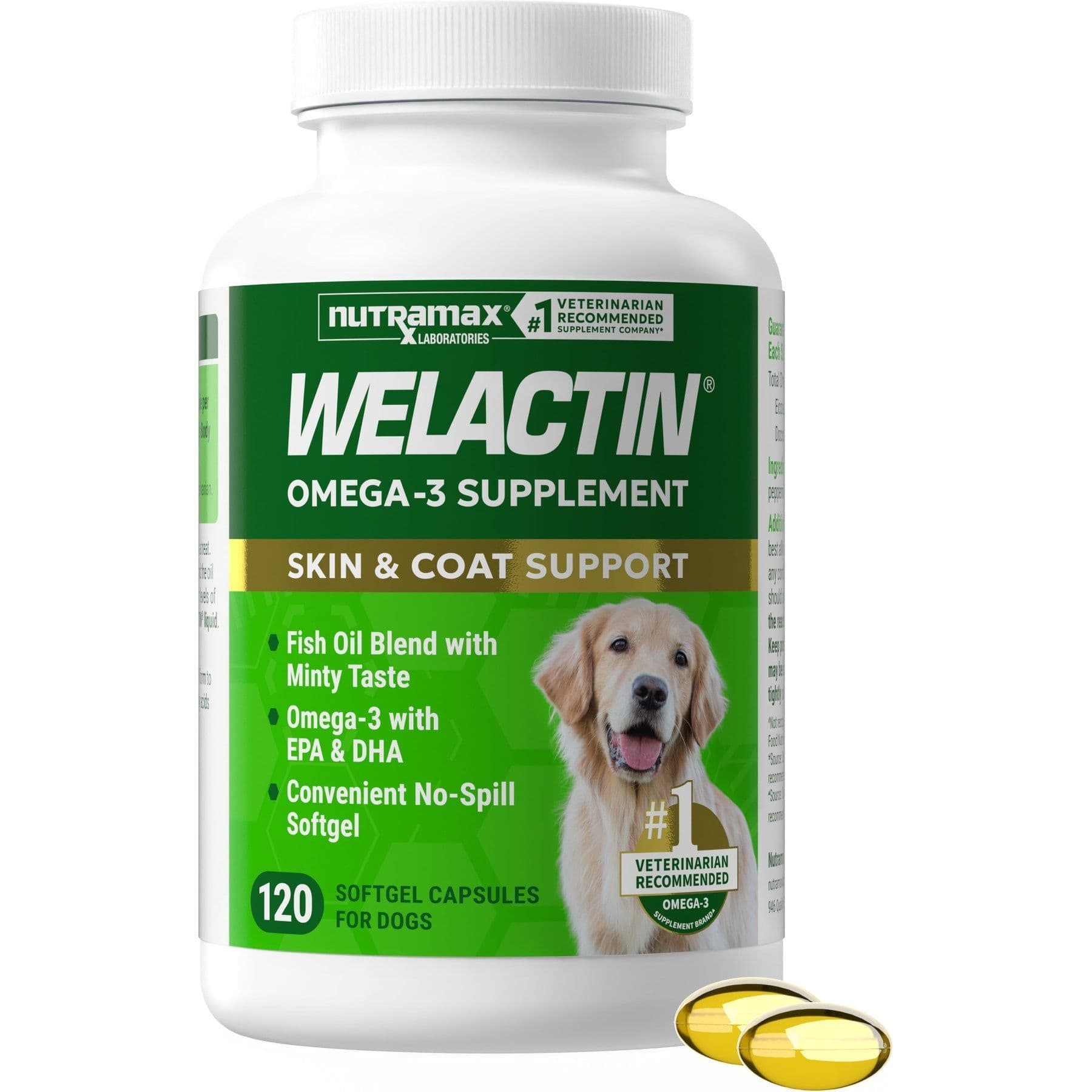
Nutramax Welactin is an omega-3 fish oil softgel supplement for dogs, 360 count.
Webvet may earn a commission when you click through to Chewy, at no extra cost to you.
Allergen-specific immunotherapy is a long-term treatment built from allergy test results. VCA says its benefits are often not apparent until three to twelve months or more. A PMC review reports about 20 percent of dogs respond excellently, 40 to 50 percent satisfactorily, and 30 to 40 percent insufficiently.
For dog ear allergy treatment, a vet must diagnose the exact cause first, VCA says. Recurrent ears often need treatment for a dog ear yeast infection alongside the allergy. No natural or holistic cure exists, because allergies are managed rather than cured.
Allergy Medicine for Dogs
Dog allergy medicine splits into prescription drugs with strong evidence and over-the-counter antihistamines with weak evidence. Apoquel (oclacitinib) and Cytopoint (lokivetmab) are prescription only. The Apoquel label on DailyMed covers itch from allergic and atopic dermatitis in dogs at least 12 months old.
- Apoquel for dog skin allergies: Merck says it acts within 24 hours. The label warns it may increase infection risk, including demodicosis, and worsen neoplastic conditions.
- Cytopoint: a newer allergy medication, a caninized antibody that blocks the IL-31 itch signal (PMC). Merck lists onset at 1 to 3 days. VCA says injections are given every 1 to 2 months, and Zoetis says every 4 to 8 weeks as needed.
- Over-the-counter antihistamines: VCA says they appear relatively ineffective for dogs already itchy, and a PMC review notes inconsistent evidence.
In a company-affiliated 12-month study, 88 percent of dogs on lokivetmab (65 of 75) kept a low owner itch score. Over-the-counter allergy chews are supplements, not medicine: Merck says fatty acids are not useful for acute flares and can take up to 2 months to work.
Can dogs take claritin?
Loratadine (Claritin) is not listed by VCA or Merck as a dog allergy treatment, so ask your vet before giving it. Merck warns that loratadine and fexofenadine products are often combined with pseudoephedrine, which causes more serious poisoning signs. Merck's table says fexofenadine helps mild itch only as part of combination therapy. Ask your vet for the dose for your dog's weight.
Is Benadryl or Zyrtec better for dog allergies?
Veterinary references do not rank Benadryl against Zyrtec for dog allergies. VCA lists diphenhydramine (Benadryl) and cetirizine (Zyrtec) as antihistamines used off label in dogs, and the evidence shows antihistamines help only some dogs. VCA warns never to use the cetirizine and pseudoephedrine combination product.
What can I give my dog for allergies without going to the vet?
Without a vet visit, the safe steps are strict flea control, regular baths with a soothing shampoo, and omega-3 fish oil. The ASPCA advises checking with your veterinarian before giving any medication, and warns that antihistamines with added pseudoephedrine can cause severe hyperactivity and seizures.
Food and Diet for Dogs With Skin Allergies
The best dog food for skin allergies is the diet that passes an elimination trial: a novel or hydrolyzed protein fed strictly with nothing else. VCA says the only treatment for food allergy is avoidance of the offending food, and the vet picks the specific diet.

Merck says elimination trials use novel protein diets, hydrolyzed diets, or elemental diets. VCA explains the two common choices:
- Novel protein diet: contains nothing present in the dog's previous foods
- Hydrolyzed diet: breaks protein into pieces too small for the immune system to recognize
Limited ingredient dog food for allergies is not the same as a veterinary diet. VCA says retail foods lack the cross-contamination controls of veterinary diets, so over-the-counter dry dog food can still carry traces of allergens. This matters for any dog on a strict food trial.
A homemade dog food for dogs with skin allergies should only be used if your vet designs it, since a trial allows no other foods, treats, or supplements. A prescription hydrolyzed or novel protein diet is the recommended starting point your vet will usually discuss.
Our guides to hypoallergenic dog food and dog food for sensitive skin compare diet types, and the right food is the one that keeps your dog's skin calm after the challenge.
Home Care for a Dog With Skin Allergies
Home care for dog skin allergies centers on baths, wipes, omega-3s, plus flare tracking, layered on top of your vet's plan. VCA says allergies are managed, not cured, and atopic dogs likely need lifelong treatment. Merck lists controlling flare factors, such as fleas or secondary infections, as part of management.
- Bathe often with a soothing or medicated shampoo, as VCA recommends for many atopic dogs
- Wipe the paws and belly after walks to remove pollen
- Keep flea control going rigorously even when no fleas are seen (VCA)
- Give omega-3 fish oil as your vet advises, knowing it may take up to 2 months (Merck)
- Track flares in a simple log of dates, season, food changes, and body areas, then share it with your vet
Home remedies for dog skin allergies like apple cider vinegar or coconut oil are not described in veterinary references as treatments, so ask your vet before using them on raw or broken skin. Natural and herbal remedies should never replace flea control or a prescribed medicine.
Dry, flaky skin is a different problem from allergy; see our sibling guide to dry skin on dogs. Merck notes topical triamcinolone is for short-term use of 7 to 14 days on small areas, and only when your vet prescribes it.
When to See a Vet
See a vet when itching keeps returning, skin breaks open, or home care stops working. Merck says to call the vet if treatment seems to make signs worse, or if signs return, change, or do not resolve. A suspected food allergy also needs your vet, who picks the trial diet.
Ear problems need a vet exam, because VCA says the exact cause must be diagnosed to choose the right treatment. Hot spots that spread or keep returning also deserve a visit.
Dog Skin Allergies FAQs
Frequently Asked Questions
What is the safest antihistamine to give a dog?
Veterinary references do not name a safest antihistamine for dogs, and antihistamines help only some itchy dogs. Ask your vet which one fits and the dose for your dog's weight, and never use a combination product with pseudoephedrine.
How much Zyrtec can I give my dog?
Ask your vet for the dose for your dog's weight. VCA lists cetirizine (Zyrtec) as used off label in dogs and warns against the cetirizine and pseudoephedrine combination product.
What do dog skin allergies look like?
Dog skin allergies look like red, itchy skin with scratches, rash, or bumps on the paws, face, ears, belly, and armpits. Hot spots and saliva-stained fur are common.
What is the best food for a dog with skin allergies?
The best food is a vet-guided elimination diet with a novel protein or a hydrolyzed protein, fed for 8 to 12 weeks per VCA. Retail limited-ingredient foods can carry traces of allergens.
How do you treat dog skin allergies at home?
Treat dog skin allergies at home with a regular bath using a soothing shampoo, year-round flea control, paw wipes, and omega-3s your vet approves. Track flares and share the log with your vet.
What triggers atopic dermatitis in dogs?
Atopic dermatitis is triggered by environmental allergens, mainly tree and grass pollen, weeds, molds, and dust mites, according to VCA.
Will dermatitis on a dog go away on its own?
No. Merck says atopic dermatitis is lifelong, so you manage it with long-term treatment and regular exams rather than waiting for it to clear.

Editor
The Webvet Editorial Team is the in-house group of pet-care editors and writers behind Webvet, operated by Smart Pet Collective. The team researches, writes, and maintains Webvet's pet health, behavior, and medication content. Every article follows a defined editorial process: research from reputable veterinary and scientific sources, careful drafting, mandatory review of medical content by a credentialed veterinarian, and dated publication. Health and medication articles are medically reviewed by a licensed veterinary professional before they go live and are kept current over time.
Veterinarian · BVMS MRCVS
Dr. Pippa Elliott, BVMS, MRCVS, is a veterinarian with nearly 30 years of experience in companion animal practice. Dr. Elliott earned her Bachelor of Veterinary Medicine and Surgery from the University of Glasgow. She was also designated a Member of the Royal College of Veterinary Surgeons. Married with 2 grown-up kids, Dr. Elliott has a naughty Puggle named Poggle, 3 cats and a bearded dragon.


