Flea Allergy Dermatitis in Dogs: Symptoms, Treatment, and Prevention
Flea allergy dermatitis in dogs is an allergic reaction to flea saliva, and a single bite can set off days of intense itching, with hair loss and scabs over the rump and tail base. Here are the signs, why fleas go unseen, and treatment.

BVMS MRCVS
Medically reviewed by Dr. Pippa Elliott, BVMS MRCVS · Last reviewed

This article contains affiliate links. Webvet may earn a commission when you buy through them, at no extra cost to you.
Flea allergy dermatitis in dogs is an allergic skin reaction to the proteins in flea saliva, and even one bite can set off intense itching, hair loss, and scabs over the rump and tail base. VCA Animal Hospitals describes it as a skin condition caused by an allergic reaction to those saliva proteins.
Because fleas bite briefly and then leave, many owners never see one on a dog with flea allergy dermatitis. Strict, year-round flea control for every pet in the home is the core of treatment.
- 1Flea allergy dermatitis in dogs is an allergic reaction to flea saliva, also called flea bite hypersensitivity.
- 2The signs: intense itching, hair loss, and scabs over the rump plus the tail base and rear legs.
- 3A single flea bite can cause itching for several days, so live fleas are often never seen.
- 4Strict flea control for the dog, every other pet in the home, and the house itself is essential to treatment.
- 5Lifelong flea control is required to prevent the next flare.

 Sponsored
Want a vet's take on your dog's skin or coat?
Talk to a licensed vet at Dutch over video, often the same day. They can recommend treatment and prescribe it when it's appropriate.
Use code Pets60
Plans start at $12/month · covers up to 5 pets
- Licensed vets in most states
- Rx for 150+ conditions
- 4.7 on Trustpilot
What Is Flea Allergy Dermatitis in Dogs?
Flea allergy dermatitis in dogs is an allergic reaction to flea saliva in which even one bite causes intense itching, usually over the rump and tail base. Fleas are often not seen on the dog, and strict year-round flea control is the treatment.
Flea allergy dermatitis (FAD) is an allergic reaction to flea saliva that makes the skin intensely itchy. The Merck Veterinary Manual calls it a hypersensitivity caused by antigens from the flea's salivary glands, injected as the flea feeds. Today's Veterinary Nurse also calls it flea bite hypersensitivity.
What relieves flea allergy dermatitis in dogs is stopping the bites. VCA says the best treatment is flea prevention with modern oral or topical medications, and that prevention is essential, simple, and inexpensive. Year-round prevention keeps new fleas from feeding long enough to trigger another round of flea wounds and scratching.
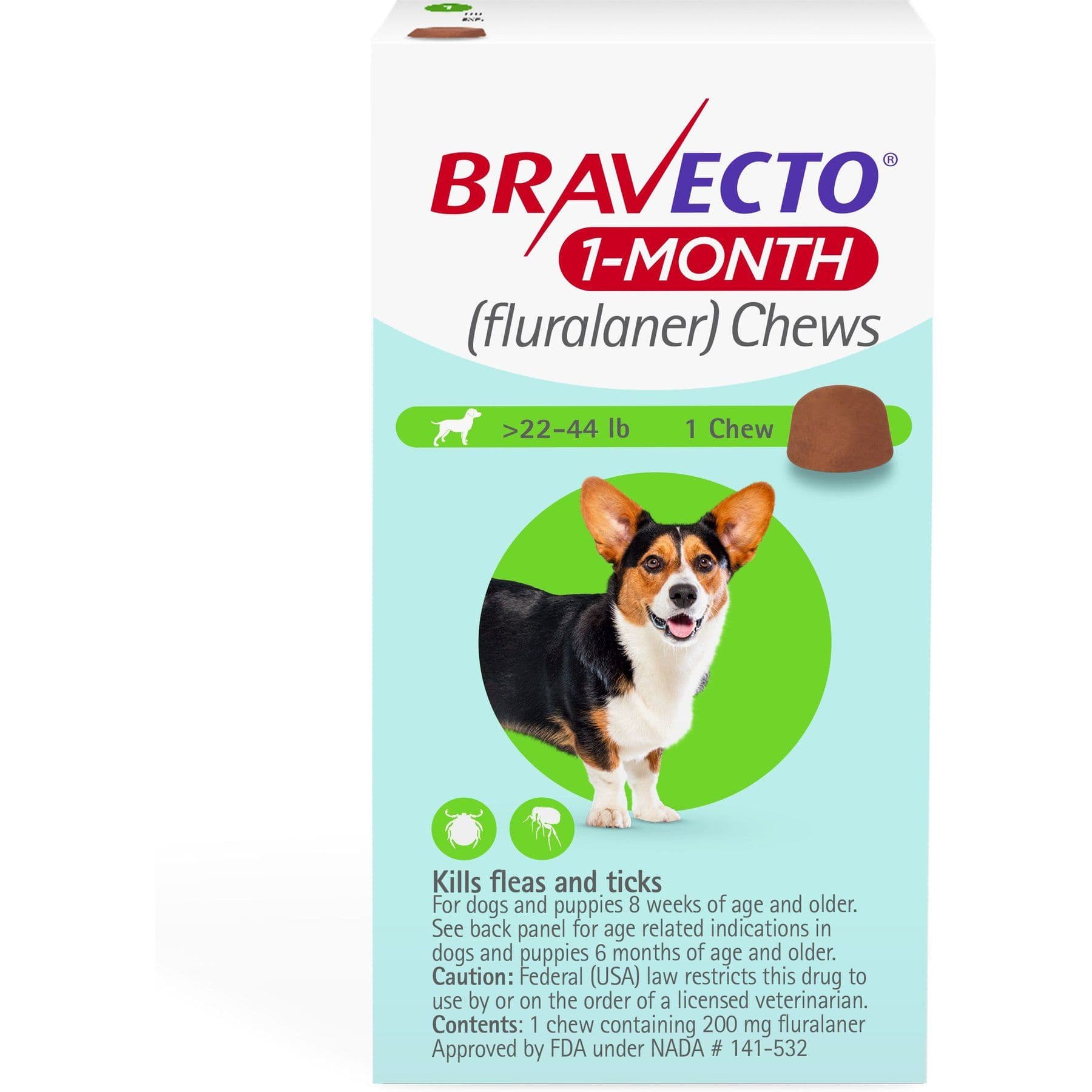
Bravecto 1-Month Chew is a fluralaner flea and tick chew for dogs 22 to 44 lbs, one chew per box.
Webvet may earn a commission when you click through to Chewy, at no extra cost to you.
When a dog is allergic to fleas, the pattern matters more than the flea count. A dog with this flea irritation of the skin reacts to bites that a non-allergic dog barely notices. Even one flea on an allergic dog is enough to start a flare.
Fleas jump onto a dog, feed, and spend most of their life cycle in the home rather than on the coat. That flea cycle explains why simply trying to remove fleas from a puppy or adult dog by hand rarely ends the itch. Our guide to fleas on dogs, what they look like, and how to stop them shows how to tell whether a dog has fleas.
Merck notes that most cases occur in late summer, when flea populations peak, though the condition can be seasonal or year-round.
Symptoms of Flea Allergy Dermatitis
The main symptoms of flea allergy dermatitis in dogs are intense itching, hair loss, and scabs or sores, usually from the middle of the back to the tail base. VCA adds ear infections and places the signs from mid-back to the tail base and down the rear legs, an area called the flea triangle.

Merck places the itchy skin disease in dogs on the mid to lower back, the tailhead, and the back of the thighs. A flea bite allergy in dogs often shows up as:
- Constant scratching, chewing, or licking at the rump and tail base
- Hair loss due to fleas, often thinning over the lower back and back legs
- Small red flea bumps on dogs and a flea bite rash on thin-haired skin
- Flea bite scabs and dog flea sores from repeated scratching
Today's Veterinary Nurse describes the reaction across the rear half of the body, including the tail and belly, so a flea rash on a dog's belly can appear.
Flea bites on dogs look like small red bumps that are easy to miss, and flea bites on a black dog or deep in the coat are especially hard to spot. Brown spots on a dog's belly that look like dirt may be flea dirt rather than soil. While flea control takes effect, a gentle, soothing bath can make an itchy coat more comfortable.
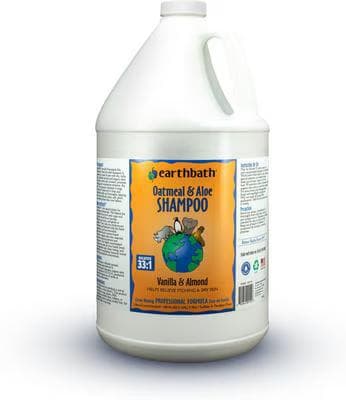
Earthbath Oatmeal and Aloe Itch Relief Shampoo is a dog and cat shampoo in a 128-fl oz bottle.
Webvet may earn a commission when you click through to Chewy, at no extra cost to you.
Pictures of flea allergy dermatitis in dogs usually show a thinned coat over the rump and red, scabbed skin near the tail. Scratching can lead to a secondary skin infection. If you are tracking coat changes, our page on hair loss in dogs covers other causes.
Why You May Not See Fleas
You may not see fleas because live fleas feed briefly and leave, and VCA says you rarely see them unless the home has a severe infestation. That is why a dog keeps scratching but no fleas turn up on a quick check. A single flea bite can cause itching for several days in an allergic dog.
A dog that scratches a lot or is itchy all over can still have flea allergy even when no fleas are visible.
To check a dog with no visible fleas:
- Run a flea comb through the coat over the rump and tail base.
- Look for flea dirt, which Merck describes as reddish black, cylindrical, and pellet or comma shaped.
- Learn what the earlier life stages look like in our guide to flea eggs on dogs.
Today's Veterinary Nurse explains that for every adult flea on a pet, there are many eggs, larvae, pupae, and newly emerged adults in the environment. Veterinary references do not give a percentage split between fleas on the pet and fleas in the home, but the message is clear: most of the problem lives off the dog.
A dog still itching after flea treatment, or still itching after a flea bath, has usually met new fleas from the home. VCA says that even if you do not see fleas on your dog, it is important to continue rigorous flea treatment.
What Causes Flea Allergy Dermatitis?
Flea allergy dermatitis is caused by proteins in flea saliva that a sensitive dog's immune system overreacts to. VCA explains that the antigens in the saliva cause an intensely itchy response in sensitive dogs. The flea saliva proteins that trigger the reaction enter the skin each time a flea feeds.
Not every itchy dog has a flea allergy. Merck lists environmental or food-triggered atopic dermatitis, sarcoptic or demodectic mange, and other skin parasites as conditions that can look similar. Our overview of why a dog is so itchy and the common causes of canine pruritus compares them in more depth.
 Sponsored
Vet care that's always there
Unlimited video calls and messaging with licensed vets for less than a typical vet visit. One membership covers up to five pets.
Use code Pets60
Plans start at $12/month · covers up to 5 pets
- Licensed vets in most states
- Rx for 150+ conditions
- 4.7 on Trustpilot
How Is Flea Allergy Dermatitis Diagnosed?
Flea allergy dermatitis is diagnosed mainly by the pattern of itching and hair loss, signs of flea dirt, and how the dog responds to strict flea control. VCA says clinical signs often indicate FAD, and formal allergy testing is only needed in some cases.
Merck says response to ectoparasite control can itself be used as a diagnostic test. In practice, a vet looks for itch focused on the rump and tail base, flea dirt in the coat, and improvement once flea control starts.

Merck also recommends skin cytology to find secondary bacterial and yeast infections. Food reactions are one of the main look-alikes; what foods dogs with allergies should avoid is covered in our guide to dog skin allergies.
This table compares flea allergy with food allergy, atopy, and mange by body pattern, season, and flea evidence.
| Cause | Body pattern | Season | Flea evidence |
|---|---|---|---|
| Flea allergy dermatitis | Mid-back to rump, tail base, and back of the thighs; sometimes the belly | Peaks in warm weather, most cases in late summer | Fleas often not seen; flea dirt or a single flea supports the diagnosis |
| Food allergy | Varies by dog | Varies | Fleas not the cause |
| Atopic dermatitis (atopy) | Varies by dog | Varies | Fleas not the cause |
| Mange (sarcoptic or demodectic) | Varies by dog | Varies | Fleas not the cause |
Treatment for Flea Allergy Dermatitis in Dogs
Treatment for flea allergy dermatitis in dogs combines fast-acting flea control with medication for the itch and any infection. VCA says strict flea control is essential in treating FAD, because the flea saliva itself causes the allergic response.
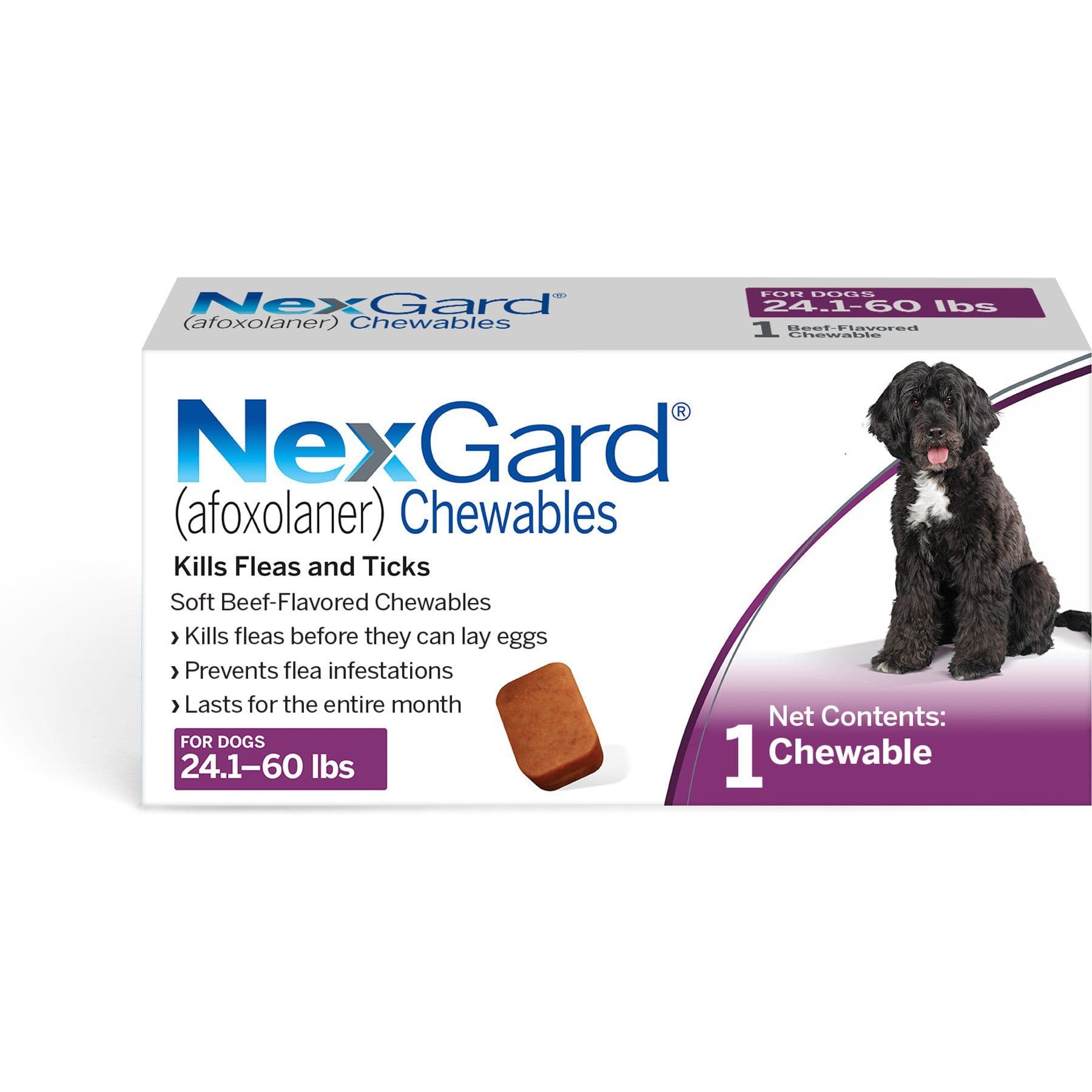
NexGard Chewables is a monthly flea chewable for dogs 24.1 to 60 lbs.
Webvet may earn a commission when you click through to Chewy, at no extra cost to you.
Merck's first step is to eliminate existing flea infestations on the pet. How to treat flea allergy dermatitis in dogs, step by step:
- Kill the fleas on the dog. Merck names the isoxazoline group among the insecticides that eliminate established infestations on dogs.
- Treat every other dog and cat in the household at the same time.
- Clear the home. Merck says the second step of flea control is eliminating the infestation in the pet's environment.
- Ask your vet about medication for the itch and for any secondary skin infection.
The best treatment for flea allergy dermatitis in dogs is the one that stops every bite, which is why the household and environment matter as much as the dog. For full flea removal steps, see how to get rid of fleas on dogs. Between vet visits, home care such as soothing baths and a topical product on a small, localized patch can keep the dog comfortable.
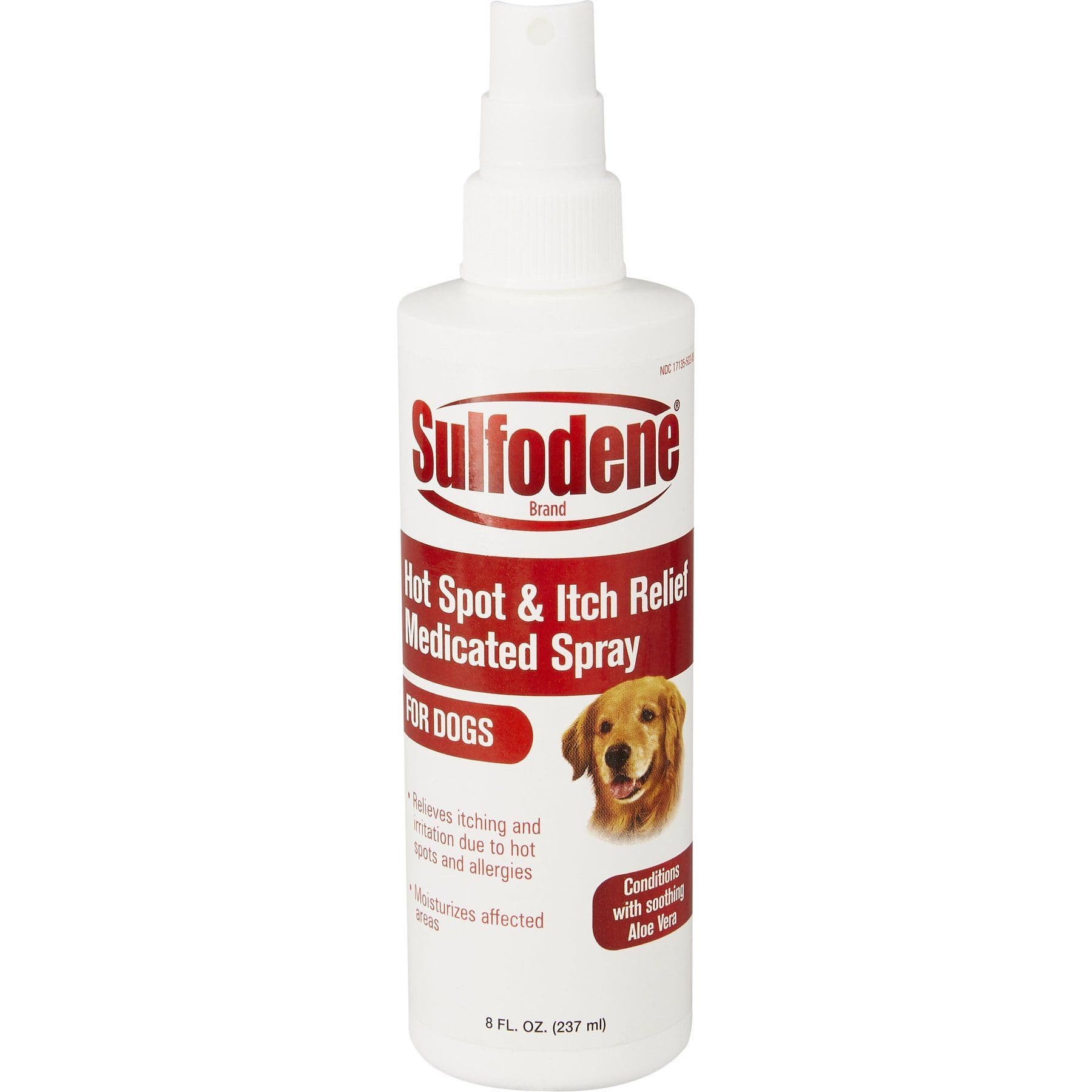
Sulfodene Medicated Hot Spot and Itch Relief Spray is a medicated spray for dogs, 8-fl oz.
Webvet may earn a commission when you click through to Chewy, at no extra cost to you.
What is the best anti-itch medicine for dogs?
For flea allergy itch, the main prescription options are corticosteroids, oclacitinib (Apoquel), and lokivetmab (Cytopoint), all chosen by a vet. VCA says steroids are often needed for sudden flare-ups at the lowest dose possible. Merck reports that oclacitinib substantially decreased itch in flea-infested dogs. None of these replaces flea control.
Antibiotics may be necessary if the dog develops a secondary bacterial skin infection from scratching, according to VCA. For widespread skin infection, Merck says systemic antimicrobials should be considered. How Zyrtec and Benadryl compare for allergic dogs is covered in our guide to dog skin allergies.
An allergic reaction to flea treatment in dogs is a different problem: if new symptoms start after a product is applied, call your vet. Flea allergy cannot be cured in the sense of switching the allergy off. In practical terms, the goal is keeping fleas from biting at all, which controls the condition for as long as flea control continues.
Home Care for Flea Allergy Dermatitis
Home care for flea allergy dermatitis means rigorous flea control for the dog and the house, plus soothing baths and gentle skin care while the itch settles. VCA says to continue rigorous flea treatment even when you do not see fleas, and Merck says flea control must cover the pet's environment as well as the pet.

Soothing baths plus home care can make an itchy dog more comfortable. Neither VCA nor Merck gives a recommended shampoo or a bath frequency for flea allergy, so ask your vet which product suits your dog's skin and how often to bathe. Our roundup of dog shampoo for itchy skin covers the common options.
A dog still scratching after a flea bath has usually been bitten again, since shampoo washes the coat but does not protect it from new fleas. Home remedies and natural treatments work only alongside reliable flea control, never instead of it.
Simple ways to soothe flea allergy dermatitis in dogs at home:
- Keep every pet in the house on flea control without gaps.
- Wash bedding and vacuum where the dog rests, following our guide to getting rid of fleas in your house and yard.
- Use a gentle, vet-approved bath to calm the coat.
- Check the rump and tail base each day for new scabs or broken skin.
For a small, localized patch of moist dermatitis, Merck mentions a single topical antiseptic, and a medicated spray is one over-the-counter option owners ask about. Our page on hot spots on dogs explains how these patches form.
Treating flea allergy dermatitis in dogs at home has a limit. VCA notes that a secondary skin infection from scratching may need a vet-prescribed antibiotic, which home care alone cannot replace.
How Long Does Flea Allergy Dermatitis Last?
Flea allergy dermatitis lasts as long as fleas keep biting, and the itch eases once strict flea control stops the bites. VCA says dogs respond to treatment quickly enough that formal allergy testing is only needed in some cases, but it gives no fixed recovery time.
Clearing the home takes longer than treating the dog. Today's Veterinary Nurse says eliminating fleas from the environment can take up to 2 to 3 months because of the different life stages present. Merck says cat fleas complete their life cycle in 3 to 8 weeks in a typical home.
Does flea dermatitis go away on its own?
No. Flea dermatitis keeps returning while fleas are present, because each bite restarts the allergic reaction and a single bite can cause itching for several days. Merck says lifelong flea control is required to prevent reinfestation. The skin settles once the bites stop, and a vet can treat the itch and any infection in the meantime.
Preventing Flea Allergy Dermatitis
Preventing flea allergy dermatitis means year-round prevention for every pet in the home so fleas never get a chance to bite. Today's Veterinary Nurse puts the goal simply: avoid flea bites as much as possible. VCA notes that most flea infestations occur in warmer weather but can happen year-round.

Merck says prevention requires treating the affected pet, the other pets in the household, and the environment. The flea life cycle shows why gaps matter:
- Eggs hatch in about 1 to 6 days.
- The larval stage usually lasts 5 to 11 days but can stretch to 2 to 3 weeks.
- A newly emerged cat flea can survive about 12 days before it needs a blood meal.
- Delayed emergence of up to 6 to 8 months has been seen in unfinished basements and crawl spaces.
Flea chews for dogs, topical treatments, and flea repellent collars for dogs are the common prevention formats, and VCA points to modern oral or topical medications as the best approach. The Bravecto 1-Month Chew for Dogs, 22-44 lbs, (Green Box), 1 Chew (1-mo. supply) is one oral option. Our guide to the best flea and tick prevention for dogs compares the best dog flea chewable picks and other formats.
According to the Bravecto manufacturer, all Bravecto products contain fluralaner, a member of the isoxazoline class. The manufacturer warns that seizures have been reported in dogs given isoxazoline class drugs, even dogs with no seizure history, so tell your vet about any neurologic history before starting one.
When to See a Vet
See a vet when your dog's itching does not ease with strict flea control, or when the skin shows signs of infection. Prescription itch medicines, steroids, and antibiotics all need a veterinarian, and Merck says secondary bacterial or yeast infections should be identified with skin cytology and treated promptly.
Other signs that need a vet:
- Itching that continues after every pet in the home is on flea control
- Hair loss spreading beyond the rump and tail base
- Ear infections, which VCA lists among the signs
- A dog that cannot rest or sleep because of the itch
VCA advises contacting your veterinarian with any questions or concerns about your dog's skin.
Flea Allergy Dermatitis in Dogs FAQs
Frequently Asked Questions
How long does it take for flea allergy dermatitis to go away in dogs?
The itch eases once strict flea control stops the bites, and veterinary references give no single recovery figure. Clearing fleas from the home can take up to 2 to 3 months, so flea control has to continue the whole time.
Will Benadryl help with flea allergy dermatitis?
VCA and Merck do not list Benadryl or any other antihistamine for flea allergy dermatitis. The itch medicines they name are steroids, oclacitinib, and lokivetmab, so ask your vet before giving any human medicine.
What does flea allergy dermatitis look like on a dog?
It looks like hair loss, redness, and scabs from the middle of the back to the rump and tail base, often running down the back legs. The dog usually chews or scratches at the tail area constantly.
Is flea allergy dermatitis contagious?
Flea allergy dermatitis is an allergy to flea saliva, so the allergy itself is the dog's own reaction. The fleas are what spread between pets, which is why Merck says to treat every pet in the household and the home.
Can a dog have flea allergy dermatitis without fleas?
Yes. A single bite can cause itching for several days, and fleas feed briefly and leave, so they are often never seen. Even careful grooming and combing may turn up flea dirt rather than a live flea.
How do you treat flea allergy dermatitis at home?
Keep the dog, every other pet, and the house on strict flea control, and use a gentle bath to soothe the coat. See your vet for infected skin or itch that does not ease, since prescription medicine may be needed.
What is the best shampoo for flea allergy dermatitis?
Veterinary references do not name a single best shampoo, so choose a gentle, soothing shampoo your vet approves. A bath calms the coat, but only flea control stops the bites that cause the allergy.

Editor
The Webvet Editorial Team is the in-house group of pet-care editors and writers behind Webvet, operated by Smart Pet Collective. The team researches, writes, and maintains Webvet's pet health, behavior, and medication content. Every article follows a defined editorial process: research from reputable veterinary and scientific sources, careful drafting, mandatory review of medical content by a credentialed veterinarian, and dated publication. Health and medication articles are medically reviewed by a licensed veterinary professional before they go live and are kept current over time.
Veterinarian · BVMS MRCVS
Dr. Pippa Elliott, BVMS, MRCVS, is a veterinarian with nearly 30 years of experience in companion animal practice. Dr. Elliott earned her Bachelor of Veterinary Medicine and Surgery from the University of Glasgow. She was also designated a Member of the Royal College of Veterinary Surgeons. Married with 2 grown-up kids, Dr. Elliott has a naughty Puggle named Poggle, 3 cats and a bearded dragon.


