Seborrhea in Dogs: Symptoms, Causes, and Treatment
Seborrhea in dogs is a keratinization disorder that makes the skin flaky, greasy, and often smelly. Here are the signs of dry and oily seborrhea, the primary and secondary causes, how vets diagnose it, and how medicated shampoos and treatment work.

BVMS MRCVS
Medically reviewed by Dr. Pippa Elliott, BVMS MRCVS · Last reviewed

This article contains affiliate links. Webvet may earn a commission when you buy through them, at no extra cost to you.
Seborrhea in dogs is a keratinization disorder that makes the skin flaky, greasy, and often smelly, because the outer skin layer renews abnormally and the sebaceous glands overproduce oil. Most dogs have secondary seborrhea, which means another health problem is driving it.
That matters for treatment. Medicated shampoo controls the scale and grease of seborrhea in dogs, but the skin usually settles for good only when a vet finds and treats the underlying cause.
- 1Seborrhea is a keratinization disorder of the skin plus sebaceous glands: the outer skin layer renews abnormally and the glands produce too much sebum.
- 2The signs are flaky scale, a greasy coat, odor, plus crusting, often worst in skin folds.
- 3Most dogs have secondary seborrhea caused by another condition, most often a hormonal disorder or an allergy.
- 4Primary, inherited seborrhea is rare, starts young, and is managed for life rather than cured.
- 5Treatment targets the underlying cause and uses medicated shampoos chosen for dry or oily skin.
 Sponsored
Want a vet's take on your dog's skin or coat?
Talk to a licensed vet at Dutch over video, often the same day. They can recommend treatment and prescribe it when it's appropriate.
Use code Pets60
Plans start at $12/month · covers up to 5 pets
- Licensed vets in most states
- Rx for 150+ conditions
- 4.7 on Trustpilot
What Is Seborrhea in Dogs?
Seborrhea in dogs is a skin disease defined by a defect in keratinization, the constant renewal of the protective outer layer of the skin, hair follicles, or claws, according to the Merck Veterinary Manual. The result is scale, sometimes greasiness, and often secondary inflammation and infection.
VCA Animal Hospitals describes seborrhea, or seborrheic dermatitis in dogs, as a skin disorder in which the sebaceous glands produce too much sebum, leaving the skin scaly, flaky, itchy, and red. Both descriptions point to the same problem: seborrheic skin conditions in dogs involve abnormal skin renewal plus excess oil.
Of all the skin conditions in dogs, seborrhea is one where Merck notes most affected dogs have the secondary form, so another condition is usually behind the flaking and grease.
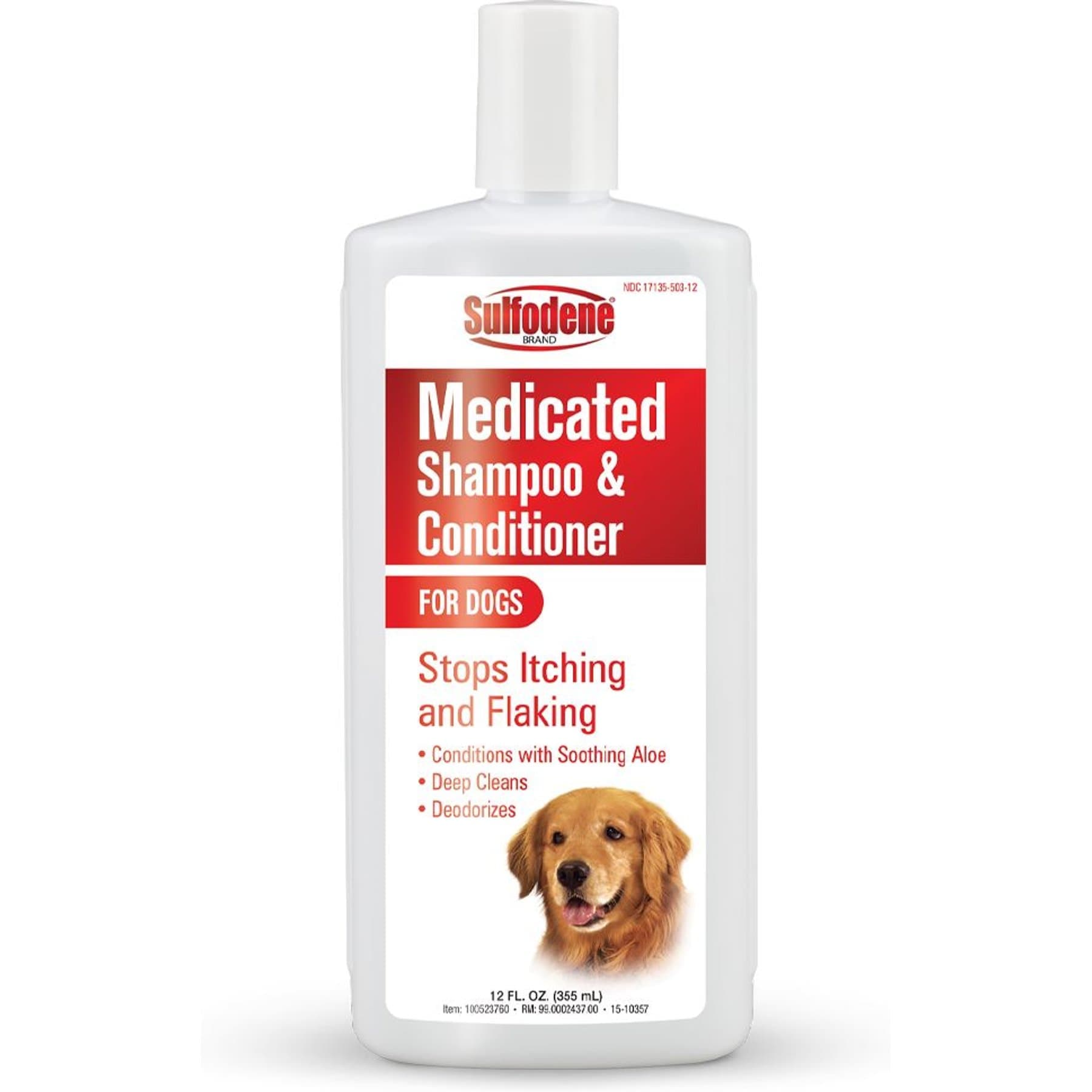
Sulfodene Medicated Shampoo and Conditioner is a medicated dog shampoo sold in a 12-fl oz bottle.
Webvet may earn a commission when you click through to Chewy, at no extra cost to you.
In short, seborrhea is a disorder of keratin renewal and oil production that leaves skin flaky, greasy, and smelly. Most cases are secondary to another condition, so the approach is medicated shampoo plus treating the cause.
Symptoms of Seborrhea in Dogs
The main seborrhea in dogs symptoms are dandruff-like flakes, greasy or dry skin, redness, crusting, and odor. VCA says the affected skin is often red and crusty and can feel dry or oily, and that seborrhea typically affects the back, face, and flanks and is worse in skin folds.

Other seborrhea symptoms in dogs to watch for:
- A brown, waxy build-up on the skin or in hair follicles, worst in skin folds (VCA)
- Odor, usually stronger when a bacterial or yeast infection is also present (VCA)
- Excessive scaling, crusting, or oiliness, often with pus-filled inflammation and hair loss in secondary cases (Merck)
- Itching in some dogs: Merck says primary seborrhea is not itchy, while secondary seborrhea may or may not be itchy
Many dogs with seborrhea have a noticeable smell. VCA links that odor to secondary bacterial or yeast infection, which is why an odor-control shampoo is often part of the bathing plan your vet sets.
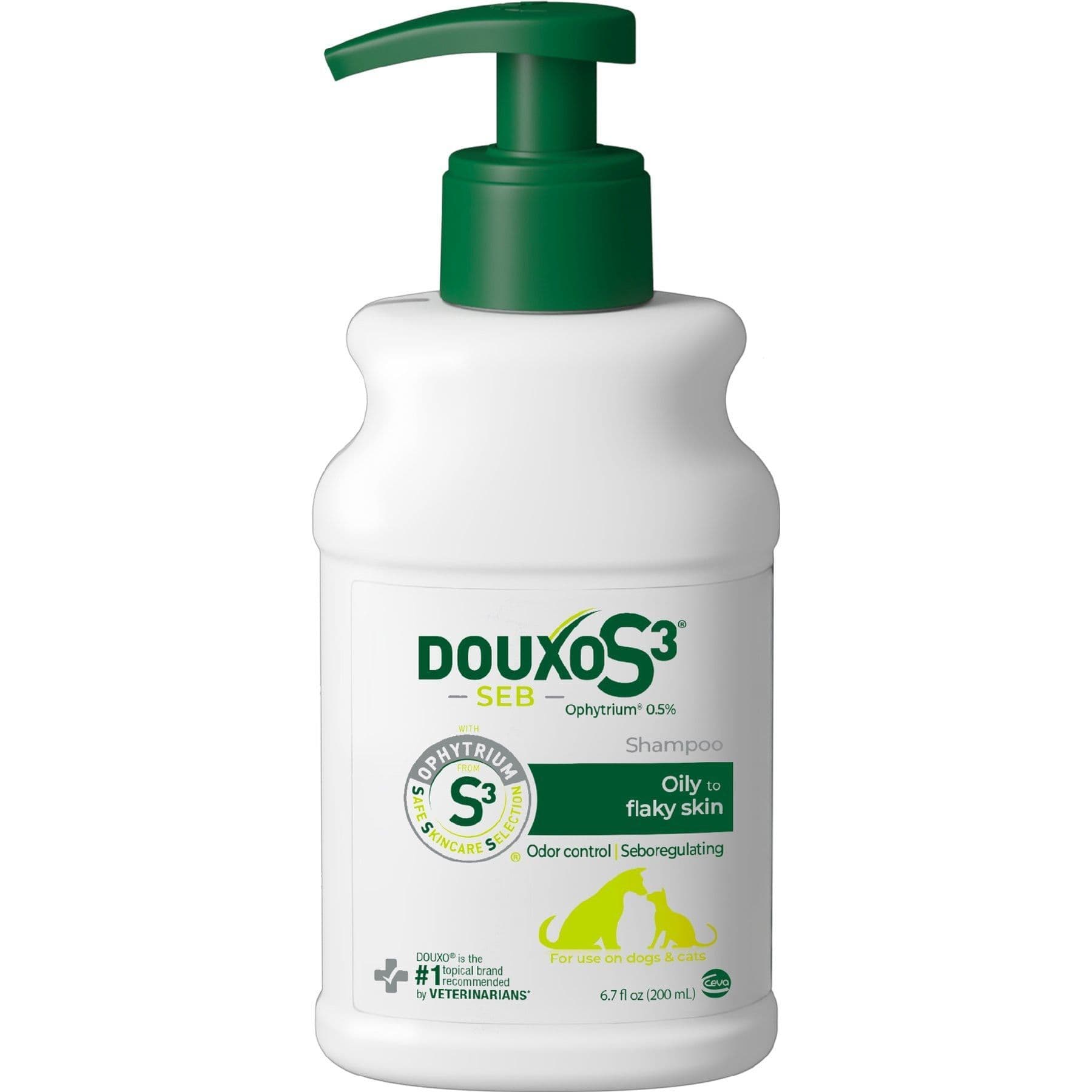
Douxo S3 SEB is a seboregulating odor-control shampoo for dogs and cats, sold in a 6.7-fl oz bottle.
Webvet may earn a commission when you click through to Chewy, at no extra cost to you.
Seborrhea in dogs can affect the ear flap edge. Merck documents ear margin seborrhea in dogs as thick, adhered scale along the pinna margin, and its owner guide pictures the condition in a Dachshund. For dog ear seborrhea that seems to involve the ear canal, compare it with a dog ear yeast infection and ask your vet.
What does seborrhea look like on dogs?
Seborrhea on dogs looks like dandruff-like white or gray flakes on a coat that may feel dry or greasy, with red, crusty patches on the back, face, and flanks. Skin folds are often worst, sometimes with a brown, waxy build-up. Several skin conditions can look like this, including those in our dog skin problems pictures and dog yeast infection skin pictures, so have your vet confirm what you are seeing.
Photos taken over the course of treatment can help you describe changes to your vet. If your dog is scratching heavily, the itch may come from the underlying cause; the guide to why your dog is so itchy covers the common culprits.
Dry vs Oily Seborrhea
Seborrhea comes in two forms: seborrhea sicca, the dry type, and seborrhea oleosa, the oily type. VCA notes that most affected dogs have a combination of the two, so a dog can be flaky in one area and greasy in another. The type matters because it changes which shampoo ingredient fits.
The table below compares dry and oily seborrhea side by side.
| Feature | Dry (seborrhea sicca) | Oily (seborrhea oleosa) |
|---|---|---|
| Main signs | Flaky, dandruff-like scale on dry skin | Greasy coat and skin |
| Shampoo ingredient (Merck) | Gentle, cleansing, moisturizing shampoos | Benzoyl peroxide for severe oiliness; sulfur and salicylic acid when scaling and oiliness combine |
| Bathing frequency (Merck, primary seborrhea) | 2 to 3 times weekly until improved, then 1 to 2 times weekly | 2 to 3 times weekly until improved, then 1 to 2 times weekly |
For seborrhea sicca in dogs treatment, Merck advises that dry, mildly scaling dogs need gentle, cleansing, moisturizing shampoos. A dog with seborrhea sicca can look a lot like plain dry skin on dogs, which is one reason a vet exam comes before a shampoo plan.
For oily seborrhea in dogs treatment, Merck recommends benzoyl peroxide shampoos, which degrease strongly, when a dog with oily seborrhea has severe oiliness with little scaling. Seborrhea oleosa in dogs treatment shifts to sulfur and salicylic acid shampoos when moderate to marked scaling comes with the oil.
Benzoyl peroxide is not right for every case of seborrhea oleosa in dogs. Merck says it can be irritating and drying, so a dog that starts out greasy can swing toward dry, uncomfortable skin if it is overused.
What Causes Seborrhea in Dogs?
What causes seborrhea in dogs depends on the form. Primary seborrhea in dogs is an inherited keratinization disorder, while secondary seborrhea in dogs is caused by another condition and, per VCA, is the more common form. When no cause can be found, VCA calls the case idiopathic seborrhea in dogs.
Merck says the most common seborrhea in dogs causes are hormonal disorders and allergies. VCA lists these underlying causes:
- Hormonal imbalances, such as thyroid disease and Cushing's disease
- Parasites, including fleas, ticks, and mange mites
- Allergies (see the guide to dog skin allergies)
- Diets low in omega-3 fatty acids
- Obesity or musculoskeletal disease that keeps a dog from grooming itself
What triggers seborrheic dermatitis in dogs?
Seborrheic dermatitis in dogs is usually triggered by an underlying problem, most often a hormonal disorder such as hypothyroidism in dogs or an allergy, according to Merck. Parasites, low omega-3 diets, and obesity that blocks grooming also appear on VCA's list. Merck adds that superficial pyoderma and Malassezia yeast infection often accompany secondary seborrhea and keep the skin inflamed.
Age at onset offers a clue. Merck says hormonal disorders are more likely when seborrhea begins in a middle-aged or older dog, while allergies are more likely when it starts before 5 years of age.
 Sponsored
Vet care that's always there
Unlimited video calls and messaging with licensed vets for less than a typical vet visit. One membership covers up to five pets.
Use code Pets60
Plans start at $12/month · covers up to 5 pets
- Licensed vets in most states
- Rx for 150+ conditions
- 4.7 on Trustpilot
Which Dogs Get Seborrhea?
Seborrhea can appear in any dog, and Merck notes it is more common in dogs than in cats. The inherited primary form is breed-linked: VCA names the cocker spaniel among the breeds affected, and Merck lists several other breeds with primary seborrhea in its owner guide.
Age is the other half of the picture. Merck says primary seborrhea usually starts young, typically before 18 to 24 months, and progresses throughout life. Secondary seborrhea can start at any age, and the age it begins helps your vet decide which underlying cause to test for first.
Because primary seborrhea is rare, Merck reserves the diagnosis for dogs in which all possible underlying causes have been excluded. A young dog of an affected breed still needs the same workup as any other dog.
How Is Seborrhea Diagnosed?
Seborrhea is diagnosed by ruling out the underlying cause. The workup sorts seborrhea into primary or secondary by testing for each possible trigger.

What is seborrheic dermatitis in dogs, in diagnostic terms? Merck says primary seborrhea is confirmed only after other causes are ruled out, so the label is a conclusion reached by exclusion rather than from a single test. Cytology results also guide shampoo choice, since Merck lists benzoyl peroxide as an antibacterial shampoo ingredient for seborrhea with skin infection.
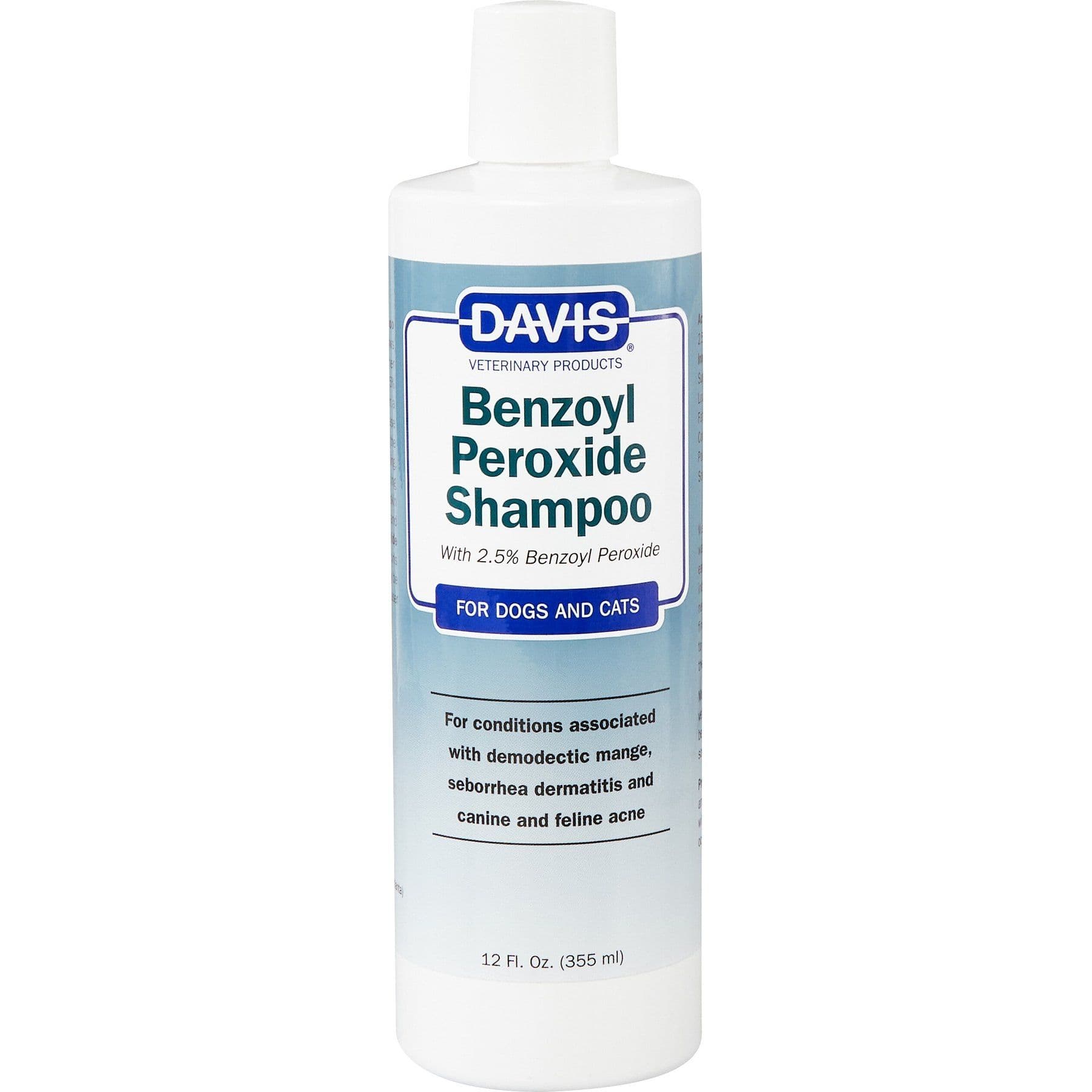
Davis Benzoyl Peroxide Shampoo is a benzoyl peroxide shampoo for dogs and cats in a 12-fl oz bottle.
Webvet may earn a commission when you click through to Chewy, at no extra cost to you.
VCA and Merck describe these diagnostic steps:
- Skin scrapings and cultures to check for external parasites and ringworm (VCA)
- Skin cytology to look for bacteria, yeast, or fungus (VCA)
- Blood tests and hormone tests for thyroid and adrenal disease (VCA, Merck)
- A skin biopsy to confirm primary seborrhea when scrapings, cytology, and blood tests are normal (Merck)
Treatment for Seborrhea in Dogs
Treatment for seborrhea in dogs targets the underlying cause first, then controls the scale and oil with medicated shampoos. VCA says treatment is aimed at the underlying cause, and that there is no specific treatment for primary or idiopathic seborrhea beyond long-term management.
Treating seborrhea in dogs usually combines several of these, based on VCA and Merck:
- Treatment of the underlying disease, such as a hormonal disorder, allergy, or parasites
- Antibiotics for secondary bacterial infection, typically for 3 to 4 weeks (Merck)
- Antifungals when Malassezia yeast is present; Merck says these are used topically first, with oral medication if needed
- Fatty acid supplements, which dvm360 calls the most commonly used systemic option
- Frequent bathing plus vitamin A or a retinoid for primary seborrhea (Merck)
How do you treat seborrhea in dogs?
You treat seborrhea in dogs by having a vet find and treat the cause, clear any bacterial or yeast infection, and set a medicated shampoo routine matched to dry or oily skin. Omega-3 fatty acid supplements are often added. To treat seborrhea in dogs of the primary type, Merck describes frequent bathing combined with vitamin A or a retinoid prescribed by the vet.
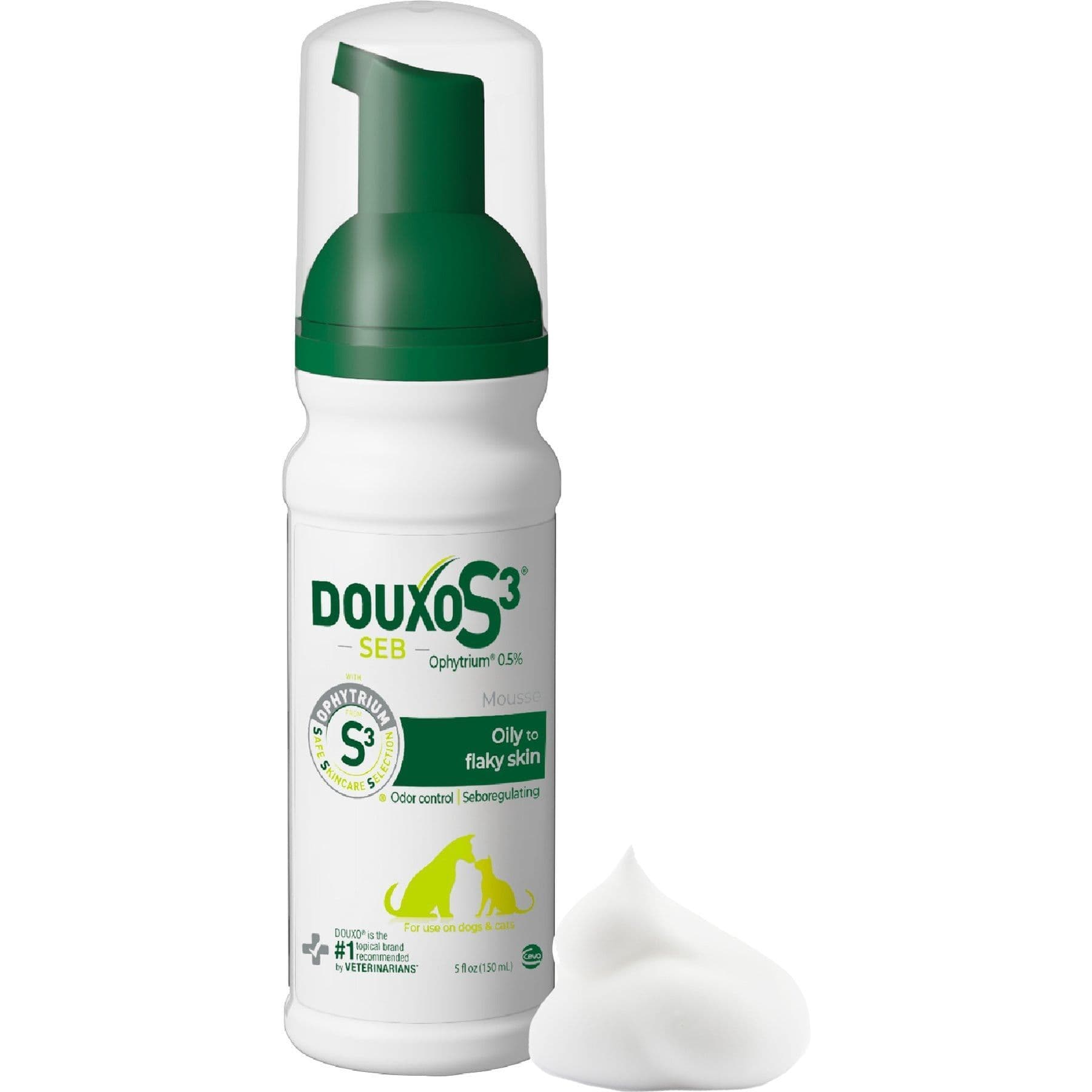
Douxo S3 SEB Mousse is a leave-on seboregulating mousse for dogs and cats in a 5.1-fl oz bottle.
Webvet may earn a commission when you click through to Chewy, at no extra cost to you.
Can seborrhea be cured in dogs? Secondary seborrhea often improves once the cause is controlled, and VCA says the outlook is better when an underlying cause is identified and treated. How to cure seborrhea in dogs of the primary type is a different answer: Merck says it cannot be cured, only controlled with continuous treatment.
How long does it take to get rid of seborrhea in dogs?
How long seborrhea takes to settle depends on the cause. Merck says infections are treated for 3 to 4 weeks, and that keratolytic shampoos often make scaling worse during the first 14 days before continued bathing clears it. Merck advises following your vet's requests for follow-up examinations as treatment continues.
Best Shampoo for Seborrhea in Dogs
The best shampoo for seborrhea in dogs is the one whose active ingredient matches your dog's skin type and any infection, which is why your vet chooses it. Merck groups seborrhea in dogs shampoo ingredients into three working families.
Merck's owner guide lists which shampoo ingredients vets use:
- Keratolytic ingredients that loosen scale: sulfur, salicylic acid, tar, selenium sulfide, propylene glycol, fatty acids, and benzoyl peroxide
- Antibacterial ingredients: benzoyl peroxide and chlorhexidine
- Antifungal ingredients: chlorhexidine, sulfur, iodine, ketoconazole, and miconazole

Merck's professional guide says shampoos with ceramides or phytosphingosine are often effective, and that a benzoyl peroxide or selenium sulfide shampoo is the next step if greasiness persists. dvm360 describes phytosphingosine as a ceramide component and a key skin defense molecule, and says sulfur and salicylic acid shampoos work best for light scaling and flaking.
What is the best shampoo for dogs with seborrheic dermatitis?
The best shampoo for dogs with seborrheic dermatitis depends on the skin: gentle moisturizing or ceramide shampoos for dry scale, benzoyl peroxide for heavy grease, and chlorhexidine, salicylic acid, or benzoyl peroxide when a skin infection is present, per Merck. The best antiseborrheic shampoo for your dog is the one your vet matches to these signs.
Seborrhea in dogs treatment shampoo can be paired with a leave-on product between baths, such as the Douxo S3 SEB Odor-Control Seboregulating Dog & Cat Mousse. For a wider look at a shampoo for seborrhea in dogs, see the guides to medicated dog shampoo and dog shampoo for itchy skin.
Merck advises never using a human shampoo in a dog's seborrhea shampoo routine without your vet's consent. Stick with the veterinary product your vet has chosen for your dog's skin type.
Home Care and Bathing Routine
Home care for seborrhea centers on a regular medicated bathing routine your vet sets, plus emollients and diet support. Seborrhea in dogs treatment at home works best as a follow-through on that plan rather than a substitute for it.

How often should you bathe a dog with seborrhea?
Bathe a dog with seborrhea 2 to 3 times per week until the skin improves, then 1 to 2 times weekly for maintenance, according to Merck, which gives that schedule for primary seborrhea. Merck warns that scaling often gets worse at first and clears with continued bathing, so keep to the schedule unless your vet changes it.
How to treat seborrhea in dogs at home, step by step, based on Merck's guidance:
- Use the medicated shampoo your vet recommends, on the schedule above.
- Apply an emollient or moisturizer after shampooing, when Merck says emollients work best on rehydrated skin.
- Switch to a milder shampoo if your vet thinks the skin has been bathed too often.
- Give omega-3 fatty acid supplements if your vet recommends them, since VCA lists low omega-3 diets as a cause.
- Keep follow-up appointments so the plan can be adjusted.
Home remedies, including essential oils, are no substitute for the medicated shampoo plan, and Merck advises following your vet's advice on medicated shampoo. Ask your vet before trying any natural product on seborrheic skin, including any supplement meant to support treatment.
If you want to treat seborrhea naturally, raise it with your vet first, because medicated shampoos and treating the underlying cause are the core of care. Any natural approach should be agreed with your vet so it supports, rather than replaces, the bathing plan.
Is Seborrhea in Dogs Contagious?
Seborrhea itself is a keratinization disorder of the dog's own skin, not an infection. Veterinary references describe it as either inherited (primary) or secondary to the dog's own disease, such as a hormonal disorder or an allergy, rather than as something caught from another animal.
Is seborrhea contagious in dogs when other skin problems are involved? That is a separate question. VCA notes that vets run skin scrapings and cultures to test for external parasites and ringworm, which are different conditions that can be checked for during the seborrhea workup. Merck's professional guide lists risk of contagion as a history question vets ask when investigating causes.
If another pet in the home is scratching too, tell your vet. Any underlying infection or parasite is what needs to be identified, and your vet can advise on the other animals.
When to See a Vet
See a vet as soon as you notice persistent flaking, greasy skin, odor, or crusting, because seborrhea is usually a sign of another problem that needs a diagnosis. Merck notes that secondary infection is a problem for dogs with seborrhea.
Merck also lists clues that point to an underlying disease and are worth reporting:
- Excessive drinking
- Excessive urination
- Heat-seeking behavior
Follow your vet's requests for follow-up examinations, Merck advises. VCA says the prognosis is better when an underlying cause is identified and treated, so the first visit and the rechecks matter.
Seborrhea in Dogs FAQs
Frequently Asked Questions
Is seborrhea in dogs contagious?
Seborrhea is a keratinization disorder of the dog's own skin rather than an infection, and veterinary references describe it as inherited or secondary to the dog's own disease. If another pet in the home has skin problems, ask your vet about an underlying infection or parasite, which is a separate question.
What causes seborrhea in dogs?
Most dogs have secondary seborrhea, caused by another condition. Merck says the most common causes are hormonal disorders and allergies, and VCA adds parasites, low omega-3 diets, and obesity that prevents grooming.
Can seborrhea in dogs be cured?
Secondary seborrhea often improves when the underlying cause is treated. Primary seborrhea cannot be cured, Merck says, but it can be managed with continuous treatment throughout the dog's life.
What home remedies help seborrhea in dogs?
Veterinary references do not recommend home remedies in place of treatment. Merck advises following your vet's advice on medicated shampoo, and the home part of care is keeping to that bathing routine.
Can seborrhea affect a dog's ears?
Yes, seborrhea can affect the ears. Merck documents ear margin seborrhea in dogs, which shows as thick, adhered scale along the edge of the ear flap. Problems inside the ear canal need a vet exam to check for other causes.
What is seborrhea sicca versus seborrhea oleosa?
Seborrhea sicca is the dry, flaky form and seborrhea oleosa is the oily, greasy form. VCA says most affected dogs have a combination of the two.
Does seborrhea in dogs smell?
Yes, VCA says many dogs with seborrhea have an odor. It is usually worse when a bacterial or yeast infection is present, and Merck notes the abnormal skin creates ideal conditions for those infections.

Editor
The Webvet Editorial Team is the in-house group of pet-care editors and writers behind Webvet, operated by Smart Pet Collective. The team researches, writes, and maintains Webvet's pet health, behavior, and medication content. Every article follows a defined editorial process: research from reputable veterinary and scientific sources, careful drafting, mandatory review of medical content by a credentialed veterinarian, and dated publication. Health and medication articles are medically reviewed by a licensed veterinary professional before they go live and are kept current over time.
Veterinarian · BVMS MRCVS
Dr. Pippa Elliott, BVMS, MRCVS, is a veterinarian with nearly 30 years of experience in companion animal practice. Dr. Elliott earned her Bachelor of Veterinary Medicine and Surgery from the University of Glasgow. She was also designated a Member of the Royal College of Veterinary Surgeons. Married with 2 grown-up kids, Dr. Elliott has a naughty Puggle named Poggle, 3 cats and a bearded dragon.


