Dog Skin Yeast Infection Pictures: Paws, Belly, Skin Folds and Face
Labeled dog skin yeast infection pictures by stage and body area, from early pink greasy skin to black elephant skin, with look-alikes, vet treatment, diet facts and when to see a vet.

BVMS MRCVS
Medically reviewed by Dr. Pippa Elliott, BVMS MRCVS · Last reviewed

This article contains affiliate links. Webvet may earn a commission when you buy through them, at no extra cost to you.
Dog skin yeast infection pictures show a recognizable pattern: red or pink skin with a greasy film, fine yellow-grey or brown scale and a musty smell, often between the toes, in the armpits and belly, inside skin folds and around the lips. After months without treatment, the skin can thicken and turn black.
Photos can show whether your dog's skin fits that pattern, but they cannot confirm yeast. A veterinarian confirms it with cytology, a tape strip or impression smear examined under a microscope. The photos below, arranged by stage and body area, help you compare what you see and decide how soon to book that exam.
What does a yeast infection on dog skin look like?
- 1Skin yeast shows up as red greasy skin with fine yellow, grey or brown scale and a musty smell.
- 2It favors warm, moist or oily areas: paws, claw folds, lips, neck, armpits, belly, groin and skin folds.
- 3Months of itching can turn the skin black, thick and leathery, often called elephant skin.
- 4Photos cannot confirm yeast. A vet confirms it with a quick cytology test of a tape strip or impression smear.
- 5Yeast is usually secondary to another problem, often allergies, so lasting treatment means finding the trigger.
Yeast dermatitis is an overgrowth of Malassezia pachydermatis, a yeast that lives on healthy dog skin in small numbers, according to VCA Animal Hospitals. When the skin turns oilier, damper or inflamed, the yeast multiplies and the skin reacts. The main symptoms described in the WAVD consensus guideline are:
- Itch, from mild to severe, shown as licking, chewing, face rubbing or scratching
- Redness, from pale pink to deep red
- A greasy or sticky film on the skin and coat
- Flaky or waxy scale that can be yellow, grey or brown
- A musty smell that can turn rancid when large areas are involved
- Rusty red-brown staining of light fur and pale claws
- In chronic cases, hair loss and black, thickened elephant skin
Where a yeast rash appears is as telling as how it looks, and the photo sections below cover each common site. The ear canals are a common yeast site too, with their own signs and care covered in our dog ear yeast infection guide.
Because Malassezia is a fungus, skin yeast is one kind of fungal skin infection; ringworm, a different fungus, is compared further down.
Why your dog smells like yeast
A yeasty smell comes from the overgrown yeast on greasy, inflamed skin. Vets describe it as musty, and dogs with widespread yeast often have an offensive, rancid odor, per the WAVD guideline.
Healthy paws often carry a mild corn-chip smell from normal skin bacteria and yeast, and on its own that is not a problem, as PetMD explains. A smell deserves a closer look when it is new, stronger than usual or comes with:
- Red, greasy or stained skin under the smell
- Constant licking or chewing at one spot
- The same smell from the belly, armpits, neck folds or ears
- Hair loss or darkening skin
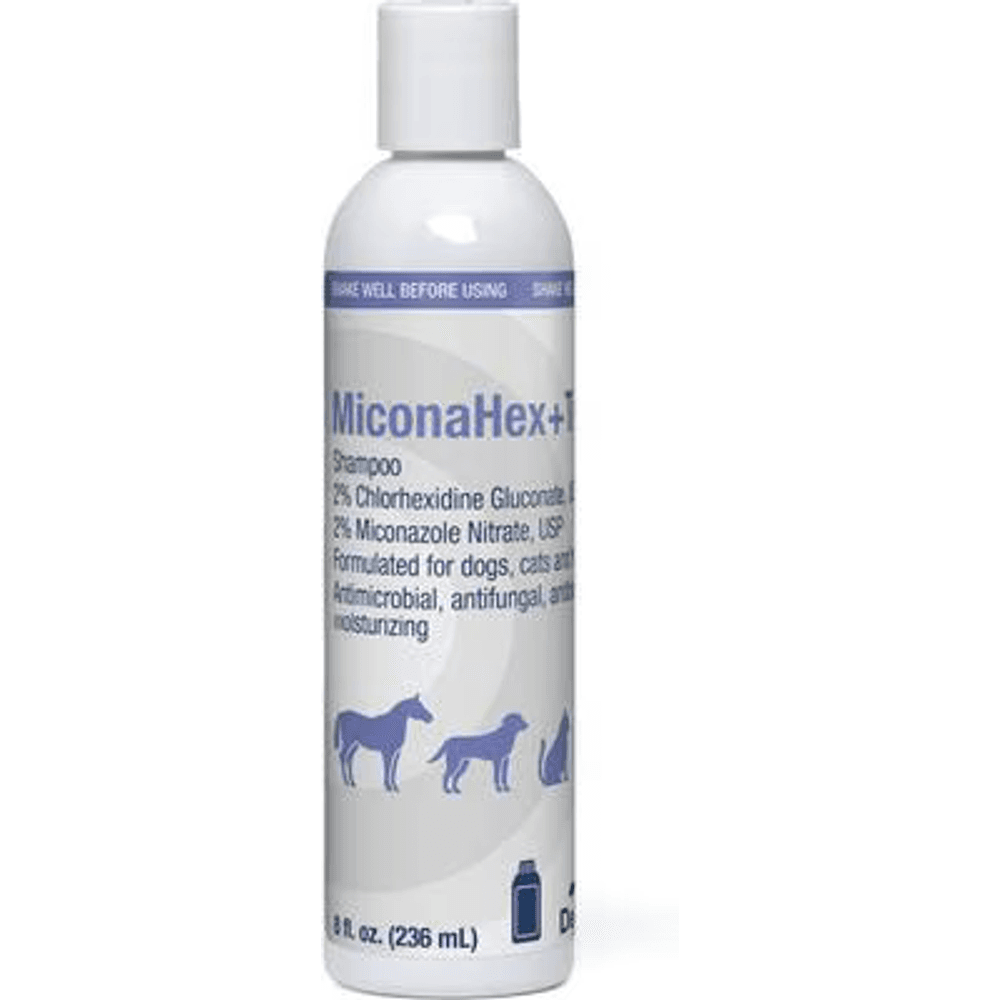
For a diagnosed skin infection: MiconaHex+Triz shampoo under your veterinarian’s bathing plan.
Webvet may earn a commission when you click through to Chewy, at no extra cost to you.
If you notice the smell first, part the hair and check the skin in daylight. A musty smell over red, greasy skin fits yeast. A foul smell with pus, bumps or open sores points more toward bacteria, which often join yeast and need their own treatment.
Dog skin yeast infection pictures by stage: early vs. chronic
Yeast changes the skin over weeks to months, so the stage tells you how long the problem has been brewing. Early stage yeast is pink, greasy and flaky with the hair still in place. Chronic stage yeast has thickened and often darkened the skin.
Early stage: pink skin, greasy film and fine scale
Early stage yeast often starts as greasy pink skin on the inner thigh, belly, armpits or between the toes. The skin looks pink to red and feels slightly tacky, and fine yellow-grey flakes collect at the base of the hairs. The coat is still mostly there, and the skin keeps its normal thickness and color.

Itch is often what owners notice first, and it can be intense while the skin still looks mild. Some dogs react strongly to the yeast itself, so even modest numbers can cause a lot of scratching.
This is the best stage for a vet check. In mild or localized cases, medicated baths alone often work, while widespread or severe cases more often need oral medicine as well, according to the WAVD guideline.
Chronic stage: black, thickened elephant skin
Chronic stage yeast shows up as black thickened skin. The surface turns leathery with deep creases (lichenification) and darkens to grey or black (hyperpigmentation). Hair thins or falls out, and a greasy brown-grey crust can stick tightly to the skin. Vets often call this elephant skin.
Breed shapes the picture. West Highland White Terriers typically darken with chronic yeast, while Basset Hounds typically do not, so a Basset Hound's long-standing yeast may stay greasy and scaly rather than black.

A severe yeast infection can spread beyond the folds to much of the body, including the back and sides, with crusty, greasy scale and a rancid smell. A crusty rash mainly on the lower back and tail base is more typical of flea allergy, which can bring yeast with it, notes the Merck Veterinary Manual.
Black skin is not proof of yeast. Darkening can follow many kinds of long-term skin irritation, including allergies, bacterial infection, friction and hormone disease, according to Merck. Our guide to black spots on dog skin covers the other causes of dark patches.
Thick, dark skin means the problem has run for a while, so it calls for a full vet workup of the underlying cause, not more home care. Even after the yeast clears, the pigment fades slowly, possibly over months.
Where skin yeast shows up on a dog's body
Yeast grows where skin stays warm, damp or oily: in folds, between the toes and anywhere a dog licks often. The WAVD guideline lists these as the common sites:
- Lips and muzzle
- The underside of the neck
- Armpits
- Belly and inner thighs
- Between the toes and around the claws
- Around the anus
- Skin folds anywhere on the body
- The ear canals
Yeast in several of these places at once, such as the paws, armpits, belly and ears together, often points to an allergy underneath, because these are the same areas that atopic dermatitis targets.
Paws and between the toes
Paws are a favorite spot for yeast. The skin between the toes traps warmth and moisture, and every lick adds more. That is why dogs with yeasty paws lick constantly, which keeps the cycle going. Spread the toes and check the haired skin between them and around the pads. Signs of paw yeast infection include:
- Red, greasy skin in the webbing between the toes
- Red-brown staining of light fur between and on top of the toes
- Waxy brown debris at the base of the hairs
- A musty smell and frequent licking or chewing at the feet

Staining alone does not confirm yeast. Any dog that licks its feet a lot can develop brown or red saliva staining, most noticeable on white dogs, and allergies are a common reason for the licking, according to vets at the PDSA.
Early stage paw yeast often looks like mild redness and staining. Swollen, painful bumps, pus, bleeding or open sores between the toes point to a deeper bacterial infection and need a vet promptly.
Nail beds and claws
Yeast can also infect the claw folds, where each claw meets the skin of the toe. Vets call this Malassezia paronychia. Look for:
- Red-brown claw staining at the nail beds, starting at the base of the claw
- Red, swollen claw folds
- Waxy or crusty brown debris where claw meets skin
- Licking or chewing at the toes

Nail bed yeast is easiest to see on pale claws. On black claws, check for swollen claw folds and waxy debris instead. The yeast pattern is staining and swelling at the fold, not a broken claw.
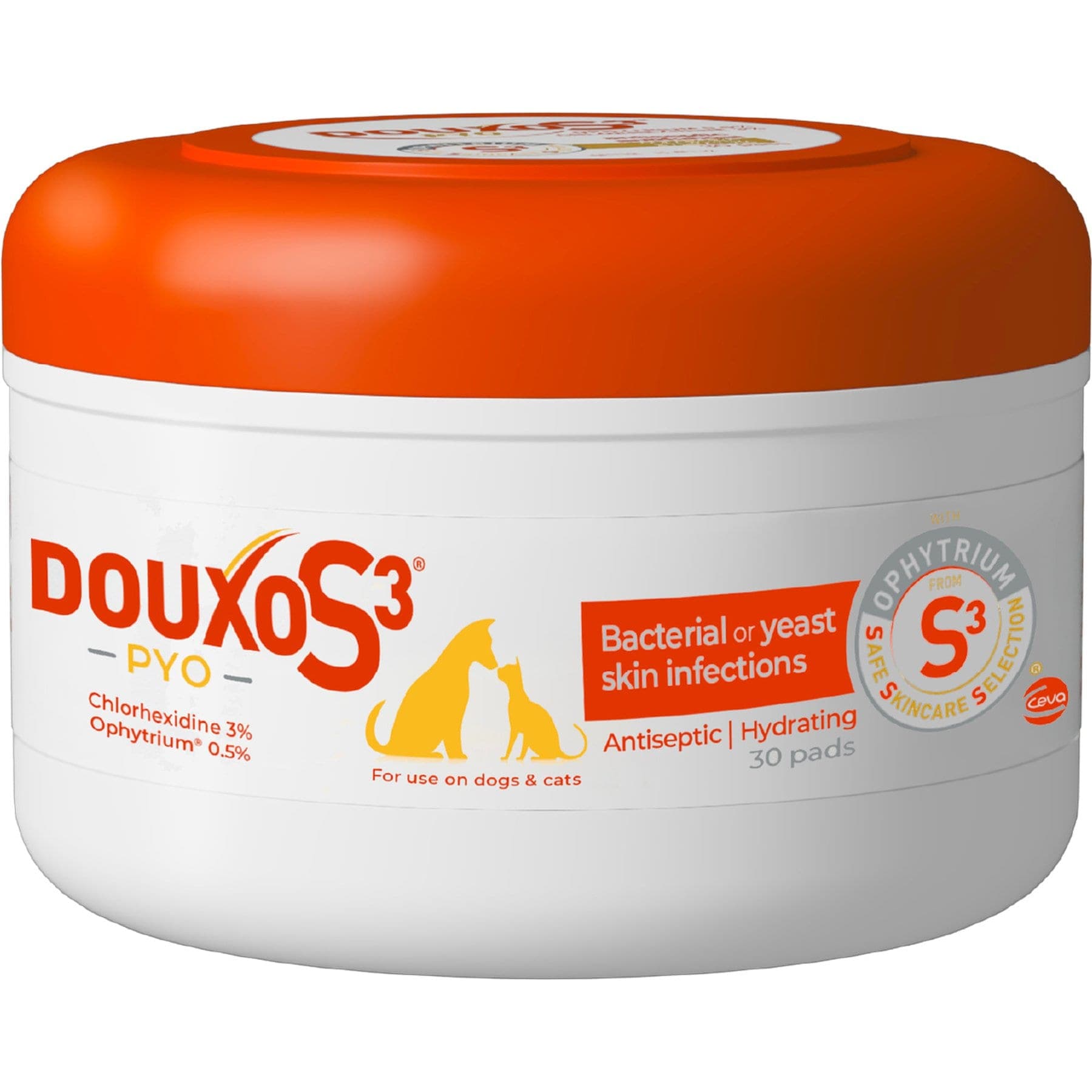
For small infected folds: DOUXO S3 PYO pads, used only where and as your veterinarian directs. Avoid the eyes.
Webvet may earn a commission when you click through to Chewy, at no extra cost to you.
Claws that split, crumble, loosen or fall off, a whole toe swollen with pus, or a limping dog need a vet exam. A fungal nail infection in dogs is not always yeast: bacteria and deep fungal infections such as blastomycosis can also involve the nail beds.
Belly, armpits and groin
The belly, armpits and groin are classic yeast territory. A yeast rash on a dog's belly usually looks like patchy redness with a greasy film and yellowish-brown flakes, and the area can smell musty. What to look for:
- Patchy red skin rather than separate bumps
- A greasy belly rash that leaves light fur sticky or stained
- Yellowish-brown flakes at the base of the hair
- Thinning hair from scratching
- Grey-brown darkening of the groin skin and armpit creases

Darkening in the armpits and groin often begins with a lacy pattern and deepens over time. Distinct pimples or rings of peeling skin suggest bacterial pyoderma instead, and raised welts that come and go are more like hives.
In male dogs, the moist skin around the sheath is one more place yeast can overgrow.
Skin folds
Skin folds trap warmth, moisture and oil, and the WAVD guideline names folds as a common risk factor for local yeast. In a Royal Veterinary College study of UK dogs, English Bulldogs, French Bulldogs and Pugs had the highest odds of skin fold dermatitis, with Basset Hounds and Shar-Peis also at raised risk.
In an English Bulldog or French Bulldog, check the facial fold over the nose and the pocket around a corkscrew tail. Inside a facial fold, yeast shows as a moist red fold with brown waxy debris, staining and mild hair loss along the edges.

Neck folds are the other common spot, especially in dogs with a heavy dewlap such as Basset Hounds and mastiffs. Lift the neck fold and look for a sharply bordered, intensely red patch of thickened skin, with greasy matted hair clumped with yellow-brown scale.

Folds need regular care even after the infection clears. Clean them gently with the product your vet recommends and dry them completely. Deep folds that keep flaring despite good care can sometimes be corrected with surgery, a decision to make with your vet.
Keep a clean Frisco Microfiber Towel for drying after baths or water cleaning. Pat gently; follow the medicated product’s directions if it needs to remain on the skin rather than being wiped off.
Face, lips and muzzle
On the face, yeast commonly settles in the lip folds and on the muzzle and chin, and affected dogs may rub their face on furniture or the floor. Look for:
- Red, moist skin inside the lower lip fold
- Rust or brown staining of the hair around the lip fold
- Greasy debris and a strong smell near the mouth that actually comes from the fold
- Redness on the chin or around the mouth

Cocker Spaniels are a textbook example. American Cocker Spaniels are among the breeds most prone to yeast, and in the Royal Veterinary College study, more than nine in ten English Cocker Spaniels with fold dermatitis had it on the lips.
Around the eyes, reddish-brown tear staining is common with watery eyes and is not a yeast infection by itself. Constant wetness can irritate the skin and lead to infection, though, so redness, odor or discharge under the eyes needs a vet check, VCA advises.
On the nose, yeast can inflame the fold above it in flat-faced breeds, but crusts, sores or color loss on the nose leather itself are not typical of yeast and need a vet. Problems inside the mouth, such as sore gums or white patches, are a different issue too.
 $65 · no membership
Is your dog's itching or skin issue getting worse?
A licensed vet can examine your dog over video and prescribe treatment online when it's appropriate.
 Talk to a vet
- Licensed vets
- All 50 states
- same-day Rx
Webvet may earn a commission if you book.
What can be mistaken for yeast infection in dogs?
Allergy rash, bacterial pyoderma, mange and ringworm can all look like yeast, and yeast often joins them, so vets test rather than guess. Compare the clues below, then let the matching test settle it. For side-by-side photos of these and other conditions, see our guide to dog skin problems pictures.
| Condition | What you see | Usual spots | Itch and smell | How a vet confirms |
|---|---|---|---|---|
| Yeast (Malassezia) | Red skin with a sticky, greasy yellow-grey scale or brown debris; later black, thickened skin | Paws, claw folds, lips, neck, armpits, belly, groin, skin folds, ears | Itchy, with a musty or rancid smell | Cytology of a tape strip or impression smear, then response to antifungal treatment |
| Allergy rash (environmental or food) | Redness, lick staining and hair loss; usually no greasy film unless yeast joins in | Paws, face, ears, armpits, belly | Itch comes first; little smell on its own | Ruling out other causes; food allergy needs an elimination diet trial |
| Bacterial pyoderma | Pimples, pustules, crusts, epidermal collarettes (rings of peeling skin) and patchy hair loss | Trunk and belly | Deep infection is painful and can smell | Cytology, plus culture for repeat infections |
| Mange | Sarcoptic: thick yellow crusts; demodectic: patchy hair loss with redness and scale | Sarcoptic: ear edges, elbows, hocks, belly and chest; demodectic: anywhere | Sarcoptic is intensely itchy and spreads to other dogs and people | Skin scraping or hair plucks to find mange mites; sarcoptic mites are often missed, so vets may treat on suspicion |
| Ringworm | Roughly circular hair loss with scale, crusts and broken hairs | Anywhere on the body | Usually not itchy; contagious to people and pets | Fungal culture, sometimes with a Wood's lamp or PCR test |
The last column matters most. Each condition has its own test, and a dog can have two at once, such as an allergy with yeast on top, so a rash that does not fit one row neatly is common, not a reason to wait.
Yeast and bacterial infection together
Yeast and bacteria often infect the same skin. Many dogs with yeast dermatitis also have a bacterial skin infection called pyoderma, VCA notes, and cytology can show both at once. Skin folds are a frequent site for this mix. Clues that bacteria are involved, per the Merck Veterinary Manual:
- Pimples or pus-filled bumps
- Crusts and round rings of peeling skin (epidermal collarettes)
- Pain, swelling, bleeding or oozing, which signal deeper infection
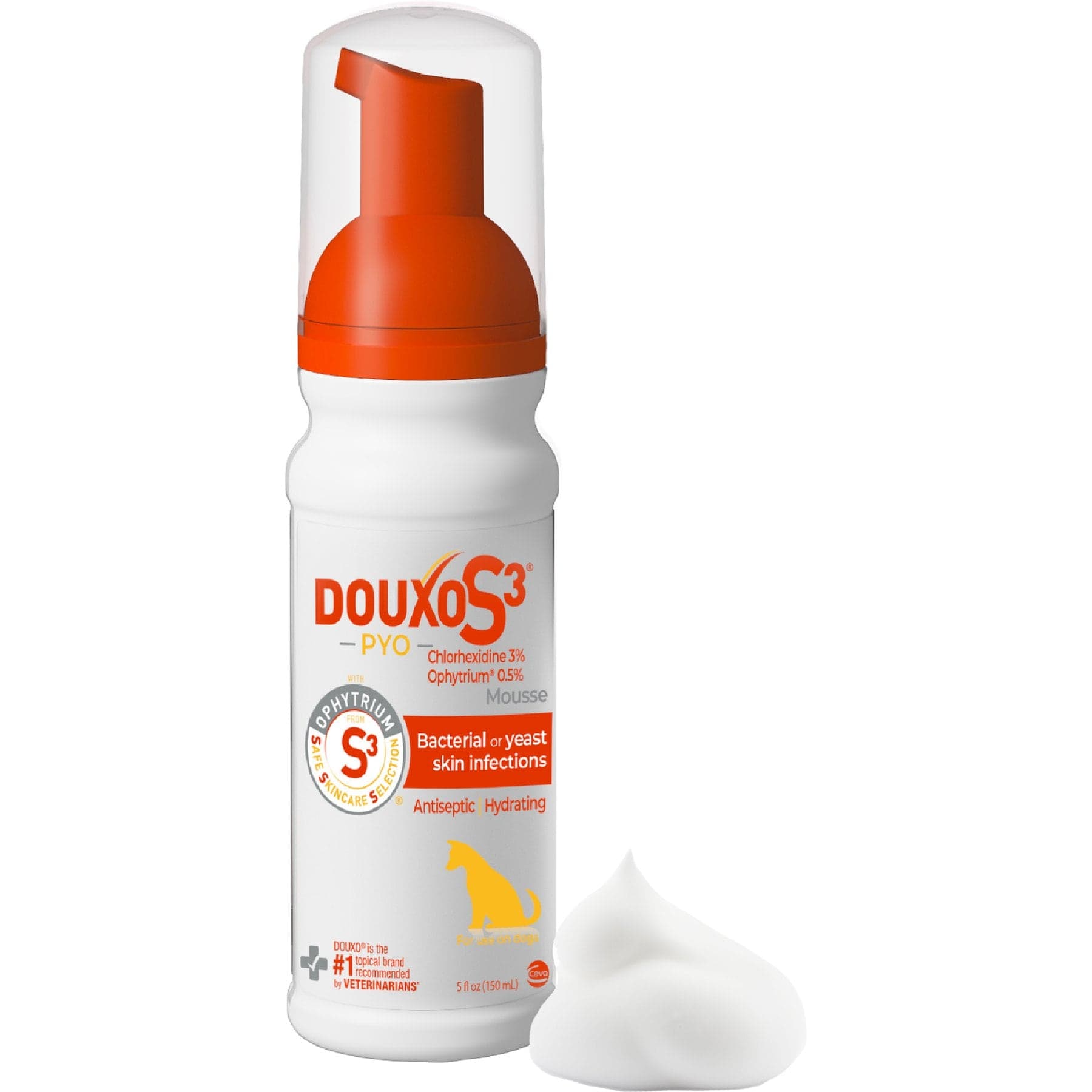
For a leave-on format: DOUXO S3 PYO mousse. Ask your vet which topical format suits the affected area; do not add products to the plan on your own.
Webvet may earn a commission when you click through to Chewy, at no extra cost to you.
A bacterial yeast infection in dogs needs both problems treated, because an antibiotic will not clear yeast, and an antifungal alone will not clear a bacterial infection. A chlorhexidine and miconazole shampoo can lower both yeast and bacteria, the WAVD guideline reports, and vets add antibiotics only when a bacterial infection is confirmed.
Our staph infection pictures guide shows how bacterial pyoderma looks at each stage, from early pimples to deep infection.
Yeast vs. ringworm and other fungal infections
Yeast and ringworm are both fungal skin infections, but they differ in ways you can see:
- Yeast: normal skin yeast that overgrows; red, greasy, itchy and smelly; not contagious
- Ringworm: a fungus caught from infected animals or contaminated surfaces; roughly circular patches of hair loss with scale and broken hairs; usually not itchy; contagious to people, especially children, and to other pets, according to VCA
So the symptoms of fungal infection in dogs depend on the fungus. Greasy, itchy skin points toward yeast, while dry, round, scaly bald patches point toward ringworm, which a fungal culture confirms. See what ringworm looks like on dogs for photos.
Deep fungal infections are a different, more serious kind of fungal dermatitis in dogs. Blastomycosis, for example, can cause draining sores on the face, nose or nail beds along with cough, weight loss or fever, and it needs prompt vet care.
What triggers yeast infections in dogs?
A yeast infection in dogs starts with a change in the dog's own skin, not with catching a germ. Malassezia already lives on healthy skin and overgrows when the skin turns oilier, damper or inflamed, or its defenses drop. So yeast is usually secondary to allergies or another problem. Common triggers:
- Allergies: atopic dermatitis (environmental allergy), food allergy and flea allergy often sit behind yeast overgrowth
- Oily skin (seborrhea), which favors yeast growth
- Moisture: skin folds, the damp skin between the toes and constant licking
- Hormone disease: hypothyroidism and Cushing's disease (hyperadrenocorticism) often turn up alongside yeast, though the WAVD guideline notes neither has been proven to cause it on its own
- Steroids and other immune-suppressing medicines, which weaken the skin's defense against yeast, per VCA
- A dog yeast allergy: some dogs become hypersensitive to Malassezia itself, so modest numbers trigger strong itch
- Warm, humid weather, although part of that seasonal pattern may reflect seasonal allergies
Ask about hormone disease when yeast keeps returning. Hypothyroidism (an underactive thyroid) and Cushing's disease, in which the body makes too much of the natural steroid cortisol, can both leave skin greasy, scaly and prone to infection, which gives yeast an opening.
The clues differ: an underactive thyroid typically brings weight gain, low energy and slow hair regrowth, while Cushing's disease brings heavy thirst, a potbelly and panting in middle-aged or older dogs. Blood tests, plus a urine test for Cushing's, check for both, and treating either is part of preventing yeast relapses.
Some breeds are also more prone to Malassezia dermatitis:
- West Highland White Terrier
- English Setter
- Shih Tzu
- Basset Hound
- American Cocker Spaniel
- Boxer
- Dachshund
- Poodle
- Australian Silky Terrier
Yeast is often first diagnosed between one and three years of age, and male and female dogs are affected equally.
In some dogs, especially predisposed breeds, no trigger turns up and the skin clears fully with antifungal treatment. For others, finding the cause is the key step: start with what a food allergy rash looks like and how to tell whether skin trouble comes from food, fleas or the environment.
When to see a vet and how yeast is confirmed
Photos cannot confirm yeast; a quick in-clinic test can. After a history and exam, your vet will usually take one or more skin samples:
- Cytology with a tape strip: clear tape pressed on the skin, stained and read under a microscope. This is the routine test for skin yeast.
- An impression smear: a glass slide pressed onto greasy or moist skin, handy for folds.
- Skin scrapings to look for mange mites, and a fungal culture if ringworm is possible.
Yeast numbers alone do not settle it, because some dogs react strongly to a few yeast. Vets confirm the diagnosis when the skin responds to antifungal treatment, judged after three to four weeks of medicated baths or two to four weeks of oral medicine.
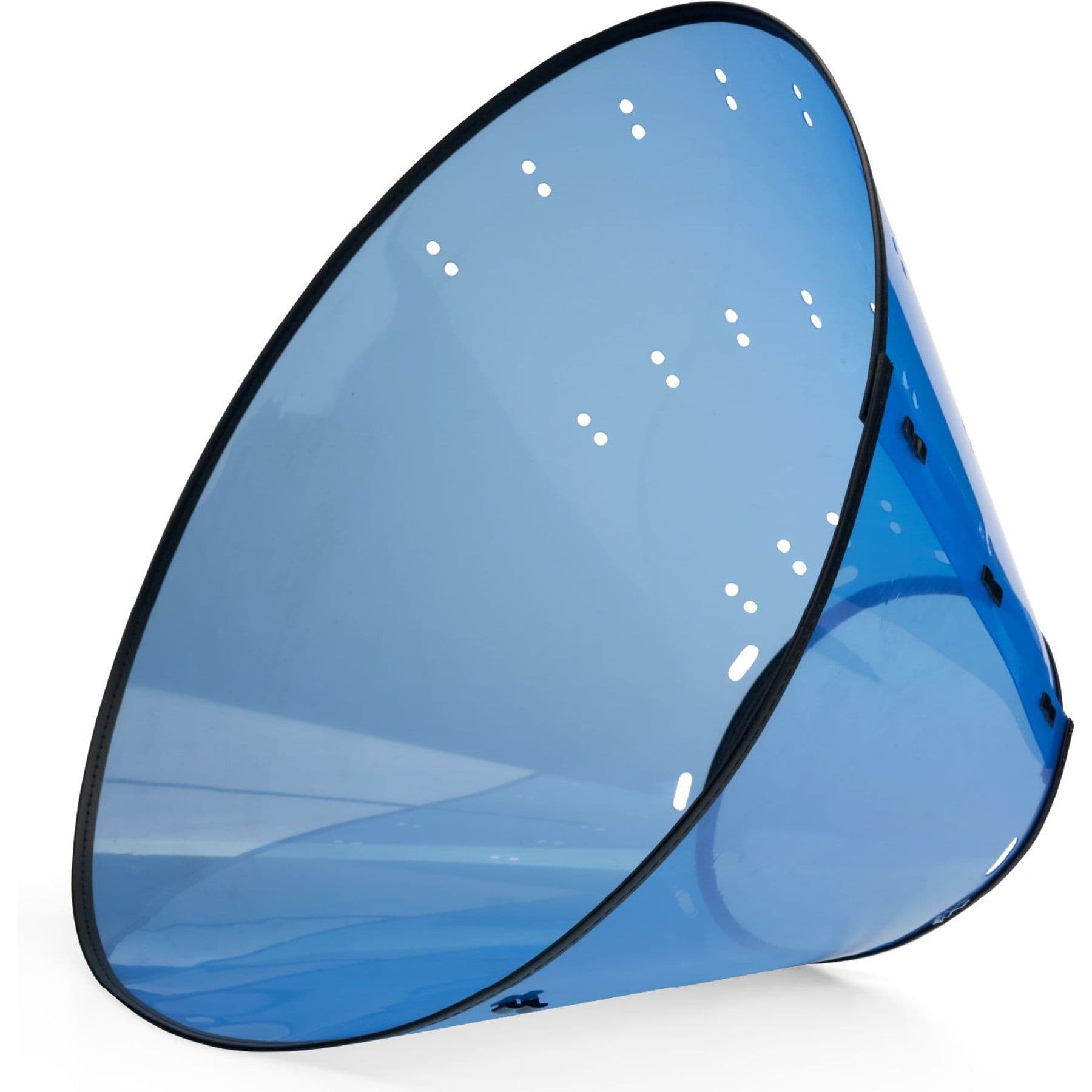
For licking that keeps skin irritated: a rigid recovery collar. This listing is Small; measure for fit and check reach.
Webvet may earn a commission when you click through to Chewy, at no extra cost to you.
Recurring or long-standing yeast calls for a search for the trigger, which may include checking flea control, an elimination diet trial for food allergy and blood tests for hormone disease.
If your vet prescribes Royal Canin Hydrolyzed Protein HP for a suspected food allergy, use it as the trial diet without extra foods. This requires veterinary authorization and addresses an allergy trigger, not yeast directly.
Photographing the skin for the vet is worth the effort, because a flare can look calmer by appointment day. Part the hair, shoot in daylight without flash, and take one wide shot and one close-up of the worst spots; our FAQ below explains how to track changes over time.
What can I give my dog for a skin yeast infection?
Give only what your vet prescribes once yeast is confirmed. Skin yeast treatment works on three fronts at once:
- Medicated baths or topical products that kill yeast on the skin
- An oral antifungal for severe, widespread or stubborn cases
- Treatment of the trigger, plus itch control, with antibiotics only if bacteria are confirmed
For Malassezia dermatitis treatment, the strongest evidence in the WAVD review is for a medicated shampoo, with moderate evidence for two oral antifungals. That makes a medicated yeast infection dog shampoo the center of most treatment plans, with oral medicine added when bathing alone is not enough.
How often to bathe a dog with a yeast infection
Twice a week is the bathing schedule with the best evidence, and your vet will adjust it for your dog. The best-studied product is a miconazole-chlorhexidine shampoo used twice weekly: 2% miconazole plus 2% chlorhexidine has the strongest evidence of any yeast treatment for dogs. A 3% chlorhexidine shampoo has moderate evidence.
How to bathe a dog with a yeast infection:
- If the coat is very greasy, start with the degreasing shampoo your vet recommends.
- Work the medicated shampoo down to the skin, including between the toes, under the arms and inside folds.
- Leave the miconazole-chlorhexidine shampoo on for 10 minutes before rinsing. That contact time is what lets the medicine work, VCA notes.
- Rinse well, then dry thoroughly, especially paws and folds.
- Repeat on schedule for at least three to four weeks, when your vet will judge the response.
Tell your vet if the skin seems more irritated after baths, since some dogs react to medicated shampoos. Our guide to dog shampoo for itchy skin explains how gentle and medicated formulas differ once your vet has confirmed yeast.
Oral antifungals and other prescription treatment
Oral antifungals are prescribed by a vet when yeast is widespread or severe, when regular medicated baths are not practical for your dog, or when bathing alone has not cleared it. The options, per the WAVD guideline:
- Ketoconazole and itraconazole, which have moderate evidence for skin yeast in dogs
- Fluconazole, with more limited evidence
- Terbinafine, with weak evidence so far
Only a vet can choose the drug and dose, because the right choice depends on your dog's size, liver health and other medicines. Courses can run from several weeks to several months, and combining an oral drug with medicated baths can clear severe cases faster than either alone.
Your vet may schedule blood tests, because these drugs can affect the liver. While your dog takes one, watch for:
- Nausea, vomiting or a poor appetite, possible side effects of this drug class, per the Merck Veterinary Manual
- Any new sign of illness, since liver problems can develop
- Interactions: azole antifungals change how the body handles many other drugs, so give your vet a full list of medicines and supplements
Never substitute human antifungal tablets. Avoid compounded versions: the WAVD guideline says compounded azole antifungals must not be used because they can be poorly absorbed and fail, and it prefers approved or proven generic products. Other prescriptions your vet may add:
- Antibiotics, only when cytology shows bacteria as well
- Itch-control medicine for the underlying allergy
- Year-round flea control
- A prescription diet for an elimination trial if food allergy is suspected
Dog yeast infection home treatment: what helps
Dog yeast infection home treatment supports your vet's plan; it does not replace it. The steps that actually help:
- Keep to the bathing schedule and the full 10-minute contact time.
- Dry paws, folds and the belly after walks, swims and baths.
- Clean skin folds daily with the wipe or product your vet recommends, then dry them.
For a small infected fold, your vet may suggest DOUXO S3 PYO pads. These contain 3% chlorhexidine; use them only on the areas and schedule your vet recommends, avoiding the eyes.
For a leave-on format, ask your vet about DOUXO S3 PYO mousse. Use the topical format your vet selects.
- Break the lick cycle; a cone can stop the licking while paws and skin heal.
- Keep your dog on year-round flea control.
- Finish the full course, even when the skin looks better.
Some popular remedies don't help. Apple cider vinegar soaks and sprays for yeasty paws are not among the treatments with evidence in the WAVD review, and as an acid, vinegar stings scratched or raw skin. Coconut oil adds more oil to skin that is already greasy. Neither is a treatment.
Tea tree oil and other concentrated essential oils are the riskiest choice. Tea tree oil has been the most commonly reported essential oil poisoning in pets, and concentrated oils should never be applied directly to a dog, warns the Merck Veterinary Manual.
What healing skin looks like during treatment
Healing follows a fairly predictable order, which helps you tell whether treatment is working:
- Within about a week: itching eases.
- By three to four weeks: redness, greasy film and smell should be clearly better; this is when your vet judges the response.
- As the scratching stops: hair regrowing as short, fine hairs over the thinned areas.
- Over months: fading dark patches, which can leave faint lacy grey-brown pigment for a while.

Book a recheck if the itch has not eased after one to two weeks, if redness or greasy scale comes back, or if new spots appear. Slowly fading dark skin is expected; returning red, greasy skin is not.
What to feed a dog with a yeast infection
No special diet treats skin yeast, and the WAVD guideline lists no diet among its treatments. If you are wondering what to feed when your dog has a yeast infection, the answer for most dogs is their usual complete and balanced food, unless your vet suspects a food allergy.
Food matters when food allergy is the trigger. It often shows up as itchy paws, ears and belly with yeast or bacterial infections that keep coming back. The only reliable test is an elimination diet trial for food allergy:
- Your vet picks a hydrolyzed-protein diet or a novel-protein diet your dog has never eaten, as VCA describes.
- Feed only that food, usually a hydrolyzed or limited ingredient dog food your vet chooses, for an elimination diet trial of eight to 12 weeks; the Merck Veterinary Manual notes that ten weeks may be needed to identify 95% of food-allergic pets.
- Give no treats, table food, flavored chews, flavored supplements or flavored medicines during the trial.
- If the skin improves, your vet adds old foods back one at a time, about two weeks apart, to find the culprit.
Blood and skin tests for food allergy are not reliable, so they cannot replace the trial. The most common food allergens in dogs are beef, dairy, chicken, wheat and lamb. Our guide to common food allergens in dog food covers what to feed instead once a trigger is found.
Grain-free food is not a yeast treatment either. Wheat can be an allergen for some dogs, but a grain-free label is not an elimination diet and does nothing to starve skin yeast.
Do any foods starve yeast in dogs?
No food starves skin yeast. Malassezia lives in the outer layer of the skin and feeds on fats in skin oil; the WAVD guideline notes its genes for breaking down sugars and starches are reduced. Cutting carbohydrates, sugar or grains from the bowl does not remove the skin fats it grows on.
What does reduce yeast is treating the skin and its trigger: medicated baths, dry folds and paws, allergy control and, when food allergy is suspected, a strict elimination diet. Diets sold as anti-yeast or low-sugar are not part of the WAVD treatment recommendations for dogs.
Dog skin yeast infection FAQs
Frequently Asked Questions
What not to give a dog with a yeast infection?
Skip anything your vet has not prescribed for this flare, especially:
- Leftover steroid tablets such as prednisone, because steroids weaken the skin's defense against yeast
- Leftover antibiotics, which do not treat yeast and are only needed if bacteria are confirmed
- Human antifungal pills or creams, unless your vet approves them
- Tea tree oil or other concentrated essential oils, which can poison dogs
- Vinegar on raw or broken skin
- Extra treats or chews during an elimination diet trial
No food needs to be banned for yeast itself; diet changes matter only when a food allergy is being tested.
Will yogurt help my dog's yeast infection?
No. There is no evidence that yogurt treats skin yeast, which grows on the skin, not in the gut. Plain yogurt is dairy, one of the most common food allergens in dogs, and any sugar-free yogurt should be checked for xylitol, a sweetener the Merck Veterinary Manual lists as toxic to dogs.
The probiotic evidence is early and strain-specific: a few small studies suggest particular probiotic strains may help some allergic dogs as an add-on, not as a yeast treatment. Our guide to probiotics for dogs with allergies explains what those studies show.
What homemade food can I give my dog for a yeast infection?
No homemade recipe treats skin yeast, and home-cooked diets are hard to get right. A UC Davis study of 200 published dog food recipes found that 95% were short of at least one essential nutrient.
If you want to cook for your dog, including for an elimination diet trial, ask a board-certified veterinary nutritionist for a recipe that is complete and balanced.
Is a dog skin yeast infection contagious to people or other pets?
No. Skin yeast is not contagious to people or other pets: Malassezia is normal skin yeast that overgrows on the affected dog because of that dog's own skin changes.
The WAVD guideline rates the risk to people as low except for people with severely weakened immune systems, so simply wash your hands after handling the skin or medicated shampoo. Ringworm, by contrast, is contagious.
How long does a skin yeast infection take to clear with treatment?
Itching eases within about a week of starting treatment, according to VCA. Vets judge the response after three to four weeks of medicated baths or two to four weeks of oral medicine, and oral courses can run for several months in stubborn cases. Dark, thickened skin takes longest: pigment can fade slowly over months.
Can a yeast infection on a dog's skin go away on its own?
It rarely clears for good without treatment, because the underlying trigger that let the yeast overgrow, such as an allergy, skin folds or oily skin, is still there.
Malassezia is a normal skin resident, and the WAVD guideline notes that relapses are common while the cause persists. Itchy, smelly or spreading skin needs a vet rather than waiting.
Why does my dog keep getting yeast infections?
Recurrent yeast infections usually mean the underlying cause is still active, often an underlying allergy. Dogs with severe skin allergies can have yeast or bacterial flare-ups two or three times a year, VCA reports. The long-term fix is controlling that trigger with your vet through flea control, a diet trial or allergy treatment.
When the trigger can't be fully controlled, vets use maintenance bathing with a medicated shampoo, or pulsed oral antifungals, to keep relapses down. Twice-weekly baths have the best evidence; less frequent maintenance schedules may work for some dogs but have not been proven.
How should I photograph my dog's skin for the vet?
Photos help your vet see a flare that may look calmer by appointment day. For useful pictures of your dog's skin:
- Shoot in natural daylight, without flash.
- Part the hair so the skin itself is visible.
- Take one wide shot to show the location and one close-up to show texture and color.
- Photograph the same spot from the same distance every few days to track change.
- Note the date and bring the photos to the visit.
Photos support the exam; they never replace the cytology test that confirms yeast.
$65 · no membershipIs your dog's itching or skin issue getting worse?
A licensed vet can examine your dog over video and prescribe treatment online when it's appropriate.
Talk to a vet- Licensed vets
- All 50 states
- same-day Rx
Webvet may earn a commission if you book.

Editor
The Webvet Editorial Team is the in-house group of pet-care editors and writers behind Webvet, operated by Smart Pet Collective. The team researches, writes, and maintains Webvet's pet health, behavior, and medication content. Every article follows a defined editorial process: research from reputable veterinary and scientific sources, careful drafting, mandatory review of medical content by a credentialed veterinarian, and dated publication. Health and medication articles are medically reviewed by a licensed veterinary professional before they go live and are kept current over time.
Veterinarian · BVMS MRCVS
Dr. Pippa Elliott, BVMS, MRCVS, is a veterinarian with nearly 30 years of experience in companion animal practice. Dr. Elliott earned her Bachelor of Veterinary Medicine and Surgery from the University of Glasgow. She was also designated a Member of the Royal College of Veterinary Surgeons. Married with 2 grown-up kids, Dr. Elliott has a naughty Puggle named Poggle, 3 cats and a bearded dragon.
Related reading

Pictures of Black Spots on Dog Skin and What Each One Means

Skin Rash Dog Food Allergy Pictures: What Allergic Skin Looks Like

Dog Skin Problems Pictures: 15 Conditions and When to See a Vet
