Pictures of Black Spots on Dog Skin and What Each One Means
Labeled pictures of black spots on dog skin: normal freckles, flea dirt, belly darkening from itch, yeast, blackheads, hormone-related black skin, and the raised or growing dark spots that need a vet check.

BVMS MRCVS
Medically reviewed by Dr. Pippa Elliott, BVMS MRCVS · Last reviewed

This article contains affiliate links. Webvet may earn a commission when you buy through them, at no extra cost to you.
Pictures of black spots on dog skin show several problems that can look alike: flat freckles of normal pigment, black specks of flea dirt caught in the coat, and patches of skin that have darkened after weeks of itching, infection or friction. Blackheads, hormone disease and pigmented growths can also leave dark spots.
How a spot feels and where it sits narrow the list quickly. A flat, smooth, painless spot that stays the same is usually harmless pigment. A raised, growing, irregular, ulcerated or bleeding dark spot, or any dark spot on the lip, in the mouth or at a nail bed, needs a vet promptly.
Photos help you describe what you see, but they cannot confirm a cause. A veterinarian does that with an exam and, when needed, quick tests such as a skin scraping, a tape sample or a needle sample. The photos below are grouped by what a spot looks like and where it sits on the body.
What causes black spots on dog skin?
- 1Flat black freckles that feel smooth and do not change are usually normal pigment to watch, not treat.
- 2Black specks that smear red-brown on a wet paper towel are flea dirt, so every pet in the home needs flea control.
- 3Dark, thick, itchy skin is old inflammation from allergy, infection or friction, and its cause needs finding.
- 4Dark, greasy skin with a musty smell points to yeast, which a vet confirms with a skin sample.
- 5A raised dark lump, a swollen toe or any dark spot on the lip, in the mouth or at a nail bed needs a vet promptly.
Black spots and black skin get their color from melanin, the pigment that cells called melanocytes make for both the skin and the coat, explains the Merck Veterinary Manual. Genes and hormones control how much melanin the skin makes.
Inflammation and rubbing can push that production higher, so the same dark color can have very different causes. When you find a black spot on your dog, it usually belongs to one of these groups:
- Normal pigment: flat freckles called lentigines, and naturally dark skin under dark hair
- Surface debris: flea dirt, soil, dried blood or scale sitting on the skin or in the coat
- Darkening after inflammation: skin that turned dark after itching, infection or friction, called post-inflammatory hyperpigmentation
- Plugged pores: blackheads, which vets call comedones
- Hormone and inherited conditions: hypothyroidism, Cushing's disease, alopecia X and acanthosis nigricans
- Pigmented growths: usually benign melanocytomas, and less often malignant melanomas
Before comparing photos, part the hair in daylight and answer three questions. Is the spot flat or raised? Does it comb, wipe or wash off? Is your dog itchy there? Those answers rule out several look-alikes before you scroll any further.
If the problem looks red, bumpy or scabby rather than dark, our dog skin problems pictures guide compares black spots with every other common skin condition.
Is it normal for dogs to have black spots on skin?
Yes, in many dogs. A spot that is flat and painless, feels smooth and does not change is usually normal pigment, especially on the belly and chest of a middle-aged or older dog. Raised, growing, itchy, greasy, crusty or bleeding spots are a different story, and the sections below show each of them.
The classic harmless black spot is a lentigo (plural lentigines): a flat black freckle with sharp edges on otherwise normal skin. A 2022 review of darkened skin in dogs in the Canadian Veterinary Journal calls lentigines benign and purely cosmetic. They are most common on the belly and chest of middle-aged and older dogs.
Vets tell a freckle from a pigmented tumor by feeling it, measuring it and watching for change, and they test any spot that changes. At home, gently stretch the skin beside the spot. Flat black freckles stay level with the skin, like ink on paper, and the skin around them looks healthy.

A black spot is not a simple freckle when it:
- Rises above the skin, is dome-shaped or sits on a stalk
- Grows, changes shape or turns uneven in color
- Itches, or looks greasy, scaly or crusty
- Becomes sore, ulcerated or starts to bleed
- Sits on the lip, in the mouth or at a nail bed
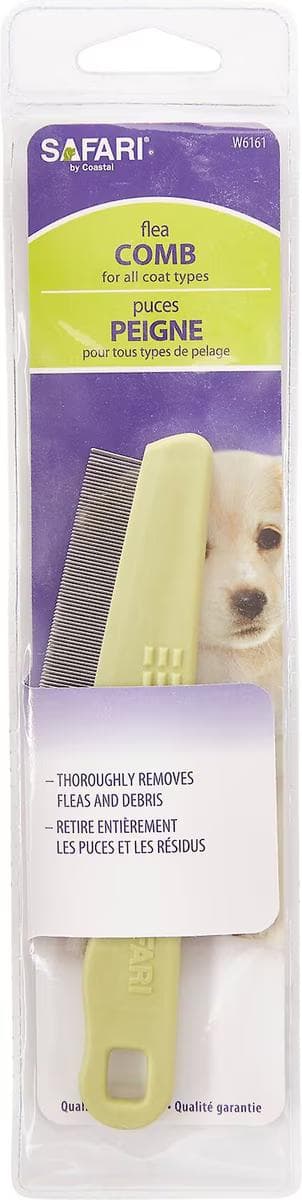
A fine-tooth comb for collecting loose specks for the flea-dirt test.
Webvet may earn a commission when you click through to Chewy, at no extra cost to you.
Freckles that pass all of these checks only need watching. A dated photo about once a month makes any change easy to spot.
What kind of dogs have black spots on their skin?
Any dog can have black spots on its skin, and coat color is the first clue. Melanocytes color both skin and hair, so dark patches of coat often sit over grey or black skin, and a dark-coated dog may have dark skin in many places.
White patches work differently. In white-spotted dogs, the skin under white hair lacks pigment cells, according to the OMIA database at the University of Sydney, so it stays pink. That is why dark freckles stand out so clearly on a pale belly.
Age matters as much as breed. Lentigines turn up most often in middle-aged and older dogs, so a senior dog with a few new flat freckles on its belly is a common and harmless picture. A few breeds also get dark skin from specific conditions covered later in this guide:
- Dachshunds: primary acanthosis nigricans, black skin in both armpits of young dogs
- Pomeranians and other plush-coated breeds: alopecia X, black skin with hair loss
- Miniature Schnauzers: Schnauzer comedo syndrome, black dots along the back
- Miniature and Standard Schnauzers and Scottish Terriers: the breeds most at risk for malignant melanoma, per Merck
Black specks on dog skin: flea dirt or something else?
If you find tiny black dots on your dog's skin, or black dirt-like stuff at the base of the hairs, rule out flea dirt first. Flea dirt is flea droppings made of digested blood, and VCA Animal Hospitals says it looks like bits of dirt or pepper.
Up close, the Merck Veterinary Manual describes these black specks in dog fur as reddish black and shaped like tiny pellets or commas. Because flea dirt is dried blood, it turns red when it gets wet, which makes a simple home test possible.
On the towel, flea dirt looks like black grains surrounded by red-brown smears as the dried blood dissolves. Finding it means fleas have been feeding on your dog, even if you never see a live one.
Use a Safari Double Row Flea Comb to collect loose specks for the damp-paper test. Keep the pressure light and do not scrape at attached scabs or blackheads.

No flea comb handy? Merck notes that slowly parting the hair against the way it lies often reveals flea dirt or fast-moving fleas at the skin. Check the places Merck links with fleas in dogs:
- The middle and lower back
- The base of the tail
- The backs of the thighs
- The belly and groin
Flea dirt means fleas, and fleas spread to other pets. Merck's approach to flea control covers every animal in the household and the home itself, not only the dog with the specks. Our guide to what fleas look like on dogs shows the adult fleas and how to stop them if your test turns red.
Black specks that are not flea dirt
If the specks stay black on the wet towel, they are not flea dirt. Black specks on dog skin that are not fleas usually come from one of these:
- Soil, dust or bedding caught in the coat, often mixed with dandruff. It washes out in a bath, while flea dirt keeps coming back until the fleas are treated.
- Dried blood from scratches. Scabs also turn red when wet, but they stick to the skin over a scratch instead of sitting loose in the coat.
- Blackheads. These are plugged pores in the skin itself, so they do not comb out or wipe off.
- Greasy scale from yeast. The WAVD consensus guidelines on Malassezia describe brown, yellow or grey greasy scale on inflamed skin.
Black flakes on dog skin are usually either dried crusts or dark, greasy scale, and the next section and the yeast section below show both. Flakes on skin that also smells musty point toward yeast.
Tiny black specks will not be flea eggs, because flea eggs are not black at all: they are tiny white ovals. Our guide to flea eggs on dogs shows what they look like. For pictures of the two look-alikes that do not comb out, see the blackhead and yeast photos further down.
Black scabs, crusts and scaly patches
Black scabs on a dog's skin are usually dried blood and serum over broken skin, so the dark color comes from blood rather than pigment. The usual reasons for black crusty spots:
- Flea allergy. Merck describes itching, hair loss and crusts over the lower back, tail base and backs of the thighs, with the skin darkening and thickening over time.
- Self-trauma. Hot spots, bites and constant chewing at itchy skin leave dried blood scabs from scratching wherever the skin has broken.
- Bacterial infection. As it heals, it can leave round, peeling rings with a dark center, as the Canadian Veterinary Journal review describes. If a ring still has a red, crusty rim, the infection is active and needs a vet. Our pictures of bacterial skin infections show those rings and other stages of infection.
Black scaly skin on a dog usually means long-standing inflammation. Merck describes darkened skin with scaling, hair loss and thickening, often with yeast or bacteria growing on top.
Bald, scaly, crusted patches with broken hairs can be ringworm, a fungal infection that spreads to people and other pets, according to the Merck Veterinary Manual. See what ringworm looks like on dogs if the patches are round.
Book a vet visit for scabs or crusts that:
- Spread to new areas
- Ooze or smell
- Keep coming back
- Come with patches of hair loss
Go sooner if the skin is hot, swollen or painful, or if your dog seems unwell.

Flea control for dogs over 55 pounds when the dark specks are flea dirt.
Webvet may earn a commission when you click through to Chewy, at no extra cost to you.
What does black skin on a dog mean?
Black skin on a dog means extra melanin in that area. Some dogs are born with dark skin, but skin that darkens over weeks or months has hyperpigmentation. The Merck Veterinary Manual's guide for dog owners describes this as a reaction to other conditions, not a disease of its own.
The most common cause in dogs is post-inflammatory hyperpigmentation, skin that darkens after itching, infection or friction, according to the Canadian Veterinary Journal review. Merck adds that it is common in dogs with allergic skin disease. Hormone disease, inherited conditions and pigmented growths are less common causes.
The pattern of the darkening is your best clue:
- Patchy, lace-like darkening where the dog licks, scratches or rubs: post-inflammatory
- Even darkening on both sides of the body, with hair loss and no itch: hormone disease or alopecia X
- Matching black armpits in a young Dachshund: possible primary acanthosis nigricans
- Dark skin that feels greasy and smells musty: yeast
- A single raised dark spot: a growth that needs a needle sample
Black skin itself is not what gets treated. It fades only after its cause is found and controlled, and slowly, possibly over months, according to Merck.
Dark spots on a dog's belly and belly skin turning black
Dark spots on a dog's belly are easy to see because the skin there is thin and pale, and itchy dogs lick and scratch the belly and groin a lot.
Merck lists the legs and groin as the usual sites of darkening, which can later spread to the underside of the neck, the rest of the belly and the skin under the tail.
If your dog's belly is getting darker, one of these is usually behind it, according to Merck:
- Allergies to fleas, food or things in the environment
- Yeast or bacterial skin infections
- Contact irritation from things the belly touches
- Friction, including skin rubbing on skin in overweight dogs
- Hormone disease, less often
Working out which trigger is behind the itch is the real job. Our guide to telling whether skin trouble comes from food, fleas or the environment walks through that process.
For a dog in the correct weight range, Advantage II for dogs over 55 pounds is one flea-control option to discuss with your vet. The linked formulation is not for smaller dogs or cats.
The photos below show the two stages of belly darkening: early, patchy grey-brown darkening on pink skin, and the thick leathery belly skin of a dog whose belly has turned black after months of irritation.
Early stage: patchy grey-brown darkening
Early belly darkening shows up as lacy grey-brown patches on pink skin, as if someone had brushed on a faint shadow. Merck describes post-inflammatory darkening as patchy and often lacy at first, alongside signs of the itch that caused it: redness, scaling and thinning hair. The skin is still thin and soft.

Signs that belly darkening is still at the early stage:
- Grey-brown, lace-like patches rather than solid black
- Pink skin still showing between the patches
- Redness, fine scratch marks or small bumps from the ongoing itch
- Skin that still feels thin and soft, with no deep creases
This is the best stage to act. Early darkening means the itch or infection is still active, and treating the cause now gives the skin its best chance to settle before it thickens. Take a dated photo of the belly so you and your vet can compare after treatment.
Advanced: black, thick, leathery belly skin
When irritation goes on for months, the belly skin turns black, thick and leathery. Vets call the thickening lichenification: the surface turns rough, with deep criss-cross creases, and the hair often falls out. Merck's dog owner guide describes these areas as light brown to black, velvety, rough, thickened and often hairless.

Owners often describe it as the belly skin turning black, or the skin on the stomach turning dark and tough. Look for:
- Solid black or slate-grey skin across the belly and groin
- Thick skin with exaggerated creases
- Hair loss over the dark area
- Greasy scale or a musty smell, which suggests yeast or bacteria on top
Merck notes that secondary infections are common in long-standing darkening. Black leathery skin like this needs a full vet workup to find the original trigger and treat any infection. The color fades slowly after that, possibly over months, and thickened skin takes time to soften.
What do allergy spots look like on a dog?
Allergy spots start red, not black. Merck describes the early signs of atopic dermatitis, the environmental skin allergy, as red patches and small red bumps, most often on:
- The paws
- The face and ears
- The bends of the front legs
- The armpits
- The belly
Hair loss, scratch marks, crusts, thickened skin and darkening follow as the dog keeps licking and scratching. That is why dark spots on an itchy dog are often old allergy skin rather than a new disease.
Flea allergy has its own pattern, with itching, hair loss and crusts centered on the lower back, tail base and backs of the thighs, per Merck.
Food allergy causes the same kind of itchy skin, paws and ears, notes VCA Animal Hospitals, and vets confirm it with an elimination diet trial. See what a food allergy rash looks like for photos of the early red stages.
 $65 · no membership
Is your dog's itching or skin issue getting worse?
A licensed vet can examine your dog over video and prescribe treatment online when it's appropriate.
 Talk to a vet
- Licensed vets
- All 50 states
- same-day Rx

Webvet may earn a commission if you book.
What does fungal dermatitis look like on a dog?
Fungal dermatitis on a dog is usually a yeast infection caused by Malassezia, a yeast that lives on normal skin and overgrows when the skin is inflamed or oily. It looks like red, itchy skin with greasy brown, yellow or grey scale and a musty smell, according to the WAVD consensus guidelines.
In long-standing cases the skin thickens and darkens, which VCA Animal Hospitals describes as thickened elephant skin with darker pigment.
On the front of the neck, chronic yeast looks like grey-brown to black skin with a greasy sheen, waxy brown scale stuck to the base of the hairs and red edges where the infection is still active.

The WAVD guidelines list the usual yeast sites:
- Lips and muzzle
- The underside of the neck
- Armpits
- Belly and inner thighs
- Between the toes
- Around the anus
- Skin folds and ear canals
Texture and smell set yeast apart. Dark spots from yeast feel greasy, carry waxy scale and smell musty or rancid, while flat freckles are clean and smooth.
Dark, greasy, musty skin needs a vet check. A vet confirms yeast by looking at a tape strip or impression smear under the microscope, then treats both the yeast and the trigger that let it overgrow. VCA notes that yeast dermatitis is not contagious.
Ringworm, the other common fungal skin infection, looks different: bald, scaly patches with broken hairs rather than greasy dark skin, and it can spread to people. For the full set of yeast stages and body sites, see our dog skin yeast infection pictures.
Blackheads and black bumps on dog skin
Blackheads on dogs are pores plugged with oil and dead skin. They look like tiny black dots or pepper-like specks, and unlike flea dirt they do not comb out. Vets call them comedones, and VCA describes them as dilated pores with wider than usual openings. Larger ones feel like small black bumps.
Not every black bump on a dog's skin is a blackhead:
- A soft growth that dangles on a stalk is more often a skin tag; see our guide to skin tags on dogs
- A single raised, dome-shaped dark lump belongs with the growths in the melanoma section below
Causes of blackheads listed by VCA include:
- Steroid medicines (glucocorticoids)
- Hypothyroidism
- Cushing's disease
- Allergies
- Pressure points such as the breastbone in thin-coated, lean dogs
Which blackheads need a vet check? A new cluster on an older dog's belly does, to rule out Cushing's disease or another hormone cause. So do blackheads that turn red, itchy or crusted, a sign of infection. On a Miniature Schnauzer's back, a vet confirms the syndrome first, then home care keeps it in check.

A benzoyl peroxide shampoo option for vet-confirmed comedones.
Webvet may earn a commission when you click through to Chewy, at no extra cost to you.
Blackheads on the belly
Blackheads on a dog's belly often look like clusters of tiny black comedones in thin belly skin with sparse hair, sometimes with small blood vessels showing through. On an older dog, that picture is worth a vet check, because blackheads and thin skin are both skin signs of Cushing's disease.

Cushing's disease, an excess of the body's own cortisol, mostly affects dogs 7 to 12 years old, per the Merck Veterinary Manual. Blackheads on the belly point toward it when they come with:
- A pot-bellied shape
- Thin skin that bruises easily
- Hair loss on the body
- Drinking, urinating and eating more than usual
- Panting
- Dark patches of skin
Merck lists Miniature Poodles, Dachshunds, Boxers, Boston Terriers, Yorkshire Terriers and Staffordshire terriers among the breeds at higher risk. Steroid medicines and allergies can also cause belly blackheads, so the vet starts with your dog's history and an exam, then blood tests.
Schnauzer comedo syndrome on the back
In Miniature Schnauzers, black dots along the spine are the classic sign of Schnauzer comedo syndrome: waxy black comedones running down the middle of the back from the neck to the rump. In a case series from Cornell University dermatologists, most owners had not noticed them. The coat hides them well.

Older blackheads often turn into small, crusted bumps. The syndrome itself does not itch, but a secondary bacterial infection of the hair follicles can make it itchy and red, so new redness or scratching along the back is a reason to see the vet.
Schnauzer comedo syndrome is usually painless but incurable. In the Cornell dogs, it stayed unchanged for months to years. Control is the goal: VCA lists benzoyl peroxide shampoos and gels for it, and vets treat any infection with antibiotics. A vet also checks for mites and infection before settling on the diagnosis.
Davis Benzoyl Peroxide Shampoo is a 2.5% benzoyl peroxide option to discuss with your vet for confirmed comedones. It is not a treatment for a changing pigmented lump.
Black skin with hair loss: hormone problems and alopecia X
When a dog's skin turns black while its hair thins evenly on both sides of the body, and the dog is not itchy, think hormones or a hair-cycle problem rather than allergy. Owners often call this pattern black skin disease in dogs, a name most closely tied to alopecia X in Pomeranians. The main causes:
- Alopecia X, a hair-cycle arrest in plush-coated breeds
- Hypothyroidism, an underactive thyroid gland
- Cushing's disease, too much cortisol from the adrenal glands
These conditions can look alike in photos, so a vet runs blood tests for thyroid and adrenal disease early, one of the steps Merck describes for working out darkened skin.
Alopecia X, the black skin disease of plush-coated breeds
Alopecia X is a hair-cycle arrest in plush-coated breeds, most often Pomeranians. A 2024 study in Veterinary Dermatology describes symmetric hair loss on the body without itch or visible inflammation, starting before 4 years of age, mainly in males, with the head and lower legs spared. UK Pomeranian owners call it black skin disease.
What alopecia X looks like:
- A coat that turns woolly, fluffy or brittle and mats easily before it thins
- Symmetric hair loss over the body, matching on both sides
- Grey or black skin where the hair is gone
- A normal coat on the head and lower legs
- No redness, scabs or itch, in a dog that otherwise feels well

Alopecia X is cosmetic, and a study in PLoS One notes that it is not linked with illness elsewhere in the body.
Hypothyroidism and Cushing's disease can look the same and do need treatment, so a vet tests for them before calling it alopecia X. Whether to treat alopecia X itself is a choice to make with your vet after those tests.
Hypothyroidism and Cushing's disease
Hypothyroidism is most common in dogs 4 to 10 years old, according to the Merck Veterinary Manual. Breeds reported at higher risk include Golden Retrievers, Doberman Pinschers, Irish Setters, Miniature Schnauzers, Dachshunds, Cocker Spaniels and Airedale Terriers. It causes non-itchy, usually symmetric hair thinning, and darkening with hair loss is one of its skin signs.
Where to look for hypothyroid hair loss, per Merck:
- The sides and underside of the body
- The backs of the thighs
- The top of the tail
- The underside of the neck
- The bridge of the nose
VCA Animal Hospitals adds these signs:
- Weight gain without a bigger appetite
- Tiredness and less interest in exercise
- Feeling the cold
- A dry, dull coat with heavy shedding
- Hair that does not grow back after clipping
- Darker skin and repeated skin or ear infections
Cushing's disease shows up as thin skin, a pot belly, hair loss, dark patches, blackheads and repeated skin infections, according to Merck and VCA, usually alongside more drinking, urinating and eating.
Both conditions are diagnosed with blood tests and treated with medication your vet chooses and monitors with rechecks. The dark skin fades once the underlying disease is under control.
Acanthosis nigricans: black armpits in young Dachshunds
Primary acanthosis nigricans is a rare inherited condition found almost only in Dachshunds, with signs usually appearing by 1 year of age, according to the Merck Veterinary Manual. It starts as matching black armpit skin on both sides that is smooth and not itchy. Over time the skin can thicken where skin rubs on skin.

Vets diagnose it by ruling out the far more common causes of black armpits first: allergies, infections and hormone disease. Merck notes that what is often diagnosed as primary acanthosis nigricans is usually post-inflammatory darkening in a dog with allergic skin disease.
So black armpits in another breed, or in a Dachshund that licks and scratches, are much more likely to be darkening after inflammation, sometimes called secondary acanthosis nigricans. That form is a reaction pattern, and it fades once its cause is treated.
True primary acanthosis nigricans cannot be cured, but it can be managed. Merck describes medicated shampoos that fight infection and grease, soothing emollients where skin rubs, and antibiotics when infection sets in.
What do melanoma spots look like on dogs?
Melanoma spots on dogs range from flat dark patches to raised lumps, and malignant ones are usually raised and most often grow on the lips, inside the mouth and at the nail beds. Not every dark lump is cancer, and not every melanoma is dark, so a needle sample matters more than any photo.
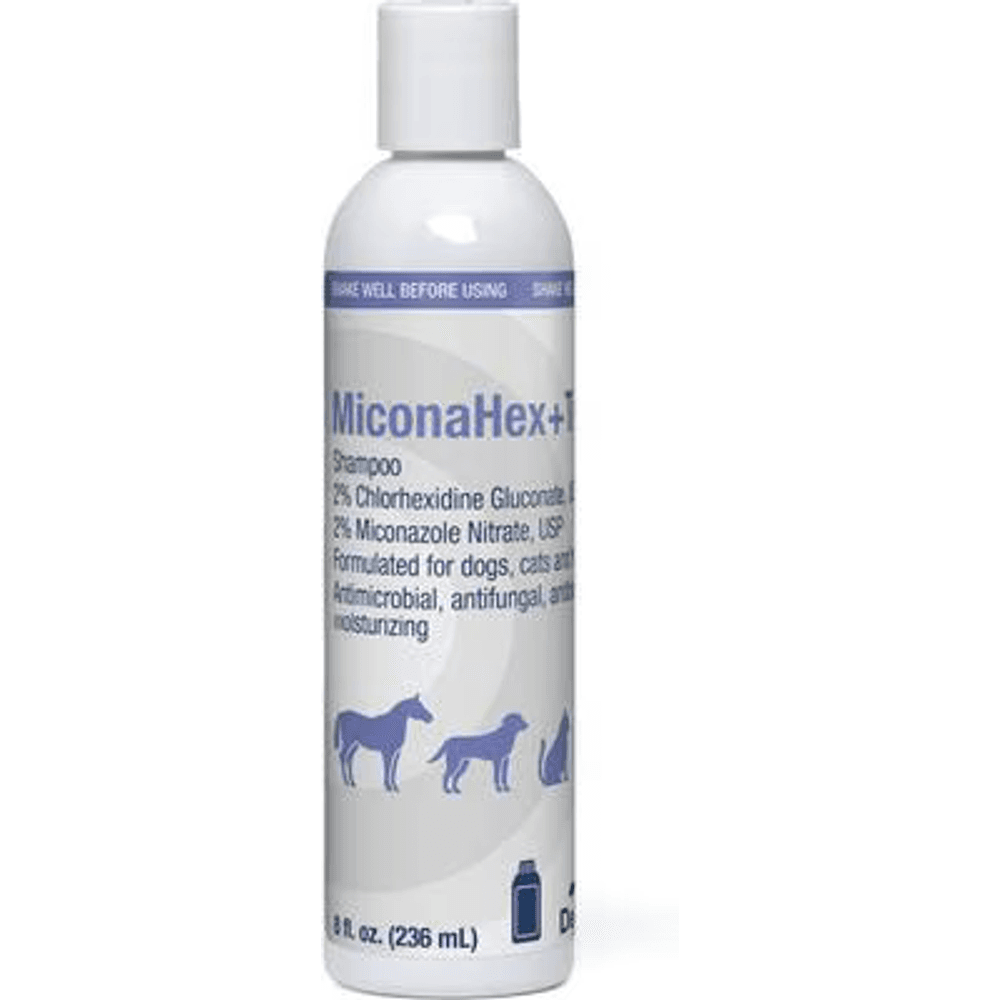
Miconazole-chlorhexidine shampoo for diagnosed infection under a veterinarian’s treatment plan.
Webvet may earn a commission when you click through to Chewy, at no extra cost to you.
On haired skin, melanocytomas, which are benign, are diagnosed much more often than malignant melanomas, according to the Merck Veterinary Manual. They most often develop on the head and front legs of middle-aged and older dogs. They can be flat spots, raised bumps or lumps on a stalk, and most have a dark surface.
Malignant melanomas tend to look different, per Merck:
- Usually a raised, often ulcerated lump
- Color from black to brown, and sometimes no pigment at all
- Most often on the lips, in the mouth and in the nail beds
- Rare on haired skin, where most arise on the belly and scrotum
- Quick to grow, with the potential to spread to other organs
Miniature and Standard Schnauzers and Scottish Terriers are the breeds most at risk. Melanomas of the toe also behave more aggressively than those on haired skin, according to VCA Animal Hospitals.
A raised dark lump like the one pictured below, dome-shaped with a slightly uneven surface, could be a harmless melanocytoma or a melanoma, and looks cannot tell them apart. A vet starts with a fine-needle aspirate, a quick sample of cells taken with a needle, and often follows with a biopsy (VCA).

Treatment depends on that result. Surgical removal cures a benign melanocytoma (Merck). Malignant melanomas are removed with wide margins, and a melanoma on a toe often means amputating that toe (VCA). Every raised, growing or ulcerated dark lump deserves that needle sample first.
Skin cancer is not always dark, so a pale or pink lump deserves the same check. Merck calls mast cell tumors the most common malignant tumor seen in dogs, and they usually appear as a raised lump. Our mast cell tumor pictures show what they look like.
Itchy black spots on dog skin
Itch is one of the best clues when you find black spots on dog skin. A dog itching at dark spots usually has an active skin problem, while several of the harmless and hormone-related causes do not itch at all.
Usually not itchy:
- Flat freckles (lentigines)
- Schnauzer comedo syndrome without infection
- Alopecia X
- Hair loss and darkening from hypothyroidism
- Primary acanthosis nigricans in its early stage
Usually itchy:
- Fleas, with flea dirt in the coat and crusts over the lower back
- Allergies, with darkening wherever the dog licks and scratches
- Yeast, with greasy, musty skin
- Bacterial infection, with crusts, bumps and peeling rings
- Sarcoptic mange mites
Start with the wet paper towel test, because it is quick and rules fleas in or out. Then book a vet visit if the itch keeps going, keeps your dog awake, breaks the skin or spreads to new areas.
Vets treat itchy black spots by treating the cause, and the dark color fades later, after the skin has been calm for a while. For the wider list of reasons dogs itch and how vets work through them, see our guide to common causes of itching in dogs.
Black spots by body location
Where a spot sits narrows down what it is. That includes black spots on the nose, scrotum or around the anus, which get their own advice below.
Spots on the tongue, gums, teeth or eyes are not skin spots and fall outside this guide, although a dark spot on the lip or in the mouth is one of the melanoma warning signs above.
Dark, waxy or crusty debris inside the ear canal is an ear problem, often ear mites or an infection. Our guide to dark debris in the ears explains those signs.
Black spots on the legs and paws
Black spots on a dog's legs usually fall into one of these groups:
- Darkening where a dog licks or chews. Merck lists the legs, including the hocks, among the usual sites of darkened skin.
- Flat freckles and naturally dark skin under dark hair, which are harmless.
- A thick, hairless callus over the elbow of a large dog that lies on hard floors, as Merck describes. Friction is one of the triggers of darkened skin, so these calluses can look dark too.
- A raised dark lump. Melanocytomas most often develop on the head and front legs, so a raised lump on a leg, like the one in the melanoma photo above, needs a needle sample.
Black spots on dog paws have their own short list:
- Black paw pads are normal pigment in many dogs
- Reddish-brown staining of light fur between the toes or on the claws can come with licking and with yeast in the nail folds (WAVD)
- A swollen toe with dark tissue at the nail bed, a loose or missing nail, or constant licking of one toe needs a vet soon
That last point matters because nail beds are among the most common sites of malignant melanoma in dogs (Merck). A dark swelling at the nail bed should never be dismissed as a paw stain.
VCA reports that melanomas make up almost 25% of toe tumors in dogs and can destroy the bone of the toe, causing pain, swelling, licking and lameness.

Black spots on the back and tail
Black spots on a dog's back usually sort out by texture. Black specks near the base of the tail deserve the wet paper towel test first, because VCA names the tail base as a key place to comb for flea dirt, and Merck places flea allergy crusts over the lower back and tail base.
Waxy black dots down the spine of a Miniature Schnauzer usually point to Schnauzer comedo syndrome, shown above. Black skin with even hair loss across the back points to alopecia X or a hormone problem instead.
Black spots on a dog's tail need a closer look at one place: the top of the tail, a few centimeters from its base, where the tail gland sits. An oval patch there with hair loss, greasy fur, blackheads and darker skin is tail gland hyperplasia, or stud tail, per VCA.

Stud tail is most common in unneutered males, but any dog can get it. VCA lists these causes:
- Excess male hormones, including from testicular tumors
- Cushing's disease
- Greasy, scaly skin (seborrhea) linked to allergies, hypothyroidism or chronic yeast or bacterial infection
Mild cases are kept clean with degreasing shampoos containing benzoyl peroxide or salicylic acid, and neutering may be discussed for intact males (VCA). Have a vet check a greasy dark tail gland patch that is sore, crusted or growing. Thinning hair on top of the tail can also signal hypothyroidism (Merck).
Black spots on the nose
Flat black patches on a pink or two-tone nose are usually pigment, especially when the nose keeps its normal texture and the patches do not change. Black spots on a dog's nose become a concern in these situations:
- The nose loses color, turns red, crusts or develops sores. The Merck Veterinary Manual lists lupus, pemphigus and skin lymphoma among the causes of a nose that loses color and reddens, and these need a vet diagnosis, often with a biopsy.
- A spot becomes raised, grows or bleeds. Melanocytomas often develop on the head (Merck), and any raised dark spot needs a needle sample.
- Pale areas around the nostrils turn red or sore after time in the sun. Merck describes sun damage that starts on the unpigmented parts of the nose.
If you are unsure, photograph the nose in daylight every few weeks and take the photos to your vet. A change in texture matters more than a flat patch of color that stays the same.
Black spots on the scrotum or around the anus
Owners often notice black spots on a dog's balls, the scrotum, during a belly rub. Flat, even freckles there can be pigment like the freckles elsewhere on the belly. But the scrotum is also one of the two places where the rare melanomas of haired skin most often arise, along with the belly (Merck).
Have a vet check any spot on the scrotum that is raised, growing, ulcerated or bleeding, and show your vet any new spot there at the next visit.
Around the anus, skin darkens with chronic licking and inflammation. Merck lists the area under the tail among the places where post-inflammatory darkening spreads, and yeast often grows there too (WAVD). Black spots around a dog's anus need a vet visit when you also see:
- A lump or swelling
- Bleeding or discharge
- Scooting or constant licking
- A spot that is raised or growing
Black spot look-alikes side by side
Use this table to compare the most common black spots by look, feel, itch and location. It helps you describe what you see to your vet, but it cannot replace an exam.
| What you see | Feels like | Itchy? | Usual spots | Likely cause | Next step |
|---|---|---|---|---|---|
| Flat black freckles with sharp edges | Smooth, level with the skin | No | Belly and chest of older dogs | Lentigo freckle (normal pigment) | Watch it and photograph it monthly |
| Comma-shaped black specks in the coat | Gritty, combs out | Often | Lower back, tail base, thighs, belly | Flea dirt, confirmed on a wet paper towel | Flea control for every pet and the home |
| Black specks that stay black when wet | Gritty or flaky, washes out | Varies | Anywhere in the coat | Soil, dried debris or scale | Bathe; see a vet if flakes or itch continue |
| Lacy grey-brown patches, then thick leathery skin | Soft early, thick later | Yes | Belly, groin, armpits, legs | Post-inflammatory darkening | Find and treat the cause with your vet |
| Dark greasy musty skin with waxy scale | Greasy and thickened | Yes | Neck, armpits, belly, paws | Yeast (Malassezia) | Vet skin sample under the microscope |
| Tiny black dots in the pores | Slightly rough, will not wipe off | Rarely | Belly, pressure points, Schnauzer back | Blackheads (comedones) | Vet check for a hormone cause |
| Black skin with symmetric hair loss | Smooth, not inflamed | No | Body, backs of thighs, tail | Hormone disease or alopecia X | Blood tests for thyroid and adrenal disease |
| Matching black armpits in a young Dachshund | Smooth at first, thicker later | No at first | Both armpits | Possible acanthosis nigricans | Vet rules out allergy, infection and hormones |
| Greasy dark oval with hair loss | Greasy, sometimes crusty | Varies | Top of the tail near its base | Tail gland patch (stud tail) | Vet check and degreasing shampoo |
| Raised dark lump or swollen toe | Raised, firm or swollen | Varies | Head, legs, lips, mouth, nail beds, belly, scrotum | Pigmented growth | Needle sample by a vet promptly |
How are black spots on dog skin treated?
Treatment follows the cause, never the color. No treatment targets the pigment itself: darkened skin lightens on its own after the underlying cause is identified and treated, according to Merck. How each cause is handled:
- Flat freckles and normal pigment: no treatment, just watching for change
- Flea dirt: flea control for every pet in the home and the house itself, as explained in our guide on how to get rid of fleas on dogs
- Allergy-driven darkening: itch control plus an allergy workup to find the trigger
- Yeast and bacterial infections: medicated shampoos, plus oral medicine for widespread cases, prescribed by your vet
- Blackheads and Schnauzer comedo syndrome: benzoyl peroxide shampoos or gels, plus treatment of any hormone cause
- Hypothyroidism and Cushing's disease: medication after blood tests confirm the diagnosis
- Primary acanthosis nigricans: medicated shampoos and supportive care, because it is managed rather than cured
- Tail gland patches: degreasing shampoos, with neutering considered for intact males
- A raised dark lump: a needle sample, then surgical removal when needed
Once the cause is under control, darkened skin fades slowly, over weeks to months, and some faint lacy pigment may stay behind, according to Merck and the Canadian Veterinary Journal review. Signs that a darkened belly is healing:
- The itching has stopped
- The skin feels softer and closer to its normal thickness
- The dark color breaks up into faint lacy pigment at the edges
- Fine hair is regrowing over the patch

If your dog's skin is darkening again after it had faded, the cause has come back, whether that is fleas, an allergy flare or an infection. Treat it early, before the skin thickens again, and keep dated photos so your vet can compare.
More questions about black spots on dog skin
Frequently Asked Questions
What dog breeds have speckled skin?
Speckled skin in dogs is usually lentigines, flat black freckles that any breed can develop, most often on the belly and chest of middle-aged and older dogs.
Pugs are the breed described with lentiginosis profusa: a veterinary report on a Pug family, two parents and their daughter, found many black freckles up to about 10 mm across, mostly on the underside of the body.
A speckled coat is a different thing. Ticked and roan coats, seen in breeds such as English Springer and English Cocker Spaniels, carry flecks of colored hair within white areas, and the flecks become more obvious in the weeks after birth, according to OMIA.
Are black spots on dog skin contagious?
Most are not. Freckles, darkening after inflammation, hormone-related black skin, acanthosis nigricans, blackheads and pigmented growths cannot spread to other animals or people, and VCA notes that yeast dermatitis is not contagious either.
The exceptions come from parasites and ringworm. Flea dirt means fleas, which move between animals, so treat every pet in the home at the same time. Ringworm is contagious to people and other pets (Merck), though it usually causes bald, scaly patches rather than black spots.
How can I tell if a black spot on my dog is getting bigger?
Photograph it. Take a close-up in daylight with a ruler or coin beside the spot, from the same distance and angle each time, about once a month, to track any change. Note whether the spot is flat or raised and whether it feels different.
Vets separate harmless freckles from pigmented tumors partly by measuring spots and watching for change, so dated photos give your vet useful evidence. Book a visit if the spot grows, rises above the skin, changes color or shape, becomes sore or starts to bleed.
Why does my dog have dark marks where a skin infection healed?
Skin can darken as it heals. Post-inflammatory darkening can appear during inflammation or recovery, and a healing bacterial infection can leave peeling rings with a dark center, according to the Canadian Veterinary Journal review. A ring with a red, crusty edge is still an active infection. Scratches and hot spots can leave dark patches too.
These marks fade over weeks to months once the skin stays healthy, though some faint lacy pigment may remain. New redness, pus, crusts or itching in the same place means the infection may be back and needs a vet.
Do black spots on a dog's belly mean cancer?
Usually not. Malignant melanoma of haired skin is rare, according to Merck. Dark spots on a dog's belly are far more often flat freckles, which are most common on the belly and chest of older dogs, or darkening from itching and licking.
When melanoma of haired skin does happen, though, it most often arises on the belly and scrotum. So a belly spot that is raised, growing, ulcerated or bleeding needs a vet and a needle sample rather than more waiting, while flat freckles that stay the same can be watched and photographed.
Can black spots on dog skin come back after treatment?
Yes, when the cause comes back. Darkening fades after its trigger is controlled, so it returns if fleas come back, an allergy flares or an infection recurs. Merck notes that atopic dermatitis cannot be cured and needs lifelong management, and the WAVD guidelines say yeast infections often relapse while their cause persists.
Some causes are lifelong from the start. Schnauzer comedo syndrome is incurable, and primary acanthosis nigricans is not curable, so both need long-term control rather than a one-time fix.
How do vets figure out what a black spot is?
It starts with a physical exam and questions about when the spot appeared, whether it itches and what your dog eats and takes. Depending on what the vet sees, next steps can include:
- A flea comb check for flea dirt
- Skin scrapings to look for mites
- Tape strips or impression smears to look for yeast and bacteria
- Blood tests for thyroid and adrenal disease
- An allergy workup, including a diet trial when food allergy is suspected
- A fine-needle aspirate or biopsy for any lump
Your vet picks the tests that fit what the spot looks like, so a flat freckle may need nothing more than the exam.
$65 · no membershipIs your dog's itching or skin issue getting worse?
A licensed vet can examine your dog over video and prescribe treatment online when it's appropriate.
Talk to a vet- Licensed vets
- All 50 states
- same-day Rx
Webvet may earn a commission if you book.

Editor
The Webvet Editorial Team is the in-house group of pet-care editors and writers behind Webvet, operated by Smart Pet Collective. The team researches, writes, and maintains Webvet's pet health, behavior, and medication content. Every article follows a defined editorial process: research from reputable veterinary and scientific sources, careful drafting, mandatory review of medical content by a credentialed veterinarian, and dated publication. Health and medication articles are medically reviewed by a licensed veterinary professional before they go live and are kept current over time.
Veterinarian · BVMS MRCVS
Dr. Pippa Elliott, BVMS, MRCVS, is a veterinarian with nearly 30 years of experience in companion animal practice. Dr. Elliott earned her Bachelor of Veterinary Medicine and Surgery from the University of Glasgow. She was also designated a Member of the Royal College of Veterinary Surgeons. Married with 2 grown-up kids, Dr. Elliott has a naughty Puggle named Poggle, 3 cats and a bearded dragon.
Related reading

Skin Rash Dog Food Allergy Pictures: What Allergic Skin Looks Like

Dog Skin Problems Pictures: 15 Conditions and When to See a Vet

Dog Skin Yeast Infection Pictures: Paws, Belly, Skin Folds and Face
