Skin Issues in Dogs: How to Tell If It’s Food, Fleas, or the Environment
An itchy dog almost always traces back to food, fleas, or the environment, and the itch pattern tells you which. Here is how to read the clues, the look-alike conditions to rule out, and the treatments that match each cause.

BVetMed MRCVS
Medically reviewed by Dr. Hannah Godfrey, BVetMed MRCVS · Last reviewed

This article contains affiliate links. Webvet may earn a commission when you buy through them, at no extra cost to you.
Skin issues in dogs almost always trace back to one of three triggers: something in the food bowl, fleas, or the environment. The frustrating part is that all three produce the same headline symptom, an itchy, miserable dog, so the trigger has to be read from the pattern, not the itch itself.
The pattern is more revealing than most owners expect. Where the dog itches, when it itches, and what the skin looks like narrow the list dramatically before a vet ever runs a test. This guide walks through each culprit, the look-alike conditions worth ruling out, and the treatments that match each cause.
- 1Flea allergy targets the tail base and back half; food allergy favors ears, paws, and rear, year-round; environmental allergy hits paws, face, belly, and armpits, often seasonally.
- 2A single flea bite can keep an allergic dog itching for weeks, so rigorous flea control is step one even if you never see a flea.
- 3Food allergies are diagnosed with a strict 8 to 12 week elimination diet, not a blood test.
- 4Hot spots, yeast, ringworm, and mange mimic allergies; a vet visit sorts them out with quick, cheap tests.
- 5Medicated shampoos, prescription itch relief, and year-round parasite prevention resolve the vast majority of cases.
Food, Fleas, or Environment: Reading the Pattern
Think of it as a map. Each trigger has favorite real estate on the body, a season, and a set of telltale companions. No single clue is proof, but two or three together point strongly in one direction.
| Clue | Fleas | Food | Environment |
|---|---|---|---|
| Classic itch zones | Tail base, lower back, rear thighs | Ears, paws, rear end, sometimes gut signs | Paws, face, armpits, belly, ears |
| Timing | Any time; worse in warm months | Year-round, regardless of season | Often seasonal at first, can become year-round |
| Typical age of onset | Any age | Any age; can appear after years on the same food | Usually 1 to 3 years old |
| Companion clues | Flea dirt, live fleas, other pets itchy | Recurrent ear infections, soft stool, gas | Improves indoors or after rain; worse after walks |
| Fastest test | Flea comb and wet paper towel | 8 to 12 week elimination diet | Response to allergy meds; intradermal or blood testing |

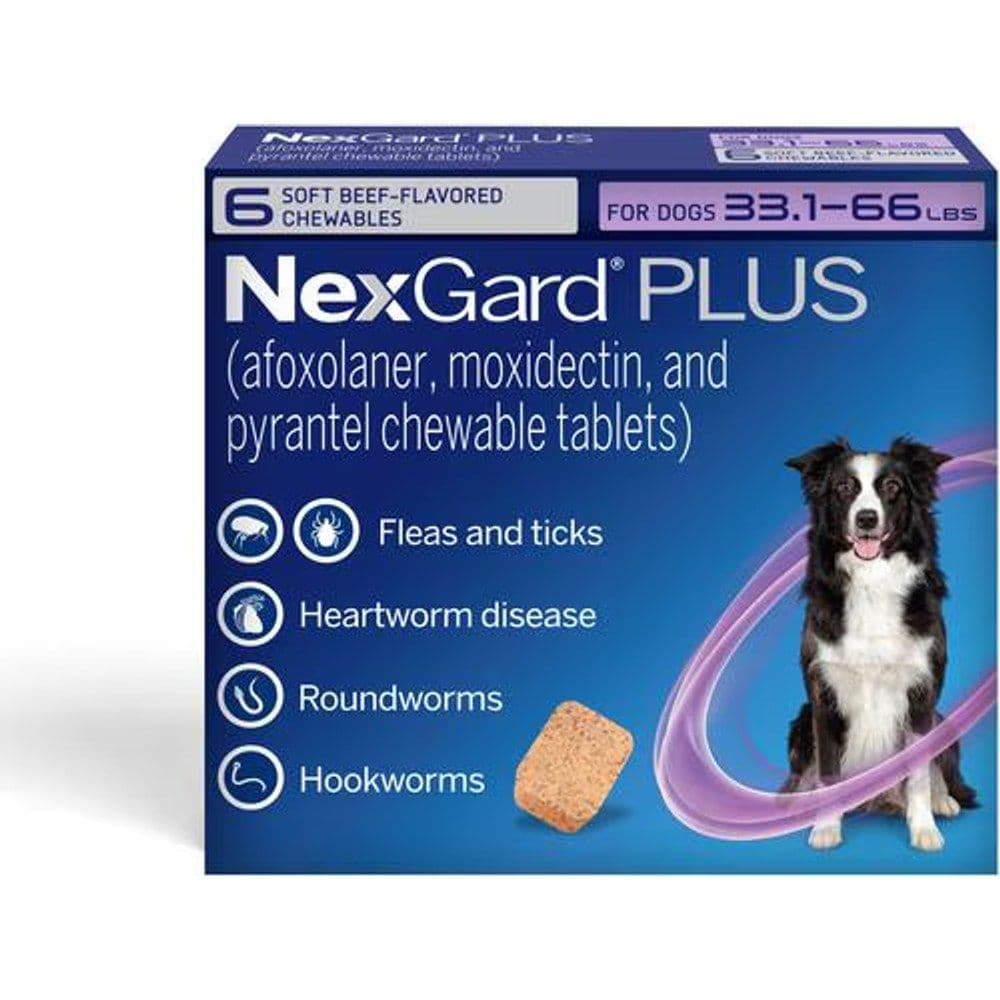
Beef-flavored monthly chew that protects dogs from fleas, ticks, heartworm disease, roundworms, and hookworms.
Webvet may earn a commission when you click through to Chewy, at no extra cost to you.
Symptoms: What Dog Skin Problems Look Like
- Scratching, licking, chewing, or rubbing, especially the paws, face, ears, and rear
- Redness and inflamed skin (dermatitis), often in the armpits, groin, and belly
- Hair loss or thinning patches, from overgrooming or from the condition itself
- Scabs, crusts, and bumps along the back and neck
- Greasy or flaky coat with an odor (seborrhea or secondary yeast overgrowth)
- Dark, thickened, elephant-like skin in long-standing cases
- Recurring ear infections, a common sidekick of both food and environmental allergy
Dermatitis simply means inflamed skin: expect pink-to-red patches, small raised bumps, and moist or scabbed areas the dog cannot leave alone. Seborrhea shows up as greasy, yellowish flakes clinging to the fur with a distinctive musty smell, most visible along the back and in skin folds.

A note on urgency before the deep dive: skin problems are among the most common reasons dogs are seen by a vet, ranking at or near the top of pet-insurance claims year after year, and the overwhelming majority of cases fall into a handful of patterns. None of them are emergencies in the first hours, but all of them get harder, itchier, and more expensive the longer they simmer. Two weeks of home observation is reasonable; two months is not.
It also helps to know what healthy skin looks like so changes register early. A healthy coat is glossy without being greasy, the skin beneath is pale pink to pigmented depending on breed, and a weekly hands-on check (ears, armpits, belly, tail base, between the toes) takes ninety seconds. Dogs that get that weekly once-over get diagnosed weeks earlier than dogs that do not.
Flea Allergy Dermatitis: The Most Common Culprit
Flea allergy dermatitis (FAD) is the single most common allergic skin disease in dogs. The allergy is to flea saliva, which means one bite can trigger weeks of itching. You do not need an infestation, and on a well-groomed dog you may never see a live flea at all.
The distribution is the giveaway: intense itching over the tail base, lower back, and rear thighs, with scabby bumps and thinning fur in that triangle. To check, part the fur at the tail base and look for flea dirt, the black pepper-like specks that smear rusty red on a damp paper towel. Our guide to what fleas look like on dogs shows every stage.
Why so dramatic from so few bites? An allergic dog's immune system reacts to proteins in flea saliva at vanishingly small doses, so the usual math of 'more fleas, more itching' does not apply. This is also why FAD is a year-round diagnosis in warm climates and heated homes, where a low-level flea presence never fully disappears.

Treatment is uncompromising flea control for every pet in the home, year-round. Fast, reliable options include monthly chews such as NexGard Plus or Simparica Trio, topicals like Frontline Plus, or an 8-month Seresto collar. If the house itself is seeded, follow the full flea eradication protocol. For a deeper product comparison, see our vet guide to flea and tick prevention.
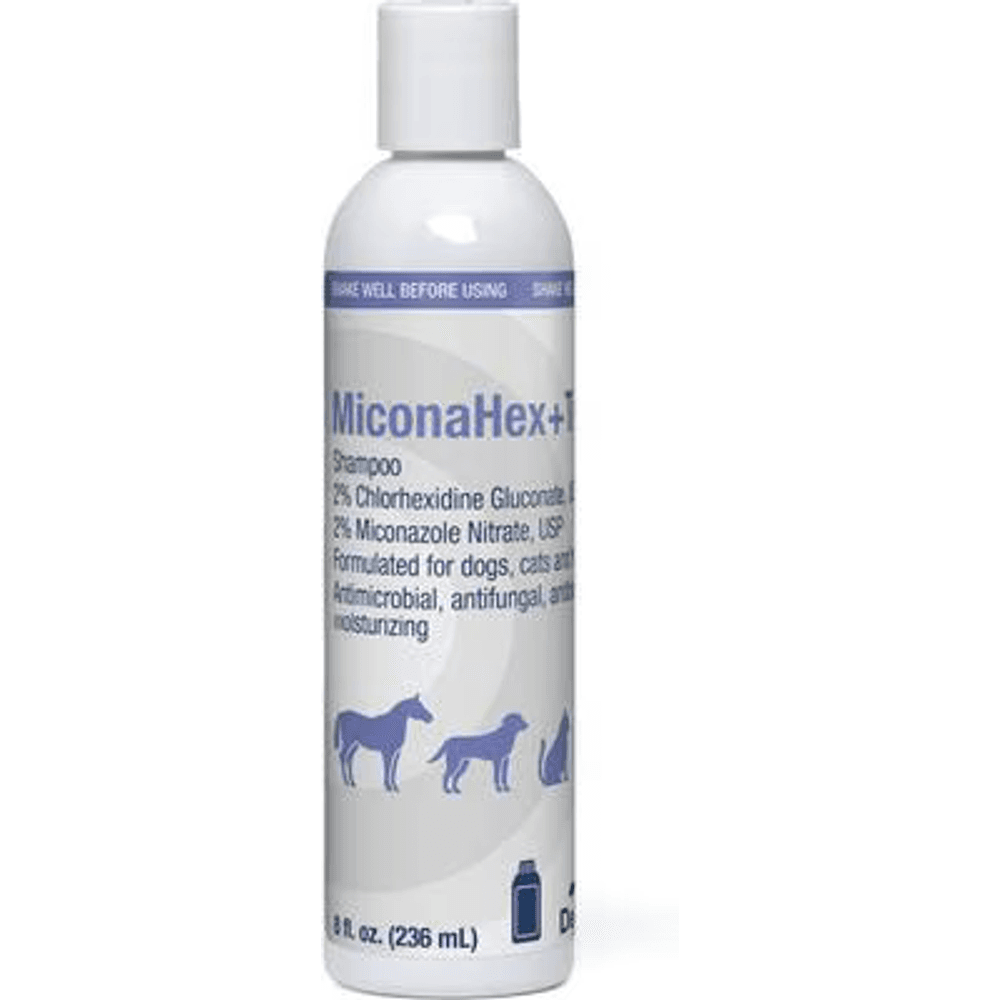
A vet-strength medicated shampoo pairing 2% chlorhexidine and 2% miconazole, a potent antifungal and antibacterial combination widely used to help clear ringworm and yeast or bacterial skin infections.
Webvet may earn a commission when you click through to Chewy, at no extra cost to you.
Food Allergies: The Year-Round Itch
True food allergy is less common than owners assume, but very real. The immune system reacts to a protein, most often chicken, beef, dairy, or egg, and the reaction shows up on the skin: itchy ears and paws, rear-end irritation, and sometimes recurring ear infections or digestive signs like soft stool and gas.
Two features distinguish food from everything else. It is completely non-seasonal (the trigger is served daily), and it can start at any age, even after years of eating the same brand without trouble. That last point surprises owners constantly: allergy is a learned immune response, so 'he has eaten chicken his whole life' is an argument for suspicion, not against it.
Food intolerance is a separate, more common issue: digestive upset without the immune reaction, more bloating and soft stool than itching. The elimination diet sorts out both, which is part of why vets lean on it so heavily.
The elimination diet: the only reliable test
Blood and saliva allergy tests for food are notoriously unreliable in dogs. The gold standard is an elimination trial: 8 to 12 weeks on a strict novel-protein or hydrolyzed prescription diet, with zero treats, table scraps, or flavored medications on the side. If the itching resolves and returns when the old food is reintroduced, the diagnosis is made.
Strict means strict. A single pepperoni slice in week seven can reset the clock. Keep a food diary, brief every family member, and let your vet choose the trial diet; over-the-counter 'limited ingredient' bags frequently contain traces of common proteins.
Novel protein means one your dog has never met (rabbit, venison, kangaroo, duck in some cases), paired with a single carbohydrate. Hydrolyzed diets take the other route: the protein is enzymatically chopped into pieces too small for the immune system to recognize. Both work; the right pick depends on your dog's dietary history and your vet's read.
Expect partial improvement by week four and a real verdict by week eight to twelve. Skin repairs slowly, so an itchy day in week three is not failure. The re-challenge at the end, feeding the old diet and watching for the itch to return within two weeks, is the step most owners skip and the one that actually confirms the diagnosis.

 $65 · no membership
Is your dog's itching or skin issue getting worse?
A licensed vet can examine your dog over video and prescribe treatment online when it's appropriate.
 Talk to a vet
- Licensed vets
- All 50 states
- same-day Rx

Webvet may earn a commission if you book.
Environmental Allergies (Atopic Dermatitis)
Atopic dermatitis is the canine version of hay fever, except the reaction plays out in the skin instead of the sinuses. Pollens, dust mites, mold spores, and grasses are absorbed through the skin and inhaled, triggering itch in the paws, face, ears, armpits, and belly.
Most atopic dogs start showing signs between 1 and 3 years old, often seasonally at first (spring grass, fall ragweed) before becoming year-round. Paw licking is the signature: saliva staining turns light-colored paws rusty pink, exactly the two-front-paws pattern owners notice on the rug each evening.

Allergy testing (intradermal or blood-based, done through your vet or a dermatologist) is used less for diagnosis than for building immunotherapy, the allergy-shot approach that desensitizes the immune system over months. Diagnosis itself is clinical: the right age, the right itch map, other causes excluded, and a response to treatment.
Breeds with a genetic head start
Atopy runs in families. French Bulldogs, Labrador and Golden Retrievers, West Highland White Terriers, Boxers, German Shepherds, Bull Terriers, and Shar-Peis all carry an elevated risk, and fold-heavy breeds add skin-fold dermatitis on top.
If you own one of these breeds, treat the first itchy spring at age two as a preview rather than a one-off. Early barrier care (regular bathing, omega-3s, strict parasite control) measurably softens how hard atopy hits in later seasons.
Seasonality: reading the calendar
Tree pollens dominate spring, grasses run early summer, ragweed and molds own the fall, and dust mites peak in winter when the furnace turns over and windows close. A two-line itch diary (date and intensity) kept across one year frequently identifies the season, and therefore the allergen class, without any testing at all.
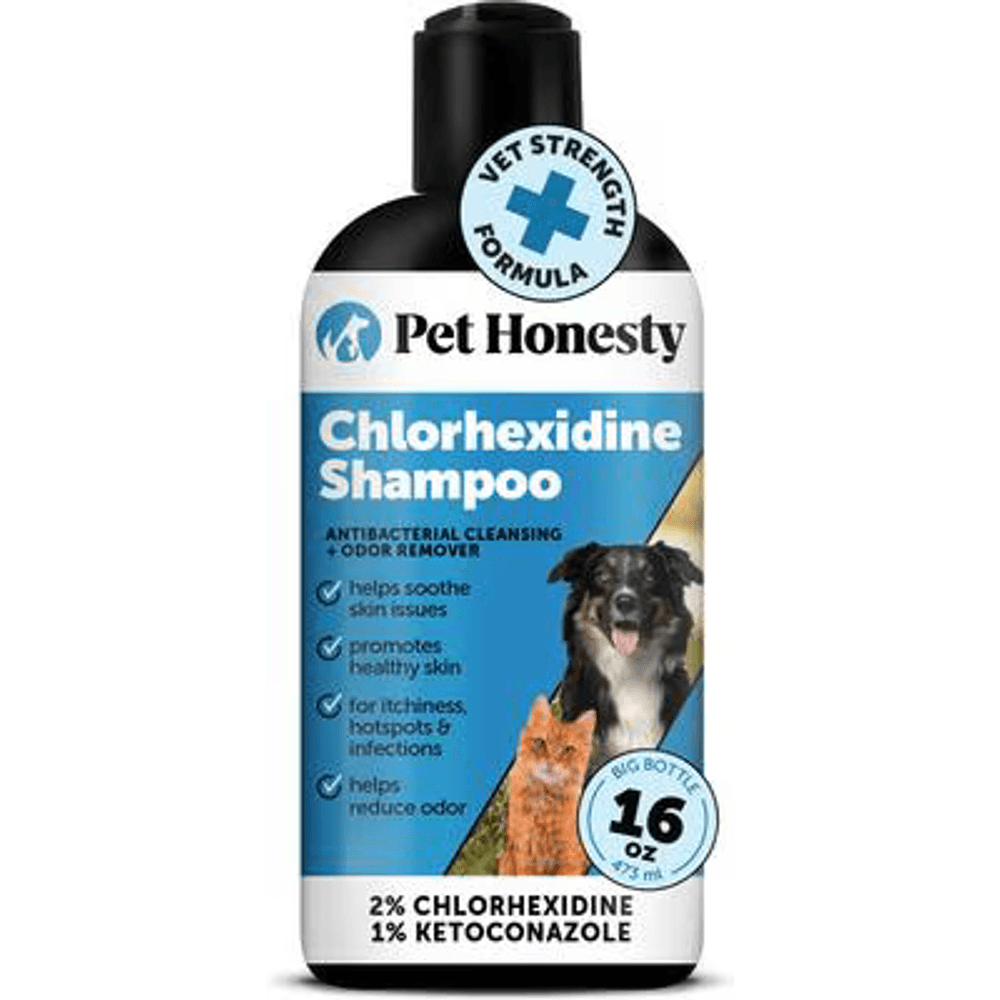
A vet-strength medicated shampoo with 2% chlorhexidine and 1% ketoconazole, the antifungal and antibacterial combination vets use to help clear ringworm and skin infections and to cut fungal spore shedding during treatment.
Webvet may earn a commission when you click through to Chewy, at no extra cost to you.
Look-Alikes to Rule Out First
Hot spots
A hot spot (acute moist dermatitis) is a raw, red, oozing sore that appears almost overnight, usually where a dog has chewed or licked an itch into an open wound. Thick-coated breeds after swimming or a bath are classic candidates, because trapped moisture softens the skin and invites bacteria.
Hot spots are painful, spread within hours, and rarely heal while hidden under matted fur. Treatment means clipping the area, cleaning it, and usually a short course of anti-inflammatory and antibiotic medication, plus fixing whatever itch started the licking in the first place.
Bacterial skin infections (pyoderma)
Pyoderma looks like pimples, pustules, crusty circles, and small scabs, often on the belly and trunk. It is usually secondary: allergic skin scratched open gets infected, the infection itself itches, and the cycle feeds itself. Antibiotics or antibacterial bathing clear it, but it returns until the underlying allergy is controlled.
Yeast infections
Malassezia yeast lives on normal skin but overgrows in warm, moist folds, ears, and paws, especially on allergic skin. Look for greasy, reddish-brown discoloration, a corn-chip or musty odor, and thickened, darkened skin in chronic cases. Cytology confirms it in minutes, and antifungal shampoos or ear preparations knock it back.
Ringworm
Not a worm but a fungus, ringworm causes expanding circular patches of hair loss with scaly, crusty edges, and it is contagious to people and other pets. Any circular bald patch, especially on a puppy or in a multi-pet home, earns a vet visit and a fungal culture before anyone shares the couch.
Mange
Sarcoptic mange (scabies) causes ferocious, sleep-destroying itching with crusty ear tips, elbows, and hocks, and it spreads to other dogs and, transiently, to people. Demodectic mange, common in puppies and immunocompromised dogs, causes patchy hair loss with far less itch.
Both are diagnosed with a skin scrape, and both now respond reliably to the same isoxazoline medications used for flea and tick prevention, which has turned a once-dreaded diagnosis into a very fixable one.
Dry skin and seborrhea
Low winter humidity, over-bathing with harsh shampoos, and poor diet all produce flaky, dull coats. Primary seborrhea is rarer and breed-linked, showing up as the greasy, musty-smelling coat described earlier. If flakes are the only sign and itching is mild, grooming cadence, a humidifier, and an omega-3 supplement may be all it takes.
Less common but serious: autoimmune disease and skin cancer
Blisters, ulcers, and crusting concentrated on the nose, face, and footpads can signal autoimmune disease such as pemphigus, and any new lump, non-healing sore, or rapidly changing growth deserves a needle sample rather than a wait-and-see. These are the reasons a persistent 'rash' should eventually meet a veterinarian instead of another home remedy.
How Vets Diagnose Skin Issues in Dogs
Expect a methodical process of elimination rather than one magic test: a flea comb check, skin scrapes for mites, tape cytology for yeast and bacteria, a fungal culture if ringworm is plausible, then an elimination diet or allergy workup for the survivors. Each step is quick and inexpensive compared to months of guessing.
Bring history: when it started, where it itches, diet, parasite products and dates, and what has already been tried. Those five answers do half the diagnostic work before a single sample is taken.
Cost-wise, the basic workup is modest: an exam plus scrape and cytology typically lands between 100 and 250 dollars. Referral-level allergy testing runs several hundred more, which is why vets reserve it for dogs whose owners are ready to pursue immunotherapy. The expensive path is actually the untreated one: chronic ear infections, repeated hot spot visits, and years of steroid cycles cost far more than one honest diagnostic push.
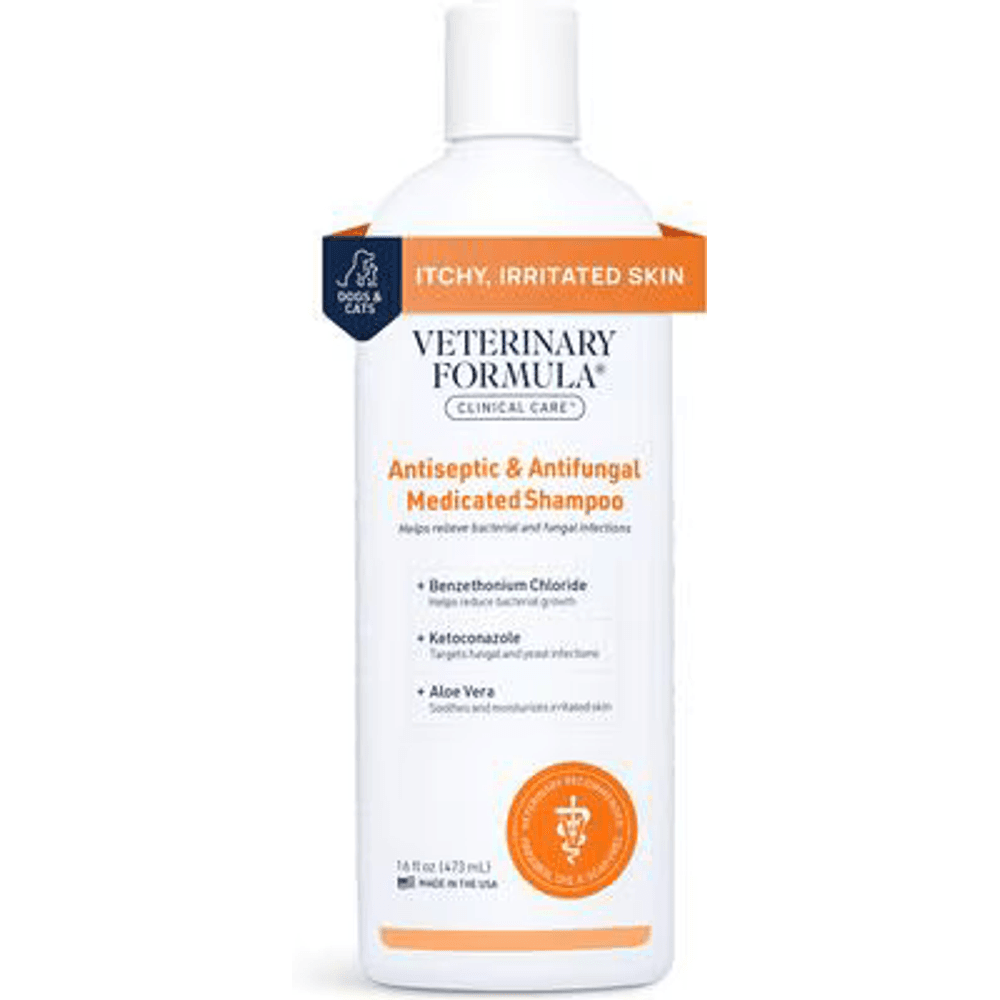
A budget-friendly medicated shampoo with ketoconazole and benzethonium chloride that helps control the fungal and bacterial skin infections behind ringworm, with aloe to soothe irritated skin.
Webvet may earn a commission when you click through to Chewy, at no extra cost to you.
Treatment: Match the Fix to the Cause
Flea control, always
Whatever else is going on, rigorous year-round flea prevention for every pet is the floor. It cures FAD outright and removes the biggest itch amplifier for food-allergic and atopic dogs.
Medicated shampoos
Bathing is genuinely therapeutic: it rinses allergens off the coat, treats microbial overgrowth, and soothes inflamed skin. Chlorhexidine formulas such as Pet Honesty Chlorhexidine Shampoo target bacteria; combination antifungal-antibacterial options like MiconaHex+Triz or Veterinary Formula Clinical Care add yeast coverage. Lukewarm water, ten minutes of contact time, and a weekly cadence during flare-ups is the usual rhythm.

Prescription itch relief
For moderate to severe itching, vets reach for targeted anti-itch medications (oclacitinib tablets or the Cytopoint injection), short steroid courses for hot flare-ups, and antibiotics or antifungals when infection is present. These modern options control itch within days and, unlike long-term steroids, are designed for ongoing use.
Immunotherapy is the long game for confirmed environmental allergy: custom allergy shots or under-the-tongue drops built from the dog's test results, improving roughly two-thirds of dogs over 6 to 12 months and reducing lifetime medication needs. It is the only treatment that changes the allergy itself rather than muting it.
Ears count as skin
Recurring ear infections are allergy until proven otherwise. If your dog's skin plan ignores the ears, the ears will keep relapsing and reseeding the misery; ask for an otic exam at every skin visit and treat flare-ups early.
Diet and supplements
Food-allergic dogs stay on their successful trial diet long-term. For everyone else, omega-3 fatty acids from fish oil measurably support the skin barrier and take the edge off mild itch over 4 to 8 weeks, and they pair safely with every other treatment on this list.
A 15-Minute Home Check Before the Vet Visit
- Step 1: The flea comb pass. Comb the tail base, lower back, and neck onto a damp white paper towel. Rusty red smears end the investigation: treat fleas first.
- Step 2: Map the itch. Note exactly where the dog scratches, licks, or chews for two days. Rear half says fleas; ears, paws, and rear say food; paws, face, and belly say environment.
- Step 3: Check the calendar. Seasonal flare-ups point outdoors. A dog equally itchy in January and July is eating its trigger or living with it indoors.
- Step 4: Smell and touch. Musty odor and greasy texture mean yeast or seborrhea is in play and bathing belongs in the plan.
- Step 5: Photograph everything. Phone photos of rashes, bald patches, and sores, with dates, give your vet a timeline no memory can match.
Bring the results of those five steps to the appointment and you have compressed the first thirty minutes of diagnostics into a handout. It is the cheapest diagnostic tool in this entire article.
What Soothes Itchy Skin Naturally
For mild itch, or as comfort measures alongside real treatment: a cool-water oatmeal soak, wiping paws and belly with a damp cloth after walks to remove pollen, a humidifier in dry winters, fish-oil supplementation, and keeping nails short to limit self-trauma. Skip tea tree oil and essential-oil blends, which can be toxic, and treat coconut oil as a coat conditioner, not a cure.
Natural measures manage comfort; they do not fix fleas, infections, or true allergies. If the itching is intense, spreading, or keeping anyone awake, the kind fix is a diagnosis.
When to See the Vet
A useful rule: if an itch has lasted more than two weeks despite good flea control, it will not resolve on its own. Related reading: our vet-reviewed guide to allergies in cats covers the feline side of the same triad.
Frequently Asked Questions
How can I treat my dog's skin problems?
Start with the cause. Confirm rigorous year-round flea control for every pet, bathe with a vet-recommended medicated shampoo, and see your vet if itching persists beyond two weeks. From there, treatment matches the diagnosis: an elimination diet for food allergy, prescription itch relief or immunotherapy for environmental allergy, and antimicrobials for infections.
What does dermatitis look like on a dog?
Dermatitis appears as pink-to-red, inflamed skin, often with small raised bumps, scabs, moist patches, or hair thinning. Common locations are the belly, armpits, groin, paws, and around the ears. Chronic dermatitis darkens and thickens the skin into a leathery texture. It is a description of inflammation, not a diagnosis; fleas, food, environment, and infections can all produce it.
What does seborrhea look like on a dog?
Seborrhea shows up as greasy or waxy, yellowish flakes stuck to the fur, a dull coat, and a distinctive musty odor, concentrated along the back, in skin folds, and around the ears. Most cases are secondary to allergies, parasites, or hormonal disease, so treating the underlying cause matters as much as medicated bathing.
What soothes dogs' itchy skin naturally?
Cool-water oatmeal baths, wiping the coat and paws down after outdoor time, fish-oil omega-3 supplements, a humidifier in dry months, and short nails all provide genuine relief for mild itch. Avoid essential oils, especially tea tree, which can be toxic to dogs. Natural measures soothe, but persistent itching still needs a diagnosis.
The Bottom Line
Skin issues in dogs stop being mysterious once you read the pattern: rear half plus flea dirt means fleas, year-round ears-and-paws means food, seasonal paws-face-belly means environment, and anything raw, spreading, or smelly means a look-alike that needs its own treatment.
Puppies deserve one extra sentence: their immune systems are still calibrating, so demodectic mange, impetigo (puppy pimples on the belly), and ringworm all show up disproportionately in the first year, and every one of them is a quick vet visit rather than a shampoo experiment. Products also carry age and weight minimums, so read labels before treating anyone under six months.
Lock in year-round flea prevention, use the elimination diet honestly if food is on the list, and let your vet run the cheap, fast tests before the expensive guesses. An itchy dog is fixable, usually faster than the months of trial and error most owners endure first.
$65 · no membershipIs your dog's itching or skin issue getting worse?
A licensed vet can examine your dog over video and prescribe treatment online when it's appropriate.
Talk to a vet- Licensed vets
- All 50 states
- same-day Rx
Webvet may earn a commission if you book.

Veterinarian · BVetMed MRCVS
Hannah graduated in 2011 and works as a small animal vet in Cardiff, UK. She loves meeting people and their special pets and has a particular interest in diagnostic imaging, soft tissue surgery, and dentistry.


