Probiotics for Dogs with Allergies: The Gut-Skin Connection
Probiotics for dogs with allergies may support the gut-skin axis, but effects vary by strain and condition. Learn how to evaluate gut support within a veterinary allergy plan.

BVMS MRCVS
Medically reviewed by Dr. Pippa Elliott, BVMS MRCVS · Last reviewed

This article contains affiliate links. Webvet may earn a commission when you buy through them, at no extra cost to you.
Probiotics for dogs with allergies may support the gut-skin axis, but they do not diagnose an allergy, cure canine atopic dermatitis, or replace treatment for fleas, infection, or another cause of itching. The direct answer is that a strain-specific product may be a reasonable adjunct for some dogs after a veterinary workup, while the evidence is not strong enough to call any probiotic a universal anti-itch treatment.
Allergic skin disease is complex. Food, environmental allergens, fleas, mites, yeast, and bacteria can overlap, and a dog's licking or scratching may have more than one trigger. A veterinary diagnosis protects the dog from months of trial-and-error supplements while discomfort and secondary infection continue.
 $65 · no membership
Worried about your dog's vomiting or diarrhea?
A licensed vet can examine your dog over video and prescribe treatment online when it's appropriate.
 Talk to a vet
- Licensed vets
- All 50 states
- same-day Rx
Webvet may earn a commission if you book.
Can probiotics help dogs with allergies?
The direct answer is that a defined probiotic may provide adjunctive support for some allergic dogs, but it will not diagnose the allergy or replace treatment for itch, infection, or parasites. The veterinary next step is to identify the cause of the dog's signs and then decide whether a strain-specific product has a clear role. Results depend on the organism, dose, product quality, duration, and condition being treated, so findings for one strain cannot automatically be applied to another.
- 1Probiotics may be an adjunct for some dogs with allergic skin disease, but they are not a cure or a substitute for itch control.
- 2A veterinary workup should address fleas, mites, skin or ear infection, food allergy, environmental allergy, and nonallergic causes.
- 3The next practical step is to ask what exact strain, dose, and outcome a proposed product is meant to support.
- 4Animal Biome products should remain within a supportive care boundary alongside veterinary diagnosis and prescribed treatment.
- 5Prompt veterinary care is needed for facial swelling, breathing difficulty, rapidly spreading hives, collapse, severe skin pain, pus, fever, or a dog who cannot rest because of itching.
- 6Keep planned follow-up so the team can distinguish improvement from normal symptom fluctuation.
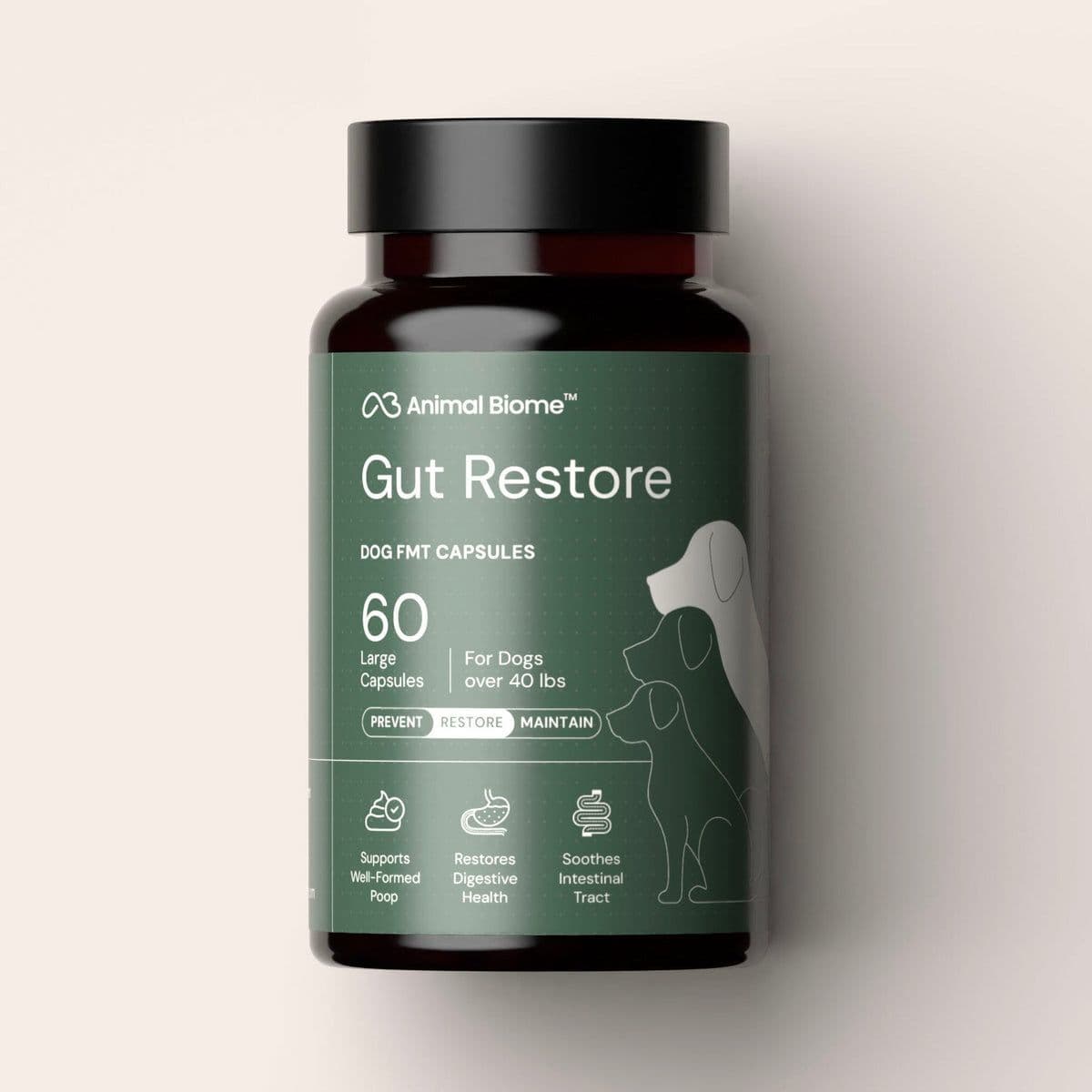
Veterinarian-developed oral fecal microbiota transplant (FMT) capsules that reintroduce a full community of dog-specific gut bacteria; used to support dogs with ongoing soft stools, diarrhea, or recovery after antibiotics.
Webvet may earn a commission when you click through to Animal Biome, at no extra cost to you.
Can probiotics help with allergies in dogs? Early clinical research suggests that certain probiotic approaches may reduce skin-disease scores in some dogs, particularly when used with standard care. That is encouraging, but "may help" is different from "will stop itching." Canine atopic dermatitis is usually a long-term condition involving skin-barrier changes, immune signaling, allergen exposure, and secondary infections. Gut support addresses only part of that picture.
The intestinal microbiome communicates with the immune system through microbial metabolites, barrier function, and immune signaling. Researchers sometimes call this the gut-skin axis. Dysbiosis, or a disrupted microbial community, has been associated with several inflammatory conditions. Association does not prove that dysbiosis caused a dog's allergy, and changing a stool sample does not guarantee that the skin will improve.
When a veterinary recommendation is useful
Do vets recommend probiotics for dogs? They may recommend one in selected digestive situations, and some may include one in a broader allergy plan. A responsible recommendation is product- and purpose-specific. The veterinarian considers the evidence for the named strain, manufacturing quality, the dog's health, current medications, and whether a more urgent problem needs treatment first.
For example, a dog with red, greasy, odorous skin may need cytology and targeted treatment for yeast or bacteria. A dog with flea-allergy dermatitis needs reliable flea control for every pet in the home. A probiotic cannot substitute for either intervention, even if it later becomes part of ongoing support.
Start by finding the reason for the itch
Our guide to why a dog may be itchy covers common causes in more detail. The initial skin visit may include a close coat and skin examination, flea-comb check, skin cytology, ear cytology, skin scrapings, or fungal testing. The veterinarian also reviews seasonality, diet history, parasite prevention, household pets, and response to prior medication.

What is the best thing to give a dog that itches all the time? It is not one over-the-counter product. It is a veterinary assessment followed by fast relief and cause-specific control. Persistent itch disrupts sleep, damages skin, and increases infection risk. Use this practical sequence:
- Treat urgent infection, parasites, and severe inflammation.
- Establish dependable flea prevention for all household pets.
- Use prescribed itch relief consistently.
- Complete an exclusive elimination diet if food allergy is suspected.
- Discuss immunotherapy or long-term medication for environmental allergy.
- Add one evidence-informed supplement or microbiome intervention only when its goal is clear.
- Recheck skin, ears, itch score, and quality of life on schedule.
What allergy tests can and cannot diagnose
Food allergy cannot be diagnosed by a probiotic response, a stool microbiome profile, hair testing, or an over-the-counter blood or saliva panel. The accepted clinical approach is a strict elimination diet using a veterinary-selected hydrolyzed or novel-protein food, followed by a controlled challenge when appropriate. This trial is designed and monitored by the veterinary team.
Environmental allergy is also a clinical diagnosis after other causes have been addressed. Intradermal or serum allergen testing is generally used to formulate allergen-specific immunotherapy, not as a stand-alone yes-or-no test for whether a dog is atopic.
How the gut-skin connection works
The intestine is both a digestive organ and a major immune interface. Its epithelial barrier, resident microorganisms, and immune cells continually respond to food components and microbial signals. In theory, selected probiotics could influence inflammatory signaling or support a more resilient microbial ecosystem. In practice, those effects are strain-specific and can be modest. For dogs with skin allergies, the most plausible path is indirect: a named strain may affect intestinal barrier function or immune messaging while standard care continues to control fleas, infection, itch, and allergen exposure. This is why research on probiotics for dogs with skin allergies must be interpreted product by product. The best probiotics for dogs with skin allergies cannot be chosen from species count or marketing alone; evidence has to match a defined strain, dose, formulation, patient group, and measured outcome. Owners should expect supportive rather than curative effects, and a veterinary follow-up should decide whether changes in itching, lesions, infections, medication use, or digestive comfort are meaningful.
Canine probiotic evidence matrix
The canine evidence matrix below keeps the named strain or intervention, concurrent standard care, measured outcome, and transfer limit together. The named strain or intervention identifies what was actually tested, concurrent standard care shows what treatment continued, and the measured outcome defines what changed. The transfer limit then explains why a result for one formulation and patient group cannot validate a different blend, dose, commercial product, or treatment plan.
| Named strain or intervention | Dogs and concurrent standard care | Dose and duration | Measured outcome | Transfer limit |
|---|---|---|---|---|
| Lacticaseibacillus rhamnosus GG (LGG) | 40 dogs with atopic dermatitis; oclacitinib continued | 1 billion CFU daily for 90 days | Standardized CADESI-04 lesion score | Supports an adjunctive possibility for this strain and setting, not replacement of allergy treatment |
| Daily probiotic intervention studied in the paper | Dogs with allergic skin disease | Daily for 16 weeks | Clinical severity and intestinal microbial findings | Formulation, population, and study design limit transfer to commercial products |
A 2025 placebo-controlled trial indexed in PubMed evaluated Lacticaseibacillus rhamnosus GG, or LGG, in 40 dogs with atopic dermatitis. Dogs continued oclacitinib, and the probiotic group received 1 billion colony-forming units daily for 90 days. The researchers reported improvement in a standardized lesion score, CADESI-04. Because standard medication continued and one defined strain was studied, the result supports an adjunctive possibility rather than probiotic replacement of allergy treatment. See the study abstract on canine atopic dermatitis and LGG.
This is the most relevant kind of evidence for owners researching probiotics for dogs with skin allergies, but it does not establish a universal best probiotic. The useful question is whether a named strain, dose, and formulation has evidence for a similar patient and whether it fits the dog's existing allergy plan.
Another 2025 study found microbiome differences in dogs with allergic skin disease and reported lower clinical severity after a daily probiotic intervention over 16 weeks. It adds useful evidence for the gut-skin hypothesis, while formulation, study population, and design still limit how broadly the outcome can be generalized. The PubMed record on intestinal microbiota and probiotics in canine allergic dermatoses provides the study details.
What the studies do not prove
The evidence limits are clear: these studies do not show that every probiotic blend works, that more species are better, or that a dog can stop prescribed medication. They also do not prove that a microbiome test diagnoses atopic dermatitis. They support continued investigation and a measured conversation with a veterinarian, not a universal treatment claim.
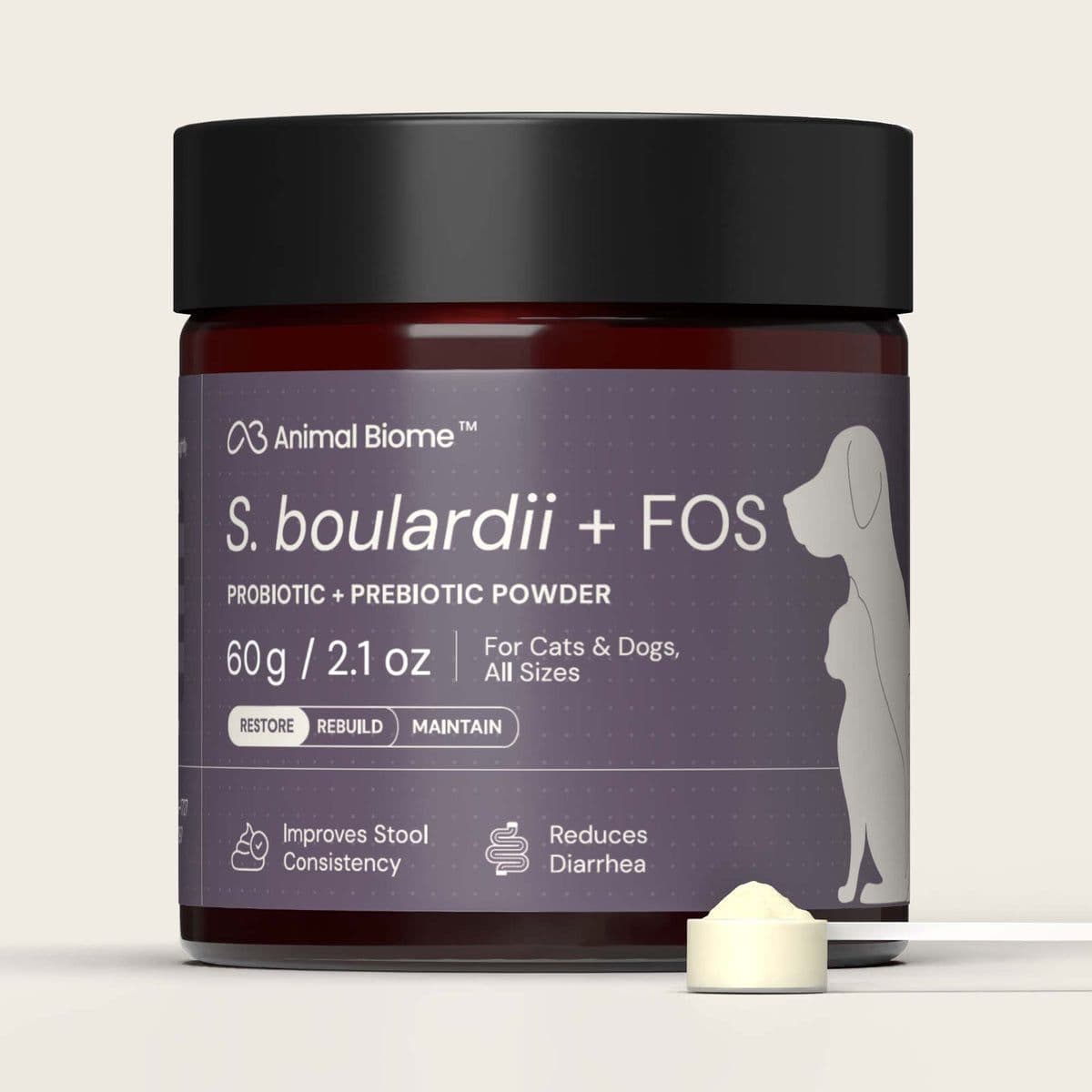
Antibiotic-resistant probiotic yeast paired with prebiotic FOS; supports stool consistency and helps reduce diarrhea in cats and dogs, including during antibiotic courses.
Webvet may earn a commission when you click through to Animal Biome, at no extra cost to you.
Dysbiosis is a clue, not a diagnosis
Dysbiosis describes an altered microbial community or function. It can occur with diet changes, diarrhea, antibiotics, inflammation, stress, age, and disease. A result that suggests imbalance does not identify which came first or establish that the change is causing itchy skin.
Testing and treatment therefore answer different questions:
- Skin and ear testing looks for infection, parasites, and patterns that guide immediate care.
- Elimination diet trials assess whether food exposure contributes to clinical signs.
- Allergen testing helps formulate immunotherapy after environmental allergy is diagnosed.
- Microbiome profiling describes aspects of a stool sample and may inform an adjunctive gut-health discussion.
- Response tracking shows whether a chosen intervention is making a meaningful difference for this dog.
The best veterinary next step is based on the dog's most urgent unmet need. A painful ear infection should not wait for a microbiome report. Likewise, a stable dog whose infections and parasites are controlled may be a reasonable candidate for a carefully monitored gut-support trial.
Skin barrier, immune signaling, and secondary infection
Atopic dogs often have a less effective skin barrier. Allergens can penetrate more easily, and scratching further damages the surface. Yeast and bacteria then take advantage of the inflamed environment, creating more odor, redness, and itch. Gut-directed support does not directly remove these organisms from the skin.
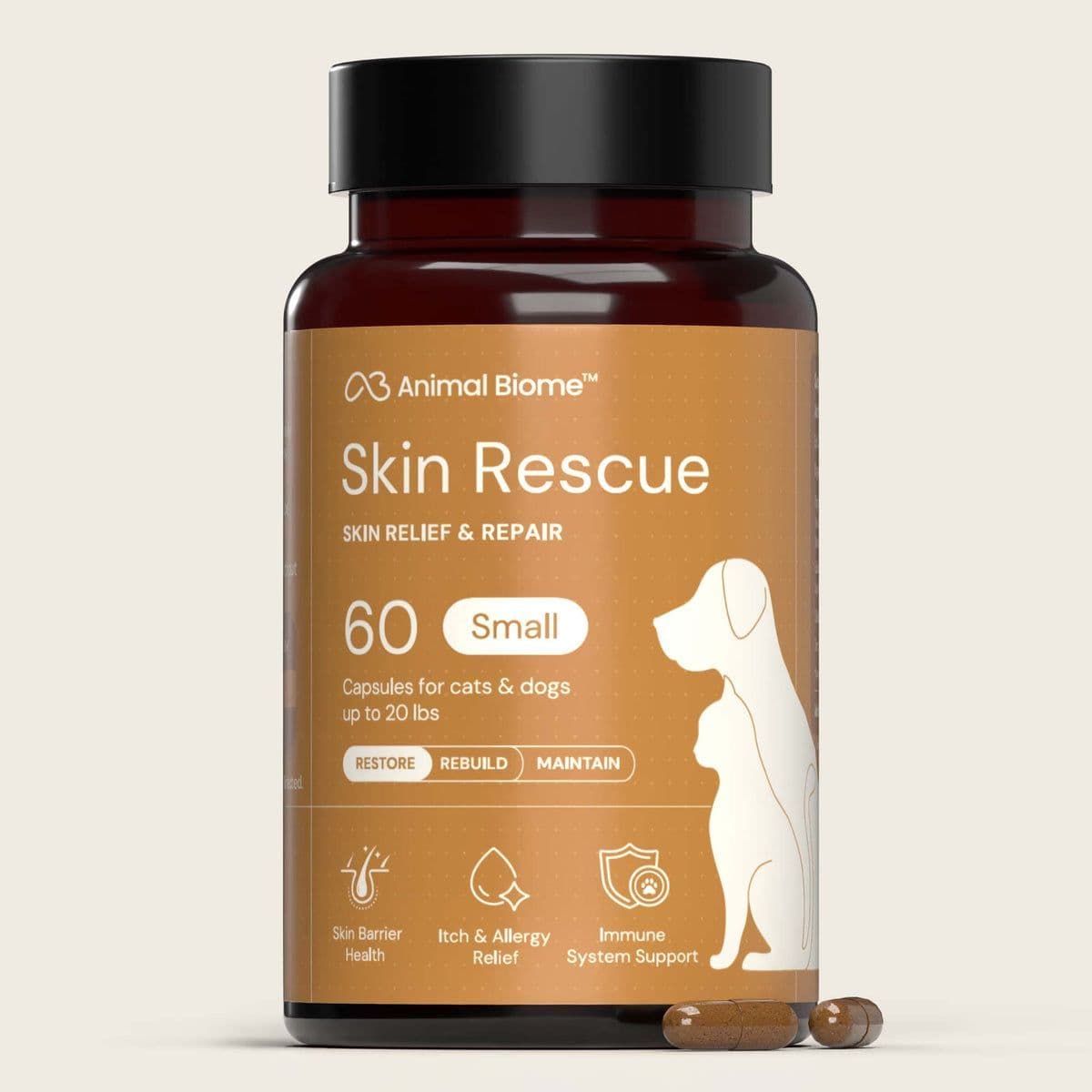
Skin relief and repair capsules that target the gut-skin axis, supporting the skin barrier and easing itch and allergy symptoms in cats and dogs.
Webvet may earn a commission when you click through to Animal Biome, at no extra cost to you.
A complete plan may combine:
- Reliable flea and mite control
- Targeted treatment for bacterial or yeast infection
- Medication that reduces itch and inflammation
- Medicated bathing or topical care
- An elimination diet when food allergy is possible
- Allergen-specific immunotherapy for selected environmental allergies
- Nutrition and optional gut support
This layered approach is positive and practical: each tool has a defined job. The family and veterinary team can then see what is controlling infection, what is reducing itch, and whether digestive or skin comfort changes after the probiotic is introduced.
Choosing and using a probiotic safely
The front of a label is not enough to judge a probiotic. Look for the full genus, species, and strain when available, along with the number of viable organisms expected through the end of shelf life. A product that lists only "proprietary probiotic blend" is harder to compare with published research.
Search descriptions such as good probiotics for dogs with allergies, natural probiotics for dogs with allergies, and vet-recommended probiotics for dogs with allergies are not quality standards by themselves. "Natural" does not identify the strain or prove safety, and a veterinary recommendation applies to the named product and patient. The best probiotics for dogs with allergies are those with transparent labeling, relevant evidence, dependable manufacturing, and ingredients that fit the dog's care plan.

Match the product to the evidence
What is the best probiotic for dogs to stop itching? There is no single product proven to stop itching in all dogs. The best candidate is one whose named strain and dose have credible evidence for the intended use, whose quality can be verified, and whose inactive ingredients fit the dog's allergy plan. The LGG trial is promising for that specific strain, dose, study population, and concurrent treatment. It does not validate every product containing a Lactobacillus name.
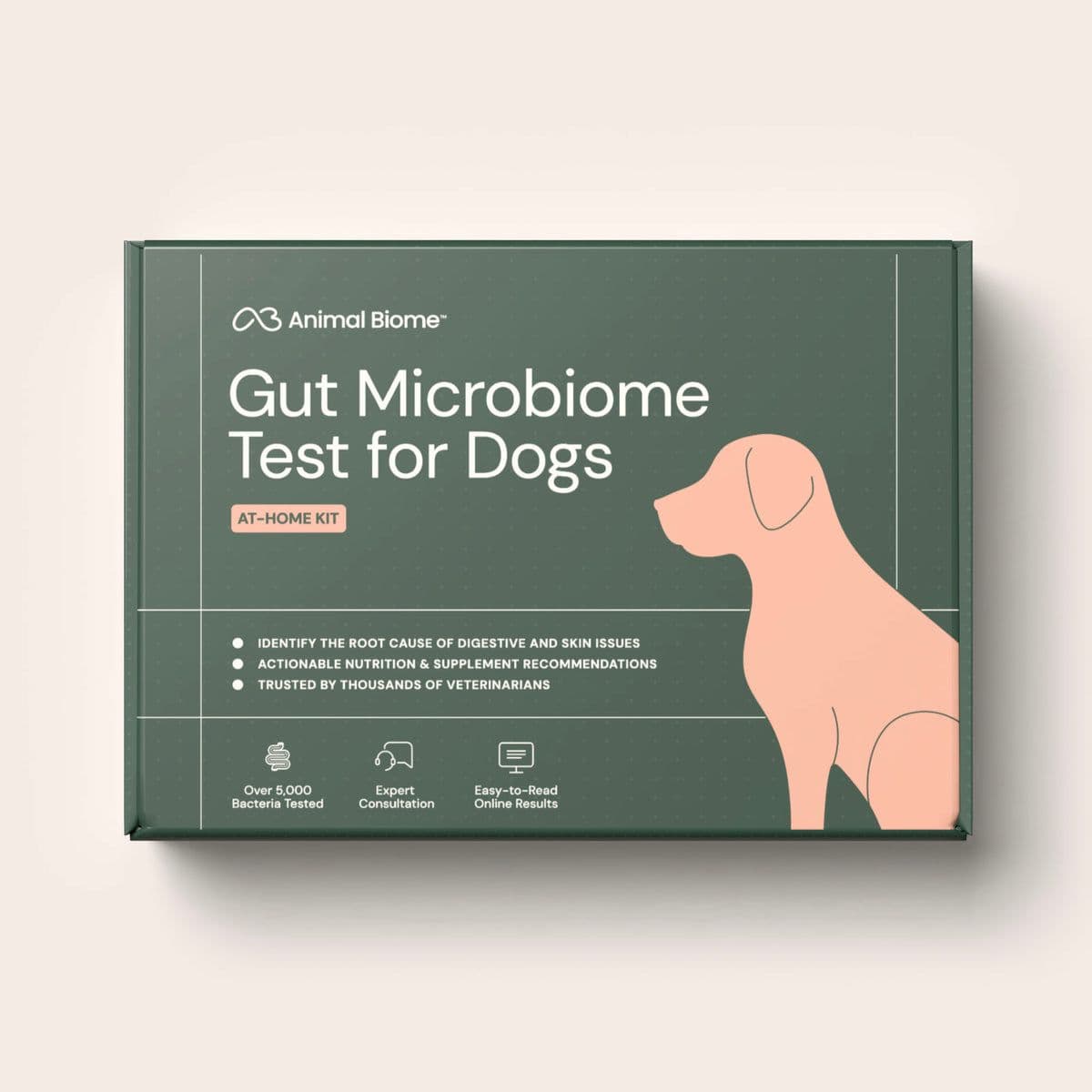
At-home gut microbiome test that sequences your dog's fecal bacteria and returns actionable diet and supplement recommendations, useful for chronic diarrhea, colitis, and IBD workups.
Webvet may earn a commission when you click through to Animal Biome, at no extra cost to you.
Before choosing, work through these product-quality questions:
- Are the microorganisms identified to strain level?
- Is the viable count guaranteed through expiration or only at manufacture?
- Does the company provide storage and handling directions?
- Is there peer-reviewed evidence for this exact strain, dose, and purpose?
- Are flavorings or animal proteins compatible with an elimination diet?
- Has the veterinarian reviewed the ingredient list and the dog's medications?
- What measurable outcome will determine whether to continue?
Our general guide to probiotics for dogs explains labels, colony-forming units, and storage in more depth. Quality matters because a product must deliver living organisms in the amount expected. Heat, moisture, age, or poor manufacturing controls can alter what reaches the dog.
Protect an elimination diet from hidden exposures
A probiotic can contain liver flavor, poultry digest, beef, dairy components, or other ingredients that matter during an elimination diet. The microorganisms themselves are only part of the label. Ask the veterinarian to review carriers, flavorings, capsule materials, chews, and any prebiotic fibers before the product enters the trial.
Use the same caution with toothpaste, pill pockets, supplements, and flavored parasite preventives. An exposure does not make the product bad, but it can make a food trial harder to interpret. The veterinary team can often identify an unflavored alternative or decide that the medication benefit outweighs the diagnostic limitation.
If the dog is not on a diet trial, ingredient transparency still helps. A simpler formulation makes it easier to investigate a new digestive sign or skin flare. Keep the lot number and expiration date until the trial is complete, and report a suspected adverse event to both the veterinarian and manufacturer.
Storage and expiration matter
Follow the label's temperature and moisture instructions. Some organisms are shelf-stable, while others need refrigeration. A scoop left in a damp bag or a product stored in a hot car may no longer deliver the expected viable count. Keep the lid closed and use the measuring device supplied with the product.
Do not use a container that is damaged, has an unusual odor, or is past its expiration date. If a dog becomes ill, retain the package and lot number. These practical details help the veterinarian and manufacturer investigate whether the reaction relates to the formulation, storage, or an unrelated condition.
Response scorecard and stop rules
Start the probiotic at the veterinary-recommended dose and keep other nonessential variables stable. Record stool consistency, gas, appetite, vomiting, licking, scratching, sleep, skin lesions, and ear signs. Weekly photos taken in similar light can help show whether the skin is truly changing.
Use a response scorecard with a written baseline, a predefined success threshold, and a stop rule agreed with the veterinarian. A response scorecard does not prove cause and effect, but it keeps the same itch, lesion, comfort, medication, and digestive measures visible from the first dose through review. The predefined success threshold identifies a meaningful benefit, while the stop rule protects the dog if signs worsen or a reaction develops.
| Response scorecard checkpoint | What to record | Predefined success threshold or stop rule |
|---|---|---|
| Before the first dose | Daily itch score, nighttime waking, paw licking, skin and ear findings, stool, current medicines | Keep the starting record and photos as the comparison baseline |
| Each week | Same measures, same photo angles, missed doses, diet exposures, medication changes | Flag any confounder rather than crediting or blaming the probiotic automatically |
| Planned veterinary review | Change in itch and lesion scores, infections, comfort, stool, rescue-medication use | Continue only if the predefined benefit is meaningful and safety remains acceptable |
| Stop or recheck sooner | Worsening itch, hives, facial swelling, vomiting, persistent diarrhea, reduced appetite, painful skin | Stop as directed and contact the veterinary team; emergency signs need immediate care |
Do not stop an itch medication suddenly or reduce it without instructions. A flare after an unplanned medication change does not prove the probiotic failed. Conversely, improvement while several treatments start on the same day does not prove the probiotic caused the change.
Set a planned follow-up date. The veterinarian may use a validated itch scale, lesion score, infection check, medication use, and quality-of-life observations to judge progress. If there is no meaningful benefit after an adequate trial, the honest next practical step may be to stop the product rather than layering on more supplements.
When not to give probiotics to dogs
When not to give probiotics to dogs? Do not give one without veterinary guidance to a severely ill, critically immunocompromised, or hospitalized dog. Extra caution is also appropriate for pregnant or nursing dogs, very young puppies, dogs with central intravenous catheters, and dogs receiving complex immune-modulating therapy. Product quality and contamination risk matter more in vulnerable patients.
- Safety rule: Emergency allergy signs and painful, infected skin need veterinary care before any supplement trial.
Stop the product and call the veterinarian if new vomiting, persistent diarrhea, marked gas, reduced appetite, hives, facial swelling, or worsening itch follows administration. Bring the package or a clear photo of the entire label so the team can review microorganisms and inactive ingredients.
Where microbiome and skin support may fit
Animal Biome offers several products that may enter a veterinarian-guided conversation, but each has a different purpose. Product selection should follow the dog's confirmed needs rather than assuming that every itchy dog needs the same microbiome intervention. Every AnimalBiome product in this section is adjunctive support that sits alongside veterinary diagnosis and treatment, never a replacement for either.
Gut Restore for Dogs uses screened donor-derived material intended to support microbial diversity. It may be considered when the digestive history and broader care plan support that goal. It is not a probiotic in the narrow single-strain sense, and it does not diagnose or cure canine allergies.
Skin Rescue and Gut Defend serve different goals
Animal Biome's Skin Rescue is an oral product positioned for skin and immune support. Its ingredient list and suitability should be reviewed alongside the dog's diet trial, medications, and medical history. Positive sponsor framing still requires a clear medical boundary: an oral supplement does not treat an active bacterial or yeast infection by itself.

Gut Defend is a separate decision
Animal Biome's current product name is Gut Defend. It contains gut-support ingredients and is separate from an allergy diagnosis or prescription treatment. Because adsorbent ingredients can affect how substances move through the digestive tract, ask the veterinarian about timing with oral medication and whether the product fits this dog's plan.
A veterinary microbiome test and a Skin Rescue or Gut Defend purchase are also separate decisions. Testing may be informative in a selected digestive case, but it is not required before every probiotic and cannot tell a family which environmental allergen is causing a dog's itch.
Match supplements to a defined gap
What is the best supplement for dogs with allergies? There is no universally best option. A supplement is useful only when it fills a defined gap without interfering with the diagnostic or treatment plan. For one dog, that may be an essential-fatty-acid product with veterinary oversight. For another, a strain-specific probiotic may be reasonable. A dog eating a complete and balanced diet does not automatically need a multivitamin.
Avoid choosing by the longest ingredient list. Multiple botanicals, proteins, flavorings, and microbes make it harder to identify which component helped or caused a reaction. Products should have transparent labeling, quality controls, appropriate dosing, and a contactable manufacturer.
How to judge whether gut support is helping
Before starting, define success in observable terms. Examples include fewer nighttime scratching episodes, less paw licking, a lower owner-rated itch score, longer intervals between ear flares, stable stool, or reduced rescue-medication use under veterinary direction. A vague impression that the dog seems "detoxed" is not a reliable clinical measure.
Allow enough time for the agreed trial, but do not wait through worsening disease. Skin infection can progress quickly, and an allergen exposure may continue. Planned follow-up gives the team a chance to examine the skin, repeat cytology when needed, and adjust the plan without discarding every supportive measure at once.
Probiotics for dogs with allergies are an evolving area with credible reasons for interest and early clinical signals. The most positive, evidence-based approach is to use them for a defined supportive purpose after the causes of itch have been addressed. With veterinary diagnosis, strain-aware selection, standard allergy treatment, and measured follow-up, gut support can be evaluated fairly while the dog's comfort remains the priority.
Frequently Asked Questions
Can probiotics help with allergies in dogs?
Probiotics may support the gut barrier or immune signaling in some dogs, but the evidence is strain-specific and they are not a cure for food, flea, or environmental allergies. A probiotic works best as one defined part of a veterinary plan that also identifies and treats the actual trigger, secondary infection, and itch. Track one product at a time and measure changes in scratching, licking, skin lesions, stool, and medication use at an agreed review point.
What is the best probiotic for a dog with allergies?
There is no single best probiotic for every allergic dog. Choose a product by the named organisms and strains, dose, storage instructions, quality controls, and evidence for the dog's specific condition, not by the largest colony count or the word allergy on a label. The veterinarian should also consider diet-trial rules, medications, immune status, and digestive signs. A product that helps stool quality may not reduce itch, and lack of response should prompt reassessment.
When should a dog not start a probiotic without veterinary advice?
Ask the veterinarian first when a dog is seriously ill, immunocompromised, very young, receiving several medications, undergoing an elimination diet, or showing vomiting, bloody diarrhea, weakness, facial swelling, breathing trouble, or rapidly worsening skin disease. Those situations may require urgent diagnosis or make extra ingredients inappropriate. Also pause before adding multiple supplements together, because simultaneous changes make side effects and benefits harder to identify and can interfere with a controlled allergy plan.
How long before probiotics help a dog's itching?
Expect weeks, not days. Studies that showed skin benefit ran for one to two months or longer, so most veterinarians suggest a defined window of about four to eight weeks alongside the main allergy treatment, with a simple itch and skin scorecard to judge whether the product earned its place.
Can I give my dog a human probiotic for allergies?
It is not recommended. Human products use strains and doses studied in people, may include flavorings or ingredients that break an elimination diet, and rarely carry any canine evidence. Choose a dog-specific product whose exact strain and dose have supporting data, and clear it with the veterinarian first.
Do probiotics have side effects in dogs?
Side effects are usually mild and short-lived, most often gas, softer stool, or a brief appetite dip while the gut adjusts. Extra caution applies to immunocompromised, severely ill, or very young dogs, where live microorganisms should only be used under direct veterinary guidance.
$65 · no membershipWorried about your dog's vomiting or diarrhea?
A licensed vet can examine your dog over video and prescribe treatment online when it's appropriate.
Talk to a vet- Licensed vets
- All 50 states
- same-day Rx
Webvet may earn a commission if you book.

Editor
The Webvet Editorial Team is the in-house group of pet-care editors and writers behind Webvet, operated by Smart Pet Collective. The team researches, writes, and maintains Webvet's pet health, behavior, and medication content. Every article follows a defined editorial process: research from reputable veterinary and scientific sources, careful drafting, mandatory review of medical content by a credentialed veterinarian, and dated publication. Health and medication articles are medically reviewed by a licensed veterinary professional before they go live and are kept current over time.
Veterinarian · BVMS MRCVS
Dr. Pippa Elliott, BVMS, MRCVS, is a veterinarian with nearly 30 years of experience in companion animal practice. Dr. Elliott earned her Bachelor of Veterinary Medicine and Surgery from the University of Glasgow. She was also designated a Member of the Royal College of Veterinary Surgeons. Married with 2 grown-up kids, Dr. Elliott has a naughty Puggle named Poggle, 3 cats and a bearded dragon.


