Gastroenteritis in Cats: Symptoms, Causes, Treatment, and When to See a Vet
Gastroenteritis in cats is inflammation of the stomach and intestines that causes vomiting, diarrhea, and a cat that stops eating. Here are the symptoms, how indoor cats get it, treatment, home care, how long it lasts, and the emergency signs.

BVMS MRCVS
Medically reviewed by Dr. Pippa Elliott, BVMS MRCVS · Last reviewed

This article contains affiliate links. Webvet may earn a commission when you buy through them, at no extra cost to you.
Gastroenteritis in cats is inflammation of the stomach and intestines that causes vomiting, diarrhea, and often a cat that stops eating. Most mild cases settle quickly with fluids and gentle food, but dehydration can build fast, and a cat that refuses food needs attention sooner than most owners expect.
This guide explains what gastroenteritis in cats looks like, how an indoor cat picks it up, what your vet does to treat it, how to care for your cat at home, how long it should last, and the signs that mean you should call the clinic today.
- 1Gastroenteritis in cats is the inflammation of the stomach and intestines, the definition VCA Animal Hospitals uses.
- 2Vomiting, diarrhea, and appetite loss as the presentation is the classic picture, often in intermittent episodes.
- 3Common triggers include new foods, dietary indiscretion, hairballs, parasites, infections, toxic plants, and some medications.
- 4Most acute cases improve rapidly once the cat is rehydrated, and VCA advises calling the vet if there is no clear improvement within 24 to 48 hours of treatment.
- 5A cat that has not eaten in 24 hours, or any sick kitten, should be discussed with a vet the same day.
 Sponsored
Want a vet's take on your cat's upset stomach?
Talk to a licensed vet at Dutch over video, often the same day. They can recommend treatment and prescribe it when it's appropriate.
Use code Pets60
Plans start at $12/month · covers up to 5 pets
- Licensed vets in most states
- Rx for 150+ conditions
- 4.7 on Trustpilot
What Is Gastroenteritis in Cats?
Gastroenteritis in cats is inflammation of the stomach and intestines, and vomiting with diarrhea is how it usually shows, according to VCA Animal Hospitals. Most acute cases improve rapidly once the cat is rehydrated. A cat not eating for 24 hours, or any sick kitten, needs a vet.
Vets call it a diagnosis of exclusion. That means your vet rules out more serious problems, such as a swallowed object, a toxin, or pancreatitis, before settling on gastroenteritis as the explanation. A sudden, short bout is called acute gastroenteritis, and it is the most common form owners see.
Is gastroenteritis in cats serious? Usually not, when it is caught early. VCA reports that most acute cases improve rapidly after rehydration, which is why keeping a sick cat drinking matters so much in the first day.
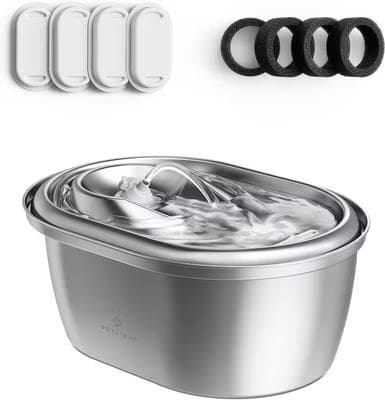
A quiet 3 L stainless steel fountain with filtered moving water can help encourage a recovering cat to keep drinking.
Webvet may earn a commission when you click through to Chewy, at no extra cost to you.
Some cases are more involved. Chronic gastroenteritis in cats describes signs that keep returning over weeks rather than clearing up. You may also see the terms hemorrhagic gastroenteritis in cats, used when there is blood in the vomit or stool, and eosinophilic gastroenteritis in cats, a specific type of inflammation a vet confirms with testing.
Both of those forms need a vet's workup rather than home care. VCA lists blood in vomit as a reason to seek veterinary care immediately. Stories from other owners on forums such as Reddit can be reassuring, but they cannot tell you whether your own cat's case is the simple acute kind or one of these.
Symptoms of Gastroenteritis in Cats
The main symptoms of gastroenteritis in cats are vomiting and diarrhea, often in intermittent episodes rather than one constant stream. VCA describes this on-and-off pattern as typical. Common cat gastroenteritis symptoms include:
- Vomiting food, foam, or bile
- Loose or watery diarrhea
- Loss of appetite or refusing favorite foods
- Lethargy and hiding
- Belly discomfort, such as a hunched posture
- Dehydration, such as tacky gums and less urine in the litter box
If your cat is doing both at once, our guide to a cat throwing up and diarrhea walks through the combined picture. For loose stool alone, see why your cat has diarrhea and what to do about it.

A pumpkin supplement to ask your vet about for digestive support.
Webvet may earn a commission when you click through to Chewy, at no extra cost to you.
Dehydration is the symptom that turns a mild case into a serious one. VCA notes that dehydration can occur quickly if vomiting and diarrhea persist for more than 24 hours. VCA also lists loss of appetite among the warning signs that need prompt care when a cat is vomiting.
What are the first signs of gastroenteritis in cats?
The first signs are usually vomiting and loose stool that come and go, which VCA describes as intermittent episodes. Many owners notice a skipped meal or a cat that seems quieter than usual around the same time. Watch for lethargy, fever, or a refused meal alongside the vomiting, since VCA lists those as reasons to call the vet promptly.
How do cats act when their stomach hurts?
Cats tend to hide discomfort, so the signs are often behavioral. A cat with belly pain may:
- Sit hunched or curled tightly instead of stretching out
- Hide, avoid being picked up, or react when the belly is touched
- Walk up to the food bowl and then turn away
- Lick its lips or drool, which can come before vomiting
VCA lists abdominal pain with vomiting as a reason to seek veterinary care immediately, so a cat that seems sore and is also vomiting should be seen.
What Causes Gastroenteritis in Cats?
The usual cause of gastroenteritis in cats is something that irritates or infects the gut, and VCA names infection with bacteria, viruses, or parasites, certain medications, and even new foods. Many of the common causes of gastroenteritis in cats are minor, but a few are not.
VCA divides the causes of vomiting into two groups:
- Minor causes: intestinal parasites, dietary indiscretion (eating something it should not), hairballs, and food intolerance or allergy
- Serious causes: infections, toxins, pancreatitis in cats, cancer, and a foreign body blocking the intestines
A diet change made too fast is an everyday trigger, which is why vets recommend switching foods gradually. Parasites matter too: VCA lists coccidia and worms such as hookworms and roundworms among the infectious causes of diarrhea.
The Cornell Feline Health Center describes a hairball as a damp, cylindrical wad of undigested hair. Hairballs explain some vomiting, but they should not be blamed for repeated episodes. Our cat throwing up guide helps tell a hairball from something more.
How Do Indoor Cats Get Gastroenteritis?
Indoor cats get gastroenteritis mainly from what reaches them inside the home: new or spoiled food, toxic plant leaves, human medications, and germs carried in by a new cat or on objects.
How does an indoor cat get gastroenteritis?
An indoor cat usually gets gastroenteritis from something it ate or something brought into the house. VCA lists new foods as a trigger, and Cornell adds spoiled cat food, leaves of poisonous plants, and human medications. The panleukopenia virus can persist in the environment for more than a year, according to the Merck Veterinary Manual, so a new cat or contaminated item can carry it indoors.

Plants deserve special care. Cornell names poisonous plant leaves as a cause of vomiting, and some houseplants and bouquets are far more dangerous than an upset stomach. Read are lilies toxic to cats before keeping any in the house.
Any new food, including a switch to raw food, and any spoiled food can upset an indoor cat's stomach and intestines. The table below matches each indoor cause with the clue it tends to leave and how quickly to act.
| Indoor cause | Clue at home | How urgent |
|---|---|---|
| New food or a fast diet switch | Signs start soon after the change, cat otherwise bright | Call the vet if no clear improvement in 24 to 48 hours |
| Spoiled food left out | Bowl sat out or smelled off, signs soon after eating | Call the vet if no clear improvement in 24 to 48 hours |
| Hairball | Cylindrical wad of hair in the vomit, cat eats normally after | Vet visit if vomiting happens more than once a week |
| Chewed houseplant or bouquet | Torn leaves, plant material in vomit | Same day; see the lily warning linked above |
| Human medication | Open pill bottle, dropped tablet | Same day; call the vet now |
| New cat or kitten in the home | Fever, low energy, refusing food, newcomer also sick | Same day; panleukopenia is possible |
| Refusing food | Untouched bowl, hiding | Call the vet; going days without food risks hepatic lipidosis |
| Swallowed string, toy part, or hair tie | Missing item, repeated vomiting, belly pain | Same day; possible foreign body |
SponsoredVet care that's always there
Unlimited video calls and messaging with licensed vets for less than a typical vet visit. One membership covers up to five pets.
Use code Pets60
Plans start at $12/month · covers up to 5 pets
- Licensed vets in most states
- Rx for 150+ conditions
- 4.7 on Trustpilot
How Is Gastroenteritis in Cats Diagnosed?
Gastroenteritis in cats is diagnosed by ruling out other causes, starting with a history and physical exam. Your vet will ask about diet changes, plants, medications, new pets, and how often your cat has vomited.
From there, testing depends on how sick your cat is. Cornell explains that bloodwork and fecal testing help rule out toxins, parasites, and metabolic disease. Common steps include:
- Fecal test: VCA says it detects intestinal parasites such as roundworm, hookworm, and giardia
- Bloodwork: helps rule out toxicities and metabolic diseases, per Cornell
- X-rays and ultrasound: Cornell notes these help find masses and foreign objects
A bright cat with one or two episodes may need only an exam. Bloodwork or imaging becomes more likely when vomiting is repeated, a swallowed object is possible, the cat is not eating, or signs return after treatment.
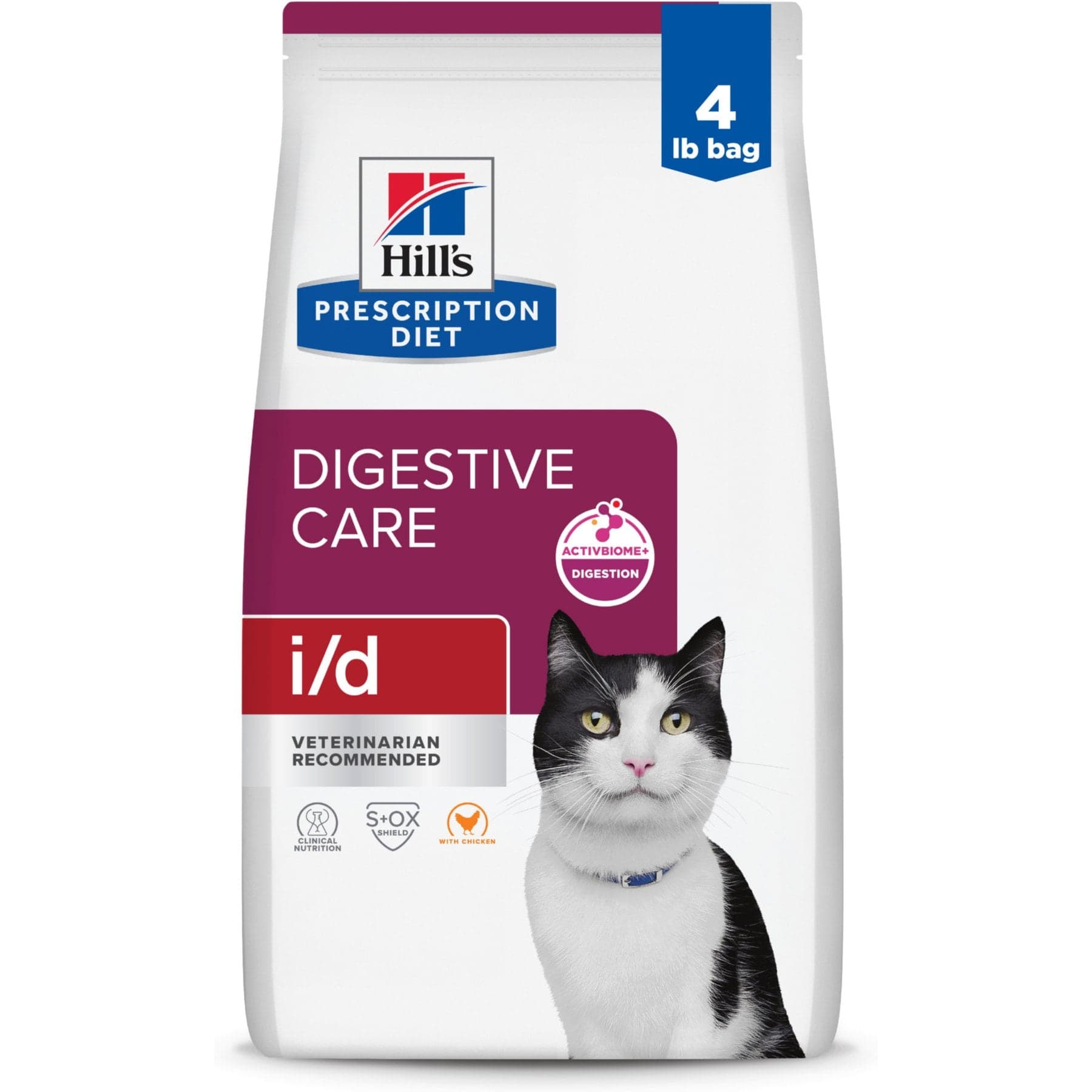
Hill's i/d is a highly digestible diet to ask your vet about during recovery.
Webvet may earn a commission when you click through to Chewy, at no extra cost to you.
What gets mistaken for gastroenteritis in cats?
Several conditions cause the same vomiting and diarrhea, which is why vets treat gastroenteritis as a diagnosis of exclusion. VCA and Cornell point to these look-alikes:
- Pancreatitis: VCA lists it among the serious causes of vomiting
- A foreign body: a swallowed object that blocks the intestines, which x-rays and ultrasound can find, per Cornell
- Feline panleukopenia: a contagious virus that starts with fever, depression, and appetite loss, according to Merck
- Hairballs: Cornell describes these as wads of undigested hair, and they can explain occasional vomiting
- Toxins, metabolic disease, and cancer: bloodwork and imaging help rule these out
Telling them apart at home is not possible, so repeated vomiting or a cat that stops eating needs an exam.
Treatment for Gastroenteritis in Cats
Treatment for gastroenteritis in cats centers on rehydration and restoring electrolyte balance, which VCA calls the principal treatment. The rest of feline gastroenteritis treatment depends on the cause and how sick your cat is.
To treat it, your vet usually combines some of these:
- Fluids: to rehydrate, with hospitalization for IV fluids when dehydration is significant, per VCA
- Anti-nausea medication: VCA names maropitant citrate (Cerenia) for minor vomiting cases, and Cornell notes anti-emetics are used in dietary indiscretion
- A veterinary gastrointestinal diet: VCA advises feeding small amounts of a diet made for gut problems
- Dewormers or anti-diarrheals: when parasites or persistent diarrhea are involved
VCA also lists probiotics among diarrhea treatments, with the advice to check with your vet before giving any supplement. Ask whether a product such as Purina Pro Plan FortiFlora Probiotic Supplement for Cats fits your cat; our cat probiotics guide explains how these products are used.
Treating your cat at home is reasonable only if it is still bright, drinking, and keeping some food down. The next section explains home care step by step, but a cat that is lethargic, dehydrated, or refusing food needs the clinic first.

Home Care for a Cat With Gastroenteritis
Home care for a cat with gastroenteritis means keeping water available, offering small bland meals, and watching closely for signs that it is getting worse. VCA says water should be freely available because it is needed to prevent dehydration.
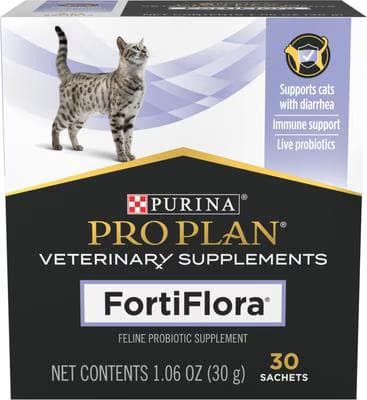
FortiFlora is a probiotic powder for cats that you can ask your vet about adding to a bland diet during recovery.
Webvet may earn a commission when you click through to Chewy, at no extra cost to you.
VCA notes that food may be withheld for 8 to 12 hours in the early stage of treatment. Do not stretch that further on your own. Cats risk hepatic lipidosis when they go without food, so any pause in feeding should be short and agreed with your vet.

When you restart food, follow these steps:
- Offer an easily digested, bland diet, which VCA recommends for vomiting cats
- Feed small meals several times a day instead of one large meal
- Use a vet GI diet such as Hill's Prescription Diet i/d Gastrointestinal Health Cat Food if your vet recommends one
- Once stools return to normal, transition back to the regular food over seven to ten days, as VCA advises
Keep a simple log of vomiting, stool, food eaten, and water intake. It helps your vet judge progress if you need to call.
A clean, steady water source helps too.
How Long Does Gastroenteritis Last in Cats?
The length of gastroenteritis in cats varies with the cause, and veterinary references do not give a fixed recovery time. VCA instead sets a checkpoint: call your vet if vomiting and diarrhea do not improve significantly within 24 to 48 hours of treatment.
VCA gives two more limits worth knowing:
- A cat that otherwise seems well but keeps vomiting for more than one to two days should see a vet
- Frequent liquid or semi-liquid stools lasting more than two days need a veterinary consult
Recovery time is usually short for a cat with a simple dietary upset, since most acute cases improve rapidly once rehydrated. If your cat stops eating at any point, our cat not eating guide explains why that changes the timeline.
Is gastroenteritis in cats fatal? Mild acute cases rarely are. The danger comes from severe dehydration, infections such as panleukopenia, and hepatic lipidosis in cats that stop eating, which is why the clock matters more than the diagnosis name.
Track three things each day of recovery: whether vomiting is less frequent, whether stools are firming up, and whether your cat is eating and drinking. Steady progress on all three is the pattern you want. A cat that improves and then relapses needs a recheck, since returning signs can point to a cause that has not been found yet.
Is Gastroenteritis in Cats Contagious?
Gastroenteritis in cats is contagious only when the cause is infectious, such as a virus, bacteria, or parasites. Cases caused by a diet change, a hairball, or a toxic plant cannot spread to other cats.
The most important contagious cause is feline panleukopenia. The Merck Veterinary Manual describes it as a highly contagious, often fatal viral disease of cats. Key facts from Merck:
- Cats are infected through the mouth and nose by exposure to infected animals
- Fever, depression, and loss of appetite appear after a 2 to 7 day incubation period
- The virus can persist in the environment for more than a year
- Vaccines provide solid, long-lasting immunity
If one cat in a multi-cat home is sick, keep it apart from the others and ask your vet whether testing is needed. Keeping your cats current on vaccines is the best protection against panleukopenia.
Because the virus survives so long in the environment, a cat can be exposed without ever meeting a sick animal. Bedding, carriers, and bowls that came from a home or shelter with an infected cat can carry it, which is one more reason to vaccinate cats that never go outside.
If your vet mentions FIP, or you are wondering how an indoor cat could catch it, what the early signs are, and whether vaccinated cats are protected, our guide to FIP in cats answers those questions. If you also share your home with a dog, the symptoms in dogs are covered in gastroenteritis in dogs.
When to See a Vet
See a vet the same day if your cat with gastroenteritis is lethargic, refusing food, dehydrated, vomiting blood, or is a kitten. VCA advises immediate care when a vomiting cat also has fever, lethargy, loss of appetite, abdominal pain, diarrhea, dehydration, blood in the vomit, or may have swallowed a foreign object or toxin.
The University of Illinois College of Veterinary Medicine lists jaundice (yellowing of the skin), lethargy, weakness, and vomiting as possible signs of hepatic lipidosis. Its standard treatment is feeding through a feeding tube, and many cases resolve after days to weeks. A cat not eating and lethargic should never wait.
Use this checklist for a same-day call:
- Your cat has not eaten in 24 hours, or eats far less than usual
- Vomiting or diarrhea contains blood
- Your cat is weak, hiding, or lethargic
- Gums look yellow, which can signal jaundice
- You suspect a swallowed toxin, plant, medication, or object
- The patient is a kitten, or an unvaccinated cat recently met a new cat
Also book a visit if your cat vomits more often than once a week, which Cornell says warrants a vet exam even when the cat seems fine. Severe panleukopenia needs hospitalization with IV fluids and supportive care, according to Merck.
Gastroenteritis in Cats FAQs
Frequently Asked Questions
Can gastroenteritis in cats go away on its own?
Mild cases often do. VCA notes that many cases of sudden vomiting improve on their own within about a day, but if vomiting and diarrhea do not improve significantly within 24 to 48 hours of treatment, call your vet.
What can I feed a cat with gastroenteritis?
Feed an easily digested, bland diet in small meals several times a day. VCA recommends small amounts of a veterinary gastrointestinal diet, then a gradual return to regular food over seven to ten days once stools are normal.
Is gastroenteritis in cats contagious to humans?
Most cases are not, because they come from diet, hairballs, or plants. Intestinal parasites such as roundworm, hookworm, and giardia can cause feline gastroenteritis, so practice good hygiene, such as washing your hands after cleaning the litter box, and ask your vet.
How long does gastroenteritis last in cats?
Many owners expect two to five days, but veterinary references do not set a fixed course. VCA's checkpoint is 24 to 48 hours of treatment; signs that last longer, or diarrhea beyond two days, need a vet.
Can gastroenteritis kill a cat?
It can in severe cases. Dehydration is the main danger, and Merck reports that kittens under 5 months are most likely to die from panleukopenia, while cats that stop eating also risk hepatic lipidosis.
What food will settle a cat's stomach?
An easily digested, bland diet fed in small meals settles most upset stomachs, per VCA. Your vet may recommend a highly digestible veterinary gastrointestinal diet, then a gradual return to normal food over seven to ten days.
How to get rid of gastroenteritis in cats?
Treat the cause, rehydrate, and feed a bland diet in small meals. Your vet may add anti-nausea medication or dewormers, and any red flag, such as a cat not eating for 24 hours, blood in vomit, lethargy, or a sick kitten, means a vet visit rather than home care.
Should I withhold food from a cat with gastroenteritis?
Only briefly, and only on your vet's advice. Never fast a cat for long: the University of Illinois explains that going multiple days without eating raises the risk of hepatic lipidosis, so call your vet if your cat has not eaten in 24 hours.

Editor
The Webvet Editorial Team is the in-house group of pet-care editors and writers behind Webvet, operated by Smart Pet Collective. The team researches, writes, and maintains Webvet's pet health, behavior, and medication content. Every article follows a defined editorial process: research from reputable veterinary and scientific sources, careful drafting, mandatory review of medical content by a credentialed veterinarian, and dated publication. Health and medication articles are medically reviewed by a licensed veterinary professional before they go live and are kept current over time.
Veterinarian · BVMS MRCVS
Dr. Pippa Elliott, BVMS, MRCVS, is a veterinarian with nearly 30 years of experience in companion animal practice. Dr. Elliott earned her Bachelor of Veterinary Medicine and Surgery from the University of Glasgow. She was also designated a Member of the Royal College of Veterinary Surgeons. Married with 2 grown-up kids, Dr. Elliott has a naughty Puggle named Poggle, 3 cats and a bearded dragon.
Related reading

Gastroenteritis in Dogs: Symptoms, Causes, Treatment, and Recovery Time

Hemorrhagic Gastroenteritis in Dogs (HGE): Symptoms, Causes, Treatment, and Survival

Bland Diet for Dogs: Recipes, Ratios, How Much to Feed, and How Long
