Are Lilies Toxic to Cats? Yes, and It Is an Emergency
Yes. True lilies and daylilies cause sudden kidney failure in cats, and pollen groomed off the fur is enough. Here is how to tell a deadly lily from a harmless lookalike, the signs to watch for, and what to do in the next few minutes.

BVMS MRCVS
Medically reviewed by Dr. Pippa Elliott, BVMS MRCVS · Last reviewed

This article contains affiliate links. Webvet may earn a commission when you buy through them, at no extra cost to you.
Are lilies toxic to cats? Yes, and it is one of the most dangerous plant exposures a cat can have. True lilies (Lilium species) and daylilies (Hemerocallis species) cause sudden kidney failure in cats. Every part of the plant counts, and exposure alone is reason to call a veterinarian now.
If you are asking are lilies toxic to cats with a bouquet on the counter and a cat in the room, move the flowers somewhere the cat cannot reach and pick up the phone. Do not wait to see whether anything happens.
Are lilies toxic to cats?
True lilies and daylilies are poisonous to cats: eating any part, swallowing pollen during grooming, or drinking vase water can cause kidney failure. Call your veterinarian immediately after suspected exposure, even if your cat seems well. The botanical identity, not flower color or the amount eaten, determines this emergency.
- 1True lilies (Lilium) and daylilies (Hemerocallis) can cause acute kidney injury in cats. The ASPCA Animal Poison Control Center reports the injury is often fatal when treatment is delayed longer than 18 hours after ingestion.
- 2Every part of the plant is dangerous, including petals, leaves, stem, pollen, and the water in the vase.
- 3Exposure is the trigger for calling a vet, not symptoms. A cat that looks completely normal in the first few hours still needs to be seen.
Not every flower sold as a lily carries that risk. Peace lilies, calla lilies, and Peruvian lilies share the name and very little else. They cause mouth irritation or stomach upset rather than organ failure.
Two more, lily of the valley and the gloriosa lily, are genuinely dangerous but in an entirely different way. Working out which plant is actually in your house is the first job on this page.
Which lilies kill cats, and which ones only make them sick

The word lily gets attached to plants from several unrelated families. Only two of them, the genus Lilium and the genus Hemerocallis, are the kidney-toxic true lilies that make this an emergency. The Merck Veterinary Manual limits the true lily label to exactly those two.
If the bloom in your house came from a florist and has six petals with long stamens tipped by heavy orange pollen, treat it as a true lily until someone qualified tells you otherwise. Use these names as your checklist:

A window perch gives your cat a dedicated resting spot. Install it as directed and keep it away from accessible plants.
Webvet may earn a commission when you click through to Chewy, at no extra cost to you.
Use the photographs to compare the exposed orange anthers of a true lily with the peace lily spathe and calla flower shape. A photograph or common name is not enough to clear an unfamiliar plant: keep the label, photograph the leaves and whole plant, and have a veterinarian or poison-control specialist confirm its identity.
- Easter lily, tiger lily, Asiatic lily, Oriental lily, stargazer lily, rubrum lily, Japanese show lily, and wood lily are all Lilium species.
- Daylilies, also written as day lilies, are Hemerocallis plants common in garden beds and roadside plantings. They are poisonous to cats and carry the same kidney risk as true lilies in cut bouquets.
- Flower color cannot settle the identity: white, pink, orange, yellow, red or purple blooms may belong to different plants. Once identified as Lilium or Hemerocallis, every color carries the kidney-injury risk. A rose lily trade name also needs its botanical label checked; a Lilium cultivar is not made safe by a rose-like flower.
| Plant | Botanical genus | What it does to a cat | Urgency |
|---|---|---|---|
| True lilies (Easter, tiger, Asiatic, Oriental, stargazer) | Lilium | Acute kidney injury from any part of the plant, including pollen alone | Emergency. Call now, even with no symptoms |
| Daylily | Hemerocallis | Acute kidney injury, the same picture as a true lily | Emergency. Call now, even with no symptoms |
| Lily of the valley | Convallaria | Cardiac glycoside poisoning: vomiting, arrhythmias, weak pulse, hyperkalemia | Emergency. Call now |
| Gloriosa or glory lily | Gloriosa | Colchicine poisoning: severe stomach signs, organ damage, possible death | Emergency. Call now |
| Peace lily | Spathiphyllum | Insoluble calcium oxalate crystals: oral pain, drooling, vomiting or diarrhea | Call your vet. Not usually life-threatening |
| Calla lily | Zantedeschia | Insoluble calcium oxalate crystals: mouth and throat irritation, drooling | Call your vet. Not usually life-threatening |
| Peruvian lily | Alstroemeria | Listed non-toxic by the ASPCA. Stomach upset possible, no organ injury expected | Monitor. Call if signs persist |
Peace lily (Spathiphyllum) and calla lily are toxic to cats through mouth and throat irritation rather than the kidney injury associated with true lilies. The FDA explains the distinction. Do not treat the shared word lily as a shared toxin, and seek veterinary advice after either type of exposure.
The lookalikes that share the name but not the danger
Peace lily (Spathiphyllum) and calla lily (Zantedeschia) contain insoluble calcium oxalate crystals. The ASPCA describes the result as oral pain, drooling, vomiting, or diarrhea rather than kidney injury. It is genuinely unpleasant and worth a vet call, but it is not the same emergency.
The Peruvian lily (Alstroemeria) is listed by the ASPCA as non-toxic to cats. Non-toxic means no known systemic poisoning, not harmless. The ASPCA still notes it can cause stomach upset, and any plant material can trigger vomiting or a blockage.
Canna lily (Canna generalis) is a separate plant that the ASPCA lists as non-toxic to cats, dogs, and horses. Check the botanical name: a canna lily is not a Lilium lily or a daylily.
The two that are dangerous for a different reason
Lily of the valley (Convallaria) contains cardiac glycosides. ASPCApro reports that all parts of the plant are toxic and that signs can include vomiting, arrhythmias, decreased cardiac output, a weak pulse, hyperkalemia, and possibly death. That is a heart emergency, not a kidney one.
The gloriosa or glory lily (Gloriosa superba) contains colchicine. Pet Poison Helpline describes ingestion as capable of causing severe gastrointestinal signs, organ damage including the kidney and liver, respiratory failure, nervous system signs, and death.
Spider lily is not one botanical identity. Red spider lily is Lycoris radiata; Hymenocallis plants also use the name. These names do not identify a Lilium or Hemerocallis plant, and they do not establish a safe alternative.
North Carolina Extension identifies red spider lily as Lycoris radiata and separately lists Hymenocallis as spider lily. Veterinary toxicologist Anthony Knight describes Hymenocallis poisoning in animals as causing gastrointestinal signs, with more serious effects possible after larger ingestions. Keep an unidentified spider lily away from your cat and give the veterinarian the label or photographs after any suspected ingestion.
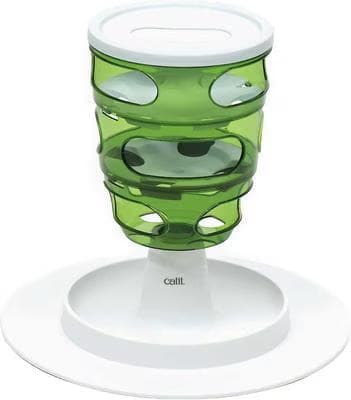
A food-tree puzzle adds an activity to everyday feeding. Introduce it gradually using part of your cat’s usual food allowance.
Webvet may earn a commission when you click through to Chewy, at no extra cost to you.
What part of a lily is toxic to cats
All of it. Pet Poison Helpline states that all parts of lilies from the Lilium genus are toxic for cats, and that this includes any amount of leaf, stem, flower, pollen, vase water, or rhizome.
Pollen and vase water are what catch owners out. There is no part of the arrangement you can safely leave on the table, and a stem trimmed into the bin is still a stem a cat can find. Everything on this list counts as the plant:
- Petals and the whole bloom, whether it is open or still closed
- Leaves and stems, fresh or wilting
- Pollen from the anthers, including pollen that has fallen onto a table, a counter, or a floor
- The water in the vase, and any water spilled or splashed around it
- The bulb or rhizome, if the plant is potted or growing in the garden
- Dropped, dried, or dead plant material, which is still plant material
ASPCApro's guidance for veterinarians goes further and notes documented cases where exposure to the pollen alone caused acute kidney injury. Amount is not a useful question here, because no primary veterinary source publishes a safe threshold for a cat.
The Merck Veterinary Manual notes that consuming less than one leaf can produce severe toxicosis in cats. If a cat eats a true lily, kidney injury can follow; a cat does not have to eat a leaf to be poisoned, because swallowed pollen and vase water also count. There is no established safe dose.
Can a cat be poisoned by smelling or brushing against a lily?

Touching a poisonous lily can transfer pollen onto a cat. If your cat sniffs a lily, check whether the face, whiskers or coat touched pollen. Smell alone is different from ingestion, but pollen can be swallowed during grooming. A forum account of a cat that sniffed a lily cannot establish your cat's safety. Call immediately after possible contact or ingestion; do not wait for symptoms.
Lily pollen is loose, sticky, and bright orange, and it transfers onto fur, whiskers, and paws with the lightest contact. The ASPCA lists grooming pollen off the fur, and drinking the water a lily has been standing in, as routes of exposure alongside eating the plant.
So a cat that never chewed a stem can still be exposed. If you find orange dust on your cat, on a windowsill, or on the floor under an arrangement, treat that as contact.
This is not an allergy, and antihistamines do nothing
A lot of people search for whether cats are allergic to lilies. The poisoning described here is organ toxicity; treating it as an allergy would delay the veterinary care an exposed cat needs.
The distinction matters because an allergy model tells an owner to give a tablet and watch. Antihistamines do nothing for lily toxicosis, and the hours spent watching are the same hours the kidneys are being damaged.
Do not medicate at home. Call a veterinarian or a poison control line instead.
Why lilies cause acute kidney injury in cats
The specific kidney-damaging toxin in true lilies, including Easter lilies, has not been identified. Their poisonous effect on cats is well documented even though the exact compound remains unknown.
The Merck Veterinary Manual states that although the specific toxin is not known, true lilies have been shown to damage renal tubular epithelial cells. What is known is that the compound is water soluble and present throughout the plant.
Those tubular cells are the kidney's reabsorption machinery. When enough of them die, the result is renal tubular necrosis, and the kidney stops clearing waste from the blood. On a blood panel that shows up as a specific pattern:
- Creatinine and blood urea nitrogen (BUN) climb as waste stops being filtered out
- Urine output often rises first, as the kidneys lose the ability to concentrate urine
- It can then fall away to almost nothing, which is called anuria and is the most serious sign in this poisoning
There is no specific antidote for true-lily poisoning. There is also no established safe exposure, so do not use the amount as a reason to wait after suspected contact or ingestion.
Cats are also close to alone in this. Dogs exposed to the same plants generally get an upset stomach rather than kidney failure, which is why lily advice written for pets in general badly understates the risk to a cat.
The first signs of lily poisoning in cats
The early signs are vague, and that is exactly the problem. The Merck Veterinary Manual puts the onset at one to three hours after ingestion, with salivation, loss of appetite, lethargy, and vomiting. In the order an owner tends to notice them:
- Vomiting, sometimes with fragments of plant material in it
- Drooling, or damp fur under the chin
- Walking away from food, including food the cat normally runs for
- Flatness: sitting still, hiding, sleeping somewhere out of character
- Then, over the following day, drinking and urinating noticeably more than usual
- Later still, dehydration and continued vomiting as kidney values climb
None of that is specific to lilies. A cat that has been sick once and gone quiet looks like a cat having an ordinary bad afternoon, and that resemblance is what buys the poison its head start.
If your cat is being sick and you have no idea why, our guide to a cat vomiting but acting normal covers the wider set of causes. If a lily is anywhere in the picture, skip the reading and call.
The pairing that should worry you most is a cat that has stopped eating and turned lethargic at the same time. Our guide to a cat that stops eating and turns lethargic treats that combination as urgent on its own, and after a plant exposure it is more urgent still.
How fast lily poisoning moves: the 72-hour timeline
How quickly do lilies affect cats? The FDA describes early signs within 0 to 12 hours and kidney failure within 24 to 72 hours. Untreated poisoning can kill a cat, but there is no safe waiting period or exact fatal deadline for an individual. Treatment must start after suspected exposure. The timeline below links symptoms, kidney changes and treatment opportunities across the first 72 hours and beyond.

Grow a small tray of oat grass for your cat. Follow the kit instructions and keep ornamental plants out of reach.
Webvet may earn a commission when you click through to Chewy, at no extra cost to you.
| Time after exposure | What you may see | What is happening inside | What treatment can still do |
|---|---|---|---|
| 0 to 3 hours | Often nothing at all. Sometimes drooling or a single bout of vomiting | The toxin is being absorbed | Veterinary decontamination is most useful here, and fluid therapy can start before damage sets in |
| 3 to 12 hours | Vomiting, refusing food, lethargy | Kidney tubular cells are being damaged | Intravenous fluid therapy is strongly protective. This is the window veterinary teams want |
| 12 to 30 hours | Drinking and urinating more, dehydration, continued vomiting | Creatinine and BUN begin to climb | Treatment still changes the outcome, but the margin is narrowing |
| Beyond 18 hours | The cat may look worse, or confusingly a little better | Renal tubular damage may already be established | ASPCApro reports that treatment started more than 18 hours after exposure may find the kidney damage irreversible |
| 24 to 72 hours | Weakness, collapse, little or no urine being passed | Acute kidney failure, possibly anuria | Intensive supportive care. Outcomes become far less certain |
| 3 to 7 days | Continued decline if the cat was never treated | Merck reports weakness, recumbency, and death occurring in this window | Emergency and referral care only |
Notice what the treatment column does to the symptom column. The stage where a cat looks least alarming is the stage where treatment does the most good, and the stage where a cat finally looks obviously ill is the stage where it does the least.
That inversion is the entire argument for going in tonight rather than in the morning. Nothing about lily poisoning rewards waiting to see how the cat is by breakfast.
What to do right now if your cat touched a lily

What follows is a first-aid sequence, not a treatment plan. The treatment happens at a clinic, and the only job here is getting your cat there quickly with useful information attached.
Three things not to do while you are on the phone:
- Do not give milk, over-the-counter activated charcoal, or an antihistamine. None of them treat this, and decontamination is a veterinary procedure with drugs and monitoring behind it.
- Do not wait for symptoms to decide. The most common thing owners say about this is that their cat ate a lily and nothing happened, and nothing happening is what the first hours are supposed to look like.
- Do not assume a small amount is a small problem. There is no established safe amount of a true lily for a cat, and pollen alone has been enough.
Do not wait for a cat to recover from true-lily poisoning on its own. Veterinary treatment is needed promptly after suspected exposure, even while the cat appears well.
If cost is the thing making you hesitate, say so on the phone rather than staying home. Clinics can often talk through options, and our breakdown of what an emergency vet visit costs will tell you roughly what to expect before you walk in.
None of this replaces a veterinary exam. It is simply the sequence that gets your cat in front of someone who can run bloodwork and start fluids.
How vets treat lily poisoning in cats
There is no specific antidote for lily toxicosis. Treatment aims to prevent or limit kidney damage through prompt veterinary care; the fact that the toxin remains unidentified does not provide a safe exposure threshold.
The Merck Veterinary Manual describes decontamination after a recent ingestion in a neurologically appropriate cat, followed by an anti-nausea drug and a single dose of activated charcoal with a cathartic. All of that is done by a veterinary team making a judgment about whether the cat is stable enough for it.
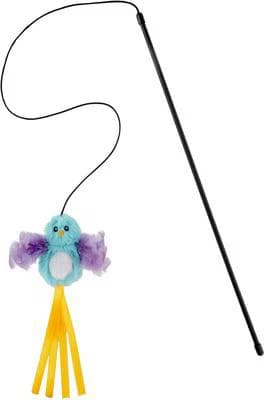
Make time for supervised play with a feathered wand. Put the toy away after each session.
Webvet may earn a commission when you click through to Chewy, at no extra cost to you.
A typical hospital stay looks like this:
- Intravenous fluid therapy, which Merck describes at two to three times maintenance rate for 48 to 72 hours to protect the kidneys
- Bloodwork to establish baseline kidney values, with Merck advising kidney values be rechecked every 24 hours for the first 72 hours
- Monitoring urine output, because a fall toward anuria changes the picture significantly
- Anti-nausea medication and supportive care while the cat is hospitalized
- In severe cases, referral for dialysis where that is available
ASPCApro's guidance is that any cat exposed to any part of a true lily should be on intravenous fluid diuresis for 48 hours to prevent acute kidney injury. That is the standard of care an exposed cat should be getting.
It also answers the practical question owners ask on the phone. This is an inpatient problem measured in days, not a tablet and a follow-up call.
Can a cat survive lily poisoning?
Yes, cats can survive eating a true lily when they receive prompt veterinary care. Easter lilies and stargazer lilies can also kill cats through kidney failure. The outcome depends on the exposure, how quickly treatment begins and the cat's kidney function; an online anecdote or fact-check cannot predict an individual cat's outcome.
Do not wait for a cat to recover from a true lily exposure on its own. The FDA's guidance on lilies and cats states that early veterinary treatment greatly improves prognosis, while a delay of 18 hours or more after ingestion generally results in irreversible kidney failure. Call immediately; 18 hours is not a safe waiting period.
A population survival percentage cannot predict an individual cat’s outcome. Prompt treatment and the cat’s kidney function are more useful guides to the prognosis your veterinarian can give.
- 1Prognosis in lily poisoning tracks how quickly treatment started, not how sick the cat looks when it arrives.
- 2There is no antidote, so early intravenous fluid therapy is the treatment, and time is the ingredient it needs.
- 3ASPCApro reports that kidney damage may be irreversible when treatment begins more than 18 hours after exposure, which makes tonight and tomorrow morning genuinely different decisions.
A cat that reaches anuria, meaning it has effectively stopped producing urine, is in the most serious version of this. Those cases can still be treated, but the care is intensive and the outcome is much harder to predict.
If your cat has already been treated and is home, follow the recheck schedule you were given. Kidney values are followed after discharge for a reason, and skipping the recheck is how a quiet problem goes unnoticed.
Living with lilies and cats: what is actually safe
The reliable way to keep cats away from poisonous lilies and stop them eating any part is to remove true lilies and daylilies from the home. Do not rely on a high shelf or a closed room. Cats may investigate dangerous plants; the usual placement workarounds depend on assumptions that can fail:
- A high shelf assumes the cat cannot get onto it, and cats get onto things
- A closed door assumes nobody ever leaves it open, including guests, cleaners, and children
- Pollen travels on hands, sleeves, and whatever surface you set the wrapping down on
- Fallen anthers and petals land on the floor, which is cat height by definition
- Cut flowers get moved, knocked, tidied, and rearranged across the week they are in the house
The practical household rules are simpler than the workarounds:
- Do not bring true lilies or daylilies into a home with a cat, in a vase or in a pot
- Ask friends and family to skip lilies when they send flowers, and tell them why so the request sticks
- Inspect every delivered bouquet before it goes into water, and pull out anything you cannot identify
- Wash your hands after handling an arrangement before you touch the cat
- Dig out or fence off daylilies where a cat has garden access, and remember the bulbs stay in the ground over winter
- Give a determined plant chewer its own cat grass grown with an Imperial Cat Easy Grow Cat Oat Grass Kit, so there is something it is allowed to bite
Lilies are one item on a much longer household list. Our guide to poison-proofing your cat's home walks the rest of it room by room, from cupboards to windowsills.
Cat-safe flowers to send instead

You do not have to give up flowers. You have to give up two genera, and florists stock plenty of alternatives that are not remotely difficult to find.
One caution before the list. Non-toxic in the ASPCA sense means no known systemic poisoning, not harmless. Any plant material can cause vomiting, drooling, or a blockage if a cat eats enough of it, so the aim is a bouquet that will not damage organs, not a bouquet a cat should graze on.
| If you were going to send | Send this instead | Why it works |
|---|---|---|
| A cut lily bouquet | Sunflowers, snapdragons, or gerbera daisies | All listed non-toxic to cats by the ASPCA and stocked by most florists |
| A mixed arrangement with lilies as the feature stem | Roses, with the thorns stripped | Listed non-toxic by the ASPCA, which notes only mild stomach upset and warns about thorn injuries |
| An Easter lily as a seasonal gift | A moth orchid (Phalaenopsis) | Non-toxic to cats and lasts far longer than cut stems |
| A potted peace lily for a desk or windowsill | An African violet or a parlor palm | Non-toxic houseplants that suit the same spot |
| A leafy green plant for a shelf | A Boston fern | Non-toxic to cats, and a common swap for the trailing plants that are not |
| A daylily border in the garden | Camellia | Non-toxic garden planting where a cat has outdoor access |
| Anything, when the cat is a committed chewer | A tray of cat grass beside the arrangement | Gives the cat its own thing to chew instead of the display |
If you receive lilies as a gift, you are allowed to be blunt about it. Take a photograph, thank the sender, and pass the flowers on to an office or a neighbor without a cat.
For the complete vet-checked list across houseplants, flowers, herbs, and garden beds, see our guide to plants safe for cats.
Use the rose guide for thorn and bouquet concerns, the orchid guide to check a potted gift by its botanical name, or the spider-plant guide for a leafy houseplant. A non-toxic verdict still does not make a plant suitable food.
Are lilies toxic to dogs?
Not in the same way. Dogs that eat a true lily or a daylily typically get gastrointestinal upset rather than the kidney injury cats develop, which is why lily warnings written for cats do not transfer neatly to a dog.
| Plant identity | Dogs compared with cats |
|---|---|
| True lilies including Easter, tiger and Lilium hybrids; daylilies | Dogs may develop stomach upset after eating them. Cats risk fatal kidney failure. A white flower or rose-lily trade name does not change the verdict once its genus is confirmed. |
| Peace lily and calla lily | Poisonous to cats and dogs through irritating calcium oxalate crystals; signs include oral pain, drooling and vomiting. Seek veterinary advice after chewing. |
| Peruvian lily (Alstroemeria) | ASPCA lists it as non-toxic to cats and dogs; swallowed plant material may still cause stomach upset. |
| Lily of the valley and gloriosa | Dangerous to both species through different toxins. Call immediately after suspected ingestion. |
That is not a green light. Lily of the valley affects dogs and cats alike through cardiac glycosides, and the gloriosa lily is dangerous to both. A dog that has eaten any part of a lily should still get a call to a vet or a poison control line.
Symptoms and their timing depend on the plant. A dog that ate a lily petal needs its plant identified; the cat kidney-failure timeline is not a timetable for dogs. Smell alone does not establish ingestion, but check for chewing and call with the label, amount and time of any possible exposure.
How other flowers and houseplants compare with lilies
Other flowers and houseplants need their own verdict. Some are non-toxic alternatives; others cause different forms of poisoning. The following comparisons help identify the plant to report, while any possible true-lily exposure remains an immediate emergency.
| Plant | Cat-safety comparison |
|---|---|
| Roses (Rosa), moth orchids (Phalaenopsis) and spider plants (Chlorophytum comosum) | Listed non-toxic to cats by ASPCA. Thorns, swallowed plant material and pot products can still cause problems. |
| Tulips | Poisonous to cats, with the highest toxin concentration in the bulb. Call after ingestion. |
| Carnations and poinsettias | Toxic irritant plants that usually cause milder signs than true lilies; report ingestion and any symptoms to a veterinarian. |
| Snake plants | Toxic saponins can cause gastrointestinal signs after chewing. |
| Hydrangea and peony | ASPCA lists both as poisonous to cats, with vomiting, diarrhea and depression among the signs. These are not safe bouquet substitutes. |
- Sago palm, which can cause severe liver damage
- Oleander, which contains cardiac glycosides like lily of the valley
- Autumn crocus, which contains colchicine like the gloriosa lily
- Dieffenbachia, philodendron, and pothos, which cause the same mouth and throat irritation as a peace lily
- Azalea and rhododendron, which can affect the heart and gut
For a bouquet-wide comparison, see our guide to flowers toxic to cats. It covers the other florist stems you may find alongside lilies.
Every plant named here, and the rest of the ASPCA toxic list, is ranked by how urgently a cat needs a veterinarian in our full guide to plants toxic to cats.
Other plants need their own risk assessment: the tulip guide emphasizes the bulb, the carnation guide describes its milder irritant listing, the snake-plant guide explains saponin exposure, and the holiday-plant guide covers poinsettia. Hydrangeas and peonies are compared with other bouquet stems in the flower guide. These distinctions help you report the actual plant rather than assume every exposure behaves like a lily.
Lilies and cats: quick answers
Frequently Asked Questions
Can I keep lilies in a room my cat cannot get into?
No, and the reason is not that cats open doors. It is that pollen travels. It leaves the room on your hands, your sleeves, and whatever surface you set the wrapping down on, and it ends up somewhere the cat grooms it off.
A closed door is also only as reliable as the least careful person in the house that week. Veterinary guidance on true lilies and daylilies is removal from the home, not containment within it.
Are cats actually allergic to lilies?
Lily toxicosis is organ toxicity, and allergy medicine is not a substitute for veterinary treatment.
The framing matters because it points owners toward a tablet and a wait. Waiting is the one response that reliably makes this worse.
Is lily of the valley the same kind of danger?
It is dangerous, but it is a different emergency. Lily of the valley (Convallaria) is not a true lily and does not cause kidney injury. It contains cardiac glycosides, and ASPCApro reports that all parts of the plant are toxic, with signs that can include vomiting, arrhythmias, a weak pulse, hyperkalemia, and possibly death.
The action you take is identical to a true lily exposure: call your veterinarian or a poison control line immediately, and do not induce vomiting at home.
How much does treating lily poisoning cost?
Costs vary with your location, the hospital and how long your cat needs to stay. The main drivers include hospitalization, intravenous fluids and repeated kidney bloodwork. Both poison-control lines also charge a consultation fee.
If cost is making you hesitate, discuss the likely range and payment options with the clinic immediately. Delaying assessment can allow kidney injury to worsen.
The bottom line
Are lilies toxic to cats? Yes. True lilies and daylilies are among the most dangerous plants a cat can meet, every part counts including the pollen and the vase water, and no safe amount has ever been established.
The decision in front of you is not whether the cat looks sick. It is whether the cat had contact. If it did, call your veterinarian, the ASPCA Animal Poison Control Center on (888) 426-4435, or Pet Poison Helpline on (855) 764-7661.
This article does not replace a veterinary exam, and it is not written to help you manage an exposure at home. It is written to get you to a phone.

Editor
The Webvet Editorial Team is the in-house group of pet-care editors and writers behind Webvet, operated by Smart Pet Collective. The team researches, writes, and maintains Webvet's pet health, behavior, and medication content. Every article follows a defined editorial process: research from reputable veterinary and scientific sources, careful drafting, mandatory review of medical content by a credentialed veterinarian, and dated publication. Health and medication articles are medically reviewed by a licensed veterinary professional before they go live and are kept current over time.
Veterinarian · BVMS MRCVS
Dr. Pippa Elliott, BVMS, MRCVS, is a veterinarian with nearly 30 years of experience in companion animal practice. Dr. Elliott earned her Bachelor of Veterinary Medicine and Surgery from the University of Glasgow. She was also designated a Member of the Royal College of Veterinary Surgeons. Married with 2 grown-up kids, Dr. Elliott has a naughty Puggle named Poggle, 3 cats and a bearded dragon.
Related reading

Is Pothos Toxic to Cats? Yes, and So Is Philodendron

Is Monstera Toxic to Cats? Symptoms and What to Do

Is Aloe Vera Toxic to Cats and Dogs? What to Do Now
