Plants Toxic to Dogs: Vet-Reviewed List and What to Do
Most plants toxic to dogs cause mouth and stomach irritation, but a short list damages the liver, heart, or kidneys. This vet-reviewed guide ranks them by severity, names the toxic part of each plant, and tells you what to do first.

BVMS MRCVS
Medically reviewed by Dr. Pippa Elliott, BVMS MRCVS · Last reviewed

This article contains affiliate links. Webvet may earn a commission when you buy through them, at no extra cost to you.
Plants toxic to dogs: the quick verdict
Common poisonous plants can cause mouth and stomach irritation, while others can cause organ failure. Plants toxic to dogs include sago palm, oleander, yew, foxglove, autumn crocus, azalea, and several familiar houseplants. The plant, the part swallowed, and your dog’s condition determine the urgency; a toxic listing alone does not tell you how severe an exposure will be.
Call your veterinarian or a poison control service after a suspected toxic-plant exposure. Seek emergency care for collapse, breathing trouble, seizures, or difficulty swallowing, even if the plant is usually described as an irritant. Do not wait for symptoms after a known high-risk ingestion such as sago palm.
Every verdict below is read from the ASPCA toxic and non-toxic plant database, the Pet Poison Helpline poison list, and the Merck Veterinary Manual. Here are the plants owners ask about most, worst first.
- Sago palm: every part is toxic and the seed is the most concentrated. Liver injury. Emergency.
- Oleander: cardiac glycosides throughout the plant. Acts on the heart. Emergency.
- Lily of the valley: cardenolides. Irregular heartbeat, low blood pressure, seizures. Emergency.
- Autumn crocus: colchicine. Bloody vomiting, multi-organ damage, bone marrow suppression. Emergency.
- Yew: taxine. Sudden cardiac failure, with tremors and seizures as early signs in dogs. Emergency.
- Foxglove: cardiac glycosides. Arrhythmias and cardiac failure. Emergency.
- Castor bean: ricin, concentrated in the bean itself. Emergency.
- Azalea and rhododendron: grayanotoxins. Vomiting, diarrhea, weakness, and cardiac failure in larger ingestions.
- Daffodil, tulip, and hyacinth: alkaloids concentrated in the bulb rather than the flower.
- Pothos, philodendron, monstera, dieffenbachia, and peace lily: insoluble calcium oxalate crystals. Immediate mouth pain and drooling.
- 1Mouth and stomach irritation differs from injury to the liver, heart, or kidneys. Severe signs from either group can be an emergency.
- 2Sago palm can cause liver failure; the seed is its most concentrated toxic part.
- 3There is no universal safe plant amount: identify the species and part, then get advice for your dog.
- 4Call before you act: ASPCA Animal Poison Control on (888) 426-4435 or Pet Poison Helpline on (855) 764-7661.
- 5Never induce vomiting at home.
A plant appearing on a toxic list does not make every exposure an emergency. A dog that licked a pothos leaf and drooled for ten minutes is in a completely different situation from a dog that chewed a sago palm seed.
What moves an exposure into emergency territory is the plant, the part that was eaten, and the signs. Repeated vomiting, weakness, wobbliness, tremors, a racing or unusually slow heartbeat, collapse, or any contact with an organ-level plant means you call now.
A leaf count cannot establish safety across different plants. Tell the veterinarian your dog’s weight, the plant and part involved, the estimated amount, and the time of exposure. An uncertain amount is a reason to ask for help, not to wait.
The most dangerous plants for dogs

Sago palm is among the most dangerous garden plants for dogs. The ASPCA names cycasin as its toxic principle and lists liver damage, liver failure, and death among the clinical signs, and Pet Poison Helpline names the seed as the most concentrated part.
Ranking matters because the flat alphabetical lists most sites publish put sago palm and hydrangea side by side with nothing to separate them. The table below sorts the plants named in this guide into three tiers, with the compound each source holds responsible.
| Severity tier | What happens | Compound named by the source | Plants in this tier |
|---|---|---|---|
| Tier 1: mouth and stomach irritant | Immediate burning, drooling, retching, difficulty swallowing. Signs start on contact and usually settle. | Insoluble calcium oxalate crystals (raphides) | Pothos, philodendron, monstera, dieffenbachia, peace lily, calla lily, ZZ plant |
| Tier 2: systemic effect | Vomiting and diarrhea that can progress to weakness, tremors, or heart-rhythm changes after a larger ingestion. | Saponins, grayanotoxins, cyanogenic glycoside, soluble calcium oxalates, lycorine and related alkaloids | Snake plant, aloe, hosta, English ivy, azalea, rhododendron, hydrangea, daffodil, amaryllis, rhubarb leaves, begonia tubers, milkweed |
| Tier 3: organ-level harm | Injury to the liver, heart, kidneys, or bone marrow. Can be fatal, and signs may appear after the damage has started. | Cycasin, cardiac glycosides, colchicine, taxine, ricin, bufadienolides | Sago palm, oleander, lily of the valley, foxglove, autumn crocus, yew, castor bean, kalanchoe |
Tier one is the largest group and the least frightening. The aroid houseplants carry insoluble calcium oxalate crystals, needle-shaped raphides that stab the lining of the mouth when a dog bites down. The pain is immediate, which is usually why the dog stops.

An exercise pen can help define a supervised dog area. Choose the right height and keep plants beyond reach of the pen.
Webvet may earn a commission when you click through to Chewy, at no extra cost to you.
Tier two plants get past the mouth. Saponins, grayanotoxins, cyanogenic glycosides, and the alkaloids in spring bulbs produce vomiting and diarrhea that can progress to weakness, tremors, or heart-rhythm changes when a dog eats a larger amount.
Tier three is the short list that damages organs. Cycasin injures the liver. Cardiac glycosides in oleander, foxglove, and lily of the valley act on the heart. Colchicine in autumn crocus damages multiple organs and suppresses bone marrow. Taxine in yew can cause sudden cardiac failure.
The 10 most toxic plants for dogs
These 10 poisonous plants deserve particular caution because they can cause serious illness. This is a practical high-risk list, not a measured ranking of which plant will cause the worst outcome in every dog.
- Sago palm (Cycas revoluta): cycasin, liver failure; seeds are the most concentrated part.
- Oleander (Nerium oleander): cardiac glycosides, abnormal heart rhythm.
- Foxglove (Digitalis purpurea): cardiac glycosides, abnormal heart rhythm.
- Lily of the valley (Convallaria majalis): cardiac glycosides, slowed heart rate.
- Yew (Taxus): taxine alkaloids, sudden cardiac failure.
- Autumn crocus (Colchicum autumnale): colchicine, multi-organ damage and bone marrow suppression, often delayed.
- Castor bean (Ricinus communis): ricin, severe gastrointestinal signs and collapse.
- Kalanchoe: bufadienolides, vomiting and diarrhea with heart-rhythm changes in larger amounts.
- Azalea and rhododendron: grayanotoxins, vomiting, weakness, and collapse after a larger ingestion.
- Daffodil and amaryllis bulbs: lycorine and related alkaloids, vomiting, diarrhea, tremors, and heart-rhythm changes when the bulb is eaten.
Sago palm deserves an immediate call even when a dog looks well: its seeds contain concentrated toxin, and liver injury can follow the early stomach signs. The other plants on this list also require prompt exposure-specific advice.

Kalanchoe sits at the edge of tier three. It contains bufadienolides, which belong to the cardiac glycoside family, but the ASPCA lists vomiting and diarrhea as the usual signs and describes an abnormal heart rhythm as rare.
A toxic dose is specific to the plant, plant part, and animal; there is no single lethal-dose figure for this whole list. Do not use an online amount or an absence of symptoms to clear an exposure. A veterinarian or poison specialist can assess the actual circumstances.
Treat every tier three exposure as urgent regardless of how much you think your dog ate. Owners routinely underestimate the amount, and a chewed seed that ends up under the sofa looks exactly like a plant that was never touched.
Toxic houseplants for dogs

The common household plants poisonous to dogs are led by the aroids: golden pothos, heartleaf philodendron, monstera, dieffenbachia, peace lily, and calla lily. All six carry insoluble calcium oxalates, and all six produce the same immediate burning, drooling, and difficulty swallowing.
The ZZ plant belongs in that group too. It does not have its own entry in the ASPCA plant database, but the ASPCA names it in its houseplant guidance as an insoluble calcium oxalate plant, describes the raphides, and rates the severity as low.
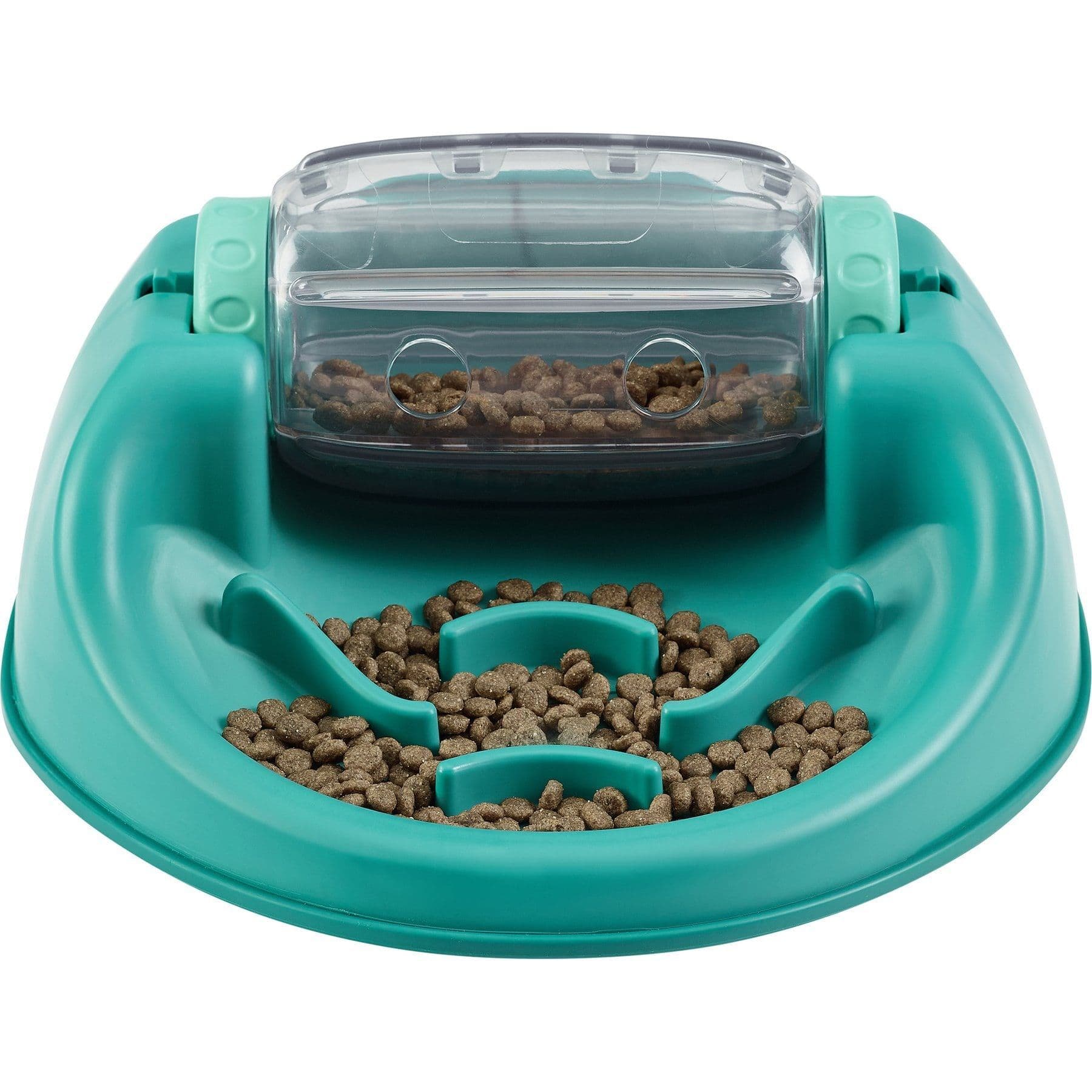
Use part of your dog’s normal food allowance in a supervised puzzle activity. Match the challenge to your dog.
Webvet may earn a commission when you click through to Chewy, at no extra cost to you.

| Houseplant | Also sold as | Toxic part | What the source lists |
|---|---|---|---|
| Golden pothos | Devil's ivy, taro vine | Leaves and stems | Insoluble calcium oxalates. Oral irritation, intense burning of mouth and lips, drooling, vomiting, difficulty swallowing |
| Heartleaf philodendron | Sweetheart plant | Leaves and stems | Insoluble calcium oxalates. Same oral burning, drooling, and difficulty swallowing |
| Monstera deliciosa | Swiss cheese plant, cutleaf philodendron | Leaves and stems | Insoluble calcium oxalates. Oral irritation, drooling, vomiting |
| Dieffenbachia | Dumb cane, tropic snow | Leaves and stems | Insoluble calcium oxalates plus a proteolytic enzyme. Intense oral burning and difficulty swallowing |
| Peace lily | Spathiphyllum, Mauna Loa peace lily | Leaves and spathe | Insoluble calcium oxalates. Oral burning, drooling, vomiting. Not a true lily |
| ZZ plant | Zanzibar gem, Zamioculcas | Leaves, stems, stalks | Insoluble calcium oxalate raphides per ASPCA houseplant guidance. Drooling, gagging, vomiting. Severity low |
| Snake plant | Mother-in-law's tongue, Sansevieria | Leaves | Saponins. Nausea, vomiting, diarrhea |
| Aloe vera | Medicine plant, true aloe | Latex under the leaf skin | Saponins and anthraquinones. Vomiting, lethargy, diarrhea. The inner gel is considered edible |
| Jade plant | Baby jade, dwarf rubber plant | Whole plant | Toxic principle listed as unknown. Vomiting, depression, incoordination |
| English ivy | Branching ivy, needlepoint ivy | Foliage more than berries | Triterpenoid saponins. Vomiting, abdominal pain, drooling, diarrhea |
| Cyclamen | Sowbread | Tuber worst | Terpenoid saponins. Salivation, vomiting, diarrhea. Large tuber ingestions can cause heart rhythm abnormalities and seizures |
| Kalanchoe | Mother of millions, devil's backbone | Whole plant | Bufadienolides. Vomiting, diarrhea, abnormal heart rhythm (rare) |
Snake plant and aloe work differently from the aroids. Both contain saponins, and the ASPCA lists nausea, vomiting, and diarrhea for snake plant and vomiting, lethargy, and diarrhea for aloe. The aloe entry adds that the gel itself is considered edible.
Jade plant is the honest gap in the literature. The ASPCA lists it as toxic to dogs and records the toxic principle as unknown, with vomiting, depression, and incoordination as the signs. A dog that ate jade still gets a call.

English ivy is the one where the part matters most. The ASPCA names triterpenoid saponins and states plainly that the foliage is more toxic than the berries, which is the reverse of what most owners assume about a berrying plant.
- Money tree (Pachira aquatica), majesty palm (Ravenea rivularis), ponytail palm (Beaucarnea recurvata), and Boston fern are listed as non-toxic to dogs by the ASPCA. Match the scientific name: a money tree is not a jade plant, and a majesty palm is not a sago palm. Non-toxic foliage can still upset a stomach when eaten. Money tree · Majesty palm · Ponytail palm · Boston fern
- Asparagus fern is toxic to dogs; berries can cause vomiting, diarrhea, and abdominal pain, while repeated skin contact can cause dermatitis. Foxtail fern is an asparagus-type plant, not a Boston fern: confirm the label before treating a plant sold as a fern as safe. ASPCA asparagus fern
- Elephant ear is a shared name: Caladium and Alocasia are toxic plants containing insoluble calcium oxalates. Chewing them can cause oral burning, drooling, vomiting, or trouble swallowing. Keep the plant inaccessible and seek advice after chewing; difficulty swallowing needs urgent care. Caladium · ASPCA dog plant list
- Dracaena marginata is toxic to dogs. Its ASPCA entry lists an unknown toxic principle and signs including vomiting, poor appetite, drooling, weakness, and incoordination. Pencil cactus (Euphorbia tirucalli) has irritant latex sap that can irritate the mouth and stomach and cause vomiting. Dracaena marginata · Pencil cactus
- Tradescantia fluminensis, often sold as wandering Jew or inch plant, can cause allergic contact dermatitis in dogs. Massey University describes canine skin reactions after contact; a rash is a reason to stop access and contact your veterinarian, not to assume every exposure requires swallowing. Massey University
- Shamrock plant (Oxalis species) is toxic to dogs. Its soluble calcium oxalates differ from the insoluble crystals in pothos: salivation and tremors are reported, and kidney failure is a rare possible outcome. Call after ingestion rather than treating it as harmless clover. ASPCA shamrock
Which houseplants to move first
Start with plants on the floor, low tables, or anywhere your dog can reach or knock a pot over. Check hanging baskets for reachable vines and fallen leaves too. Height alone does not guarantee separation; use a secure barrier or closed room when needed.
- Anything at nose height on the floor. Peace lilies, dieffenbachia, and large monstera pots are the usual offenders.
- Trailing stems within reach. A pothos on a high shelf still puts vine tips at chest height for a large dog.
- Fallen leaves. A shed philodendron leaf on the carpet is the exposure owners never actually see happen.
- Repotting day. Loose soil, cut stems, and root balls on the floor put more plant material within reach in one afternoon than a whole normal year.
- Flowering gift plants. Cyclamen and kalanchoe arrive at Christmas and Mother's Day and get put on a coffee table.
Toxic garden and yard plants for dogs

The outdoor plants toxic to dogs that matter most are sago palm, oleander, yew, foxglove, and castor bean, followed by azalea and rhododendron and the spring bulbs. Milkweed, hosta, boxwood, and hydrangea round out the list a dog is likely to meet in an ordinary garden.
Azalea and rhododendron are the same problem under two names. The ASPCA names grayanotoxin and lists vomiting, diarrhea, weakness, and cardiac failure, which is why a hedge of them along a fence line is worth fencing off rather than trusting a dog to ignore.
Oleander and yew are the two hedge plants that belong in tier three. Oleander carries cardiac glycosides, and the ASPCA's list of clinical signs ends with death. Yew carries taxine, and the ASPCA describes sudden death from acute cardiac failure, with muscle tremors, difficulty breathing, and seizures as early signs in dogs.

- Sago palm: every part, with the seed most concentrated. Cycasin, liver injury.
- Oleander: leaves, flowers, and stems. Cardiac glycosides.
- Yew: foliage and seeds. Taxine.
- Foxglove: the whole plant. Cardiac glycosides, arrhythmias, cardiac failure.
- Castor bean: the bean itself. Ricin.
- Azalea and rhododendron: leaves and flowers. Grayanotoxins.
- Milkweed: leaves and sap. Cardenolides in some species and neurotoxins in others, per the ASPCA.
- Hosta: leaves. Saponins, causing vomiting, diarrhea, and depression.
- Boxwood: foliage. Pet Poison Helpline states the foliage contains toxins and that ingestion causes gastrointestinal distress.
- Hydrangea: leaves, buds, and flowers. Cyanogenic glycoside, though the ASPCA notes cyanide intoxication is rare and the picture is usually gastrointestinal.
- Autumn crocus: the whole plant, corm worst. Colchicine.
- Daffodil: bulbs are the most poisonous part. Lycorine and other alkaloids.
- Tulip and hyacinth: bulbs. Tulipalin A and B in tulips, and possibly narcissus-like alkaloids in hyacinth.

Trees matter less than beds, with two exceptions. Oak drops acorns that a dog can swallow whole, which is both a tannin problem and an obstruction problem, and the questions further down cover it. Yew is the other, and it is usually planted deliberately.
Vegetable beds have their own section below, because there the toxic part is usually the foliage rather than the food, and the rule that keeps a dog safe is different.
- Trumpet vine (Campsis radicans) and coral honeysuckle are different plants. University of Florida describes trumpet vine as toxic if ingested and capable of contact dermatitis, but does not give a dog-specific severity or safe amount. Keep it away from a chewing dog and call with the plant’s identity after exposure. University of Florida
- Dogwood berries need an exact identification. UC Davis veterinary guidance includes the common name dogwood on a safe-plant list, but that is not a species-specific clearance for every berry or fruit. Kousa dogwood (Cornus kousa) fruit being edible to people does not establish a safe amount for dogs. Keep fallen fruit out of reach and ask your veterinarian after ingestion if the identity or amount is uncertain. UC Davis veterinary guidance · Cornus kousa identity
- Holly leaves and berries can cause vomiting, diarrhea, and depression; the ASPCA describes Ilex opaca as low toxicity. Sky Pencil holly is Ilex crenata, so that entry is not a cultivar-specific verdict. NC State flags poison characteristics for Ilex crenata, without a canine dose. Identify the shrub and call after a dog eats berries rather than extrapolating a safe count. ASPCA holly · Ilex crenata
- Laurel is another ambiguous label. Bay laurel (Laurus nobilis) is toxic to dogs and can cause vomiting or diarrhea; whole leaves also pose an obstruction risk. A laurel berry cannot be assessed safely from that common name alone: photograph the leaves, fruit, and label and contact your veterinarian after ingestion. ASPCA bay laurel
- Weeds are unwanted plants, not one toxicity group. The ASPCA dog list includes toxic weeds such as black nightshade and castor bean; identify the actual species rather than assuming a common lawn weed is harmless. Symptoms after a dog eats acorns can include vomiting, diarrhea, abdominal discomfort, poor appetite, or straining. Poisoning from tannins and a swallowed acorn’s obstruction risk are separate concerns. ASPCA dog plant list
- If “weed” means cannabis, both ingestion and marijuana smoke can poison a dog. Symptoms of THC poisoning can include wobbliness, marked sleepiness or agitation, vomiting, and other neurologic signs; collapse, seizures, or breathing difficulty are emergencies. Call promptly and describe the product and route of exposure honestly. Pet Poison Helpline
Toxic flowers and cut bouquets

The flowers toxic to dogs that turn up most often in a supermarket bouquet are tulips, daffodils, hyacinths, chrysanthemums, and lily of the valley. Calla lilies and peace lilies appear too, and despite the names neither one is a true lily.
Bulb flowers concentrate their toxin underground, which matters more than it sounds. The ASPCA states that tulips hold the highest concentration of tulipalin A and B in the bulb, and that daffodil bulbs are the most poisonous part of the plant.
- Tulip: tulipalin A and B, highest in the bulb. Vomiting, drooling, diarrhea, depression.
- Daffodil: lycorine and other alkaloids, bulbs worst. Large ingestions can cause convulsions, low blood pressure, tremors, and cardiac arrhythmias.
- Hyacinth: possibly narcissus-like alkaloids. Intense vomiting and diarrhea, occasionally with blood, plus depression and tremors.
- Amaryllis: lycorine and others. Vomiting, diarrhea, abdominal pain, drooling, tremors.
- Lily of the valley: cardenolides. Irregular heartbeat, low blood pressure, disorientation, seizures. Tier three.
- Chrysanthemum: sesquiterpene lactones and pyrethrins. Vomiting, diarrhea, drooling, incoordination, dermatitis.
- Carnation (Dianthus caryophyllus): listed as toxic to dogs, with mild gastrointestinal signs and skin irritation. Call your veterinarian or poison control for advice after ingestion.
- Hydrangea: cyanogenic glycoside. Usually vomiting, diarrhea, and depression.

- Calla lily and peace lily: insoluble calcium oxalates. Immediate mouth burning and difficulty swallowing.
- Cyclamen: terpenoid saponins, worst in the tuber.
- Geranium: geraniol and linalool. Vomiting, loss of appetite, depression, dermatitis.
- Begonia: soluble calcium oxalates, with the most toxic part underground.
- Foxglove: cardiac glycosides. Tier three, whether garden-grown or cut.
- African violet, red hot poker (Kniphofia, also called torch lily), and star jasmine (Trachelospermum jasminoides) are listed as non-toxic to dogs by the ASPCA. These names do not clear other plants called violet, lily, or jasmine. Keep even non-toxic flowers from becoming a chew toy. ASPCA dog list · Torch lily · Star jasmine
- Morning glory (Ipomoea species) is poisonous to dogs: the ASPCA lists vomiting and notes that a large seed ingestion can cause hallucinations. Lantana (Lantana camara) can cause vomiting, diarrhea, weakness, or labored breathing. Wisteria poisoning can cause vomiting, sometimes with blood, diarrhea, and depression. Call after an ingestion and report whether seeds, pods, flowers, or foliage were involved. Morning glory · Lantana · Wisteria
- Coral honeysuckle (Lonicera sempervirens), also called trumpet honeysuckle, is not trumpet vine. Penn State warns that its berries are toxic to humans; that does not establish a dog-specific severity or safe amount. Keep berries away from dogs and seek veterinary advice after ingestion with a photo or plant tag. Penn State · NC State identification
- California poppy (Eschscholzia californica) is distinct from an opium poppy. A dog-specific safety verdict for California poppy is not established by the sources linked here, so do not transfer another poppy’s classification to it. Prevent chewing and ask your veterinarian after a suspected exposure. California Department of Fish and Wildlife
True lilies run the other way, and this is the one place where a dog is the lucky species. The ASPCA lists Easter lilies, tiger lilies, and daylilies as toxic to cats and states that cats are the only species known to be affected.

A rubber toy for supervised play and chewing. Choose the right size and strength for your dog and inspect it regularly.
Webvet may earn a commission when you click through to Chewy, at no extra cost to you.
For a dog-friendly bouquet, ASPCA guidance names roses, gerbera daisies, sunflowers, orchids, lisianthus (Eustoma grandiflora), and statice (Limonium). Roses still have thorns that can injure a mouth or paw. Non-toxic flowers can still cause stomach upset, and swallowed stems can cause a blockage, so keep the finished arrangement out of reach.
For roses, botanical identity matters more than color or bouquet style. The ASPCA lists Rosa species as non-toxic to both dogs and cats. That verdict applies to a correctly identified Rosa rose sold as miniature, spray, pink, or red; it does not clear unrelated plants that happen to have rose in their common name. Thorns, swallowed stems, and the other flowers in a mixed bouquet still need attention.
Herbs and kitchen-garden plants

The kitchen garden flips the usual rule. The food is often fine and the plant is not. The ASPCA lists the tomato plant as toxic to dogs because of solanine in the green parts, and states plainly that the ripe fruit is non-toxic.
Rhubarb works the same way. The stalk is the food, and the leaves carry soluble calcium oxalates, which the ASPCA links to kidney failure, tremors, and salivation. Soluble oxalates are absorbed, unlike the insoluble crystals in a pothos leaf, and that is why the outcome differs.
Lavender is listed as toxic to dogs by the ASPCA; ingestion can cause nausea, vomiting, and loss of appetite. Brushing past a plant is a different exposure from eating it. Report any signs or uncertain ingestion to your veterinarian.
- Basil, thyme, and rosemary are all listed non-toxic to dogs by the ASPCA, which makes them the safest herbs to grow at dog height.
- Common sage (Salvia officinalis) and Russian sage, listed by the ASPCA as Perovskia atriplicifolia and now also called Salvia yangii, are non-toxic pet choices. Their names do not make every plant sold as sage safe: lantana is also called red or yellow sage. Common sage · ASPCA Russian sage · Russian sage identity
- Lemon grass or lemongrass (Cymbopogon citratus) is listed as toxic to dogs and can cause stomach upset. Mint (Mentha species, including peppermint) is also on the ASPCA toxic list. Do not use either as a plant for a dog to graze on. Lemon grass · Mint
- Citronella plant is a sales name, not enough identification for a poison verdict. Check the botanical label rather than transferring a geranium or lemongrass entry to an unidentified plant. Citronella candles and oils are separate products; the ASPCA warns that they can harm pets. Keep plant and product packaging for an exposure call. ASPCA citronella product warning
- For sugar snap pea plants or green bell pepper plants, an edible vegetable is not proof that every leaf, stem, seed, or garden treatment is safe for dogs. The sources here do not establish a whole-plant canine safety verdict for those two crops. Fence off the vegetable bed, identify the part eaten, and ask your veterinarian if your dog has chewed the plant.
- Tomato foliage, stems, and unripe fruit carry solanine. A ripe tomato does not.
- Rhubarb leaves carry soluble calcium oxalates and are the part to keep off the ground during harvest.
- Lavender belongs in a raised bed rather than a border a dog walks and grazes through.
- Onion, garlic, and chive plants are a food-toxicity subject rather than a plant-toxicity one, and are covered separately.
Two subjects sit deliberately outside this guide. Food toxicity is the first: grapes, raisins, onion, garlic, chocolate, cinnamon, and xylitol are household hazards rather than plant exposures, and they belong with the other things a dog finds indoors.
Wild mushrooms are the second. Identification is a job for a mycologist and a veterinary toxicologist rather than a plant guide, and a dog that ate an unidentified wild mushroom needs a call regardless of what it looked like.
Poison ivy, poison oak, and dogs

Poison ivy affects dogs far less than it affects you, and that is genuinely the useful half of the answer. Pet Poison Helpline describes poison ivy, oak, and sumac as generally only mildly toxic despite their names.
The oil responsible is urushiol. A dog's coat physically blocks it from reaching most of the skin, so a reaction, when it happens, is more likely on the thinly haired areas: the belly, the groin, and the muzzle.
The real problem is transfer. Urushiol sits on the coat and moves to whoever strokes the dog. That is how a person who never went anywhere near the plant ends up with a rash the day after a walk in the woods.
- Bathe the dog. Pet Poison Helpline states that a bath is indicated if a pet has knowingly been in and around these plants.
- Wear gloves and cover your arms while you do it, because the oil transfers to human skin during the bath itself.
- Wash the collar, harness, leash, and bedding, since urushiol survives on fabric long after the walk.
- Watch the belly, groin, and muzzle for redness or itching, and call your vet if the skin reacts.
- Call your vet if the dog ate the plant, since Pet Poison Helpline notes that ingestion can cause gastrointestinal upset.
Poison ivy is a contact problem first and an ingestion problem second, which is the reverse of every other plant in this guide.
How to identify a toxic plant in your home

If you are holding a chewed leaf and have no idea what it came from, work through three things in order: the leaf, the sap, and where the plant was growing.

A collapsible bowl is a practical option for carrying water on walks and garden outings.
Webvet may earn a commission when you click through to Chewy, at no extra cost to you.
Use pictures of poisonous house plants and yard weeds as identification clues, not a diagnosis. Photograph the whole plant, leaf shape, stem, flowers or berries, and nursery label. Match the scientific name with the ASPCA database; if the picture is inconclusive, send it to your veterinarian or local extension service.
Leaf shape narrows it fast. The aroids, the largest group of toxic houseplants, tend to have glossy heart-shaped or deeply lobed leaves on stalks rising straight out of the soil rather than off a woody stem.
- 1Work from three things: the leaf shape, whether the sap caused immediate mouth pain, and where the plant was growing.
- 2Photograph the plant where it stands and bag a cutting or the pot tag before you leave for the clinic.
- 3For anything not named here, search the ASPCA toxic and non-toxic plant database by common name first, then by the scientific name on the tag.
Drooling and pawing at the mouth can follow contact with an insoluble calcium oxalate plant, but those signs do not identify the plant or exclude another cause. Photograph the plant and describe the signs to your veterinarian instead of diagnosing from symptoms alone.
Where the plant was growing is the third. A bulb dug out of a bed in spring, a shrub along a fence, a potted palm on a patio, and a stem pulled out of a vase are four different risk profiles before you have named anything.
For anything this guide does not name, the ASPCA toxic and non-toxic plant database is the lookup to use. It searches by common name and by scientific name, and each entry gives the toxic principle and the clinical signs.
- Search by common name first, then by the scientific name on the nursery tag if the common name returns nothing.
- Check the plant tag, the pot, and the receipt. Nursery tags carry the scientific name that separates lookalikes.
- If the plant came in a bouquet, keep the florist's card, since mixed bouquets often list their stems.
- If you cannot identify it at all, say so on the phone. Poison control can work from a photograph and a description.
A clear photograph, label, and sample can help the veterinarian identify the exposure and choose the next step. If identification remains uncertain, say so; do not delay an urgent call while trying to name the plant.
Symptoms of plant poisoning in dogs

The symptoms of plant poisoning in dogs arrive on a rough schedule, and the schedule tells you nearly as much as the symptoms do. Mouth signs appear almost immediately. Stomach signs follow within hours. Organ signs can take a day or more.
That last window is the one that catches owners out. A dog who vomited once yesterday and seems bright today has not necessarily cleared it, because liver and kidney injury from a tier three plant can declare itself late.
| When | What you may see | What it usually points to |
|---|---|---|
| Within minutes | Pawing at the mouth, head shaking, heavy drooling, yelping when swallowing, refusing food, swollen lips or tongue | Direct contact irritation, typically an insoluble calcium oxalate plant |
| Within a few hours | Vomiting, diarrhea, loss of appetite, lethargy, abdominal pain, wobbliness, tremors, a racing or unusually slow heartbeat | The toxin has been absorbed. Tier two and tier three plants both present in this window |
| A day or more later | Yellow gums or eyes, bruising, black tarry stool, increased thirst and urination, ongoing vomiting, weakness that is getting worse | Possible liver or kidney involvement. Call even if the dog appeared to recover |
None of those windows is a guarantee. Onset depends on the plant, the part eaten, the amount, and the dog, and published veterinary sources describe these as ranges rather than fixed times. A delayed sign is not a mild sign.
Vomiting and diarrhea are by far the most common presentation, and they are also the least specific thing a dog can do. Our guide to vomiting and diarrhea in dogs carries the full triage for owners who are not certain a plant was involved at all.
- Repeated vomiting, especially with blood.
- Weakness, collapse, or a dog that cannot stand normally.
- Tremors or a seizure.
- A heartbeat that is racing, irregular, or unusually slow.
- Difficulty breathing.
- Yellow gums, yellow whites of the eyes, or unexplained bruising.
- Any suspected contact with sago palm, oleander, yew, foxglove, lily of the valley, autumn crocus, or castor bean, whether or not the dog looks unwell.
Skin signs deserve a separate mention. Chrysanthemum and geranium both list dermatitis among their clinical signs, and sap from several plants irritates skin and eyes on contact without any of it being swallowed.
What to do if your dog ate a toxic plant

If your dog ate a toxic plant, call a veterinarian or a poison control line before you do anything else. That call is the entire first step, and it is what decides whether the rest of the evening is a wait at home or a drive to a clinic.
Do not induce vomiting. Not with hydrogen peroxide, not with salt, not with anything you read on a forum. Some plant material causes more injury coming back up than it did going down, and that decision belongs to the person on the phone.
- Take the plant away from the dog and move the dog into a different room. Leave the mess where it is for now.
- Call. The ASPCA Animal Poison Control Center is on (888) 426-4435 and the Pet Poison Helpline is on (855) 764-7661. Both run 24 hours a day, every day of the year, and both charge a consultation fee.
- Photograph the plant where it stands, and bag a cutting or the pot tag to take with you.
- Work out what was eaten and which part, and say so if you are not sure. A bulb, a seed, and a leaf are three different conversations.
- Have your dog's weight, age, and any medications ready, along with anything you have already seen happen.
- If the dog vomits on its own, keep what came up. It often identifies the plant faster than anything else.
- Follow the instruction you are given, and go in if you are told to go in.
Do not wait for symptoms with a tier three plant. Signs of liver, kidney, or heart injury show up after the damage has already started, so an early call with nothing to report is worth far more than a late call with several things to report.
Bring whatever you can carry. The chewed stem, the seed, the pot tag, the florist's card, and a photograph of the plant in place all shorten the guesswork once you arrive.
After the call
An unplanned emergency visit is also an unplanned bill, and it helps to know roughly what to expect before you are standing at the desk. Our guide to emergency vet costs sets out the typical ranges and what drives them.
This guide stops at the first-aid decision on purpose. What happens after you arrive, including decontamination and any hospital care, is a veterinary decision that depends entirely on the plant, the amount, and the dog in front of them.
Dog-safe plants to swap in
For a large indoor dog-safe plant, consider an areca or parlor palm with its botanical name confirmed against the ASPCA entry. For dog-safe garden flowers, the rose, sunflower, snapdragon and zinnia options below can replace toxic blooms. An air-purifying label is not a toxicity verdict: check the exact plant for dogs, and choose the size and growing conditions separately.

Dogs do not reliably avoid toxic plants. Puppies chew to explore, bored dogs chew for something to do, and plenty of adult dogs graze on foliage for no reason anyone has ever established. Assuming a dog will leave a plant alone is not a plan.
Which leaves three real options: get rid of the plant, put it genuinely out of reach, or swap it for something on the non-toxic list that fills exactly the same spot.
| The plant you have | The dog-safe swap | Why the swap works |
|---|---|---|
| Golden pothos or heartleaf philodendron on a shelf | Swedish ivy | Same trailing habit and the same light, and the ASPCA lists it non-toxic to dogs |
| Peace lily in a low-light corner | Boston fern | Handles the same shade and is listed non-toxic to dogs and cats |
| ZZ plant or monstera as the floor statement plant | Areca palm | Upright, tall, tolerant of indoor light, and listed non-toxic to dogs |
| Aloe or jade on a sunny sill | Spider plant | Takes the same bright light and is listed non-toxic to dogs and cats |
| Cyclamen or kalanchoe as the flowering accent | African violet | Flowers indoors on a table and is listed non-toxic to dogs |
| Dieffenbachia on a side table | Prayer plant | Patterned foliage at the same size, listed non-toxic to dogs, cats, and horses |
| Azalea or rhododendron along the fence | Camellia | Evergreen shrub with a similar flowering season, listed non-toxic to dogs |
| A bulb bed the dog walks through | Roses, sunflowers, and petunias | All three are on the ASPCA non-toxic list for dogs and none of them stores toxin in a bulb |
| Lavender in a border | Rosemary, basil, or thyme | All listed non-toxic to dogs, and all of them earn their space in the kitchen |
Non-toxic on the ASPCA list means no known systemic poisoning. It does not mean harmless. The ASPCA's own note is that the consumption of any plant material may cause vomiting and gastrointestinal upset, and a swallowed stem can still cause a blockage. The ASPCA lists spider plants as non-toxic to cats as well as dogs, making that swap useful in a mixed household.
Keep plants where your dog cannot reach the foliage, fallen leaves, soil, or drainage water. A high shelf alone may not work for a dog that jumps or knocks pots over; use a secure barrier or closed room when needed.
- Move every plant off the floor and off low tables, then check what a stem can reach once it has grown another foot.
- Sweep fallen leaves the same day, especially after repotting or pruning.
- Give a dog that seeks out plant matter an appropriately sized KONG Classic Dog Toy for supervised chewing, because a plant chewer with no alternative goes back to the plant.
- If you try a taste deterrent, follow its label and use it only on the household surfaces it permits. Do not apply it to living stems or leaves unless that use is expressly listed. A deterrent never makes a toxic plant safe; barriers and removal remain the controls.
- Fence off planted beds during bulb season rather than relying on supervision.
Outdoors the same logic applies at a larger scale, and the planting choices matter more than the fencing does. Our guide to building a dog-friendly yard covers ground cover, borders, and a layout that survives an actual dog.
Start with the plants your dog can reach today rather than trying to rehome a whole collection at once. One shelf raised and one shrub fenced usually removes more risk than a weekend of rearranging everything.
Plants toxic to cats: a different risk profile
Cats face a plant risk that dogs do not. True lilies in the genus Lilium, and daylilies in the genus Hemerocallis, cause acute kidney injury in cats, and the ASPCA states that cats are the only species known to be affected.
That is why a bouquet containing lilies is an emergency in a cat household and a much smaller problem in a dog one. It also means advice written for cats does not transfer to dogs, and advice written for dogs badly under-rates the danger to a cat.
- Pothos, philodendron, dieffenbachia, and peace lily are toxic to cats and dogs alike.
- Sago palm, oleander, and yew are dangerous to any animal that eats them.
- True lilies and daylilies are the split: a genuine emergency for a cat, and usually an upset stomach for a dog.
If you live with both species, treat the lily rule as absolute and keep those bouquets out of the house entirely. Our companion guide covers the full cat plant list, and our guide to poison-proofing your home covers the whole-house sweep for a mixed household.
- For a mixed household, identify the exact plant before applying a dog verdict to a cat. Snake plants can cause gastrointestinal signs in cats, while spider plants are listed as non-toxic to both species. For a cat licking or chewing a snake plant, use the exposure guidance in our snake-plant guide; the flower guide distinguishes unsafe cut flowers from safer choices and explains the limits of a waxflower label. Snake plants and cats · Flowers and cats
For replacement plants, use the cat-safe plant and flower guide and check the chosen species for dogs as well. Its indoor, outdoor, and bouquet lists address choosing a plant, while the cat toxicity guide explains an exposure.
Household poisons that are not plants
A home safety check should also include rodenticide, antifreeze, and human medication. Put these hazards beyond your dog’s reach along with toxic plants.
Those hazards need a different sweep: locked cabinets, garage floors, handbags left on chairs, and the tablet dropped on a Tuesday morning. Our guide to how to dog-proof your home works through that inventory room by room.
- Rat and mouse bait, including bait stations a determined dog can open.
- Antifreeze and windshield washer fluid, which taste sweet and are dangerous in small amounts.
- Human medication, prescription and over the counter alike.
- Cleaning products, mothballs, and garden chemicals.
- Food toxicity, including grapes, raisins, onion, garlic, chocolate, and xylitol.
A plant guide cannot identify or treat every household poison. If a dog has encountered a chemical, medicine, bait, or unknown substance, give the product name and packaging to your veterinarian or poison control service immediately.
Dog owner questions about toxic plants
Frequently Asked Questions
Are poinsettias poisonous to dogs?
Poinsettia is listed as toxic to dogs by the ASPCA, and its reputation is considerably worse than the published risk. The ASPCA names an irritant sap and describes the plant as irritating to the mouth and stomach, sometimes causing vomiting, but generally over-rated in toxicity.
That is not permission to ignore it. A dog that chewed a poinsettia can drool, vomit, and go off its food, and the sap can irritate skin and eyes on contact. Call your veterinarian or a poison control line, say it was poinsettia, and follow the advice given for your dog.
For Christmas plants, identify the exact species: poinsettia usually causes irritation, while other holiday plants can pose different risks. Severe or persistent signs still need prompt veterinary attention.
Are acorns poisonous to dogs?
Acorns are a problem for dogs, and for two separate reasons. They carry tannins that irritate the digestive tract and can cause vomiting, diarrhea, and abdominal pain, and the Merck Veterinary Manual identifies gallotannins and related compounds as the toxic principle in oak.
The second reason is mechanical. A swallowed acorn can obstruct the gut, and a dog that vacuums up a pile of them under an oak tree can end up needing surgery rather than treatment for a toxin. Green acorns and fresh oak leaves are the worst of it.
Sweep up fallen acorns, prevent access under oak trees, and call your veterinarian after suspected ingestion. Report the amount and any straining, repeated vomiting, or loss of appetite; a single-acorn estimate is not an automatic clearance.
Are plants toxic to dogs only if they eat them?
Eating a plant is one route of exposure, but plants are not harmful only if a dog eats them. Sap can irritate the skin or eyes, and oils on the coat can transfer to people. Prevent chewing and contact with irritant sap.
A smaller group irritates skin and eyes on contact alone. Chrysanthemum and geranium both list dermatitis among their clinical signs, and sap from several plants stings on contact. Poison ivy is the clearest case of all: the urushiol oil sits on a dog's coat, does very little to the dog, and transfers to whoever strokes it.
If you find sap on a coat or on paws, wash it off wearing gloves and watch the thinly haired skin on the belly and muzzle for a reaction over the next day.
Are spider plants safe for dogs?
Yes. The ASPCA lists the spider plant as non-toxic to dogs and non-toxic to cats, which makes it one of the safer houseplants to keep at dog height and a sensible swap for a pothos or a philodendron.
Owners still report dogs vomiting after chewing one, and both things are true at the same time. Non-toxic means no known systemic poisoning, not that a stomach full of plant fiber agrees with a dog. The ASPCA's own guidance is that the consumption of any plant material may cause vomiting and gastrointestinal upset.
Do not diagnose vomiting as harmless plant matter on appearance alone. Contact your veterinarian if vomiting repeats or persists, your dog is lethargic or will not eat, or you are unsure which plant or treatment was involved.

Editor
The Webvet Editorial Team is the in-house group of pet-care editors and writers behind Webvet, operated by Smart Pet Collective. The team researches, writes, and maintains Webvet's pet health, behavior, and medication content. Every article follows a defined editorial process: research from reputable veterinary and scientific sources, careful drafting, mandatory review of medical content by a credentialed veterinarian, and dated publication. Health and medication articles are medically reviewed by a licensed veterinary professional before they go live and are kept current over time.
Veterinarian · BVMS MRCVS
Dr. Pippa Elliott, BVMS, MRCVS, is a veterinarian with nearly 30 years of experience in companion animal practice. Dr. Elliott earned her Bachelor of Veterinary Medicine and Surgery from the University of Glasgow. She was also designated a Member of the Royal College of Veterinary Surgeons. Married with 2 grown-up kids, Dr. Elliott has a naughty Puggle named Poggle, 3 cats and a bearded dragon.
Related reading

Is Pothos Toxic to Cats? Yes, and So Is Philodendron

Is Monstera Toxic to Cats? Symptoms and What to Do

Is Aloe Vera Toxic to Cats and Dogs? What to Do Now
