Antlers for Dogs: Are They Safe? What Vets Want You to Know
Antlers are natural and long lasting, but vets see broken teeth from them because they are harder than tooth enamel can safely take. What the risk really is, how to pick the least risky antler if you use one, and safer chews for every dog.

BVMS MRCVS
Medically reviewed by Dr. Pippa Elliott, BVMS MRCVS · Last reviewed

This article contains affiliate links. Webvet may earn a commission when you buy through them, at no extra cost to you.
Antlers for dogs: are they safe? The vet answer on broken teeth
Antlers for dogs are natural and long lasting, but they are harder than many dogs' teeth can safely take. VCA Animal Hospitals, Cornell's Riney Canine Health Center, and the American Veterinary Dental College all name antlers among the chews that break dogs' teeth, and Cornell's advice is simply to avoid them.
So are antlers safe for dogs? The short vet answer is no, they are not a safe default. The injury vets worry about most is slab fractures of the big upper chewing tooth, where a sheet of tooth shears off the side. Any chew you give should pass the fingernail test, and puppies, dogs that chew hard, and older dogs are better served by softer chews.
- 1Antlers last a long time because they are so hard, which is exactly why antlers can break teeth, most often the large upper chewing tooth.
- 2Use the fingernail hardness test: if your fingernail cannot leave a dent in a chew, it is too hard for your dog's teeth.
- 3No veterinary source names a safe antler; deer, elk, moose, whole, and split antlers all carry the same tooth risk.
- 4If you still give an antler, supervise every session, size it bigger than the mouth, and take it away once it could be swallowed.
- 5Broken teeth often show no obvious signs, so have your vet check any chip or crack.
Antlers as dog chews became popular because they are natural and outlast almost anything else in the toy basket. That durability is the problem. A chew that a strong dog cannot wear down is a chew that can win the fight against a tooth.
Here is how the main safety questions line up:
- Are elk antlers safe for dogs? Not as a routine chew. Elk antler sits on the same avoid lists as deer antler.
- Are deer antlers ok for dogs to chew on? The same answer applies. VCA tells owners to eliminate antlers along with bones, hooves, and nylon chews.
- Can dogs digest deer antler? Dogs eating antlers swallow hard chips, and swallowed pieces of hard chews can lodge in the esophagus or intestine rather than pass like food.
- Are antler bones good for dogs at all? They give some dogs a long chewing session, but no antler holds the dental seal that marks a chew as proven to help teeth.
- Does a well-reviewed antler make a difference? Star ratings reflect how long an antler lasts, not whether it is safe for teeth, and no veterinary source recommends any antler, however well reviewed.
- Are water buffalo antlers for dogs any different? Water buffalo grow horns rather than antlers, so these chews are horn. Horns sit in the same minimally processed chew group as antlers, and a horn that will not dent under a fingernail carries the same tooth risk.

The fingernail test is the quick check veterinary dentists give owners. Cornell explains that you should be able to make a dent in a chew with your fingernail. VCA puts it another way: throw out chews or toys that do not readily bend. A deer antler passes neither check.
That does not mean a dog has to give up chewing. Cornell names rubber toys from Kong as good options, and a natural rubber toy such as the Large KONG Classic Dog Toy gives under a fingernail while still standing up to strong jaws. It is listed at $13.96 on Chewy when checked in November 2026.
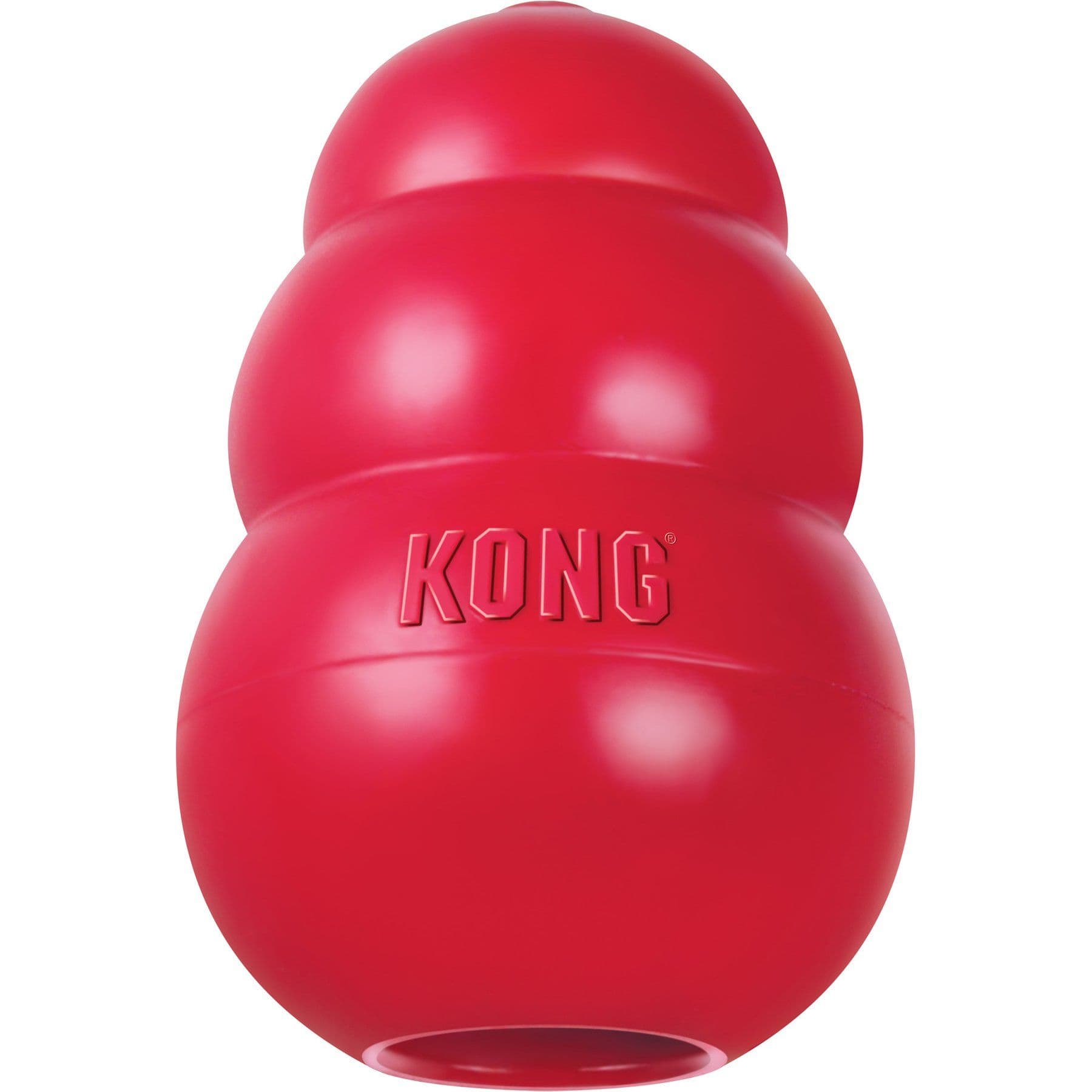
A natural rubber chew toy that dents under a fingernail, sized for larger dogs that chew hard.
Webvet may earn a commission when you click through to Chewy, at no extra cost to you.
Dog chew toys and antlers often get lumped together, but the material is what matters. If you can dent it, bend it, or squash it, the toy is far less likely to crack a tooth than an antler that never yields. For a wider look at what passes, see the WebVet guide to safe dog chew toys.
Types of antler chews: deer, elk, moose, shed, whole, and split
Most antler chews sold for dogs come from deer, elk, or moose. All three species grow a new set every year and drop the old one. The National Park Service notes that bull elk antlers begin growing in spring and usually drop in March or April of the following year.
Moose follow a similar cycle. The National Park Service says bull moose usually shed their antlers at the beginning of winter and start growing new ones in April or May. That yearly shed is where naturally shed antlers come from.
Antler chews are sold under a handful of labels:
- Deer antlers: pieces cut from a deer's antler, often labeled real or natural.
- Elk antlers: pieces of elk antler, sold whole or split.
- Moose antlers: usually sold cut into pieces, under seller names such as Maine moose antlers or Acadia moose antlers.
- Naturally shed antlers: elk, deer, or moose antlers collected after the animal drops them, rather than taken from a harvested animal.
- Whole antlers: a length of antler left intact, with the hard outer layer all the way round.
- Split antlers: a length of antler sawn lengthwise so the inner core is exposed.
Words like "real", "natural", and "shed" describe where an antler came from. None of them tells you how hard it is, and none appears in any veterinary guidance as a sign of a safer chew.
Sellers sometimes describe antlers as mineral rich or say they clean teeth, but no antler product appears on the Veterinary Oral Health Council (VOHC) list of accepted dental products. That list is where chews with dental evidence show up.
If cleaner teeth are the goal, the Greenies Dental Regular Dog Treats are part of the Canine Greenies range that holds the VOHC Seal of Acceptance for plaque and tartar. They are listed at $17.96 on Chewy for a 12-count pack when checked in November 2026.
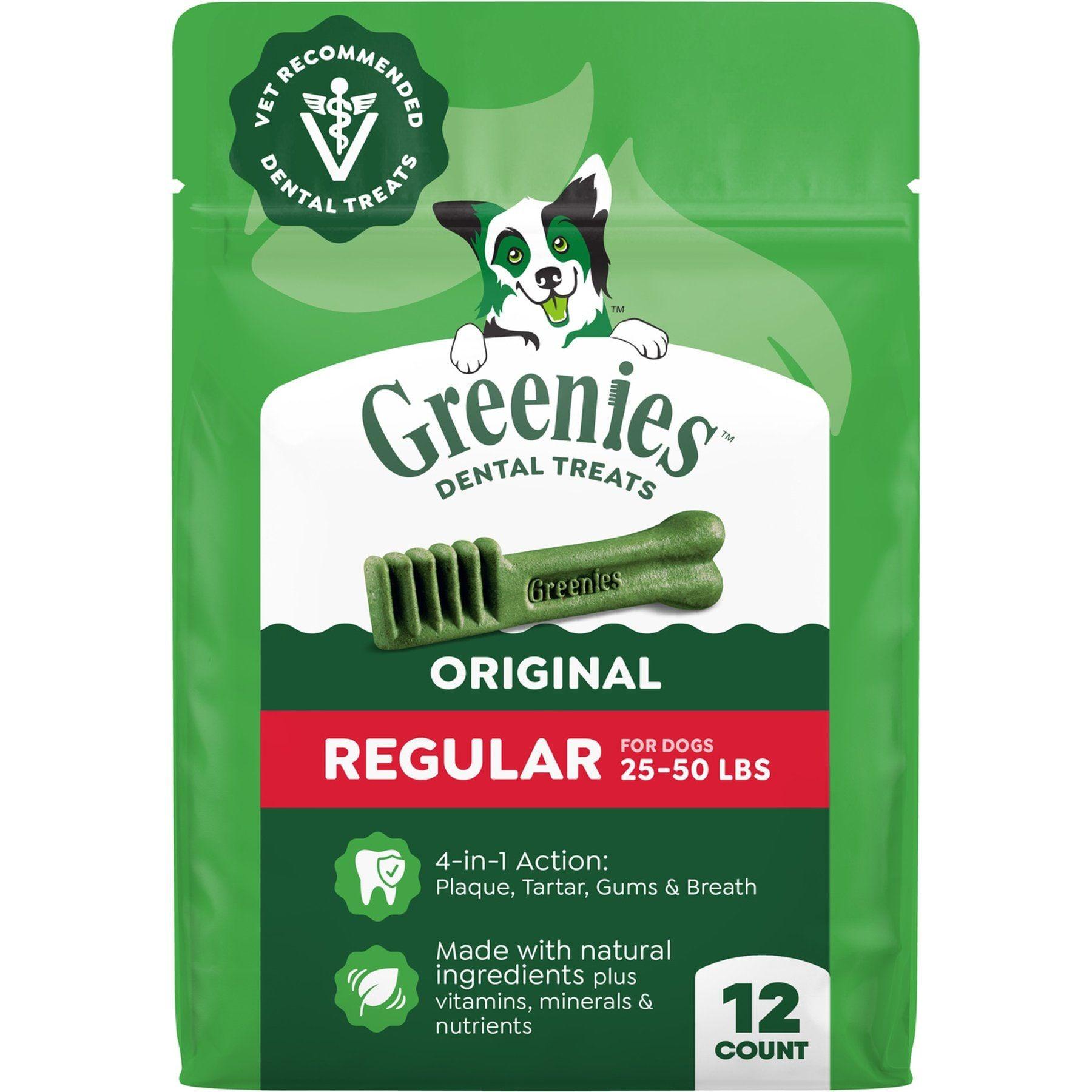
An edible dental chew from a range that carries the VOHC seal for plaque and tartar, for mid-size dogs.
Webvet may earn a commission when you click through to Chewy, at no extra cost to you.
What are some naturally shed antlers for dogs?
Naturally shed antlers for dogs are mostly elk, deer, and moose antlers that the animals dropped on their own during their yearly cycle and that were collected afterward. Elk drop theirs in late winter or early spring, and moose shed at the start of winter. Shed antlers are still antler, so the tooth risk is the same.
Can dogs eat antlers? Dogs chew them rather than eat them, and anything that breaks off gets swallowed. The same goes for the inside of antlers. A dog that works on a split antler eats antler marrow, shavings, and dust as it goes, and larger chips can follow.
Antlers belong to the group of chews that a peer-reviewed review in Today's Veterinary Practice calls minimally processed animal-derived chews. These are not regulated as food, so labels do not have to carry a calorie statement or a guaranteed analysis. Because they are not heated or sterilized, they can also carry bacteria or mold.

Is elk antler marrow good for dogs, then? There is no veterinary evidence that it adds anything a complete and balanced dog food does not already supply, and with no guaranteed analysis on the label, there is no way to know what a given piece contains.
Moose antler chews raise the same question. Are moose antlers safe for dogs? Moose antler is still antler, and no veterinary source treats it as softer. The VCA and Cornell advice to avoid antlers makes no exception for species.
Why vets worry about antlers: slab fractures, worn teeth, and swallowed pieces
Vets worry about antlers because they break teeth, wear teeth down, and leave hard pieces that dogs swallow. The pros and cons are lopsided, and for most dogs the cost lands on the teeth.
- Pros: antlers are natural, last a long time, and give a dog something to do.
- Cons: broken teeth, worn teeth, swallowed pieces, and possible bacterial contamination.
Tooth fractures are common in dogs. The peer-reviewed review in Today's Veterinary Practice reports a prevalence of up to 26% in veterinary practice and links them to chewing hard objects such as bones or hard chews. The Merck Veterinary Manual names real bones, hooves, antlers, and hard nylon toys among the objects behind fractured teeth.
The tooth that usually breaks is the carnassial tooth. A Frontiers in Veterinary Science study identifies the upper fourth premolar and lower first molar as the carnassial teeth, and the University of Illinois College of Veterinary Medicine describes them as the largest teeth in a pet's mouth. Here is how a slab fracture happens:
- The dog bears down on a hard chew with the big upper carnassial tooth.
- The chew does not give, so the force goes into the tooth instead.
- A sheet of tooth shears off the outer side. The Merck Veterinary Manual notes this injury can be called a "slab" fracture.
- When the break exposes the pulp, Merck notes the pulp will become nonvital without immediate treatment.
The Frontiers study measured how much force those upper carnassial teeth took before breaking, and the average was 1,281 N. The authors concluded that a similarly rigid chew that does not yield below that force should be considered a fracture risk. They also found these fractures often expose the pulp, which is the painful kind.
Antlers are bad for dogs' teeth in a second, slower way too. The review in Today's Veterinary Practice notes that the World Small Animal Veterinary Association and the British Veterinary Dental Association both flag dental abrasion and attrition, meaning worn teeth, from chewing very hard treats or animal-derived chews. So yes, antlers can wear down a dog's teeth over time.
Even a small chip matters. According to VCA, when the tooth enamel chips and exposes the dentin underneath, the tooth becomes sensitive to heat, cold, and pressure. A deeper break can need a root canal or an extraction. For the bigger picture on keeping teeth healthy, see the WebVet guide to dog dental health.
Do vets recommend deer antlers for dogs?
No. The veterinary sources that address antlers advise against them. VCA tells owners to eliminate antlers, Cornell says to avoid them, the University of Illinois calls soft rubber toys much safer than antlers, and the American Veterinary Dental College lists antlers among common causes of fractured teeth. Elk antlers get the same advice.
Swallowed pieces are the other worry. Cornell warns that antlers, hooves, and bones may splinter and cause stomach problems, and the Today's Veterinary Practice review notes that hard chews, if swallowed, can obstruct the esophagus or intestine. Real bones carry many of the same risks, covered in the WebVet article on the hidden dangers of bones for dogs.
Deer vs elk antlers, and whole vs split: which is least risky
No veterinary study compares deer vs elk antlers for dogs, or whole versus split antlers, for tooth safety. What the sources do agree on is that antler of any kind belongs on the avoid list. Any comparison between types is a comparison between degrees of a risk, not between a risky chew and a safe one.
Size and thickness still matter. Cornell notes that larger chews are harder and may not be the right choice for a little dog, and the Today's Veterinary Practice review advises matching chew size to the dog. A thick elk beam handed to a small terrier is the worst of both worlds.
The usual comparisons, side by side:
- Antler vs bone: both are hard, and both appear on the VCA and Merck lists of objects behind broken teeth. Neither is the safer swap for the other.
- Deer antler vs goat horn: horns sit in the same minimally processed chew group as antlers in the Today's Veterinary Practice review, and a horn that will not dent under a fingernail carries the same tooth risk.
- So-called soft antlers: no antler passes the fingernail test, and no veterinary guidance describes a way to soften antler for a dog at home.
If what you want is something edible your dog can work on for a while, a beef bully stick is a different kind of chew from an antler. The Barkworthies Odor-Free Standard 6" Bully Sticks Dog Treat is a double-cut beef pizzle sized for smaller dogs, listed at $7.49 on Chewy when checked in November 2026.
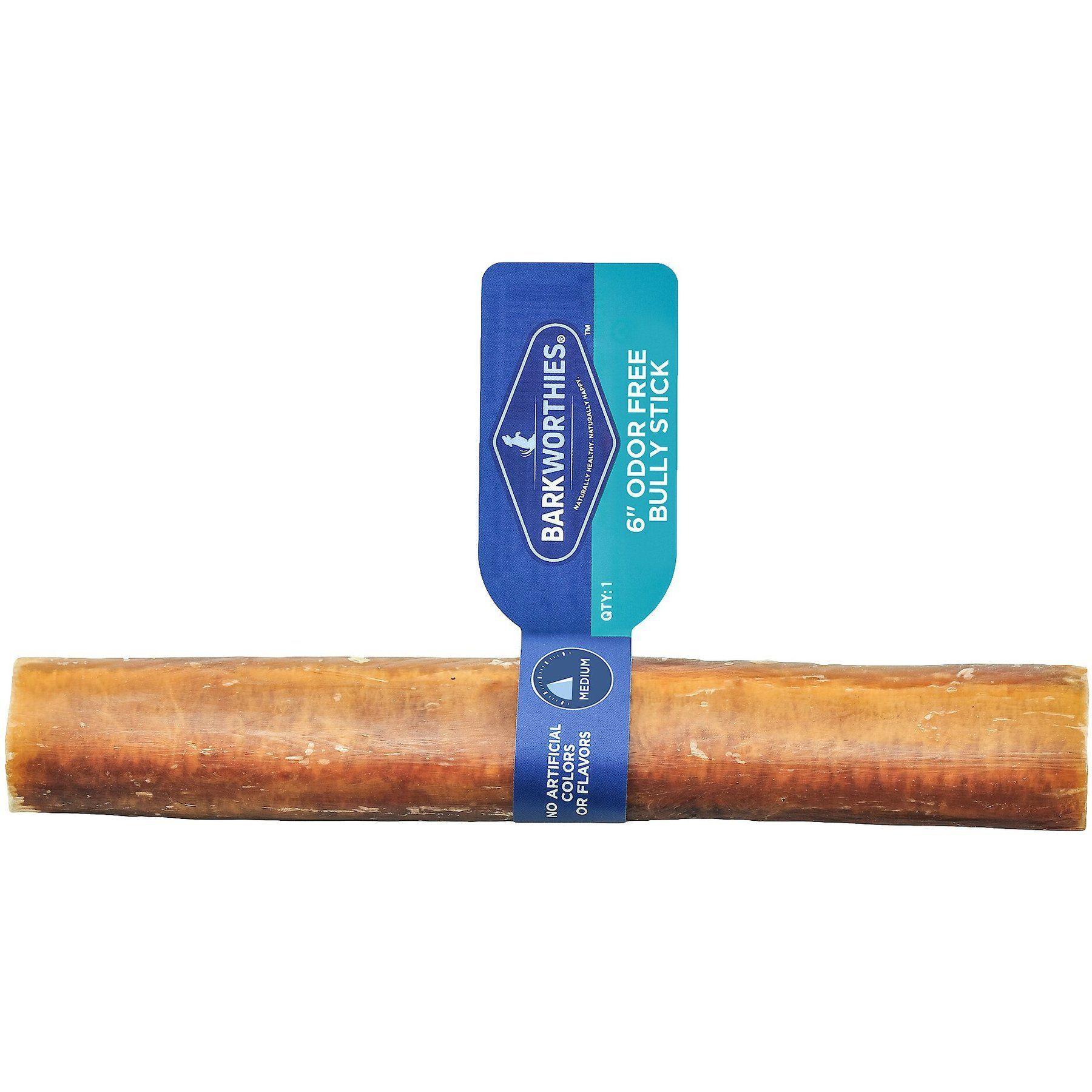
A single-ingredient beef chew for smaller dogs; count its calories and take away the last piece.
Webvet may earn a commission when you click through to Chewy, at no extra cost to you.
Bully sticks are not risk free either. VCA lists pizzle sticks on its avoid list for tooth fractures, and they add calories and can carry bacteria. The WebVet guide to bully sticks for dogs covers how to use them with those limits in mind.

Split antlers come up most often in this comparison. Splitting an elk or deer antler exposes the inner core, but the outer shell is still full-thickness antler. No veterinary source shows split antlers are safe for dogs, and none shows split elk antlers are safe for puppies.
So when owners ask which antler is best, the honest answer is a short list of conditions rather than a product: bigger than the mouth, supervised, removed when small, and never for a puppy. Veterinary dentists advise against hard chews for puppies at all, split or whole.
What is the safest antler for dogs?
There is no safe antler for dogs, only less risky ways to use one. No veterinary source names a type that cannot break a tooth. If an owner still chooses one, the least risky choice is an antler too big to fit in the mouth, given under supervision and taken away once it gets small, as the Today's Veterinary Practice review advises for any chew.
What is better for dogs, deer or elk antlers?
Neither is proven better for dogs' teeth. No study compares deer or elk antlers for fracture risk, and VCA, Cornell, and Merck give the same avoid advice for antler of any species. What changes the risk most is size: Cornell notes that larger chews are harder and may not suit a small dog.
If you decide to use an elk antler anyway, the KONG Wild Split Elk Antler Dog Chew, Medium is a naturally shed elk antler sawn lengthwise. A split antler like this is still hard enough to fracture teeth, so it needs supervision every time. It is listed at $19.09 on Chewy when checked in November 2026.
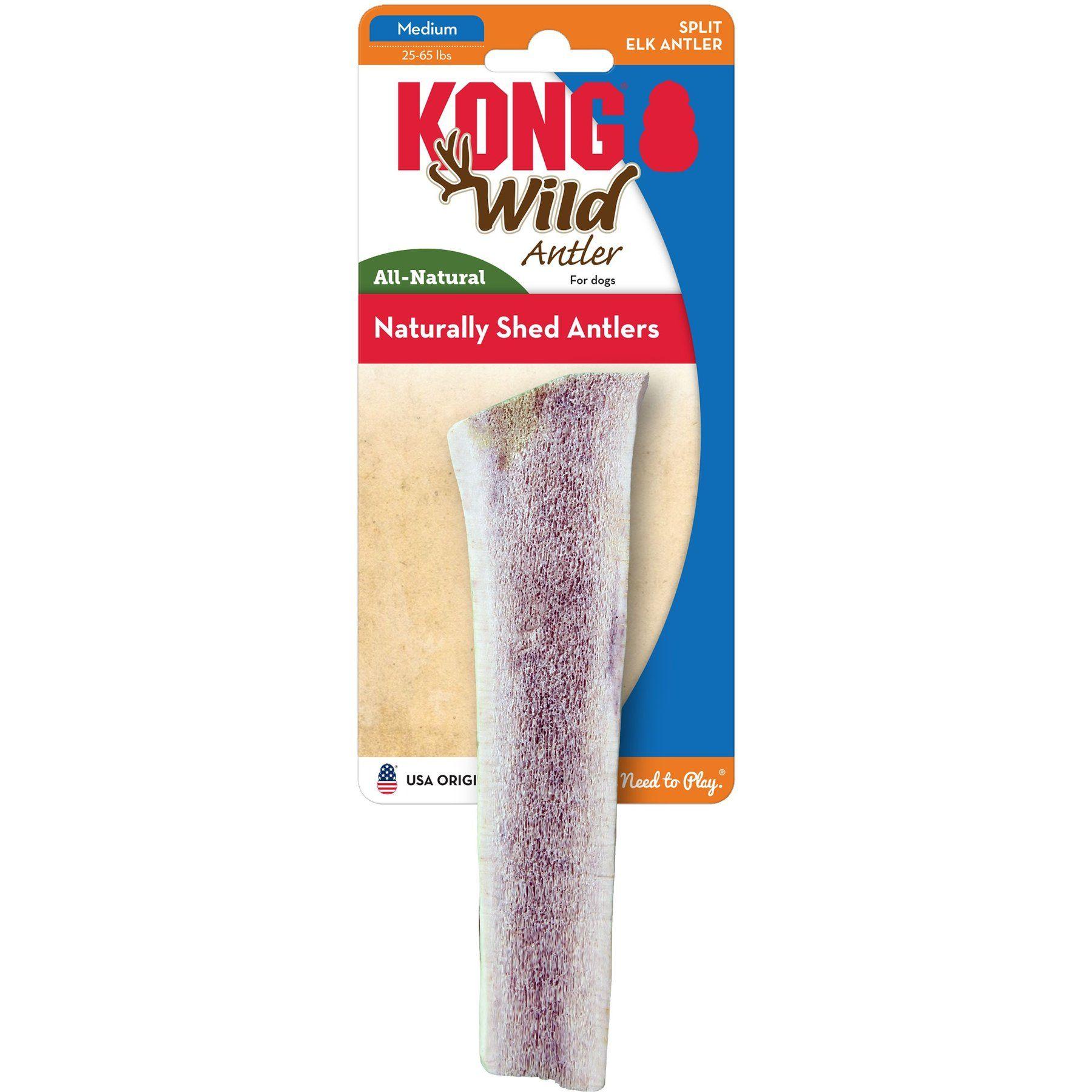
A naturally shed split elk antler for owners who still choose antler; it can still break teeth and needs supervision.
Webvet may earn a commission when you click through to Chewy, at no extra cost to you.
Brand does not change this. A split antler from Prairie Dog or any other seller is still antler, and the same rules apply.
Signs of a broken tooth or a swallowed piece, and when to see the vet
The main signs of a broken tooth are chewing on one side, dropping food, drooling, and pawing at the mouth, but dogs hide dental pain well. VCA notes that often there are no signs at all, which is why owners of dogs that chew antlers should look at the teeth, especially the large upper cheek teeth, from time to time.
Signs of a broken tooth that VCA and Cornell list include:
- Chewing on one side of the mouth
- Dropping food from the mouth when eating
- Excessive drooling or grinding of teeth
- Pawing at the mouth or shying away when the face is petted
- Facial swelling or enlarged lymph nodes under the jaw
- Refusing hard food, hard treats, or toys
- Reacting to hot and cold, even avoiding cool water
Time matters. Cornell warns that a broken tooth can become infected. VCA notes that vital pulp therapy may be an option for recently fractured teeth in dogs under 18 months old, and the University of Illinois College of Veterinary Medicine says this treatment has the best prognosis within 48 hours of the fracture. The AVDC advises having any chipped or fractured tooth checked, even if your dog seems fine.
Older breaks usually mean a root canal or an extraction. Merck notes that once a fracture reaches the pulp, one of the two will be needed. If extraction is on the table, the WebVet guide to dog tooth extraction cost explains what affects the bill.
If your dog ate deer antler pieces or chips from any other antler, watch closely. VCA notes that some swallowed objects pass through the intestinal tract without problem, but others cause a blockage. Signs that a swallowed piece is causing trouble include:
- Vomiting
- Diarrhea
- Belly pain or tenderness
- Decreased appetite
- Straining to pass stool or passing only small amounts
- Lethargy
Can antlers cause diarrhea in dogs? They can. A swallowed piece can upset the gut, and minimally processed animal chews can carry bacteria, according to the Today's Veterinary Practice review. One loose stool in an otherwise bright dog is different from diarrhea with vomiting, belly pain, or a dog that will not eat.
If your dog swallowed a small piece of elk antler, call your vet and describe the size of the piece and your dog's size. They can tell you whether to watch at home or come in for X-rays. VCA notes that surgery is generally recommended when a blockage is diagnosed or suspected.
How to give an antler more safely: size, supervision, puppies, and when to take it away
To give an antler more safely, size it bigger than the mouth, supervise every session, keep it away from puppies, and take it away once it is small enough to swallow. These steps follow the chew advice in the Today's Veterinary Practice review and the VCA puppy guidance. They lower the risk; they do not remove it.
- Size up. Pick an antler longer and thicker than your dog's mouth can close around. Big dogs need extra large antlers, and a large antler from a variety pack still has to be checked against your own dog's mouth.
- Supervise every session. The review advises monitoring a dog with a chew at all times. Never leave a dog alone with an antler.
- Know your chewer. Aggressive chewers face more dental injury and are more likely to swallow large pieces, and gulpers have a higher choking risk.
- Check it each time. Look for cracks, chips, and sharp edges before every session.
- Take it away when small. Remove any chew once it is small enough to be swallowed.
- Watch the teeth. Look at the large upper cheek teeth now and then for chips or flat, worn surfaces.

Puppies are the clearest case. Are deer antlers good for puppies? No. VCA explains that permanent teeth begin to erupt at around 12 weeks and that most veterinary dentists recommend against letting puppies chew anything hard, naming antlers specifically. That rules out puppy antler chews, whether deer or elk.
What age can puppies have deer antlers, then? No veterinary source gives one. VCA notes that all permanent teeth have normally erupted by six months, but the advice against hard chews covers puppies and older dogs alike. An 8-week-old puppy should not have an antler at all.
Teething puppies do better with something that gives. VCA recommends chew toys that have a little bend or that you can indent with a fingernail, and suggests freezing toys to ease sore gums. A soft rubber option such as the Nylabone Puppy Rubber Teether Vanilla Yellow, Small is made from natural rubber for teething puppies and is listed at $7.89 on Chewy when checked in November 2026.
How long should you let your dog chew on an antler bone?
No veterinary source sets a safe number of minutes, because a tooth can break on one hard bite. Keep sessions short and supervised, put the antler away whenever you cannot watch, and take it away for good once it has worn small enough to swallow or shows cracks or sharp edges.
How to make antlers safe for dogs?
You cannot make an antler safe, only less risky. Choose one bigger than the mouth, give it only under supervision, check it for cracks and sharp edges every time, and take it away when it gets small. Skip antlers entirely for puppies, dogs with worn or broken teeth, and dogs that crunch down hard.
A whole deer antler is no better for a puppy than a split one. For a puppy, the answer is a rubber toy, not an antler.
Safer alternatives to antlers: the fingernail test, VOHC chews, rubber toys, and bully sticks
| Chew | Fingernail test | Tooth fracture risk | Swallow risk | Best for |
|---|---|---|---|---|
| Whole antler (deer, elk, moose) | Fails, no dent | High; on VCA, Cornell, Merck, and AVDC avoid lists | Chips and the last piece | Not recommended by vet sources |
| Split antler | Fails on the outer shell | High; still full-thickness antler | Core shavings, chips, last piece | Not recommended by vet sources |
| Hard nylon bone | Fails, no dent | High; on VCA and Merck avoid lists | Chewed-off fragments | Not recommended by vet sources |
| Yak cheese chew | Hard when new; check each piece | Listed by AAHA among chews that cause problems | End piece must be taken away | Supervised adult dogs only |
| Bully stick | Check each stick | Pizzle sticks are on the VCA avoid list | Last piece; calories and bacteria | Supervised adult dogs, counted in treats |
| VOHC-accepted dental chew | Edible chew; check fit and size | Lower; VOHC requires no reported tooth fracture safety issues | Gulping; pick the right size | Daily plaque and tartar help |
| Natural rubber toy | Passes, dents and bends | Low; Cornell and Illinois favor soft rubber | Low if sized bigger than the mouth | Strong chewers, puppies, food puzzles |
The safest chew for a dog is one that passes the fingernail test, is sized for the dog, and is given under supervision. The University of Illinois College of Veterinary Medicine says soft rubber or stuffed toys are much safer than hard plastic toys, antlers, or bones, and Cornell names Kong toys as good options.
A whole elk antler is no safer than a split one, wild shed or not: both fail the fingernail test and carry the same tooth fracture risk. For more ideas by play style, see the WebVet guide to the best dog chew toys.
What is the healthiest thing for a dog to chew on?
A soft rubber toy that dents under your fingernail, or a dental chew with the VOHC seal, is the healthiest choice for most dogs. The American Animal Hospital Association also suggests crunchy vegetables and puzzle toys that release kibble.

For a strong chewer that needs a lasting outlet, a rubber toy is the closest match to what owners want from an antler. The Large KONG Classic Dog Toy is made of natural rubber, and KONG advises that the widest part should be bigger than the back of the dog's mouth, to size up if unsure, and to stop using a damaged toy.
For dental benefit, look for the VOHC seal. The Veterinary Oral Health Council lists Canine Greenies among accepted products for plaque and tartar, which puts the Greenies Dental Regular Dog Treats in a range with the VOHC seal. The Today's Veterinary Practice review lists the Greenies size for 26 to 50 pound dogs at 90 kcal per chew, about 9 to 14% of daily energy needs.
That calorie count matters because veterinary nutritionists often recommend keeping treats under 10% of a dog's daily calories. The review also notes that the VOHC makes no guarantee about the safety of using a product, so match the chew size to your dog. Which chew fits best depends on the dog:
- Puppies: a soft natural rubber teether or a frozen rubber toy as the alternative to an antler; no antlers, bones, or nylon.
- Strong adult chewers: a natural rubber toy sized up so it cannot fit behind the back teeth.
- Small dogs: small, soft chews; Cornell notes larger chews are harder and may not suit a little dog.
- Dogs watching their weight: count every edible chew within the 10% treat limit, or choose an inedible rubber toy.
- Dogs on a food trial for allergies: check with your vet first, since the Today's Veterinary Practice review notes that chews add animal proteins that can break a limited-ingredient trial.
- Homes with anyone who has a weak immune system: skip raw animal chews, as that review advises.
- Dogs with worn, chipped, or repaired teeth: soft rubber toys and brushing, with no hard chews.
Yak chews are often sold beside antlers, but they are hardened cheese rather than antler. The Himalayan Dog Chew Original Yak Cheese Dog Chews, 3 count are made from yak and cow milk with salt and lime juice, for dogs under 65 pounds, and are listed at $25.98 on Chewy when checked in November 2026. They are hard when new, and AAHA lists yak milk chews among chews that can cause problems, so supervise and take away the end piece.
Bully sticks fit in the same supervised category. A Canadian Veterinary Journal study found bully sticks averaged 15 kcal per inch, with a range of 9 to 22, and that 3 of 26 tested sticks carried bacteria, including one with MRSA. Count them in the daily treat allowance. The WebVet roundup of vet recommended dog dental chews compares edible options that carry the VOHC seal.
No chew replaces brushing. The VOHC says the gold standard is brushing, and VCA calls daily brushing the best way to prevent tartar. A dog toothpaste such as the Nylabone Advanced Oral Care Tartar Control Dog Toothpaste, a 2.5-ounce tube listed at $7.08 on Chewy when checked in November 2026, makes the habit easier.
Antlers for dogs questions
Frequently Asked Questions
Can puppies chew on antlers?
No. Puppies should not chew antlers. Their adult teeth start coming in at around 12 weeks and are normally all in by six months, according to VCA, and those new adult teeth can fracture on hard chews. Most veterinary dentists recommend against puppies chewing anything hard, so choose a toy that bends or dents under a fingernail.
Are split antlers safer than whole antlers?
Not in any way a study has shown. A split antler is cut lengthwise to expose the inner core sold as marrow, but the outer shell is still full-thickness antler that fails the fingernail test. A dog working on the core also swallows shavings and small pieces along the way.
How long do elk antlers last for dogs?
Elk antlers can last a long time, and that is the warning sign rather than the selling point. How long one lasts depends on its size, its thickness, and how hard the dog chews. A chew that a dog cannot wear down is hard enough to break teeth, and any piece worn small enough to swallow should be thrown away.
Are moose antlers safe for dogs?
No veterinary source treats moose antlers as safe. Moose antler is still antler, and its hardness puts it in the same group as deer and elk antler, which VCA, Cornell, Merck, and the AVDC link to broken teeth. The shape of moose pieces does not change that, so the fingernail test still applies.
How do you prepare deer antlers for dogs?
There is no home preparation that makes a deer antler soft enough to pass the fingernail test. If you still use one, check it for cracks and sharp edges before each session, choose a size bigger than your dog's mouth, supervise the whole time, and throw it away once it has worn small enough to swallow.
Veterinarian · BVMS MRCVS
Dr. Pippa Elliott, BVMS, MRCVS, is a veterinarian with nearly 30 years of experience in companion animal practice. Dr. Elliott earned her Bachelor of Veterinary Medicine and Surgery from the University of Glasgow. She was also designated a Member of the Royal College of Veterinary Surgeons. Married with 2 grown-up kids, Dr. Elliott has a naughty Puggle named Poggle, 3 cats and a bearded dragon.
Related reading

Best Dog Car Seat Cover: Waterproof Bench, Cargo, and Hammock Picks

Best Dog Car Hammock: Back-Seat Covers That Stop Falls, Fur, and Mud

Crash Tested Dog Car Seat and Harness Guide: What the Testing Means and Which Products Passed
