Dog Dental Extraction Cost: 2026 Per-Tooth Price Guide
A vet-reviewed breakdown of dog dental extraction cost in 2026, with real per-tooth prices, simple vs surgical fees, every add-on itemized, and ways to save.

BVMS MRCVS
Medically reviewed by Dr. Pippa Elliott, BVMS MRCVS · Last reviewed

This article contains affiliate links. Webvet may earn a commission when you buy through them, at no extra cost to you.
The dog dental extraction cost you will pay in 2026 ranges from about $50 for a single loose baby tooth to $4,000 or more for a full-mouth surgical case at a specialist. Most owners fall in the middle: expect roughly $150 to $700 per surgical tooth once anesthesia, X-rays, and monitoring are added, with a typical single-tooth visit landing around $800 to $1,500 all-in. This vet-reviewed guide gives you a real 2026 per-tooth price table, itemizes every line on the bill, explains why the number climbs, and shows exactly how to lower it.
- 1Per-tooth extraction runs $50 to $150 for a simple single-root tooth and $150 to $700+ for a surgical multi-root tooth in 2026.
- 2A full single-tooth visit usually totals $800 to $1,500 because anesthesia, bloodwork, and dental X-rays are bundled in.
- 3Full-mouth or advanced surgical cases at a board-certified veterinary dentist can reach $3,000 to $4,000+.
- 4The anesthesia, monitoring, and imaging (not the pulling itself) are what make the bill large.
- 5Leaving a diseased tooth in place is riskier and often more expensive than removing it, and many extractions are preventable with at-home care.
How much does a dog tooth extraction cost?
For the full visit, dog tooth extractions cost roughly $150 to $4,000 or more. Per tooth, plan on $50 to $700+, depending on whether the tooth needs a simple lift or full surgery. The wide spread is real, and it comes down to how many teeth are pulled, how complex each one is, your dog's size and health, and whether you see a general-practice vet or a specialist.
Here is the key thing owners miss: the extraction fee itself is often the smallest part of the bill. Anesthesia, monitoring, pre-surgical bloodwork, and full-mouth dental X-rays are usually required for any extraction, and those add-ons frequently cost more than the tooth removal. That is why a single tooth almost never costs just $75.
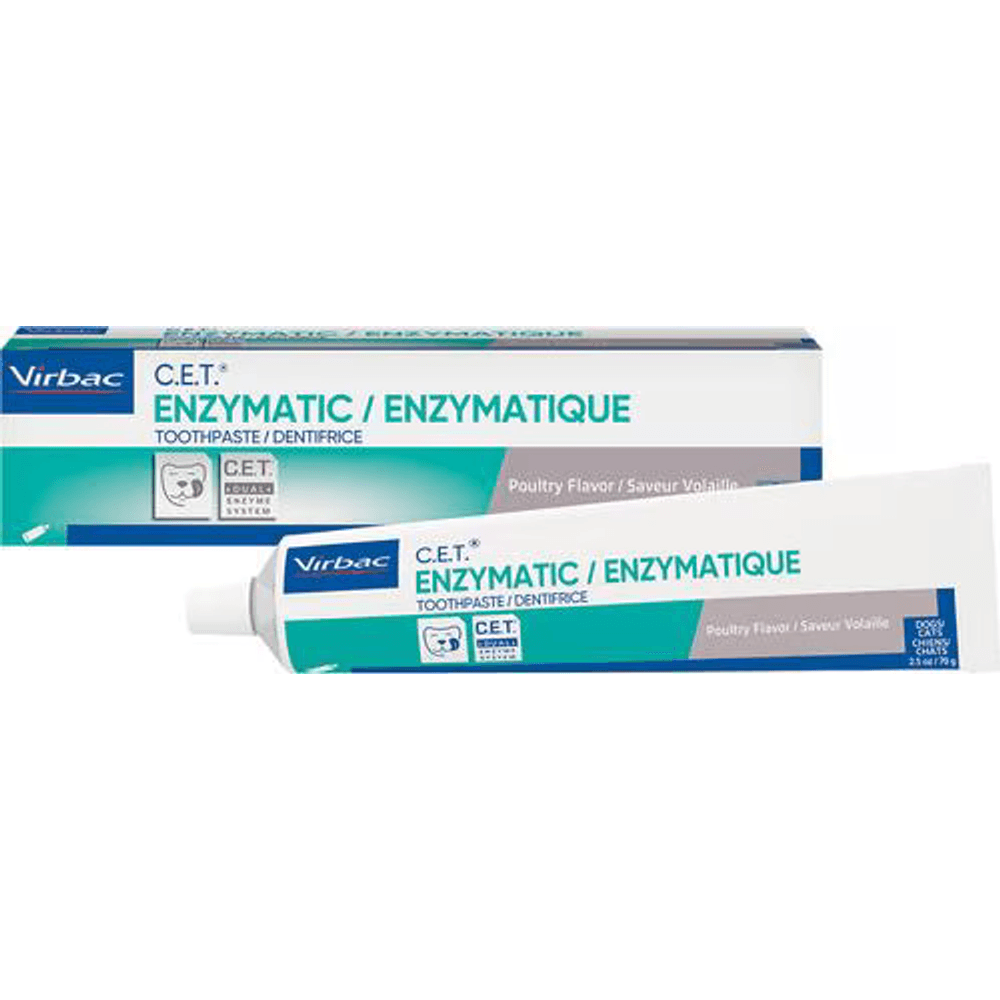
The vet-favorite enzymatic toothpaste. Its dual-enzyme system keeps working between brushings to control plaque and freshen breath, and the poultry flavor makes daily brushing easy.
Webvet may earn a commission when you click through to Chewy, at no extra cost to you.
Dog tooth extraction cost per tooth: 2026 price table
The table below shows realistic 2026 US ranges for the per-tooth extraction fee only (not the anesthesia or imaging, which are itemized further down). Prices rise with the number of roots and the difficulty of the tooth.
| Tooth type | Extraction type | Roots | Per-tooth cost (2026) |
|---|---|---|---|
| Loose incisor or baby tooth | Simple | 1 | $50 - $150 |
| Incisor / small single-root | Simple | 1 | $60 - $200 |
| Canine (fang) tooth | Surgical | 1 (large, deep) | $150 - $600 |
| Premolar | Simple to surgical | 1 - 2 | $100 - $400 |
| Molar / carnassial | Surgical | 2 - 3 | $150 - $700+ |
| Retained / fractured root | Surgical | Varies | $200 - $700+ |
For comparison, cat tooth extractions run a similar per-tooth range ($50 to $500+), but cats more often need surgical extractions for resorptive lesions, so the average cat dental bill can be just as high as a dog's despite the smaller mouth.
Simple vs surgical extraction: why the price jumps

Not all extractions are equal. The difference between a simple and a surgical extraction is the single biggest driver of your per-tooth price.
- Simple extraction: A single-root tooth (like a small incisor) that is already loose is gently loosened and lifted out whole. Minutes of work, minimal cost.
- Surgical extraction: A multi-root tooth (like a molar or a big canine) often has to be sectioned into pieces with a drill, a gum flap raised, and sometimes a little bone removed. The site is then stitched closed. Far more time, skill, and materials.
A large canine tooth is a special case: it has only one root, but that root is long and deeply anchored, so it usually requires a surgical approach despite being a single-root tooth. That is why fang teeth often cost more than a two-root premolar.
What's included in the total bill: line-by-line add-ons
A dog dental extraction is minor surgery under general anesthesia, so the estimate is really a bundle of services. Here is what each line typically costs in 2026.
| Line item | Typical 2026 cost | What it covers |
|---|---|---|
| Pre-anesthetic bloodwork | $80 - $200 | Checks organ function so anesthesia is safe |
| General anesthesia & monitoring | $90 - $500 | Sedation, intubation, vitals monitoring |
| Full-mouth dental X-rays | $150 - $350 | Reveals disease below the gumline |
| Scaling, cleaning & polishing | $100 - $400 | Cleans all remaining teeth in the same visit |
| IV catheter & fluids | $60 - $150 | Blood-pressure and safety support |
| Nerve blocks & pain control | $40 - $150 | Local anesthesia during and after surgery |
| Take-home antibiotics & pain meds | $30 - $120 | Post-op recovery medications |
| Suture & recheck exam | $0 - $75 | Closing the site; follow-up (often free) |
Pre-anesthetic bloodwork ($80 to $200)
Before anesthesia, your vet runs blood tests to confirm the kidneys and liver can safely process the drugs. This is standard for extractions and is especially important for senior dogs.
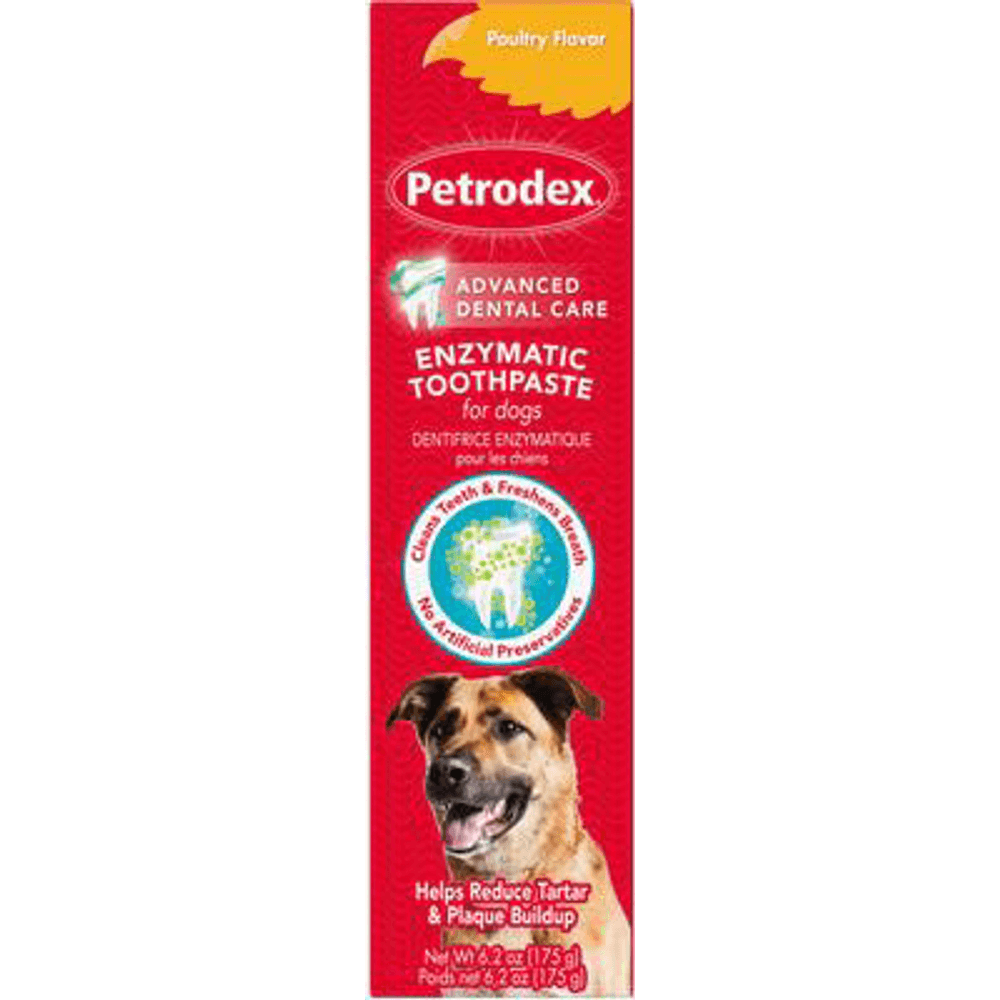
Veterinary-strength enzymatic toothpaste that helps reduce tartar and plaque buildup while freshening breath. Poultry flavored, made for dogs, with no artificial preservatives.
Webvet may earn a commission when you click through to Chewy, at no extra cost to you.
General anesthesia and monitoring ($90 to $500)

Dogs cannot hold still for dental surgery, so full general anesthesia is required for any real extraction. The cost scales with your dog's weight, the length of the procedure, and the level of monitoring. This is usually the single largest line on the bill, and it is not optional for safe, thorough work.
Full-mouth dental X-rays ($150 to $350)

About 60 percent of dental disease hides below the gumline, so X-rays are the only way to see abscessed roots, bone loss, and fractures. They also confirm the entire root came out, preventing a painful retained fragment. Skipping them is a false economy.
Scaling, cleaning and polishing ($100 to $400)
Since your dog is already under anesthesia, the vet cleans every remaining tooth in the same session. This is bundled into most extraction estimates and protects the teeth you are keeping.
IV catheter and fluids ($60 to $150)
An IV line maintains blood pressure under anesthesia and gives the team instant access if medication is needed. It is a core safety measure, not an upsell.
Nerve blocks and pain control ($40 to $150)
Local nerve blocks numb the surgical area so less general anesthesia is needed and your dog wakes up more comfortable. Good pain control is a marker of a quality dental practice.
Take-home antibiotics and pain meds ($30 to $120)
Most dogs go home with a few days of anti-inflammatory pain medication, and antibiotics if infection was present. These keep recovery smooth and are inexpensive relative to the surgery.
Suture and recheck exam
Surgical sites are closed with dissolvable stitches, so there is usually nothing to remove. Many clinics include a free post-op recheck to confirm the gums are healing. A related routine visit is covered in our guide to how much a vet visit costs.
 $65 · no membership
Have a health question about your dog?
A licensed vet can assess your dog over video and prescribe online when it's appropriate.
 Talk to a vet
- Licensed vets
- All 50 states
- same-day Rx

Webvet may earn a commission if you book.
Sample real-world estimates

Ranges are useful, but seeing two itemized examples makes the numbers concrete. These reflect typical 2026 general-practice pricing and will vary by region.
| Line item | One loose incisor | Full-mouth (8 teeth, surgical) |
|---|---|---|
| Exam | $60 | $60 |
| Bloodwork | $120 | $160 |
| Anesthesia & monitoring | $250 | $450 |
| Dental X-rays | $180 | $300 |
| Cleaning & polish | $150 | $300 |
| IV fluids | $90 | $120 |
| Extraction fee(s) | $90 | $1,600 |
| Nerve blocks & pain meds | $60 | $180 |
| Take-home meds | $40 | $110 |
| Estimated total | $1,040 | $3,280 |
Notice that in the single-tooth case, the extraction itself is only $90 of a roughly $1,000 visit. The rest is the safe-anesthesia infrastructure that every extraction requires.
Why are dog tooth extractions so expensive?
Dog tooth extractions are expensive because they are true surgical procedures performed under general anesthesia, not a quick pull like a wobbly human baby tooth. Several real costs stack up:
- Anesthesia and monitoring: A trained team, drugs, oxygen, and monitoring equipment run for the whole procedure.
- Imaging: Digital dental X-ray units are expensive and essential for finding hidden disease.
- Skill and time: Sectioning multi-root teeth and closing gum flaps takes surgical training and can take an hour or more.
- Safety and materials: IV catheters, fluids, sutures, nerve blocks, and post-op medications all add up.
In short, you are paying for anesthesia safety and surgical precision, not just the tooth. The same forces make procedures like a routine dog teeth cleaning cost more than owners expect, because that too requires anesthesia.

VOHC-accepted dental chews clinically shown to reduce plaque and tartar. The Z-shape and texture clean as your dog chews and freshen breath. A plant-based daily chew for medium dogs.
Webvet may earn a commission when you click through to Chewy, at no extra cost to you.
What changes your price: breed, size, age, location and tooth type
Small and toy breeds vs large breeds
Toy and small breeds (Yorkies, Chihuahuas, Dachshunds) crowd many teeth into a tiny jaw and suffer more early dental disease, so they often need multiple extractions. Large breeds have bigger, deeper roots that take more surgical effort per tooth. Both can push the bill up, just for different reasons.
Senior dog tooth extraction cost
Senior dogs tend to cost more, not because age itself is charged for, but because older dogs usually have more diseased teeth and need extra pre-op testing and monitoring. Age alone is not a reason to skip needed dental care; modern anesthesia protocols are tailored to older patients. Our senior dog health guide covers how to plan for these visits.
Regional and clinic-type differences
Prices run higher in major metros (California, New York, Texas cities) than in rural areas, sometimes by 50 percent or more. A board-certified veterinary dentist charges more than a general-practice vet but is the right call for complicated cases, root fractures, or jaw involvement.
Does pet insurance cover dog tooth extractions?
Many accident-and-illness pet insurance plans cover extractions when they are medically necessary (fractured, abscessed, or diseased teeth), but almost none cover routine cleaning or pre-existing dental disease. Two rules to remember:
- Enroll before problems start. Dental disease already present when you sign up is treated as pre-existing and excluded.
- Check the dental clause. Some plans require proof of an annual cleaning to honor a dental claim.
How to lower the cost of a dog tooth extraction
Get an itemized written estimate and a second opinion
Always ask for a written, itemized estimate before surgery. It lets you compare clinics line by line and spot which fees are safety-essential versus optional. For a large surgical quote, a second opinion is reasonable and can save hundreds.
Veterinary schools, nonprofit and low-cost dental clinics
Accredited veterinary teaching hospitals often perform extractions at reduced rates under expert supervision. Nonprofit and community clinics, and dental-focused low-cost days, can cut the bill significantly. Search for a school or nonprofit clinic in your region.
CareCredit, payment plans and pet savings accounts
Financing tools like CareCredit and Scratchpay spread a big bill over months, often interest-free if paid within a promotional window. Many clinics offer in-house payment plans. Setting aside a small monthly pet savings amount is the cheapest option of all over time.

A taste-free, odor-free water additive you pour straight into the bowl. No brushing needed: it freshens breath, helps clean teeth, and fights tartar. About 94 servings per 16-oz bottle.
Webvet may earn a commission when you click through to Chewy, at no extra cost to you.
Prevent extractions with at-home dental care

The cheapest extraction is the one you never need. Daily brushing is the gold standard; even a few times a week slows tartar dramatically. Learn the technique in our step-by-step guide to how to brush your dog's teeth, pair it with vet-approved dental chews, and keep up regular professional cleanings to catch problems early. Good dog dental health habits are the single best way to keep future bills small.
What happens if you can't afford the extraction
If the bill is out of reach, you have real options before giving up. Ask your vet for a written estimate you can shop, then explore financing (CareCredit, Scratchpay), veterinary school clinics, nonprofit funds (RedRover, The Pet Fund, Brown Dog Foundation), and in-house payment plans. Many practices would rather arrange a plan than see a dog go untreated. What you should not do is ignore the tooth, because untreated dental disease is both painful for your dog and more costly to fix later. A comparable emergency, covered in our guide to emergency vet costs, is almost always pricier than planned dental surgery.
Will a dog's rotten or broken tooth fall out on its own?
Sometimes a severely diseased tooth does loosen and fall out, but waiting for that is not a safe plan. In the meantime the tooth causes ongoing pain and infection, and even after it falls out, retained root fragments and infected bone frequently remain and need surgical cleanup. A broken tooth with an exposed pulp is an open door for bacteria. The humane, and usually cheaper, path is a planned extraction rather than waiting for nature to take a slow, painful course.
What to expect: the procedure and recovery timeline
On the day, your dog fasts, is anesthetized, X-rayed, and the diseased teeth are removed and the sites stitched. Most dogs go home the same afternoon, groggy but comfortable on pain medication.
- Days 1 to 3: Soft food only, some drooling or mild swelling, restrict chewing on toys.
- Days 4 to 7: Appetite and energy bounce back; keep giving prescribed meds.
- Days 10 to 14: Gums are healed; back to normal food and play. Owners are often amazed how much brighter and more playful their dog is with the painful tooth gone.
Signs your dog needs a tooth extracted
Watch for these red flags, which often point to a tooth that may need removal:
- Bad breath that is worse than usual or foul-smelling
- A visibly broken, discolored, or loose tooth
- Red, swollen, or bleeding gums
- Chewing on one side, dropping food, or refusing hard kibble
- Pawing at the mouth, face swelling, or shying away when touched
When to see your vet
Book a dental exam if you notice any of the signs above, and get in promptly for a broken tooth, facial swelling, an abscess, or a dog that stops eating. Only a hands-on exam with dental X-rays can tell whether a tooth can be saved or needs to come out, so an itemized estimate should always start with that assessment. Early evaluation keeps both your dog's pain and your bill smaller.
Frequently asked questions
What if I can't afford my dog's tooth extraction?
You have several options before giving up on care. Ask your vet for an itemized estimate and a phased treatment plan, apply for financing like CareCredit or Scratchpay, check accredited veterinary school clinics and nonprofit low-cost dental days, and look into charitable funds such as RedRover, The Pet Fund, and the Brown Dog Foundation. Many clinics offer in-house payment plans. Do not simply leave a diseased tooth untreated, because the pain and infection worsen and the eventual cost rises.
How much do vets charge to extract a dog's tooth?
The per-tooth extraction fee alone typically runs $50 to $150 for a simple single-root tooth and $150 to $700 or more for a surgical multi-root tooth. Once you add the required anesthesia, bloodwork, and dental X-rays, a full single-tooth visit usually totals about $800 to $1,500, and full-mouth surgical cases can reach $3,000 to $4,000 or more.
How much does a vet charge to pull a dog's tooth?
To pull a single tooth, most general-practice vets charge roughly $800 to $1,500 for the complete visit in 2026, because the extraction is done under general anesthesia with monitoring, bloodwork, and X-rays. A simple loose tooth on the low end may be closer to $500 to $800, while a difficult surgical canine or molar pushes toward the higher end.
Why are dog teeth extractions so expensive?
Because a dog extraction is real surgery under general anesthesia, not a quick pull. The bill covers anesthesia and monitoring, pre-surgical bloodwork, digital dental X-rays, IV fluids, nerve blocks, sutures, and take-home medications, plus the vet's surgical time. The extraction fee itself is often the smallest line; the anesthesia and imaging that keep your dog safe are what drive the total.
Will a dog's rotten tooth eventually fall out?
It can, but waiting for it is not safe or humane. Until it falls out, the tooth causes pain and infection, and even afterward, infected root fragments and diseased bone usually remain and require surgical cleanup. A planned extraction resolves the problem cleanly and is typically less painful and less expensive than letting the tooth deteriorate on its own.
What do dogs do right before they pass away?
This question usually reflects worry that a dental problem is life-threatening, and it is important to be clear: a tooth extraction is a very safe, routine procedure, and dental disease alone rarely causes sudden death. Near the end of life from serious illness, dogs may withdraw, stop eating and drinking, lose interest in activity, breathe irregularly, or become very weak. Dental pain is not that, and it is highly treatable. If your dog shows these end-of-life signs, that is a separate emergency; contact your vet right away.
How do I get rid of my dog's rotten teeth?
Rotten teeth are removed by a veterinarian through a professional dental procedure under anesthesia, which includes an oral exam, dental X-rays, and surgical extraction of the affected teeth, followed by cleaning of the rest. You cannot safely remove a dog's tooth at home, and you should never try. Book a veterinary dental exam, and prevent future decay with regular brushing, vet-approved dental chews, and routine cleanings.
$65 · no membershipHave a health question about your dog?
A licensed vet can assess your dog over video and prescribe online when it's appropriate.
Talk to a vet- Licensed vets
- All 50 states
- same-day Rx
Webvet may earn a commission if you book.

Editor
The Webvet Editorial Team is the in-house group of pet-care editors and writers behind Webvet, operated by Smart Pet Collective. The team researches, writes, and maintains Webvet's pet health, behavior, and medication content. Every article follows a defined editorial process: research from reputable veterinary and scientific sources, careful drafting, mandatory review of medical content by a credentialed veterinarian, and dated publication. Health and medication articles are medically reviewed by a licensed veterinary professional before they go live and are kept current over time.
Veterinarian · BVMS MRCVS
Dr. Pippa Elliott, BVMS, MRCVS, is a veterinarian with nearly 30 years of experience in companion animal practice. Dr. Elliott earned her Bachelor of Veterinary Medicine and Surgery from the University of Glasgow. She was also designated a Member of the Royal College of Veterinary Surgeons. Married with 2 grown-up kids, Dr. Elliott has a naughty Puggle named Poggle, 3 cats and a bearded dragon.


