German Shepherd Hip Dysplasia and Elbow Disease Guide
German Shepherd hip dysplasia affects the rear limbs, while elbow disease more often causes front-limb lameness. Learn risk, early signs, screening limits, diagnosis, treatment, and home support.

BVMS MRCVS
Medically reviewed by Dr. Pippa Elliott, BVMS MRCVS · Last reviewed

This article contains affiliate links. Webvet may earn a commission when you buy through them, at no extra cost to you.
German Shepherd hip dysplasia is a developmental joint disorder in which hip laxity and abnormal joint fit can contribute to cartilage damage and osteoarthritis. German Shepherds are a recognized risk group, but a sloped back, unusual sit, or breed label does not prove dysplasia. Elbow dysplasia is a separate developmental problem that more often produces front-limb lameness. A dog can have hip disease, elbow disease, both, or neither, and orthopedic signs can overlap with knee injury, spinal disease, muscle strain, paw pain, and other conditions. The first useful step is therefore not naming the disease. It is noticing which limb or part of the gait changed and arranging a veterinary examination.
Weight management, controlled exercise, rehabilitation, pain care, and surgery can each have a place, but the plan depends on age, joint findings, discomfort, function, arthritis, and the dog's overall health. Sudden inability to bear weight, major trauma, severe pain, fever with a swollen joint, or rapidly worsening weakness needs urgent veterinary care rather than home treatment.
 Sponsored
Have a health question about your dog?
Talk to a licensed vet at Dutch over video or message, including nights and weekends.
Use code Pets60
Plans start at $12/month · covers up to 5 pets
- Licensed vets in most states
- Rx for 150+ conditions
- 4.7 on Trustpilot
Hip and elbow dysplasia risk in German Shepherds
- 1German Shepherd hip dysplasia is a breed-associated risk, not a diagnosis from posture, topline, gait, or age.
- 2Hip disease usually affects rear-limb comfort and movement, while elbow dysplasia more often causes front-limb lameness.
- 3Breeder screening estimates inherited joint risk; a painful pet still needs a veterinary examination and diagnostic plan.
Hip dysplasia develops through an interaction of genetics, growth, joint laxity, body weight, and other environmental influences. In a normal hip, the femoral head fits deeply and stably in the socket. In a dysplastic hip, looseness and abnormal loading can damage cartilage and remodel bone over time. Some young dogs show discomfort before substantial arthritis is visible, while some adults have marked radiographic changes with surprisingly subtle signs. The x-ray and the dog must be interpreted together.
Elbow dysplasia is an umbrella term for developmental abnormalities within the elbow joint. Fragmented medial coronoid process, ununited anconeal process, osteochondrosis, and joint incongruity may occur alone or together. These lesions alter load across the front limb and can lead to osteoarthritis. A German Shepherd with elbow disease may shorten a front stride, rotate a paw, shift weight, or become lame after activity. Those signs are not visible proof of a particular elbow lesion.
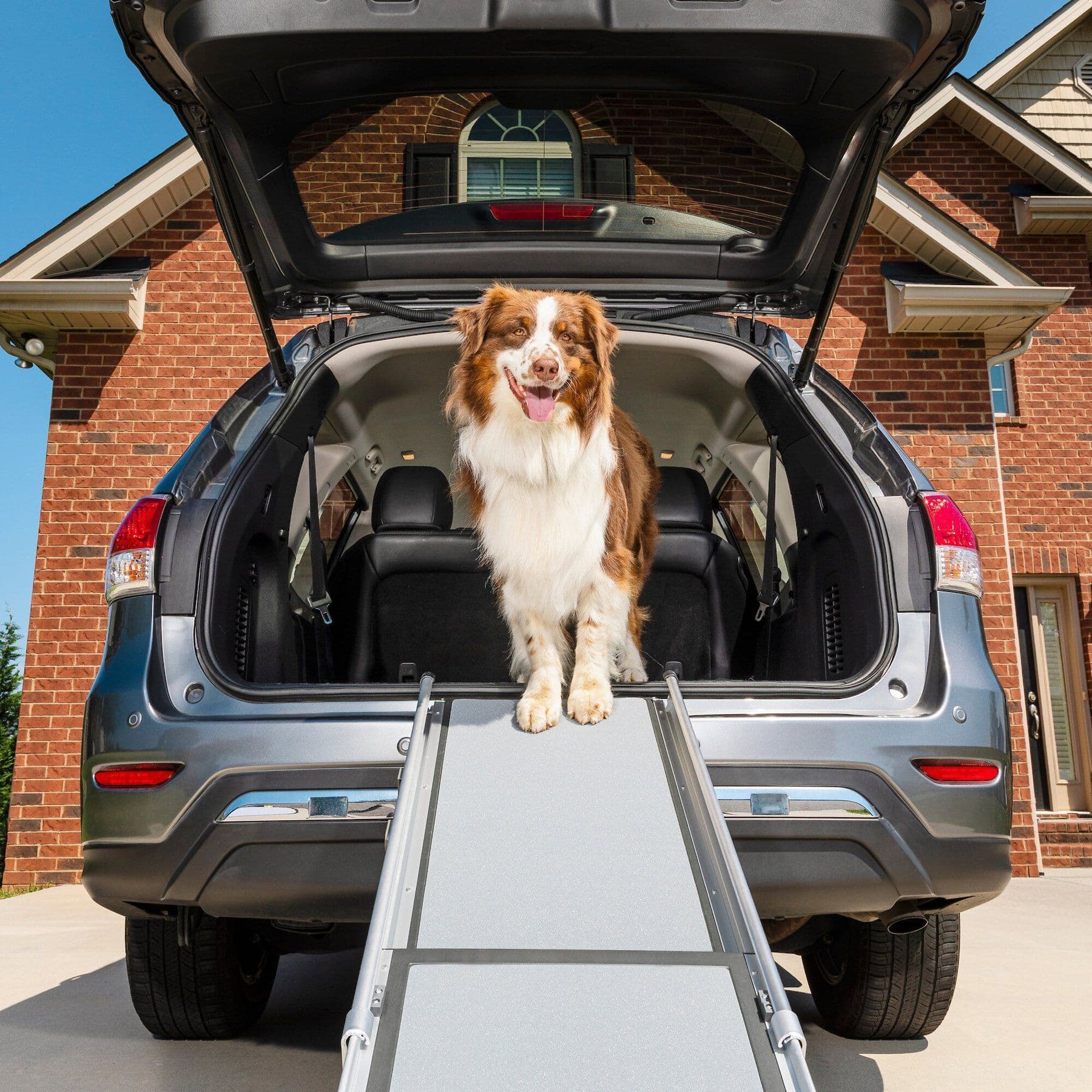
A stable ramp may reduce a high vehicle step for a steady German Shepherd after veterinary approval, but it does not prevent dysplasia and cannot replace assisted transport for a severely lame dog.
Webvet may earn a commission when you click through to Chewy, at no extra cost to you.
Breed-specific numbers come mainly from screening registries. OFA elbow statistics show elbow dysplasia in 19.8% of German Shepherds evaluated from the 1990 to 1993 birth years, 18.7% from 1994 to 1997, and 17.2% from 1998 to 2001. Submission is voluntary, so these rates do not describe every pet German Shepherd.
- Breed predisposition raises the prior probability but does not mean every German Shepherd is affected.
- Puppies may show exercise intolerance, lameness, difficulty rising, or a reluctance to play, but growing pains are not a safe default explanation.
- Adults may first show stiffness after rest, reduced endurance, trouble with stairs, or progressive osteoarthritis.
- Hip and elbow dysplasia can be present at the same time, so focusing on only the rear limbs can miss important front-limb pain.
- A dog with normal breeder paperwork can still develop pain from another orthopedic or neurologic condition.
The German Shepherd's topline and hind-limb angulation vary among individuals and breeding lines. A sloped back does not diagnose hip dysplasia, and a level back does not exclude it. Likewise, a puppy sitting with one leg to the side may be comfortable, tired, uncoordinated, or painful. Posture is a clue only when combined with consistent function, palpation, gait assessment, and imaging. Avoid judging a breeder, dog, or diagnosis from a single photograph.
Developmental joint disease can become apparent at different ages. A puppy may show pain during growth, an adolescent may struggle as activity increases, or an adult may become symptomatic only after osteoarthritis develops. Age does not distinguish hip from elbow disease on its own. An older German Shepherd may also have cruciate ligament disease, lumbosacral disease, degenerative myelopathy, or several conditions together. A complete examination should not stop after finding one abnormal joint.
Risk reduction begins before and during growth, but it is not a guarantee. Choose breeders who use recognized hip and elbow screening and discuss results honestly across relatives, not only the parents. Feed a complete and balanced growth diet appropriate for large-breed puppies, keep puppies lean, and avoid unprescribed calcium or mineral supplementation. Provide age-appropriate controlled activity and secure footing. These choices support healthy development without promising to override genetics.
- Ask for the exact registered screening results rather than accepting a verbal claim that hips are good.
- Ask whether close relatives developed lameness, arthritis, or orthopedic surgery after breeding age.
- Track body condition through growth because excess weight increases load on developing and arthritic joints.
- Discuss persistent limping promptly instead of waiting for a puppy to grow out of it.
- Do not start supplements, braces, or restrictive exercise in place of an examination.
The generic hip dysplasia in dogs guide explains joint laxity, arthritis, and broader treatment choices. WebVet also has a separate guide to elbow dysplasia in dogs. The step owners of German Shepherds often miss is checking whether the concerning pattern is mainly front, rear, or mixed before assuming every limp comes from the hips.
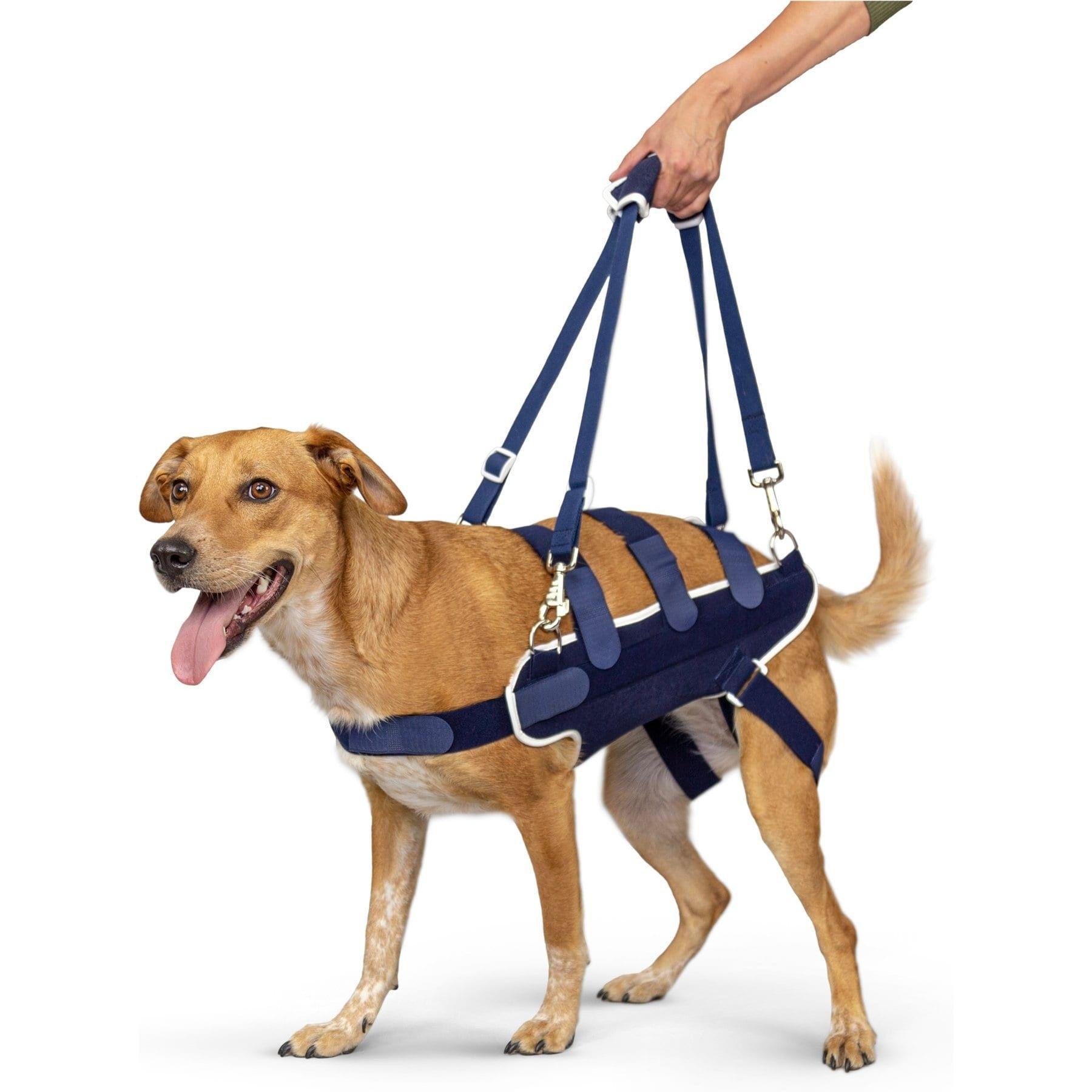
An extra-large support harness can assist a veterinarian-approved transfer or toileting plan when fit and technique are demonstrated; it does not stabilize a dysplastic joint or replace diagnosis.
Webvet may earn a commission when you click through to Chewy, at no extra cost to you.
Front-limb versus rear-limb signs
Hip-associated signs tend to involve the rear limbs. Owners may notice stiffness after rest, difficulty rising, a shortened rear stride, reluctance to climb or jump, reduced endurance, or a bunny-hopping pattern when running. The dog may shift weight forward or lose thigh muscle over time. None of these signs is exclusive to hip dysplasia. Knee injury, lumbosacral pain, spinal cord disease, muscle injury, and paw problems can create similar changes.

Elbow-associated signs tend to involve one or both front limbs. A dog may bob the head, shorten the front stride, rotate a paw outward, stand with weight shifted, or become more lame after exercise. When both elbows hurt, a dog may not show an obvious one-sided limp. Instead, the front gait can look stiff and guarded. Shoulder, neck, paw, and other elbow disorders remain possible, so location still needs confirmation.
| Front-limb, rear-limb, or mixed signs at home | Likely symptom location | Appropriate veterinary workup and diagnostic route |
|---|---|---|
| Rear stiffness, difficulty rising, bunny hopping, or reduced rear stride | Hip, knee, lumbosacral, muscle, or neurologic problem | Veterinary gait and orthopedic examination, followed by targeted imaging |
| Front-limb limp, head bob, short front stride, or paw turned outward | Elbow, shoulder, paw, neck, or other front-limb problem | Veterinary front-limb localization and elbow imaging when indicated |
| Front and rear stiffness or multiple changing limbs | More than one joint, generalized arthritis, systemic, or neurologic disease | Whole-dog examination rather than assuming one dysplastic joint |
| Sudden non-weight-bearing lameness, severe pain, trauma, fever, or rapid weakness | Acute orthopedic, infectious, or neurologic emergency | Urgent or emergency veterinary care |
Observe a short necessary walk on level nonslip ground only if the dog can walk comfortably. Look at all four limbs from the side and from behind without making the dog run or tire. Note whether signs are worse after rest or exercise, whether one limb consistently bears less weight, and whether the problem appeared suddenly. A video can help when captured safely, but online gait comparisons cannot diagnose joint laxity or elbow lesions.
Puppies deserve prompt assessment for persistent or recurring lameness. Rapid growth does not make limping normal, and prolonged restriction without a diagnosis can impair conditioning. The veterinarian may examine the hips, knees, elbows, shoulders, paws, spine, and neurologic function. Sedated palpation or specific imaging positions may be recommended because an anxious, muscular German Shepherd can guard joints and make awake assessment less reliable.
Pain expression varies. Some German Shepherds cry or refuse activity, while others continue working and show only slower rising, a changed sit, reduced play, irritability, or licking at a joint. A dog can also compensate by overloading the opposite limb. Do not use willingness to chase a ball as proof that the joints are comfortable. High arousal can temporarily mask pain and increase injury risk.
- Record which limb appears affected, when signs started, and whether they are constant or intermittent.
- Note changes in stairs, jumping, rising, sitting, running, turning, and endurance.
- Tell the veterinarian about prior injuries, growth rate, diet, supplements, and family screening.
- Report toe dragging, crossing feet, knuckling, or weakness because those findings can redirect the workup toward the nervous system.
- Use the broader dog limping causes guide to organize observations without assigning a diagnosis.
 Sponsored
Vet care that's always there
Unlimited video calls and messaging with licensed vets for less than a typical vet visit. One membership covers up to five pets.
Use code Pets60
Plans start at $12/month · covers up to 5 pets
- Licensed vets in most states
- Rx for 150+ conditions
- 4.7 on Trustpilot
Breeder screening versus diagnosis
Breeder screening and diagnosis answer different questions. Screening evaluates a clinically selected dog under a program's rules to estimate joint phenotype and inform breeding. Diagnostic imaging investigates a pet with signs, often using different views, timing, sedation, and clinical context. A result from the Orthopedic Foundation for Animals, commonly called OFA, is valuable population-health information. It is not a lifetime guarantee and should not be treated as the explanation for today's limp.

The OFA hip dysplasia resource explains radiographic evaluation and the role of inherited joint conformation. OFA hip certification uses a standardized extended-hip view and age requirements for final evaluation. The OFA elbow dysplasia resource covers elbow grading and recognized developmental lesions. Screening quality depends on positioning and interpretation, and even a screened dog can later develop pain from osteoarthritis, injury, or another condition.
PennHIP is a different radiographic method that quantifies passive hip laxity using a distraction index and requires trained positioning. It can provide information earlier than some conventional certification pathways. A lower distraction index reflects tighter hips within that method, but no single cutoff guarantees a pain-free life. PennHIP does not diagnose elbow dysplasia and does not replace an examination of a symptomatic dog.
- OFA and PennHIP use different methods and outputs; results should be interpreted within the relevant system.
- Hip screening does not certify elbows, and elbow screening does not exclude shoulder, paw, or neurologic disease.
- A puppy with lameness may need diagnostic imaging before the age used for final breeding certification.
- Radiographic severity and clinical pain do not always match perfectly.
- A breeder's CHIC participation documents completion of breed-recommended testing, not that every result is normal or that a puppy cannot develop disease.
Diagnostic hip radiographs assess joint fit, remodeling, arthritis, and other bone changes. The veterinarian may recommend sedation to obtain accurate, safe positioning and reduce muscle guarding. The physical examination helps determine whether hip views alone are enough or whether knees, spine, or other joints should also be imaged. The Cornell canine hip dysplasia overview emphasizes that treatment should reflect both signs and joint changes.
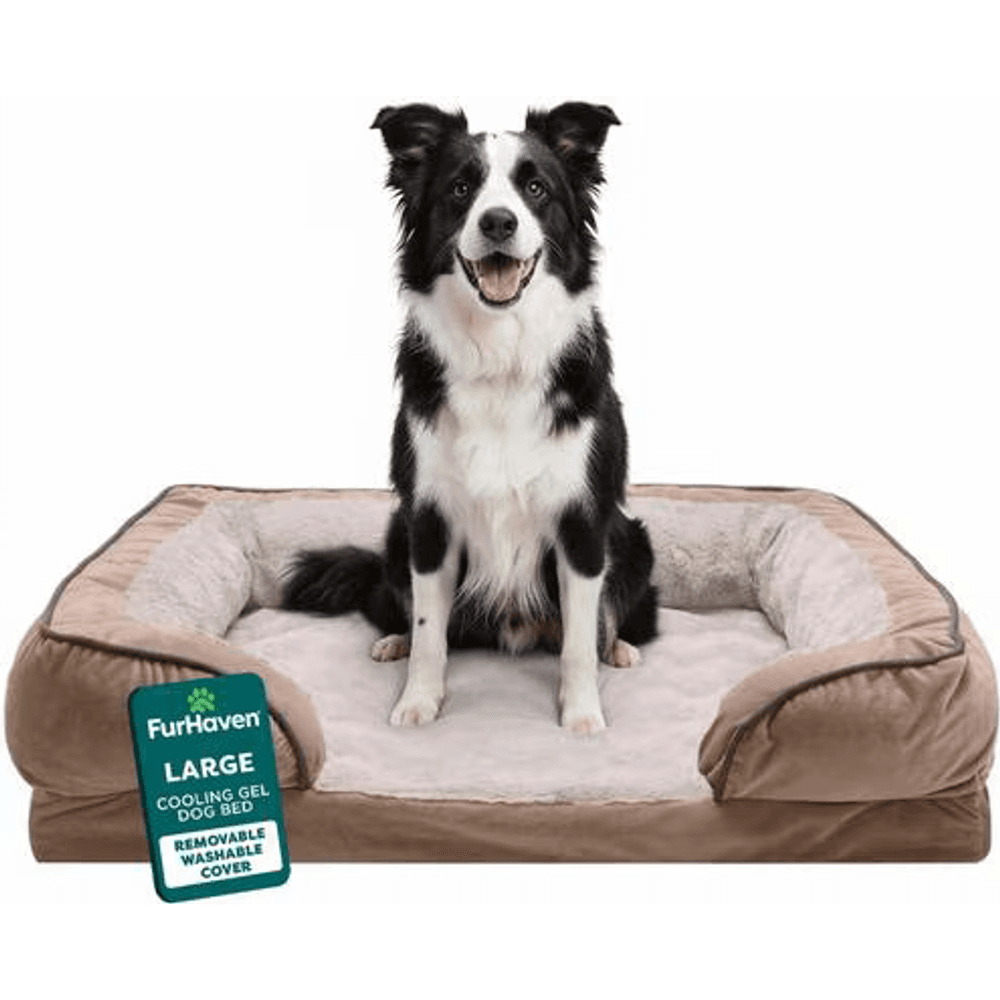
A supportive floor-level bed with a low bolster may improve comfort for a stable dog that can step over it safely; choose a flatter surface if the bolster creates a trip risk.
Webvet may earn a commission when you click through to Chewy, at no extra cost to you.
Elbow radiographs can identify arthritis and some developmental abnormalities, but overlapping bones make the joint complex. The ACVS elbow dysplasia overview lists computed tomography (CT), MRI, and arthroscopy as advanced options. CT may better define a suspected coronoid fragment or incongruity in selected dogs and can help with surgical planning.
- CT is not needed for every limp. It is most useful for selected elbows when radiographs leave a suspected fragment or incongruity unclear.
- The clinician weighs age, localization, radiographic findings, duration, and treatment goals, plus whether more detail would change care.
- Those same factors drive referral decisions, along with access to arthroscopy, advanced imaging, and a surgeon experienced with the procedure being considered.
When evaluating a breeder, verify results in the issuing registry and look beyond a single dog's score. Ask about siblings and older relatives, elbow as well as hip results, and whether dogs with poor results were removed from breeding. Avoid promises of dysplasia-free lines. Responsible screening reduces risk across generations; it cannot eliminate a multifactorial disorder.
- Bring registry numbers and prior images to the veterinary visit when available.
- Ask whether the current imaging is for screening, diagnosis, treatment planning, or a combination.
- Request an explanation of incidental findings that may not be causing pain.
- Clarify whether follow-up imaging is intended to track growth, arthritis, or response to a procedure.
- Seek referral when imaging and clinical signs disagree or when surgery is being considered.
If a large dog needs help entering a vehicle for planned appointments, a veterinarian-approved stable vehicle ramp may reduce a high step. Train on it while the dog is calm and stable, use a secure nonslip surface, and guard both sides. A ramp does not prevent dysplasia and is unsafe for a dog who cannot bear weight or may fall.
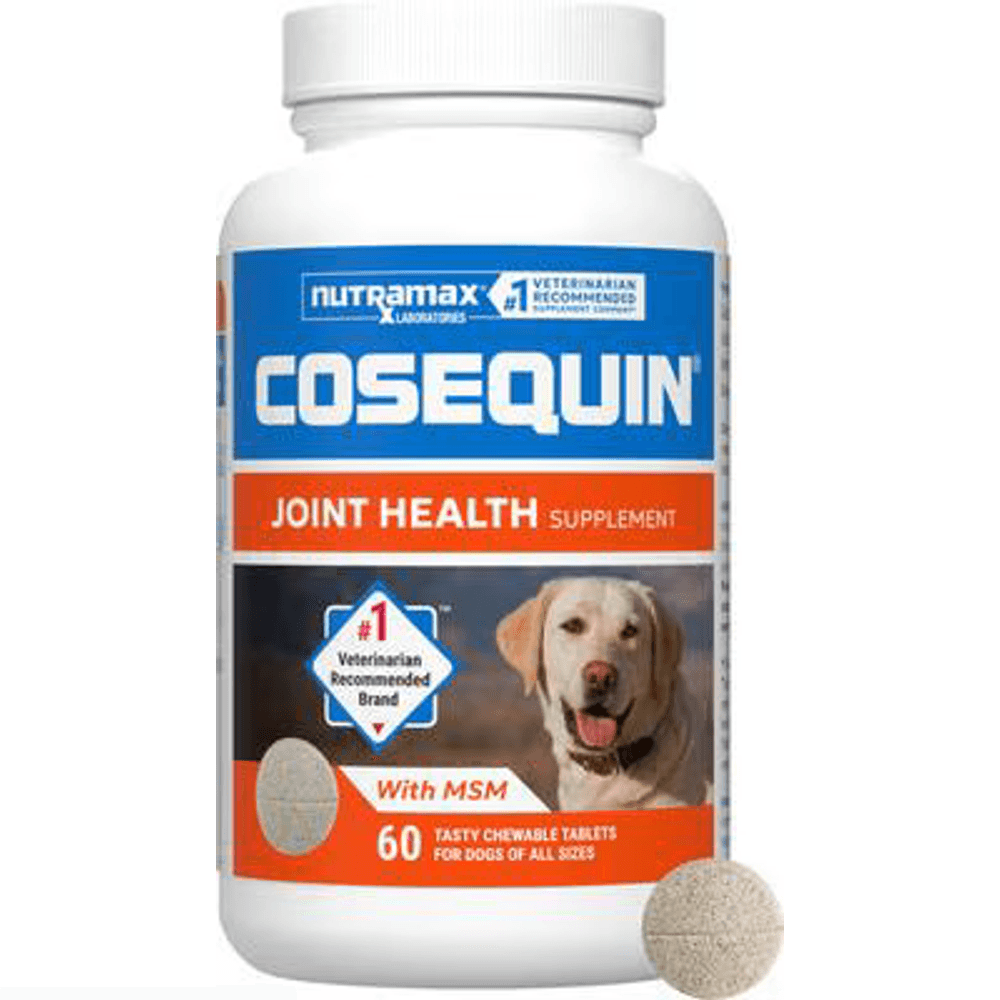
A joint supplement may be discussed as an optional adjunct with the veterinarian, never as a cure or substitute for weight management, pain control, rehabilitation, or surgical care.
Webvet may earn a commission when you click through to Chewy, at no extra cost to you.
Weight, exercise, medical care, and surgery
Treatment aims to reduce pain, preserve useful function, maintain muscle, and limit avoidable joint stress. It may include weight management, activity modification, rehabilitation, veterinarian-prescribed medication, environmental changes, injections or other joint therapies, and surgery. The right combination depends on whether signs arise mainly from laxity, active developmental lesions, established osteoarthritis, another joint, or a nonorthopedic problem.

Keeping a German Shepherd lean is one of the most practical ways to reduce joint load. Ask the veterinary team for a body-condition score, target weight, daily calorie amount, and treat budget. Weight loss should be gradual and nutritionally complete. Do not slash food during puppy growth or substitute unbalanced meals. Track body condition and muscle because a lower scale number with muscle loss is not the goal.

- Favor regular controlled walks and prescribed strengthening over infrequent bursts of hard running.
- Use nonslip surfaces and adjust duration when stiffness or lameness increases.
- Avoid repetitive high-impact jumping, forced running through pain, and sharp turns during active flare-ups.
- Let a rehabilitation professional match exercises to the affected joints and current stage.
- Continue appropriate activity after pain improves so the dog does not lose protective muscle.
A large support harness can help with a veterinarian-approved transfer, stairs, or toileting plan. An appropriately fitted extra-large body-support harness should distribute support without suspending the dog or forcing a painful joint through motion. Ask for a demonstration and protect the caregiver's back. Sudden non-weight-bearing lameness needs assessment, not more lifting practice.
A floor-level bed can make rest and rising easier. A supportive low-bolster bed may suit a stable German Shepherd who can step over the edge safely, while a flatter bed is better for a dog who catches a paw or struggles to lift a limb. Bedding does not treat joint laxity. Keep the cover secure, provide traction beside the bed, and monitor pressure points.
Pain medication should be prescribed and monitored by a veterinarian. Nonsteroidal anti-inflammatory drugs, other analgesics, and adjunct therapies have benefits and risks that depend on the dog's health and other medications.
- Never combine products or give ibuprofen, naproxen, acetaminophen, aspirin, or leftover prescriptions without direct instructions.
- Report vomiting, diarrhea, black stool, appetite loss, marked lethargy, or other adverse changes.
Joint supplements have variable evidence and product quality. If the veterinarian agrees that an adjunct is reasonable, a product such as a veterinary joint supplement should be framed as optional support, not as treatment for laxity or a substitute for weight control, pain care, rehabilitation, or surgery. Review ingredients, dose, interactions, and expected trial period with the clinician.
Hip surgery options vary with age, anatomy, arthritis, pain, and goals. The ACVS hip dysplasia overview describes juvenile pubic symphysiodesis and pelvic osteotomy as time-sensitive options for selected young dogs, while femoral head ostectomy and total hip replacement serve different patients with different rehabilitation demands.
- Ask what structure is believed to cause pain and how certain that conclusion is.
- Ask whether elbow arthroscopy could address a specific developmental lesion, and what lifelong arthritis care would still be needed afterward.
- Compare expected comfort and function with medical care versus the proposed procedure.
- Request written estimates that separate imaging, implants, hospitalization, medication, rechecks, and rehabilitation.
- Discuss how body weight and muscle condition affect candidacy and recovery.
- Clarify which signs after treatment require an urgent return.
How long will a German Shepherd live with hip dysplasia?
Hip dysplasia does not set a fixed life expectancy, and many German Shepherds live comfortably for years with individualized management. Others need major surgery or develop limiting osteoarthritis. Mobility matters: a UK VetCompass study found musculoskeletal disorders and inability to stand were the most common recorded causes of death in the breed.
Survival also reflects unrelated disease. The better measures are comfort, mobility, sleep, appetite, elimination, social engagement, and whether the care plan remains safe for dog and caregiver. Reassess those measures as the dog ages.
- Do not let weight creep up, because extra body weight adds load to every affected joint.
- Do not alternate days of total rest with hard weekend exercise or repetitive ball chasing on hard ground.
- Do not leave a dog with hip dysplasia on slippery floors without rugs or traction aids.
- Do not give human pain relievers or leftover prescriptions, and do not lift a painful dog by the hips.
Avoid the two extremes of complete inactivity and exercise through pain. Rest may be appropriate during an acute flare or after a procedure, but chronic deconditioning can worsen weakness and joint stability. A planned progression might move from short controlled walks to strengthening, balance work, and low-impact endurance as tolerated. The veterinarian or rehabilitation professional should set the pace and modify it when lameness increases.
Home treatment claims are especially risky when they delay localization. A brace fitted without diagnosis can rub, restrict the wrong joint, or alter loading elsewhere. Massage and heat may feel soothing in selected chronic cases but can be inappropriate after acute injury or over a swollen joint. Before buying equipment, identify the task: safer transfer, traction, rest, or controlled exercise. Then confirm that the product serves that task without making a medical promise.
Questions about German Shepherd hip dysplasia
Most owner questions about German Shepherd hip dysplasia come down to pain, lifespan, and what helps or harms at home. A veterinary examination of the whole dog answers them more reliably than breed averages.
Frequently Asked Questions
How long can a German Shepherd live with hip dysplasia?
Hip dysplasia does not set a fixed life expectancy for a German Shepherd. Many affected dogs reach a typical old age for the breed when weight, muscle, and pain are managed through weight control, controlled exercise, rehabilitation, environmental support, and surgery when indicated. The UK VetCompass study reported a median longevity of 10.3 years for German Shepherds overall, not specifically for dogs with dysplasia.
What usually shortens life is uncontrolled pain or loss of mobility that no longer responds to treatment, or an unrelated illness. Home care has limits: a dog who cannot rise, will not bear weight, or is rapidly losing function needs prompt veterinary attention. A veterinary examination gives a more useful prognosis than an online age estimate because it evaluates the whole dog, not only the hip radiographs.
How do I help my German Shepherd with hip dysplasia?
Keep your German Shepherd lean, give regular controlled exercise and rehabilitation, add nonslip footing, and follow a veterinarian-prescribed pain plan once an exam confirms the hips are the main source of pain. That exam matters because elbows, knees, and the spine can look similar. Ask for a target body condition, a calorie plan, and a medication monitoring plan.
Home equipment works best when it serves a defined task and fits properly. Do not force exercise through lameness, give human pain medicine, or assume supplements can correct joint laxity. Surgical referral may be appropriate depending on age, arthritis, pain, and function.
Are German Shepherds more prone to hip dysplasia?
Yes. German Shepherds are recognized as a breed at increased risk of hip and elbow dysplasia, but predisposition does not mean every dog is affected. The disease reflects genetics interacting with joint laxity, growth rate, body weight, and other environmental influences.
In the UK VetCompass study, hip dysplasia was recorded in 2.65% of German Shepherds under primary veterinary care, a count of diagnosed cases only. OFA elbow statistics show roughly 17% to 20% of German Shepherds evaluated from older birth-year groups had elbow dysplasia. Screening reduces breeding risk across generations but cannot guarantee a puppy stays disease-free. A sloped back or unusual sit is not a diagnosis; persistent lameness needs a veterinary exam.
Can a dog live comfortably with hip dysplasia?
Yes, many dogs with hip dysplasia live comfortably for years when the plan fits the individual dog. In German Shepherds, that usually means a lean body condition, regular controlled exercise, rehabilitation to keep thigh and hip muscle, veterinarian-prescribed pain relief during flares, and nonslip footing at home.
Comfort is something to measure, not assume. Track rising, stairs, sleep, play, and appetite, and ask for a recheck when they slip. Some dogs reach a point where surgery, such as total hip replacement or femoral head ostectomy, offers better comfort than medical care alone.
Is a dog in pain with hip dysplasia?
Often, yes, although the amount of pain varies widely. Some German Shepherds with marked x-ray changes move fairly well, while others with milder changes are clearly sore. Pain tends to show as stiffness after rest, slow rising, reluctance on stairs or jumps, shorter walks, irritability when touched, or licking over a hip.
Many dogs hide discomfort, especially when excited, so willingness to chase a ball is not proof of comfort. Your veterinarian can assess pain on examination and adjust prescribed medication and rehabilitation. Never give human pain relievers such as ibuprofen, naproxen, or acetaminophen, which can seriously harm dogs.
What is the leading cause of death in German Shepherds?
In a UK VetCompass study of German Shepherd Dogs under primary veterinary care, the most common recorded causes of death were musculoskeletal disorders (16.3%) and inability to stand (14.9%). Median longevity in that population was 10.3 years. These figures describe one UK population in 2013 and may differ elsewhere.
The finding matters for hip and elbow care because loss of mobility often drives end-of-life decisions in this breed. Keeping a German Shepherd lean, strong, and comfortable, and investigating weakness early, protects quality of life. Inability to stand can also come from spinal or neurologic disease, so it needs a veterinary diagnosis.
What not to do with a dog with hip dysplasia?
Do not let a German Shepherd with hip dysplasia gain weight, and do not swing between total rest and hard weekend exercise. Avoid repetitive jumping, ball chasing on hard ground, slippery floors, and forced running through stiffness. Do not restrict a growing puppy for months without a diagnosis and a veterinary plan.
Never give human pain medicine or leftover prescriptions, and do not rely on supplements, braces, or home remedies in place of an examination. Do not lift a painful dog by the hips or force a limb through motion. Sudden inability to bear weight or rapidly worsening function needs emergency veterinary care.
Sources
- Orthopedic Foundation for Animals: Hip Dysplasia
- Orthopedic Foundation for Animals: Elbow Dysplasia
- Orthopedic Foundation for Animals: Elbow FAQs and German Shepherd statistics
- Cornell Riney Canine Health Center: Canine Hip Dysplasia
- American College of Veterinary Surgeons: Canine Hip Dysplasia
- American College of Veterinary Surgeons: Canine Elbow Dysplasia
- O'Neill et al. 2017, Demography and disorders of German Shepherd Dogs under primary veterinary care in the UK

Editor
The Webvet Editorial Team is the in-house group of pet-care editors and writers behind Webvet, operated by Smart Pet Collective. The team researches, writes, and maintains Webvet's pet health, behavior, and medication content. Every article follows a defined editorial process: research from reputable veterinary and scientific sources, careful drafting, mandatory review of medical content by a credentialed veterinarian, and dated publication. Health and medication articles are medically reviewed by a licensed veterinary professional before they go live and are kept current over time.
Veterinarian · BVMS MRCVS
Dr. Pippa Elliott, BVMS, MRCVS, is a veterinarian with nearly 30 years of experience in companion animal practice. Dr. Elliott earned her Bachelor of Veterinary Medicine and Surgery from the University of Glasgow. She was also designated a Member of the Royal College of Veterinary Surgeons. Married with 2 grown-up kids, Dr. Elliott has a naughty Puggle named Poggle, 3 cats and a bearded dragon.


