Wobbler Syndrome in Dobermans: Signs & Treatment
Wobbler syndrome is an important cause of gait change in Dobermans, but breed and wobbling alone do not diagnose it. Learn the signs, differentials, imaging choices, treatment, and prognosis.

BVMS MRCVS
Medically reviewed by Dr. Pippa Elliott, BVMS MRCVS · Last reviewed

This article contains affiliate links. Webvet may earn a commission when you buy through them, at no extra cost to you.
Wobbler syndrome in Dobermans is a cervical spinal cord disorder that can produce a swaying rear gait, weakness, a short or stiff front stride, and sometimes neck pain. Veterinarians more precisely call it cervical spondylomyelopathy. The label describes spinal cord compression in the neck, but it does not tell an owner which structure is responsible or how severe an individual case is. A Doberman with an unusual gait might instead have an orthopedic injury, peripheral nerve disease, another spinal disorder, or weakness from systemic illness.
A dog that suddenly collapses or faints may have a cardiac emergency, including a rhythm problem associated with dilated cardiomyopathy, rather than Wobbler syndrome. Breed and appearance can raise suspicion, but only a veterinary examination can direct the next step. This guide covers when a gait change needs prompt evaluation, when loss of function becomes an emergency, why a neurologic examination comes before imaging, and how MRI or CT may affect treatment.
Adult age patterns are clues rather than diagnostic rules, medical and surgical plans differ, and prognosis cannot be reduced to one online percentage. Do not force a wobbly dog to walk for a video or test the neck at home. Keep movement controlled, avoid pressure from a neck collar, and seek emergency care for inability to stand, rapidly worsening weakness, severe pain, breathing difficulty, or collapse.

 Sponsored
Have a health question about your dog?
Talk to a licensed vet at Dutch over video or message, including nights and weekends.
Use code Pets60
Plans start at $12/month · covers up to 5 pets
- Licensed vets in most states
- Rx for 150+ conditions
- 4.7 on Trustpilot
Why Wobbler syndrome is discussed in Dobermans
- 1Wobbler syndrome in Dobermans means cervical spinal cord compression, but a Doberman's breed and gait cannot establish the diagnosis.
- 2Adult Dobermans are a recognized risk group, yet age is only context and other neurologic, orthopedic, and cardiac problems can look similar.
- 3A veterinary neurologic assessment localizes the problem; MRI or CT may then identify the compression and guide treatment.
Cervical spondylomyelopathy is discussed in Dobermans because the breed is overrepresented in clinical populations and often develops a form associated with changes in cervical discs and supporting tissues. Those changes may narrow the spinal canal or compress the spinal cord and nerve roots. Compression can be static, present in a neutral neck position, or dynamic, changing with flexion, extension, or traction. Dynamic does not mean an owner should move the neck to test it. It means specialists may use carefully planned imaging under controlled conditions.
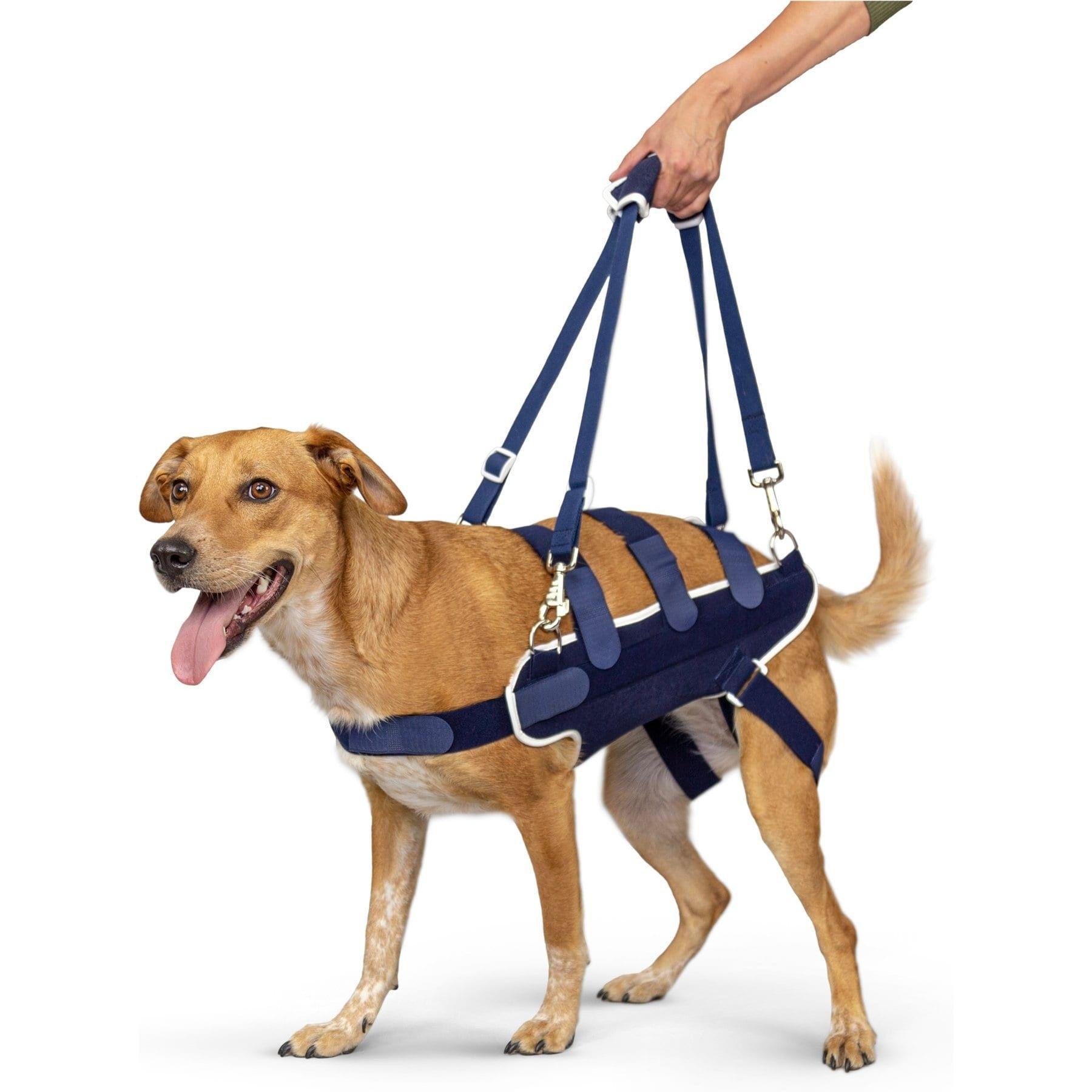
An extra-large support harness can assist veterinarian-approved transfers for a weak Doberman when fit and technique are demonstrated; it cannot diagnose or treat cervical compression.
Webvet may earn a commission when you click through to Chewy, at no extra cost to you.
The typical presentation is an adult Doberman Pinscher with a worsening, swaying rear gait, a short front stride, and sometimes neck pain. The Ohio State University Wobbler syndrome program reports a mean age of about 6 years in Dobermans, but younger adults can be affected and an older dog's wobble is not automatically Wobbler syndrome.
Age is not diagnostic. Age, breed, progression, and examination findings create a probability, not proof. A complete history should include when the gait changed, whether the dog shows pain, whether signs are steady or episodic, how all four limbs move, and whether any event involved true loss of consciousness.
- Cervical refers to the neck portion of the spine, where compression can affect signals traveling to all four limbs.
- Spondylomyelopathy is a descriptive term for vertebral and spinal cord disease, not a single cause that behaves identically in every dog.
- Ataxia means poor coordination; it can look like swaying, crossing the feet, stumbling, or placing a foot inaccurately.
- Paresis means weakness, which may appear as dragging, delayed stepping, buckling, or difficulty rising.
- Neck pain may be obvious, subtle, or absent, so a dog does not need to cry out to have clinically important disease.
The Ohio State University Wobbler syndrome research program describes the disease as multifactorial and emphasizes that Dobermans and Great Danes can show different patterns. That distinction matters because findings from one breed, age group, or surgical cohort should not automatically be applied to another. It also explains why a generic description is only a starting point. The companion WebVet guide to Wobbler syndrome in dogs covers the condition across breeds, including Great Danes.
Wobbler syndrome is not the same as dancing Doberman disease. Dancing Doberman disease is a different, uncommon neuromuscular condition historically described with intermittent flexion of a hind limb and progressive involvement of the other rear limb. It is also not dilated cardiomyopathy. Dilated cardiomyopathy can cause exercise intolerance, weakness, fainting, or sudden collapse through impaired heart function or arrhythmia. A dog may have more than one problem, so a familiar breed diagnosis should never close the differential too early.
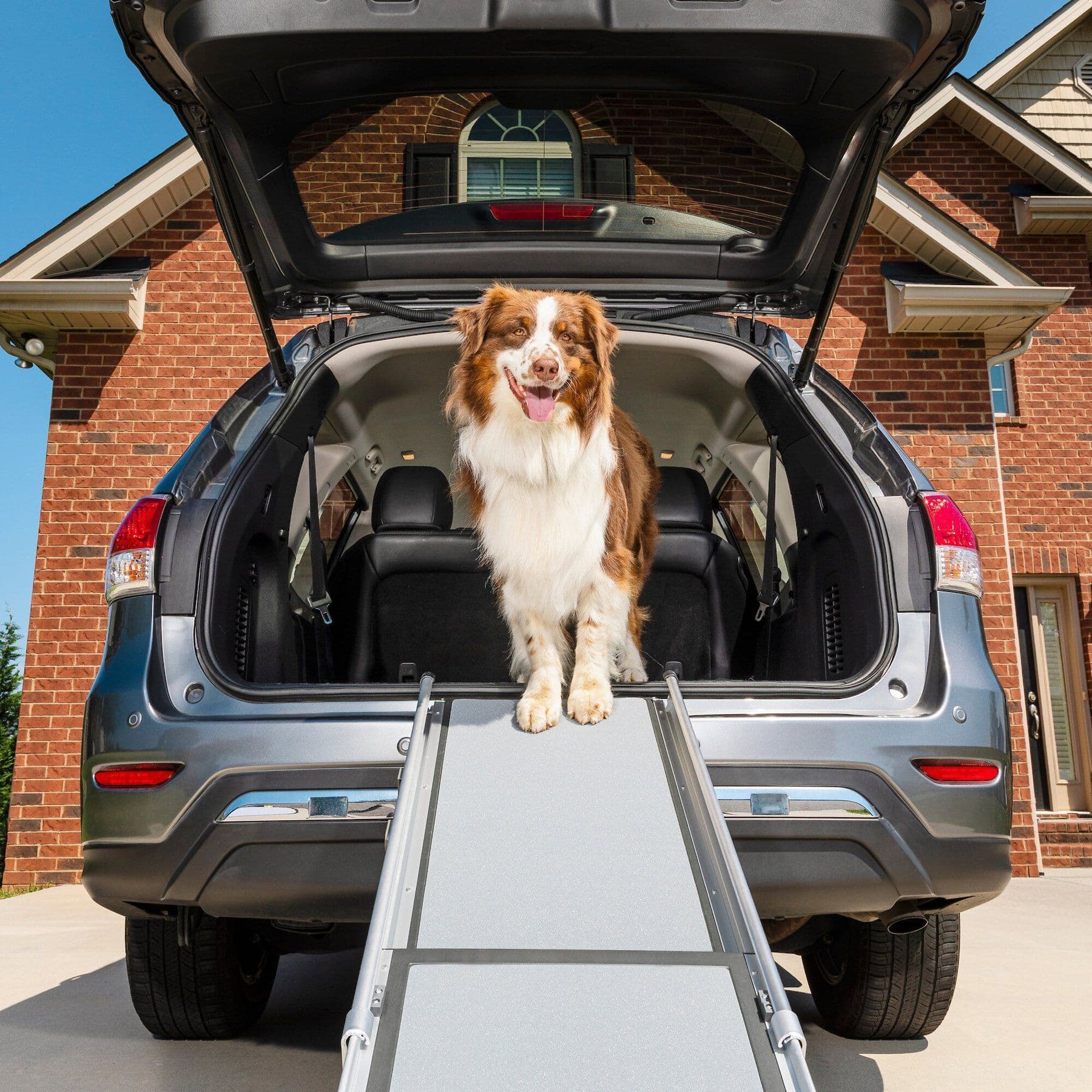
A stable ramp may reduce a high vehicle step for a neurologically stable dog after veterinary approval, but a severely weak or painful dog may require carried or stretcher transport.
Webvet may earn a commission when you click through to Chewy, at no extra cost to you.
Owners cannot prevent cervical spondylomyelopathy by choosing a bed, ramp, supplement, or exercise routine. Nutritional excess has been studied more often in rapidly growing giant breeds, and it should not be turned into a universal explanation for adult Dobermans. Feed a complete, balanced diet appropriate for life stage, maintain a healthy body condition, and avoid unprescribed supplements. Those steps support general health but do not remove inherited or structural susceptibility.
- Know your dog's normal rear-limb track, front stride, head carriage, and ability to rise on a nonslip surface.
- Use a body harness for routine control if your veterinarian recommends avoiding pressure on the neck.
- Record whether a concerning event involved stumbling while conscious or sudden loss of consciousness.
- Arrange veterinary assessment for a persistent gait change instead of waiting for the dog to fall.
- Keep emergency contact information accessible because both spinal deterioration and cardiac collapse can require urgent care.
Doberman gait and neck-pain signs
A classic description is a rear end that sways from side to side while the front limbs take short, stiff steps. The hind feet may cross, scuff, or land wider than normal. Affected dogs can stumble when turning, drag toenails, wear nails unevenly, or struggle on slick floors. As weakness increases, a dog may buckle, fall, or need several attempts to rise. These changes reflect disrupted spinal cord signaling, but they are not unique to Wobbler syndrome.

Observe only normal necessary movement on a level nonslip path. Do not pull the head up with a neck collar, flex or extend the neck, push the dog sideways, flip paws repeatedly, or walk the dog to exhaustion. A short video of spontaneous movement may help the clinician if it can be taken without delay or extra steps. A still image cannot display ataxia reliably or replace a neurologic examination.
- Rear-limb sway, crossing, scuffing, delayed paw placement, or an unsteady wide stance.
- Short or choppy front steps, stiffness through the neck and shoulders, or reluctance to lower the head.
- Weakness when rising, turning, backing, or stepping over a low threshold.
- Neck pain, crying with movement, muscle tension, or avoiding food and water bowls placed low.
- Progression from occasional missteps to frequent falling or inability to walk.
Use the table below to match what you see to the right level of care: book a prompt examination, seek urgent same-day care, or go to an emergency hospital now. When you are unsure which row fits, choose the more urgent option.
| Observed pattern | Important possibilities | Next action |
|---|---|---|
| Gradual gait deterioration, such as rear sway with a short front stride, while fully conscious | Cervical spinal cord disease, including Wobbler syndrome, plus other neurologic or orthopedic disease | Arrange prompt veterinary and neurologic assessment |
| Brief limp collapse or fainting with rapid return of awareness | Cardiac arrhythmia, dilated cardiomyopathy, or another cause of syncope | Seek urgent veterinary care and describe loss of consciousness |
| Weakness triggered by exercise without a typical persistent gait deficit | Cardiac, metabolic, neuromuscular, or other exercise-associated disease | Stop activity and obtain veterinary assessment rather than assuming a neck disorder |
| Sudden inability to stand, rapidly worsening function, severe pain, or breathing difficulty | Acute spinal or systemic emergency | Go to an emergency hospital now |
True syncope is a sudden, brief loss of consciousness caused by reduced blood flow to the brain. A dog may go limp and then recover quickly. Ataxia is poor coordination while the dog remains conscious. Owners can have difficulty distinguishing them, especially during a frightening event. Report what happened before, during, and after: exercise, excitement, coughing, gum color, limb movements, responsiveness, urination, duration, and recovery. A video can help only if someone else captures it without delaying care.
Dobermans have an important breed risk for dilated cardiomyopathy and arrhythmias. A normal-sounding heart at one visit does not exclude every rhythm disturbance. Depending on the event, a veterinarian may recommend an electrocardiogram, ambulatory rhythm monitoring, chest imaging, echocardiography, blood tests, or other cardiac workup in addition to a neurologic examination. Which workup comes first depends on the event, not on which disease is more familiar online.
Other gait differentials include orthopedic pain, lumbosacral disease, intervertebral disc extrusion, tumors, inflammatory disease, peripheral neuropathy, and degenerative or vascular spinal cord disorders. Back-leg trembling in dogs can have painful, neurologic, metabolic, and situational causes. Trembling alone does not equal cervical compression. The clinician uses the distribution of deficits, reflexes, pain, and systemic findings to decide which path deserves priority.
- Call promptly for a gait change that persists, recurs, or is accompanied by neck pain.
- Use emergency care for loss of walking, rapid deterioration, uncontrolled pain, collapse, or breathing difficulty.
- Avoid stairs, jumping, rough play, and slick surfaces until the dog is assessed.
- Use a chest-supporting body harness rather than pulling against a neck collar when moving the dog is necessary.
- Do not give human pain relievers, leftover prescriptions, or supplements as a diagnostic trial.
 Sponsored
Vet care that's always there
Unlimited video calls and messaging with licensed vets for less than a typical vet visit. One membership covers up to five pets.
Use code Pets60
Plans start at $12/month · covers up to 5 pets
- Licensed vets in most states
- Rx for 150+ conditions
- 4.7 on Trustpilot
Neurologic examination and cervical imaging
The neurologic examination asks where the dysfunction is located before asking what caused it. A veterinarian observes posture and gait, tests postural reactions and spinal reflexes, assesses muscle tone and sensation, checks for neck pain, and integrates the findings across all four limbs. Cervical spinal cord compression can create a different pattern in front and rear limbs. That pattern helps localize the lesion, but it does not reveal the exact compressive structure.

Plain neck radiographs can show vertebral shape, alignment, bone changes, and some alternative problems. They cannot display the spinal cord or intervertebral discs with enough detail to confirm most cases of Wobbler syndrome. Abnormal-looking vertebrae may not be the site causing clinical signs, and normal radiographs do not rule out compression. Positioning can require sedation and must be handled carefully. Owners should never recreate neck positions at home.
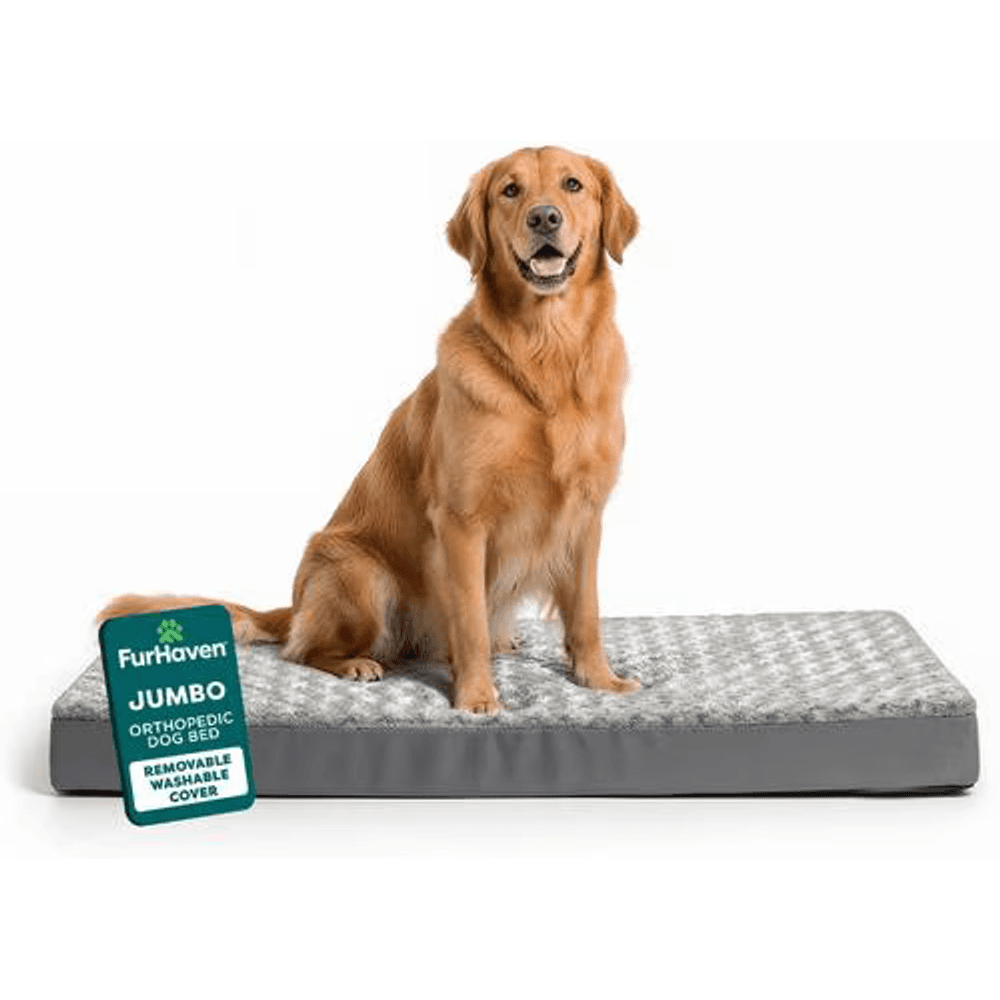
A low flat bed can support comfort and floor-level transfers for a stable Doberman, while skin care, repositioning, and the medical plan remain essential.
Webvet may earn a commission when you click through to Chewy, at no extra cost to you.
MRI is often the most informative test because it shows the spinal cord, discs, soft tissues, compression, and changes within the cord. Computed tomography (CT) provides excellent bone detail and can contribute to surgical planning. Specialists may use CT myelography or carefully selected dynamic techniques in some cases. These tests generally require anesthesia, so the team weighs neurologic need against cardiac and anesthetic risk. A Doberman with possible occult heart disease may need additional assessment before a planned procedure.
- Ask which lesion location the neurologic examination suggests and how certain that localization is.
- Ask what MRI, CT, or another test would change about treatment.
- Tell the team about fainting, exercise intolerance, coughing, family cardiac history, and prior rhythm screening.
- Clarify whether the suspected compression is static, dynamic, or uncertain and what that means clinically.
- Request an explanation of important alternatives if the imaging does not show classic cervical spondylomyelopathy.
The Texas A&M Small Animal Teaching Hospital overview describes MRI and CT as central to diagnosis. A 2009 study of 51 dogs treated conservatively for disc-associated Wobbler syndrome reported a successful outcome in about 45% of dogs and a median survival of 47 months. Ask what is known, what is uncertain, and what would change the plan.
Advanced imaging is not automatically required for every stiff step, nor should it be postponed solely because the dog is still walking. The decision depends on progression, pain, examination findings, response to initial care, anesthesia risk, and whether surgery is being considered. If imaging is deferred, obtain explicit monitoring thresholds. A plan should state what change means an urgent recheck, not merely advise watching.
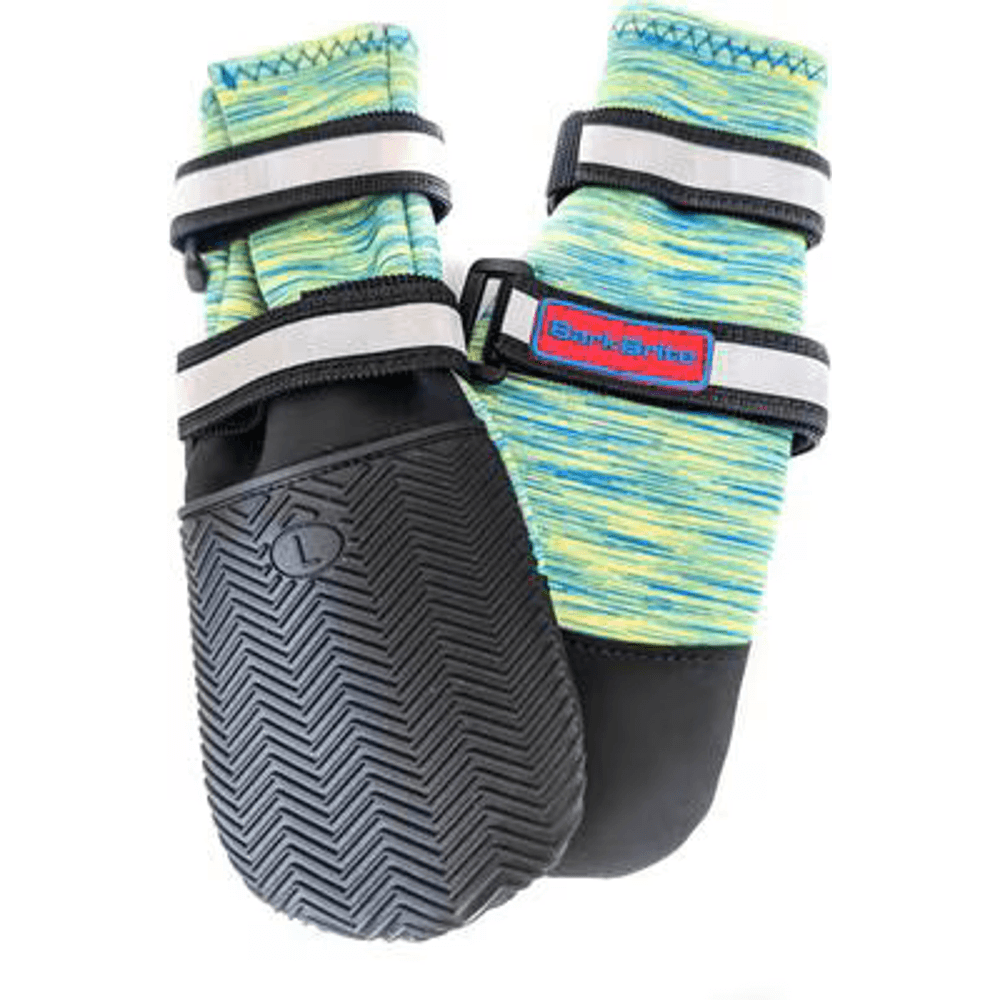
A large boot may provide short supervised traction or protect a scuffing paw after veterinary approval; monitor fit and skin because it does not correct neurologic weakness.
Webvet may earn a commission when you click through to Chewy, at no extra cost to you.
During a workup, controlled access can make a large weak dog safer to handle. If the veterinary team recommends an individual transfer aid, a properly fitted extra-large support harness may help two adults steady the body without pulling on the neck. The device must not be used to force walking, suspend the dog, or delay reassessment when function worsens.
A ramp may reduce a high vehicle step for a stable dog after the clinician approves its use. The surface must be secure, wide enough, and introduced while the dog is calm. A stable telescoping ramp is not suitable for an acutely unstable dog who may fall, and it does not prevent progression. During an emergency, use the transport method the hospital recommends rather than attempting new equipment training.
Medical care, surgery, and prognosis
Treatment depends on severity, pain, progression, imaging, the type and location of compression, concurrent disease, and caregiver capacity. Medical management may include veterinarian-prescribed activity restriction, pain control, controlled rehabilitation, weight management, and close rechecks. It does not physically remove compression. A stable walking dog may be considered for medical care, while progressive deficits, substantial compression, severe pain, or loss of function may shift the discussion toward surgery. There is no safe breed-only rule.
Surgical techniques differ because Wobbler syndrome is not one uniform lesion. The goal may be decompression, stabilization, or both. Ventral slot, dorsal laminectomy, distraction-stabilization, and other approaches each have specific indications and risks. Ask why a technique matches the imaging, what complications are most relevant, how concurrent cardiac risk is handled, and what recovery assistance a large dog will need. A second neurologic or surgical opinion is reasonable when time and stability allow.

- Medical care requires a defined activity plan, medication monitoring, and thresholds for repeat examination.
- Surgery may improve function in selected dogs but cannot guarantee a cure or prevent every future lesion.
- Rehabilitation should begin only at the stage and intensity prescribed for the individual dog.
- Large-dog nursing needs can include assisted transfers, skin checks, toileting support, and a safe nonslip route.
- Any new collapse needs separate urgent assessment even after a cervical diagnosis.
Home setup should favor level, nonslip movement and low, firm resting surfaces. A low flat orthopedic bed may improve comfort for a stable dog who can reposition, but a bed does not decompress the spinal cord. Avoid a deep surface that makes rising harder or a high bolster that creates a fall risk.
- Check elbows, hips, hocks, and toes for pressure sores.
- Keep bedding clean and dry, especially for a dog who struggles to rise.
- Ask how often a less mobile dog should be repositioned.
A large paw boot may protect a scuffing foot or provide brief traction after the rehabilitation team approves it. An appropriately fitted large protective boot can also rub, twist, trap moisture, or alter stride, so remove it for skin checks and never leave it on an unattended dog. Rugs or runners may be safer than boots for some dogs. Traction support does not correct ataxia.
How long can dogs live with wobblers?
Prognosis varies. Some dogs remain functional with medical management, some improve after surgery, and some experience progression, recurrence, or complications. Published outcomes reflect selected groups and techniques. They cannot predict how long one Doberman will live. Survival and quality of life also depend on cardiac health, cancer, kidney disease, arthritis, and other conditions common in aging dogs. The most useful prognosis combines neurologic status with the whole patient's health.
Progression can be gradual over months, stepwise, or occasionally acute. A history of slow change does not guarantee that future change will remain slow, so track the same functions the same way each week and contact the clinician when any of them changes.
- Rising from lying down, turning, and walking a short, familiar route.
- Slipping, falling, or needing more assistance than last week.
- Neck comfort, urination, appetite, and willingness to interact.
- Any change in front-limb stride, which may carry different urgency from a rear-limb misstep.
Quality-of-life decisions should not be made from the word Wobbler or from a single bad morning. Discuss comfort, ability to eat and drink, breathing, elimination, mobility with available support, sleep, social interest, complications, treatment burden, and caregiver safety. Euthanasia may be a compassionate choice when suffering cannot be controlled or essential functions cannot be supported, but timing is a decision to make with your veterinarian. Ask for a structured quality-of-life review before a crisis when possible.
- Create a written plan for routine monitoring and a separate plan for collapse or rapid deterioration.
- Use body-support techniques that protect both the dog and caregiver; a falling large dog can injure both.
- Keep cardiac screening current according to veterinary advice, even when a cervical diagnosis is established.
- Recheck sooner than scheduled if gait, pain, awareness, breathing, or exercise tolerance changes.
- Measure success by comfort and useful function, not by a promise of a perfectly normal gait.
Plan for transitions, not only the final outcome. A Doberman who walks independently today may need a second handler, a support device, or a different toileting route after fatigue or a procedure. Rehearse how two adults will move the dog without neck pressure, clear narrow turns, and keep other pets away during transfers. Ask the hospital how to recognize urinary retention, pressure injury, aspiration risk, or medication complications. If the dog is being managed medically, confirm whether a change in front-limb stride carries different urgency from a rear-limb misstep.
If surgery is planned, ask about the first night home, vehicle loading, stairs, incision protection, and what level of assistance is expected at each recheck. These details do not predict recovery, but they expose practical gaps before they become crises. They also help the clinical team judge whether home nursing is realistic or whether additional hospitalization, rehabilitation support, or equipment training is needed.
Questions about Wobbler syndrome in Dobermans
Frequently Asked Questions
How long can a doberman live with wobbler syndrome?
No one can give a number of years for an individual dog. The Ohio State University Wobbler syndrome program reports a mean survival of about 4 years after diagnosis in its studied dogs, similar for medical and surgical treatment, but that is a group average, not a prediction.
Many dogs live for years after diagnosis, and Ohio State notes that the outlook depends on how severe the compression is, how impaired the dog is, and how it is treated. What matters most is function, not the calendar: loss of walking, rapid worsening, or uncontrolled pain needs urgent care. Heart disease can also shorten a Doberman's life independently, so keep cardiac screening current.
When to put a dog down with wobblers?
No single stage of the disease decides it. Consider a structured quality-of-life discussion when pain cannot be controlled, the dog cannot eat, drink, rest, eliminate, or move safely with realistic support, or complications keep recurring.
Caregiver safety and nursing capacity are legitimate parts of the decision. Sudden deterioration should prompt emergency assessment rather than an automatic conclusion, because treatable pain or another condition may be contributing. Plan the timing with your veterinarian, ideally before a crisis.
How fast does wobbler's disease progress?
Progression varies. Wobbler syndrome in Dobermans is often slow over months, but it can worsen in steps, and the Ohio State University Wobbler syndrome program notes that about 5% of affected dogs may become acutely paralyzed in all four legs. Breed, age, and gait appearance cannot predict the pace for one dog.
Record rising, turning, falling, front and rear stride, and neck comfort, then follow the recheck thresholds your veterinarian sets. Inability to stand or walk, rapid worsening, severe pain, or collapse requires emergency veterinary care.
Can a dog recover from wobblers?
Many dogs improve, but cure is not guaranteed. In the 104-dog study summarized by the Ohio State University Wobbler syndrome program, about 80% of surgically treated dogs had a successful outcome. With medical management, about half improved, about 30% stayed stable, and about 20% worsened.
Improvement means better function and comfort, not always a normal gait. Recovery after surgery usually needs weeks of restricted activity and rehabilitation, and new compression can develop at a neighboring disc later. A neurologist can explain which outcome is realistic for the lesion your dog actually has.
Are dogs with wobblers in pain?
Some are and some are not. The Ohio State University Wobbler syndrome program describes disc herniation as a common source of compression in Dobermans and notes that walking with the head held low is usually a sign of pain. Other dogs show weakness and wobbling with little obvious discomfort.
Watch for reluctance to lower the head to bowls, stiffness, crying when moving, or muscle tension along the neck. Pain is treatable, so report it rather than waiting. Severe neck pain or pain with sudden weakness is a reason for same-day or emergency care.
What do dogs do right before they pass away?
Dogs near the end of life often stop eating and drinking, sleep most of the time, lose interest in people and surroundings, and become too weak to stand. Breathing may become slow, shallow, or labored, and some dogs lose bladder or bowel control or seem restless.
These signs are not specific to wobblers, and several also occur with treatable emergencies. Labored breathing, collapse, or visible distress needs immediate veterinary contact. Many owners choose euthanasia before this stage so the dog does not spend its final hours in discomfort, and your veterinarian can help you plan.
Sources

Editor
The Webvet Editorial Team is the in-house group of pet-care editors and writers behind Webvet, operated by Smart Pet Collective. The team researches, writes, and maintains Webvet's pet health, behavior, and medication content. Every article follows a defined editorial process: research from reputable veterinary and scientific sources, careful drafting, mandatory review of medical content by a credentialed veterinarian, and dated publication. Health and medication articles are medically reviewed by a licensed veterinary professional before they go live and are kept current over time.
Veterinarian · BVMS MRCVS
Dr. Pippa Elliott, BVMS, MRCVS, is a veterinarian with nearly 30 years of experience in companion animal practice. Dr. Elliott earned her Bachelor of Veterinary Medicine and Surgery from the University of Glasgow. She was also designated a Member of the Royal College of Veterinary Surgeons. Married with 2 grown-up kids, Dr. Elliott has a naughty Puggle named Poggle, 3 cats and a bearded dragon.


