Dog Back Legs Trembling: 13 Causes and When to Worry
Dog back legs trembling can mean anything from a cold draft to a spinal emergency. A vet breaks down 13 causes, what each looks like, what to do, and the red flags that mean call now.

BVMS MRCVS
Medically reviewed by Dr. Pippa Elliott, BVMS MRCVS · Last reviewed

This article contains affiliate links. Webvet may earn a commission when you buy through them, at no extra cost to you.
Watching your dog's back legs trembling is unsettling, especially when you cannot tell whether it is a passing shiver or the first sign of something serious. The honest answer is that hind-leg trembling sits on a wide spectrum. On one end it is completely benign, a cold dog or an excited one burning off energy. On the other end it points to pain, a spinal problem, or a hormonal emergency that needs same-day care.
This guide walks through 13 distinct causes of dog back legs trembling, what each one actually looks like at home, and exactly what to do about it. We cover when the shaking is normal, when it signals pain, when it is an emergency, how vets diagnose the cause, and how you can support a wobbly senior at home. By the end you should be able to tell a harmless tremble from a red flag, and know when "wait and watch" is fine versus when it is dangerous.
Trembling back legs are a symptom, not a diagnosis. The single most useful thing you can do is notice the pattern: when it happens (at rest, after exercise, when cold or scared), how long it lasts, and whether the legs are also weak, dragging, or buckling. Weakness plus trembling is far more concerning than trembling alone, and dragging or sudden collapse is an emergency. When in doubt, film a 20-second video on your phone and call your vet.
Is My Dog's Back Legs Trembling Normal or a Problem?

Before we get into specific diseases, it helps to understand why a dog's back leg trembles and shakes in the first place. Muscles produce small, rapid contractions when they are working hard, when they are cold, when they are fatigued, or when the nervous system that controls them is misfiring. A fine tremor in the hind end can come from any of those routes, which is why the same symptom can be trivial in one dog and alarming in another.
So should you be worried if your dog is trembling? Use a simple triage filter. Ask three questions. Is your dog acting otherwise normal, eating, walking, and responding like usual? Did the trembling start with an obvious trigger, like cold weather, a thunderstorm, or a hard play session? And does it stop within a few minutes once the trigger is gone? If the answer to all three is yes, occasional hind-leg trembling is usually benign and worth watching rather than rushing in.
The picture changes when trembling shows up at rest for no reason, when it is paired with weakness or a wobbly, drunken gait, when your dog will not put weight on a back leg, or when other symptoms appear such as not eating, vomiting, or hiding. Those combinations move the needle from "monitor" to "call the vet."
Throughout this article we link out to sibling guides in our broader why is my dog shaking hub, which is the place to start if the shaking is whole-body rather than focused on the back legs. Here, we stay focused on the hind end.
13 Reasons a Dog's Back Legs Tremble

Here is the full list of causes we will work through, grouped roughly from most benign to most serious. Use this as a map; the detailed sections follow.
| Cause | How worried to be | Typical clue |
|---|---|---|
| Cold or shivering | Low | Cold environment, stops when warm |
| Fear, stress, or anxiety | Low | Clear trigger (storm, vet, fireworks) |
| Fatigue after exercise | Low to moderate | Follows hard activity, resolves with rest |
| General muscle weakness in seniors | Moderate | Gradual, age-related, worse when tired |
| Osteoarthritis | Moderate | Stiffness, slow to rise, worse in cold |
| Hip dysplasia | Moderate | "Bunny-hopping," loose-hipped gait |
| Luxating patella | Moderate | Skipping steps, intermittent hop |
| Pain from any source | Moderate to high | Guarding, panting, reluctance to move |
| Intervertebral disc disease (IVDD) | High | Sudden, painful, may progress to paralysis |
| Degenerative myelopathy | High (progressive) | Slow, painless wobble and dragging |
| Other neurological or spinal causes | High | Wobbling, knuckling, coordination loss |
| Low blood sugar (hypoglycemia) | High | Weakness, disorientation, can collapse |
| Addison disease and electrolyte imbalance | High (can be fatal) | Vague, waxing-waning, sudden crisis |
| Tick paralysis | High (emergency) | Ascending weakness after tick exposure |
That is more than nine on purpose. The common "9 causes" framing leaves gaps, and what causes a dog's back legs to shake genuinely spans this wider list. We have folded in the position-specific patterns (shaking while lying down, shaking while standing) and the sudden-onset cases so you can match what you are actually seeing. Let us take them in turn.
Cold and Shivering
The simplest explanation for a dog back legs trembling is the same reason you shiver: the body shakes muscles to generate heat. Small breeds, thin or short-coated dogs, puppies, and seniors lose heat fastest and shiver soonest. Hind-leg and whole-body shivering in a chilly room, after a bath, or on a cold walk is usually just thermoregulation.
What it looks like: a fine, fast, full-body or hind-end tremble that starts in the cold and stops once your dog warms up. Your dog is otherwise bright, alert, and normal.
What to do: warm the dog. Dry them thoroughly after baths, add a sweater for short-coated breeds in winter, and provide a warm bed away from drafts. If the shaking continues after your dog is warm and dry, cold is not the answer and you should look further. Our companion guide on dog shivering: cold versus something more walks through how to tell temperature shivering apart from the worrying kind.
Fear, Stress, and Anxiety
Adrenaline makes muscles tremble. A frightened dog often shakes in the hind end and tucks the tail, and the trembling can look just like a medical tremor. Common triggers include thunderstorms, fireworks, vet visits, car rides, and unfamiliar people or dogs.
What it looks like: trembling that appears with a clear emotional trigger, often paired with a lowered body, pinned ears, lip-licking, yawning, hiding, or pacing. It fades once the dog feels safe.

The number-one veterinarian-recommended joint supplement brand. Glucosamine, chondroitin, and MSM support cartilage and cushion the joints, easing the stiffness and hind-end weakness that can leave an older or arthritic dog trembling.
Webvet may earn a commission when you click through to Chewy, at no extra cost to you.
What to do: remove or soften the trigger, give your dog a quiet retreat, and stay calm yourself. For dogs whose anxiety is frequent or severe, talk to your vet about a behavior plan; our dog shaking from fear and anxiety guide covers desensitization and when medication helps. Can cold or anxiety make a dog's back legs shake? Yes, and they are two of the most common benign causes, but both should resolve when the dog is warm and calm.
Fatigue After Exercise
Muscles tremble when they are spent. After a long hike, a hard sprint, or an intense play session, a dog's back legs shaking for a few minutes is the muscular equivalent of your legs feeling rubbery after leg day. Do dogs' back legs tremble after exercise? Yes, briefly, and it should ease with rest, water, and a chance to cool down.
What it looks like: trembling that follows obvious exertion, eases within several minutes of rest, and is not paired with limping, collapse, or distress. Dogs back legs shaking when excited follows the same logic; arousal and adrenaline drive a transient tremor that settles.
What to do: let your dog rest and rehydrate. Build fitness gradually rather than weekend-warrior bursts, especially in unfit or older dogs. Persistent post-exercise trembling, trembling that comes with heavy collapse, or trembling in hot weather (which can signal heat-related illness) deserves a call rather than a wait.
General Muscle Weakness and Atrophy in Seniors
As dogs age, they lose muscle mass (a process called sarcopenia) and the strength that goes with it. Weaker muscles fatigue and tremble sooner, especially in the large muscle groups of the hindquarters. This is a frequent, partly normal contributor to senior dog back legs trembling, although it often travels alongside arthritis or nerve changes rather than appearing alone.
What it looks like: a senior dog shaking and back legs weak after standing for a while, slow to rise, tiring on walks, with visibly thinner thigh muscles than in younger years. Old dog shaking while lying down can also reflect tired, under-supported muscles working to hold position.
What to do: keep aging dogs lean and gently active; muscle responds to use at any age. Controlled walks, sniff-paced outings, and vet-guided physical therapy preserve hind-end strength. Because weakness in seniors so often overlaps with treatable disease, this is worth a vet check rather than chalking it all up to age. For a broader picture of what is normal as dogs slow down, see our guide on dog energy levels by age.
Osteoarthritis
Osteoarthritis is one of the most common causes of chronic pain and limb weakness in senior and large-breed dogs. Worn joint cartilage makes movement painful, and pain plus compensating muscles produce stiffness, lameness, and trembling, particularly when rising or after rest. Can arthritis cause a dog's back legs to tremble? Absolutely; dog back leg shaking arthritis is a classic pairing.
What it looks like: stiffness that is worst first thing in the morning and after naps, reluctance to jump or climb stairs, a stiff or bunny-hopping gait, slowing on walks, and trembling in the hind legs as sore joints are loaded. Cold, damp weather usually makes it worse.
What to do: arthritis is manageable, not curable. Veterinary options include weight control, prescription anti-inflammatories, joint-support diets and supplements, modern injectable treatments, and physical rehab. Do not give human pain relievers; many are toxic to dogs. According to the American Animal Hospital Association, early diagnosis and a multi-modal plan keep arthritic dogs comfortable and mobile for far longer, so an exam is the right first step.
Hip Dysplasia
Hip dysplasia is a malformation of the hip joint where the ball and socket do not fit together properly. The joint becomes loose, then arthritic, then painful. It is most common in large and giant breeds but can occur in any dog. The instability and pain can produce hind-leg trembling and a distinctive gait.
What it looks like: a "bunny-hopping" run where both back legs move together, a loose or swaying rear end, difficulty rising, reluctance to use stairs, and trembling or weakness in the hindquarters after activity. Signs can appear young in some dogs and later in others as secondary arthritis sets in.
What to do: your vet can confirm hip dysplasia with a physical exam and X-rays. Management ranges from weight control, exercise modification, and pain relief to surgical options in significant cases. The Cornell Riney Canine Health Center notes that joint disease and mobility loss are common in dogs and respond best to early veterinary diagnosis and a structured management plan.
Luxating Patella
A luxating patella is a kneecap that slips out of its groove, common in small breeds but seen across sizes. When the kneecap pops out, the leg may lock, skip, or wobble, and the muscle effort to correct it can look like trembling.
What it looks like: an intermittent "skip" or hop in one back leg, a dog that suddenly holds a leg up for a few strides then walks normally again, and occasional trembling or a brief shake as the kneecap slides. Many dogs are otherwise comfortable between episodes.
What to do: have your vet grade the luxation. Mild cases are managed conservatively with weight control, joint support, and activity guidance, while higher grades may need surgical correction to prevent arthritis and chronic pain down the line.
Pain From Any Source
Pain anywhere in the hind end (joints, muscles, the back, the abdomen, even a sore paw) can drive trembling. Is back leg trembling a sign of pain in dogs? Often, yes. Dogs are stoic and rarely cry out; a fine tremor, a hunched posture, and reluctance to move may be the loudest signal you get.
What it looks like: trembling paired with panting at rest, a tense or hunched body, guarding a body part, reluctance to be touched, restlessness, a tucked tail, or a drop in appetite and activity. The trembling may be steady rather than tied to cold or excitement.
What to do: treat unexplained trembling-plus-pain signs as a reason to call your vet rather than to medicate at home. The American Veterinary Medical Association advises owners to seek veterinary care when trembling and weakness are persistent or paired with other symptoms, because pain that produces visible trembling is usually significant.
Intervertebral Disc Disease (IVDD)
Intervertebral disc disease is a common and serious cause of hind-leg weakness, trembling, and sudden paralysis. A cushioning disc between the vertebrae bulges or ruptures and presses on the spinal cord. According to the Merck Veterinary Manual, it is especially common in chondrodystrophic (long-backed, short-legged) breeds such as Dachshunds and Corgis, but it can affect any dog.
What it looks like: often a sudden onset, sometimes after a jump or fall, with back pain, a hunched or tense posture, trembling, weakness or wobbliness in the back legs, reluctance to move, and in more severe cases dragging of the hind feet or full hind-leg paralysis. Many dogs are clearly painful and may yelp when picked up.
What to do: treat suspected IVDD as urgent. Confine your dog to prevent worsening, avoid stairs and jumping, and get to a vet promptly. The window to preserve or restore function can be short once weakness or dragging appears. Mild cases may respond to strict rest and medication; cases with significant weakness or paralysis may need emergency imaging and surgery.
Degenerative Myelopathy
Degenerative myelopathy is a progressive disease of the spinal cord in older dogs. The Merck Veterinary Manual describes it as causing hind-limb weakness, wobbling, and dragging of the back feet. Crucially, it is typically painless, which is part of what distinguishes it from IVDD and arthritis.

Disposable, reusable natural-rubber boots that slip on like a balloon to give a dog waterproof paw protection and extra grip on slippery floors, a simple traction aid for a senior or wobbly dog. No straps, 12 boots per pack.
Webvet may earn a commission when you click through to Chewy, at no extra cost to you.
What it looks like: a slow, gradual decline starting with subtle hind-end wobble and trembling, scuffed or dragged back toenails, crossing of the back legs, and difficulty with traction on smooth floors. Over months it progresses to hind-leg weakness and eventually loss of use, without obvious pain. Breeds such as German Shepherds, Boxers, and Corgis are over-represented.
What to do: there is no cure, but diagnosis matters because it changes the plan. Your vet will rule out treatable look-alikes (IVDD, arthritis, tumors) first. Physical rehabilitation, harnesses and slings, traction aids on slippery floors, and home modifications help maintain quality of life and mobility for as long as possible.
Other Neurological and Spinal Causes
Beyond IVDD and degenerative myelopathy, several other neurological problems can make the back legs tremble, wobble, or give out: spinal tumors, fibrocartilaginous embolism (a "spinal stroke"), nerve inflammation, and, in older dogs, brain or vestibular events. What are the signs of a dog having a mini stroke? Sudden loss of balance, a head tilt, circling, rapid eye movements, disorientation, and weakness on one side or in the hind end; some dogs tremble or stagger as if drunk.
What it looks like: a wobbly, uncoordinated gait, knuckling over of the paws (walking on the tops of the feet), crossing legs, head tilt, circling, or sudden weakness that does not fit a simple joint or muscle pattern. Onset can be sudden or gradual depending on the cause.
What to do: neurological signs warrant prompt veterinary evaluation, and sudden ones warrant emergency care. Diagnosis may involve neurological exams and advanced imaging (MRI or CT). Many of these conditions are treatable or manageable, and some, like spinal strokes, can improve substantially with time and rehab, but only a vet can sort one from another.
Low Blood Sugar (Hypoglycemia)
Can low blood sugar make a dog's legs shake? Yes. When blood glucose drops too low, the body cannot fuel muscles and nerves properly, producing weakness, trembling, disorientation, and in severe cases seizures or collapse. It is most dangerous in toy-breed puppies, very small dogs, diabetic dogs on insulin, and dogs with certain illnesses.
What it looks like: trembling or shakiness paired with weakness, wobbliness, glazed or vacant behavior, hunger, and in severe cases collapse or seizure. It can come on relatively quickly, especially if a small dog has missed meals or a diabetic dog has had too much insulin.
What to do: this is urgent. If your dog is conscious and able to swallow, you can rub a small amount of honey or corn syrup on the gums and then get to a vet. If your dog is collapsing or seizing, go to an emergency clinic immediately. Recurrent low blood sugar always needs a diagnosis, because the underlying cause (diabetes management, liver disease, certain tumors) must be addressed.
Addison Disease and Electrolyte Imbalance
Addison disease (hypoadrenocorticism) is sometimes called a "great pretender" because its signs are so vague, and it is one reason owners search for the silent killer in dogs. The adrenal glands fail to produce enough cortisol and aldosterone, which throws off electrolytes like sodium and potassium. The result can be intermittent weakness, trembling, lethargy, vomiting, and poor appetite, sometimes waxing and waning for weeks before a sudden, life-threatening crisis.
What it looks like: episodes of weakness, hind-end trembling, lethargy, reduced appetite, and stomach upset that come and go, often worse during stress. In an "Addisonian crisis," a dog can suddenly collapse with dangerously abnormal electrolytes and shock.
What to do: because the signs are nonspecific, Addison disease is diagnosed with blood tests (including a specific adrenal stimulation test). If your dog has vague, recurring bouts of weakness and trembling that do not add up, ask your vet specifically about checking electrolytes and adrenal function. A crisis is an emergency, but well-managed Addisonian dogs can live full, normal lives on replacement medication.
Tick Paralysis
Certain ticks secrete a toxin in their saliva that causes a progressive, ascending paralysis. It classically starts in the back legs as weakness and wobbliness and moves forward over hours to a day or two. It is one of the more dramatic and time-sensitive causes of a dog's back legs suddenly shaking and giving out.
What it looks like: weakness and trembling that begins in the hind legs and ascends, a change in bark or voice, difficulty swallowing, and in severe cases breathing trouble. There is usually a history of tick exposure, though the tick itself can be hard to find.
What to do: this is an emergency. Find and remove any ticks and get to a vet immediately, because the paralysis can affect breathing. Recovery is often good once the offending tick is removed, but the breathing risk makes this a do-not-wait situation. Year-round tick prevention is the best defense.
Back Legs Trembling While Lying Down or Resting

Why are my dog's back legs shaking while lying down? Trembling at rest is more informative than it sounds, because the benign triggers (exercise, excitement) are off the table. When a dog's back legs shake while lying down, think about a few buckets.
First, temperature and dreaming. A cold dog shivers even while curled up, and dogs twitch and paddle their legs during REM sleep; dog back legs trembling while sleeping that stops the moment they wake is almost always dream activity, not disease.
Second, pain and arthritis. Sore joints and muscles can tremble as a dog settles or holds a position, which is why old dogs back legs shaking while lying down so often traces back to arthritis or muscle fatigue. Old dog shaking while lying down is one of the most-searched versions of this for a reason.
Third, the more serious causes. Trembling that happens at rest while the dog is awake, calm, and warm, with no dream movement, is the kind worth investigating, because it can reflect pain, neurological disease, or metabolic problems like low blood sugar or Addison disease.
For dogs back legs shaking while lying down treatment is not one thing; it depends entirely on the cause. Warming a cold dog, treating arthritis, managing pain, or correcting a metabolic problem are very different interventions, which is why a diagnosis comes before any treatment.
 $65 · no membership
Have a health question about your dog?
A licensed vet can assess your dog over video and prescribe online when it's appropriate.
 Talk to a vet
- Licensed vets
- All 50 states
- same-day Rx

Webvet may earn a commission if you book.
Back Legs Trembling While Standing Still
Why are my dog's back legs shaking while standing still? Standing is work. Holding the body upright loads the hind-leg muscles and joints continuously, so weakness, pain, and fatigue often show up most clearly when a dog stands in one place. Dogs back legs shaking while standing is a common pattern in seniors and in dogs with joint disease.
In an older dog, standing tremor usually reflects some mix of muscle loss, arthritis, and early nerve changes; the legs simply tire and tremble under sustained load. Old dogs back legs shaking while standing frequently improves with arthritis treatment and strengthening work, because reducing pain and rebuilding muscle lets the legs hold position with less strain.
In a younger or sicker dog, a standing tremor can point to pain, a neurological problem, or a metabolic cause, especially if the dog also seems weak, unsteady, or reluctant to move. The same triage applies: trembling alone in an otherwise normal dog is lower-risk than trembling with weakness, wobbling, or illness signs.
As with the resting pattern, old dogs back legs shaking while standing treatment is cause-specific. There is no single fix; the win comes from identifying whether arthritis, weakness, nerve disease, or a systemic illness is driving it, then treating that.
Senior and Older Dogs: Trembling and Weak Back Legs
Why are my senior dog's back legs trembling and weak? In older dogs, hind-leg trembling is rarely one thing. It is usually a stack: age-related muscle loss, arthritis in the hips and knees, slower nerves, and sometimes early degenerative myelopathy, all adding up to legs that tire, tremble, and feel unsteady. Senior dog back legs trembling and old dog back legs trembling almost always deserve a vet workup rather than a shrug, because so many contributors are treatable.
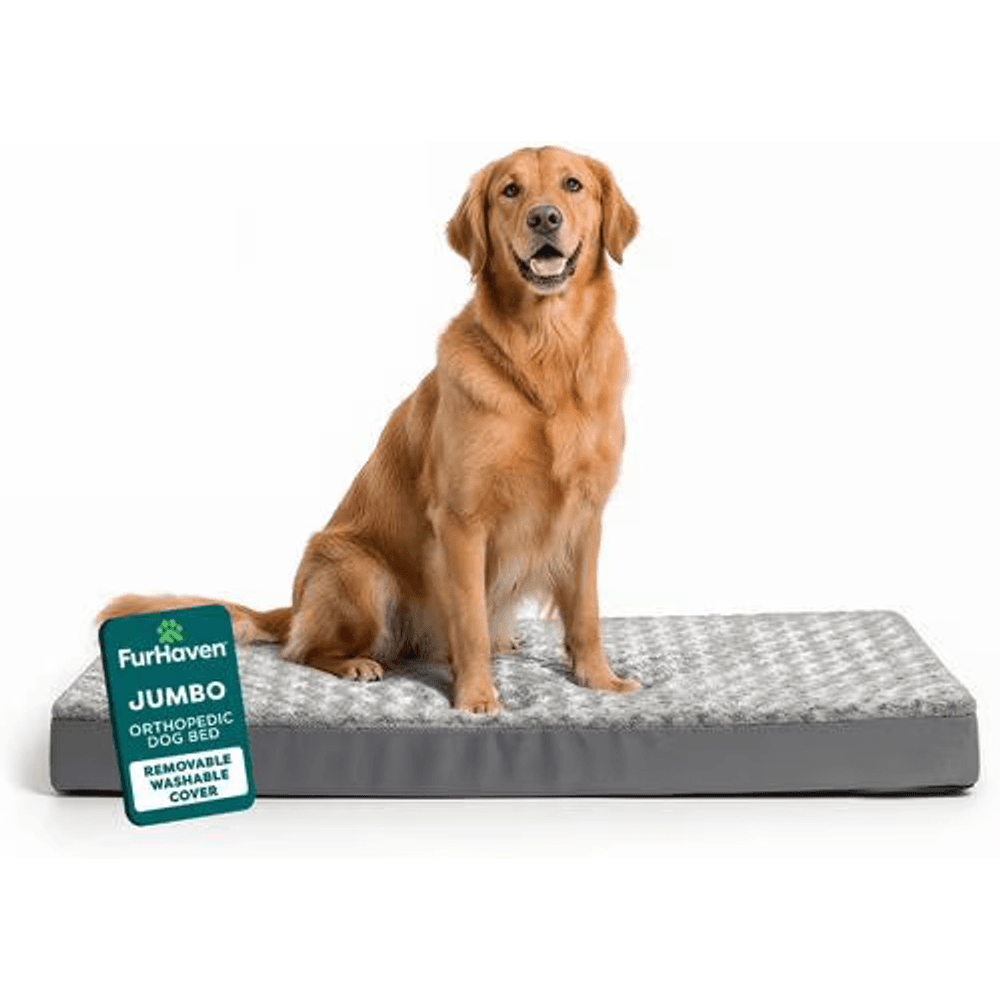
A plush orthopedic foam mattress that cushions aging joints and pressure points, giving a stiff or trembling senior dog warm, supportive rest.
Webvet may earn a commission when you click through to Chewy, at no extra cost to you.
The reassuring part is that "old age" is not a diagnosis and it is not a dead end. A senior dog shaking and back legs weak can often be helped substantially by treating the arthritis, rebuilding muscle with appropriate exercise and rehab, improving traction at home, and managing weight. The goal shifts from cure to comfort and function, and a lot of function can be preserved.
The watch-outs in seniors are the same red flags as in any dog, but they carry extra weight because older dogs are more prone to serious disease. Sudden weakness, dragging a leg, collapse, refusing food, or trembling paired with other illness signs should never be filed under "just getting old" without a vet's input.
For senior dogs, the biggest mistake owners make is assuming trembling, weak back legs are an untreatable part of aging. They usually are not. Arthritis, muscle loss, and many nerve and metabolic problems respond to treatment. A vet visit turns "my old dog is just slowing down" into a specific, actionable plan, and often a more comfortable, more mobile dog.
Sudden Back Leg Trembling: What It Can Mean
My dog's back legs are shaking all of a sudden, what is happening? Sudden onset shifts the odds toward the more serious causes. While a dog can shake suddenly from a cold draft, a fright, or a hard sprint, dog hind legs shaking suddenly with weakness, pain, wobbling, or collapse points toward IVDD, a spinal or vascular event (a "spinal stroke" or mini stroke), low blood sugar, an Addisonian crisis, or tick paralysis.
The key distinction is what comes WITH the sudden trembling. Sudden trembling in a dog that is otherwise bright, with a clear trigger that passes, is usually benign. Sudden trembling with any of the following is an emergency: dragging or knuckling the back feet, inability to stand or bear weight, collapse, disorientation, a head tilt, repeated vomiting, or seizures.
Because several of the sudden-onset causes are time-sensitive (IVDD outcomes hinge on early treatment, tick paralysis can affect breathing, hypoglycemia and Addisonian crisis can be fatal), the safe move when back legs start shaking abruptly and the dog is not clearly fine is to call your vet or an emergency clinic right away.
Trembling After Exercise, When Excited, or When Cold
Three of the most common benign triggers deserve grouping, because they share a logic: the trembling is driven by a temporary physiological state, not a disease, and it resolves when the state passes.
Dog back legs shaking after exercise is muscular fatigue. Spent muscles tremble; rest, water, and a cool-down fix it. The caution is heat: in hot weather, post-exercise trembling and weakness can signal overheating, which is dangerous and needs immediate cooling and a vet.
Dogs back legs shaking when excited is adrenaline. An aroused dog, anticipating a walk, a meal, or a visitor, can vibrate with anticipation, hind legs included. It settles as the excitement does.
Dog back legs trembling cold is thermoregulation, covered above. The common thread across all three: a clear trigger, a short duration, and a dog that is otherwise completely normal. When those boxes are checked, monitoring at home is reasonable.
When to Call the Vet (and What Is an Emergency)
This is the part that matters most, because dog back legs trembling sits inside YMYL (your-money-or-your-life) territory where guessing wrong is costly. Should I be worried if my dog is trembling? The trembling itself is a clue; the company it keeps decides the urgency.
Call your vet soon (within a day or two) if:
- Trembling is new, persistent, or happening at rest in a calm, warm dog.
- Your dog is stiff, slow to rise, or reluctant to jump or climb stairs.
- A senior dog's back legs are getting weaker or more unsteady over weeks.
- Trembling comes and goes alongside vague off days (low appetite, low energy).
- Dog back legs shaking not eating: trembling plus appetite loss is a real flag, because it suggests the dog feels unwell rather than just cold or excited.
Treat it as an EMERGENCY and go now if you see:
- Dragging the back legs, knuckling over, or walking on the tops of the feet.
- Sudden inability to stand, bear weight, or use the back legs (possible paralysis).
- Collapse, fainting, or seizures.
- Sudden severe back or neck pain (crying out, hunching, refusing to move).
- Signs of a mini stroke: sudden loss of balance, head tilt, circling, disorientation.
- Trembling with repeated vomiting, pale gums, a bloated abdomen, or labored breathing.
- Known or suspected tick exposure with ascending hind-leg weakness.
What is the silent killer in dogs? Owners often use that phrase for conditions whose early signs are easy to dismiss until they turn into a crisis, such as Addison disease, certain heart conditions, bloat, and some cancers. The lesson is not to panic over every shiver; it is to take vague, recurring weakness and trembling seriously enough to get bloodwork rather than waiting for a collapse.
People also ask what are the signs that a dog is about to pass away, and it is a fair fear when a beloved senior's back legs start failing. Dogs near the end of life often show profound weakness and inability to stand, loss of interest in food and water, withdrawal, labored breathing, incontinence, and a marked drop in responsiveness. Importantly, trembling weak back legs on their own are usually NOT a sign of imminent death; they are far more often a treatable mobility or pain problem. If you are worried your dog is declining, a vet can assess quality of life honestly and compassionately, and can often help more than you expect.
How Vets Diagnose and Treat Trembling Back Legs

When you bring in a dog with trembling back legs, the vet's job is to figure out which of the many causes is in play. The single most helpful thing you can bring is information: when it started, how often it happens, what triggers it, whether the legs are weak or just shaky, and ideally a short phone video of an episode, because trembling often will not perform on cue in the exam room.
The workup typically layers from least to most invasive:
- History and physical exam. Posture, gait, muscle mass, joint range of motion, and pain responses tell the vet a great deal before any test is run.
- Neurological exam. Testing reflexes, paw placement (do the feet knuckle?), and coordination separates a nerve or spinal problem from a joint or muscle one.
- Bloodwork and electrolytes. This catches low blood sugar, Addison disease, organ disease, and other systemic causes that produce trembling and weakness.
- Imaging. X-rays evaluate hips, knees, and the spine for arthritis, hip dysplasia, and disc disease; advanced imaging (MRI or CT) is used when a spinal-cord or brain cause like IVDD, a tumor, or degenerative myelopathy is suspected.
Treatment follows the diagnosis, which is why there is no single answer to dog back leg shaking treatment. A cold dog needs warmth; an arthritic dog needs weight control, pain relief, joint support, and rehab; an IVDD dog needs rest, medication, or surgery; a hypoglycemic or Addisonian dog needs the underlying metabolic problem corrected. Matching treatment to cause is the whole game.

360-degree Wi-Fi pet camera so you can watch your cat's resting breathing rate and behavior from your phone and catch worrying changes early.
Webvet may earn a commission when you click through to Chewy, at no extra cost to you.
| Cause | Typical treatment direction |
|---|---|
| Cold / fear / fatigue | Address the trigger; no medical treatment needed |
| Osteoarthritis | Weight control, vet pain meds, joint support, rehab |
| Hip dysplasia | Weight and activity management, pain relief, sometimes surgery |
| Luxating patella | Conservative management or surgical correction by grade |
| IVDD | Strict rest and meds (mild) to emergency surgery (severe) |
| Degenerative myelopathy | Rehab, mobility aids, traction; no cure |
| Hypoglycemia | Emergency glucose, then treat the underlying cause |
| Addison disease | Lifelong hormone replacement; crisis is an emergency |
| Tick paralysis | Emergency tick removal and supportive care |
At-Home Support for a Dog With Trembling, Weak Back Legs

What home treatment helps a dog with trembling, weak back legs? Once your vet has ruled out emergencies and pinned down the cause, there is a lot you can do at home to support mobility and comfort, especially for arthritic and aging dogs. None of this replaces veterinary care, and how to strengthen old dogs hind legs always works best as part of a vet-guided plan.
- Improve traction. Smooth floors are a tripping hazard for wobbly dogs. Add rugs, runners, or yoga mats along their main routes, and consider toe-grip socks or nail caps.
- Keep them lean. Every extra pound loads sore joints and weak muscles. Lean body weight is one of the most powerful, no-cost interventions for mobility.
- Gentle, consistent exercise. Short, frequent, low-impact walks and sniff-paced outings maintain muscle better than occasional long hauls. Your vet may add specific strengthening exercises or refer you to canine rehab.
- Warmth and a good bed. An orthopedic bed and a warm, draft-free spot ease stiff joints and reduce cold-driven trembling.
- Mobility aids. Harnesses with a handle, support slings, ramps for cars and couches, and raised food bowls reduce strain and prevent falls.
- Follow the medical plan. Give prescribed joint-support diets, supplements, and pain medication exactly as directed, and never substitute human painkillers.
The bottom line: dog back legs trembling ranges from a harmless shiver to a genuine emergency, and the difference lies in the details around it. Trembling with a clear trigger that passes is usually fine to monitor. Trembling at rest, trembling with weakness, dragging, or collapse, and trembling alongside other illness signs all need a vet, sometimes urgently. When you are unsure, film it and call. You will rarely regret asking, and for the time-sensitive causes, asking early is what protects your dog.
Frequently Asked Questions
What causes my dog's back legs to shake?
Many things, ranging from benign to serious. Common benign causes are cold, fear or excitement, and muscle fatigue after exercise. More serious causes include osteoarthritis, hip dysplasia, a luxating patella, pain, intervertebral disc disease (IVDD), degenerative myelopathy, other neurological problems, low blood sugar, Addison disease, and tick paralysis. The trigger, the timing, and whether the legs are also weak help narrow it down.
Why does my dog's back leg tremble and shake?
A back leg trembles when the muscle is working hard, is cold, is fatigued, or when the nerves controlling it are misfiring. If it happens with an obvious trigger (cold, stress, hard play) and stops quickly, it is usually benign. If it happens at rest, comes with weakness or wobbliness, or pairs with other illness signs, it more likely reflects a medical problem and should be checked.
Should I be worried if my dog is trembling?
Not always. Use the triage filter: is your dog otherwise normal, was there a clear trigger, and does it stop within a few minutes? If yes to all three, monitor at home. Be worried (and call the vet) if trembling happens at rest, comes with weakness, dragging, or collapse, or pairs with not eating, vomiting, or other illness signs.
Why are my dog's back legs shaking while lying down?
At rest, the benign exercise and excitement causes are off the table, so think temperature (a cold dog shivers), dreaming (twitching during sleep that stops on waking), or pain and arthritis as the dog holds a position. Trembling in a calm, warm, awake dog at rest is the kind worth investigating for pain, neurological disease, or a metabolic cause.
Why are my dog's back legs shaking while standing still?
Standing continuously loads the hind-leg muscles and joints, so weakness, arthritis, and fatigue often show up most when a dog stands in one place. In seniors this usually reflects muscle loss and joint disease and often improves with treatment. In younger or sicker dogs it can signal pain, a neurological problem, or a systemic illness, especially with other symptoms.
Why are my senior dog's back legs trembling and weak?
In older dogs it is usually a combination: age-related muscle loss, arthritis, slower nerves, and sometimes early degenerative myelopathy. The good news is that most contributors are treatable. Do not write it off as just old age; a vet can build a plan with arthritis treatment, strengthening, traction at home, and weight control that meaningfully improves comfort and mobility.
Should I be worried if my dog's back legs are shaking but he acts normal?
If the trembling is occasional, tied to a clear trigger like cold or excitement, stops quickly, and your dog eats, walks, and behaves normally, it is reasonable to monitor and note the pattern. The moment acts normal stops being true (weakness, limping, appetite loss, repeated episodes at rest), it is time to call your vet.
Can arthritis cause a dog's back legs to tremble?
Yes. Osteoarthritis is one of the most common causes of hind-leg trembling, especially in senior and large-breed dogs. Sore joints make movement painful, and the dog trembles, stiffens, and is slow to rise, often worse in the morning and in cold weather. Arthritis is very manageable with vet-guided weight control, pain relief, joint support, and rehab.
Why are my dog's back legs suddenly shaking?
Sudden onset shifts the odds toward serious causes. It can still be a cold draft, a fright, or a hard sprint, but sudden hind-leg trembling with weakness, pain, wobbling, dragging, or collapse points toward IVDD, a spinal or mini stroke, low blood sugar, an Addisonian crisis, or tick paralysis. If your dog is not clearly fine, treat sudden onset as urgent and call your vet.
Do dogs' back legs tremble after exercise?
Yes. Fatigued muscles tremble, so a brief shake after a hard hike, sprint, or play session is normal and eases with rest, water, and a cool-down. The exception is hot weather, where post-exercise trembling and weakness can signal overheating, which is dangerous and needs immediate cooling and veterinary care.
Can cold or anxiety make a dog's back legs shake?
Yes, both are among the most common benign causes. A cold dog shivers to generate heat, and an anxious or frightened dog trembles from adrenaline, often with a tucked tail and hiding. Both should stop once the dog is warm or calm. If trembling continues after warming and calming your dog, look for another cause.
Is back leg trembling a sign of pain in dogs?
It often is. Dogs are stoic and rarely cry out, so a fine tremor, a hunched posture, panting at rest, guarding a body part, and reluctance to move may be the main signs of pain. Treat unexplained trembling-plus-pain signs as a reason to see your vet, and never give human painkillers, which are commonly toxic to dogs.
What home treatment helps a dog with trembling, weak back legs?
After your vet rules out emergencies and identifies the cause, supportive care helps: improve floor traction with rugs and toe grips, keep your dog lean, do gentle and consistent low-impact exercise, provide a warm orthopedic bed, use mobility aids like harnesses and ramps, and follow the prescribed medical plan exactly. These support but do not replace veterinary treatment.
When is a dog's trembling back leg an emergency?
Go to a vet immediately if you see dragging legs, knuckling, sudden inability to stand or bear weight, collapse, seizures, sudden severe back or neck pain, mini-stroke signs (head tilt, circling, loss of balance), trembling with repeated vomiting or labored breathing, or ascending hind-leg weakness after tick exposure. For these, early treatment protects your dog.
Can low blood sugar make a dog's legs shake?
Yes. When blood glucose drops too low, muscles and nerves cannot get enough fuel, causing trembling, weakness, disorientation, and in severe cases collapse or seizures. It is most dangerous in toy-breed puppies, very small dogs, and diabetic dogs on insulin. If your conscious dog can swallow, rub honey or corn syrup on the gums and get to a vet; if collapsing or seizing, go to emergency care now.
What is the silent killer in dogs?
Owners use the phrase for conditions whose early signs are easy to dismiss until a crisis, such as Addison disease, certain heart conditions, bloat, and some cancers. With trembling back legs, the relevant lesson is that vague, recurring weakness and trembling deserve bloodwork rather than waiting, because catching something like Addison disease early prevents a dangerous collapse later.
What are the signs of a dog having a mini stroke?
Sudden loss of balance, a head tilt, circling, rapid abnormal eye movements, disorientation, and weakness on one side or in the hind end; some dogs tremble or stagger as if drunk. These signs warrant emergency veterinary care. Many dogs improve substantially with time and supportive care, but a vet must distinguish a stroke from other sudden neurological causes.
What are the signs that a dog is about to pass away?
Dogs near the end of life often show profound weakness and inability to stand, loss of interest in food and water, withdrawal, labored breathing, incontinence, and reduced responsiveness. Trembling, weak back legs on their own are usually not a sign of imminent death; they far more often reflect a treatable mobility or pain problem. If you are worried about decline, a vet can honestly assess quality of life.
What do dogs do right before they pass away?
In their final days, many dogs become very still and withdrawn, stop eating and drinking, sleep most of the time, have trouble standing or walking, may become incontinent, and breathe irregularly. These are whole-body changes, not isolated hind-leg trembling. If you see this combination, contact your vet promptly for guidance and compassionate end-of-life support.
$65 · no membershipHave a health question about your dog?
A licensed vet can assess your dog over video and prescribe online when it's appropriate.
Talk to a vet- Licensed vets
- All 50 states
- same-day Rx
Webvet may earn a commission if you book.

Editor
The Webvet Editorial Team is the in-house group of pet-care editors and writers behind Webvet, operated by Smart Pet Collective. The team researches, writes, and maintains Webvet's pet health, behavior, and medication content. Every article follows a defined editorial process: research from reputable veterinary and scientific sources, careful drafting, mandatory review of medical content by a credentialed veterinarian, and dated publication. Health and medication articles are medically reviewed by a licensed veterinary professional before they go live and are kept current over time.
Veterinarian · BVMS MRCVS
Dr. Pippa Elliott, BVMS, MRCVS, is a veterinarian with nearly 30 years of experience in companion animal practice. Dr. Elliott earned her Bachelor of Veterinary Medicine and Surgery from the University of Glasgow. She was also designated a Member of the Royal College of Veterinary Surgeons. Married with 2 grown-up kids, Dr. Elliott has a naughty Puggle named Poggle, 3 cats and a bearded dragon.


