My Dog Is Shaking and Acting Scared: Causes & What to Do
If your dog is shaking and acting scared, the cause can range from a thunderstorm to pain, a swallowed toxin, or illness. Here is how to read the signs, calm your dog, and know when it is an emergency.

BVMS MRCVS
Medically reviewed by Dr. Pippa Elliott, BVMS MRCVS · Last reviewed

This article contains affiliate links. Webvet may earn a commission when you buy through them, at no extra cost to you.
When your dog presses against your leg, tail tucked, body trembling, and eyes darting around the room, it is hard not to panic with them. The good news: most shaking with fear has an explanation you can work through calmly. This vet-reviewed guide walks you through every common reason a dog shakes and acts scared, how to tell harmless anxiety apart from a medical emergency, and exactly what to do in the moment.
My Dog Is Shaking and Acting Scared: Quick Answer
If my dog is shaking and acting scared, the most common explanation is fear or anxiety triggered by something in the environment: a thunderstorm, fireworks, a stranger, a new place, or a loud noise. In those cases the shaking is the body's stress response and it usually settles once the trigger passes and the dog feels safe again.
But shaking is not always emotional. A dog acting scared and shaking can also be in pain, running a fever, reacting to a swallowed toxin, or showing early signs of a neurological or metabolic problem. When a dog is shaking and acting scared with no obvious trigger, or alongside vomiting, collapse, or unsteady walking, that points toward a medical cause that needs a vet.
A dog that is shaking and acting scared is telling you something. Ask one question first: is there a clear trigger (a storm, a noise, a visitor)? If yes, it is most likely fear, and your job is to calm and reassure. If there is no trigger, or you see physical red flags like vomiting, pale gums, or collapse, treat it as a possible medical emergency and call your veterinarian.
This article is the detailed companion to our overview on why your dog is shaking. Below we go deep on the fear-and-anxiety side specifically: the triggers, how to separate fear from pain, the calming steps that actually work, and the warning signs that mean you should stop reassuring and start driving to the clinic.
Why Is My Dog Suddenly Shaking and Acting Scared?
The phrase owners search most is some version of "why is my dog suddenly acting scared and shaking" or "my dog is shaking and acting weird all of a sudden." Sudden onset is the part that frightens people, because a dog who was fine an hour ago is now trembling and hiding.
Sudden shaking with fear almost always has one of these explanations:
- A trigger you did not notice. Dogs hear and smell far more than we do. A distant rumble of thunder, fireworks two streets over, or a high-pitched appliance can set off fear before you register anything.
- A change in the environment. New furniture, a houseguest, a different walking route, or even a rearranged room can read as a threat to an anxious dog.
- Pain that just started. A pulled muscle, a sore back, an ear infection, or a dental abscess can flare suddenly and make a dog tremble and act frightened.
- A swallowed substance. If your dog got into something toxic, tremors and anxious behavior can appear within an hour or two.
- An internal event. A spike in pain, a brewing illness, or a neurological episode can all present as sudden shaking and odd behavior.
According to the Merck Veterinary Manual, trembling and abnormal behavior in dogs span a wide range of causes, from fear and anxiety to pain, toxins, and neurological or metabolic disease. That is exactly why "why is my dog acting scared and shaking" rarely has a single answer. Your read of the situation, especially whether a trigger is present, is the most useful clue.
Fear and Anxiety Triggers (Noises, Storms, Strangers)

When a dog is scared and shaking, fear and anxiety are the leading cause by a wide margin. Trembling is part of the fight-or-flight response: adrenaline surges, muscles tense, and the body shakes. It is the same mechanism that makes a frightened person's hands shiver.

Probiotic supplement formulated to help dogs maintain calm behavior, with the BL999 strain. Liver-flavored powder in 30 daily sachets.
Webvet may earn a commission when you click through to Chewy, at no extra cost to you.
Common fear triggers include:
- Loud noises. Thunderstorms, fireworks, gunshots, construction, and vacuum cleaners are classic. Noise aversion is extremely common, and the American Kennel Club notes that fear of loud sounds is one of the most frequent canine anxiety problems.
- Strangers and other animals. Unfamiliar people, especially men with deep voices or hats, and unknown dogs can trigger fear.
- New or unfamiliar places. The vet's office, a boarding kennel, or a friend's house can all provoke trembling.
- Past trauma. Rescue dogs and dogs with rough early experiences may shake and hide in situations that seem harmless to us.
- Separation. Some dogs tremble and pace when they sense an owner is about to leave.
People often search "dog shaking and scared for no reason" or "dog acting scared and shaking for no reason." In almost every one of those cases, there is a reason, but it is one the dog perceives and we do not. A smell, a sound outside the range of human hearing, a barometric pressure change before a storm, or a single bad past association can all set off a fear response that looks like it came from nowhere. So when your dog is randomly shaking and acting scared, assume there is a trigger and start scanning the environment for it.
For the full toolkit on settling an anxious dog at home, including longer-term desensitization and management, see our guide to anxiety relief for dogs.
Is It Fear or Pain? How to Tell the Difference

This is the question that matters most, because fear is managed with comfort and patience, while pain needs a veterinarian. The tricky part: a scared dog and a hurting dog can look similar from across the room. Both may tremble, hide, pant, and refuse food.
A dog that is shaking and acting weird and not eating is a particularly important pattern. Skipping a meal during a brief, scary storm can be normal. But a dog who is shaking and not eating with no obvious trigger, especially for more than a meal or two, is more likely telling you something hurts or something is wrong inside.
Here is a side-by-side to help you read the situation:
| Clue | Points toward FEAR / anxiety | Points toward PAIN / illness |
|---|---|---|
| Trigger present | Yes (storm, noise, stranger, new place) | No clear trigger |
| Body language | Tucked tail, crouched, ears back, wants to hide or flee | Guarding one body part, stiffness, reluctance to move or be touched |
| Timing | Tied to a specific event; settles when trigger passes | Persistent, or worse with movement, touch, or certain positions |
| Eating | May skip a meal during the scary event, then resumes | Ongoing loss of appetite |
| Vocalizing | Whining tied to the trigger | Yelping or groaning when touched or moving |
| Other signs | Calms with comfort and a safe space | Limping, vomiting, fever, swelling, bad breath, squinting |
The Cornell Riney Canine Health Center emphasizes that subtle behavior changes are often the first sign a dog is unwell or in pain. So if you cannot find a trigger and your dog also seems stiff, sore, off food, or just not themselves, lean toward calling your vet rather than assuming it is "just nerves."
 $65 · no membership
Have a health question about your dog?
A licensed vet can assess your dog over video and prescribe online when it's appropriate.
 Talk to a vet
- Licensed vets
- All 50 states
- same-day Rx
Webvet may earn a commission if you book.
Medical Causes: Pain, Toxins, Fever, and Seizures
When fear is ruled out, the medical causes behind a dog shaking and acting weird fall into a few buckets. Knowing them helps you describe the problem accurately to your vet.
Pain
Pain is one of the most common medical reasons a dog trembles and acts frightened. Sources range from orthopedic problems (arthritis, a slipped disc, an injury) to internal pain (pancreatitis, abdominal issues, dental disease). Pain-driven shaking often comes with guarding, stiffness, a hunched posture, or reluctance to jump and climb stairs.
Toxins
A swallowed toxin is a true emergency, and tremors are a hallmark sign. Common household culprits that can cause shaking include chocolate, xylitol (a sweetener in sugar-free gum and some peanut butters), certain plants, human medications, and some pesticides. The AVMA maintains owner resources on household toxins and what to do in a suspected poisoning. If there is any chance your dog ate something toxic, do not wait, this is covered in the red-flag section below.
Fever and infection
A dog running a fever may shiver as the body temperature rises, much like a person with the chills. Fever usually comes with lethargy, warm ears, and a dull, withdrawn demeanor.
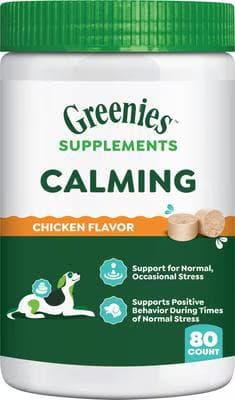
Chicken-flavored soft chew that supports normal, occasional stress and positive behavior during times of normal stress.
Webvet may earn a commission when you click through to Chewy, at no extra cost to you.
Seizures vs. anxiety
People sometimes confuse a seizure with severe shaking. The difference: anxiety trembling is fine, fast, and the dog stays aware and responsive to you. A seizure typically involves rhythmic jerking, loss of awareness, possible collapse, paddling limbs, drooling, or loss of bladder control, and the dog does not respond to your voice during the event. A true seizure warrants a vet visit. We cover rhythmic, repetitive head movements specifically in our guide to dog head tremors and shaking.
My Dog Is Shaking, Panting, and Won't Leave My Side
A very common version of this worry is "my dog is shaking and panting and won't leave my side." Shaking plus panting plus sudden clinginess is a classic stress signature. When dogs are frightened, they often seek the safety of their person, glue themselves to you, and pant heavily even though they have not exercised.
This combination usually means fear or anxiety, especially during storms, fireworks, or other frightening events. The clinginess is your dog asking for security, and following you from room to room is part of that.
That said, panting and clinginess can also signal pain or a medical problem, particularly if there is no scary event going on. Things to weigh:
- Is there a trigger? Storm or noise present, and the behavior fades when it passes? Likely fear.
- Is the panting heavy and out of context? Hard, persistent panting on a cool, quiet day with no exertion deserves a vet call.
- Any other signs? Pale or blue gums, a bloated or hard belly, restlessness that will not settle, or repeated attempts to vomit can indicate an emergency.
My Dog Is Shaking and Acting Scared at Night
Nighttime shaking has its own flavor of worry, partly because the house is quiet and the behavior stands out. Owners search "my dog is shaking and acting scared at night" and "my dog is shaking and acting weird all of a sudden at night" hoping for reassurance.
Common nighttime explanations:
- Cold. A thin-coated or small dog may simply be cold once the heat drops overnight. If shivering stops when you add a blanket or raise the temperature, cold was the cause. We dig into this in dog shivering: cold vs. something more.
- Nighttime noises. Wildlife, distant fireworks, or storms are more noticeable at night.
- Cognitive changes in older dogs. Senior dogs can become disoriented, restless, and anxious at night, sometimes called sundowning. Our guide to the trembling older dog covers age-related causes.
- Pain that worsens at rest. Some discomfort feels worse when a dog lies still, so trembling can show up at bedtime.
If your dog is scared and shaking at night and warming them up does not help, and there is no noise to explain it, watch for the medical red flags below and call your vet if anything looks off.
Is My Dog Suddenly Scared of Me?
Few things hurt more than a dog who is suddenly shaking and acting scared of you. Searches like "my dog is shaking and acting scared of me" usually come from a worried, loving owner, so let us clear something up: a dog acting scared of you almost never means they have stopped loving you or that you did something terrible.
The more likely explanations:
- Pain. A dog in pain may shrink from touch or approach because they anticipate it will hurt. This is the single most common reason a dog suddenly seems afraid of their person.
- A bad association. A recent scary event near you (a dropped pan, a loud argument, an accidental step on a paw) can create a temporary, generalized fear.
- A sensory or neurological change. Vision or hearing loss can make your approach startling. Neurological issues can also alter behavior.
- Displaced fear. During a storm or fireworks, a dog may act wary of everyone, including you, because they are flooded with fear.
How to Soothe a Scared, Shaky Dog (Step by Step)

Once you have decided the most likely cause is fear (a trigger is present and there are no medical red flags), here is how to soothe a scared, shaky dog in the moment. These are the steps that actually calm a dog, and they double as the answer to "how to break anxiety in a dog" during an acute episode.

Peanut-butter-flavored soft chew that supports relaxation and helps reduce hyperactivity, with L-theanine, chamomile, and ashwagandha.
Webvet may earn a commission when you click through to Chewy, at no extra cost to you.
- Stay calm yourself. Dogs read your energy. A relaxed posture, slow movements, and a soft voice tell your dog the threat is not real.
- Remove or reduce the trigger. Close curtains, turn on white noise or calm music to mask thunder, move away from the stranger or the loud area.
- Offer a safe space. Many dogs feel safest in a crate, a closet, or a quiet room. Let them choose where to settle and do not force them out.
- Stay near, but do not smother. Sit close, let them lean on you, offer gentle slow strokes if they want contact. Comforting a scared dog does not reinforce fear.
- Use a calming aid if you have one. A snug body wrap, a pheromone diffuser, or a vet-recommended calming supplement can help. Ask your vet before using anything new.
- Redirect gently once the edge comes off. A lick mat, a favorite chew, or a few easy commands for treats can shift the brain out of panic mode.
- Let it pass. Most fear episodes fade as the trigger ends. Avoid flooding your dog with attention or fussing, which can heighten arousal.
For lasting change, fear and anxiety respond best to a longer plan: gradual desensitization, counter-conditioning, predictable routines, and sometimes veterinary anti-anxiety support. Our anxiety relief for dogs guide lays out that longer-term approach.
When to Worry: Red-Flag Symptoms and Emergency Signs

Most shaking from fear is not dangerous. But some shaking is the visible tip of an emergency. Stop reassuring and seek urgent veterinary care if you see any of the following:
| Red-flag sign | Why it is urgent |
|---|---|
| Collapse or inability to stand | Possible internal bleeding, heart, or neurological emergency |
| Pale, white, or blue gums | Sign of shock, poor oxygenation, or blood loss |
| Repeated vomiting or retching with a bloated belly | Possible bloat (GDV), a life-threatening emergency in deep-chested dogs |
| Unsteady, drunken walking or circling | Neurological event, possible toxin or stroke-like episode |
| Known or suspected toxin ingestion | Tremors can progress fast; minutes matter |
| Seizure activity | Rhythmic jerking, loss of awareness, paddling limbs |
| Difficulty breathing | Hard, fast, or open-mouth breathing at rest |
| Tremors that will not stop | Continuous, worsening shaking with no trigger |
People also search for "signs of a dog having a mini stroke" and "how does a dog act before a stroke." Dogs can have stroke-like events. Warning signs include a sudden head tilt, loss of balance, walking in circles, abnormal eye movements, collapse, or sudden disorientation. These are emergencies. Per AAHA, acute neurological signs warrant immediate veterinary evaluation, so do not wait to see if it passes.
The phrase "silent killer in dogs" comes up often in this context. It usually refers to diseases that progress with vague or hidden symptoms until they are advanced, such as kidney disease, certain cancers, or heart disease, and conditions like bloat that turn deadly fast. The takeaway is the same: subtle, persistent changes like unexplained shaking, hiding, and appetite loss deserve a veterinary look, not a wait-and-see.
When to Call Your Veterinarian

If you are wondering "should I be worried if my dog is shaking," use this simple rule. A brief fear episode tied to an obvious trigger that resolves on its own is usually fine to manage at home. Anything outside that deserves a call.
Call or visit your veterinarian if:
- The shaking has no identifiable trigger and does not settle.
- Your dog is shaking and not eating for more than a meal or two.
- You see any red-flag sign from the table above.
- The behavior is new, persistent, or progressively worse.
- Your dog seems to be in pain or is suddenly scared of being touched.
- You suspect a toxin, even if your dog seems okay right now.
It is common to find owners on forums asking the same questions, and a search for "dog shaking and acting scared reddit" turns up plenty of worried posts. Anecdotes can be comforting, but they are not a diagnosis. When in doubt, a phone call to your clinic costs nothing and is always the safer move. Trust your read on your own dog: you know their normal better than anyone.
The Bottom Line
A dog that is shaking and acting scared is rarely a mystery once you slow down and read the signs. Look for a trigger first: if one is present and your dog has no physical red flags, comfort them, remove the trigger, and let the fear pass. If there is no trigger, or you see warning signs like vomiting, collapse, pale gums, or a suspected toxin, treat it as a medical emergency and call your veterinarian. When in doubt, a quick call to your clinic is always the safe choice, because you know your dog's normal better than anyone.

360-degree Wi-Fi pet camera so you can watch your cat's resting breathing rate and behavior from your phone and catch worrying changes early.
Webvet may earn a commission when you click through to Chewy, at no extra cost to you.
This article is for general education and does not replace a hands-on examination. If you are worried about your dog, contact your veterinarian.
Frequently Asked Questions
What is the 3-3-3 rule for dog anxiety?
The 3-3-3 rule is a guideline for newly adopted dogs: about 3 days to decompress from the stress of the change, 3 weeks to begin learning the household routine, and 3 months to feel fully settled and bonded. A new dog who shakes and acts scared is often just overwhelmed and needs calm, patience, and predictability during this adjustment.
What are the signs of a dog having a mini stroke?
Stroke-like signs in dogs include a sudden head tilt, loss of balance or coordination, walking in circles, abnormal or darting eye movements, sudden weakness, collapse, and disorientation. These are emergencies. If you notice them, contact your veterinarian or an emergency clinic right away.
How do you soothe a scared, shaky dog?
Stay calm, lower your energy, and remove or muffle the trigger (close curtains, play white noise). Offer a safe space like a crate or quiet room, stay near so your dog can lean on you, and use a calming aid if your vet recommends one. Comforting a frightened dog does not reinforce the fear, so reassurance is helpful, not harmful.
What is a silent killer in dogs?
A silent killer refers to a disease that advances with vague or hidden symptoms until it becomes serious, such as kidney disease, heart disease, or some cancers, plus fast-moving emergencies like bloat. The practical lesson is that subtle, unexplained changes like persistent shaking, hiding, or appetite loss should prompt a veterinary check rather than a wait-and-see approach.
How do you break anxiety in a dog?
In the moment, you break an anxiety spiral by removing the trigger, providing a safe space, and staying calm so your dog can settle. Long term, anxiety responds to gradual desensitization, counter-conditioning, consistent routines, enrichment, and sometimes vet-prescribed anti-anxiety support. A behavior-focused veterinarian can build a tailored plan.
What is "I love you" in dog language?
Dogs show affection through soft eye contact and relaxed blinking, leaning against you, gentle tail wags, following you around, bringing you toys, and settling calmly near you. A frightened, trembling dog that chooses to press into you for comfort is showing trust, which is its own form of bond, even in a stressful moment.
How does a dog act before a stroke?
Some dogs show sudden changes such as disorientation, head tilt, loss of balance, circling, weakness, or unusual eye movements. These can come on abruptly and are a medical emergency. There is not always a clear warning, so any sudden neurological change should be treated urgently.
Can dogs have panic attacks, and what does one look like?
Yes, dogs can experience panic-like episodes. Signs include sudden intense trembling, heavy panting, pacing or an inability to settle, drooling, clinging to you, trying to hide or escape, and sometimes destructive behavior. These episodes are often tied to a trigger like a storm or fireworks and tend to ease once the trigger passes and the dog feels safe.
Why is my dog shaking and acting weird but eating normally?
A dog that is shaking and acting weird but still eating normally is reassuring, because a healthy appetite often points away from serious illness. The shaking is more likely fear, mild stress, cold, or excitement. Still watch for a trigger and monitor the behavior, and call your vet if it persists or other symptoms appear.
My dog is shaking and acting scared all of a sudden, is it an emergency?
It depends on the rest of the picture. Sudden shaking tied to an obvious trigger like thunder, with no other symptoms, is usually not an emergency. But sudden shaking with collapse, pale gums, repeated vomiting, unsteady walking, suspected toxin ingestion, or seizure activity is an emergency that needs immediate veterinary care.
Why does my dog shake and hide when nothing is happening?
When a dog shakes and hides for no apparent reason, there is usually a trigger you cannot perceive, such as a sound outside human hearing, an approaching storm felt as a pressure change, or a learned fear association. It can also reflect underlying anxiety or, less often, pain. Keep a log of when it happens, and if it is frequent or paired with other signs, see your vet.
Can pain make a dog shake and act frightened?
Yes. Pain is one of the most common medical reasons a dog trembles and acts scared, including shrinking from touch. Sources include injuries, arthritis, dental disease, ear infections, and abdominal pain. If there is no fear trigger and your dog seems stiff, sore, or reluctant to be handled, treat pain as the likely cause and contact your veterinarian.
Why is my dog suddenly scared of me and trembling?
The most common reason a dog suddenly seems scared of you is pain, since they may associate your approach with discomfort. A recent frightening event, a sensory change like vision or hearing loss, or generalized fear during a storm can also be responsible. It rarely means a broken bond. Speak gently, give space, and have your vet rule out a physical cause.
Do thunderstorms and fireworks cause dogs to shake and hide?
Absolutely. Noise aversion is one of the most common canine anxieties, and storms and fireworks are leading triggers. Dogs may shake, pant, drool, hide, cling, or try to escape. Help by muffling the sound, providing a safe space, staying calm, and, for known triggers, asking your vet about calming aids or medication ahead of time.
Is shaking a sign my dog ate something toxic?
It can be. Tremors are a hallmark sign of several poisonings, including chocolate, xylitol, certain plants, and some medications and pesticides. If your dog is shaking and you suspect they got into something, do not wait. Call your veterinarian or an animal poison control line immediately and bring the packaging or substance if you can.
How long should I wait before taking a shaking, scared dog to the vet?
If there is a clear trigger and your dog settles within a reasonable time with no other symptoms, monitoring at home is fine. If there is no trigger, the shaking persists, your dog stops eating for more than a meal or two, or you see any red-flag sign, do not wait, contact your vet right away. With a suspected toxin or any emergency sign, seek care immediately.
What calming products actually help a scared, shaking dog?
Options with the best track records include snug pressure wraps, pheromone diffusers and sprays, calming music or white noise, and vet-recommended calming supplements or prescription anti-anxiety medication for severe or recurring fear. Products vary in effectiveness by dog, so ask your veterinarian which fits your dog's situation before starting anything new.
$65 · no membershipHave a health question about your dog?
A licensed vet can assess your dog over video and prescribe online when it's appropriate.
Talk to a vet- Licensed vets
- All 50 states
- same-day Rx
Webvet may earn a commission if you book.

Editor
The Webvet Editorial Team is the in-house group of pet-care editors and writers behind Webvet, operated by Smart Pet Collective. The team researches, writes, and maintains Webvet's pet health, behavior, and medication content. Every article follows a defined editorial process: research from reputable veterinary and scientific sources, careful drafting, mandatory review of medical content by a credentialed veterinarian, and dated publication. Health and medication articles are medically reviewed by a licensed veterinary professional before they go live and are kept current over time.
Veterinarian · BVMS MRCVS
Dr. Pippa Elliott, BVMS, MRCVS, is a veterinarian with nearly 30 years of experience in companion animal practice. Dr. Elliott earned her Bachelor of Veterinary Medicine and Surgery from the University of Glasgow. She was also designated a Member of the Royal College of Veterinary Surgeons. Married with 2 grown-up kids, Dr. Elliott has a naughty Puggle named Poggle, 3 cats and a bearded dragon.


