IVDD in Dachshunds: Early Signs, Risk & Treatment
IVDD is common in Dachshunds, but breed alone cannot diagnose a back problem. Learn the first signs, emergency thresholds, testing limits, treatment choices, prognosis, and safer daily handling.

BVMS MRCVS
Medically reviewed by Dr. Pippa Elliott, BVMS MRCVS · Last reviewed

This article contains affiliate links. Webvet may earn a commission when you buy through them, at no extra cost to you.
IVDD in Dachshunds can begin with a change that looks minor, such as reluctance to jump, a tense belly, or an unusually quiet afternoon, and then progress to weakness or paralysis within hours. Intervertebral disc disease, usually shortened to IVDD, happens when material from a spinal disc displaces and compresses or bruises the spinal cord or nearby nerve roots. A Dachshund's body shape and inherited chondrodystrophic traits increase the breed's risk, but a long back does not prove that any individual dog has IVDD.
Pain, wobbliness, or hind-limb weakness can also come from orthopedic injury, abdominal illness, vascular events, infection, or another neurologic disorder. New pain deserves a prompt veterinary call, while loss of walking ability, rapidly worsening weakness, or trouble urinating requires emergency veterinary care.
This guide helps owners decide what to do next without trying to diagnose a disc problem at home. It explains why Dachshunds are predisposed, what the first signs can look like, how a neurologic examination and imaging answer different questions, and why treatment depends on function rather than breed alone.

 Sponsored
Have a health question about your dog?
Talk to a licensed vet at Dutch over video or message, including nights and weekends.
Use code Pets60
Plans start at $12/month · covers up to 5 pets
- Licensed vets in most states
- Rx for 150+ conditions
- 4.7 on Trustpilot
Why Dachshunds are predisposed to IVDD
- 1IVDD in Dachshunds is strongly associated with chondrodystrophy, an inherited pattern of early disc degeneration, but risk is not the same as a diagnosis.
- 2A painful or reluctant Dachshund needs veterinary assessment; weakness, loss of walking, or bladder difficulty is an emergency.
- 3Miniature and standard Dachshunds can both be affected, and no home check, supplement, or screening image can promise that an acute episode will never occur.
Dachshunds are chondrodystrophic dogs. The same inherited biology that contributes to their short legs also changes how the nucleus pulposus, the normally gel-like center of a spinal disc, matures. In susceptible dogs, discs can lose water, become mineralized, and behave more like brittle material than a shock absorber.
A sudden tear in the outer disc may then let degenerated material enter the spinal canal. The result can range from painful inflammation to severe spinal cord compression. The long body is visually obvious, but it is not the whole explanation. Genetics, disc degeneration, age, body condition, activity, and chance all interact, which is why two Dachshunds in the same home can have very different experiences.

One important genetic association involves an FGF4 retrogene on canine chromosome 12. Research has linked that variant with chondrodystrophy and greater risk of certain disc extrusions across several breeds. A genetic association is useful for understanding population risk, not for deciding whether a painful dog has a current spinal emergency.
Many dogs carry risk-associated traits without ever developing a clinically important episode, and a genetic result cannot identify which disc will extrude or when. Conversely, a dog with back pain still needs an examination even if a breeder reports favorable health testing. The immediate question is what the dog's spinal cord and nerves are doing now.
Clinical IVDD often appears in adulthood rather than only in old age. Dachshunds may experience an acute episode while otherwise active and healthy, commonly during the years when owners still think of them as young or middle-aged. Age changes probability, but it does not create a safe cutoff. A puppy with pain needs evaluation, and an older Dachshund with sudden weakness should not be dismissed as simply slowing down.
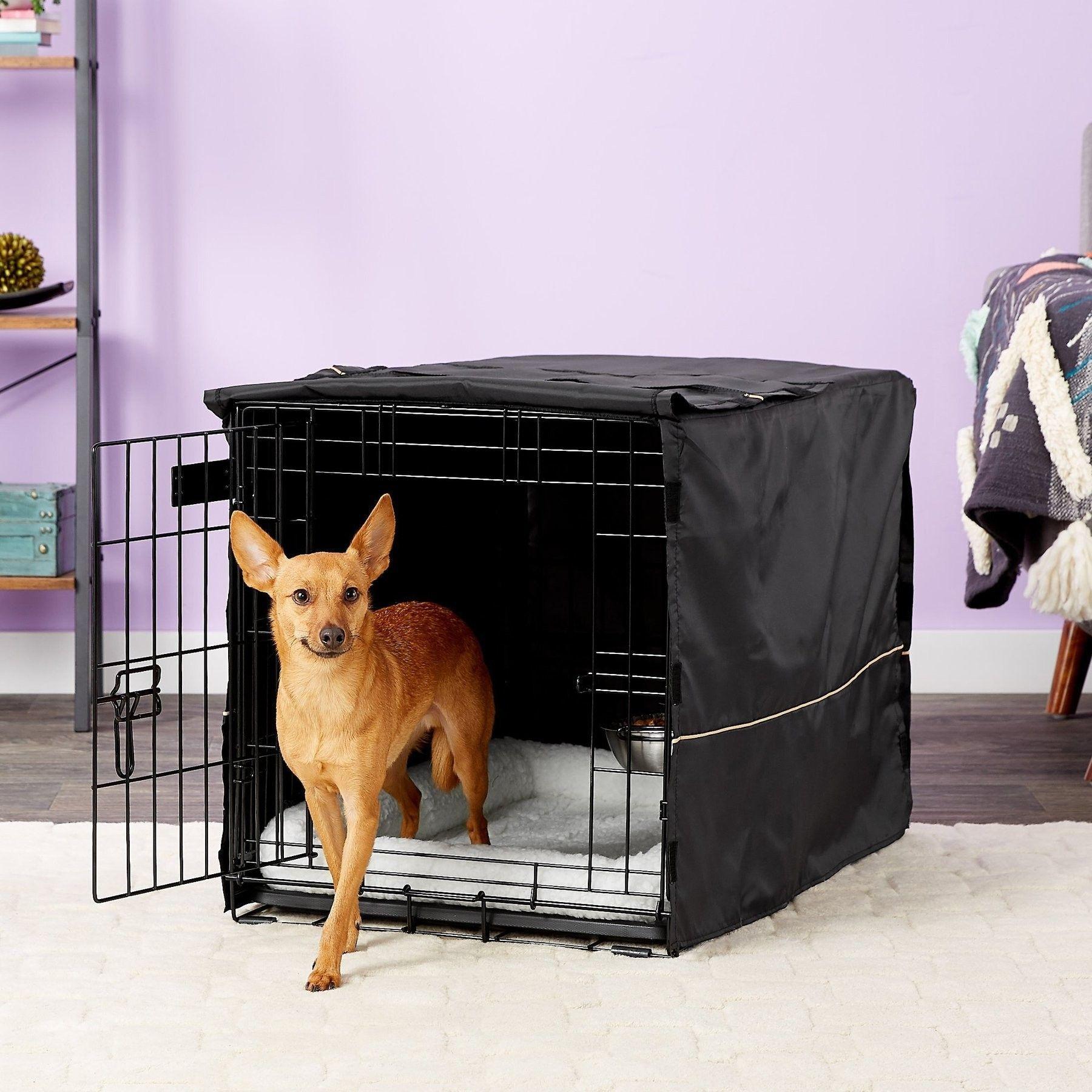
A crate may help maintain veterinarian-prescribed movement restriction when it is correctly sized and the dog can rest without climbing; it does not treat IVDD.
Webvet may earn a commission when you click through to Chewy, at no extra cost to you.
At what age do most Dachshunds get IVDD? Cornell's Riney Canine Health Center notes that this type of disc disease is usually first recognized in young adult dogs, with breed differences in age of onset. The underlying disc hardening starts much earlier, from birth to about one year of age, long before any signs appear.
- DachsLife 2015 owner survey of about 2,000 UK Dachshunds of all ages: 15.7% reported IVDD overall, from 7.1% in Standard Wire-Haired to 24.4% in Standard Smooth-Haired Dachshunds.
- DachsLife 2018 owner surveys, as summarized by the Royal Kennel Club, of 1,173 Dachshunds over three years old: 21.1% reported IVDD overall, from 8.6% in Wire Haired to 29.9% in Miniature Smooth Haired Dachshunds.
How common is IVDD in Dachshunds? These owner-reported figures, from the DachsLife 2015 study and the Royal Kennel Club IVDD scheme page, suggest roughly one in six to one in five UK Dachshunds has had IVDD. Survey rates describe populations rather than one dog, and no variety in these data was free of risk.
- Miniature and standard Dachshunds share chondrodystrophic risk; size alone does not protect one variety.
- A previous pain episode raises concern about recurrence, but a new episode may involve a different disc and still requires reassessment.
- Disc calcification on screening images can indicate degeneration at a population or breeding level, but it cannot confirm the site or severity of today's spinal cord compression.
- Body weight, fitness, other orthopedic disease, and home layout can affect how well a dog moves and how safely an owner can manage recovery.
Published screening programs illustrate both the value and the limit of imaging. The Royal Kennel Club IVDD screening scheme uses spinal radiographs at a defined age to count calcified discs and inform breeding decisions. That is not the same job as emergency imaging. A screening image can contribute information about inherited risk across generations, but it cannot show the spinal cord with the detail needed to plan surgery during an acute episode. It also cannot guarantee that a dog with a lower calcification score will remain free of IVDD.
Owners often ask whether a miniature Dachshund is safer than a standard Dachshund. Available evidence does not support treating either variety as protected. Apparent differences can be influenced by population size, breeding lines, reporting, lifestyle, and how a study defines disease. The practical advice is the same: know your individual dog's normal gait and habits, maintain a healthy body condition, and act on pain or neurologic change. Breed framing should heighten awareness, not produce a diagnosis or make every cautious movement seem catastrophic.
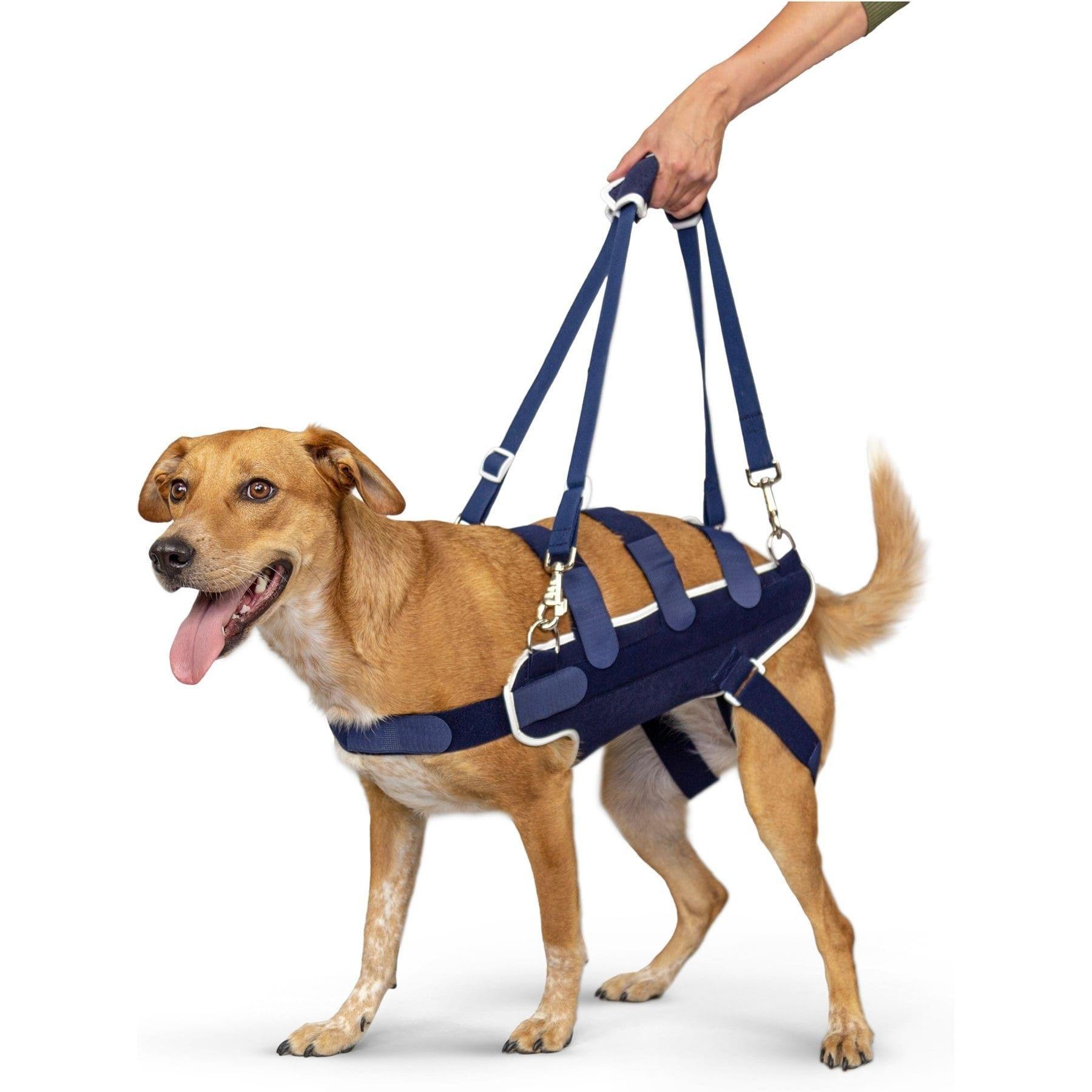
A small support harness can assist a veterinarian-approved transfer or toileting plan, but fit and technique must be individualized and the device cannot restore neurologic function.
Webvet may earn a commission when you click through to Chewy, at no extra cost to you.
The broader WebVet guide to IVDD in dogs explains disc anatomy and the condition across breeds. For Dachshund owners, the added decision is how to live with elevated risk without turning normal life into permanent confinement. Healthy, pain-free dogs still need controlled exercise, muscle, enrichment, and social activity. The goal is not to eliminate movement. It is to avoid preventable high-impact patterns, recognize a meaningful change, and have a plan for veterinary access.
- Ask your veterinarian to record a baseline body-condition score and discuss an appropriate weight range.
- Use consistent, controlled exercise rather than long periods of inactivity followed by intense weekend activity.
- Teach calm handling and a supported two-hand lift before an emergency occurs.
- Reduce repeated uncontrolled leaps from furniture or vehicles when practical, without claiming that any single household change prevents IVDD.
- Keep your regular clinic and nearest emergency hospital numbers available.
A crate can be useful if a veterinarian prescribes strict movement restriction, but routine confinement of a healthy dog is not a prevention strategy. If your veterinarian approves a specific recovery space, choose one that prevents climbing and turning with speed. A correctly sized recovery crate can support that plan, but the product does not treat a disc or replace instructions about duration, toileting, medication, and rechecks.
Early signs and emergency neurologic changes
The first signs of IVDD in Dachshunds are often pain-related rather than obvious paralysis. A dog may pause before using stairs, refuse to jump onto a familiar surface, cry when turning, tremble, pant at rest, hold the head or back stiffly, arch the spine, or seek an unusual posture. Some dogs become quiet or stop eating because movement hurts.
Others guard the abdomen, which can be mistaken for stomach trouble. None of these signs is specific enough for a home diagnosis. They are a reason to restrict unnecessary movement and call a veterinarian for triage.
- Reluctance to walk, climb, jump, lower the head, or turn the neck.
- A yelp when moving, being picked up, or changing position.
- Trembling, panting, a tense belly, or a hunched and guarded posture.
- A wobbly rear end, crossing the hind feet, scuffing nails, or standing with a paw folded under.
- Falling, dragging a limb, inability to stand, or loss of voluntary walking.
- Urine leakage, inability to begin urinating, or a suddenly overfull bladder alongside weakness.
Neurologic change means the problem may be affecting more than pain fibers. Watch your dog walk only if the dog can do so safely and the clinic asks for that information. Do not repeatedly flip paws, squeeze toes, pinch skin, or force a painful dog to demonstrate a gait. Deep pain perception is a clinical assessment performed by a veterinarian because withdrawal of a limb is not the same as conscious recognition of pain. Misreading that distinction can create false reassurance or unnecessary panic.
| What you observe (pain versus weakness) | What it may mean | What to do |
|---|---|---|
| New reluctance to jump, yelping, tense posture, but walking normally | Early sign: a pain-only change without obvious loss of function | Limit movement and call your veterinarian promptly for individual triage |
| Wobbling, crossing feet, knuckling, repeated scuffing, or falling | Possible spinal cord or nerve dysfunction | Arrange urgent same-day veterinary assessment and transport with the body supported |
| Unable to stand or walk, dragging limbs, or function worsening over minutes or hours | Serious neurologic loss, which may progress to paralysis | Go to an emergency hospital now |
| Weakness plus inability to urinate, uncontrolled leakage, or loss of tail and hind-limb function | Paralysis and bladder emergency: severe neurologic loss with bladder dysfunction | Go to an emergency hospital now and do not attempt home bladder expression |
Speed matters because neurologic function can change, and treatment choices may depend on the examination at presentation. It is impossible to identify a universal number of safe hours for every dog. Severity, progression, imaging access, other illnesses, and the presence or absence of deep pain perception all affect the plan. A dog that is still walking can still be in substantial pain, while a quiet dog may be hiding deterioration. If the clinic advises an emergency visit, do not wait for a routine appointment.
During transport, use a firm carrier, box, board, or other stable surface that limits scrambling. Support the chest with one hand and the pelvis with the other if you must lift. Keep the body level rather than letting the rear hang. A second person can open doors and steady the carrier. Do not place a tight wrap around the spine, attempt a chiropractic adjustment, massage a painful area, or stretch the limbs. If a dog may bite because of pain, tell the clinic and follow its handling advice.
- Note when the dog was last walking normally and whether function changed suddenly or gradually.
- Tell the clinic about urination, bowel movements, vomiting, trauma, medications, and any previous spinal episode.
- Bring the medication containers or a clear list rather than relying on memory.
- Record a brief video only if it can be captured without making the dog walk farther or delaying departure.
- Do not feed a large meal while traveling unless the veterinary team says to do so, because sedation or anesthesia may be considered.
Pain can occur in the neck or back. Cervical disc disease may cause a low head carriage, stiff neck, crying when looking down, or front-limb lameness, while thoracolumbar disease more often affects the back and hind limbs. These patterns overlap, and dogs do not read textbooks. A veterinary neurologic examination localizes the likely region by assessing posture, gait, reflexes, sensation, pain, and bladder function. Localization guides the next test; it does not by itself prove the exact cause.
Bladder changes need special caution. A dog may leak because the bladder is too full rather than because normal control remains. Trying to express a bladder without instruction can be painful, incomplete, and unsafe. If your dog is weak and has not passed a normal stream, tell the emergency team. Veterinary staff can assess bladder size, urine retention, and whether temporary assisted emptying is needed.
The phrase final stages is not a formal diagnosis. Owners usually use it to describe paralysis, loss of deep pain perception, loss of bladder control, or progressive spinal cord injury. Those findings are severe, but they do not allow a prognosis from a description alone. A veterinarian must examine the dog, determine how quickly the signs developed, and discuss whether imaging, surgery, or carefully managed nonsurgical care is appropriate. Do not interpret severe signs as a reason to skip assessment.
 Sponsored
Vet care that's always there
Unlimited video calls and messaging with licensed vets for less than a typical vet visit. One membership covers up to five pets.
Use code Pets60
Plans start at $12/month · covers up to 5 pets
- Licensed vets in most states
- Rx for 150+ conditions
- 4.7 on Trustpilot
Treatment, recovery, recurrence, and daily handling
Treatment is based on neurologic status, pain, progression, imaging findings when obtained, previous episodes, and the dog's overall health. A walking dog with a first, stable episode may be considered for conservative management. A dog with worsening weakness, inability to walk, severe or recurrent pain, or other concerning findings may be referred urgently for advanced imaging and possible surgery. These are not rigid categories that owners can apply alone. The examination establishes the starting point, and repeated examinations can reveal improvement or deterioration.

Conservative care usually combines veterinarian-prescribed movement restriction, pain control, monitoring, and a planned return to activity. The purpose of restriction is to reduce forceful movement while inflammation settles and the disc injury stabilizes. It is not simply keeping a dog indoors. Running across a room, jumping onto a lap, wrestling, or slipping during toileting can defeat the plan. The veterinarian should define the recovery area, toileting method, permitted steps, recheck timing, and signs that require escalation. Never change prescription doses or combine pain medicines without direct veterinary advice.
A recovery crate is appropriate only when the treating team approves it and the dog can settle safely. The space should allow comfortable lying, standing, and turning without room to run or rear up. Some dogs need a different enclosure, hospital care, or hands-on support because they cannot reposition, have breathing concerns, or become distressed.
Place the recovery area on a nonslip floor in a quiet part of the home. Keep bedding flat and dry, and check the skin daily. A deep bolster or loose pile of blankets can make transfers harder for a weak dog.
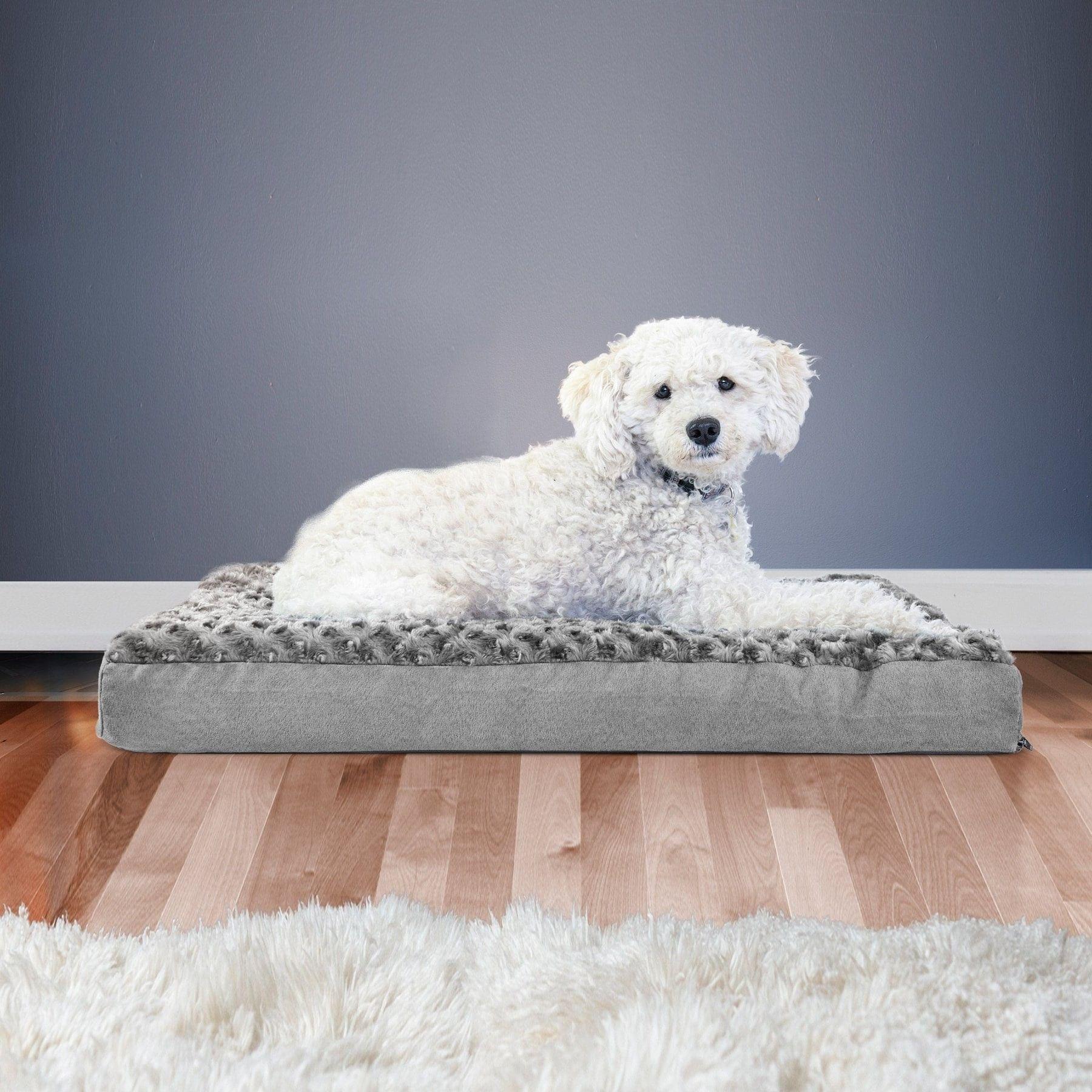
A low, flat bed can support comfort and easier transfers in a veterinarian-approved recovery area; it cannot heal a disc or replace repositioning and skin checks.
Webvet may earn a commission when you click through to Chewy, at no extra cost to you.
For a small Dachshund who needs help during an approved transfer, a properly fitted small body-support harness may give an owner more control. It should support rather than suspend the dog, avoid pressure on a painful area, and never be used to make a weak dog walk farther. Fit and use should be demonstrated by the veterinary or rehabilitation team. If the dog's function changes, stop and call the clinic rather than tightening or improvising straps.
- Carry a small dog to the toileting area when instructed, supporting the chest and pelvis so the body stays level.
- Use a short leash for controlled elimination only; do not turn a bathroom break into exercise.
- Keep a written log of pain, walking ability, urination, bowel movements, appetite, medication times, and sleep.
- Check toes and nails for scuffing, especially if a paw sometimes folds under.
- Contact the clinic for new weakness, breakthrough pain, reduced urination, vomiting, black stool, extreme sedation, or any medication concern.
Surgery generally follows advanced imaging such as MRI or CT so the team can identify the affected site and plan decompression. A common thoracolumbar procedure is a hemilaminectomy, in which the surgeon creates access to remove compressive disc material. Cervical procedures differ. Surgery does not make the spine genetically normal or eliminate every future episode, and every anesthetic and operation carries risk. Its purpose is to relieve compression and give the spinal cord the best available conditions for recovery in an appropriately selected patient.
Prognosis is strongly tied to neurologic function, especially whether conscious pain perception remains in a dog that cannot walk, but no single sign creates a guarantee. Studies of referral patients describe groups, not the destiny of one Dachshund. Time to surgery, injury severity, spinal cord changes, complications, rehabilitation, and concurrent disease can affect outcome. The veterinary neurologist can explain how the examination and imaging change the estimate for your dog. Be wary of precise online percentages applied without that context.
Can my Dachshund recover from IVDD? Often, yes. The ACVIM consensus statement pooled published outcomes from dogs of many breeds, summarized below. The studies differ in design and the figures are not a promise for one Dachshund, but they show why deep pain perception and prompt referral matter so much.
- Spinal pain only, or weak but still walking: successful outcome in 80% of 115 dogs with medical care and 98.5% of 336 dogs with surgery.
- Hind legs paralyzed with deep pain present: 60% of 67 dogs with medical care and 93% of 548 dogs with surgery.
- Hind legs paralyzed with deep pain absent: 21% of 48 dogs with medical care and 61% of 502 dogs with surgery.
Recovery is rarely a straight line. Pain may improve before coordination, or a dog may regain purposeful movement while still needing bladder support. Early postoperative days can look different from later rehabilitation. The team may prescribe assisted standing, controlled range-of-motion work, supported walking, hydrotherapy, or other exercises at specific times. Starting exercises early because they seem gentle can be harmful, while avoiding all activity long after clearance can allow deconditioning. Follow the written schedule and ask what each exercise is meant to accomplish.

A low, firm resting surface can make transfers easier than a deep bed. If your veterinarian approves the setup, a flat medium support bed may provide a consistent resting place for a small dog. It should not be so soft that the dog sinks, so high that the dog must climb, or so slick that the cover shifts. Bedding is comfort equipment, not a treatment for disc compression. Keep it dry and inspect pressure points, elbows, hips, hocks, and toes.
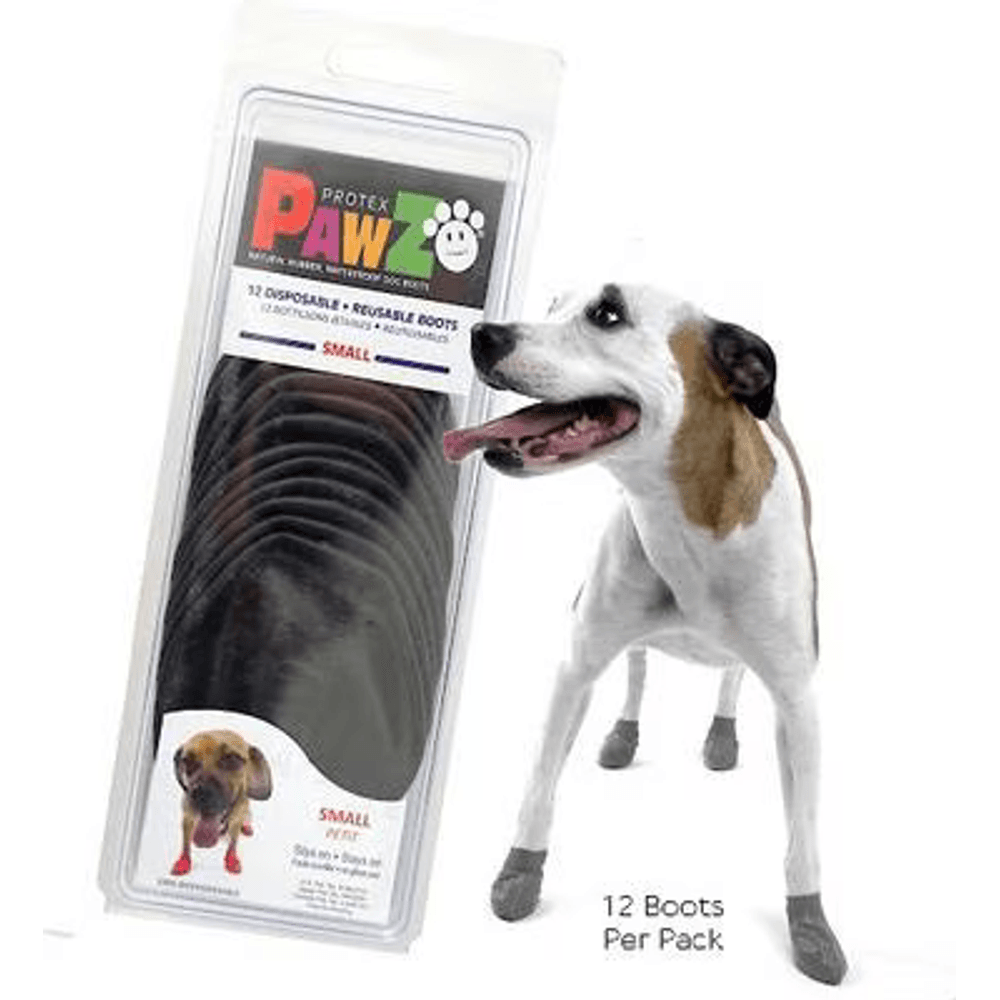
A small boot may protect a scuffing paw or provide short supervised traction after veterinary approval; monitor fit and skin because it does not correct weakness.
Webvet may earn a commission when you click through to Chewy, at no extra cost to you.
Traction products need equally careful use. A small, appropriately fitted paw-covering boot may protect a scuffing paw or add short supervised traction after the rehabilitation team approves it. Boots can also twist, rub, trap moisture, or change gait. They should not remain on an unattended dog and should not be used to push a weak dog through fatigue. Nonslip floor runners may be a simpler option for some homes.
Recurrence is possible after either conservative treatment or surgery because other discs may already be degenerating. Recurrence can mean another painful episode, new compression at a different site, or a return of neurologic deficits. It should not be assumed to be the same severity or managed automatically with leftover medication. Call the clinic, restrict unnecessary movement, and arrange reassessment. Never save prescription drugs for an unsupervised future episode.
- Ask what level of movement is allowed this week, not only the total recovery duration.
- Request a demonstration of lifting, toileting support, and any rehabilitation exercise before leaving the hospital.
- Clarify who to call after hours and which changes mean returning immediately.
- Confirm when stairs, ramps, furniture access, free walking, and play may resume.
- Schedule rechecks even when the dog seems better, because pain relief can precede tissue recovery.
Daily handling after recovery should balance risk awareness with quality of life. Keep nails and paw hair managed for traction, use rugs on slick routes, block unsupervised high jumps, and teach calm ramp use if the dog can use a ramp safely. Maintain a lean body condition and regular low-impact activity. These measures may reduce avoidable strain and help a dog stay fit, but none has been proven to make IVDD impossible. A dog who has been cleared for activity should not spend life in a crate out of fear.
To lift, place one hand under the chest behind the front legs and the other under the pelvis, then raise both ends together so the body stays level. Hold the dog close to your torso and set all four feet down together on a nonslip surface. Adapt the technique to your own mobility and the dog's pain, and ask the clinical team to demonstrate. A photograph can show the basic support points, but it cannot replace hands-on instruction for a dog with severe weakness, an incision, or other medical needs.
Weight management deserves special emphasis because excess weight increases the physical work of movement and makes assisted care harder. Weight loss is not an emergency treatment and should not be pursued through abrupt food restriction during illness. Once the dog is stable, ask for a calorie plan, treat budget, and safe activity target. Track body condition as well as pounds, since ideal weight varies with frame and muscle. Supplements marketed for discs cannot replace this basic plan, and evidence does not support promising that a supplement prevents extrusion.
Detailed IVDD treatment decisions
Treatment for IVDD in Dachshunds usually turns on a few breed-specific questions. Is this a first episode or a recurrence? Chondrodystrophic discs often degenerate at several sites, so a new episode may involve a different disc, and imaging may matter more the second time. Is your dog small enough for you to lift with two hands, confine, and carry to the toilet for the weeks conservative care can require? Can stairs, sofas, and slick floors at home be controlled during recovery?
Other health problems and practical limits also shape the plan. Tell the team about excess weight, heart, kidney, or liver disease, anxiety, and your own ability to lift and monitor the dog. Ask for a written estimate for the current step, and say early if finances limit options so the team can prioritize diagnostics and referral timing.
- Avoid human nonsteroidal anti-inflammatory drugs, acetaminophen, aspirin, cannabis products, or leftover prescriptions unless a veterinarian specifically directs their use for this dog at this time.
- Pain relief that makes a dog feel active does not mean jumping or free running is safe.
The wider choices, including conservative care, surgery, rehabilitation, and monitoring, follow the same examination-led principles in every breed, and IVDD treatment in dogs explains them in detail. For a Dachshund, as for any dog, function and progression, not breed, set the urgency and the choice of plan.
You can help most by observing rather than testing. Note voluntary movement, comfort at rest, appetite, urination, bowel movements, and whether the dog needs more or less help. Short videos taken safely can show change between visits, but do not extend activity to see how far the dog can go. Your veterinarian combines those observations with the examination to decide the next step.
Screening limits, examination, and imaging
There is no single home or screening test that answers whether a Dachshund has an acute disc extrusion. Diagnosis begins with history and physical and neurologic examinations. The veterinarian evaluates pain, gait, postural reactions, spinal reflexes, muscle tone, sensation, and bladder function to localize the likely lesion. The same signs can arise from fractures, tumors, infection, inflammatory disease, vascular injury, orthopedic pain, or abdominal disease, so the examination also looks for reasons the story may not fit a routine disc episode.

Plain spinal radiographs can show vertebral bones, alignment, fractures, some tumors, and mineralized disc material. They cannot directly show the spinal cord well, and mineralized material on a radiograph does not always identify the disc responsible for current signs. Normal-looking radiographs do not rule out clinically important IVDD. Sedation may be needed for positioning, and repeatedly flexing a painful spine for images is not a home task. The veterinarian decides whether radiographs are useful as a first step or whether referral for advanced imaging is more appropriate.
MRI provides detailed information about the spinal cord, discs, soft tissues, compression, and alternative diagnoses. CT can be especially useful for mineralized disc material and surgical planning in selected cases. Both generally require anesthesia or heavy sedation so the dog remains still, and neither is ordered simply because the patient is a Dachshund. The clinical question matters: advanced imaging is most valuable when its result may change treatment, identify a surgical site, or resolve diagnostic uncertainty.
- 1A breed DNA result estimates inherited susceptibility; it does not locate today's lesion.
- 2A breeding-screen radiograph counts or characterizes disc calcification under a program's rules; it does not diagnose acute spinal cord compression.
- 3A neurologic examination localizes dysfunction and grades current function; it may not identify the exact underlying material without imaging.
- 4Plain radiographs assess bone and mineralization but cannot reliably rule IVDD in or out.
- 5MRI or CT can define compression and alternatives when the information will affect treatment.
Jeffery and colleagues' review of intervertebral disc degeneration in dogs explains how chondrodystrophic discs degenerate and why imaging findings need clinical context. The ACVIM consensus statement links an FGF4 retrogene on chromosome 12 with accelerated disc degeneration. Neither source turns a group association into a promise about one dog.
Owners considering a puppy can ask breeders about family history, age at any IVDD events, participation in recognized screening schemes, and how breeding decisions incorporate health results. No ethical breeder can guarantee that a puppy will never develop IVDD. A transparent discussion should include the limits of available tests and the need for veterinary care if signs arise. Insurance decisions are best made before symptoms or diagnoses appear because policies may exclude preexisting conditions and vary in neurologic coverage.

At home, establish a simple baseline while your dog is well. Know how the dog normally rises, walks on a nonslip surface, uses stairs if allowed, holds the head and back, and urinates. Notice nail wear and whether one paw tends to scuff. Baseline awareness is different from repeated testing. If something changes, stop risky activity, call the veterinarian, and describe the difference. Do not wait for paralysis to validate your concern.
Prevention claims require restraint. Keeping a dog lean, physically conditioned, and protected from uncontrolled falls is sensible for general health and may reduce avoidable stress. Training ramp use and lifting with chest and pelvic support can improve handling. Evidence does not show that any ramp, supplement, boot, diet, or exercise routine makes inherited disc degeneration disappear. Stairs and jumping are best discussed as modifiable household exposures, not as a moral failure or the single cause of an episode.
A useful risk-reduction plan is specific enough to follow and flexible enough to preserve normal life. None of these choices changes the dog's genes or proves that an extrusion has been prevented, but they mean fewer uncontrolled movements, easier handling if pain occurs, and a household that already knows how to respond.
- Walk through the dog's ordinary day with your veterinarian: getting out of bed, crossing slick floors, reaching the yard, riding in a vehicle, greeting visitors, and resting when no one is home.
- Target the few moments that combine height, speed, poor traction, or an awkward lift, and make those moments calmer.
- Gate staircases rather than relying on verbal warnings, use a floor-level bed so there is no sofa to leap from, and travel in a secure carrier rather than on a lap.
- Review the setup as the dog ages, gains or loses weight, develops arthritis or vision loss, or recovers from an episode, because what worked for a young, steady dog may be unsafe for a weak one.
- Choose changes that the whole household can apply consistently, such as gates at high stairs and a stable route to the yard.
- Avoid slick improvised ramps; a dog should be trained gradually on a stable, appropriately angled surface while pain-free.
- Keep food rewards within the daily calorie plan so training does not undermine weight management.
- Support normal muscle through veterinarian-approved activity rather than relying on permanent inactivity.
Life expectancy cannot be predicted from the label IVDD alone. Many affected Dachshunds recover useful function and live for years, while some sustain severe injury, recurrence, complications, or concurrent disease that changes quality of life. The most honest prognosis comes after the neurologic examination and, when indicated, imaging. Ask about both neurologic recovery and the practical work of bladder care, skin protection, rehabilitation, and recurrence monitoring. A good plan includes the dog's comfort and the caregiver's capacity.
What is the leading cause of death in Dachshunds?
Claims about the leading cause of death in Dachshunds need care, because breed-specific cause-of-death data are limited and vary by dataset. A VetCompass study of 29,865 UK dog deaths found spinal cord disorders strongly associated with death by euthanasia, which shows how serious severe IVDD can be, but it did not report Dachshund results.
When the examination is complete, ask the veterinarian to state the working diagnosis, important alternatives, current neurologic function, and next decision in plain language. If imaging is deferred, clarify what would make it necessary. If a screening result is discussed, ask whether it is being used for breeding risk or current clinical care. This separation prevents a common error: treating a risk marker as proof while overlooking what the dog is showing today.
Questions about IVDD in Dachshunds
These are short answers to the questions Dachshund owners ask most often. Call your veterinarian for any new pain, weakness, or trouble urinating.
Frequently Asked Questions
What is the life expectancy of a Dachshund with IVDD?
IVDD does not set a fixed life expectancy for Dachshunds. Many dogs recover useful function and live for years after an episode, while severe spinal cord injury, recurrence, or complications can shorten life or lead to euthanasia decisions.
Time matters: a Dachshund who cannot walk, is getting worse, or cannot urinate needs emergency veterinary care, because prognosis depends on function at examination. Your veterinarian can give a meaningful estimate only after examining the dog, with imaging when needed.
What are the first signs of IVDD in Dachshunds?
The first signs are usually pain or reluctance rather than paralysis: avoiding jumps or stairs, yelping when lifted or turning, trembling, panting, a stiff neck or arched back, or unusual quietness.
Wobbling, crossing the hind feet, scuffing nails, or knuckling suggests the spinal cord is affected and needs a same-day veterinary visit. Inability to stand or walk, rapid worsening, or weakness with trouble urinating requires emergency veterinary care now.
How to avoid your Dachshund getting IVDD?
No method guarantees that a Dachshund will never get IVDD, because inherited chondrodystrophy drives early disc degeneration. In the DachsLife 2015 study, dogs exercised for more than an hour a day had lower odds of IVDD, but the authors called the lifestyle findings hypothesis-generating rather than proven prevention.
Sensible risk reduction includes a lean body condition, regular controlled exercise, traction on slick floors, calm ramp use, and lifting with the chest and pelvis supported. Be wary of any product or plan that promises prevention.
Can my Dachshund recover from IVDD?
Yes, many Dachshunds recover, but the odds depend on neurologic function at diagnosis. Pooled outcomes in the ACVIM consensus statement show high success rates for dogs that still walk or still feel deep pain, and much lower rates once deep pain perception is lost.
Recovery can take weeks to months, may be incomplete, and recurrence is possible. Your dog's examination and imaging, not breed averages, decide whether conservative care or surgery offers the better chance.
What are the final stages of IVDD in dogs?
Final stages is not a formal diagnosis. Owners usually mean paralysis with loss of deep pain perception, loss of bladder and bowel control, or progressive myelomalacia, a spreading spinal cord injury that is usually fatal.
These are emergencies, not a reason to give up without an examination. Some deep-pain-negative dogs still recover after surgery, so have your dog examined before making any end-of-life decision.
What is the most common cause of death for Dachshunds?
No reliable Dachshund-specific ranking exists, because cause-of-death figures vary by country, insurer, and record type. Across UK dogs in general, a VetCompass study of 29,865 UK dog deaths found neoplasia was the most common cause among euthanized dogs and spinal cord disorders were a significant risk factor for euthanasia, but it did not report Dachshund results.
Severe IVDD can lead to paralysis and end-of-life decisions, especially after loss of deep pain perception. Recognizing early signs and getting prompt veterinary care gives an affected dog the best chance of avoiding that outcome.
At what age do most Dachshunds get IVDD?
Most Dachshunds with IVDD first show signs as young adults or in middle age. Cornell's Riney Canine Health Center notes that this disc disease is usually first recognized in young adult dogs, although disc hardening begins between birth and about one year of age.
In the DachsLife 2015 survey, the odds of a reported IVDD history rose in older age groups. No age is safe: back pain or weakness in a puppy or a senior deserves the same prompt veterinary check.
Sources
- ACVIM consensus statement on diagnosis and management of acute canine thoracolumbar intervertebral disc extrusion (Olby et al., 2022)
- Royal Kennel Club: IVDD screening scheme for Dachshunds
- Intervertebral disk degeneration in dogs: consequences, diagnosis, treatment, and future directions (Jeffery et al., 2013)
- DachsLife 2015: lifestyle associations with the risk of intervertebral disc disease in Dachshunds (Packer et al., 2016)
- Cornell University College of Veterinary Medicine: Chondrodystrophy and intervertebral disc disease (CDDY/IVDD)
- Proportion and risk factors for death by euthanasia in dogs in the UK (Pegram et al., 2021)

Editor
The Webvet Editorial Team is the in-house group of pet-care editors and writers behind Webvet, operated by Smart Pet Collective. The team researches, writes, and maintains Webvet's pet health, behavior, and medication content. Every article follows a defined editorial process: research from reputable veterinary and scientific sources, careful drafting, mandatory review of medical content by a credentialed veterinarian, and dated publication. Health and medication articles are medically reviewed by a licensed veterinary professional before they go live and are kept current over time.
Veterinarian · BVMS MRCVS
Dr. Pippa Elliott, BVMS, MRCVS, is a veterinarian with nearly 30 years of experience in companion animal practice. Dr. Elliott earned her Bachelor of Veterinary Medicine and Surgery from the University of Glasgow. She was also designated a Member of the Royal College of Veterinary Surgeons. Married with 2 grown-up kids, Dr. Elliott has a naughty Puggle named Poggle, 3 cats and a bearded dragon.


