IVDD Treatment in Dogs: Conservative Care vs Surgery
IVDD treatment in dogs may involve conservative care or surgery. Learn how neurologic findings guide the choice, what recovery requires, and which changes demand emergency reassessment.

BVMS MRCVS
Medically reviewed by Dr. Pippa Elliott, BVMS MRCVS · Last reviewed

This article contains affiliate links. Webvet may earn a commission when you buy through them, at no extra cost to you.
IVDD treatment in dogs is chosen according to neurologic function, pain, rate of progression, imaging findings, prior episodes, and the dog's overall health. Conservative management can be appropriate for some dogs with pain or mild, stable deficits. Surgery is often discussed when function is substantially impaired, signs are worsening, pain cannot be controlled, or imaging shows compression that is likely to benefit from decompression.
There is no safe one-size-fits-all home protocol. A dog that can walk today may deteriorate, and pain relief can make a dog more active before the damaged disc is ready for movement. Treatment therefore combines a veterinary plan with close monitoring and clear reassessment thresholds. Sudden loss of walking, rapidly worsening weakness, inability to urinate, or severe uncontrolled pain requires emergency care.
 Sponsored
Have a health question about your dog?
Talk to a licensed vet at Dutch over video or message, including nights and weekends.
Use code Pets60
Plans start at $12/month · covers up to 5 pets
- Licensed vets in most states
- Rx for 150+ conditions
- 4.7 on Trustpilot
How IVDD treatment decisions are made
The first treatment decision is not simply medicine versus surgery. The veterinary team first localizes the neurologic problem, grades current function, asks whether signs are stable or progressing, and considers how much pain the dog has. A dog walking independently with spinal pain presents a different decision from a dog that became unable to walk over a few hours. The history of previous episodes and the owner's ability to provide safe monitoring also matter.
- 1IVDD treatment in dogs starts with a veterinary assessment of neurologic function, pain, and progression, because those findings decide which path is safe.
- 2Conservative care may be considered when pain and neurologic deficits are mild and stable, but it still requires veterinary prescribing, meaningful movement restriction, and monitoring.
- 3Surgical referral becomes more urgent as voluntary movement is lost, function deteriorates, pain persists, or imaging identifies substantial spinal cord compression.
- 4No product, supplement, manipulation, or home exercise can replace the neurologic examination or decompress the spinal cord.
The WebVet guide to IVDD in dogs covers the condition overview, early signs, stages, diagnosis, and breed risk. Owners should not use a symptom checklist to assign a neurologic grade because withdrawal of a paw can be a reflex and deep pain perception requires professional assessment.
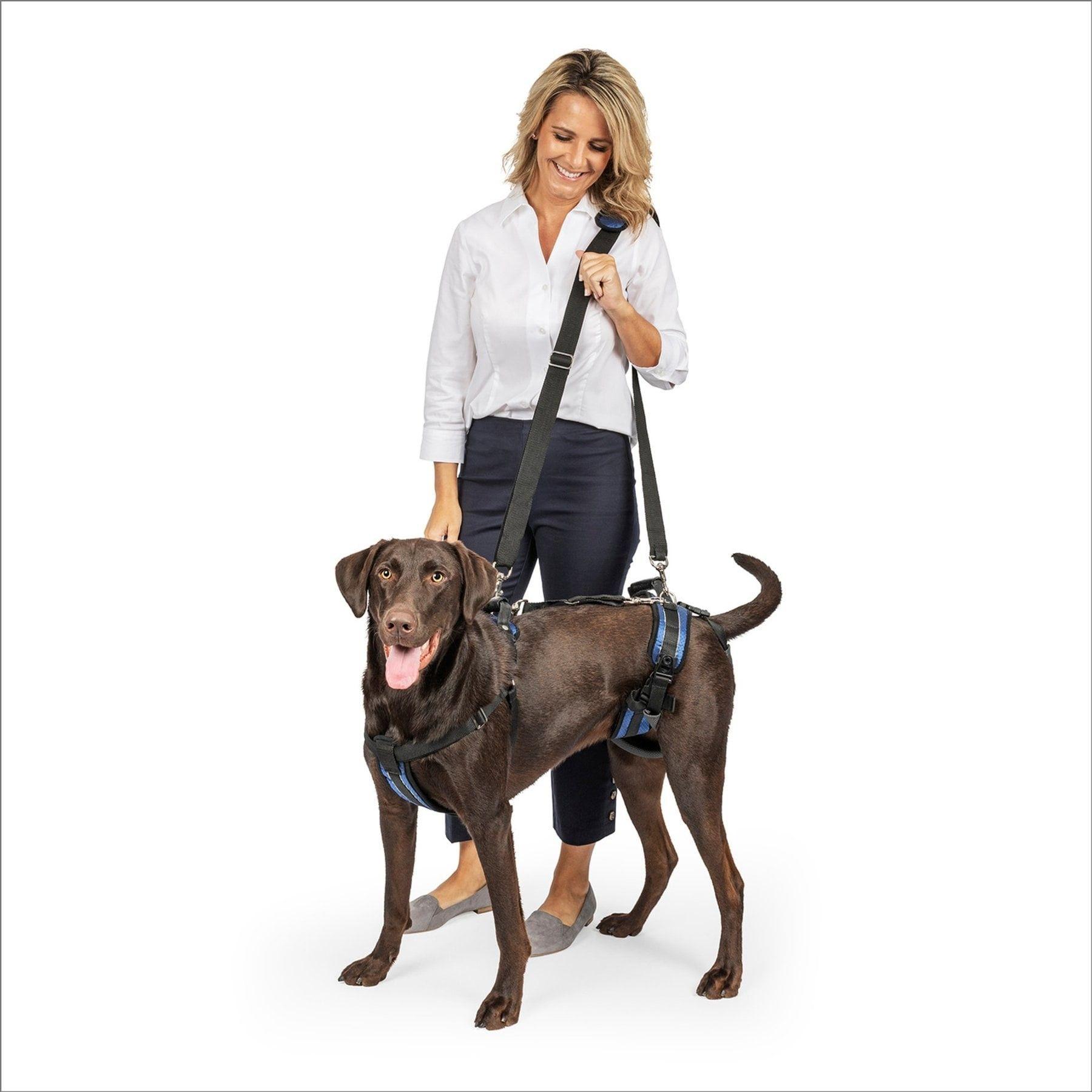
A full-body support harness may assist approved transfers after hands-on veterinary instruction. It cannot stabilize a deteriorating spinal injury or replace emergency evaluation.
Webvet may earn a commission when you click through to Chewy, at no extra cost to you.
| Treatment path (conservative care versus surgery) | Candidacy: when it may be discussed | Monitoring and requirements | Reassessment threshold for escalation |
|---|---|---|---|
| Conservative management | Pain alone or mild, stable deficits in a dog judged suitable by the veterinarian | Prescribed restriction, appropriate medication, toileting plan, monitoring, and follow-up | Any new weakness, loss of walking, urinary dysfunction, or uncontrolled pain |
| Surgical evaluation | Nonambulatory status, progression, recurrent episodes, persistent pain, or compressive disease likely to benefit from decompression | Neurologic examination, advanced imaging, anesthesia, procedure-specific care, and hospitalization | Urgency is set by function and progression; severe deterioration requires immediate referral |
| Rehabilitation | After the treating team determines movement is safe for the healing stage | Individual goals, trained handling, measured progression, and response monitoring | Pain, fatigue, weaker movement, incision problems, or loss of a previously gained function |
The ACVIM consensus statement notes that evidence quality varies across parts of acute thoracolumbar disc-extrusion management. That uncertainty does not mean every option is equal for every dog. It means the clinician combines the best available evidence with neurologic findings, imaging, practical constraints, and the dog's response instead of promising a universal outcome.
IVDD signs and stages
Signs and stage matter because they change how urgent treatment is. Pain may appear as trembling, a guarded back, low head carriage, reluctance to move, or crying when position changes. Neurologic deficits include scuffing nails, delayed paw placement, crossing the feet, weakness, knuckling, an unsteady gait, loss of walking, and paralysis. Bladder dysfunction can accompany more severe spinal cord injury.
- Pain without weakness can still require strong prescription pain control and strict movement limits, but it is not automatically a surgical case.
- A walking dog that is weak or uncoordinated needs close monitoring because progression can change the recommendation quickly.
- Any new problem with walking or urination needs a prompt call to the clinic, and a dog that cannot walk has lost substantial motor function and should be evaluated as an emergency.
- Suspected loss of deep pain perception is a severe finding that only a veterinarian should assess.
- Inability to urinate, unexpected leakage with weakness, or a persistently enlarged bladder changes both urgency and nursing needs.
Some grading systems use numbered stages, but the numbers are not perfectly interchangeable across practices and studies. An owner will make safer decisions by recording what the dog can do: whether the dog can rise, take steps, support weight, urinate voluntarily, and remain comfortable. The veterinary record can then connect those observations to the examination grade.
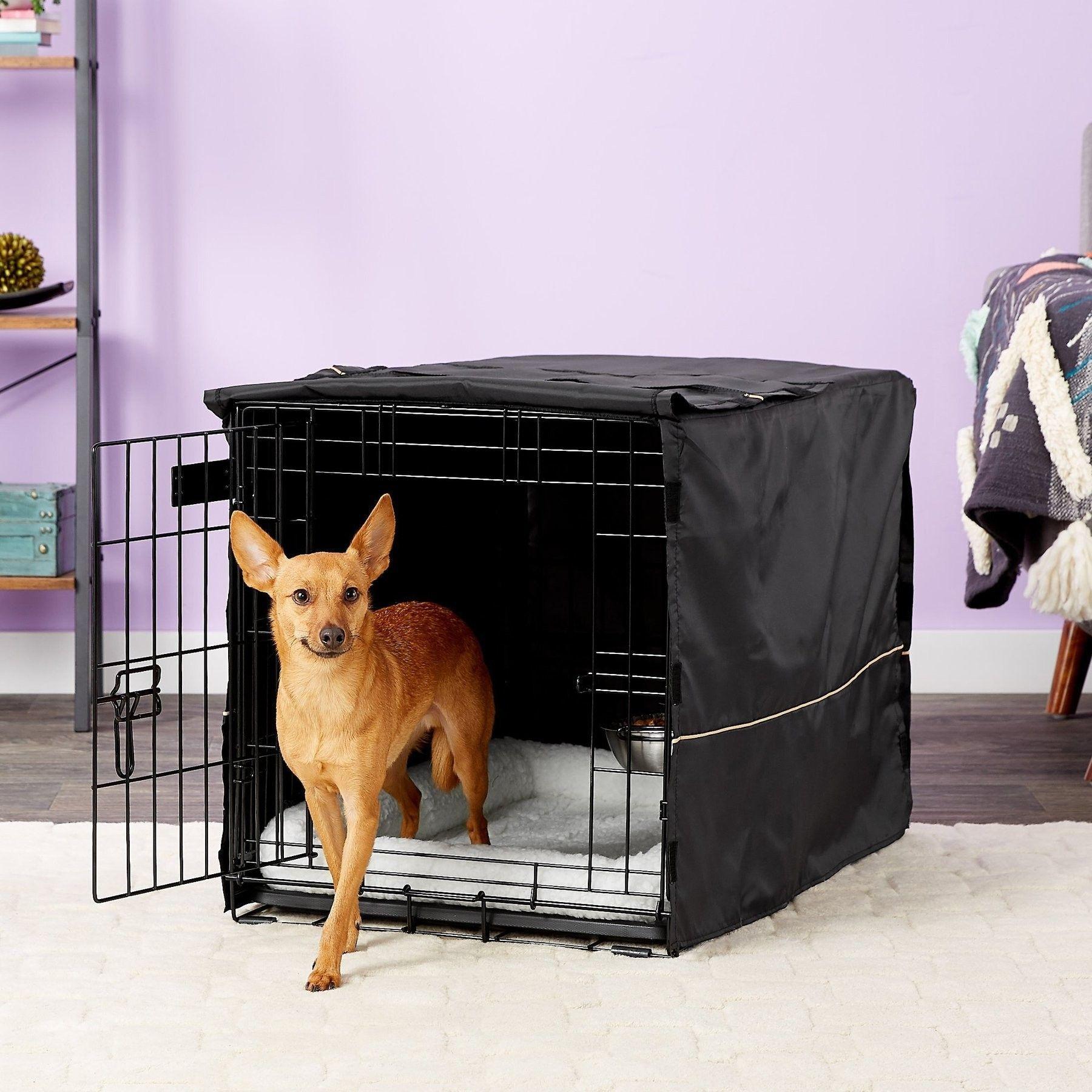
A properly sized crate can support veterinarian-prescribed restriction. Confirm enclosure type, dimensions, bedding, toileting, and duration for the individual dog.
Webvet may earn a commission when you click through to Chewy, at no extra cost to you.
For the early signs of IVDD in dogs, how symptoms differ by disc location, and how the condition is diagnosed, see the WebVet guide to IVDD in dogs.
Questions to ask when comparing treatment paths
A useful treatment conversation separates what is known now from what still requires imaging or observation. Ask the clinician to describe the neurologic localization and function in plain language, whether the dog is stable or deteriorating, and which finding most strongly supports the recommendation. If surgery is advised, ask what decompression is intended to accomplish and what could happen if referral is delayed.
- Is my dog walking independently, moving the limbs voluntarily, and emptying the bladder normally?
- Has function changed since the first examination, and how quickly could another change alter the prognosis?
- What diagnosis is most likely, what alternatives remain possible, and would advanced imaging change treatment today?
- If we choose conservative management, what exact movement restriction, medication monitoring, follow-up, and emergency thresholds are required?
- If we choose surgery, what imaging, procedure, hospitalization, bladder care, home assistance, and rehabilitation should we plan for?
- What outcome is realistic for comfort, continence, independent walking, and return to normal activity rather than a vague promise of recovery?
When finances or travel limit options, say so early. The veterinary team may be able to prioritize diagnostics, arrange referral, discuss financing, or design the safest feasible management plan. A constrained plan should still include honest uncertainty and explicit escalation points. It should never be described as equivalent to surgery when decompression is strongly recommended.
A second opinion can be reasonable when the dog is stable and the treatment decision is complex. It is not a reason to delay emergency transfer for rapidly worsening weakness, loss of walking, urinary dysfunction, or severe uncontrolled pain. Ask the current clinic to send examination notes, laboratory results, and images so the consulting neurologist can assess change rather than start with an incomplete history.
Neurologic findings and imaging before treatment
A neurologic examination helps the clinician identify the likely spinal region and document motor function, coordination, reflexes, sensation, and pain. The exam also tests whether the pattern fits spinal cord disease rather than an orthopedic injury, peripheral nerve problem, vascular event, infection, cancer, or another condition. Treatment chosen without this localization can target the wrong problem.

Plain X-rays may reveal fractures, bone disease, disc mineralization, or a narrowed disc space, but they cannot show the spinal cord or every disc extrusion adequately. MRI offers detailed information about the cord, discs, soft tissue, compression, and changes within the cord. CT can be particularly useful for mineralized extruded material. Advanced imaging generally requires anesthesia and is usually necessary before decompressive surgery.
- Imaging can confirm the site and side of compression, which determines the surgical approach.
- More than one disc may look abnormal, so the images must be interpreted with the neurologic localization.
- A dog with an anesthetic risk may need additional testing or a modified plan before imaging.
- If imaging finds a different disease, the IVDD treatment plan must be abandoned rather than forced onto the new diagnosis.
When advanced imaging is not immediately available, the veterinarian may discuss referral, stabilization, or carefully monitored presumptive management depending on severity. Financial limitations are clinically relevant and should be discussed openly, but they do not make severe signs safe to treat at home. Ask what the team believes is most likely, what remains uncertain, which finding would change the plan, and how quickly that change could become harmful.
A support device may be recommended after the dog's safe handling method is demonstrated. A full-body lifting harness can help distribute support during approved transfers or toileting, but it does not immobilize the spine and should not be used to delay emergency transport.
 Sponsored
Vet care that's always there
Unlimited video calls and messaging with licensed vets for less than a typical vet visit. One membership covers up to five pets.
Use code Pets60
Plans start at $12/month · covers up to 5 pets
- Licensed vets in most states
- Rx for 150+ conditions
- 4.7 on Trustpilot
Conservative care, surgery, and rehabilitation
Conservative treatment usually combines prescribed activity restriction, veterinarian-selected pain control, and close observation. It is active medical management, not simply waiting. The goal of restriction is to limit forces that could worsen disc extrusion while inflammation and injured tissue settle. The appropriate enclosure, toileting routine, and duration depend on the dog's size, temperament, neurologic status, home layout, and the treating clinician's instructions.
A securely sized recovery crate may be part of a prescribed plan. Some dogs require a closed crate; others may be approved for a different restricted area. An owner should not substitute an exercise pen because it seems kinder, allow furniture time because the dog is calm, or stop restriction when pain medication makes the dog feel better.
- Movement is usually limited to the specific handling and toileting the veterinary team approves.
- Running, jumping, stairs, rough play, unsupervised walking, and furniture access are commonly restricted.
- The owner should know how to give every medication, what adverse effects to watch for, and which drugs must not be combined.
- The dog should be reassessed on the schedule provided and sooner if pain or neurologic function worsens.
- A written daily record of comfort, walking, urination, bowel movements, appetite, and medication can reveal change more reliably than memory.
Medication categories may include an anti-inflammatory drug, analgesia (pain relief) aimed at different types of pain, and sometimes medication to reduce anxiety or unsafe activity during confinement. The exact combination is individual. Nonsteroidal anti-inflammatory drugs and corticosteroids can have dangerous interactions, and human pain relievers may be toxic to dogs. Do not change doses, add an old prescription, or switch drug classes without direct veterinary instructions.
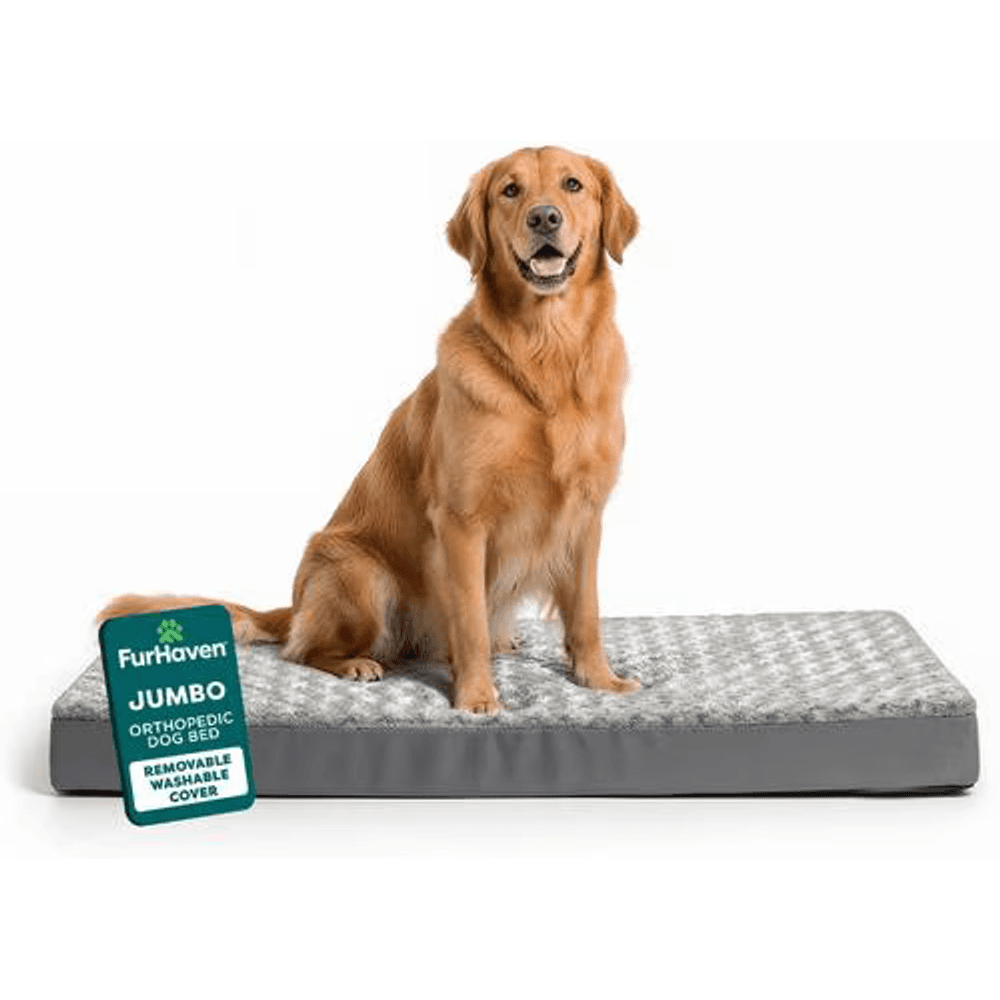
A low, flat bed may support comfort in an approved restricted space. Select firmness and height for the dog's current ability to turn, rise, and transfer.
Webvet may earn a commission when you click through to Chewy, at no extra cost to you.
Surgery removes compressive disc material and relieves pressure on the spinal cord. Thoracolumbar extrusion is often treated with a hemilaminectomy, while cervical disc procedures use different approaches according to location and imaging. Surgery may be recommended for a dog that cannot walk, is getting weaker, has repeated episodes, has persistent severe pain, or has imaging findings unlikely to respond adequately to conservative care.

The practical decision includes more than the operation. Owners need to understand the expected hospital stay, bladder care, possible complications, home restriction, follow-up, rehabilitation, and the range of functional outcomes. The WebVet guide to IVDD surgery cost and recovery explains estimate components and postoperative planning without treating any clinic quote as a national promise.
Recovery surfaces should be stable, easy to clean, and accessible without climbing. If the clinician approves it, a low flat bed may provide cushioning without a high bolster that a weak dog must cross. The bed should not be so deep that the dog struggles to turn or the caregiver cannot reposition the dog safely.

Rehabilitation should be matched to the healing pathway. A postoperative dog whose compressive material has been removed may receive a different plan from a medically managed dog whose disc must settle without surgery. The veterinarian or credentialed rehabilitation professional may use assisted standing, controlled walking, range-of-motion work, strengthening, or other techniques when appropriate. Starting an online exercise routine early can increase pain, create unsafe movement, or conflict with surgical restrictions.
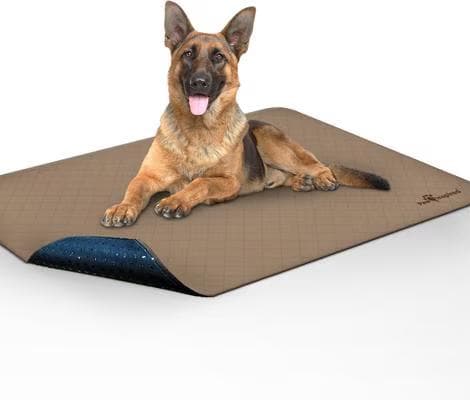
Washable absorbent protection can simplify hygiene during limited mobility. It is not bladder treatment and does not replace hands-on urinary-care training.
Webvet may earn a commission when you click through to Chewy, at no extra cost to you.
The available rehabilitation research includes small and heterogeneous studies, so a named modality should not be promised to restore walking. A clinical study of postoperative rehabilitation in dogs with thoracolumbar disc extrusion, available through PubMed Central, supports continued investigation but does not create one protocol for every neurologic grade. Progress should be measured against the individual dog's baseline and reassessed when gains stall or reverse.
- Comfort and neurologic stability come before exercise intensity.
- Fatigue, pain, weaker movement, or loss of a previously gained ability means the plan should be paused and reviewed.
- Skin, paws, bedding, and any incision need regular inspection without twisting the dog.
- Some dogs need manual bladder expression or a urinary catheter until voluntary urination returns; the veterinary team should teach expression hands-on and test for urinary infection when needed. Straining, blood, strong odor, fever, reduced urine production, or a firm enlarged bladder warrants veterinary contact.
- Return to stairs, furniture, play, and running should occur only after the treating team clears those activities.
For dogs with urine leakage or assisted bladder care, a large washable absorbent pad can make hygiene and bedding changes easier. It does not empty the bladder or prevent urinary infection.
Changes that alter the treatment plan
IVDD can progress over hours, remain stable, or improve gradually. An owner cannot predict the path from the first painful episode. The plan must be updated when the dog's walking, strength, or bladder function changes, when pain is not controlled, when medication causes an adverse effect, or when the practical home setup cannot keep the dog safely restricted.
- New weakness or incoordination can move a dog from a conservative-care candidate to an urgent imaging or surgical discussion.
- Repeated breakthrough pain may indicate inadequate control, progression, another affected site, or a different diagnosis.
- Vomiting, diarrhea, black stool, poor appetite, marked sedation, agitation, or other medication concerns require a call to the prescribing clinic.
- An incision that is swollen, opening, draining, or increasingly painful needs prompt postoperative assessment.
- Fever, urinary odor, blood, straining, or reduced output may signal a complication that requires testing rather than a bedding change.
What is the life expectancy of a dog with IVDD?
IVDD itself does not set a life expectancy. Many dogs live for years after an episode and may reach a normal lifespan once pain is controlled and comfortable walking and voluntary urination return. IVDD does not simply disappear when pain improves. The acute episode may settle and injured tissue can heal, but underlying disc degeneration and recurrence risk may remain. Conversely, a dog with an imperfect gait can still have good comfort and quality of life. Decisions about continued treatment should evaluate pain, mobility, bladder and bowel care, skin health, appetite, engagement, caregiver capacity, and the likely benefit and burden of the next intervention.
Many recovered dogs eventually return to controlled activity and some can run again after veterinary clearance. That decision is based on healing, strength, coordination, recurrence history, and the chosen treatment pathway, not a calendar date alone. A gradual plan may begin with brief controlled movement and progress only when the dog remains comfortable and neurologically stable.
- Before discharge, ask for written emergency thresholds and the correct after-hours contact.
- Confirm who will handle prescription refills and whether a neurologist or primary veterinarian leads follow-up.
- Ask which home tasks are essential, which are optional adjuncts, and which are unsafe at the current stage.
- Request a demonstration of lifting, toileting, bedding changes, and any rehabilitation exercise before attempting it alone.
- Discuss what success means for this dog, including comfort and independence rather than walking speed alone.
Home treatments to avoid
Unsafe home care most often comes from trying to confirm the diagnosis, improvise medication, or accelerate recovery. Do not press along the spine to find the painful disc, flip a paw repeatedly, pinch toes to test sensation, stretch the neck or back, use forceful massage, or encourage walking to see whether the dog can do it. These actions can hurt and still provide misleading information.
- Do not give ibuprofen, naproxen, acetaminophen, aspirin, or another human medication unless a veterinarian has specifically prescribed the exact product for that dog.
- Do not combine an anti-inflammatory drug with a leftover steroid or switch between them without veterinary direction.
- Do not use a brace, wrap, or rigid support to treat suspected IVDD without specialist guidance.
- Do not start an exercise, swimming, treadmill, chiropractic, acupuncture, laser, or supplement program in place of needed imaging or surgery.
- Do not allow an apparently comfortable medicated dog to jump, climb, or roam before the restriction plan is complete.
Adjunctive options may have a role for comfort or rehabilitation in selected patients, but the question should be specific: what outcome is expected, what evidence supports it, what risk does it add, and could it delay an intervention with stronger evidence? A specific next step backed by evidence is more useful than labeling a treatment conventional, holistic, or new.
Questions about IVDD treatment in dogs
Frequently Asked Questions
Can a dog heal from IVDD without surgery?
Yes, for some dogs. Dogs with pain alone or mild, stable neurologic deficits can recover with veterinarian-directed conservative management. Strict activity restriction means prescribed confinement, leash-only toileting, and no jumping, stairs, or play.
The main risk is progression. Self-directed crate rest without an exam can be unsafe because a worsening dog may go unnoticed. Dogs that cannot walk, are getting weaker, have uncontrolled pain, or show significant compression on imaging may need urgent surgery, so the neurologic exam comes first.
How long can dogs live with IVDD?
Many dogs live for years after an IVDD episode and may have a normal lifespan, especially once pain is controlled and comfortable walking and voluntary urination return. IVDD itself does not set one life-expectancy number.
A dog that remains paralyzed can still live well for years in some cases, but it needs committed bladder, skin, and mobility care. Recurrence, bladder complications, and other medical conditions also shape the outlook. A small subset of severely affected dogs, mainly those that have lost deep pain perception, develop progressive myelomalacia, a spreading spinal cord injury that the ACVIM consensus statement links to poor outcomes.
How to soothe a dog with IVDD?
Keep movement to a minimum, rest the dog on a stable, comfortable surface, and get veterinary pain control promptly. Once a plan is in place, follow the prescribed confinement and medication schedule exactly.
Do not massage or stretch the spine, apply an unapproved brace, give human pain medicine, or encourage walking. Severe or worsening pain needs urgent reassessment, and any new weakness means the dog should be rechecked rather than soothed at home.
How quickly does IVDD progress?
IVDD can progress over hours, worsen gradually over days to weeks, or stay stable after the first painful episode. A sudden disc extrusion may cause pain, weakness, or paralysis quickly, while slower disc changes can produce signs that build over time. An owner cannot predict which path a dog will follow.
That uncertainty is why treatment includes scheduled rechecks and a fresh exam whenever function changes. Loss of walking, weakness that worsens over a few hours, or inability to urinate needs emergency veterinary care, not a wait-and-see night at home.
Does IVDD in dogs ever go away?
The acute episode can settle, and pain and neurologic signs often improve with conservative care or surgery. The underlying disc degeneration does not reverse, though, so IVDD is better viewed as a condition that can go quiet rather than one that is cured.
Another disc can herniate later in life. The American College of Veterinary Surgeons reports that about 25% of affected dogs have a later herniation. Long-term care therefore includes weight control, safe activity habits, and a prompt recheck for any new pain or weakness.
What are the final stages of IVDD in dogs?
The most severe stage is paralysis with loss of deep pain perception, often with loss of voluntary bladder control. The American College of Veterinary Surgeons describes a typical sequence of spinal pain, then an unsteady gait, then loss of limb movement, and finally loss of deep pain sensation.
This is an emergency. The ACVS reports that surgery allows 50 to 60 percent of dogs with complete loss of pain perception to regain function, compared with under 10 percent under strict medical management, and the outlook worsens the longer deep pain is absent. Some dogs that do not recover live well with carts and assisted bladder care.
Can dogs with IVDD ever run again?
Yes, many dogs that recover good strength and coordination return to running and play, but only after the treating team clears it. The timeline depends on the neurologic grade, whether surgery was performed, rehabilitation progress, and recurrence history rather than a fixed number of weeks.
Return is usually gradual, starting with short controlled leash walks before off-leash activity. Ramps, nonslip flooring, and a lean body weight may reduce strain. Any pain, stumbling, or weakness during the return means the dog should be rechecked before activity increases.
Sources
- ACVIM consensus statement on diagnosis and management of acute canine thoracolumbar intervertebral disc extrusion
- Current Approaches to the Management of Acute Thoracolumbar Disc Extrusion in Dogs
- Postoperative rehabilitation in dogs following thoracolumbar intervertebral disc extrusion
- American College of Veterinary Surgeons: Intervertebral Disc Disease

Editor
The Webvet Editorial Team is the in-house group of pet-care editors and writers behind Webvet, operated by Smart Pet Collective. The team researches, writes, and maintains Webvet's pet health, behavior, and medication content. Every article follows a defined editorial process: research from reputable veterinary and scientific sources, careful drafting, mandatory review of medical content by a credentialed veterinarian, and dated publication. Health and medication articles are medically reviewed by a licensed veterinary professional before they go live and are kept current over time.
Veterinarian · BVMS MRCVS
Dr. Pippa Elliott, BVMS, MRCVS, is a veterinarian with nearly 30 years of experience in companion animal practice. Dr. Elliott earned her Bachelor of Veterinary Medicine and Surgery from the University of Glasgow. She was also designated a Member of the Royal College of Veterinary Surgeons. Married with 2 grown-up kids, Dr. Elliott has a naughty Puggle named Poggle, 3 cats and a bearded dragon.


