IVDD in French Bulldogs: Early Signs, Risk & Care
IVDD can affect French Bulldogs at a relatively young age, but breed alone does not diagnose spinal pain. Learn early signs, emergency thresholds, imaging limits, treatment choices, safer handling, and recurrence monitoring.

BVMS MRCVS
Medically reviewed by Dr. Pippa Elliott, BVMS MRCVS · Last reviewed

This article contains affiliate links. Webvet may earn a commission when you buy through them, at no extra cost to you.
IVDD in French Bulldogs can start as subtle neck or back pain and progress to weakness, loss of walking, or bladder dysfunction. Intervertebral disc disease occurs when a degenerated spinal disc shifts or ruptures and the displaced material compresses or bruises the spinal cord or nerve roots.
French Bulldogs are chondrodystrophic and are overrepresented in clinical IVDD cohorts, sometimes at younger ages than owners expect. That breed association raises suspicion but does not diagnose a painful dog. Hemivertebrae, other vertebral malformations, inflammatory disease, tumors, orthopedic pain, and other neurologic disorders can cause overlapping signs.
Do not test the paws, manipulate the neck, or wait for paralysis. If a French Bulldog cannot stand or walk, worsens quickly, has severe pain, struggles to breathe, or is weak with trouble urinating, support the body and airway and go to an emergency veterinary hospital.
 Sponsored
Have a health question about your dog?
Talk to a licensed vet at Dutch over video or message, including nights and weekends.
Use code Pets60
Plans start at $12/month · covers up to 5 pets
- Licensed vets in most states
- Rx for 150+ conditions
- 4.7 on Trustpilot
Why IVDD is discussed in French Bulldogs
- 1IVDD in French Bulldogs is a meaningful breed risk, but neither breed nor age proves the cause of neck pain, back pain, or weakness.
- 2French Bulldogs can have cervical or thoracolumbar disease and may also have vertebral malformations or other neurologic disorders.
- 3Prompt veterinary assessment matters because loss of function can progress, while safe transport must support the chest and pelvis without compressing the airway.
French Bulldogs are chondrodystrophic dogs. That inherited skeletal biology is linked to early degeneration of the gelatinous center of each intervertebral disc. Degenerated material can mineralize and, in an acute extrusion, enter the spinal canal. The result can be pain alone or loss of movement, sensation, and bladder control.
Chondrodystrophy is only part of the Frenchie picture. Clinical studies describe younger presentation in affected cohorts, cervical involvement as well as thoracolumbar disease, and screw-tail vertebral malformations that complicate imaging. Unlike a long-backed breed, a French Bulldog also brings brachycephaly into every emergency, sedation, and recovery decision.
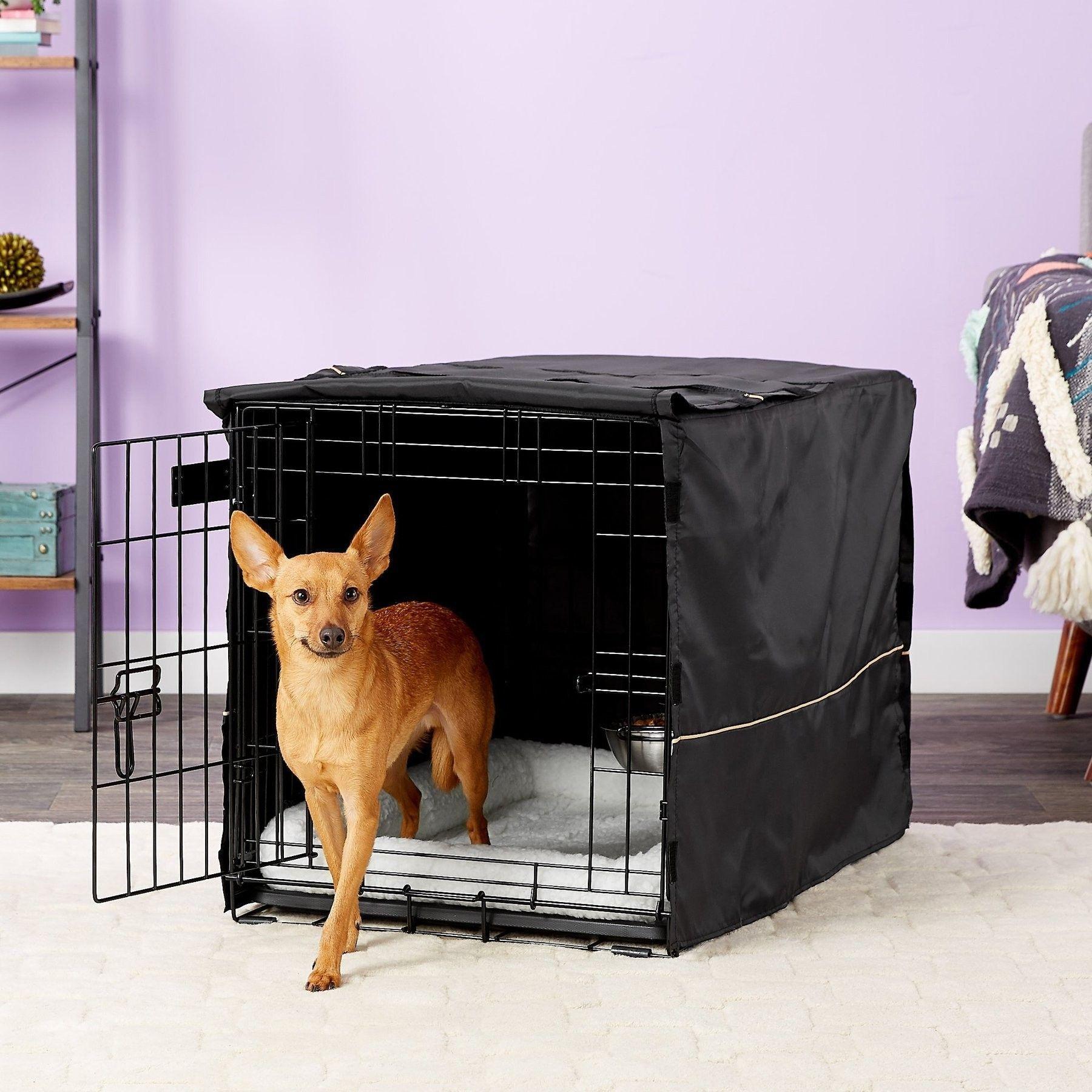
A correctly sized crate may support veterinarian-prescribed movement restriction when a French Bulldog can rest and breathe comfortably; it does not treat IVDD.
Webvet may earn a commission when you click through to Chewy, at no extra cost to you.
Those findings describe affected referral populations. They do not tell us what percentage of all French Bulldogs will develop disease, so treat these figures with care. A specialty cohort is enriched for dogs sick enough to be referred, imaged, or operated on, and applying its percentages to every pet overstates certainty.
- Cervical IVDD affects the neck and may cause a low head carriage, stiff neck, crying with movement, or front-limb signs.
- Thoracolumbar IVDD affects the mid-to-lower back and more often produces back pain, rear weakness, ataxia, or paralysis.
- A dog can have mineralized discs without current clinical compression.
- A vertebral malformation visible on imaging may be incidental or may contribute to spinal cord disease, depending on location and findings.
- Brachycephalic airway disease can complicate distress, transport, sedation, anesthesia, and postoperative care without causing the IVDD itself.
Hemivertebrae and other vertebral malformations are common imaging findings in screw-tailed breeds such as the French Bulldog. An abnormal vertebral shape does not automatically explain today's signs. Some malformations are incidental, while others deform the canal or contribute to instability and chronic spinal cord compression.
The neurologic examination and advanced imaging determine whether the clinically important lesion is an acute disc extrusion, a malformation-associated problem, another spinal disorder, or more than one condition at the same time.
Age remains context, not a diagnostic test. A young adult Frenchie who is reluctant to move deserves evaluation even if an owner associates IVDD with seniors. In an open-access study of spinal diseases in pugs and French Bulldogs, acute disc extrusion was the most common spinal diagnosis in French Bulldogs (84.3%) at that referral center. That figure describes affected dogs without telling us how many French Bulldogs overall develop IVDD.
- Learn your dog's normal willingness to rise, turn, lower the head, walk, and climb approved steps.
- Use a well-fitted body harness for routine control if the veterinarian recommends avoiding neck pressure.
- Keep a carrier or safe two-person lift plan ready before an emergency.
- Know which nearby hospital can provide emergency and neurologic care.
- Treat new pain as a medical change, not stubbornness or a normal Frenchie posture.
Risk reduction cannot eliminate chondrodystrophy. Keep a lean body condition, support regular controlled fitness, add traction, block uncontrolled high falls, and teach calm handling. No ramp, supplement, diet, crate, or exercise rule guarantees prevention. The broader WebVet IVDD in dogs guide explains the condition across breeds.
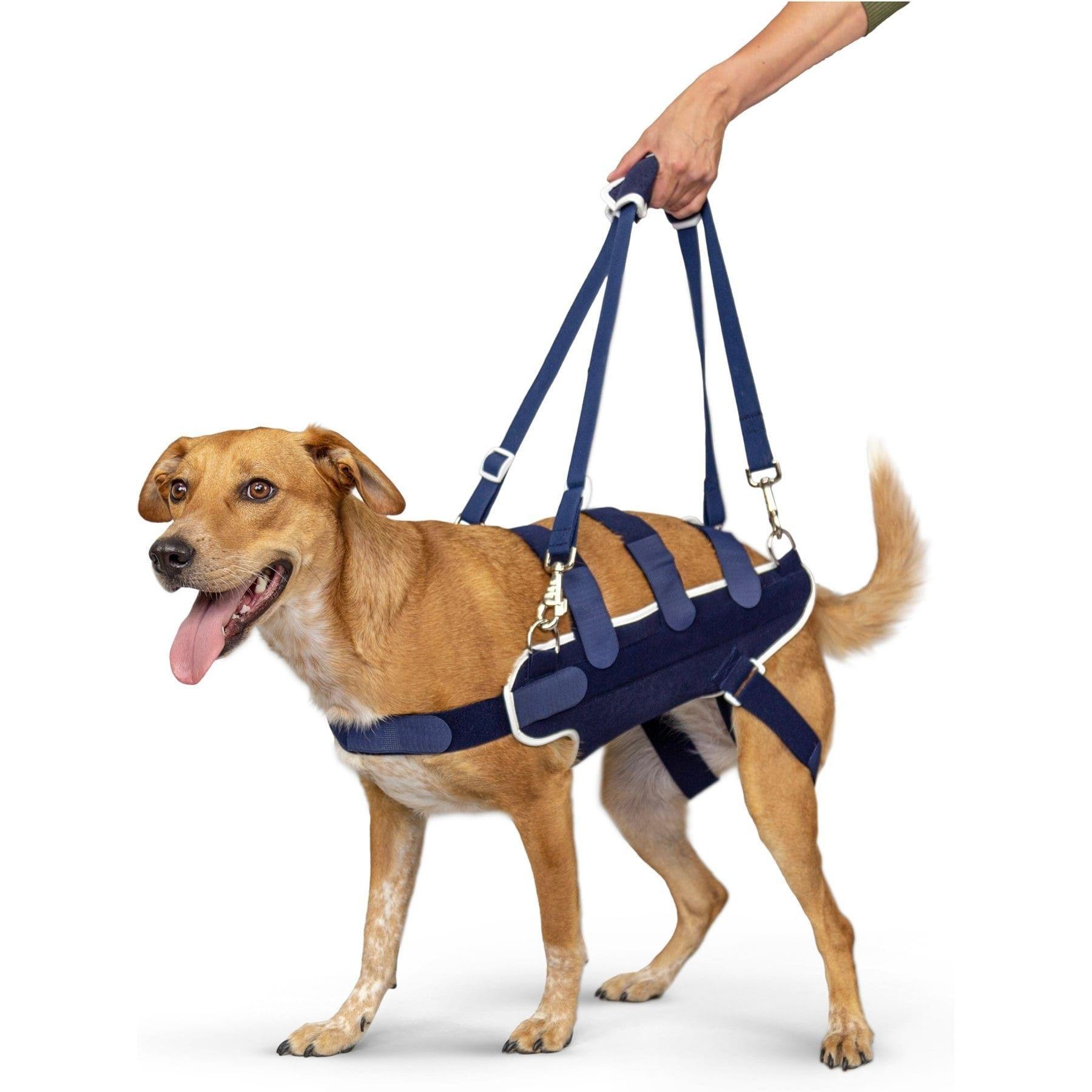
A small support harness may assist veterinarian-approved transfers when it supports the body without neck or airway pressure; it cannot restore neurologic function.
Webvet may earn a commission when you click through to Chewy, at no extra cost to you.
Early signs and emergency neurologic changes
Early signs of IVDD in French Bulldogs often look like pain rather than paralysis. A Frenchie may stop jumping, refuse a walk, tremble, pant, hold the head low, arch the back, or cry when turning. Some dogs become quiet or avoid a low bowl because lowering the neck hurts.
- Reluctance to walk, jump, use stairs, turn the head, or lower the head to food and water.
- Yelping, trembling, panting at rest, a tense belly, or a stiff guarded posture.
- Wobbling, crossing the rear feet, scuffing nails, or standing with a paw folded under.
- Weakness, falling, dragging one or more limbs, or inability to rise.
- Urine leakage or inability to pass a normal stream alongside weakness.
Stage 1 is an informal grading label for pain without obvious neurologic deficits. It can look like reluctance, yelping, tension, or guarded movement while the dog still walks normally. Grading systems vary and owners cannot assign a stage reliably, so use the description to communicate, not to decide that care can wait.
Knuckling and scuffing suggest impaired position sense or motor control. Do not repeatedly flip the paw or pinch toes to test deep pain. Limb withdrawal is a spinal reflex, not conscious pain perception. A veterinarian must perform and interpret the neurologic examination, because home testing causes pain and false reassurance.
Transport requires attention to both spine and airway. Support the chest with one forearm and the pelvis with the other, lifting both ends together with the body level. Never lift by the front legs, let the rear hang, or tighten a collar. For a heavy or painful dog, use two people and a firm carrier.
Call ahead so the hospital can prepare oxygen or rapid neurologic triage. Panting can reflect pain, stress, heat, or brachycephalic airway compromise. A Frenchie who is blue, pale, noisy, unable to settle, or working hard to breathe needs immediate care. Avoid muzzles that restrict panting unless staff direct otherwise.
Bladder dysfunction is also time-sensitive. Leakage can happen because an overfull bladder cannot empty normally. Do not try to express the bladder without hands-on instruction. If the dog is weak and has not produced a normal urine stream, tell the emergency team so they can assess retention.
- Note when the dog last walked and urinated normally.
- Record whether pain or weakness started suddenly or gradually.
- Tell the team about vomiting, trauma, heat exposure, prior spinal episodes, breathing disease, and all medications.
- Capture a brief spontaneous video only if it does not require extra walking or delay departure.
- Do not massage, stretch, manipulate, or apply a brace to the painful area.
Severe signs do not mean recovery is impossible. Prognosis depends on neurologic status, conscious pain perception, progression, imaging, and treatment. Every change points to one of two actions: restrict movement and call today, or go now. Waiting because the dog is young or improved before can cost function.
 Sponsored
Vet care that's always there
Unlimited video calls and messaging with licensed vets for less than a typical vet visit. One membership covers up to five pets.
Use code Pets60
Plans start at $12/month · covers up to 5 pets
- Licensed vets in most states
- Rx for 150+ conditions
- 4.7 on Trustpilot
Examination, imaging, and breed-risk limits
Diagnosis begins with history, physical examination, and neurologic localization. The veterinarian assesses gait, posture, postural reactions, reflexes, muscle tone, sensation, spinal pain, and bladder function. The pattern suggests whether the lesion lies in the neck, thoracolumbar spine, peripheral nerves, brain, or musculoskeletal system. Breed risk raises IVDD on the list without replacing localization.

Spinal radiographs show vertebral bone, alignment, mineralized discs, fractures, and many malformations. They cannot show the spinal cord and discs clearly enough to confirm the site and severity of most compressions. A mineralized disc can be incidental, a hemivertebra can look dramatic without causing this episode, and normal radiographs do not rule out IVDD.
MRI shows the spinal cord, discs, compression, hemorrhage, and alternative soft-tissue disease. The 2022 ACVIM consensus statement on thoracolumbar disc extrusion reports MRI sensitivity above 98.5% and supports CT as a first-line option in chondrodystrophic dogs with likely mineralized discs. Both usually require anesthesia.
For a French Bulldog, the anesthetic plan should account for airway anatomy, prior breathing signs, body temperature, and regurgitation risk. Brachycephaly is a reason to plan imaging carefully, not a reason to guess without it when the result would change treatment.
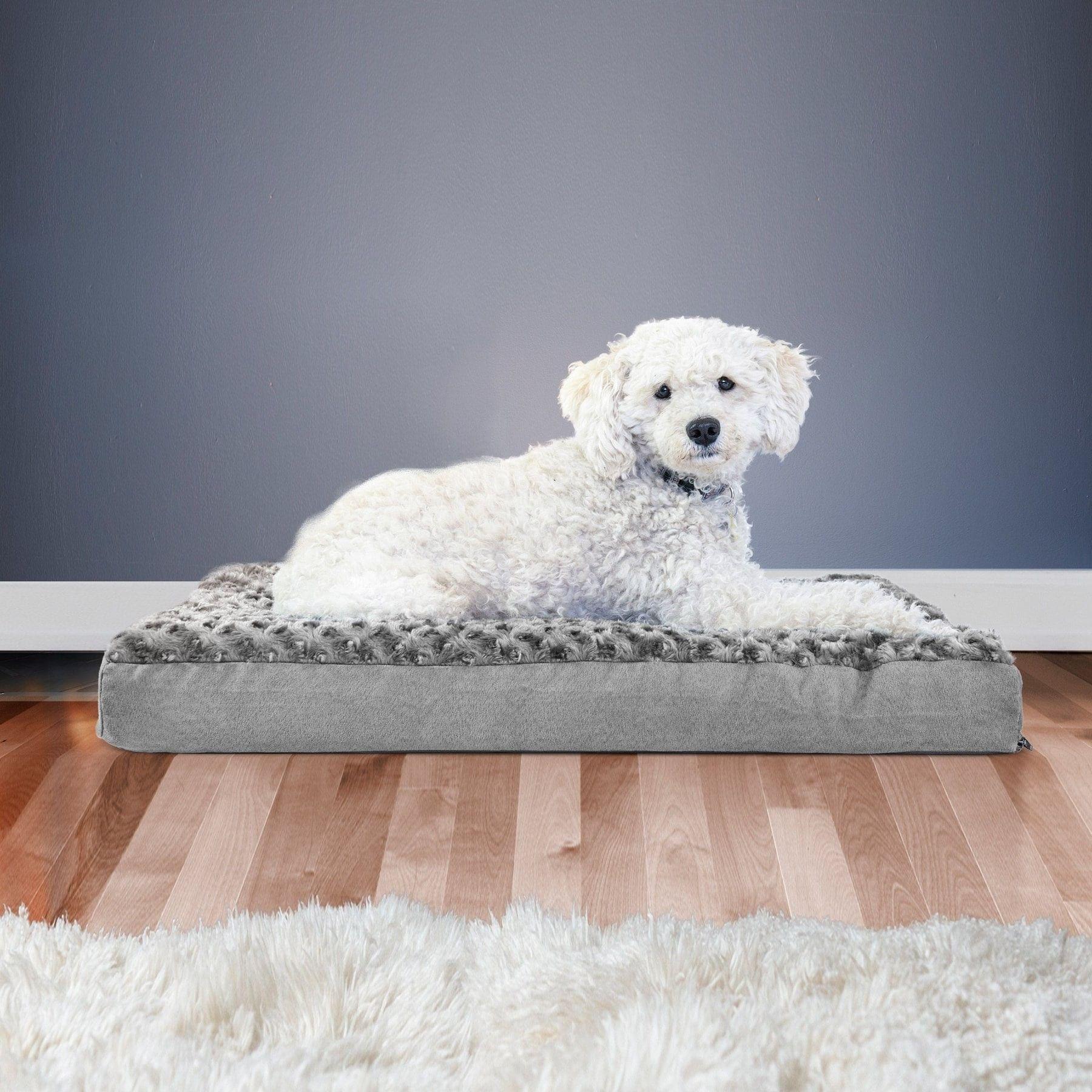
A low floor-level bed may support comfort and easier repositioning in an approved recovery space; avoid deep heat-trapping surfaces and monitor breathing and skin.
Webvet may earn a commission when you click through to Chewy, at no extra cost to you.
| Breed evidence or findings | What it supports | Evidence limit |
|---|---|---|
| French Bulldogs are overrepresented in affected cohorts of dogs with IVDD | Breed-associated risk and the need for early awareness | Affected cohort versus prevalence: it cannot support claims about how many French Bulldogs overall develop IVDD |
| Surgical cohorts report later disc events in French Bulldogs | Recurrence monitoring after a diagnosed episode | A selected cohort figure cannot support a recurrence promise for an individual dog |
| Radiographs show mineralized discs or vertebral malformations | Bone and mineralization findings that guide the workup | Cannot support proof that the visible finding causes today's spinal cord signs |
| MRI or CT shows compression matching the examination | A diagnosis and treatment plan for the individual dog | Cannot support a guarantee of recovery or freedom from future episodes |
| General IVDD knowledge from all breeds, such as outcomes by deep pain status | Realistic prognosis discussions once the neurologic grade is known | Most outcome data are not French Bulldog specific, so breed claims cannot rest on them alone |
The distinction between affected cohort and prevalence is crucial. An open-access study of cervical IVDD in French Bulldogs can describe lesion sites, ages, or outcomes among dogs that reached a hospital. In an open-access study of IVDD recurrence in surgically treated French Bulldogs, 52.7% of 127 dogs at one referral center showed signs of recurrence, about half of them within 12 months, and dogs first affected at 3 years or younger were at higher risk. Neither counts every healthy dog in the population.
Genetic susceptibility is not a clinical test. A risk-associated variant may help explain chondrodystrophy at a population level, but DNA testing does not identify today's affected disc, grade spinal cord injury, or select surgery. A painful dog still needs an examination whether a DNA result is known, unknown, or favorable.
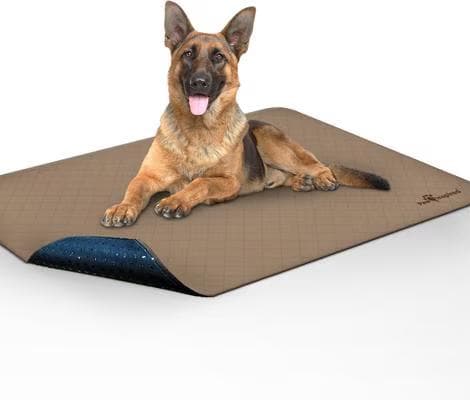
A washable pad can protect the recovery area from accidents and simplify hygiene, while urinary retention and bladder care still require veterinary assessment.
Webvet may earn a commission when you click through to Chewy, at no extra cost to you.
Competing spinal differentials deserve explicit consideration. Hemivertebra-associated compression may be chronic. Spinal arachnoid diverticula, inflammatory disease, tumors, vascular injury, discospondylitis, and peripheral nerve disease can alter gait, and hip, knee, or patellar disease can mimic weakness. Imaging and examination should agree before a finding becomes the diagnosis.
- Ask what the examination shows, what imaging would add, and what remains uncertain.
- Ask where the neurologic examination localizes the lesion.
- Ask which important alternative diagnoses remain and how urgent they are.
- Ask what MRI, CT, or radiographs will change about treatment.
- Discuss brachycephalic airway risk and postoperative monitoring before anesthesia.
- Request a plain-language explanation of prognosis based on this dog's function, not breed averages.
Costs depend on region, emergency timing, imaging, hospitalization, surgery, complications, and rehabilitation. If finances limit options, say so early and ask for prioritized steps and written estimates. The IVDD treatment in dogs guide covers detailed treatment decisions, including what to discuss when surgery is unaffordable.
Treatment, recovery, recurrence, and handling
Treatment for IVDD in French Bulldogs depends on pain, neurologic function, progression, imaging, previous episodes, airway and anesthetic considerations, and overall health. A stable walking dog with pain alone may be a candidate for conservative care. Worsening weakness, inability to walk, or significant compression may lead to urgent referral and surgery.
Conservative care combines veterinarian-prescribed movement restriction, pain control, monitoring, and a staged return to activity. The ACVIM consensus suggests at least 4 weeks of restricted activity in a crate or small room, based on low-level evidence. The veterinarian should define the space, toileting, medication, and rechecks. Never use leftover medication.
A correctly sized recovery crate may help enforce a prescribed restriction plan when the dog can rest and breathe comfortably. It does not prevent IVDD in a healthy dog or heal a disc. A French Bulldog who is distressed, overheated, or breathing poorly may need a different enclosure or hospital care.

Surgery follows advanced imaging so the specialist can locate the lesion and choose an approach. A hemilaminectomy is commonly used for selected thoracolumbar extrusions, while cervical procedures differ. Surgery relieves compression but cannot remove breed susceptibility or guarantee that another disc will never cause trouble.
Brachycephaly makes the anesthetic and recovery period a distinct risk for French Bulldogs. Swelling of an already narrow airway, regurgitation, and aspiration are concerns around surgery. Ask how the team will keep the airway open until the dog is fully awake, manage body temperature, and decide when discharge is safe.
- Ask what neurologic finding most influences prognosis.
- Ask how breathing and airway recovery will be monitored after anesthesia.
- Clarify bladder care, skin checks, lifting, toileting, and medication before discharge.
- Request a written rehabilitation timeline and restrictions for each phase.
- Know which pain, weakness, breathing, wound, or urination changes require immediate return.
For necessary transfers, support the chest behind the front legs and the pelvis under the rear, raising both ends together with the throat free of pressure. A properly fitted small support harness may assist a veterinarian-approved transfer or toileting plan, but it must never tighten around the airway or suspend the dog.
A low flat rest surface reduces climbing and makes repositioning easier. If the veterinarian approves, a medium floor-level support bed may add comfort without a high edge. Avoid deep cushions that make rising harder or trap heat. Bedding is not treatment, so check pressure points and breathing in every resting position.
Weakness or bladder dysfunction can cause urine accidents and skin injury. A large washable floor-protection pad may keep an approved rest area dry, but it does not manage urinary retention. Smooth it so it cannot bunch under the feet, change it promptly, and call the clinic if no normal stream is produced.
- Log comfort, voluntary walking, urination, bowel movements, appetite, medication, breathing, and sleep.
- Use a short controlled toileting route only as directed.
- Protect weak paws from scuffing and keep nonslip flooring on necessary paths.
- Begin rehabilitation exercises only when prescribed for the current healing phase.
- Treat new pain or neurologic change as a new clinical event rather than automatically repeating the old plan.
Recovery can be substantial, even in dogs that cannot walk at first. Across breeds, the ACVIM consensus reports successful surgical outcomes in about 93% of paraplegic dogs that keep deep pain perception and 61% of those without it. Bladder control can return on a different timeline, so serial examinations matter.

Recurrence is possible after medical or surgical care. Studies reviewed in the ACVIM consensus reported later disc extrusions after decompressive surgery in 44% of French Bulldogs, compared with 25% of Dachshunds. Those are surgical cohort figures, not breed prevalence. A new episode may involve another disc, so restrict movement and call the veterinarian.
How long can my Frenchie live with IVDD?
Life expectancy is not set by the IVDD label alone. Many French Bulldogs recover useful function and live for years, while severe spinal injury, recurrence, respiratory disease, or care complications can change the outcome. Judge quality of life by comfort, mobility, breathing, elimination, sleep, appetite, and engagement.
- Maintain a lean body condition after recovery to reduce avoidable physical load.
- Resume controlled activity gradually so the dog rebuilds muscle without high-impact bursts.
- Use traction and barriers to reduce uncontrolled falls while preserving safe enrichment.
- Reassess the home plan as breathing, vision, arthritis, weight, or neurologic function changes.
- Keep emergency and specialty contacts available even after a successful recovery.
Questions about IVDD in French Bulldogs
Frequently Asked Questions
Can a French bulldog recover from IVDD?
Yes, many French Bulldogs recover useful function after IVDD with conservative care or surgery. Time matters, because a dog who is losing the ability to walk can lose more function while waiting.
Outcome depends on neurologic severity, deep pain perception, how fast signs progress, imaging findings, and rehabilitation. No online stage or breed percentage predicts one dog, so a veterinary neurologic examination gives the most useful prognosis.
At what age do most Frenchies get IVDD?
French Bulldogs in affected clinical cohorts often present as young or middle-aged adults, sometimes younger than owners expect for spinal disease. Those referral and surgical studies describe selected sick dogs, not the age pattern of every French Bulldog.
No age rules IVDD out. New neck pain, back pain, reluctance to move, wobbling, or weakness needs a veterinary examination whether the dog is young or old.
How long will a dog live with IVDD?
IVDD does not set a fixed lifespan. Many dogs recover and live for years, while severe spinal cord injury, recurrence, bladder complications, or other disease can shorten survival or reduce quality of life.
The most useful guide is how a dog does after treatment: return of comfortable walking, bladder control, and a stable neurologic examination over serial rechecks. Brachycephalic breeds such as the French Bulldog also carry breathing risks that affect long-term outlook.
What does stage 1 IVDD look like?
Stage 1 usually describes spinal pain without neurologic deficits. The dog still walks normally but may hold the head low, arch the back, tremble, yelp when lifted, refuse stairs, or move stiffly. Even at this stage, restrict movement and call the veterinarian, because pain-only disease can progress to weakness.
What is the life expectancy of a French bulldog with IVDD?
No study has established a specific life expectancy for French Bulldogs with IVDD. A Frenchie that regains comfortable walking and bladder control may reach a typical lifespan for the breed, while severe or repeated spinal cord injury can shorten it. You can improve the outlook through early care for new signs, the full restriction and rehabilitation plan, a lean body condition, safe handling, and fast action on recurrence.
Breed lifespan itself is uncertain. A Royal Veterinary College life-table study estimated 4.53 years at birth for UK French Bulldogs, but the authors note the data skewed toward young dogs because the breed's popularity rose quickly.
What is the main cause of death in French Bulldogs?
There is no single reliable answer. The RVC life-table study did not report causes of death, but its authors linked the short life expectancy of French Bulldogs to early-life disorders including brachycephalic obstructive airway syndrome, spinal disease, and dystocia.
For an individual dog, the practical priorities are breathing, spinal health, and weight. Ask your veterinarian which of these risks matters most for your Frenchie.
Sources
- Open-access study of IVDD recurrence in surgically treated French Bulldogs
- Open-access study of cervical IVDD in French Bulldogs
- Open-access study of spinal diseases in pugs and French Bulldogs
- ACVIM consensus statement on diagnosis and management of acute canine thoracolumbar intervertebral disc extrusion (2022)
- Life tables of annual life expectancy and mortality for companion dogs in the United Kingdom (Royal Veterinary College, 2022)

Editor
The Webvet Editorial Team is the in-house group of pet-care editors and writers behind Webvet, operated by Smart Pet Collective. The team researches, writes, and maintains Webvet's pet health, behavior, and medication content. Every article follows a defined editorial process: research from reputable veterinary and scientific sources, careful drafting, mandatory review of medical content by a credentialed veterinarian, and dated publication. Health and medication articles are medically reviewed by a licensed veterinary professional before they go live and are kept current over time.
Veterinarian · BVMS MRCVS
Dr. Pippa Elliott, BVMS, MRCVS, is a veterinarian with nearly 30 years of experience in companion animal practice. Dr. Elliott earned her Bachelor of Veterinary Medicine and Surgery from the University of Glasgow. She was also designated a Member of the Royal College of Veterinary Surgeons. Married with 2 grown-up kids, Dr. Elliott has a naughty Puggle named Poggle, 3 cats and a bearded dragon.


